CASE STUDY PT 1. - FINAL EXAM
 Call Kai
 Learn
Learn Practice Test
 Spaced Repetition
 Match
Match Flashcards
 Knowt Play
1/29

There's no tags or description
Looks like no tags are added yet.
Name | Mastery | Learn | Test | Matching | Spaced | Call with Kai |
|---|
No analytics yet
Send a link to your students to track their progress
30 Terms
Background: Michael noticed a red, itchy rash on his groin area.
Symptoms:
Red-brown, round patches.
Burning sensation.
Scaly borders.
Rash worsening after playing soccer.
Exacerbated by sweating.
Tinea Cruris is popularly known as?
Jock Itch
Lila, a 27-year-old pregnant woman, is concerned about transmitting a potential infection to her baby. She has a history of genital herpes but hasn't had an outbreak for a year.
What is a significant concern during childbirth for women with Lila's history?
Transmitting herpes simplex virus to the baby during delivery.
A high school experiences an outbreak of chickenpox. Surprisingly, several vaccinated students also develop a mild version of the disease.
Why might vaccinated students still get chickenpox?
The vaccine offers high but not 100% protection, so breakthrough cases can occur.
Case Study 4: Diego, a 28-year-old hiker
Background: Diego had a minor injury while hiking in the woods. A week later, he noticed a lesion on his leg, which was followed by more nodules appearing in a chain-like fashion up his leg.
Symptoms:
Initial lesion at the site of the injury.
Chain-like pattern of nodules.
Warmth around the affected area.
Lymphatic swelling.
Tenderness to touch.
The linear arrangement of nodules in sporotrichosis is due to:
Lymphatic spread of the fungus.
Case Study 2: Samuel, a 50-year-old farmer
Background: Samuel lives on a farm with various animals, including squirrels and rats. He recently noticed blisters on his hands and face, causing him alarm.
Symptoms:
Skin lesions that evolved from macules to pustules.
Mild fever.
Cough.
Backache.
Headache.
What is the incubation period for monkeypox?
7-14 days
Harold, a 75-year-old man with a history of poorly controlled diabetes, presents with a painful, red swollen area on his right lower leg. He mentions that he recently scraped his leg on the edge of a public hot tub. Despite cleaning the wound, it has become more swollen and painful over the past week.
What would you expect to see on a gram stain of Harold's wound culture?
Gram-positive cocci in chains
A 40-year-old woman living in an urban area presents with fevers, severe headaches, and myalgias lasting two weeks. She recalls a recent weekend trip to a rural area where she visited a friend's farm. She has no pets and denies any known tick bites.
What should be the next step in the evaluation of this patient?
Serologic testing for Q fever
A 35-year-old woman returns from traveling through Southeast Asia. She presents with multiple abscesses in her spleen identified via ultrasound, along with fever and general malaise. She has a history of thalassemia but no other immunocompromising conditions.
Which diagnostic test would be most appropriate for confirming Melioidosis in this patient?
Blood Culture
A 25-year-old woman comes to the clinic complaining of a sharp chest pain that worsens with deep breaths, a fever that started suddenly last night, and a dry cough. She has no significant medical history and takes no medications.
Which diagnostic test is most likely to confirm the suspected diagnosis?
Chest x-ray
A 45-year-old woman with HIV, well-controlled on antiretroviral therapy, presents with fever, severe headache, and a dry cough. She reports cleaning an old pigeon nest from her balcony a few days prior. She is tachypneic, and her oxygen saturation is 90% on room air.
What is the most appropriate management for this patient?
Inpatient admission and treatment with a tetracycline antibiotic.
A microbiology major, 22-year-old Liam, presents with urethritis, characterized by mucopurulent discharge. Knowing the microbiological characteristics of intracellular gram-negative diplococci, he suspects it's an STD caused by a bacterium that often co-infects with Chlamydia trachomatis.
Gonorrhea
Sarah, a 42-year-old single parent of two, was admitted to the hospital with high fever, flank pain, nausea, and vomiting. She had been too busy to address her recurrent urinary tract infections properly. Her current symptoms suggested that the infection may have ascended to the kidneys. After a urinalysis and ultrasound, she was diagnosed with acute pyelonephritis.
Question: What symptom is most indicative of Sarah's progression from a lower urinary tract infection to pyelonephritis?
High fever
A 32-year-old female who frequently travels for business reports a painful rash and flu-like symptoms. She mentions that these symptoms started after her last trip abroad, where she had a brief sexual encounter. She's trying to figure out what STD might be causing her symptoms.
Question: What STD might the traveler be considering?
Herpes
Laura, a 32-year-old corporate lawyer, has been under considerable stress due to a high-profile case. She has neglected her diet and has been consuming more sugar and processed foods. Recently, she noticed an uncomfortable vaginal itch and a change in her discharge. Her gynecologist confirmed BV after a vaginal pH test and microscopic evaluation of her vaginal flora.
Question: What lifestyle change is most relevant to Laura's diagnosis of BV?
Poor dietary habits
Lisa, a 29-year-old project manager, sought medical attention for increased vaginal discharge and painful urination. She reports having recently ended a relationship with a partner who was unfaithful. Her clinician suspects gonorrhea and orders a nucleic acid amplification test, which comes back positive.
Question: What circumstance most likely led to Lisa contracting gonorrhea?
Her partner's infidelity
Following a meal at a local restaurant's salad bar, 22-year-old health enthusiast Jenna comes down with watery diarrhea that progresses to hemolytic uremic syndrome (HUS). She suspects a bacterium that can cause severe illness, especially when consuming raw vegetables that have not been properly washed.
E. coli infection
A food safety inspector and microbiology enthusiast, 28-year-old Laura, falls ill with tenesmus and bloody diarrhea after inspecting a restaurant with poor hygiene practices.
She suspects an infection with a bacterium from a genus that includes four species: dysenteriae, flexneri, boydii, and sonnei.
Shigellosis
A highly contagious intestinal infection caused by Shigella bacteria. Spread through the fecal-oral route via contaminated food, water, or direct contact with an infected person
Symptoms typically begin 1 to 2 days after exposure and last 5 to 7 days.
After spending several months in a remote area with limited access to clean water, 26-year-old Michael, a former Peace Corps volunteer, develops a high fever, headache, and a rash on his abdomen.
Considering his recent location and the conditions, he suspects a gram-negative bacterium, which can be ingested through contaminated food or water and causes a sustained high fever and rose-colored spots.
Typhoid fever
After enjoying a seafood platter on the coast, 34-year-old Mark, a gastronomy student, experiences acute onset of watery diarrhea and dehydration.
He suspects a bacterial infection from a curved, gram-negative rod-shaped bacterium known to produce cholera toxin, possibly contracted from improperly cooked shellfish.
Cholera due to vibrio cholerae
Following a humanitarian mission in a region with poor sanitation, 32-year-old Tom, an international aid worker studying for his master's in global health, develops chills, fever, and abdominal cramps. He considers an infection with a bacterium commonly linked to contaminated water and food, which can cause systemic illness.
Salmonellosis
History: A 17-year-old presents with a sudden onset of high fever, vomiting, and severe muscle aches, following a skin abscess.
Symptoms: Sunburn-like rash, hypotension, and subsequent peeling of the skin on the fingers and toes.
Microbiological Clues: Blood and wound cultures negative; diagnosis based on clinical presentation.
Differential Diagnosis:
Toxic shock syndrome
History: A 42-year-old gardener presents with fever, severe headache, and a rash 5 days after finding a tick on their body.
Symptoms: Maculopapular rash, photophobia, and arthralgia.
Microbiological Clues: Serological tests showing rising titers to Rickettsia rickettsii.
Differential Diagnosis:
Rocky mountain spotted fever
History: A 30-year-old returns from a camping trip with fever, headache, and muscle aches. Recalls multiple tick bites.
Symptoms: High fever, chills, and a mild rash.
Microbiological Clues: increased liver enzymes.
Differential Diagnosis:
Ehrlichiosis
A bacterial illness spread primarily by the bite of infected ticks.
History: A 30-year-old living in a Lyme disease-endemic area develops nonspecific flu-like symptoms and jaundice.
Symptoms: Fever, fatigue, and jaundice; mild splenomegaly on examination.
Differential Diagnosis:
Babesiosis
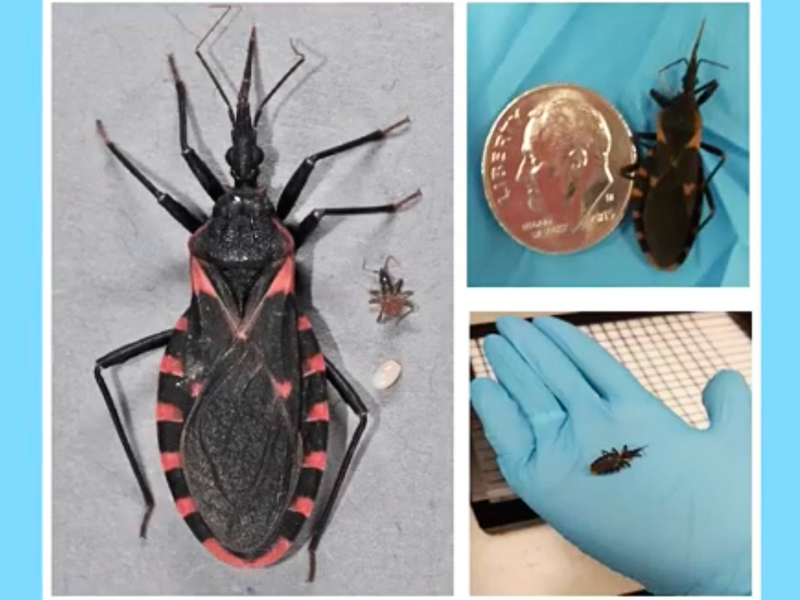
History: A 35-year-old returns from a trip to rural South America with fever, fatigue, and swelling at the site of an insect bite.
Symptoms: Localized swelling (Romaña's sign), fever, and enlarged lymph nodes.
Microbiological Clues: Positive serology for Trypanosoma cruzi; parasite observed in blood smear.
Differential Diagnosis:
Chagas disease
A tropical parasitic disease caused by the parasite Trypanosoma cruzi.
History: A newborn exhibits respiratory distress, fever, and lethargy. The mother had a fever during delivery and reported eating unpasteurized dairy products during pregnancy.
Microbiological Characteristics: Intracellular pathogen, survives in phagocytes, produces listeriolysin O, Gram-positive.
Diagnosis Options:
Listeria monocytogenes
History: A 17-year-old presents with difficulty swallowing, anxiety, and a slight fever. They recall being scratched by a wild animal during a camping trip.
Microbiological Characteristics: Transmitted by infected mammals, incubation period can vary, infects the central nervous system leading to disease in the brain.
Diagnosis Options:
Rabies virus
History: A 9-month-old infant presents with irritability, a bulging fontanelle, and fever. There is no history of immunization.
Microbiological Characteristics: Grows at 35-37°C, utilizes glucose and maltose, sensitive to penicillin.
Diagnosis Options:
Neisseria meningitidis
History: A couple in their 50s presents with progressive muscle paralysis, starting with cranial nerves and descending, after eating home-preserved meat.
Microbiological Characteristics: Anaerobic, spore-forming bacillus, botulinum toxin production, non-motile.
Diagnosis Options:
Clostridium botulinum
An 8-year-old child living in a rural area with recent flooding presents with a high fever, convulsions, and headache. The area is known for its rice cultivation and pig farming.
Microbiological Characteristics: RNA virus, belongs to the Flavivirus genus, transmitted by Culex mosquitoes, has a bird and pig reservoir.
Diagnosis Options:
Japanese encephalitis virus