ya i slept out, then u crept out, ur in the west now, now im stressed out, im on the east side, im w my gs like, u know she cheating, ur on some weak ting, should be a g ting gyalis on a free ting champs and a weed ting enemies leaking,
 Call Kai
 Learn
Learn Practice Test
 Spaced Repetition
 Match
Match Flashcards
 Knowt Play
1/602

Earn XP
Description and Tags
uncle on the ital diet like marley moving like a rasta in the markey garvey
Name | Mastery | Learn | Test | Matching | Spaced | Call with Kai |
|---|
No analytics yet
Send a link to your students to track their progress
603 Terms
diffusion is rapid only over small distances
two solutions to this?
thin surfaces decrease diffusion distance
circulatory system to move substances
Cnidarians, which include the hydras and jellyfish, do not have a distinct circulatory system. How have they solved the problem of exchange?
Thin body wall allow oxy to diffuse in and co2 out easily
gastrovascular cavity extends through body, nutrient are close to cells
Flatworms (phylum Platyhelminthes) such as planaria have a slightly different solution to this diffusion problem. What is it?
dorsoventrally flattened body allows nutrient from outside to diffuse in easily
Why do large animals need a circulatory system instead of relying on diffusion alone?
cells are too far from outside environment=diffusion slow over long distances
What is the main function of the circulatory system in animals?
move nutrients quickly between exchange organs
Contrast open circulatory systems with closed circulatory systems.
open=fluid is hemolymph, pumped by heart into body spaces that directly surround organ
closed=fluid is blood, contained in vessels, exchange through capillary walls
closed circulatory system benefit
higher bp (efficiency)
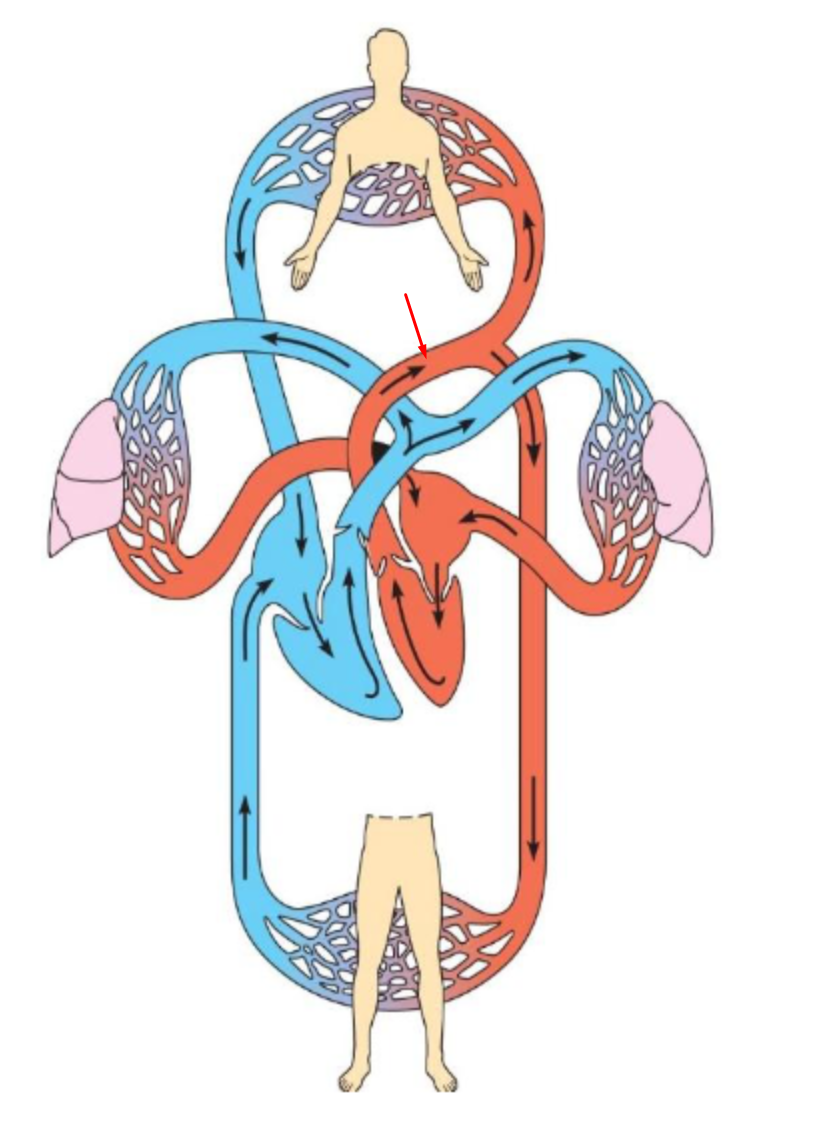
Identify and Define
Aorta, largest artery in the body carrying oxy-rich blood from left ventricle to body
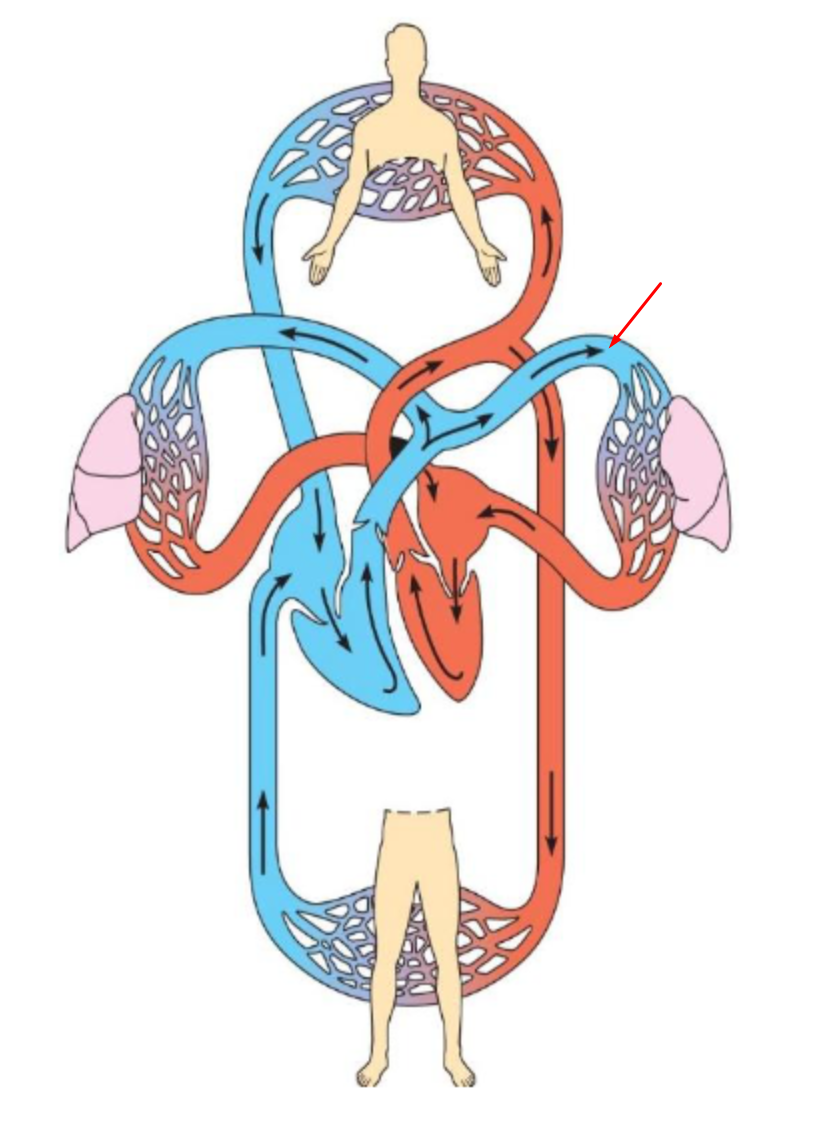
Identify and Define
pulmonary artery, artery carrying oxy-poor blood from right ventricle to lung
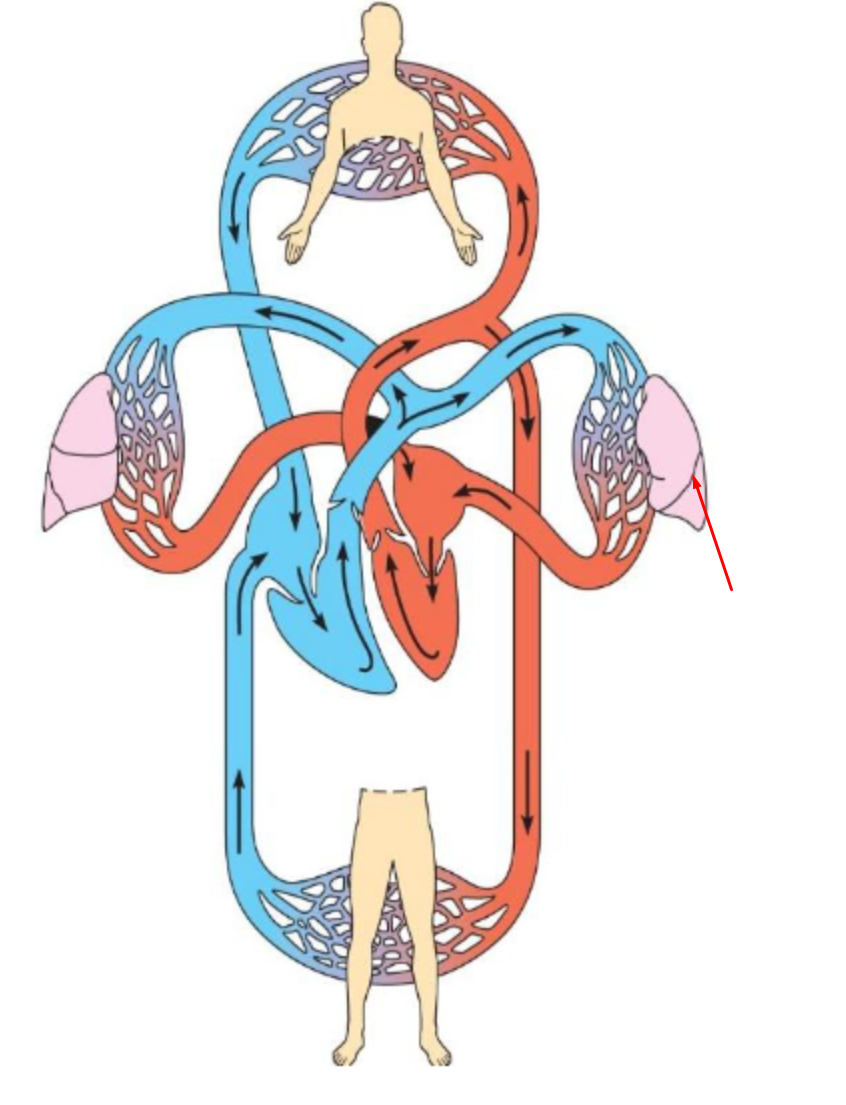
identify and define
left lung, receives oxy poor blood from pulmonary artery, allows gas exchange, sends oxy rich blood back to heart through pulmonary vein
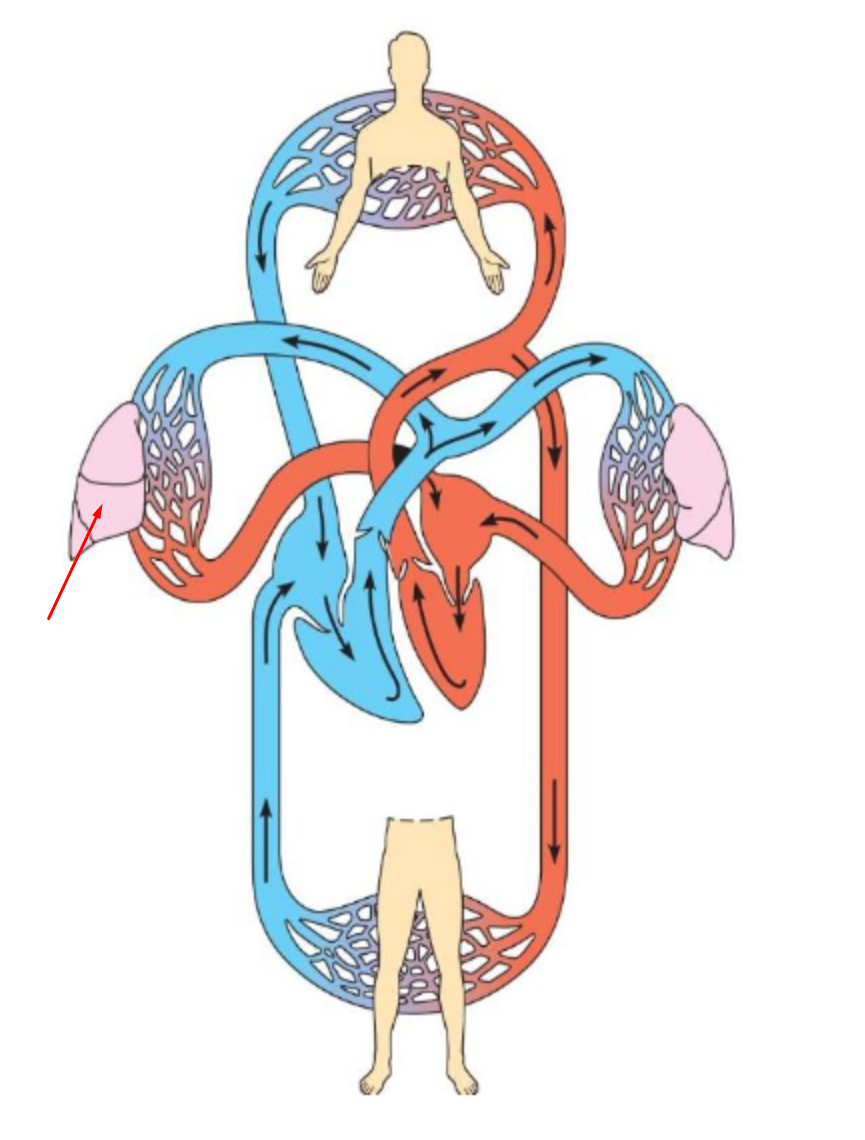
identify and define
right lung, receives oxy poor blood from pulmonary artery, allows gas exchange, sends oxy rich blood back to heart through pulmonary vein
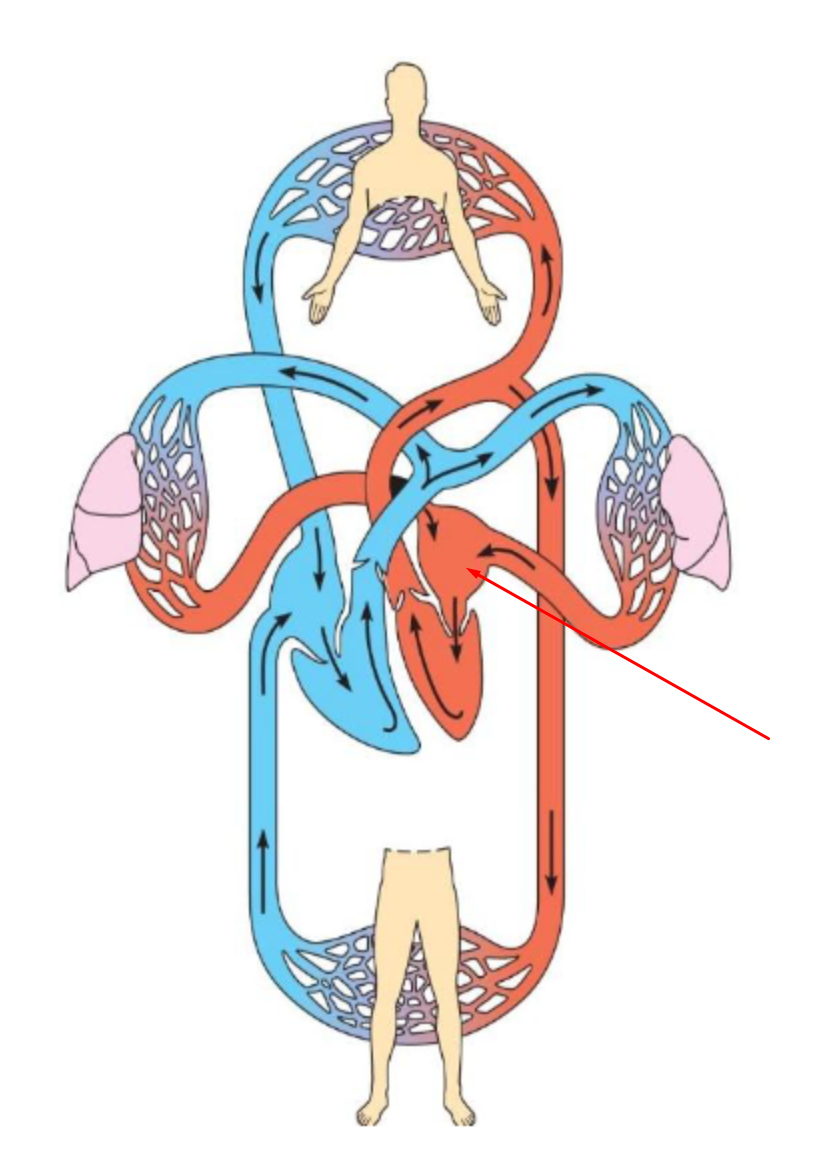
identify and define
left atrium, upper chamber of heart receiving oxy rich blood from lungs through pulmonary veins
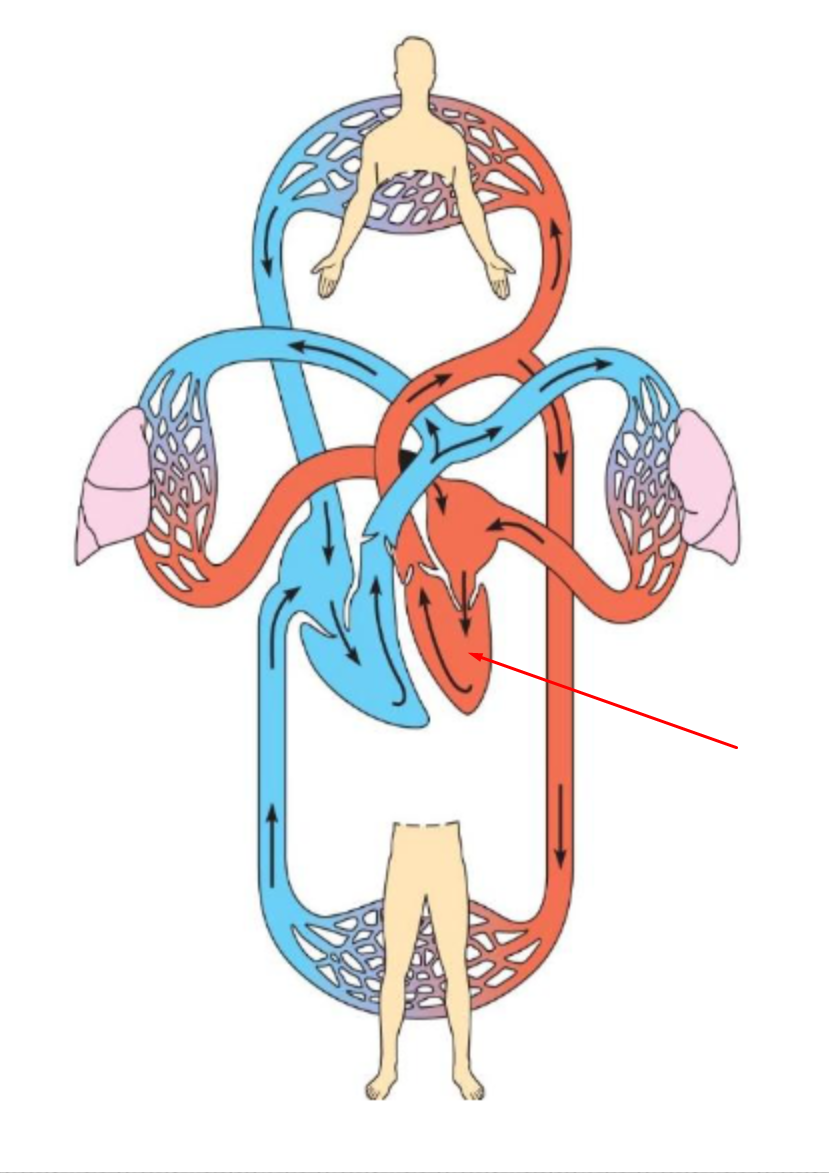
identify and define
left ventricle, lower chamber of heart pumping oxy rich blood into aorta (strongest chamber)
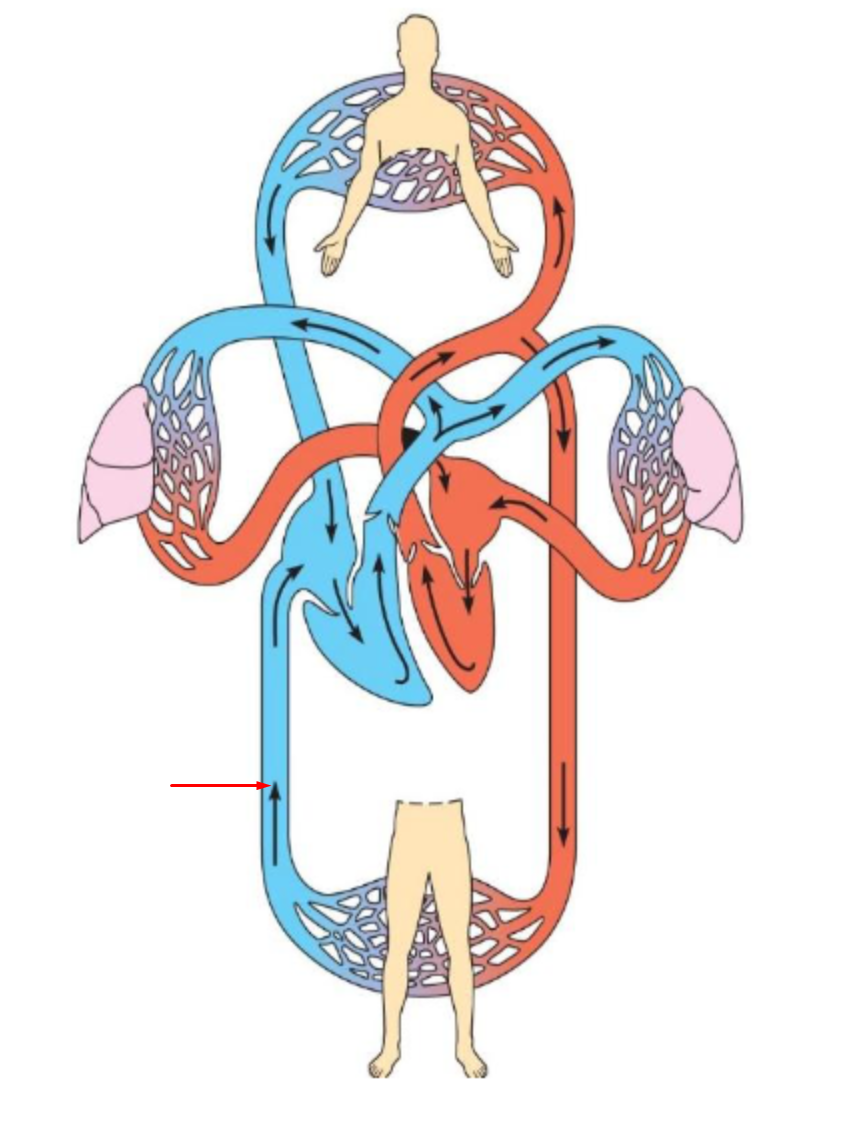
identify and define
inferior vena cava, vein pumping oxy poor blood from lower body to right atrium
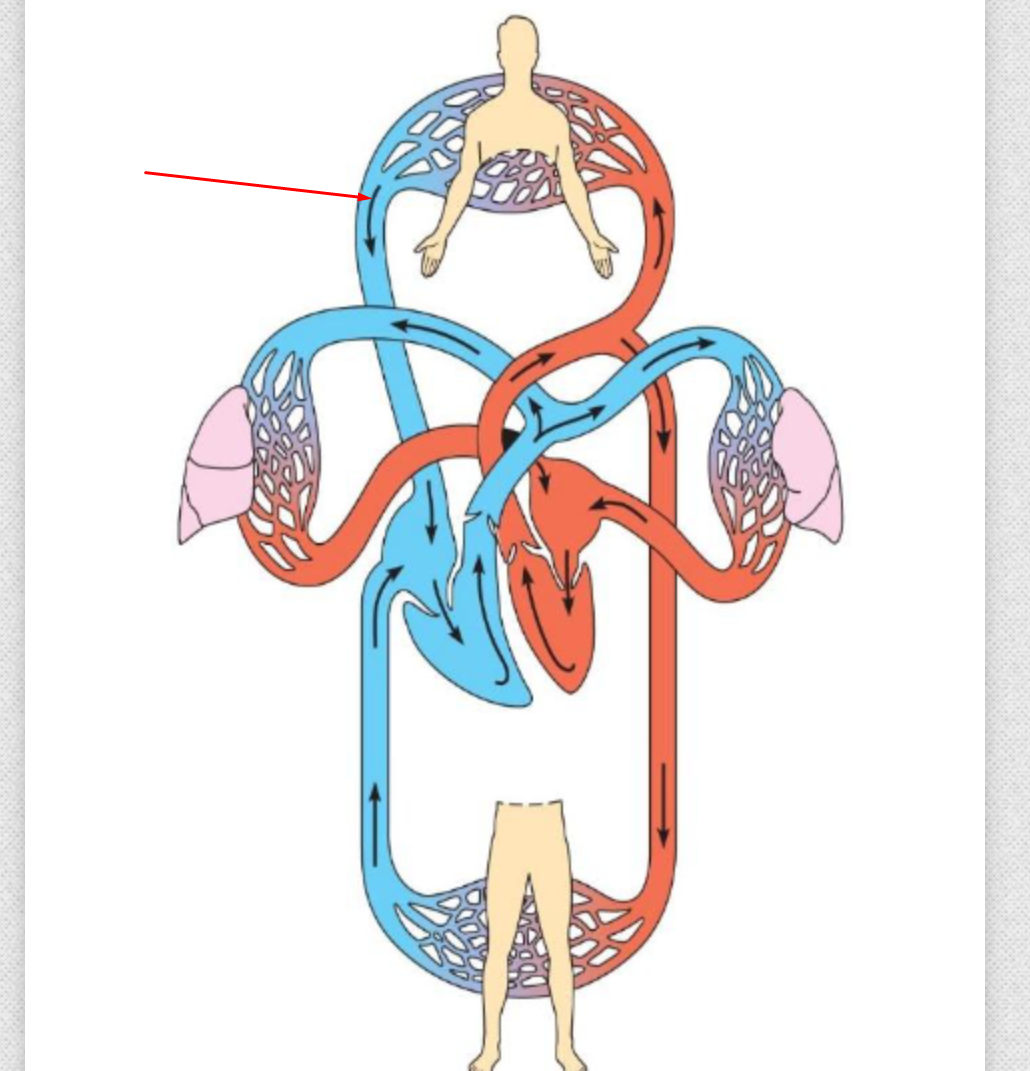
identify and define
superior vena cava, vein pumping oxy poor blood from upper body to right atrium
which vena cava functions in bringing oxy poor blood from lower body to right atrium
inferior
what is systemic circulation +pathway
pathway between heart and body tissues
left ventricle aorta body capillaries vena cava right atrium
what is pulmonary circulation + pathway
pathway between heart and lungs
right ventricle pulmonary arteries lung capillaries pulmonary vein left atrium
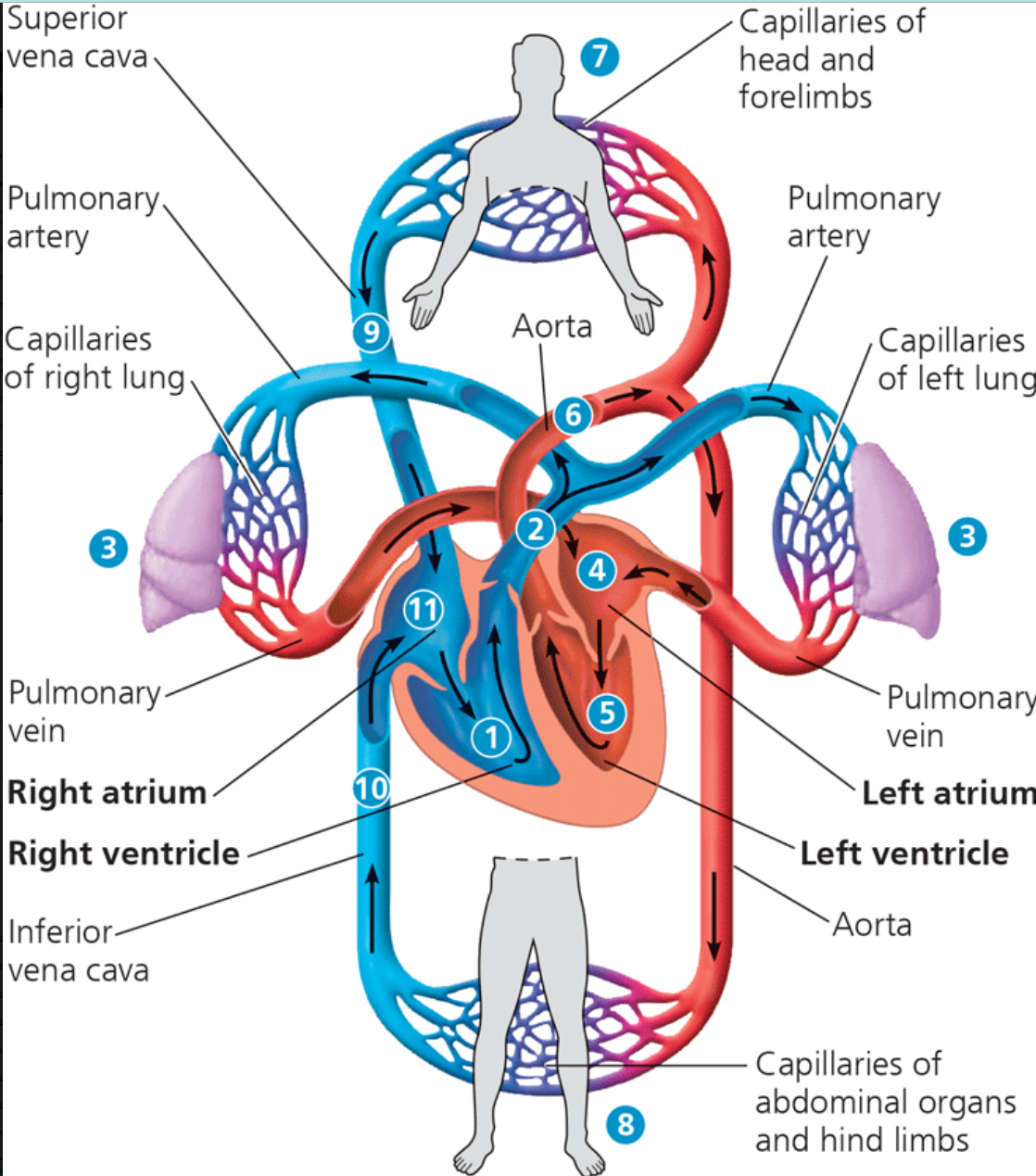
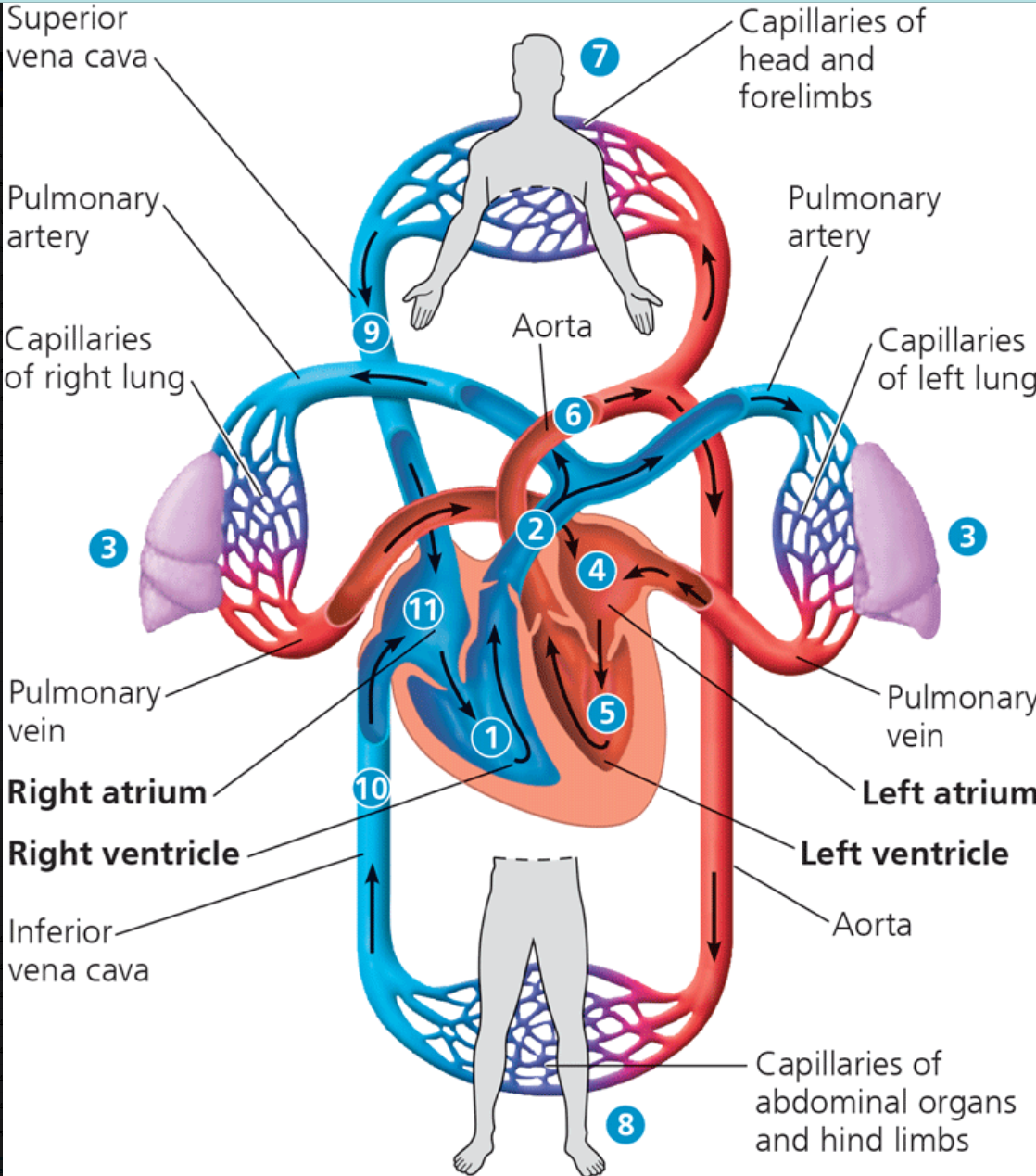
#1
right ventricle containing oxy poor blood is pumped outward to lungs
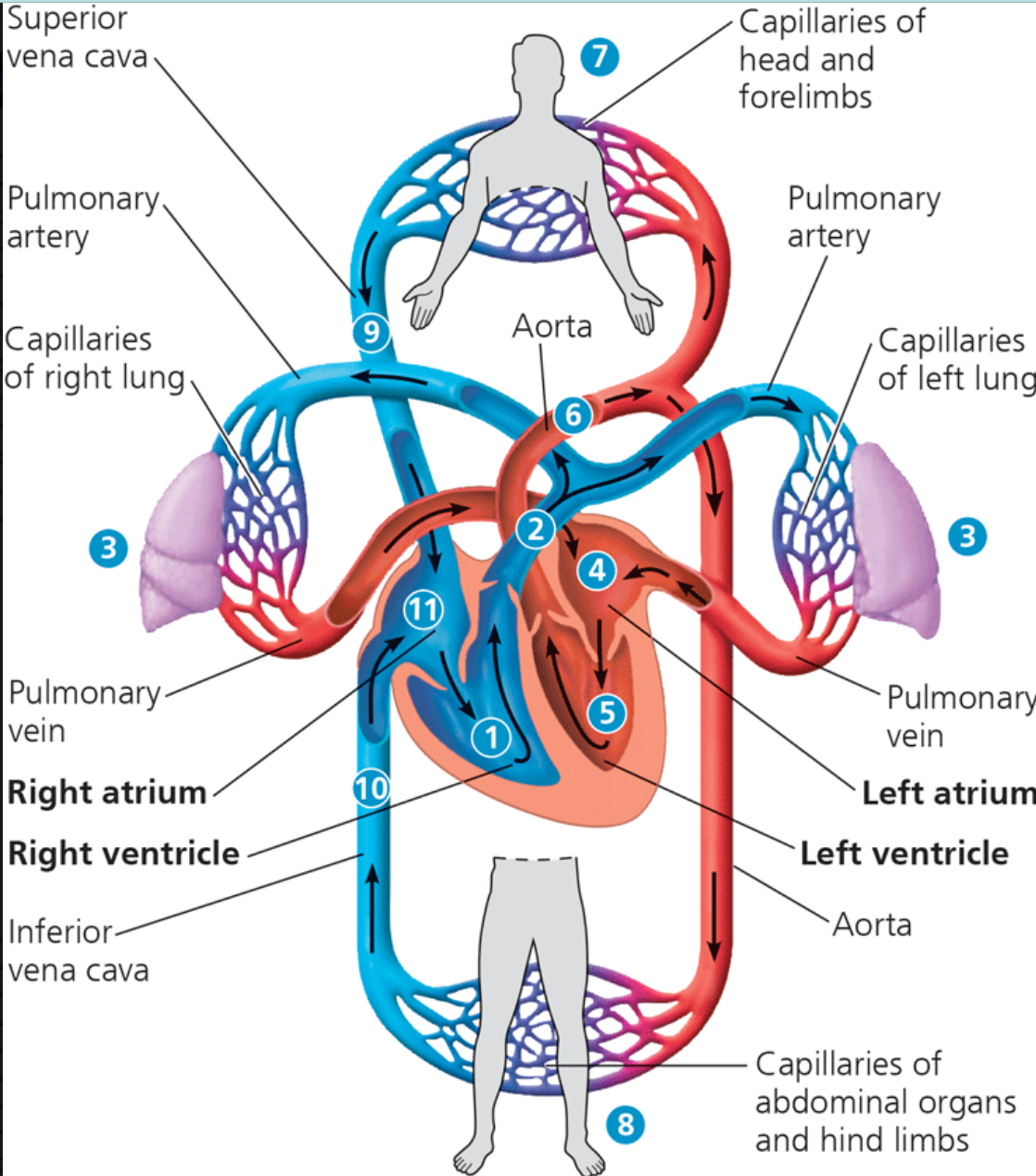
#2
pulmonary artery carrying oxy poor away from heart to lung
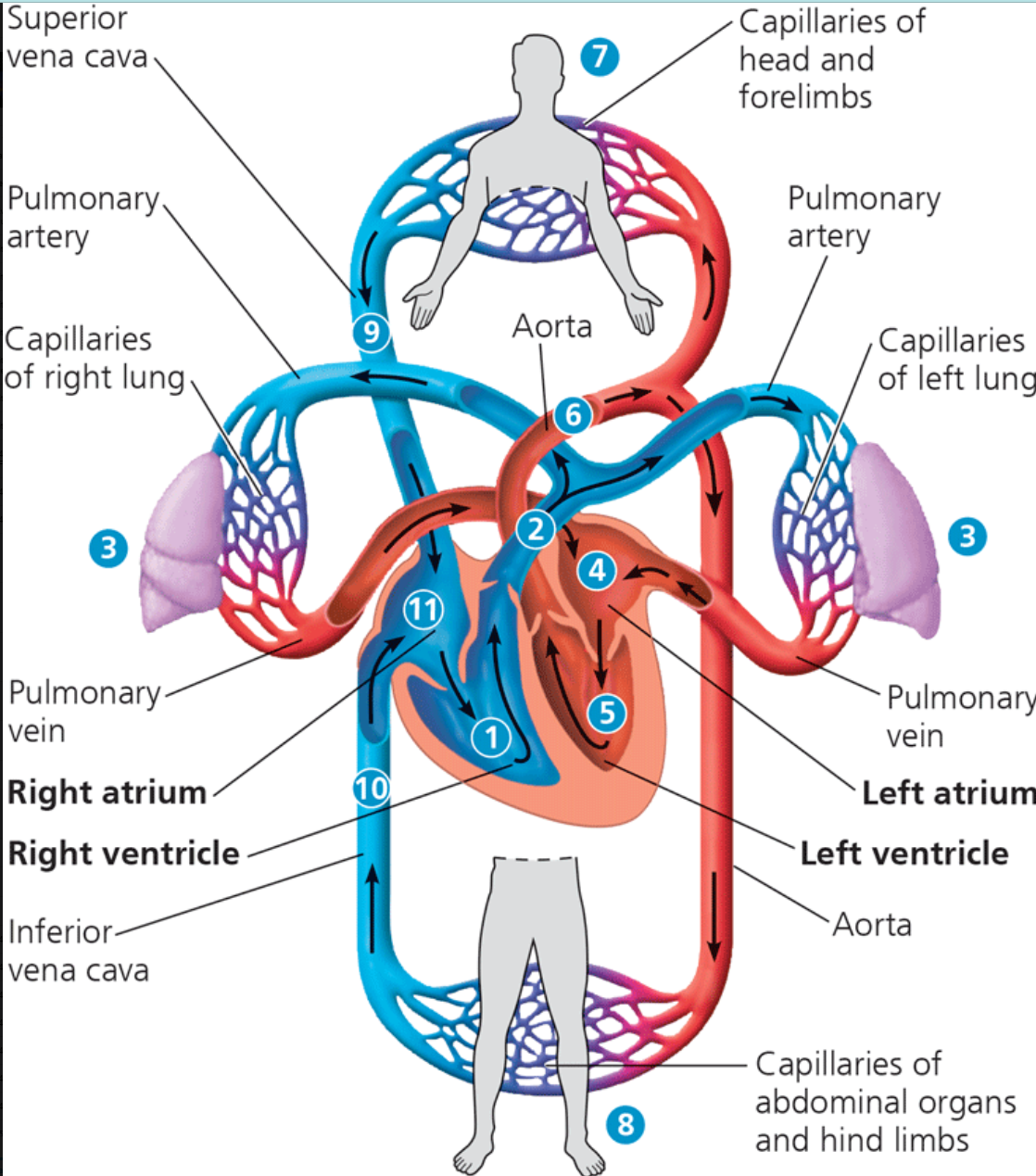
#3
gas exchange, Blood enters oxy poor leave oxy rich as co2 out blood o2 in blood
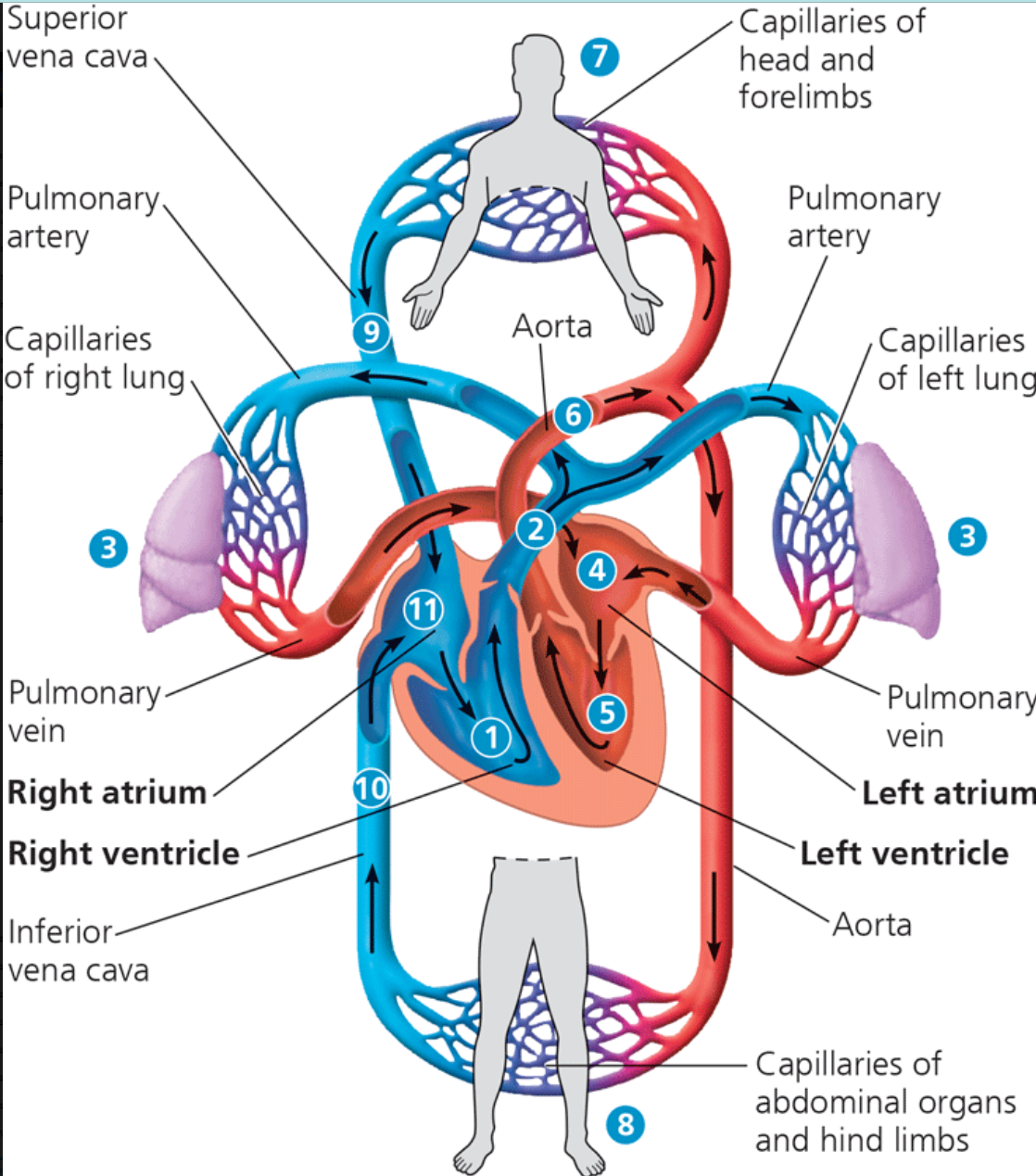
#4
Freshly oxygenated blood from the lungs enters the left atrium.
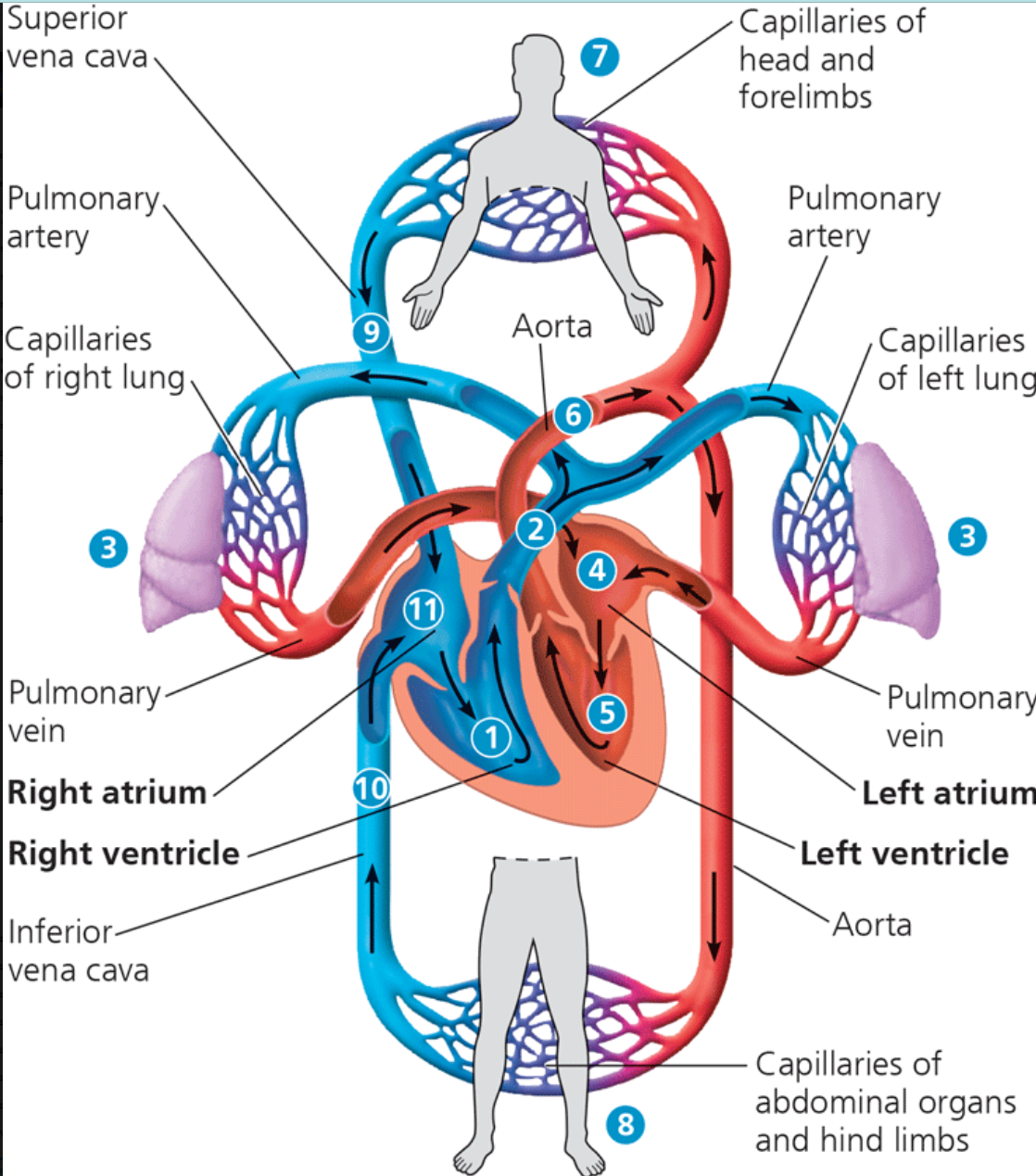
#5
left ventricle carrying oxy rich to whole body
#6
Oxygenated blood leaves the heart and gets distributed to body tissues through aorta
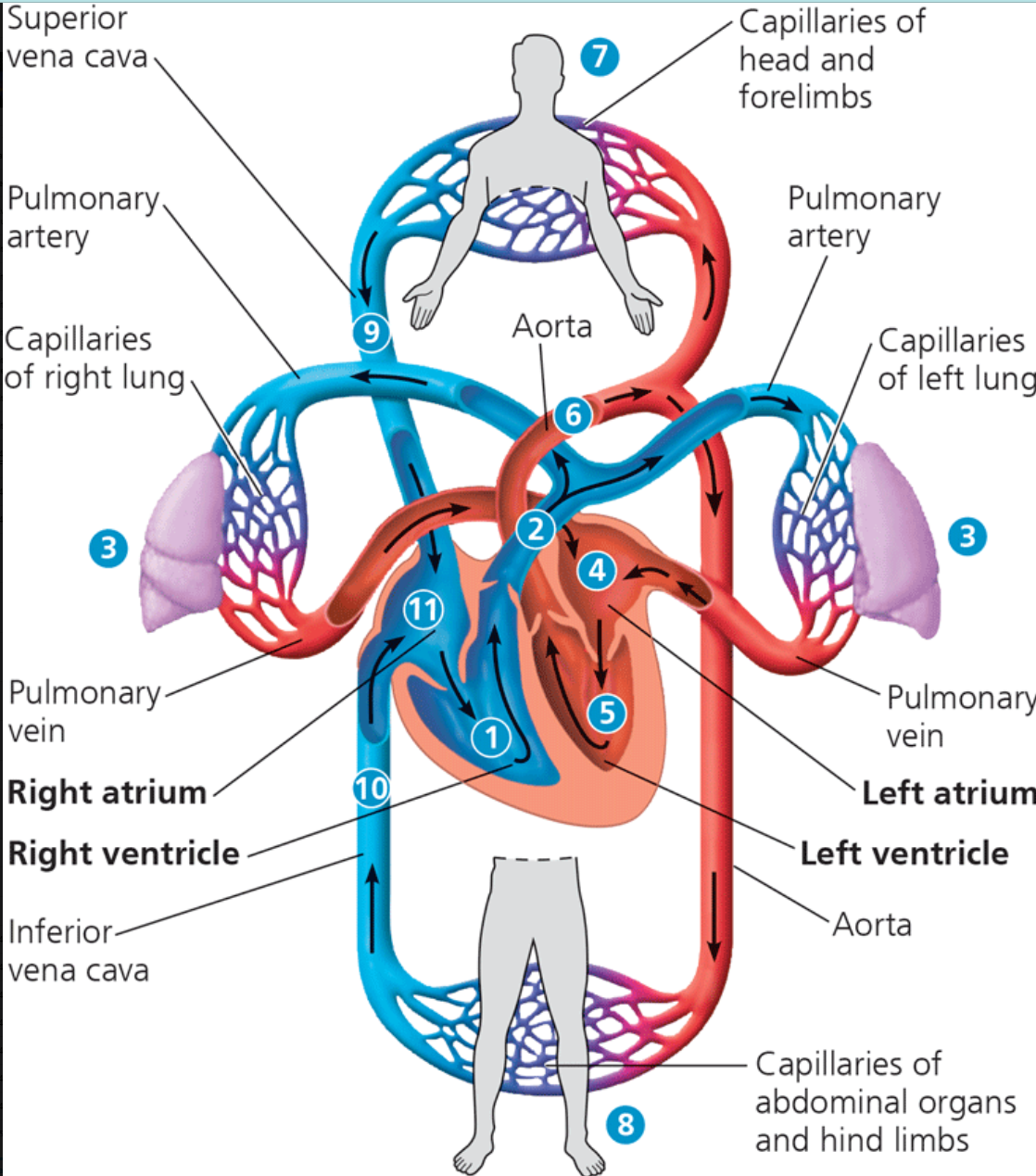
#7
systemic capillaries delivers o2 and nutrients to upper body cells while taking in co2 and waste
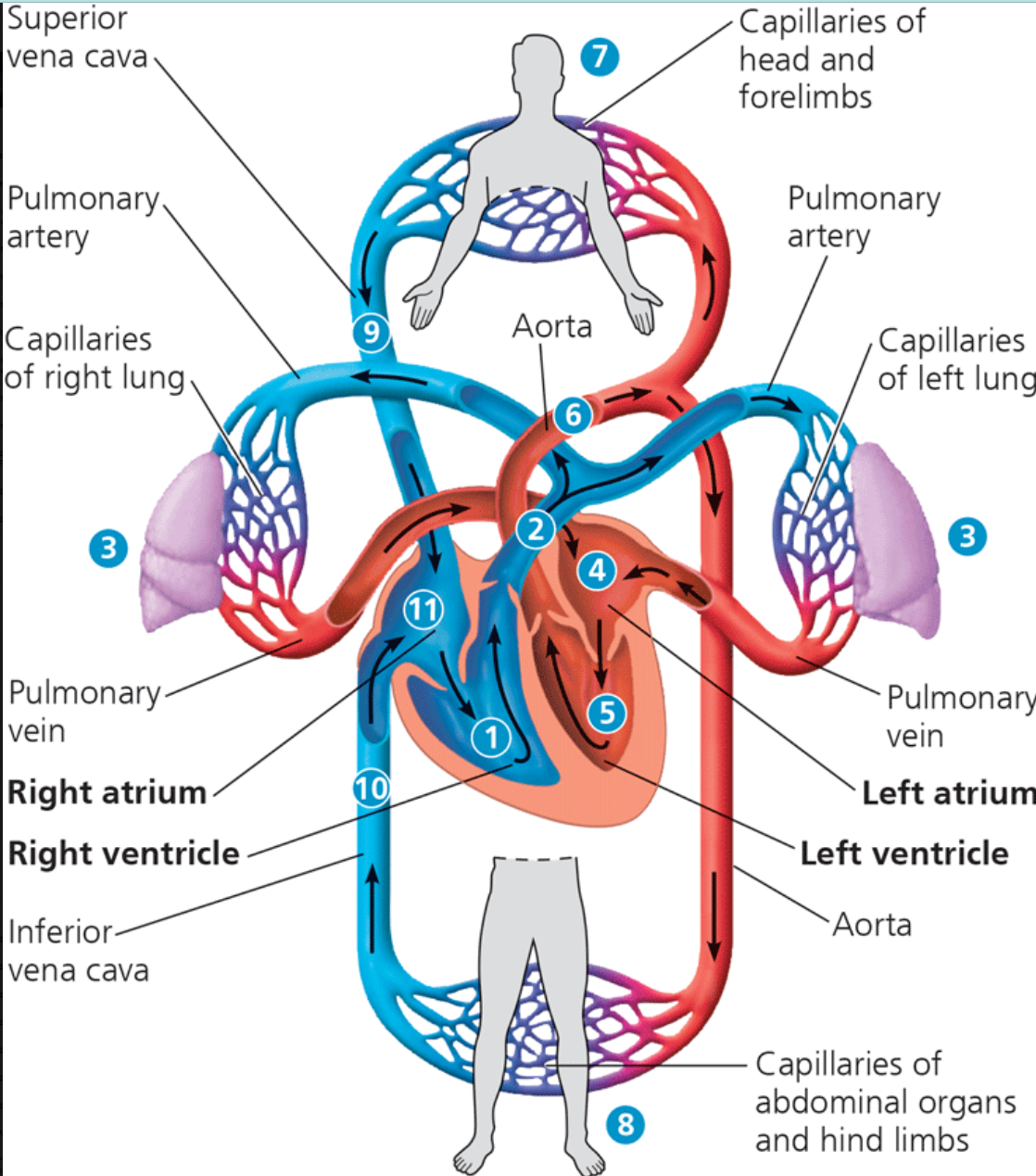
#8
systemic capillaries deliver o2 and nutrients to lower body cells while taking in co2 and waste
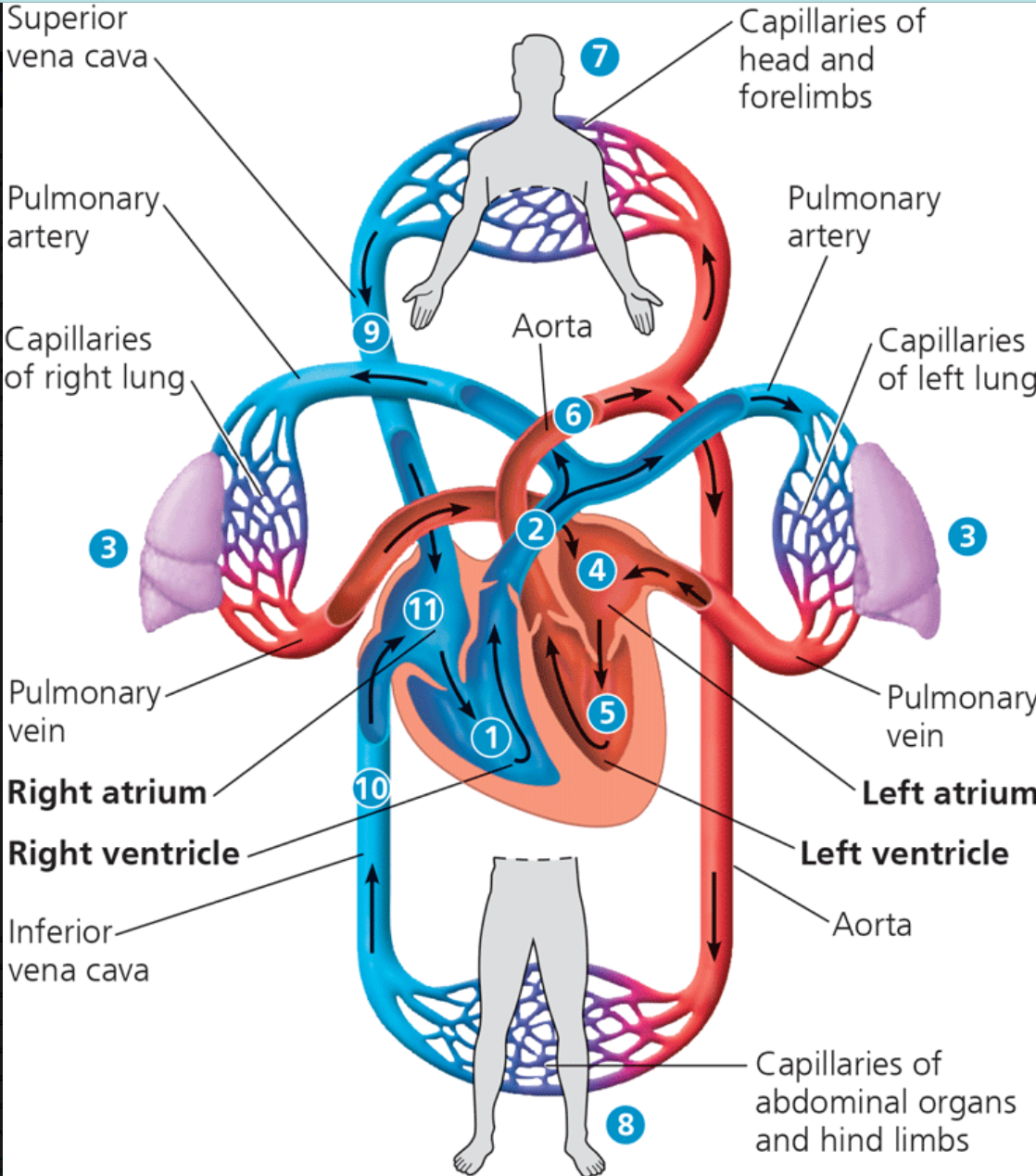
the status of #7 and #8 blood goes from ___ to ____
oxy rich to oxy poor
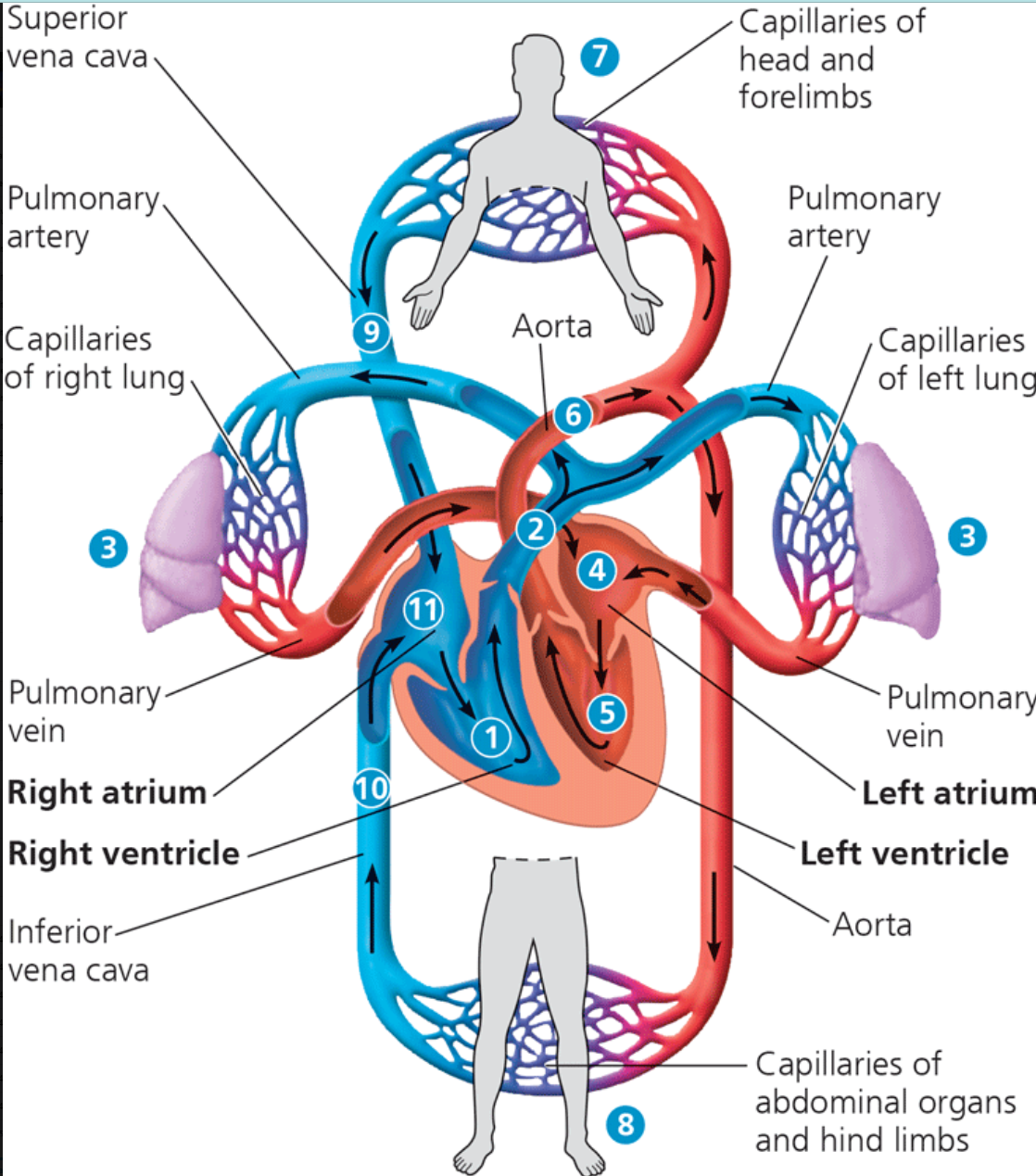
#9
superior vena cava carries oxy poor blood from upper body into right atrium
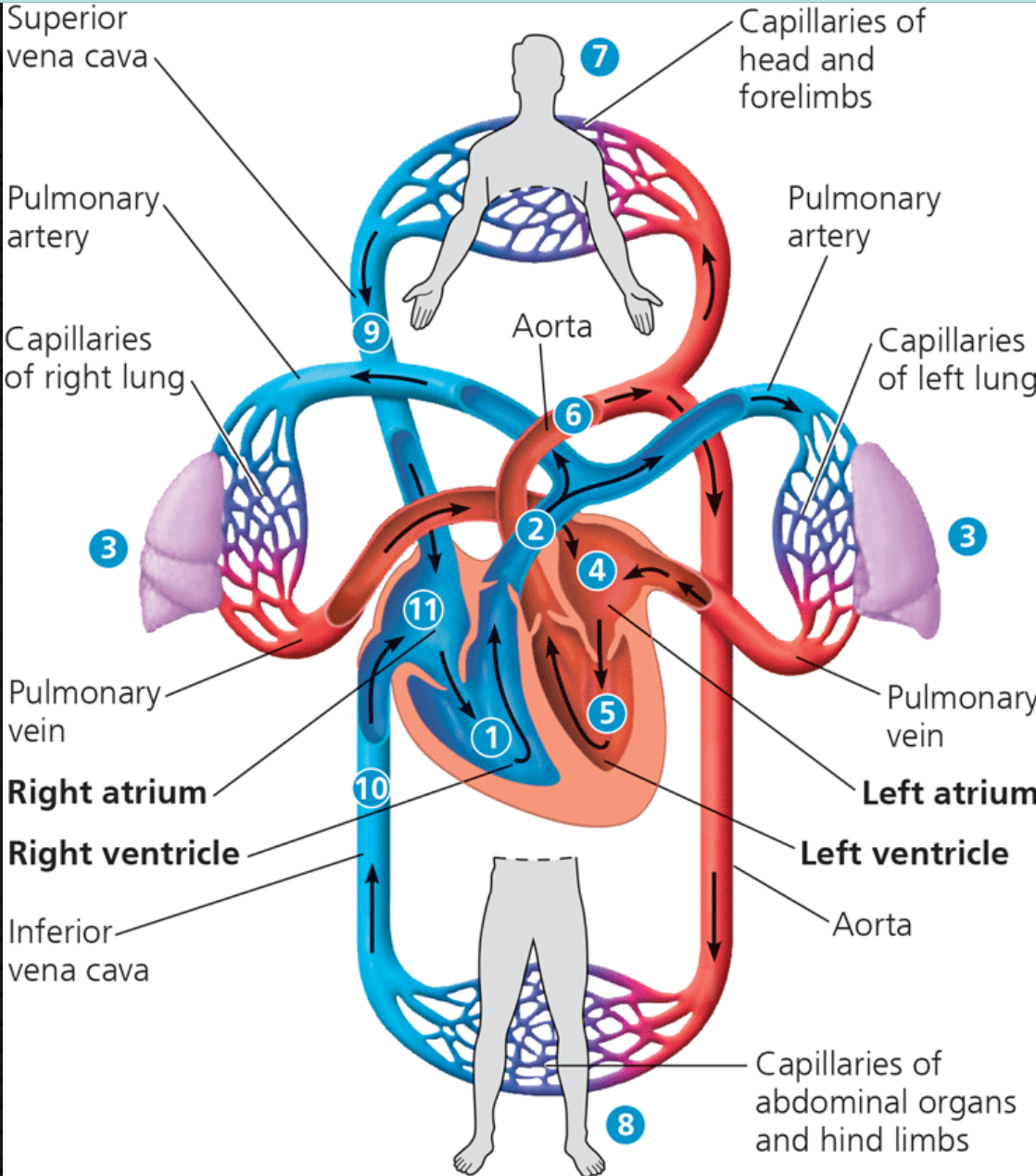
#10
inferior vena cava carries oxy poor blood from lower body into right atrium
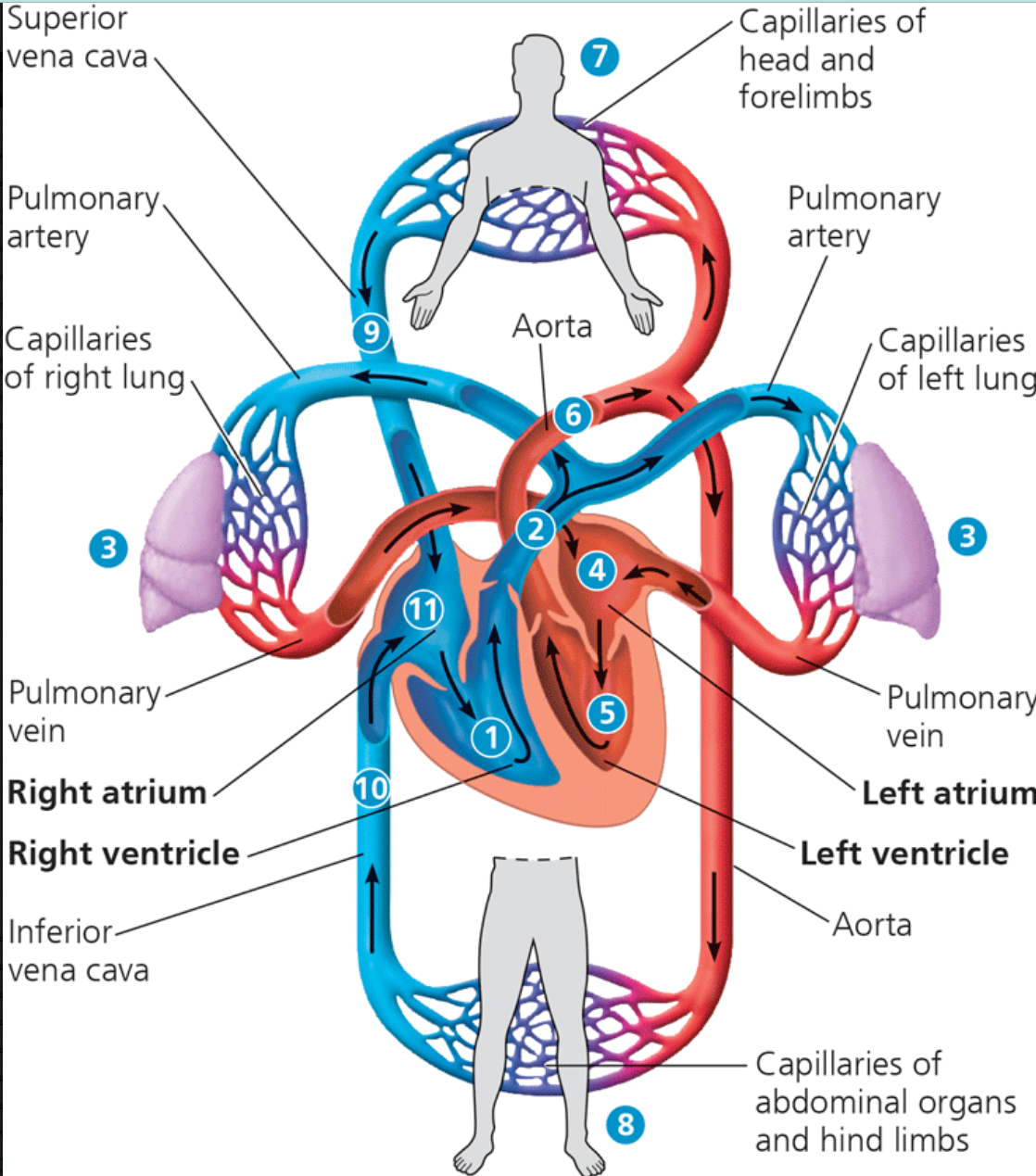
#11
oxy poor blood enters right atrium then moves into right ventricle
What are the four chambers of the heart
right atrium
right ventricle
left atrium
left ventricle
What is the function of the atria? + left and right
receive blood returning to heart
right takes oxy poor from body
left takes oxy rich from lung
What is the function of the ventricles? + left and right
ventricle pump blood out heart
right pumps oxy poor blood to lungs
left pumps oxy rich to body
Which side of the heart sends blood to the lungs?
right
Which chamber pumps blood to the body?
left ventricle
Which vessel carries oxygen-poor blood to the lungs?
pulmonary artery
Which vessel carries oxygen-rich blood to the body?
aorta
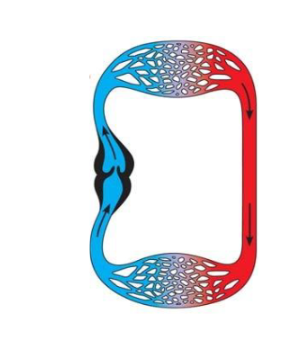
what dis
fish
two chambered heart with single circulation
blood flows from heart gills body heart
top is gills, oxy poor area where exchange makes oxy rich
bottom is body
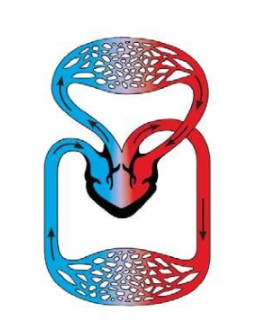
what dis
amphibian
3 chambered heart with double circulation
-pulmocutaneous circuit goes heart lung/skin heart (exchange by lung/skin)
-systemic heart body heart
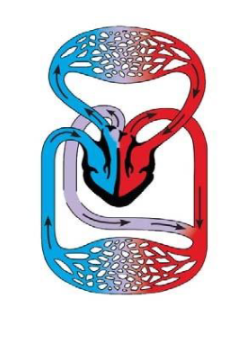
what dis
reptile
3 chambered heart (crocs have 4)
double circulation
-pulmonary circuit
-systemic circuit
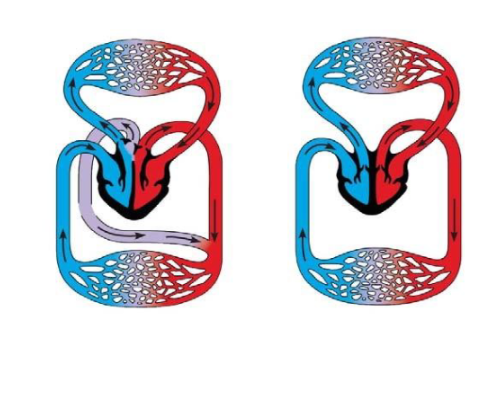
what is the difference between mammal and reptile in this picture
reptile has 3 chambers with 1 ventricle partially divided
Why is a four-chambered heart a key adaptation required for endothermy?
keeps oxy rich and poor separate, allowing delivery of oxy rich to tissue at high pressure
Explain why the four-chambered hearts of birds and mammals are considered an example of
convergent evolution
both groups needed to separate oxy rich and oxy poor to support high metabolic rates
cardiac cycle meaning
one complete heartbeat where heart fills with blood, then pumps blood out
systole explained
contraction phase where heart squeezes and pumps blood out
diastole explained
relaxation phase where heart relaxes and the chambers fill with blood
cardiac output explained
amount of blood the heart pumps per minute
(hr * stroke volume)
heart electrical system explained
specialized cell in wall of right atrium called sa node sets heart rhythms through electrical signals
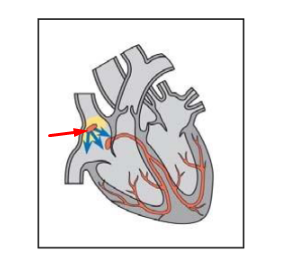
what this (no func needed)
sa node
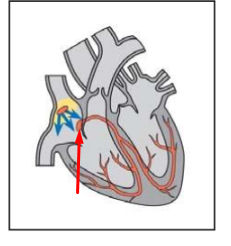
what this (no func needed)
av node
What is the function of the sinoatrial (SA) node?
create electrical signal that causes atria to contract and pus blood intro ventricles
Why is the SA node called the pacemaker of the heart?
sets rhythm of heartbeat
What is the function of the atrioventricular (AV) node
delay signal from sa node to allow blood movement from atria to ventricle
send contraction signal to ventricle
Why is there a delay at the AV node important?
ensures ventricles have enough time to fill with blood before contractions
Electrical impulses from the SA node cause the atria to contract and are conducted to a relay
station, the atrioventricular (AV) node. When an impulse is generated by the AV node, what contracts?
ventricles
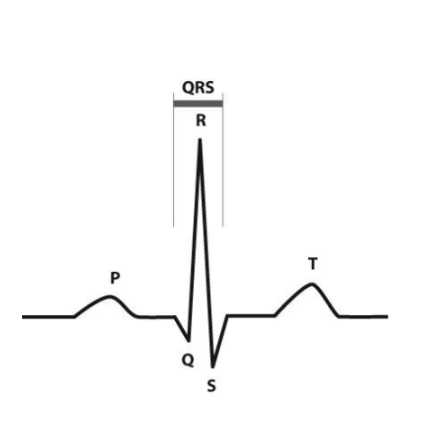
What does the P wave represent in an ECG?
atrial depolarization
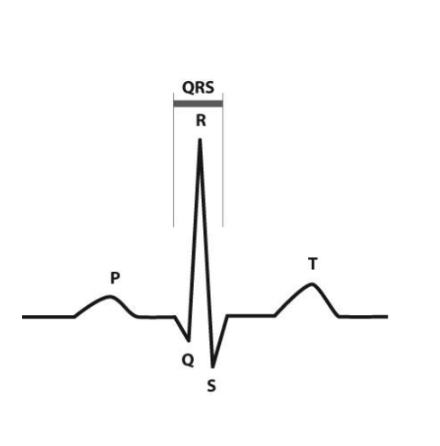
What happens in the heart during the QRS complex?
ventricular depolarization, electrical signal spreads through ventricles causing contraction
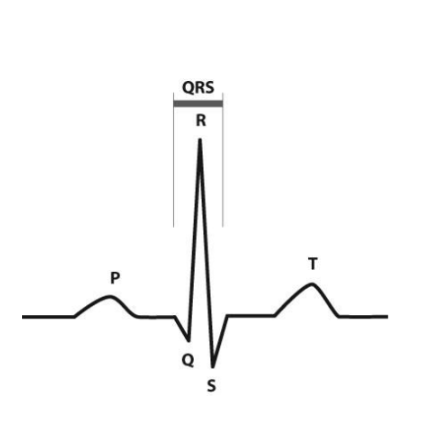
What happens during the T wave?
ventricular repolarization, reset of ventricles causing relaxation
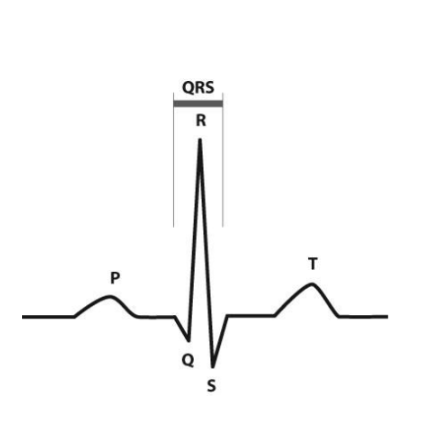
Which part of the ECG shows ventricular contraction?
qrs complex, shows electrical signal that causes ventricular contraction
What is the main function of arteries? + 1 exception
carry blood away from heart mainly oxy rich
pulmonary artery is an exception that carries oxy poor from right ventricle to lung
What is the main function of veins? + 1 exception
carry blood back to heart, mainly oxy poor
pulmonary vein carry oxy rich from lung to left atrium
Why do veins have valves?
prevent backflow ensuring one direction
What is the function of capillaries?
exchange of oxy nutrients co2 and waste
Which blood vessels have the thinnest walls
capillaries
What factors help blood flow in veins against gravity?
valves
skeletal muscle contraction
breathing
How do skeletal muscles help blood return to the heart
squeeze veins, pushing blood back to heart
What is the role of blood pressure in arteries vs veins?
arteries high bp to receive blood directly from heart and push to body
vein low bp as already passed through capillaries,
What are precapillary sphincters
tiny rings of smooth muscle at entrance of capillary beds controlling whether blood flow into capillary bed or bypasses
what are capillary beds
network of tiny capillaries where exchange happens between blood and tissue
how do precapillary sphincters control blood flow?
when relax = more blood into capillary bed
when contract = less
what type of muscle and precapillary sphincters
smooth
What type of vessel is responsible for exchange between blood and tissues?
capillaries
What is plasma?
liquid solution of blood carrying
blood cell
nutrient
hormone
waste
protein
two parts of plasma
liquid
formed element
What percentage of blood is made of cells?
45 cells
55 plasma
What are the main components of blood?
plasma
rbc
wbc
platelets
what platelets and function
cell fragments that help blood clot
neutrophils are ___ that function in
wbc, first reponse to bacteria
lymphocytes are ___ that function in
wbc, immune memory / antibody
monocytes are ___ that function in
wbc, macrophage
eosinophile are ___ that function in
wbc, fight parasites
basophils are ___ that function in
wbc, release histamine
Blood separates into two components, a liquid matrix called ______________________ and the cellular
elements
plasma
four major constitutents of plasma + funcs
water-regulate temp
ions-maintain ph
plasma protein-maintain blood osmo pressure
transported substance-nutrients
Describe three ways in which the structure of an erythrocyte enhances its function, which is to transport
oxygen.
biconcave - increase surface area for oxy diffuse
no nucleus - more space for hemoglobins
packed with hemoglobin- more oxy binded
What is the main function of red blood cells?
Allow oxy to bind using hemoglobin
Why do mature RBCs not have a nucleus
more hemoglobin = more oxy bind
What is hemoglobin + where found
oxy binding protein in rbcs
what helps oxy bind to hemoglobin
iron
Where are red blood cells produced
red bone marrow
How long do red blood cells live
120 days
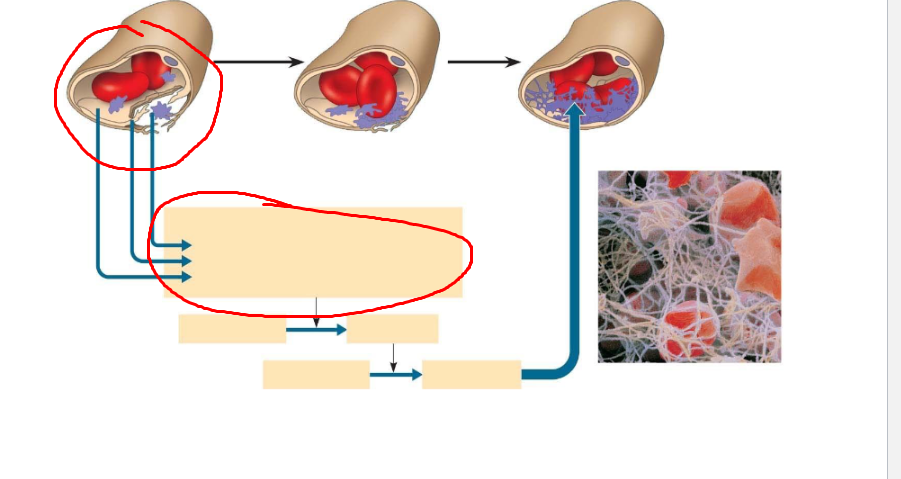
damaged vessel exposes collagen fibers
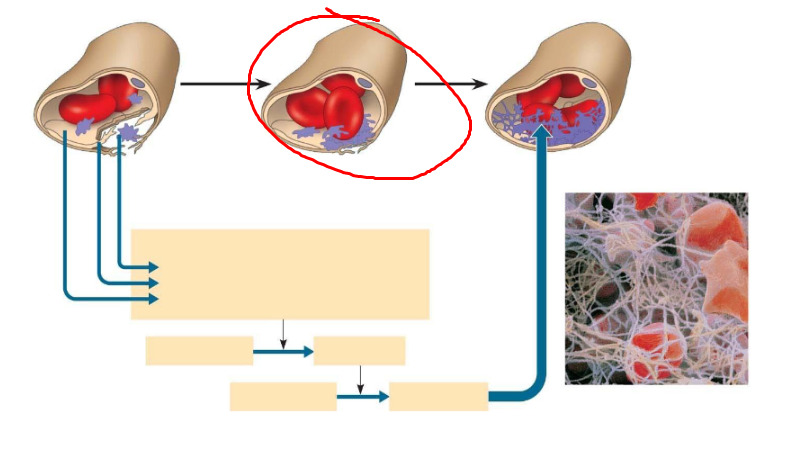
platelets from a plug creating a temporary seal
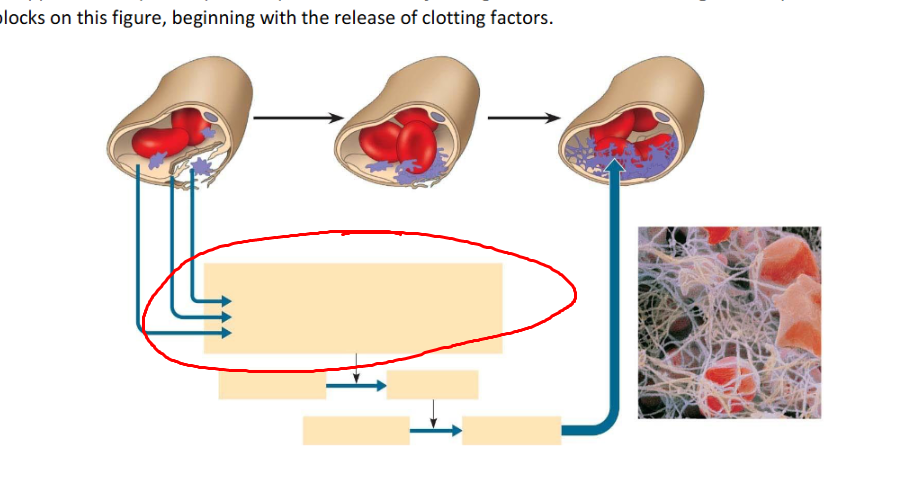
clotting factors form
platelets
damaged cells
plasma
starting an enzymatic cascade
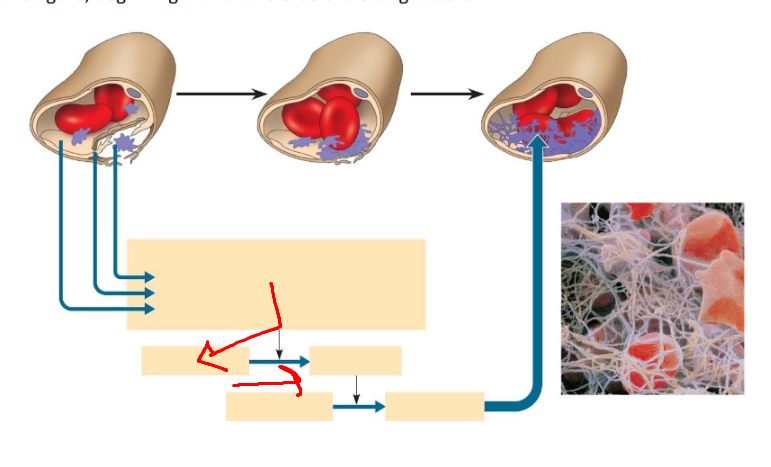
enzymatic cascade converts plasma protein from inactive prothrombin to active thrombin
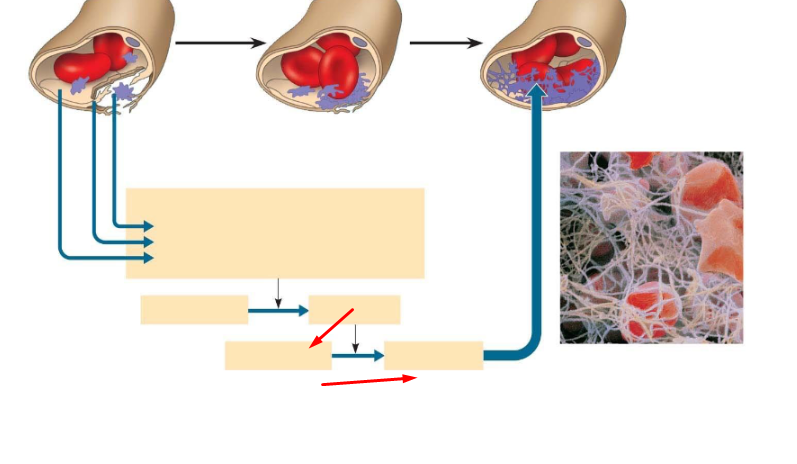
thrombin enzyme converts fibrinogen to fibrin
fibrinogen vs fibrin
fibrinogen is soluble plasma protein
fibrin is insoluble thread like protein
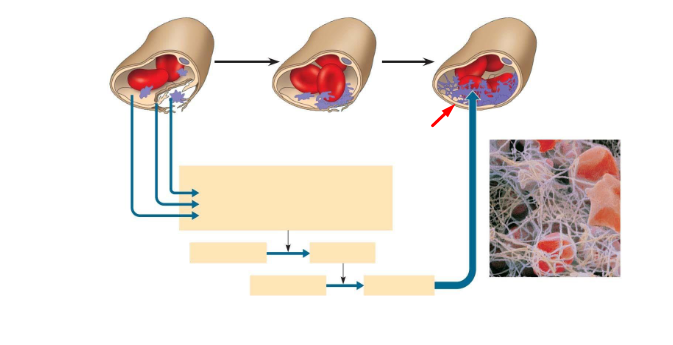
fibrin clot forms creating a mesh that traps rbc and platelets reinforcing a plug
platelet role in blood clotting
stick to damaged blood vessel forming temporary plug
what protein forms a clot
fibrin