Unit 2
 Call Kai
 Learn
Learn Practice Test
 Spaced Repetition
 Match
Match Flashcards
 Knowt Play
1/40

Earn XP
Description and Tags
41 Terms
What is Human Resource Management (HRM)?
RM is the strategic approach to managing a company's most valued assets – its people. It involves planning, organizing, directing, and controlling human resource activities such as recruiting, training, and performance management.
What are the key functions of HRM?
Key functions of HRM include recruitment and selection, training and development, performance appraisal, compensation and benefits, employee relations, and compliance with labor laws.
What is the purpose of recruitment in HRM?
The purpose of recruitment is to attract qualified candidates for job openings within an organization, ensuring a good match between the candidates and the job requirements.
What are the various methods of recruitment?
Methods of recruitment include internal recruitment (promotions, transfers) and external recruitment (job postings, recruitment agencies, job fairs, online platforms).
What is the significance of training and development?
Training and development enhance employee skills and knowledge, improve job performance, increase job satisfaction, and help in employee retention
What is performance management?
Performance management is a continuous process of evaluating employee performance, providing feedback, and aligning individual objectives with organizational goals
What are the benefits of effective performance appraisal systems?
Benefits include improving employee motivation, clarifying job expectations, identifying training needs, and supporting career development.
What role does compensation play in HRM?
Compensation is crucial in attracting and retaining employees, as well as motivating them to perform effectively. It includes salaries, bonuses, benefits, and incentives.
What is employee relations?
Employee relations refers to the efforts a company makes to manage relationships with its employees, focusing on maintaining a positive work environment.
How does HRM comply with labor laws?
HRM ensures compliance with labor laws by implementing policies and practices that adhere to legal standards, conducting regular audits, and providing training to employees on legal rights and responsibilities.
What are the key communication methods in HRM?
Key communication methods in HRM include:
verbal communication (meetings, one-on-one discussions), written communication (emails, reports)
non-verbal communication (body language, facial expressions), and digital communication (intranet, video conferencing).
What are financial and non-financial rewards in HRM?
Financial rewards include salaries, bonuses, and benefits, while non-financial rewards consist of recognition programs, career development opportunities, and work-life balance initiatives that enhance job satisfaction and employee motivation.
What are the types of management in HRM?
Types of management in HRM include strategic management (long-term planning), operational management (day-to-day activities), and project management (specific initiatives), each focusing on different aspects of HR activities.
What are the different types of leadership styles in HRM?
Leadership styles in HRM include autocratic (directive), democratic (participative), laissez-faire (hands-off), transformational (inspiring change), and transactional (focused on performance and rewards).
What are the types of organizational structures?
Functional Structure: This structure organizes the company into departments based on different functions such as marketing, finance, human resources, and production. Each department is managed independently, which fosters specialization and efficiency within each functional area.
Divisional Structure: In a divisional structure, the organization is divided into semi-autonomous units or divisions, each responsible for its own products, services, or geographical locations. This allows for flexibility and a focus on specific market segments, but can lead to duplication of resources across divisions.
Matrix Structure: The matrix structure combines elements of both functional and divisional structures. Employees report to both a functional manager and a project or product manager. This encourages collaboration and resource sharing but can create confusion and conflicts in authority.
Team-Based Structure: This structure is centered around teams formed to work on specific projects or tasks. It encourages collaboration and innovation, empowering employees to take ownership of their work. Communication tends to be more flexible and geared towards agile responses to changes.
Flat Structure: A flat organizational structure has few or no levels of middle management between staff and executives. This encourages open communication, swift decision-making, and employee autonomy. However, it can lead to confusion over responsibilities and may be less scalable as the organization grows.
Labor Turnover
A measure of the rate at which employees leave an organization. It is calculated as:

Redundancy
Occurs when a job is no longer required, usually due to a fall in demand or a change in technology, leading to the termination of an employee's contract through no fault of their own.
Span of Control
The number of subordinates directly accountable to a manager.
Chain of Command
The formal line of authority through which orders are passed down an organization.
Delayering
The process of removing one or more levels of hierarchy from an organizational structure to flatten it and reduce costs.
Centralization vs. Decentralization
Centralization: Decision-making power is kept at the top of the hierarchy.
Decentralization: Decision-making power is delegated to lower-level managers or departments.
Autocratic Leadership
A style where the leader makes all decisions with little to no input from others; best used in crises or with unskilled workers.
Paternalistic Leadership
The leader treats employees as if they were family members, acting in their perceived best interest but maintaining final control.
Laissez-faire Leadership
A "hands-off" approach where employees are given significant freedom to make their own decisions and complete tasks.
Situational Leadership
A flexible style that suggests there is no single "best" way to lead; the leader adapts their style based on the task and the competence of the team.
Taylor (Scientific Management)
Assumes workers are motivated primarily by pay (piece-rate). Focuses on efficiency and standardization.
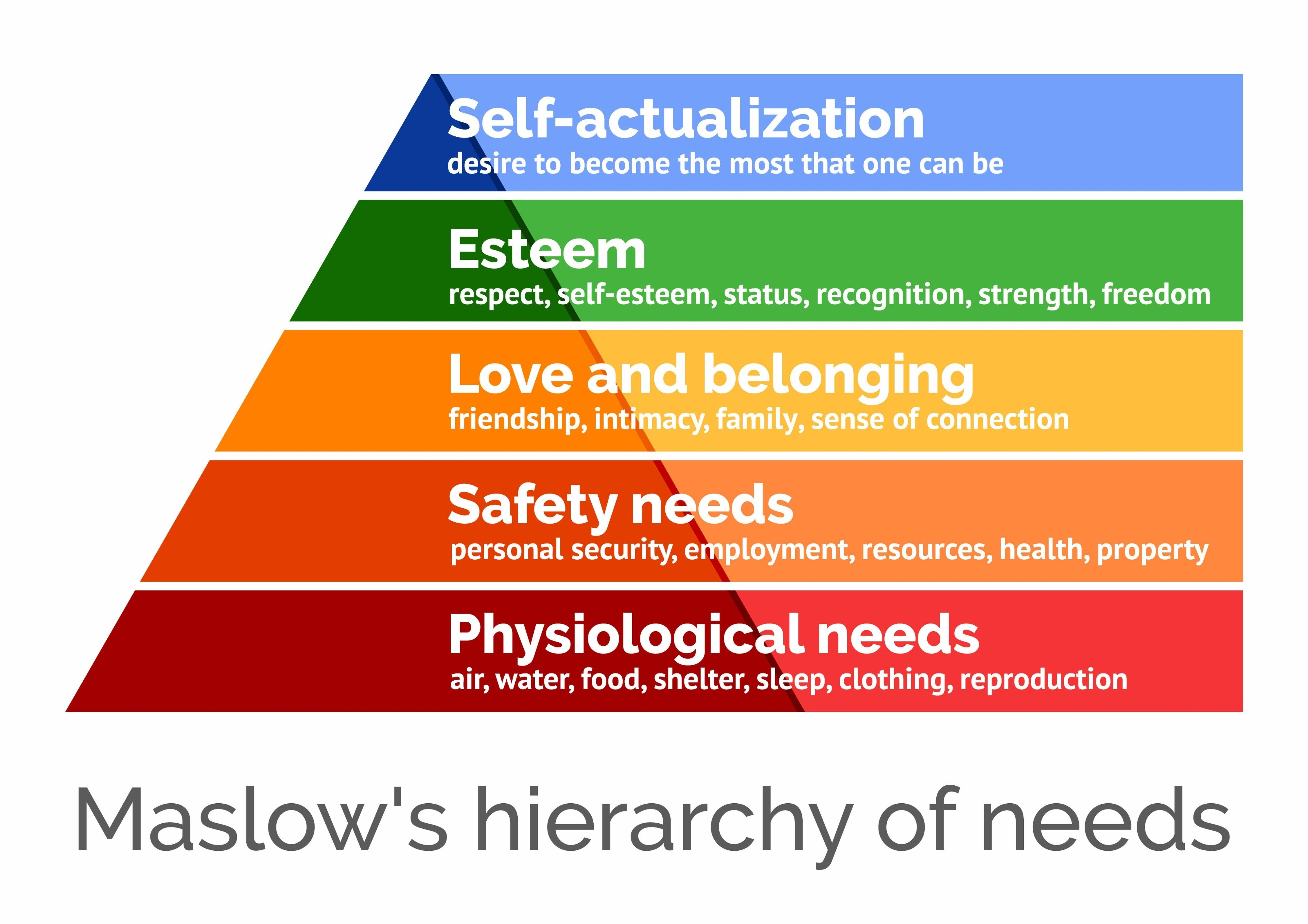
Maslow (Hierarchy of Needs)
A theory suggesting humans are motivated by a five-level hierarchy of needs: Physiological, Safety, Social, Esteem, and Self-actualization.
Herzberg (Two-Factor Theory)
Distinguishes between Hygiene factors (e.g., salary, conditions) which prevent dissatisfaction, and Motivators (e.g., achievement, recognition) which actually drive performance.
Pink (Drive Theory)
Modern theory suggesting that for cognitive work, people are motivated by Autonomy (self-direction), Mastery (getting better at something), and Purpose (connecting to a larger cause).
Organizational Culture
The values, attitudes, and beliefs of the people working in an organization that control the way they interact with each other and with external stakeholders.
Culture Clash
Conflict resulting from different cultures merging (common in Mergers and Acquisitions).
Collective Bargaining
The process by which a union and an employer negotiate a contract of employment.
Conciliation vs. Arbitration
Conciliation: A third party helps both sides reach a compromise.
Arbitration: A third party makes a legally binding decision to settle a dispute.
Merger
When two established businesses agree to join together to form one new, combined enterprise
Acquisition
(Takeover): When one company buys a controlling interest in another company (often 51% or more of shares). This can be friendly or hostile
Synergy
The concept that the combined value and performance of two companies will be greater than the sum of the separate individual parts
Horizontal Integration
Merging with a direct competitor in the same industry and at the same stage of production (e.g., two banks)
Vertical Integration
Merging with a business at a different stage of the supply chain (e.g., a clothing brand buying a textile factory)
Conglomerate Integration
Merging with a business in a completely unrelated industry to diversify risk
Diseconomies of Scale
When a business becomes too large and faces communication problems, bureaucracy, and poor coordination.
Change Management Stress
Employees feel job insecurity and uncertainty about new reporting lines (Chain of Command), which can lead to a drop in productivity