Cerebral Circulation
 Call Kai
 Learn
Learn Practice Test
 Spaced Repetition
 Match
Match Flashcards
 Knowt Play
1/63

There's no tags or description
Looks like no tags are added yet.
Name | Mastery | Learn | Test | Matching | Spaced | Call with Kai |
|---|
No analytics yet
Send a link to your students to track their progress
64 Terms
What is cerebrospinal fluid?
The fluid that fills the subarachnoid space
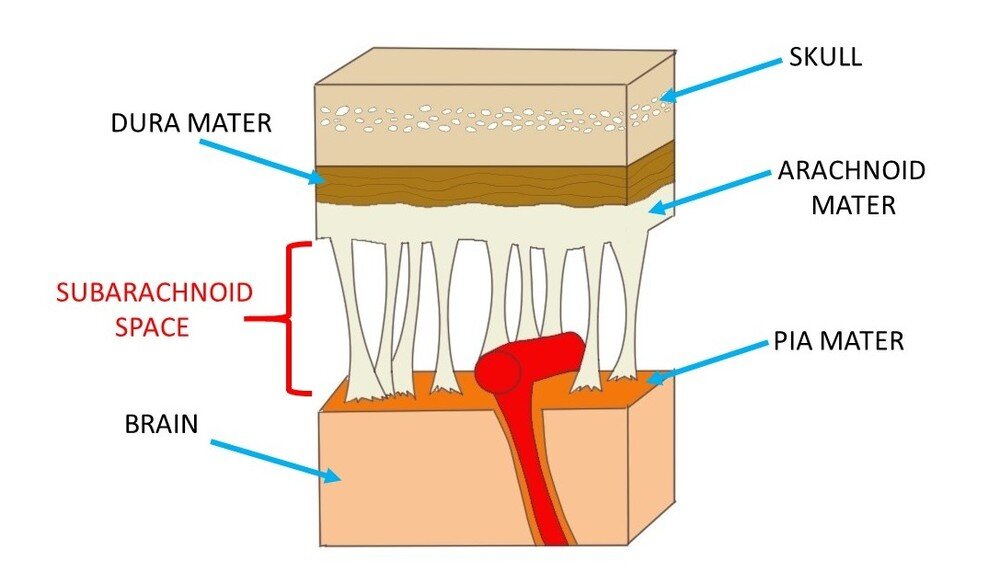
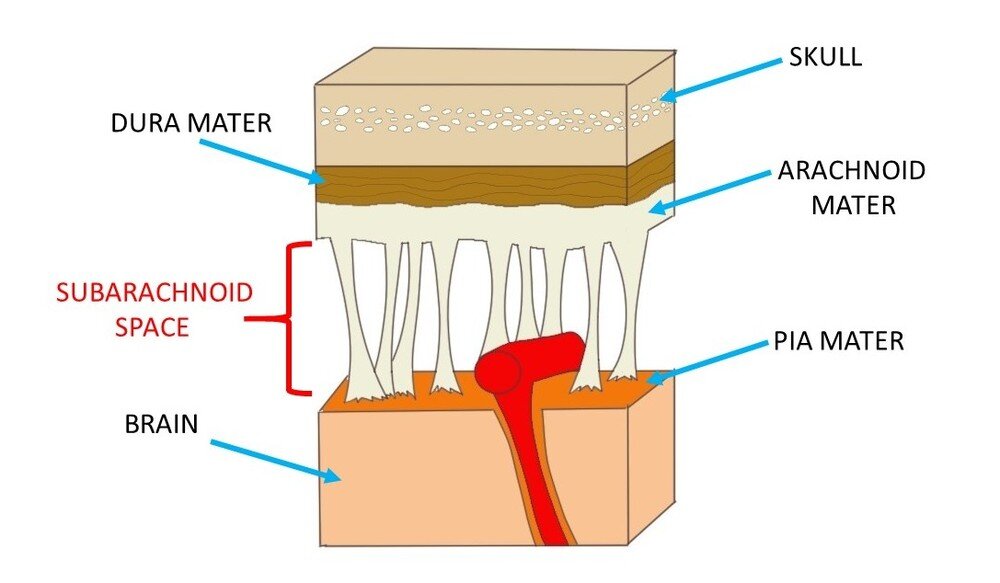
The subarachnoid space is the thin, fluid-filled interval between the arachnoid mater and pia mater, surrounding the brain and spinal cord
Where do the major cerebral blood vessels travel?
Through the subarachnoid space as they branch over the brain’s surface
What is a stroke?
A cerebrovascular accident (CVA) where a blood vessel supplying the brain is blocked or ruptures, depriving brain tissue of oxygen and leading to functional deficits
What does transitory mean in cerebral circulation?
Temporary episodes, such as temporary neurological symptoms during a TIA
What does TIA stand for?
Transient ischemic attack
What is a transient ischemic attack?
A temporary episode of focal neurological deficits caused by brief ischemia without permanent tissue death
What are the two main blood supplies to the brain?
The Vertebral-Basilar system and the Internal Carotid system
What is the vertebral-basilar system also called?
Posterior circulation
What is the internal carotid system also called?
Anterior circulation
What is the Circle of Willis?
A circular anastomosis at the base of the brain that connects the anterior and posterior circulatory systems
What is a watershed zone?
A border-zone region where terminal branches of major cerebral arteries meet
Why are watershed zones vulnerable to ischemia?
They receive blood from the ends of arterial branches, so they have lower pressure and oxygen content
Where do the vertebral arteries originate?
The subclavian arteries
What path do the vertebral arteries take through the neck?
They ascend through the transverse foramina of the cervical vertebrae
How do the vertebral arteries enter the cranium?
Through the foramen magnum
Where do the vertebral arteries sit once inside the cranium?
On the medulla
What do the two vertebral arteries form when they fuse?
The basilar artery
Where do the vertebral arteries fuse to form the basilar artery?
Over the surface of the pons
What brain regions does the vertebral-basilar system supply?
The medulla, pons, midbrain, cerebellum, and associated cranial nerves
What major area of the brain does the vertebral-basilar system supply?
The posterior fossa
Where does the common carotid artery bifurcate?
In the neck
What two arteries come from the common carotid bifurcation?
The external carotid artery and the internal carotid artery
What does the external carotid artery supply?
The face and scalp
What does the internal carotid artery supply?
The cerebral hemispheres
Why is the carotid bifurcation clinically vulnerable?
It is a common site for atherosclerosis
What can happen if plaque builds up at the carotid bifurcation?
Plaque can embolize and travel into the internal carotid, obstructing blood flow to the brain
What path does the internal carotid artery take to reach the brain?
It travels through the base of the skull, passes through the cavernous sinus, and branches to supply the cerebral hemispheres
What does the Circle of Willis connect?
The anterior and posterior circulations
Where is the Circle of Willis located?
At the base of the brain
What artery does the basilar artery branch into at the level of the midbrain?
The posterior cerebral arteries
What does PCA stand for?
Posterior cerebral artery
What two major arteries does the internal carotid artery branch into?
The anterior cerebral artery and middle cerebral artery
What does ACA stand for?
Anterior cerebral artery
What does MCA stand for?
Middle cerebral artery
What does PCoA stand for?
Posterior communicating artery
What does the posterior communicating artery connect?
The posterior cerebral artery with the internal carotid circulation
What does ACoA stand for?
Anterior communicating artery
What does the anterior communicating artery connect?
The left and right anterior cerebral arteries
Why is the Circle of Willis clinically limited during an acute stroke?
Its communicating branches usually do not provide enough immediate collateral flow to save ischemic brain tissue
How do the major cerebral arteries function physiologically in most people?
As end vessels
What does it mean that cerebral arteries function as end vessels?
They have limited effective collateral blood flow during an acute lesion or stroke
What system does the anterior cerebral artery come from?
The internal carotid system
What areas does the anterior cerebral artery supply?
The mesial surface of the hemisphere down to the corpus callosum and the ventral frontal lobe
What motor and sensory deficits are associated with an ACA stroke?
Contralateral leg and lower body deficits
What cognitive changes can occur with ACA involvement?
Changes in judgment and planning
What system does the middle cerebral artery come from?
The internal carotid system
Where is the middle cerebral artery located anatomically?
Deep inside the lateral fissure
What cortical surface does the middle cerebral artery supply?
Almost the entire lateral surface of the cerebral hemisphere
What frontal lobe deficit is associated with an MCA stroke?
Contralateral motor weakness or paralysis
What parietal lobe deficit is associated with an MCA stroke?
Loss or distortion of contralateral somatic sensation
What language deficit can occur with a left MCA stroke affecting Broca’s area?
Speech production problems
What is Broca’s aphasia?
Difficulty with speech production
What language deficit can occur with a left MCA stroke affecting Wernicke’s area?
Language comprehension problems
What is Wernicke’s aphasia?
Difficulty understanding language
What system does the posterior cerebral artery come from?
The vertebral-basilar system
What areas does the posterior cerebral artery supply?
The inferior temporal lobe and the mesial and lateral occipital lobe
What visual deficit is associated with a PCA stroke?
Contralateral visual field loss
What memory deficit can occur with PCA involvement of the hippocampus?
Severe difficulty forming new explicit memories
What is a watershed infarct?
Ischemia in overlapping border zones between major cerebral artery territories
Where can a watershed zone occur?
Between distal branches of the ACA and MCA
What causes watershed zones to lose adequate blood flow first?
Severe systemic hypotension or anoxia
What is an example of a condition that can cause watershed infarction?
Cardiac arrest
Can watershed infarcts occur when major proximal cerebral arteries are patent?
Yes, watershed infarcts can occur even when major proximal arteries remain open