Week 1 MECH 223
 Call Kai
 Learn
Learn Practice Test
 Spaced Repetition
 Match
Match Flashcards
 Knowt Play
1/36

Earn XP
Description and Tags
Project Management, Function Decomposition, Team Dynamics, Concept Generation (CH 1, 2, 3, 5, 6)
Name | Mastery | Learn | Test | Matching | Spaced | Call with Kai |
|---|
No analytics yet
Send a link to your students to track their progress
37 Terms
Critical Path Method (CPM)
Determines the sequence of tasks and how they relate to one another, easy to identify minimum completion time.
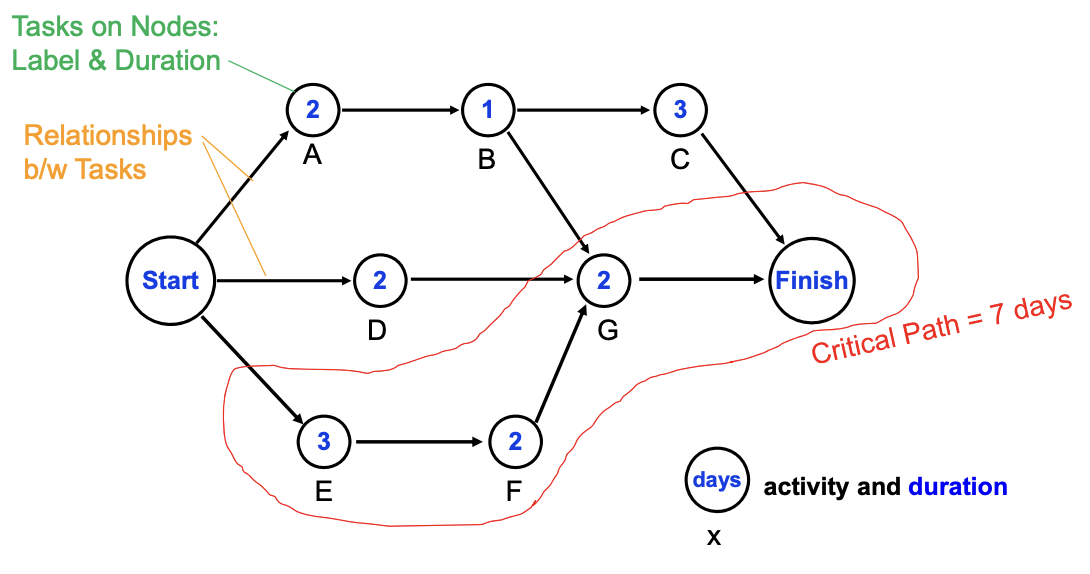
Path
A sequence of tasks from start to finish — deduce how many days required to complete this series of tasks.
Critical Path
A path that determines the shortest possible project completion time — longest to complete and the one we DO NOT want to change — will cause delays to entire project.
Slack
The amount of time a non-critical path can be delayed without delaying the project.
Gantt Chart
Used after CPM relationship sketch — a chart with start and end dates using bars plotted on a linear time scale:
Glance at the project task scheduled
Scheduled tasks overlapped
Can allocate project resources
Use arrows to show dependency
Completion progress can be shown
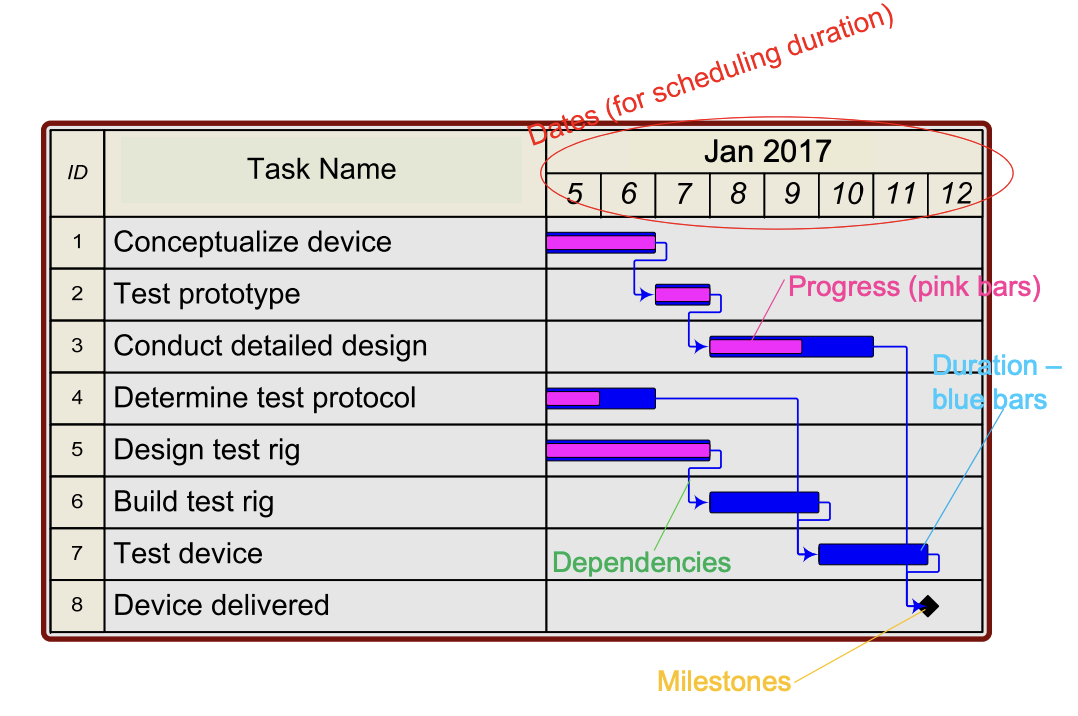
Milestones
Indicated with a diamond marker in the row — tells us the successful completion of a goal within the project.
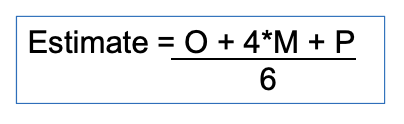
Project Evaluation and Review Technique (PERT)
Helps mitigate task duration uncertainty (amount of days) for a CPM — utilizes optimistic, most likely, and pessimistic duration in a weighted average. It accounts for costs in delays, rewards for early completion, and confidence in estimates.
Functional Decomposition
“What the design to-be is to do” — breakdown of a complex solution into what it is supposed to do at different simplicity levels.
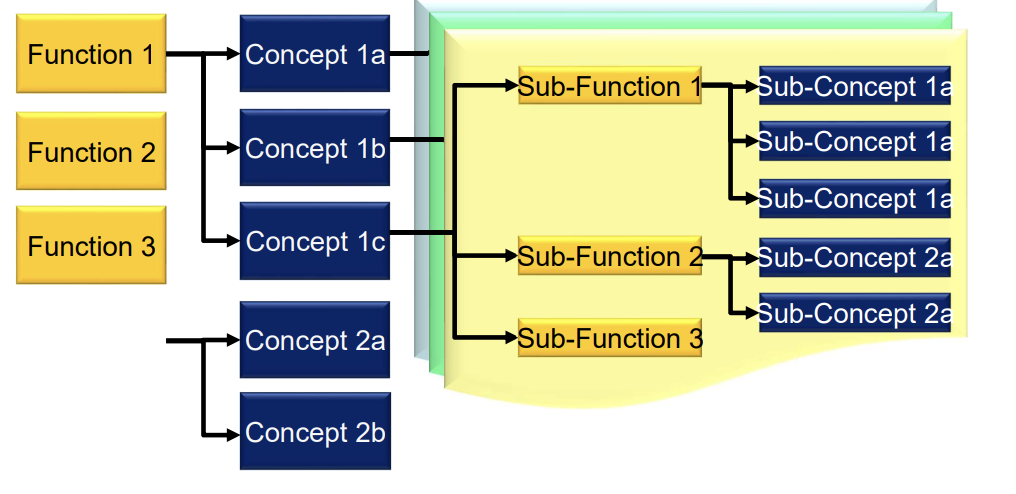
Concept Fragments
Identifying a solution for each function — how is this function achieved? This utilizes concept generation!
Top Level Functions
The function present in all solutions (describes overall solution BUT presents all viable solutions)?
Deterministic Function
Functions that will strongly determine the design of the solution.Should be at the top of the function structure diagram as it overarchingly determines the whole.
Sequential Function
Captures the order where required, a closely related function that must be carried out in this order and depends on the previous function.
Forming
Coming together and getting to know one another — promoting acceptance, minimizing conflicts, and being optimistic.
Storming
Differences, tensions, and possible power struggles may come up. Individuals speak their minds, and it can be stressful — some will move on quickly, and others will struggle in this stage.
Good Norming
When a team collaborates toward a common goal, interactions and productivity to accomplish tasks have improved — issues are resolved quickly.
Bad Norming
Unhealthy, disruptive, or dysfunctional behaviours become the team norm, such as persistent team issues continuing but no one discussing or addressing them.
Performing
High-performing teams and the team operate as a highly cohesive unit with a shared vision and a good understanding of strengths and weaknesses — good productivity and value in work done and the relationships made.
Extroversion (direction of energy)
Focus on energy outwards (working in groups), enjoys a variety of tasks, talk about their ideas, and work at a rapid pace.
Introversion (direction of energy)
Focus energy towards ideas and understanding (individually), enjoy concentration tasks, consider things fully before speaking and work at a careful, steady pace.
Sensing (how do you collect information)
Focus on what is, working with real things, applying past experience to solving problems, and prefers specific and realistic direction — detail oriented.
iNtuition (how do you collect information)
Focus on what could be, looks for patterns, theories, and speculations, and prefers to use imagination to solve — looks at the bigger picture.
Thinking (decision-making)
Logical analysis of problems with objective viewpoint, uses cause and effect to make fair decisions and values justice.
Feeling (decision-making)
Personal and social values prominent in decision making, considers each case individually and how it will impact others and values mercy.
Judging (how to get things done, deal with the world around us)
Organized and planned approach to life; predictable work pattern with control in projects, likes to make a decision and move on.
Perceiving (how to get things done, deal with the world around us)
Favour flexibility and spontaneity and like to keep options open, fewer rules and procedures, delaying decisions.
Assertiveness
The degree to which individuals seek to meet their needs.
Cooperation
The degree to which they seek to meet other’s needs.
Competing
The firm stand to achieve its own goals even at the expense of others. It can lead to resentment and hurt feelings.
Avoiding
Avoid conflict entirely, sacrificing your goals and not helping team members reach goals.
Accommodating
Cooperating with others greatly at your own expense. It can work against you for your goals but can achieve goodwill from others.
Compromising
Both parties meet in the middle, but neither fully achieves their goals.
Collaborating
Team members work together so that everyone gets what they want. “Win-Win”
External Search
“Do not reinvent the wheel” — time is saved if solution/element is readily available — provides inspiration, increases your value proposition, and need to know other patents/IP that already exist.
Internal Search
Brainstorming within the team — welcome all kinds of ideas (equal treatment), quantity over quality, suspend judgement, and focus on what the design should do.
Fixation
The situation that dominates a designer’s thinking and hinders their ability to think creatively — often picking a favourite solution. Be aware, work both individually and in a team, and utlize a morphological chart.
Morphological Charts
A systematic approach by setting out all determinative functions in which we can recognizing different solutions by combining different fragments. Look for similarities in combinations, synergies between concepts to make a cleaner design, and keep an open mind.
Value Propostion
A short non-technical statement saying how the value is created, captured, and sustained.