Ch 17: Wave Optics

0.0(0)
Studied by 0 people
call kaiCall Kai
learnLearn
examPractice Test
spaced repetitionSpaced Repetition
heart puzzleMatch
flashcardsFlashcards
GameKnowt Play
Card Sorting

1/10

encourage image

There's no tags or description

Looks like no tags are added yet.

Last updated 11:22 PM on 4/29/26
Name
Mastery
Learn
Test
Matching
Spaced
Call with Kai

No analytics yet

Send a link to your students to track their progress

11 Terms

1
New cards

The frequency of a light wave in air is 5.3×10¹⁴Hz. Is the frequency of this wave higher, lower, or the same after the light enters a piece of glass?

The same.
2
New cards
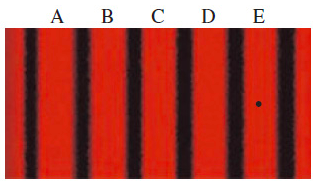
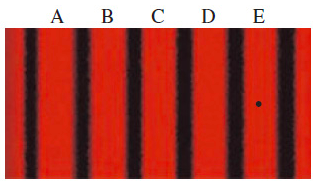
<p><span>(<u>Figure 1</u>) shows the viewing screen in a double-slit experiment with monochromatic light. Fringe C is the central maximum. The fringe separation is </span><span style="line-height: normal;">Δy</span>. <span>What will happen to the fringe spacing if the wavelength of the light is decreased?</span></p><p> A - <span style="line-height: normal;">Δy will decrease.</span></p><p><span style="line-height: normal;">B - </span> <span style="line-height: normal;">Δy will increase.</span></p><p><span style="line-height: normal;">C - </span> <span style="line-height: normal;">Δy will not change.</span></p>

(Figure 1) shows the viewing screen in a double-slit experiment with monochromatic light. Fringe C is the central maximum. The fringe separation is Δy. What will happen to the fringe spacing if the wavelength of the light is decreased?

A - Δy will decrease.

B - Δy will increase.

C - Δy will not change.

Δy will decrease.
3
New cards
<p>(<u>Figure 1</u>) shows the viewing screen in a double-slit experiment with monochromatic light. Fringe C is the central maximum. The fringe separation is <span style="line-height: normal;">Δy</span>. <span>What will happen to the fringe spacing if the spacing between the slits is decreased?</span></p><p>A - <span style="line-height: normal;">Δy will decrease.</span></p><p><span style="line-height: normal;">B - </span> <span style="line-height: normal;">Δy will increase.</span></p><p><span style="line-height: normal;">C - </span> <span style="line-height: normal;">Δy will not change.</span></p>

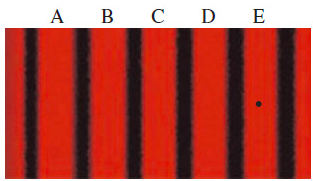
(Figure 1) shows the viewing screen in a double-slit experiment with monochromatic light. Fringe C is the central maximum. The fringe separation is Δy. What will happen to the fringe spacing if the spacing between the slits is decreased?

A - Δy will decrease.

B - Δy will increase.

C - Δy will not change.

Δy will increase.
4
New cards
<p>(<u>Figure 1</u>) shows the viewing screen in a double-slit experiment with monochromatic light. Fringe C is the central maximum. The fringe separation is <span style="line-height: normal;">Δy</span>. <span>What will happen to the fringe spacing if the distance to the screen is decreased?</span></p><p>A - <span style="line-height: normal;">Δy will decrease.</span></p><p><span style="line-height: normal;">B - </span> <span style="line-height: normal;">Δy will increase.</span></p><p><span style="line-height: normal;">C - </span> <span style="line-height: normal;">Δy will not change.</span></p>

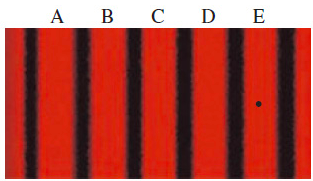
(Figure 1) shows the viewing screen in a double-slit experiment with monochromatic light. Fringe C is the central maximum. The fringe separation is Δy. What will happen to the fringe spacing if the distance to the screen is decreased?

A - Δy will decrease.

B - Δy will increase.

C - Δy will not change.

Δy will decrease.
5
New cards
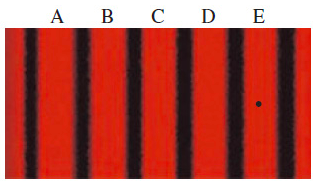
<p>The figure is the interference pattern seen on a viewing screen behind 2 slits. Suppose the 2 slits were replaced by 20 slits having the same spacing <span style="line-height: normal;">d</span> between adjacent slits.(<u>Figure 1</u>) <span>Would the number of fringes on the screen increase, decrease, or stay the same?</span></p>

The figure is the interference pattern seen on a viewing screen behind 2 slits. Suppose the 2 slits were replaced by 20 slits having the same spacing d between adjacent slits.(Figure 1) Would the number of fringes on the screen increase, decrease, or stay the same?

Stay the same.
6
New cards
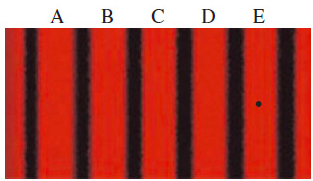
<p>The figure is the interference pattern seen on a viewing screen behind 2 slits. Suppose the 2 slits were replaced by 20 slits having the same spacing <span style="line-height: normal;">d</span> between adjacent slits.(<u>Figure 1</u>) <span>Would the fringe spacing increase, decrease, or stay the same?</span></p>

The figure is the interference pattern seen on a viewing screen behind 2 slits. Suppose the 2 slits were replaced by 20 slits having the same spacing d between adjacent slits.(Figure 1) Would the fringe spacing increase, decrease, or stay the same?

Stay the same.
7
New cards
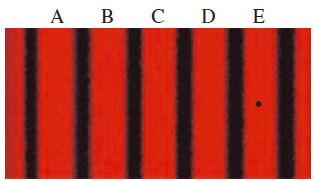
<p><span>The figure is the interference pattern seen on a viewing screen behind 2 slits. Suppose the 2 slits were replaced by 20 slits having the same spacing </span><span style="line-height: normal;">d</span><span> between adjacent slits.(<u>Figure 1</u>) Would the width of each fringe increase, decrease, or stay the same?</span></p>

The figure is the interference pattern seen on a viewing screen behind 2 slits. Suppose the 2 slits were replaced by 20 slits having the same spacing d between adjacent slits.(Figure 1) Would the width of each fringe increase, decrease, or stay the same?

Decrease.
8
New cards
<p>The figure is the interference pattern seen on a viewing screen behind 2 slits. Suppose the 2 slits were replaced by 20 slits having the same spacing <span style="line-height: normal;">d</span> between adjacent slits.(<u>Figure 1</u>) <span>Would the brightness of each fringe increase, decrease, or stay the same?</span></p>

The figure is the interference pattern seen on a viewing screen behind 2 slits. Suppose the 2 slits were replaced by 20 slits having the same spacing d between adjacent slits.(Figure 1) Would the brightness of each fringe increase, decrease, or stay the same?

Increase.

9
New cards

How do you get m to nm?

Multiply by 1 × 10⁹.

10
New cards

How do you get mm to m?

Multiply by 0.001.

11
New cards

A double-slit experiment is immersed in water (with an index of refraction of 1.33). When in the water, what happens to the interference fringes?

A. They are more closely spaced than in air by a factor of 1.33.

B. They are more widely spaced than in air by a factor of 1.33.

C. They are spaced the same as in air.

D. They are shifted upward.

E. They are shifted downward.

They are more closely spaced than in air by a factor of 1.33.



