L4(3.4.4c)Types of selection

0.0(0)
Studied by 0 people
call kaiCall Kai
learnLearn
examPractice Test
spaced repetitionSpaced Repetition
heart puzzleMatch
flashcardsFlashcards
GameKnowt Play
Card Sorting

1/6

encourage image

There's no tags or description

Looks like no tags are added yet.

Last updated 7:48 PM on 6/21/26
Name
Mastery
Learn
Test
Matching
Spaced
Call with Kai

No analytics yet

Send a link to your students to track their progress

7 Terms
1
New cards
<ol><li><p>What is selection?</p><p>info:Different environmental conditions favour different characteristics in the population</p></li><li><p>State the 3 types of selection and explain what they are?</p></li></ol><p><strong>Polygenes and the normal distribution curve</strong></p><p>Most characteristics are influenced by more than one gene such as height -We say they are …3?.</p><p>These types of characteristics are influenced more by the …4? than single gene characteristics such as eye colour.</p><p>The effect of the environment on polygenes produces individuals in a population that vary about the …5?.</p><p>This data produces a graph called a normal …6? curve.</p><p>Directional ,stabilising and disruptive selection effect the …7? and position of this curve.</p><p></p>
  1. What is selection?

    info:Different environmental conditions favour different characteristics in the population

  2. State the 3 types of selection and explain what they are?

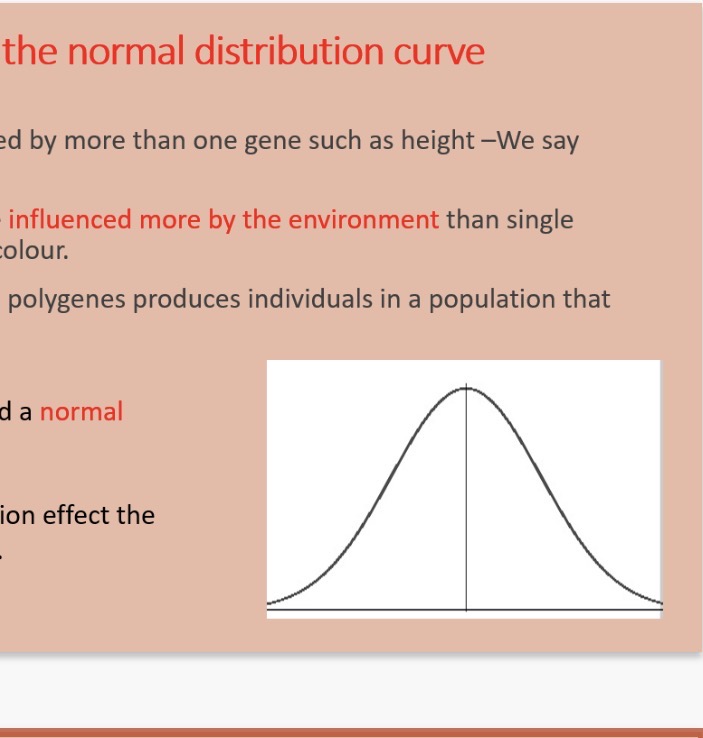
Polygenes and the normal distribution curve

Most characteristics are influenced by more than one gene such as height -We say they are …3?.

These types of characteristics are influenced more by the …4? than single gene characteristics such as eye colour.

The effect of the environment on polygenes produces individuals in a population that vary about the …5?.

This data produces a graph called a normal …6? curve.

Directional ,stabilising and disruptive selection effect the …7? and position of this curve.

  1. Selection is the process by which organisms that are better adapted to their environment tend to survive and breed, while those that are less well adapted tend not to

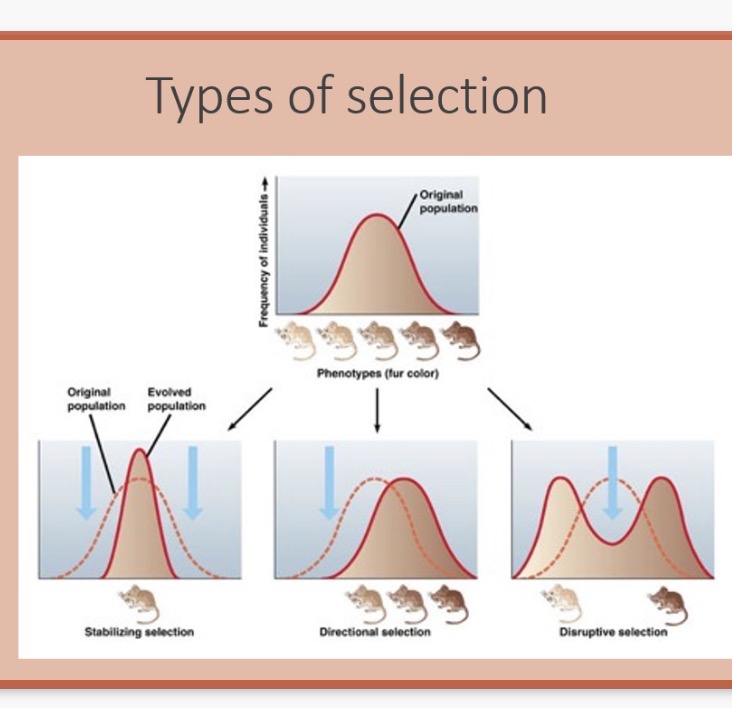
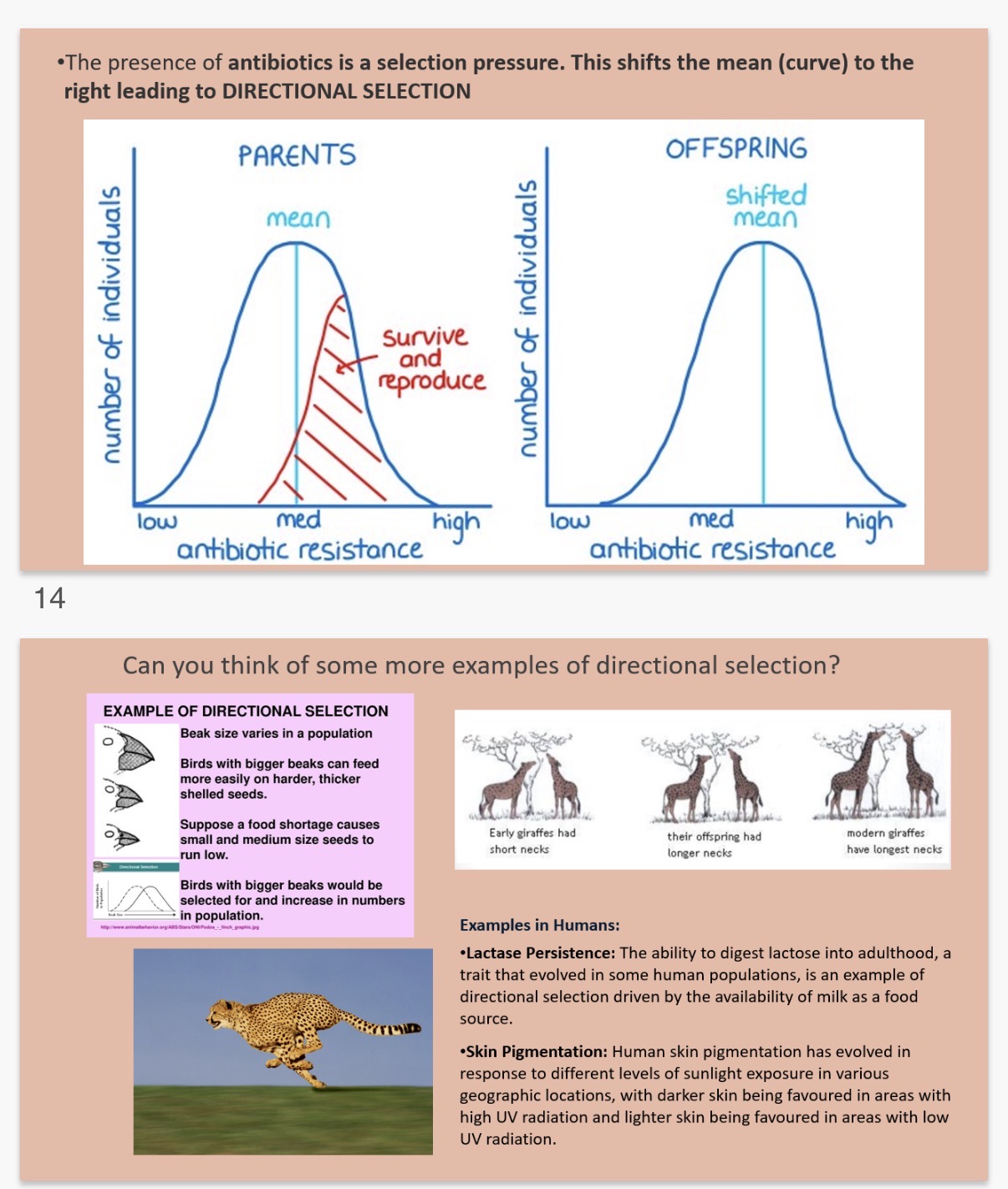
  2. Directional selection:

    • Where selection favours individuals that vary in one direction from the mean of the population

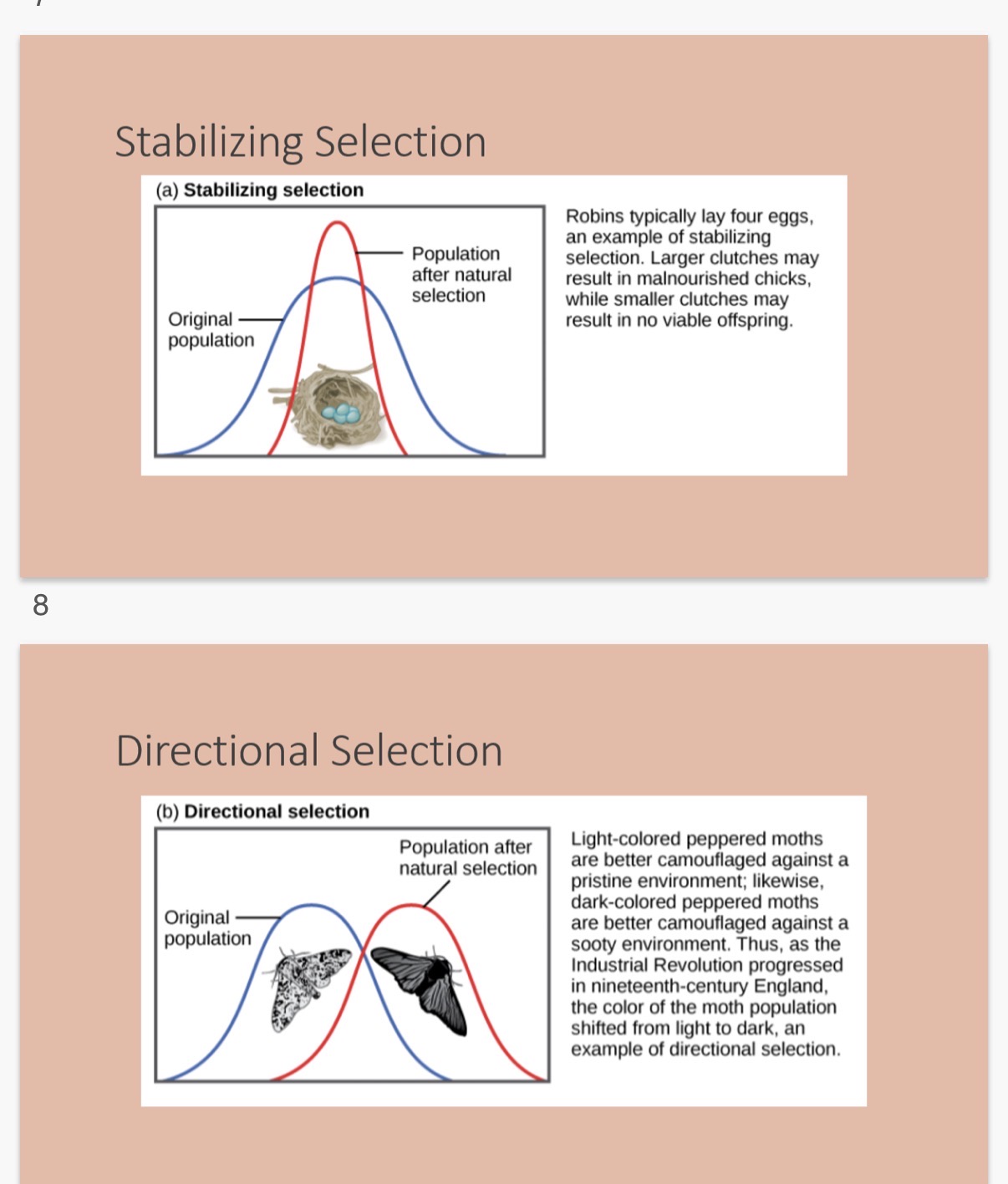
    Stabilising selection:

    • Selection may favour average individuals. (This preserves the characteristics of a population)

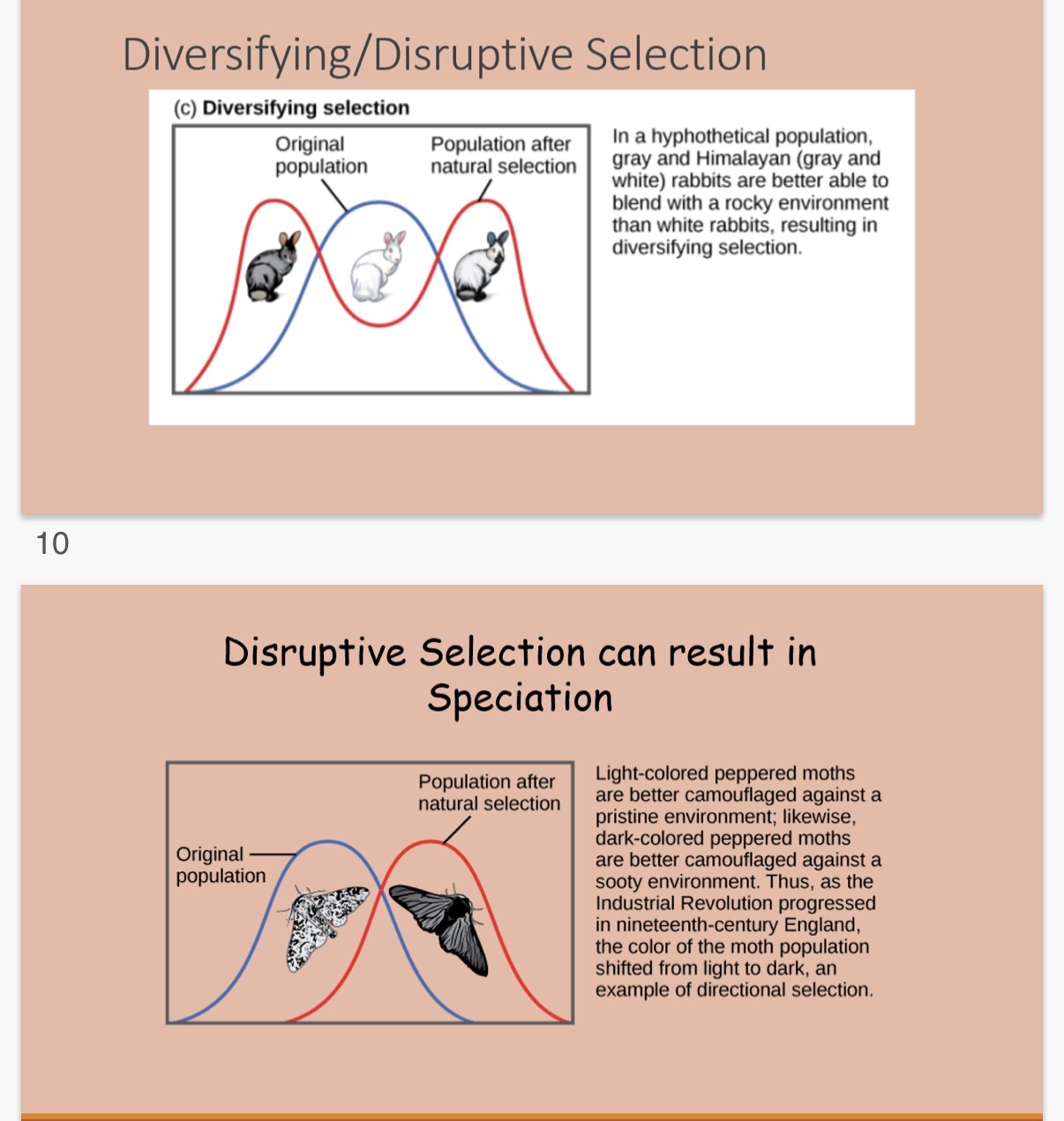
    Disruptive(diversifying) selection:

    a type of natural selection that favors individuals with traits at both extremes of a distribution.

  3. Polygenetic

  4. Environment

  5. Mean

  6. Distribution

  7. Shape

<ol><li><p>Selection is the process by which organisms that are better adapted to their environment tend to survive and breed, while those that are less well adapted tend not to</p></li><li><p>Directional selection:</p><p>• Where selection favours individuals that vary in one direction from the mean of the population</p><p>Stabilising selection:</p><p>• Selection may favour average individuals. (This preserves the characteristics of a population)</p><p>Disruptive(diversifying) selection:</p><p>a type of natural selection that favors individuals with traits at both extremes of a distribution.</p></li><li><p>Polygenetic</p></li><li><p>Environment</p></li><li><p>Mean</p></li><li><p>Distribution</p></li><li><p>Shape</p></li></ol><p></p>
2
New cards
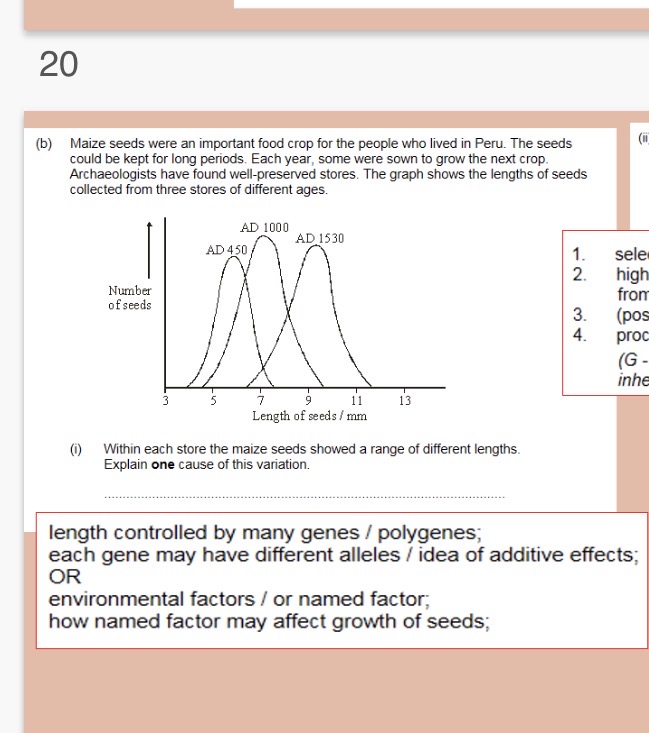
<p>Images contain important info on the types of selection</p><ol><li><p>What is speciation</p></li></ol><p></p>

Images contain important info on the types of selection

  1. What is speciation

Speciation is the evolutionary process by which new biological species arise.
<p>Speciation is the evolutionary process by which new biological species arise.</p>
3
New cards
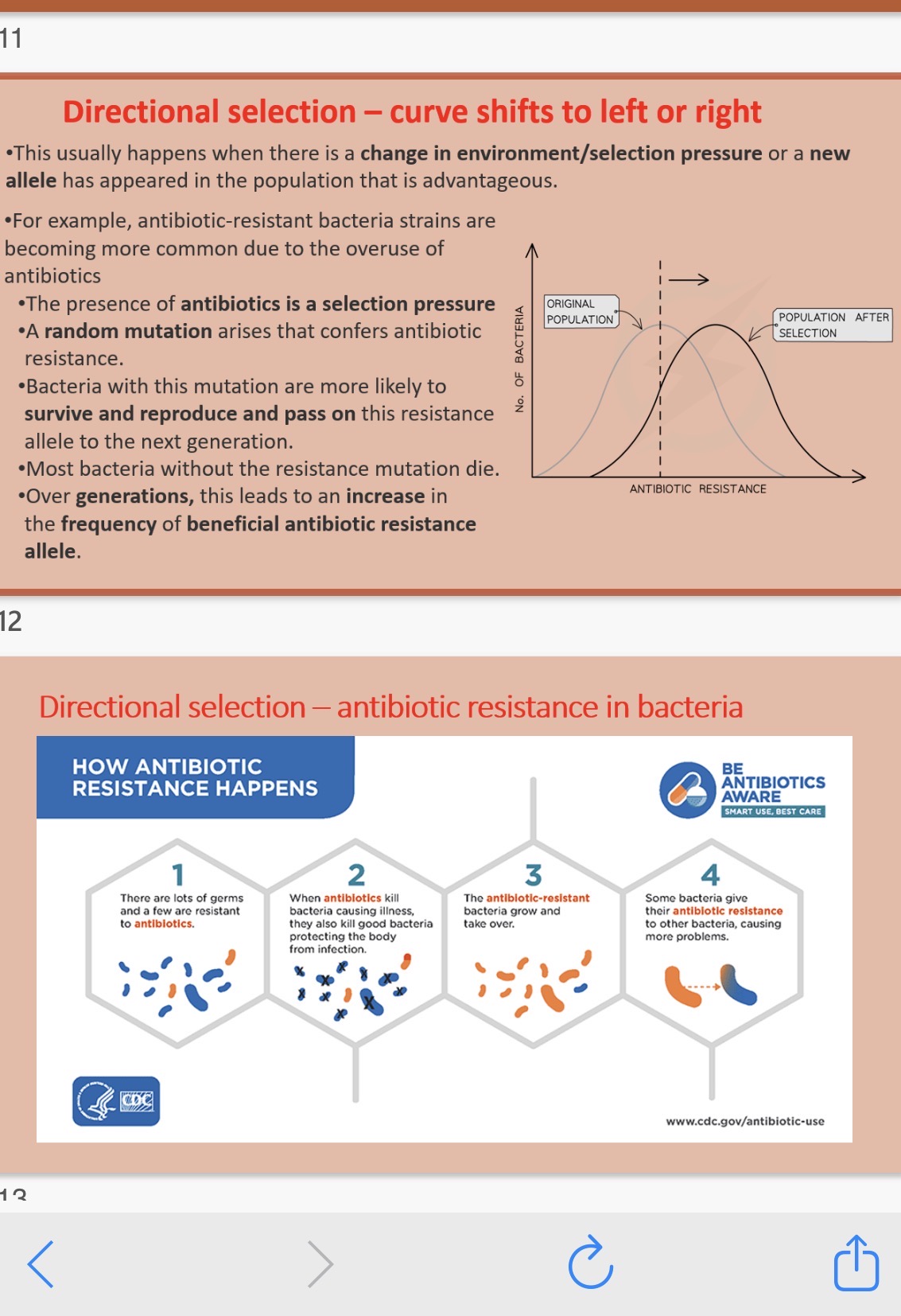
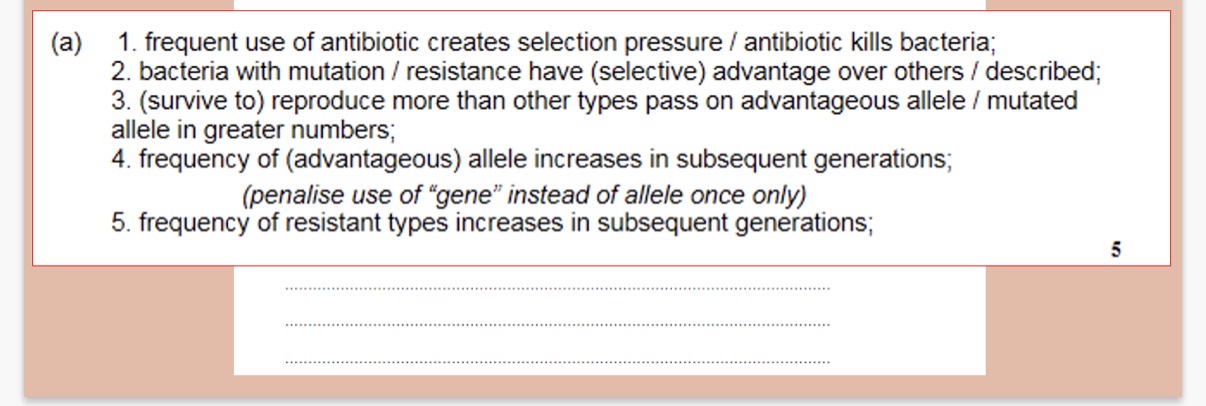
<ol><li><p>When does directional selection usually happen? (Example is below)</p></li></ol><p>•For example, antibiotic-resistant bacteria strains are becoming more common due to the …2? of antibiotics</p><p>•The presence of antibiotics is a selection …3? • A random …4? arises that confers antibiotic resistance.</p><p>•Bacteria with this mutation are more likely to survive and reproduce and pass on this resistance allele to the next …5?.</p><p>•Most bacteria without the resistance mutation die. •Over generations, this leads to an increase in the …6? of beneficial antibiotic resistance</p>
  1. When does directional selection usually happen? (Example is below)

•For example, antibiotic-resistant bacteria strains are becoming more common due to the …2? of antibiotics

•The presence of antibiotics is a selection …3? • A random …4? arises that confers antibiotic resistance.

•Bacteria with this mutation are more likely to survive and reproduce and pass on this resistance allele to the next …5?.

•Most bacteria without the resistance mutation die. •Over generations, this leads to an increase in the …6? of beneficial antibiotic resistance

  1. when there is a change in environment/selection pressure or a new allele has appeared in the population that is advantageous

  2. Overuse. 3.pressure. 4.mutation

    1. generation. 6.frequency

<ol><li><p>when there is a change in environment/selection pressure or a new allele has appeared in the population that is advantageous</p></li><li><p>Overuse. 3.pressure. 4.mutation</p><ol start="5"><li><p>generation. 6.frequency</p></li></ol></li></ol><p></p>
4
New cards
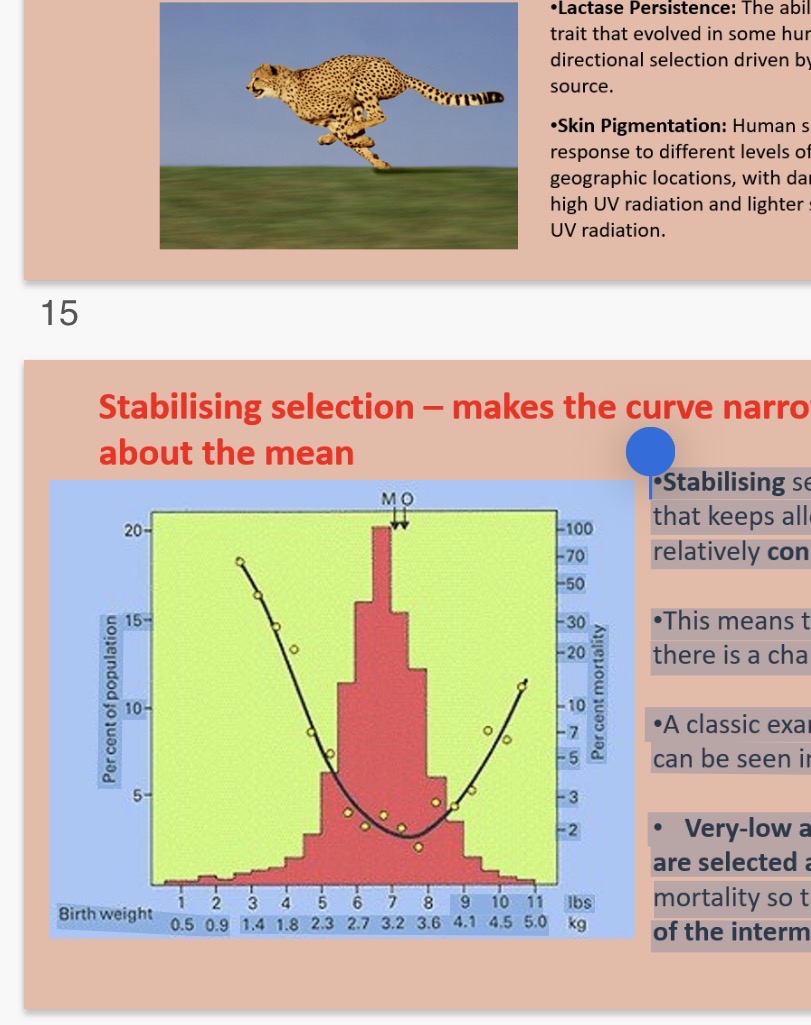
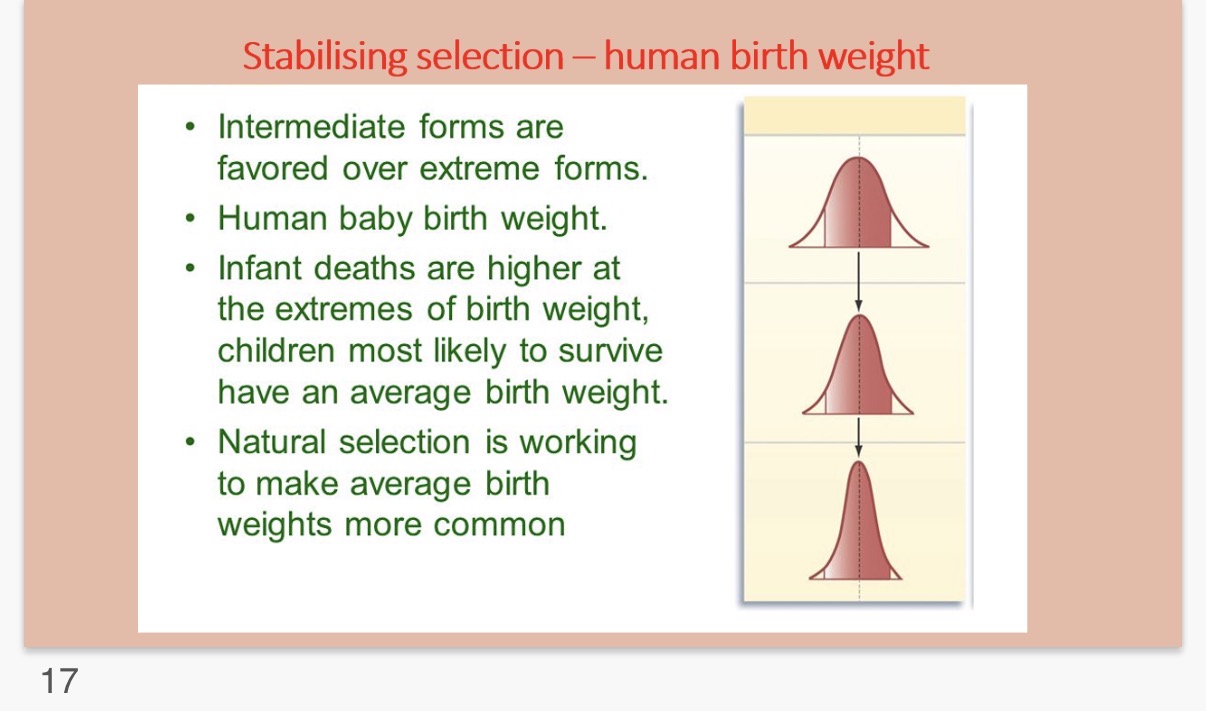
<p><strong>Stabilising selection - makes the curve narrower and higher about the mean</strong></p><p>•Stabilising selection is natural selection that keeps allele frequencies relatively …1? over generations</p><p>•This means things stay as they are unless there is a change in the …2?.</p><p>•A classic example of stabilising selection can be seen in human birth weights.</p><p>• Very-low and very-high birth weights are selected …3? as they lead to high mortality so this leads to the maintenance of the intermediate birth weights being selected for.</p>

Stabilising selection - makes the curve narrower and higher about the mean

•Stabilising selection is natural selection that keeps allele frequencies relatively …1? over generations

•This means things stay as they are unless there is a change in the …2?.

•A classic example of stabilising selection can be seen in human birth weights.

• Very-low and very-high birth weights are selected …3? as they lead to high mortality so this leads to the maintenance of the intermediate birth weights being selected for.

  1. Constant

  2. Environment

  3. Against

<ol><li><p>Constant</p></li><li><p>Environment</p></li><li><p>Against</p></li></ol><p></p>
5
New cards
<p>(5)</p>

(5)

knowt flashcard image
6
New cards
<p>(1)</p>

(1)

knowt flashcard image
7
New cards
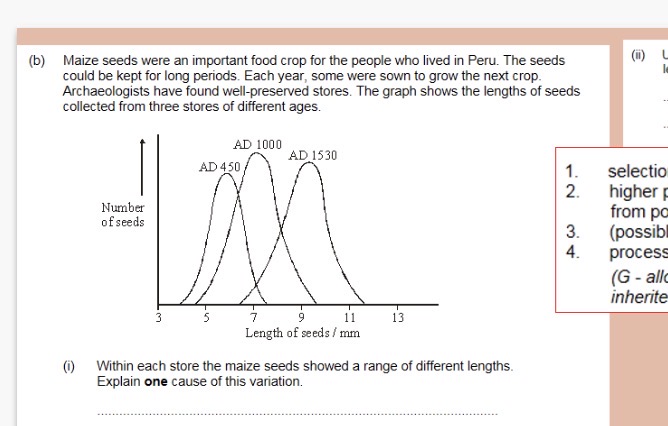
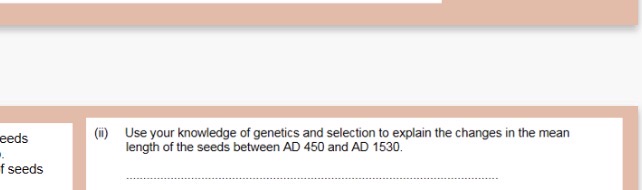
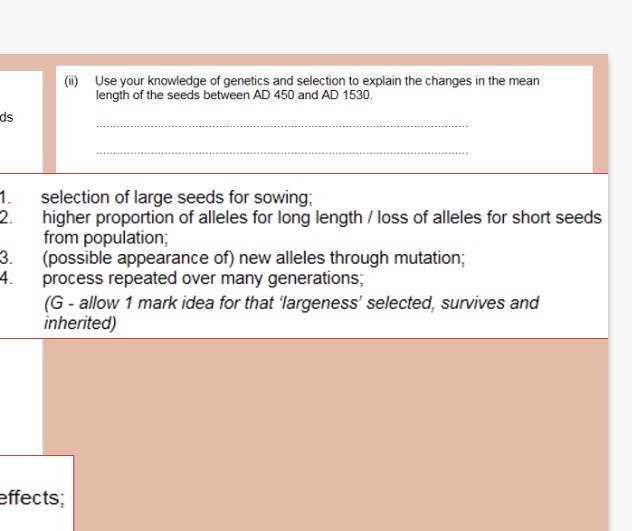
<p>Last question extended</p>

Last question extended

knowt flashcard image