Colon Cancer
 Call Kai
 Learn
Learn Practice Test
 Spaced Repetition
 Match
Match Flashcards
 Knowt Play
1/13

There's no tags or description
Looks like no tags are added yet.
Name | Mastery | Learn | Test | Matching | Spaced | Call with Kai |
|---|
No analytics yet
Send a link to your students to track their progress
14 Terms
Most common mutations in colon cancer
APC loss → KRAS activation → TP53 loss.
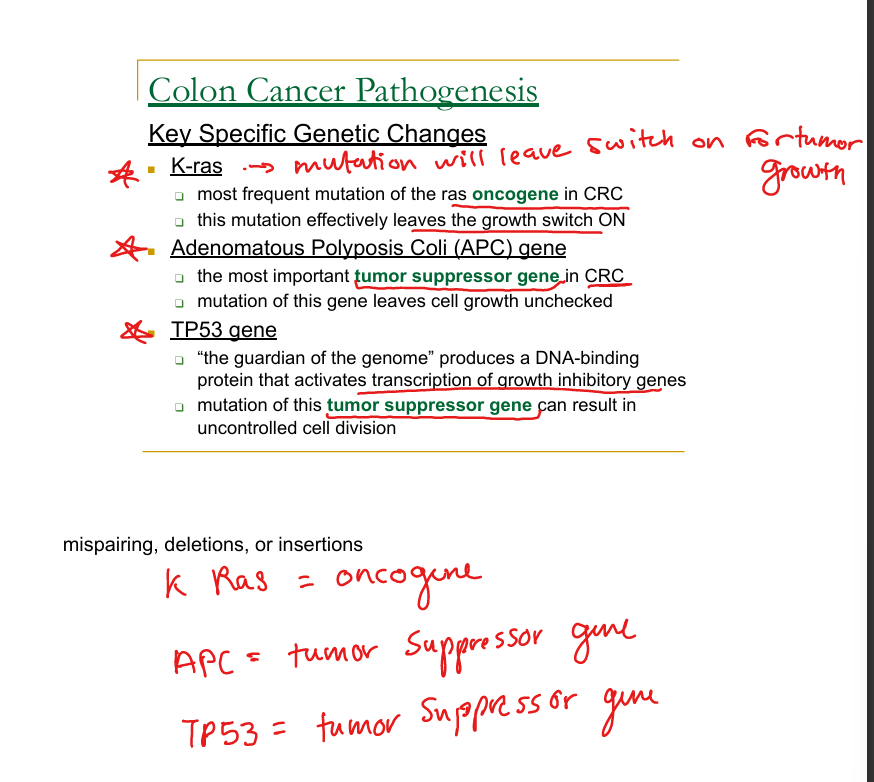
APC mutation role in colon cancer
Initially a tumor suppressor gene; mutation will lead to uncontrolled cell growth
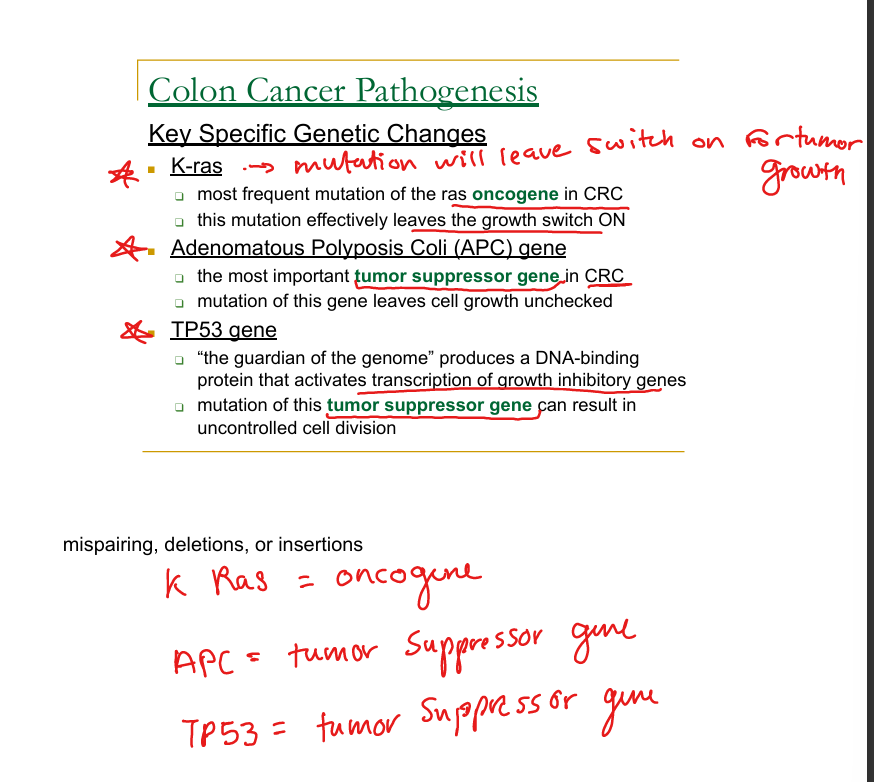
KRAS mutation role in colon cancer
Initially an oncogene; Mutation will leave this gene on leading to continuous growth
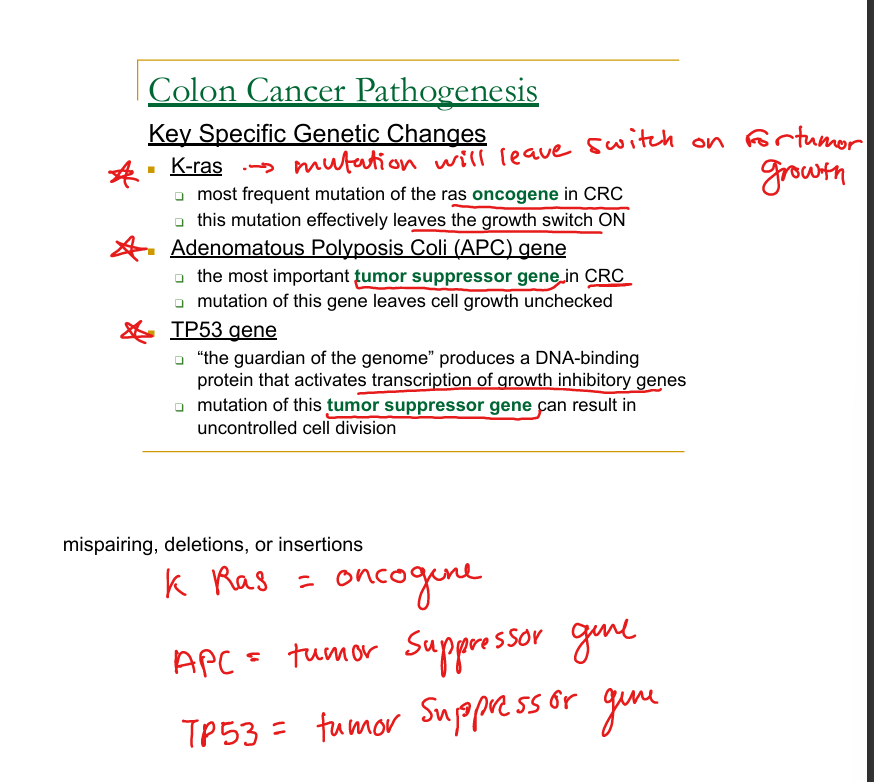
TP53 mutation role
Iniitally a tumor suppressor gene; Mutation results in uncontrolled cell growth
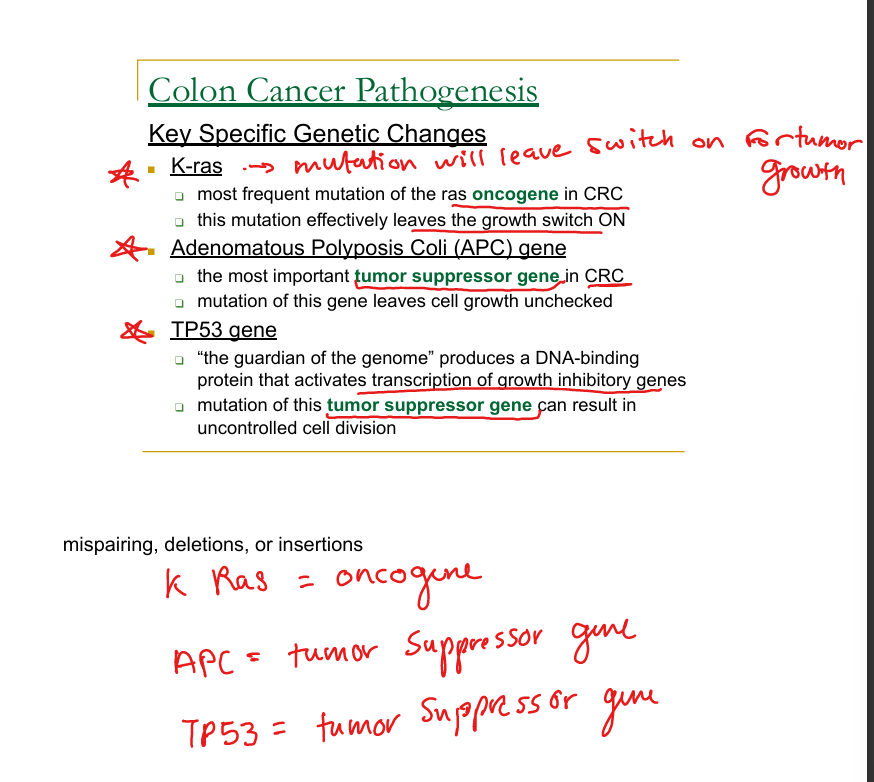
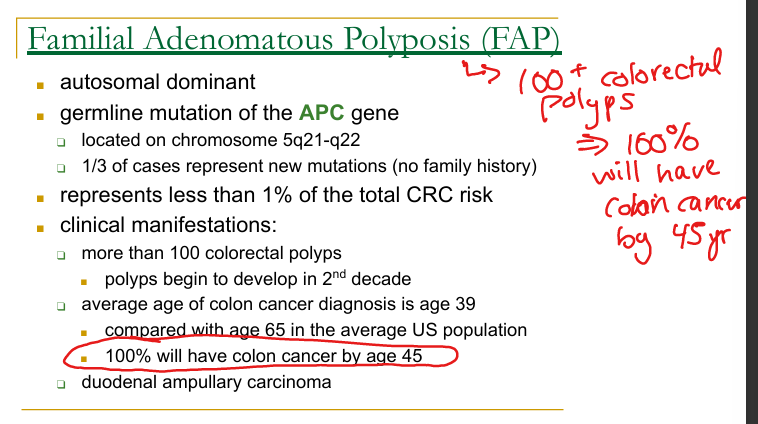
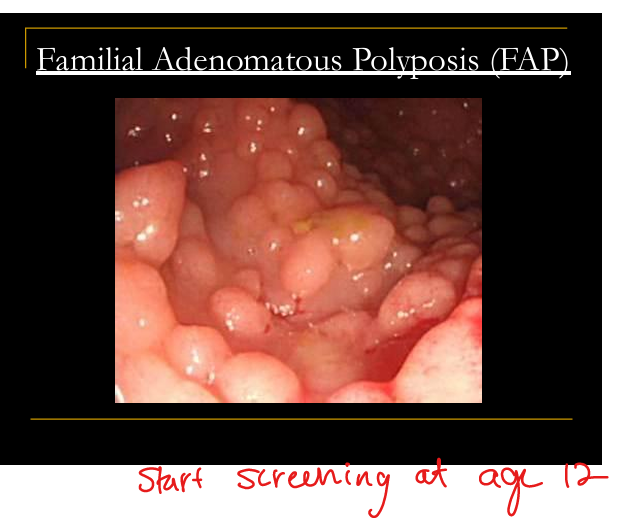
Familial Adenomatous Polyposis (FAP) syndrome
Autosomal dominant; APC mutation; hundreds–thousands of adenomas; near‑100% colon cancer risk. Treat by removing colon
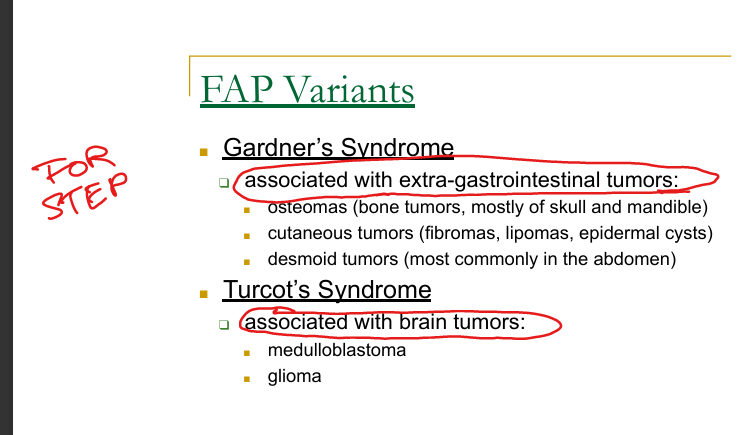
Gardner syndrome (Familial Adenomatous Polyposis FAP variant)
FAP + osteomas, dental abnormalities, epidermal cysts, desmoid tumors. Extragastrointestinal tumors
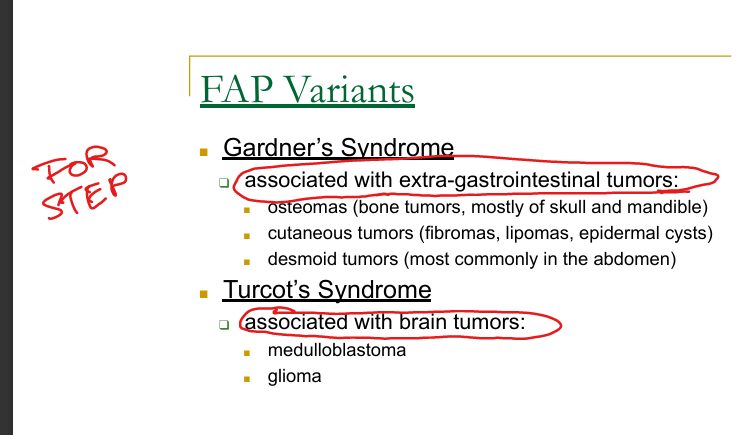
Turcot syndrome (Familial Adenomatous Polyposis FAP variant)
FAP variant with CNS tumors (medulloblastoma). A COT for my brain)
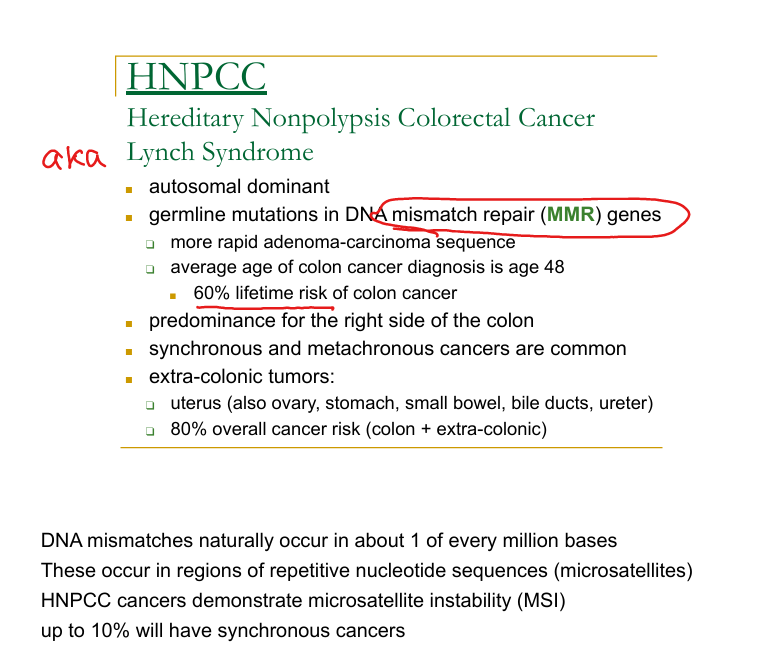
HNPCC (Lynch syndrome)
Autosomal dominant; mismatch repair gene mutations (MMR); right‑sided cancers; early onset.
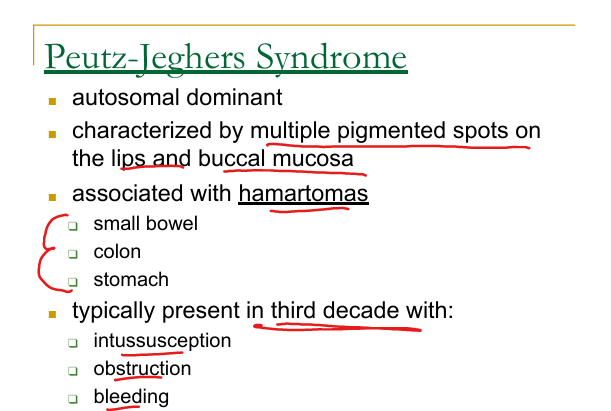
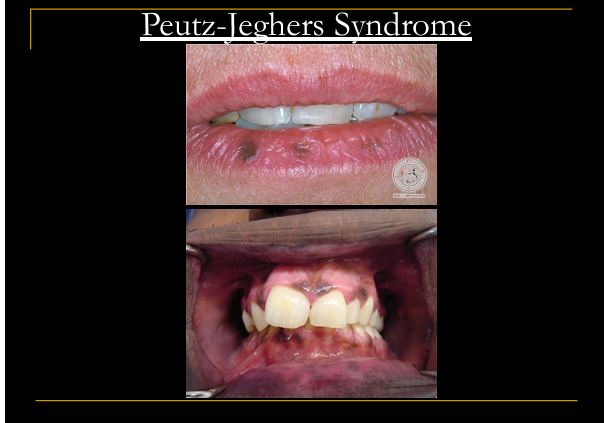
Peutz‑Jeghers syndrome
AD STK11 mutation; hamartomatous polyps + mucocutaneous pigmentation(pigmented spots on the lips and buccal mucosa); ↑ GI and pancreatic cancer risk. (PJ leaves purple jelly spots on your lips)
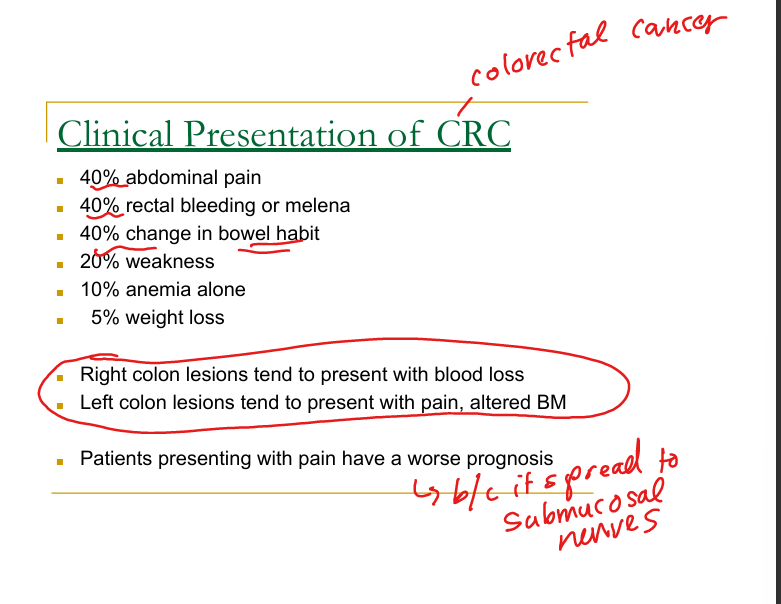
Colon cancer clinical presentation
Iron‑deficiency anemia, weight loss, abdominal pain, change in bowel habits, occult bleeding.
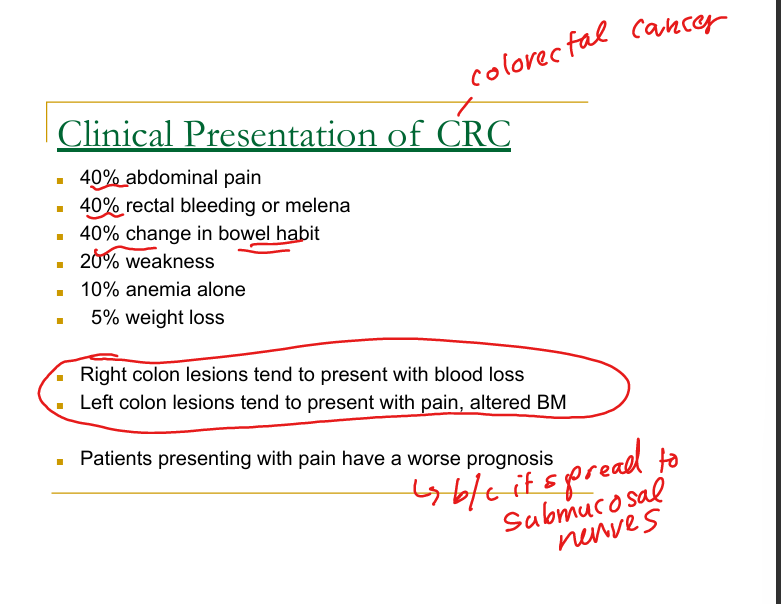
Right‑sided colon cancer
Exophytic mass; iron‑deficiency anemia; bleeding.
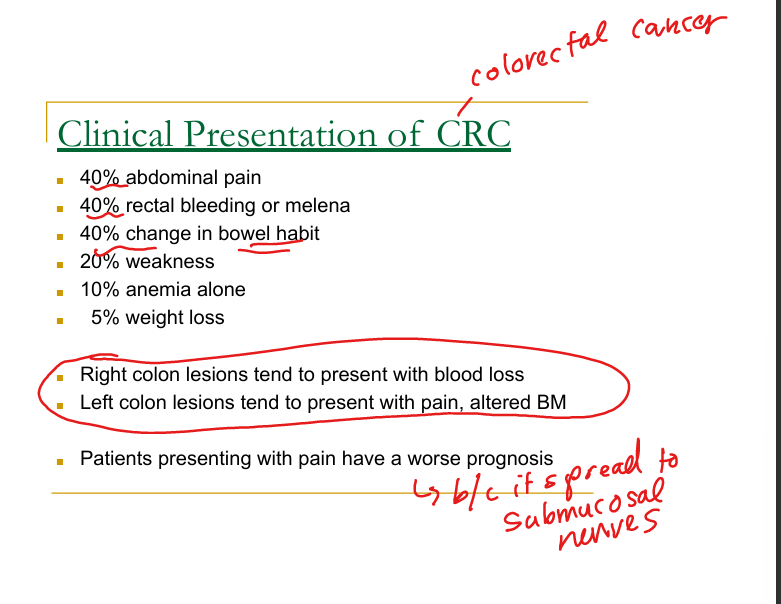
Left‑sided colon cancer
Napkin‑ring lesion; obstruction; hematochezia; change in stool caliber, Pain, Altered BM
Screening method: colonoscopy no increased risk
Every 10 years starting at age 45 for average risk.
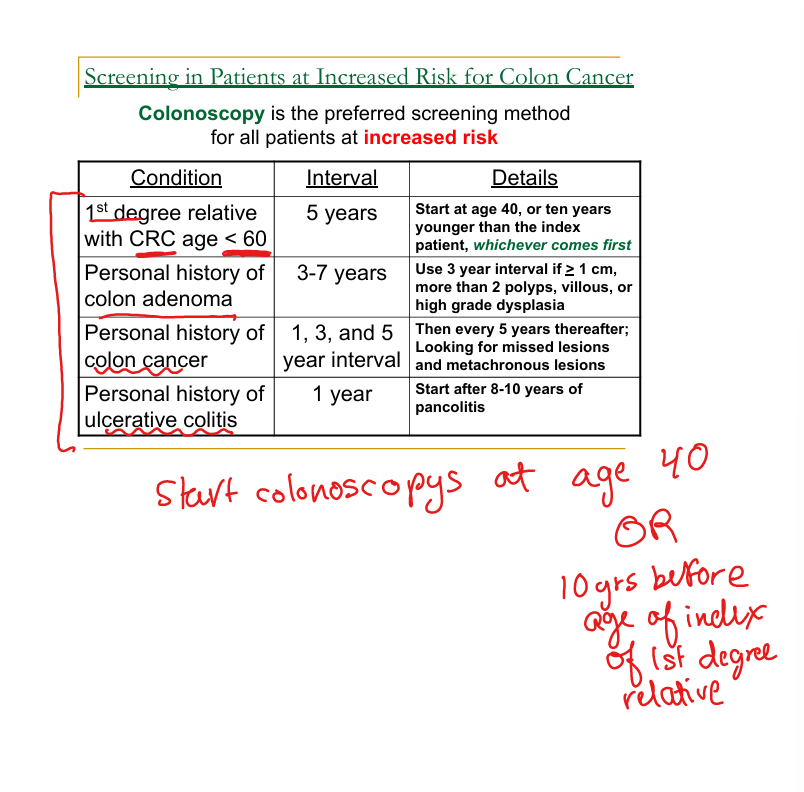
Increased‑risk screening for colon cancer
Begin at age 40 or 10 years before earliest family case; more frequent intervals.