4. Our Changing Planet Week 4
 Call Kai
 Learn
Learn Practice Test
 Spaced Repetition
 Match
Match Flashcards
 Knowt Play
1/45

Earn XP
Description and Tags
Lectures 7 and 8
Name | Mastery | Learn | Test | Matching | Spaced | Call with Kai |
|---|
No analytics yet
Send a link to your students to track their progress
46 Terms
When did agriculture begin?
Agriculture began in the Early Holocene
Which of the following is thought to have facilitated the origins of agriculture in the Near East?
human population increase → demographic stress
climatic amelioration at the end of the glacial period
social stress → competition
shift from nomadic to hunter-gatherer lifestyle
All
Our understanding of the start of agriculture into Europe can be summarised into this statement
_________ of Near East farmers with some _____ with local ________________
Demic diffusion of Near East farmers with some admixture with local hunter-gatherers
Place these cultures into time order starting with the oldest
Roman Empire
Nordic colony on Greenland
Late Classical Mayan
Egyptian Old Kingdom
Egyptian Old Kingdom, Roman Empire, Late Classical Mayan, Nordic colony on Greenland
What was the most likely cause of the collapse of the Late Classical Mayan culture about 900 CE?
Mega-droughts
Which culture preceded the development of sedentary agriculture in the Levant?
Natufians
Which crops were the result of early domestification?
Wheat, maize, rice
Is the Levant characterised by a summer-dry climate with winter rainfall?
Yes
Read the following statements about early domesticated plants and chose which is/are true and which is/are false
Most were perennials
They generally had small seeds to aid dispersal by the wind
Many had spines or thorns to prevent grazing by domesticated animals
Most had large bright flowers to attract insect pollinators
They produced large fruits with high sugar content
All are false
What were the primary drivers of agriculture?
Climate change (climatic amelioration), human cultural evolution, and the need to support growing populations
What is the definition of Foraging?
The gathering of plants and/or hunting of animals without long-term domestication.
What is the difference between Cultivation and Domestication?
Cultivation involves activities for crop production (planting, harvesting)
Domestication is the process where a population adapts to an environment created by human activity
List the 8 identified centres of independent agricultural origin.
Fertile Crescent
Central/Northern China
African Sahel
New Guinea highlands
Mesoamerica
Central Andes
SW Amazonia
Eastern USA
Name three ancient urban societies that did not have an independent agricultural origin
Egypt, Mediterranean Europe, and South Asia
Contrast the climates of the two earliest centres: The Levant vs. Northern China
The Levant: Mediterranean climate (winter rain) with thin, erodible soils
Northern China: Monsoonal climate (summer rain) with thicker soils
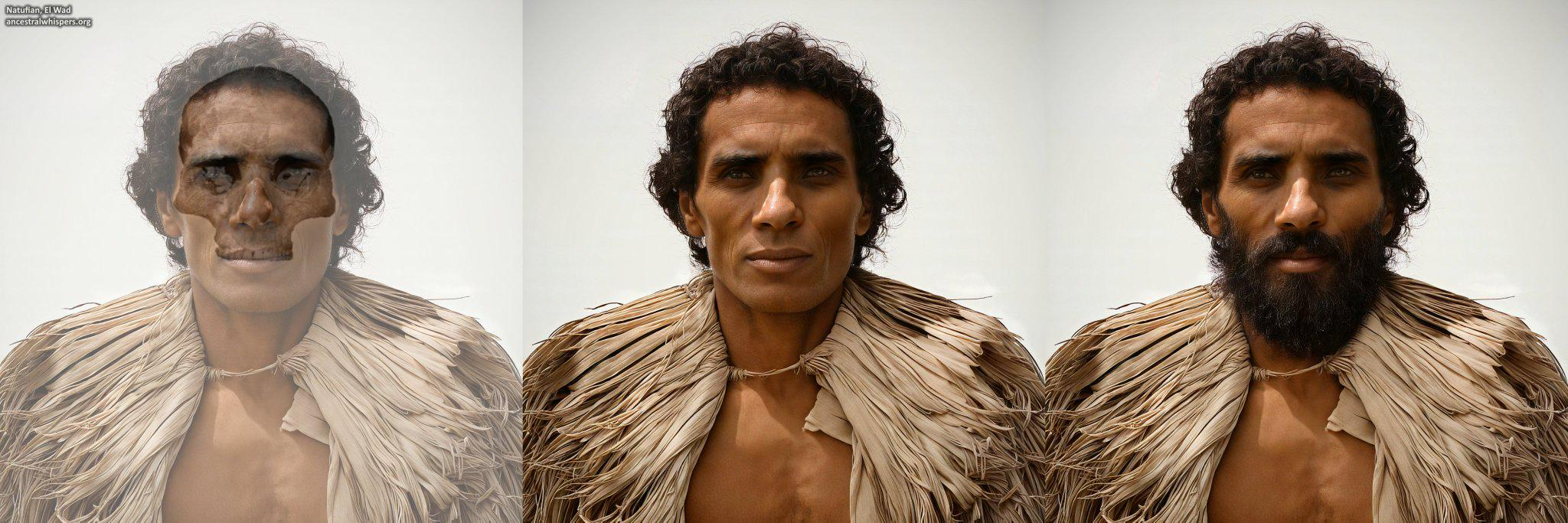
Who were the Natufians?
Complex, semi-sedentary hunter-gatherers of the Fertile Crescent who exploited wild plants during the late glacial
Describe the Agricultural Demographic Transition cycle
Food production → population growth + increased sedentism → creates greater food demand, requiring increased agricultural production.
What is sedentism?
the practice of living in one location for most or all of the year, marking a shift from nomadic to settled life
What are the key characteristics of early domesticated plants?
typically annuals (cereals and legumes) with large seeds
originated in highly seasonal climatic regimes
How does wild wheat differ from domesticated Einkorn wheat?
Wild: Fewer grains, ears shatter on ripening, glumes hard to remove
Domesticated: More grains, ears remain intact, glumes easier to remove
What genetic trait was selected for during crop domestication?
Recessive genetic alleles that inhibit shattering (preventing seeds from falling/dispersing naturally), allowing for easier human harvest
What are the origins of these crops: Wheat, Rice, Maize.
Wheat: Near East (Fertile Crescent)
Rice: Central China
Maize: Mesoamerica.
Define the Demic vs. Cultural models of agricultural spread/diffusion
Demic: Spread through the reproduction and dispersal of farmers
Cultural: Spread through hunter-gatherers acquiring knowledge from neighbors.
What is the Early Farming Dispersal Hypothesis?
The idea that the spread of farming is linked to the spread of human genetic populations, languages, and cultural traits
List 4 major societal changes that occurred during the Neolithic
Urbanization
Development of language
Social stratification,
The beginning of trade (e.g., obsidian)
How did early agriculture impact the Holocene atmosphere?
It caused significant increases in methane (CH4) and carbon dioxide (CO2) levels compared to natural projected trends
What is the "Bond et al. (2001) Iceberg Theory"?
theory explaining periodic cooling in the North Atlantic based on Ice Rafted Debris
periods of time where ice rafted debris from middle of Atlantic increased → from deep sea sediments
to have ice bergs in the North Atlantic, must have cooled down significantly → possible reason why people abandoned the houses (got incredibly cold)
How frequently do peaks in Ice Rafted Debris occur?
around every 1500 years
Why did Celtic people likely abandon certain areas 5000 years ago?
Climate data suggests it became too cold to sustain their lifestyle
What provided stability and defense for the Old Kingdom of Egypt?
The Nile River provided water/resources, and the surrounding deserts provided natural defense.
Who discovered the Rosetta Stone during the invasion of Egypt?
Napoleon Bonaparte
What major empire collapsed alongside Egypt during a "Dark Age"?
The Akkadian Empire
What climatic event happened 4200 years ago?
A significant cooling period in the North Atlantic and a global 200-year drought.
What are "Tephra" and why are they useful?
Glass shards from volcanic eruptions; they are used as precise markers to date geological and archaeological layers
Where was palaeoceanographic evidence of a mega-drought found?
Gulf of Oman
How was climate reconstructed to study the Fall of Rome?
Researchers used tree rings to create a "transfer function" to calculate past temperatures and rainfall
What climate patterns correlate with Roman Migration vs. Collapse?
Migration periods were generally wet, while the collapse period was cold.
Why did the Eastern Roman Empire survive longer than the West?
They maintained a firm alliance with the Persian eastern empire
What is Environmental Determinism?
The theory that the physical environment (especially climate) is the primary factor determining the fate and culture of a civilization.
What was a key symptom of the Mayan urban collapse?
Rapid depopulation of ceremonial centers and the countryside within 50-100 years
What mathematical advancement was "lost" when the Mayans collapsed?
The system of numbers that included a symbol for zero (0)
Why did the Mayans stop building monuments by 900 AD
The collapse of the urban/economic system meant they no longer had "people with time" or a sophisticated system to build them
What geological site provided evidence for Mayan droughts?
The Cariaco Basin (noted for the lack of oxygen in the bottom sediment layer)
How frequent were the droughts in the Mayan region?
Approximately every 40 years ("gods abandoned the people every 40 years")
How has the River Thames changed since the Little Ice Age?
It was once a slow-moving, meandering river (allowing for Frost Fairs); it is now fast-moving and narrow.
How did the Medieval Warm Period contribute to a drop in CO2?
High mortality among farmers led to massive forest regrowth, which absorbed CO2 from the atmosphere and potentially worsened the subsequent cooling.