DNA Replication, Transcription, and Translation: Key Concepts for Biology, Alberta Biology 30: Reproduction & Development, Biology 30 Endocrine System-Topic 1: Endocrine Glands, ear, Parts of the brain, the eye
 Call Kai
 Learn
Learn Practice Test
 Spaced Repetition
 Match
Match Flashcards
 Knowt Play
1/199

There's no tags or description
Looks like no tags are added yet.
Name | Mastery | Learn | Test | Matching | Spaced | Call with Kai |
|---|
No analytics yet
Send a link to your students to track their progress
200 Terms
Where is most of your DNA located in your cells?
In the nucleus; some in mitochondria.
What is a monomer of DNA called?
Nucleotide.
What are the components of a nucleotide?
Phosphate group, sugar, & nitrogenous base.
What does a polymer of DNA look like?
Double helix/twisted ladder/spiral staircase.
How many different nitrogenous bases are there in DNA?
Four: Adenine, Thymine, Guanine, Cytosine.
What charge do phosphate groups give DNA?
A negative charge.
Who began the discovery of the genetic role of DNA?
Frederick Griffith in 1928.
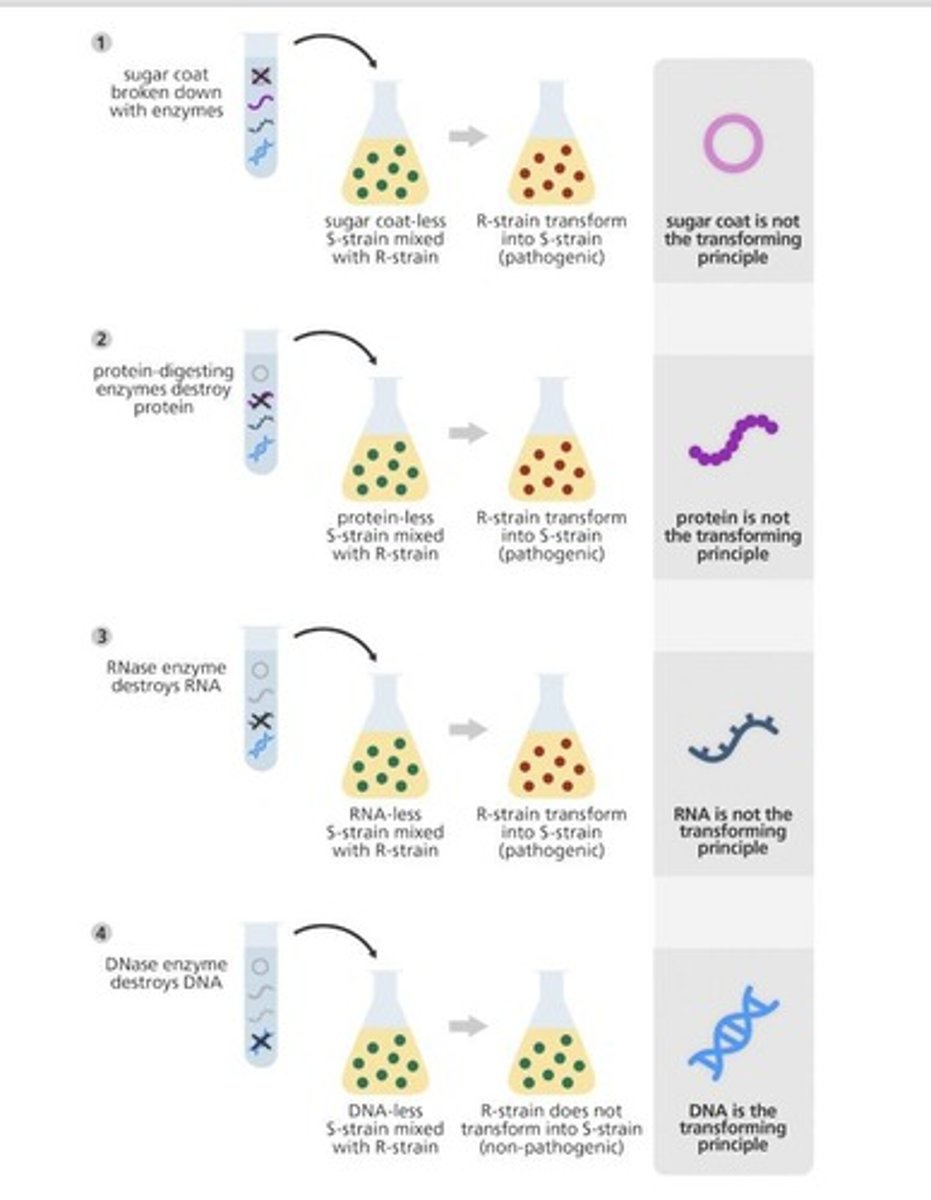
What two strains of bacterium did Griffith work with?
Pathogenic (Smooth S Strain) and harmless (Rough R Strain).
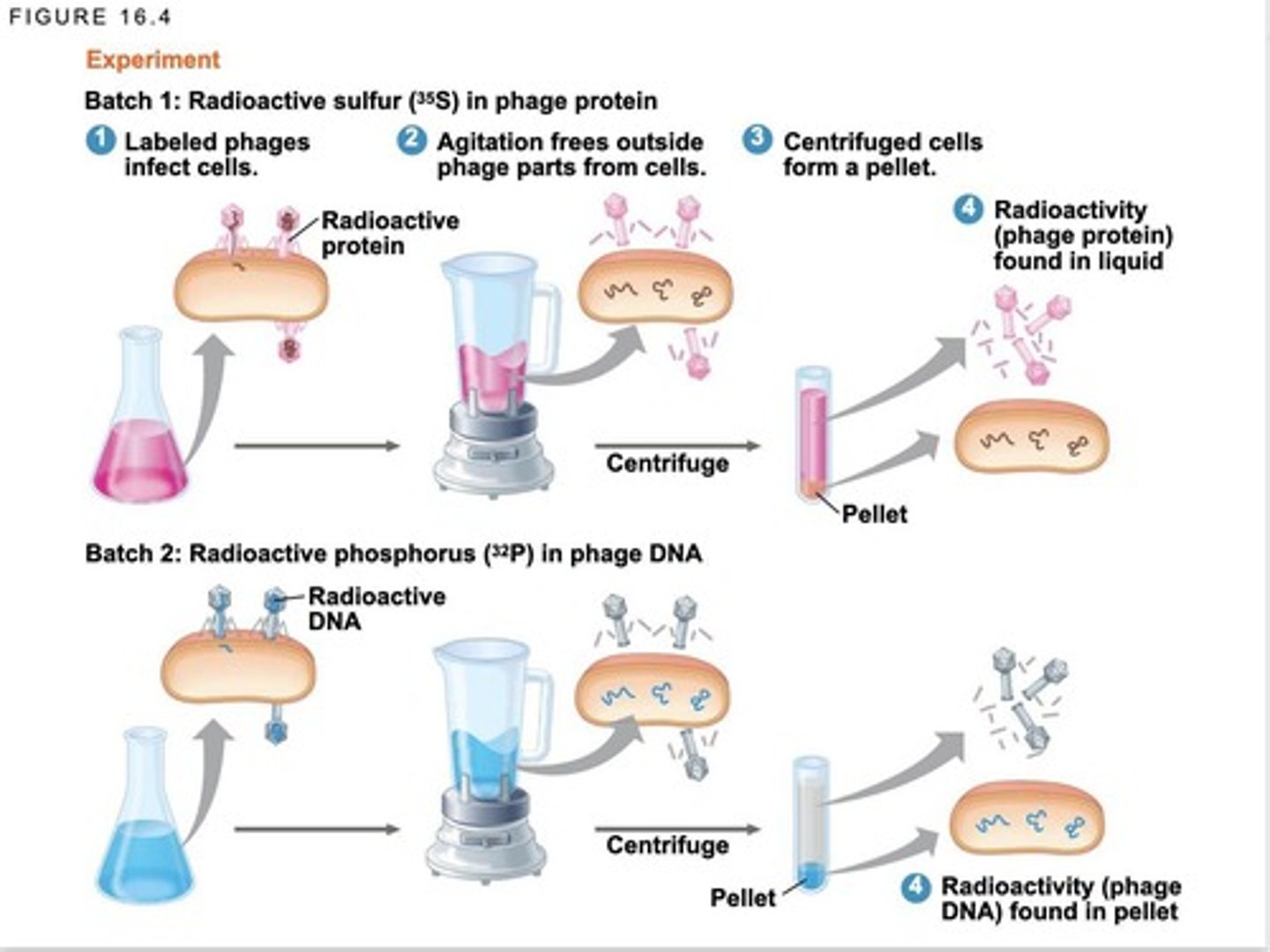
What did Hershey and Chase demonstrate in 1952?
DNA is the genetic material of the phage T2.
What did Chargaff's rules state about base composition?
Amount of A = amount of T and amount of G = amount of C.
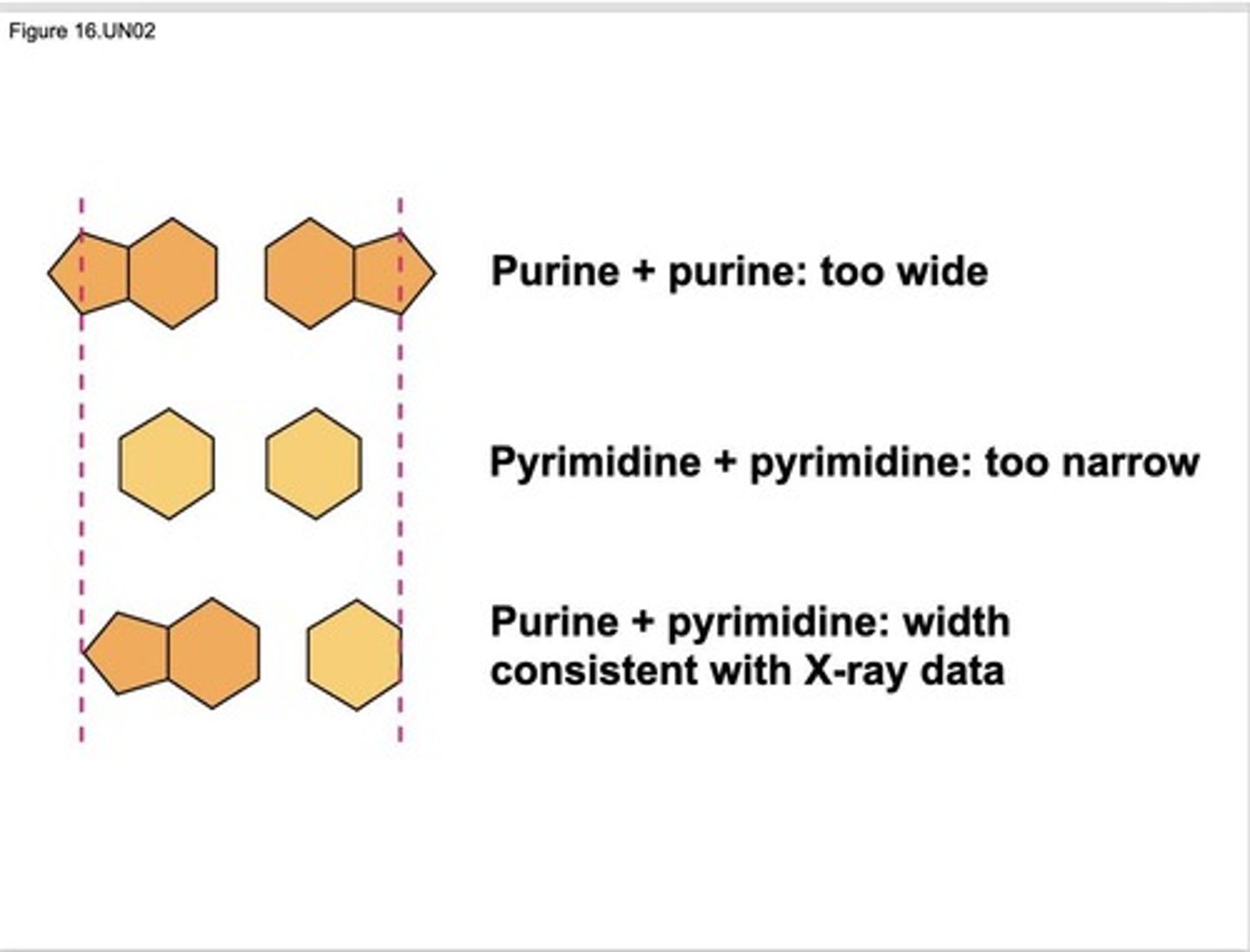
What are purines?
Double rings consisting of Adenine and Guanine.
What are pyrimidines?
Single rings consisting of Cytosine and Thymine.
What technique did Meselson and Stahl use in their experiments?
They labeled nucleotides with heavy and light isotopes of nitrogen.
What are origins of replication?
Particular sites where DNA strands are separated to open a replication bubble.
What is a replication fork?
A Y-shaped region where new DNA strands are elongating.
What is the role of helicases in DNA replication?
They untwist the double helix at the replication forks.
What do single-strand binding proteins do?
They bind to and stabilize single-stranded DNA.
What is the function of topoisomerase?
It corrects over-winding ahead of replication forks.
What is the initial nucleotide strand in DNA replication?
A short RNA primer.
What do DNA polymerases do?
They catalyze the elongation of new DNA at a replication fork.
How is the leading strand synthesized?
Continuously, moving toward the replication fork.
How is the lagging strand synthesized?
In segments called Okazaki fragments, away from the replication fork.
What enzyme joins Okazaki fragments together?
DNA ligase.
What is mismatch repair in DNA?
Repair enzymes correct errors in base pairing.
What is nucleotide excision repair?
A nucleotide cuts out and replaces damaged stretches of DNA.
What is the structure of DNA in a bacterium?
Supercoiled and found in a region called the nucleoid.
What is euchromatin?
Loosely packed chromatin that is not actively transcribed.
What is heterochromatin?
Tightly packed chromatin that is actively transcribed.
What happens to chromatin during interphase?
Some regions condense into heterochromatin.
What is conservative replication?
The original DNA molecule remains intact while a new DNA molecule is synthesized.
What is semiconservative replication?
Each of the two DNA molecules is composed of one strand from the original molecule and one newly synthesized strand.
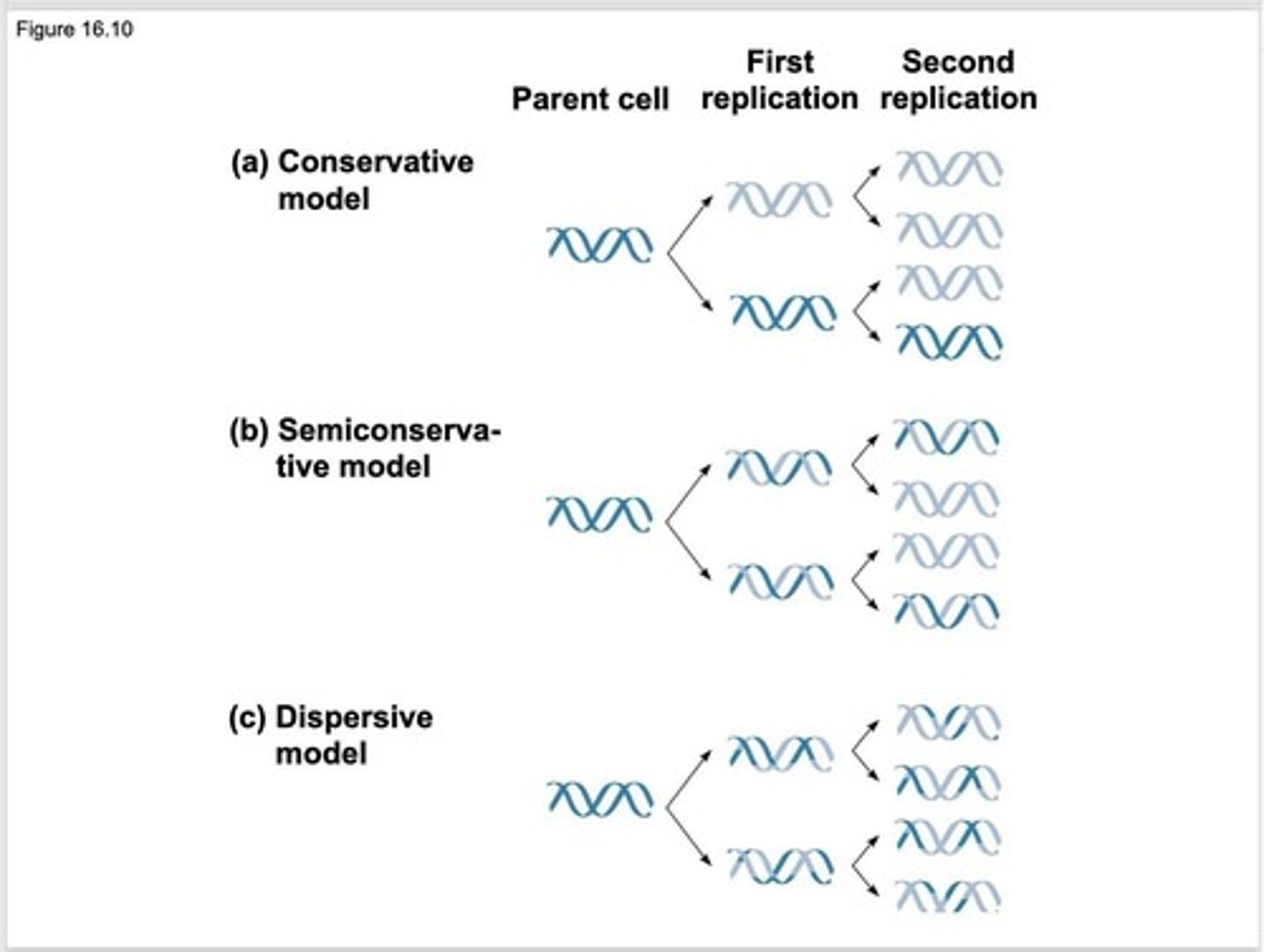
What is dispersive replication?
Each of the two DNA molecules is composed of sections of the original DNA and newly synthesized DNA randomly interspersed along each strand.
What is the role of helicase in DNA replication?
Helicase unwinds the double helix by breaking hydrogen bonds between base pairs.
What does topoisomerase do during DNA replication?
Topoisomerase relieves tension ahead of the fork by cutting, swiveling, and rejoining DNA.
What is the function of single-strand binding proteins (SSBs)?
SSBs stabilize the separated strands and prevent them from re-annealing.
What is the role of primase in DNA replication?
Primase synthesizes short RNA primers to provide a free 3′-OH group for DNA polymerase.
What does DNA polymerase III do?
DNA polymerase III elongates the new DNA strand by adding complementary nucleotides.
Why are multiple RNA primers needed on the lagging strand?
Multiple RNA primers are needed because synthesis restarts as the fork opens more DNA.
What is the function of DNA polymerase I?
DNA polymerase I removes RNA primers and replaces them with DNA nucleotides.
What does DNA ligase do?
DNA ligase seals the backbone by forming phosphodiester bonds between Okazaki fragments.
When does DNA replication end?
Replication ends when replication forks meet and the whole molecule is copied.
What is telomerase and its function?
Telomerase extends telomeres to prevent chromosome shortening after replication in eukaryotes.
What is gene expression?
Gene expression is the process by which DNA directs protein synthesis, including transcription and translation.
What is the one gene-one polypeptide hypothesis?
Beadle and Tatum's hypothesis restated, suggesting that each gene corresponds to one polypeptide.
What is transcription?
Transcription is the synthesis of RNA using information in DNA.
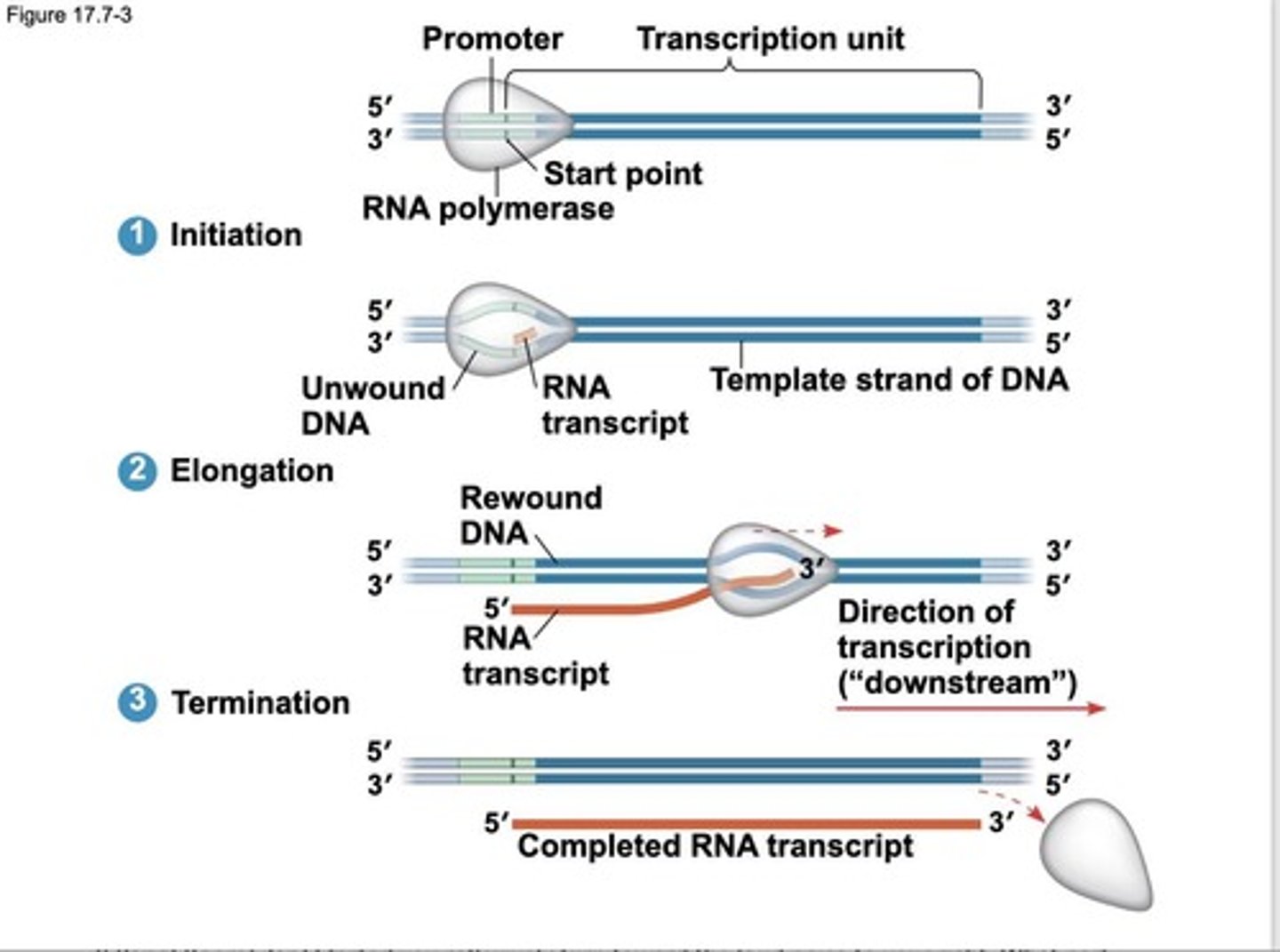
What does transcription produce?
Transcription produces messenger RNA (mRNA).
What is translation?
Translation is the synthesis of a polypeptide using information in the mRNA.
Where does translation occur?
Translation occurs at ribosomes.
How does translation differ in prokaryotes and eukaryotes?
In prokaryotes, translation can begin before transcription has finished; in eukaryotes, the nuclear envelope separates transcription from translation.
What is a primary transcript?
The initial RNA transcript from any gene prior to processing.
What is the central dogma of molecular biology?
The central dogma is the concept that cells are governed by a cellular chain of command: DNA → RNA → protein.
What is the genetic code?
The genetic code consists of 20 amino acids encoded by sequences of three nucleotide bases.
What are codons?
Codons are triplets of nucleotides that correspond to amino acids.
What is the role of RNA polymerase in transcription?
RNA polymerase catalyzes RNA synthesis by prying the DNA strands apart and joining RNA nucleotides.
What is a promoter?
The DNA sequence where RNA polymerase attaches to initiate transcription.
What is a transcription unit?
The stretch of DNA that is transcribed into RNA.
What are the three stages of transcription?
Initiation, elongation, and termination.
What modifications occur to mRNA in eukaryotic cells?
The 5' end receives a modified nucleotide cap and the 3' end gets a poly-A tail.
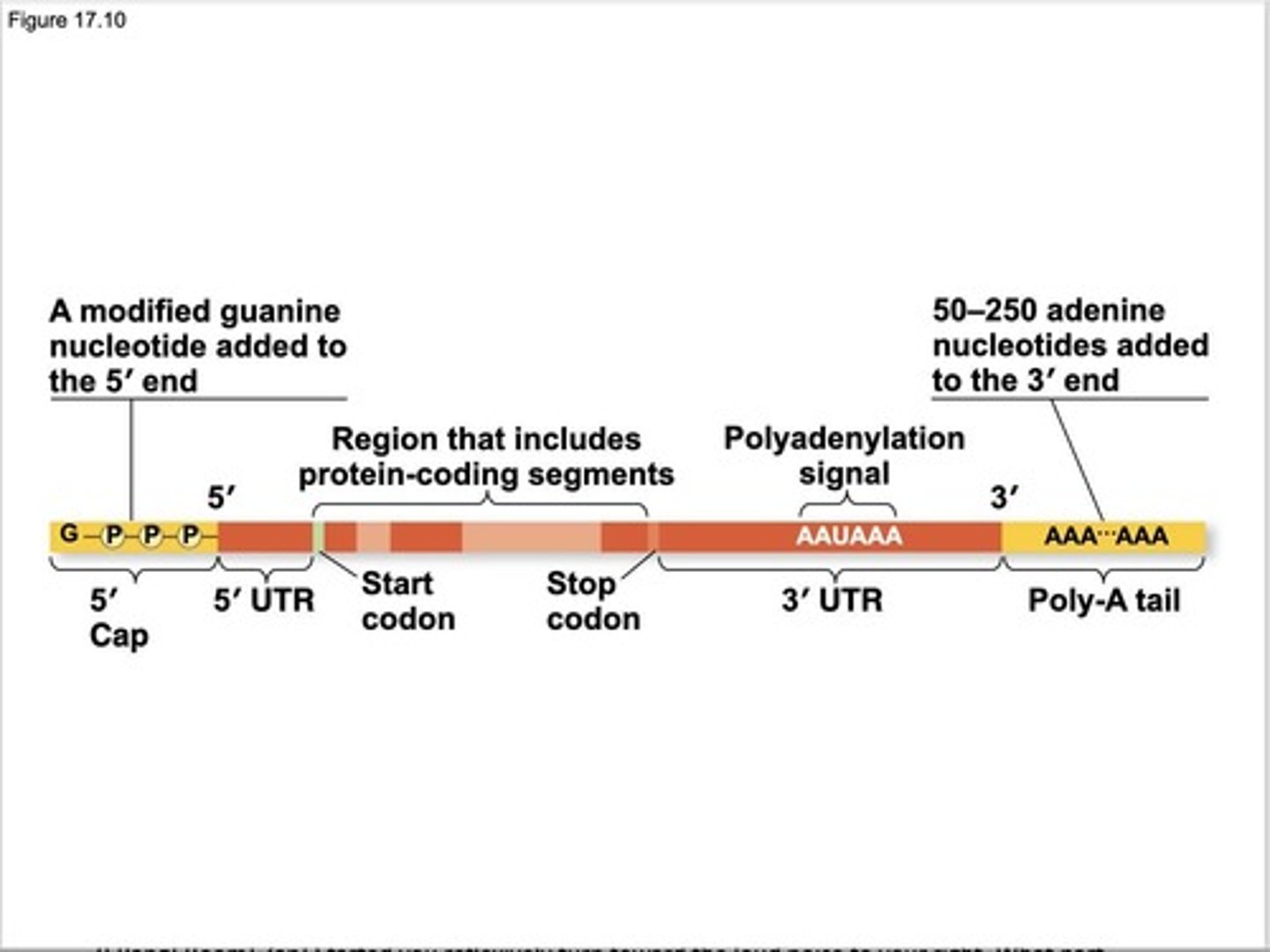
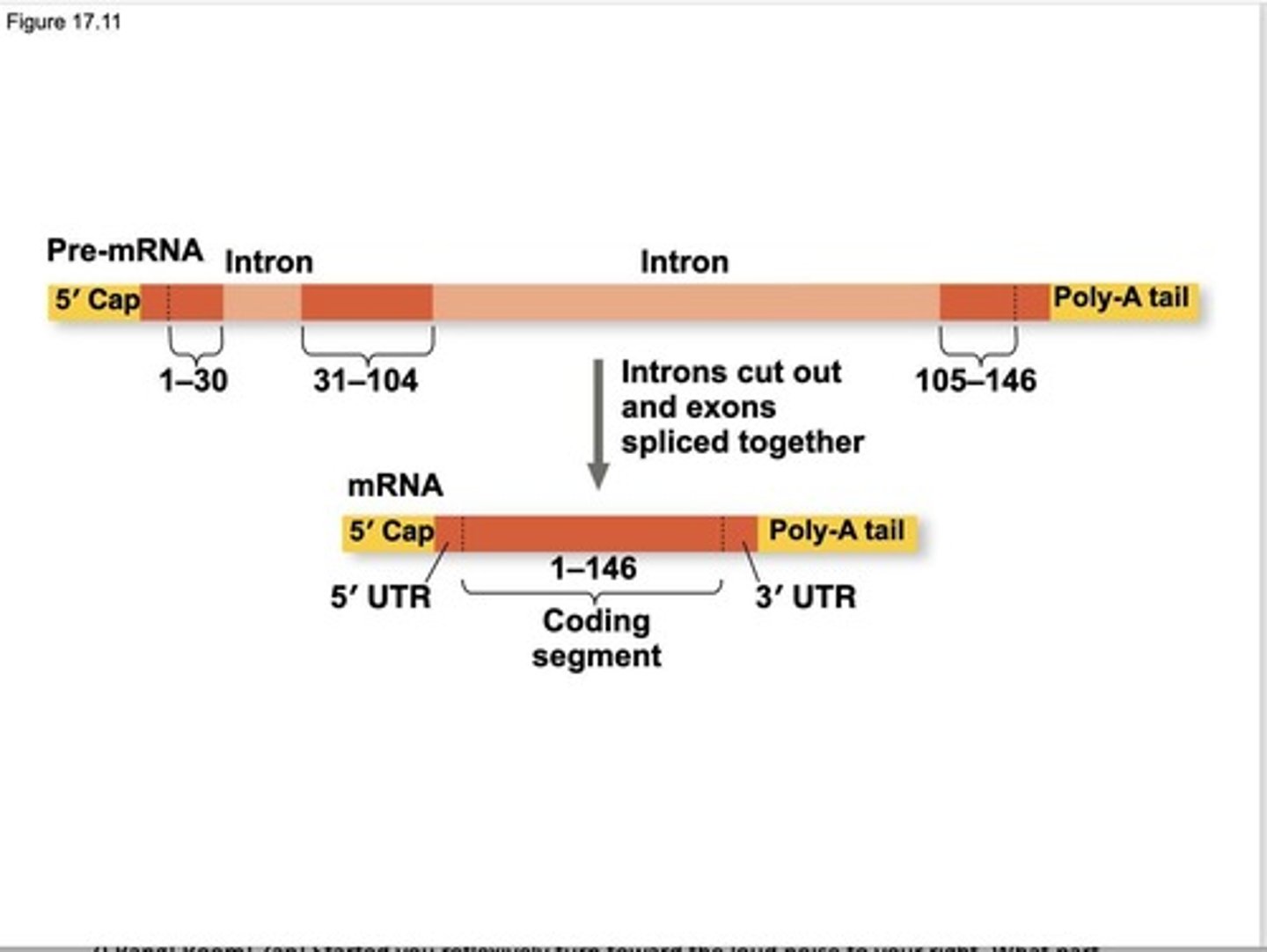
What are introns and exons?
Introns are noncoding regions, while exons are coding regions that are expressed.
What is RNA splicing?
RNA splicing removes introns and joins exons to create mRNA with a continuous coding sequence.
What do spliceosomes consist of?
A variety of proteins and several small nuclear ribonucleoproteins (snRNPs) that recognize the splice sites.
What are ribozymes?
Catalytic RNA molecules that function as enzymes and can splice RNA.
What is alternative RNA splicing?
The process where some genes can encode more than one kind of polypeptide, depending on which segments are treated as exons during splicing.
What is the flow of genetic information from mRNA to protein called?
Translation.
What role does transfer RNA (tRNA) play in translation?
It helps translate an mRNA message into protein.
What is the function of the anticodon on tRNA?
It base-pairs with a complementary codon on mRNA.
What are the two steps required for accurate translation?
A correct match between a tRNA and an amino acid, and a correct match between the tRNA codon and an mRNA codon.
What is wobble in the context of tRNA?
Flexible pairing at the third base of a codon that allows some tRNAs to bind to more than one codon.
What are the two ribosomal subunits made of?
Protein and ribosomal RNA (rRNA).
What are the three binding sites for tRNA in a ribosome?
P site, A site, and E site.
What happens at the P site of a ribosome?
It holds the tRNA that carries the growing polypeptide chain.
What is the role of the A site in a ribosome?
It holds the tRNA that carries the next amino acid to be added to the chain.
What occurs at the E site of a ribosome?
It is the exit site where discharged tRNAs leave the ribosome.
What are the three stages of translation?
Initiation, elongation, and termination.
What is the first step in the initiation of translation?
A small ribosomal subunit binds with the mRNA and a special initiator tRNA.
What happens during the elongation phase of translation?
Amino acids are added one by one to the C-terminus of the growing chain.
What is termination in translation?
It occurs when a stop codon in the mRNA reaches the A site of the ribosome.
How are polypeptides marked for the ER or secretion?
By a signal peptide.
What is a signal-recognition particle (SRP)?
A particle that binds to the signal peptide.
What is a polyribosome?
A structure formed when multiple ribosomes translate a single mRNA simultaneously.
What are mutations?
Changes in the genetic material of a cell or virus.
What are point mutations?
Chemical changes in just one base pair of a gene.
What is a silent mutation?
A DNA sequence change that does not alter the amino acid sequence of the resulting protein.
What happens in a missense mutation?
A single nucleotide change in DNA results in a different amino acid being incorporated into a protein.
What is a nonsense mutation?
A mutation that changes an amino acid codon into a stop codon, nearly always leading to a nonfunctional protein.
What are insertions and deletions in genetics?
Additions or losses of nucleotide pairs in a gene.
What is a frameshift mutation?
A mutation that alters the reading frame due to insertions or deletions of nucleotides.
What are mutagens?
Physical or chemical agents that can cause mutations.
What is the difference between primary and secondary sex characteristics?
primary = direct role in reproduction (gonads)
secondary = features that distinguish the two sexes; develop at puberty
What is the process of creating a zygote called? How many chromosomes does it have?
fertilization; 46 chromosomes
What kinds of sex chromosomes can a sperm contribute? An egg?
sperm = X or Y
egg = only X
What is the function of the scrotum?
highly elastic skin; holds testes outside of body for optimal sperm production
What is the function of the seminiferous tubules? Where are they found?
produce sperm in response to FSH; found in testes
What is the function of the interstitial cells? Where are they found?
produce testosterone in response to LH; found in testes (between sem. tubules)
What is the function of the epididymis?
site of sperm maturation and storage
What is the function of the vas deferens?
tubes; carry sperm from epididymis to urethra; cut and tied during a vasectomy
What is the function of the Seminal vesicles?
produce Sugar which nourishes sperm & increases motility; produces prostaglandins which stimulate uterine contractions (aids the movement of sperm cells)
What is the function of the ejactulatory duct?
regulates release of sperm into urethra
What is the function of the prostate gland?
produces basic mucus to protect sperm from acidity of vagina
What is the function of the Cowper's gland?
produces basic mucus that Cleans the urethra of acidic urine