ruminant nutrition 2
 Call Kai
 Learn
Learn Practice Test
 Spaced Repetition
 Match
Match Flashcards
 Knowt Play
1/24

There's no tags or description
Looks like no tags are added yet.
Name | Mastery | Learn | Test | Matching | Spaced | Call with Kai |
|---|
No analytics yet
Send a link to your students to track their progress
25 Terms
voluntary feed intake
aims
what percent of bodyweight
high NDF does what to the DMI
aim for at least 3 percent bodyweight per day- expressed as dmi
defined as the amount of feed which will be consumed when the animal has access to feed throughout the day
higher the ndf the lower the dmi
but if too rapidly digested then can cause rumen upset and reduce dmi
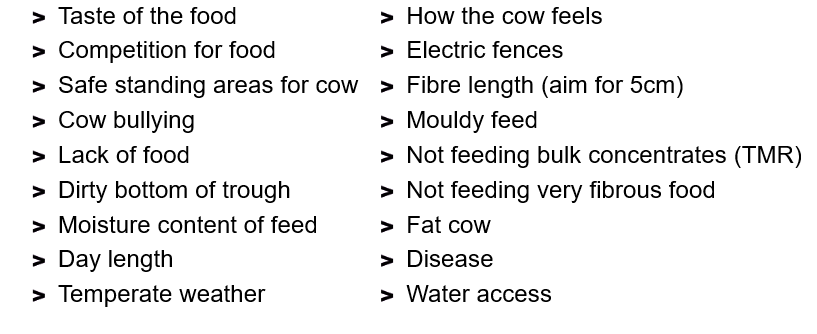
factors affecting feed intake
total mixed ration
what is it
what does it minimise
by how much percent does it improve vfi
why is fibre breakdown quicker
mixture of both forage and concentrates
minimises fluctuation in rumen pH
improves vfi of a cow, up to 30 percent
fibre breakdown quicker due to maintained pH and sufficient ERDP
can add tasy supplements to feed
make sure sorting is prevented
energy
second to dmi when formulating a diet
use megajoule
must be fed with care to avoid excessive acid build up in rumen
sufficient protein needed for breakdown
sufficient long fibre to stimulate the buffering effect of saliva and the slow release of VFA
types of energy
gross energy- total amount of energy the feed contains
digestible energy- GE minus food that is not digestible and is therefore passed in the faeces
metabolisable energy- DE minus losses in methane and urine
ME is the energy available to the cow to use, roughly 80 percent of dietary energy
net energy
ME-heat loss, as ME is turned into a useable form
used for maintenance of body functions, milk productions, body tissue growth, foetal growth
use ME when stating energy of a feed as have no idea how the erngy will be utlised by the animal
protein
2 types
which protein is good at forming essential amino acids
why cows with high vfi struggle to properly degrade protein
what can excessive amino acids be used for
third most important limiting factor
udp and rdp
non protein nitrogen must also be considered
not only does the animal need protein but so do the microbes to form VFAs
MCP very good at forming essential amino acids so ensure diet sufficient in them
udp important to make sure some protein does reach small intestine (deliver essential amino acid to intestine)
cows with high vfi will not always degrade protein sufficiently due to increased gas ransit
excess9ve amino acids that are not needed for making prtein can beused b liver to form eneryg
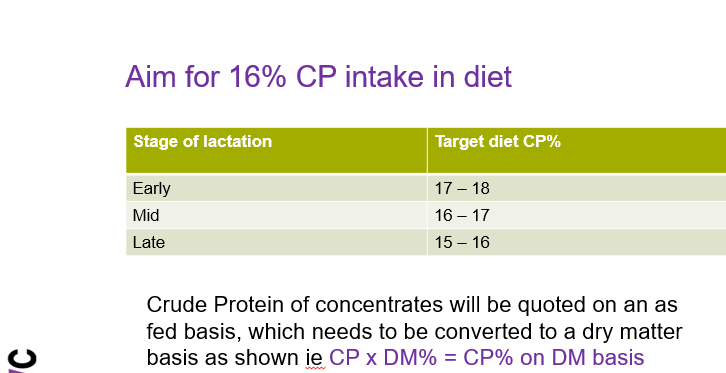
protein aim for early, middle and late lactation
what is fermentable metabolisable energy
proportion of organic matter of a feed that is fermented in the rumen
effective rumen degradable protein
the microbial requirement for nitrogen ie the more the microbes have to work the more nitrogen they need
important not to have wasted fme in rumen with insufficient erdp and not have excessive erdp for fme available
what must foods be
low energy low nitrogen eg straw
low energy high nitrogen eg urea, pulps
so that these can be used to supplement
high energy low nitrogen eg molasses beet grain potatoes
high energy high nitrogen eg oil seeds
metabolisable protein
converted to net protein after loses taken into account
maintenance has a 100 percent conversion rate to NP
but loses due to weight gain, pregnancy, milk production, wool and hair growth
fats
what does this allow farmers to do
cost
disadvantages and how is this overcome
very high energy
allow farmers to feed less conc to cows so they in turn eat mroe roughage
cheaper than grain
but impair microbe digestion so cause fall in food intake and rediced use of nitrogen which is then removed as ammonia
protected fats given to prevent harming microbes eg whole oil seed
aims of diet
when ammonia released from the breakdown of protein it must soon be assimilated into microbial protein so an energy soure must be on hand to do this
energy and protein need to be released at the same rates throughout the day to ensure no wastage
benefits of tmr
urea added as a source of nitrogen when erdp is low
argument for givving rup as that protein will be brken down by si and used for tissue protein or energy
how to know if cows are being fed correctly
BCS
bloat
milk yield
milk fat
protein
faecal consistency
fertility record
look at feed and left over
what is energy needed measured in
MJ/kg DM
energy consumed formula
energy consumed= DM x MJ/kg DM
problems with:
how much percent NDF
consequence of high conc
with high energy concnetrate diets
high protein diets
high fat
-
BUT
•Need at least 30% NDF to promote rumination and help rumen health – but slower energy!
•
•SARA a possible consequence of high concentrates
§Crushing grain helps to make the starch slower release
§
•High energy concentrate diets increase proprionate production, and decrease the production of acetate which is needed to maintain milk fat levels
•
•High protein diets lead to excessive deamination, reduces liver function and fertility
•
•Excessive fat, which are high in energy, in the diet depresses appetite and alters milk fat %
formation of clot and what enzymes break it down
milk ingested into abomasum
milk (casein) clots due to pH, rennin and pepsin
whey/lactose moves on to small intestine for digestion
clot is broken down by pepsin and lipase and the products absorbed in the small intestine
replacement feeds have less protein but higher energy, so often no clot
calf milk replacer
how much crude protein is needed
how much crude fat is needed
what vitamin must be in adequate amount
crude protein
protein provides essential amino acids for tissue synthesis in ruminants
require more than 22 percent crude protein
crude fat
provides a conc energy source and essential fatty acids
calves raised in a cold env have higher requirement for energy
require more than 20 percent
all contain adeuqat vitamin e
how much calf milk replacer
how many times a day
how much percent of bodyweight
weight gain aim per day range
little and often
at least twice a day
aim to feed 15 percent bwt daily up to 20 percent
aim 500-1000g/day calf weight gain
dietary diarrhoea
milk enter rumen due to failure of oesophageal groove/drink for thirst
lack of clotting and digestion
whole milk passes into SI where good source for bacteria replication
putrefication causes malabsorption in SI and thus diarrhoea
how do bacteria develop in the rumen?
which vfa is important for papillae
what will happen to restricted calves
initially none
ad lib water needed to allow bacteria growth
can offer conc as soon as possible
no anaerobic bacteria until calf starts to eat conc
anaerobic bacteria ferment carbs and protein in pellets to form VFAs partcularly propionate which is essential for papillae formation
conc fed ad lib, as if restricted calves will gorge and cause rumen pH to drop
forage
what does is promote growth of
what does it prevent formation of
promote growth of muscular part of rumen
prevent formation of keratin on papillae which would prevent vfa absorption