Ancient Art Final
 Call Kai
 Learn
Learn Practice Test
 Spaced Repetition
 Match
Match Flashcards
 Knowt Play
1/52

There's no tags or description
Looks like no tags are added yet.
Name | Mastery | Learn | Test | Matching | Spaced | Call with Kai |
|---|
No analytics yet
Send a link to your students to track their progress
53 Terms
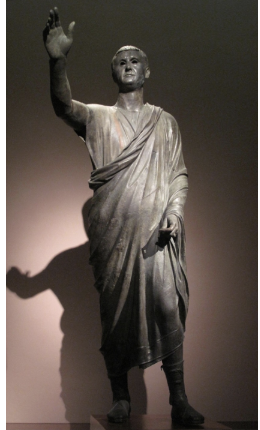
Aulus Metellus, Orator, early 1st century BCE: ROMAN REPUBLIC
- lost wax technique
- Names of Etruscan parents inscribed
- residue of fusion of Etruscan and Roman culture
- elite, high status senator about to make a speech ~ gesture
- characterized by toga, boots, and ring
- Assimilation
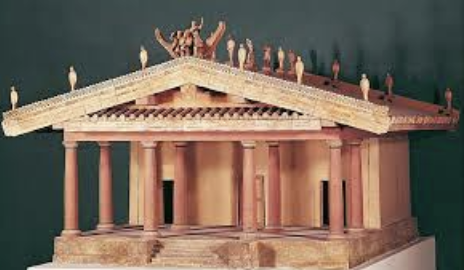
Temple of Jupiter Optimus Maximus Capitolinus, Rome, Italy, sixth-fifth century (509) BCE:
- Jupiter “the best, the biggest” temple
- Capitoline Hill ~ Capitoline triad, most important gods
- Jupiter (Zeus)
- Minerva (Athena)
- Hera (Juno)
- Columns made of wood, walls made of mud-brick, terracotta
- Emphasis on the facade, focus on the front of the temple
- Cellas of gods
- central staircase in front, columns around front and side, wall in the back
- Podiums very high (foundation where the temple sits)
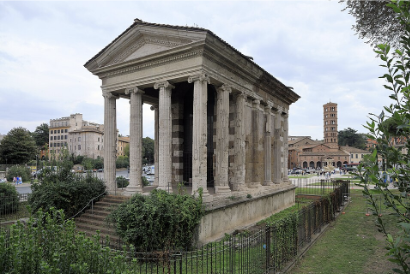
Temple of “Fortuna Virilis” (Temple of Portunus), Rome, Italy, 75 BCE: ROMAN REPUBLIC
- Travertine stone from Tivoli
- has both Etruscan (high podium, large porch) and Greek elements (use of stone and Ionic columns)
- made into a church
- columns turn into engage columns, no function, just decorative
- use of concrete
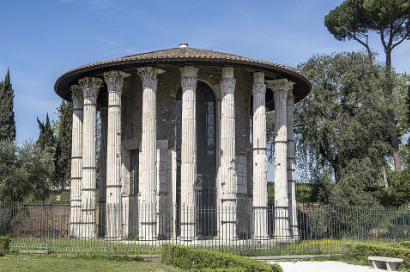
Temple of Hercules, Victor, ca. 140 BCE: ROMAN REPUBLIC
- reference to Greek temple
- Tholos (circular) temple
- Corinthian columns
- Monument to a Roman conquest
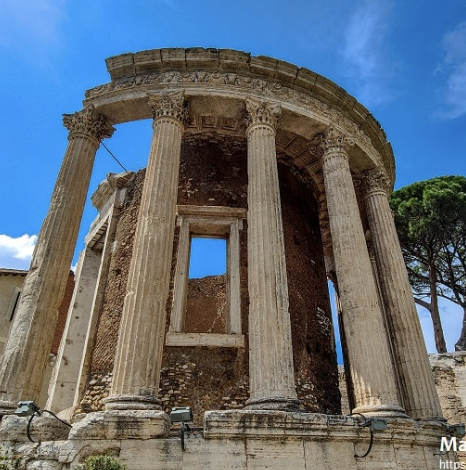
Temple of Vesta, Tivoli: ROMAN REPUBLIC
- Greek Tholos temple, but has Etruscan staircase and high podium
- Corinthian capitals
- invented by Greeks, but loved by Romans
- Ecanthus leaves
- Inner cella circle wall, use of concrete, impermeable to water, would have stucco on it to appear like marble
- Lucius Gellius, builder and “restorer”, consul
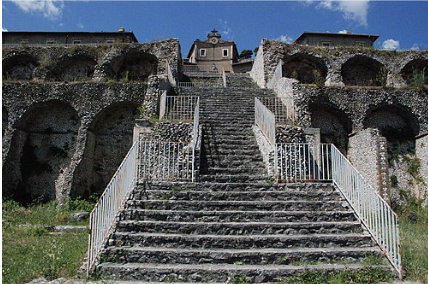
Sanctuary of Fortuna, Praeneste, ca. 120 BCE: ROMAN REPUBLIC
- built into a hill, series of terraces supported by barrel vaults
- the “first” goddess of Fortuna
- Temple, theater, shops ~ entertainment complex
- Use of concrete makes this feasible
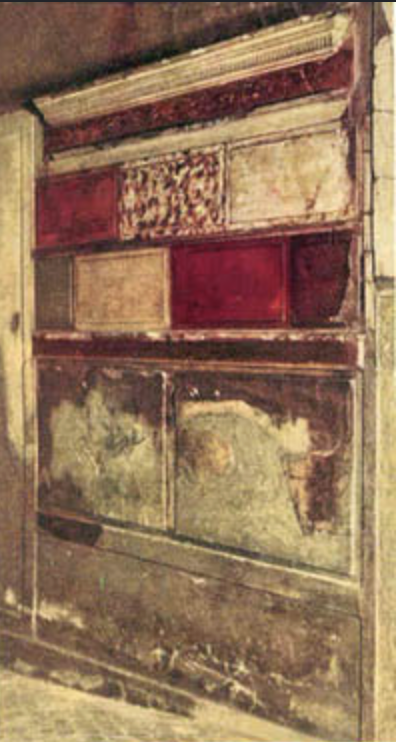
- First style painting:
- 80 BCE
- simulating marble panels
- expensive stones, suggest wealth of patron, taste, collection
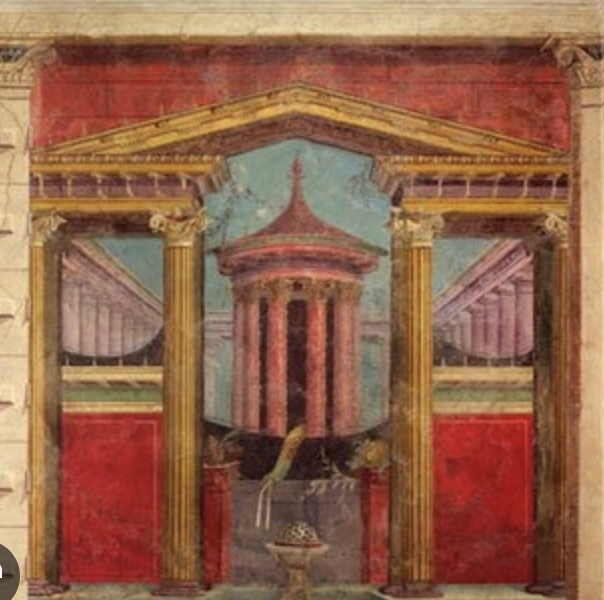
- Second style painting:
- illusion of panels, play between surface and depth - House of the Griffins
architectural style, illusionary 3d spaces
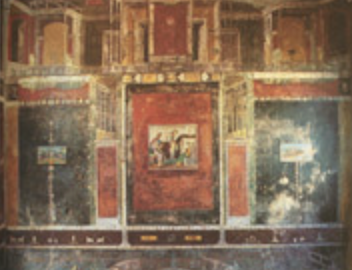
Third Style Wall painting:
flat, monochromatic backgrounds—frequently black, red, or white—featuring delicate, fantastical, and stylized architectural motifs. Popularized during the Augustan period, it emphasizes artistic elegance, intricate details
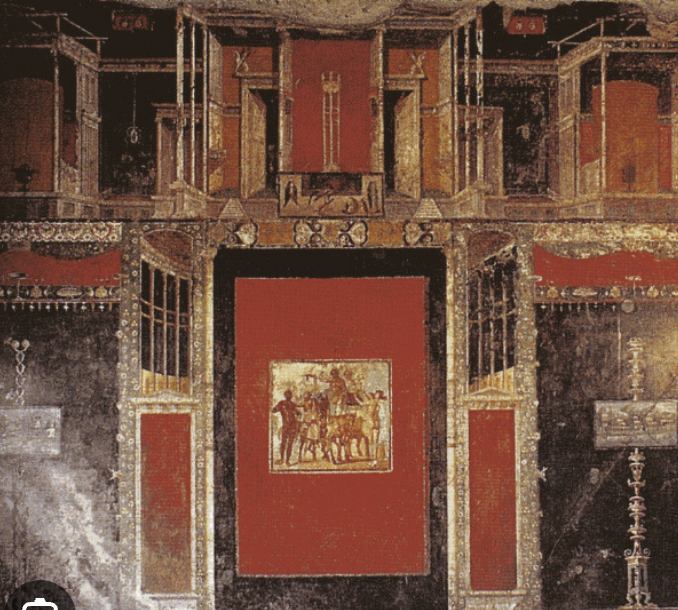
Fourth Style Wall painting:
a complex fusion of the previous three styles, characterized by ornate, theatrical, and often fantastical architectural vistas. It combines the 3D illusionism of the Second Style with the flat, framed, and delicate panels of the Third Style
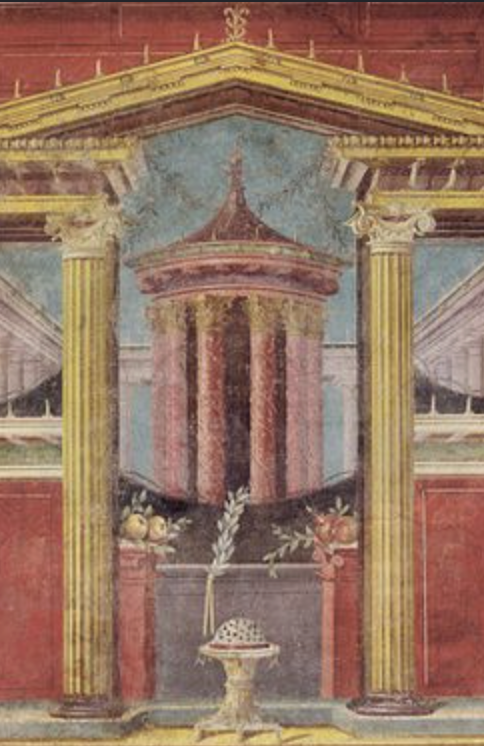
Palatine Hill Rome, ca 80 BCE, ROMAN REPUBLIC
- painted figures, sculptures act as illusion for depth - on a pedestal, turning in space to look at viewer
- innovative, wall isn’t a wall
- looking out into a landscape, linear perspective
- broken pediments painted
- images of masks, alluding to illusionistic nature of theatre
- atmospheric perspective
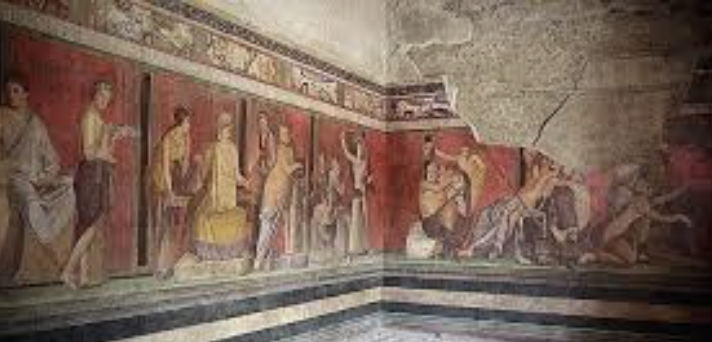
Villa of the Mysteries:
- Dionysiac mystery frieze, second style wall paintings, room 5 of VOTM, 60-50
- marrying of women to Dionysus
- interaction across the walls
- large figures operating as if on stage, inhabiting room, backdrop
- light and dark modeling of figures
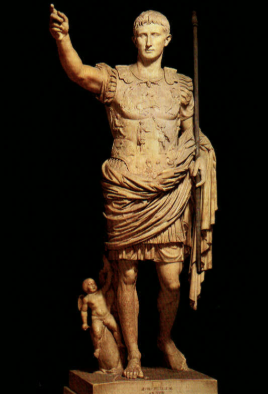
Portrait of Augustus as General, 20 BCE, Primaporta: EARLY ROMAN EMP
- marble copy of bronze original
- public image quite different from representation of senators
- very inspired by Greek sculpture, ideal image
- wearing armor and robe, draped like toga ~ personification of Roman army on chestplate, man standing back “Roman standards”, flag retrieved from Parthons
- gesture of a general addressing his troops, speech of senate ~ mixing of orator and general
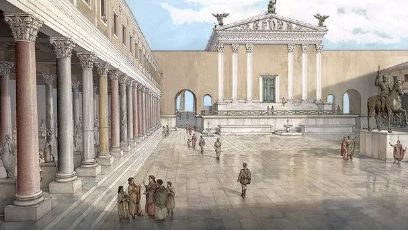
Forum of Caesar: EARLY ROMAN EMP
- temple to Venus Genetrix in back
- shops bordering, for the people
- business of the senate takes place in senate house
- pediment depicting Venus’s birth ~ divine genealogy
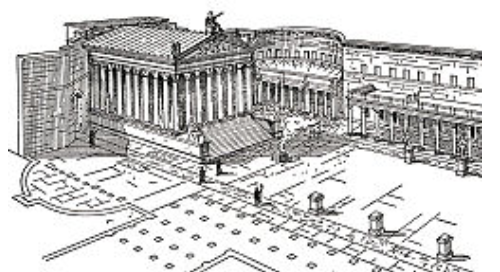
Forum of Augustus w/ Temple of Mars (avenge father) EARLY ROMAN EMP
- public business happens here, public square as atrium of his house
- hemicycles ~ semi-circular rooms for statues and art
- Chariactid columns, looking back to Athena Polias, images of conquest
- “Fire wall” between Forum and the slums to protect from fires, division between sacred and lower-class neighborhoods
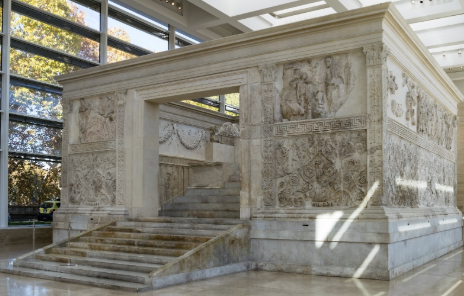
Ara Pacis Augustae, 13-9 B.C: EARLY ROMAN EMP
- “Altar of Augustan Peace”
- visualizing peace, prosperity, and perpetual civil order
- altar where sacrifices are made
- stone screen articulated by relief sculpture
- “Senate voted to build it” ~ hegemony
Inside:
- Bucrania on interior wall (bull head, garlands, ribbons)
- Show piety, ritual
- Procession of Vestal Virgins, north inner wing of altar
Outside:
- Mythological scenes on East and West (short ends)
- Ornate beautiful vegetation, cornucopia of abundance below scenes
- rosettes, candelabra, everything is flowering, renewal
- animals, naturalistic
- West: Anias sacrificing to his household Gods
- East: Female personification (Tellus? Venus? Peace?), embodiment of ideas and qualities of the time
- wind gods of sea and earth
- peace and fertility
- South side frieze: Augustus and members of the imperial household (Religious procession of the imperial family)
- Romans celebrating, observing sacrifice
- Agrippa appears as the prominent, hooded figure on the right
- children, “family values” ~ mother scolding child
- Reference to Parthenon frieze
- characters on stage, behaving naturally
- “Hostage guest” ~ child kidnapped from other nations, integrated into Augustus’s family
- North side with senators:
- portrays senators participating in rituals, power derived from relationship with Augustus
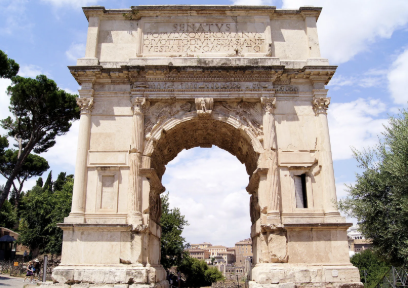
Triumphal Arch of Titus, 81 CE: EARLY ROMAN EMP
- remembering a triumph ~ memory
- procession of army with spoils
- pedestal for bronze statue of general with horses
- roman winged figures of Nike ~ victory figures
- combination of corinthian and ionic columns
- peace in Rome
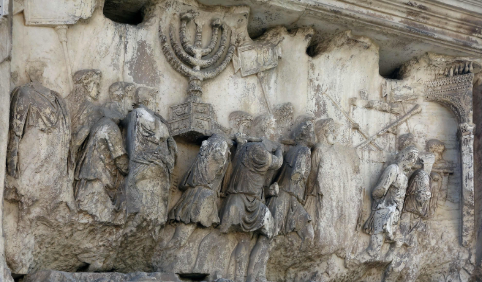
- Spoils of Jerusalem, relief panel, Arch of Titus, EARLY ROMAN EMP
- big floats
- holding up paintings of significant moments in war
- golden objects, Torah displayed, minorahs, “spoils”
- naturalism to place viewer in scene
- triumph within a triumph
- “Temple of peace” museum holds objects of triumph, no longer there
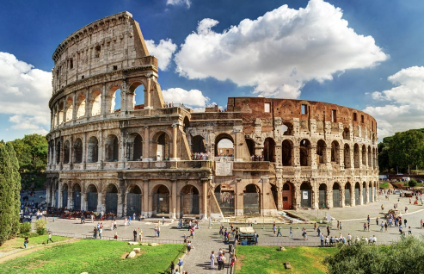
Flavian Amphitheatre (Colosseum) EARLY ROMAN EMP
- replaces destroyed Domus Aurea
- groin vaults
- spectators can feel powerful when they have no power
- document of civilization and engineering, also barbarism
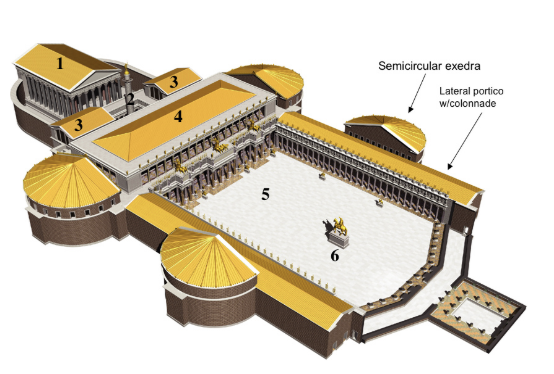
Forum of Trajan, HIGH ROMAN EMP
- largest Forum
- featured temple, column, libraries, basilica ulpia, forum, equestrian statue
- Column very well retained, became a Christian monument
- insanely detailed scenes, repeated, show “us vs them”
- sign of victory, floral wreath
- crossing of the danube river, river personified
- soldiers marching, order and precision of war machine, holding items
- emperor depicted doing a sacrifice, his piety, ritual
- inspired by Forum of Augustus ~ bigger and better
- references to Athena of Nike ~ classical monuments
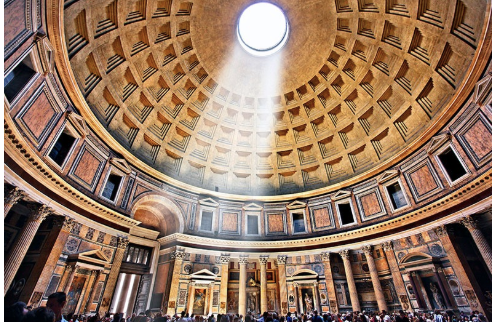
Pantheon, 118-128 CE (Era of Trajan): HIGH ROMAN EMP
- Temple to all the gods
- inspired/designed(?) by Hadrian, rebuilt it ~ gives honorific to Agrippa
- first built by Marcus Agrippa, rebuilt many times ~ Apollodorus of Demascus(?)
- combination of traditional and innovative Roman architecture
- post and lentil combined with shaped interior space
- Dynastic temple(?) ~ old emperors worshipped
- Celestial Geometry: intersection of horizontal and vertical circles; circle and square, mathematical unity
- two pediments
- Oculus: circular opening in ceiling allows light into the building
- mediates experience between viewer and Gods
- turned into a Christian church ~ continuity of use, allowed its conservation
- would not immediately see dome from outside ~ looks like any other traditional Roman temple, until you go inside ~ transformation
- porch is dark
Interior:
- go from dark to light, heavens emerge in front of you
- limitless feeling, cannot take in from any one point of view
- celestial geometry and marble everywhere
- statues of deities/old emperors all around
Dome:
- dome accents being off-center gives sense of rotation
- concrete gets lighter higher in the dome
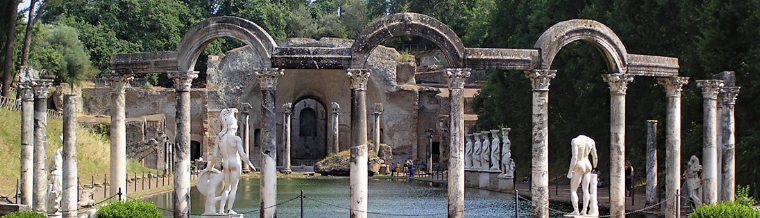
Hadrian’s Villa at Tivoli: HIGH ROMAN EMP
- not symmetrical, “recreation of world” in private villa
- bringing different aspects of the Roman world home
- Teatro Marittimo
- private space for emperor to go to, includes a moat
- innovative concrete technology mixed with Greek columns
- mirrors shape of Roman houses, but also the Pantheon
- Canopus:
- recreate the Nile river
- Temple, but acts as a dining room
- segmented, or pumpkin, domes
- brings together Greek and Roman styles of arches
- illustrates history of architecture
- Caryatids resembling those of Temple of Athena Polias
- souvenirs, recreated
- becomes a sort of museum-house of art
- boyfriend Antonius is defied after he dies
- appears in different statue forms in the villa
- Greek relationship of older man and young boy
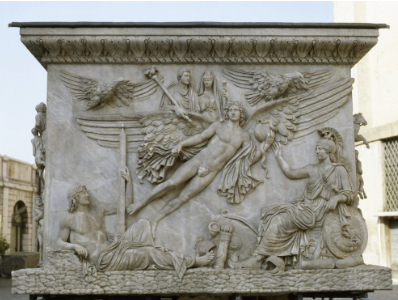
Apotheosis of Antoninus Pius and Faustina, pedestal of the Column of Antoninus Pius, AD 161: HIGH ROMAN EMP
- bottom of a column
- resembles High classical Greece and The Ara Pacis
- naturalistic
- men peeking around the sides (from the military review)
- squished, abstract scene, anti-naturalistic, show you as much as possible
- conflation of style
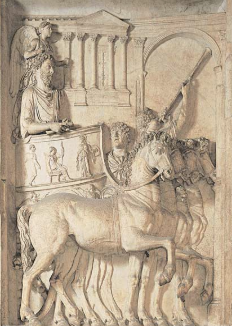
Triumph of Marcus Aurelius, 176-180: HIGH ROMAN EMP
- figures moving into illusionistic arch
- Similar to Arch of Titus
- making clear what is important
- classicized, naturalistic, but scale is challenged
- battles allow for peace, offering clemency to enemies
- and yet, we know who’s boss
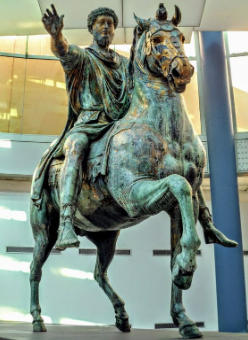
Equestrian Statue of Marcus Aurelius HIGH ROMAN EMP
- Gilded, carved bronze
- Marcus not wearing armor ~ fighting is done, in civilian clothes
- able to both battle and conduct self in senate
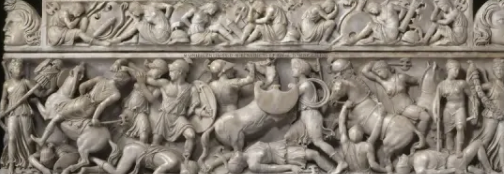
The Amazon sarcophagus, 2nd century: LATE ROMAN EMP
- Sarcophagi
- connect self to (Greek) culture of being civilized
- stories express concern with values, being a good person
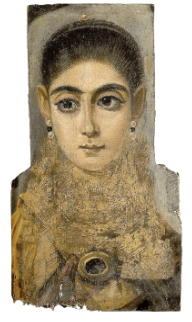
Mummy Portrait of a Young Woman LATE ROMAN EMP
- naturalistic, specific
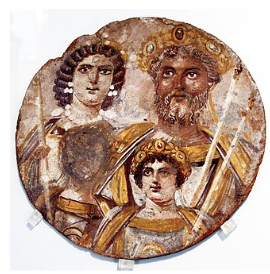
Painted Portrait of Severus Family Portrait: LATE ROMAN EMP
- imperial family
- survived in Egypt
- frontality, emphasizing authority and hierarchy
- Septimius wants to look like Marcus Aurelius ~ provides legitimacy
- Caracalla has his brother Geta killed and erased from history
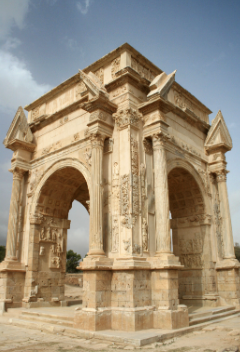
Arch of Septimius Severus, Libya: LATE ROMAN EMP
- triumphal arch, limestone and marble
- intersects north and south streets going into the city
- celebrates victory over Parthians
- broken pediments
Panel:
- not illusionistic, but Plebian
- front-facing figures, obvious who empire is, hierarchical style
- more abstract ways to represent the body
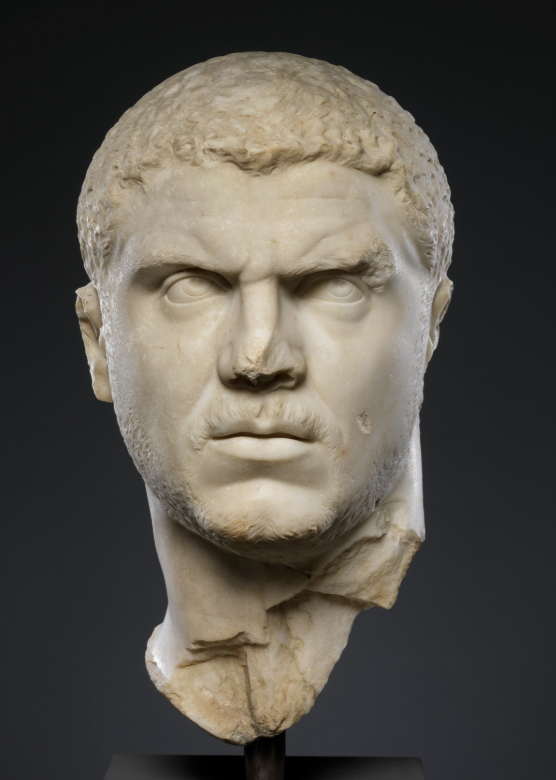
Portrait of Caracalla as emperor:
- “The Beast”, angry, wants to show you that he’s out for blood
- wanted to be associated with Hercules
- didn’t spend time with senate, but with gladiators
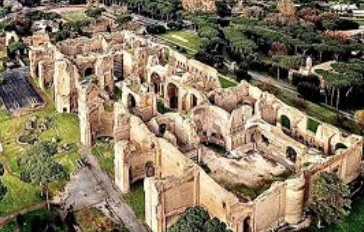
Baths of Caracalla, 211-217 CE, LATE ROMAN EMP
- very monumental, includes shops, many pools, gyms, dome
- large gardens outside
- method to bathing ~ hot, warm, cold
- people would play games together
- subterranean corridors
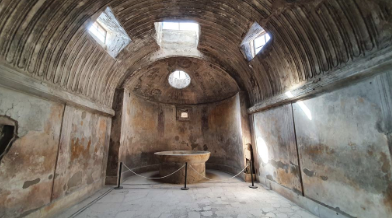
Men’s caldarium, Pompeii, 90 CE, EARLY ROMAN EMP:
- public forum baths
- oculus
- murals depicting men bathing
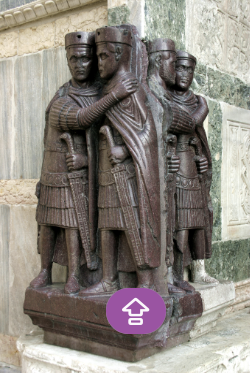
Portrait of the four tetrarchs: LATE ROMAN EMP
- not obvious who is who
- no contraposto, accurate proportions
- picking up idea of abstraction and clarity of Freedman/Plebian art
- unified emperors, depicted the same to display their same amount of power
- body language suggests solidarity
- otherworldly, change in style going with change of social contest
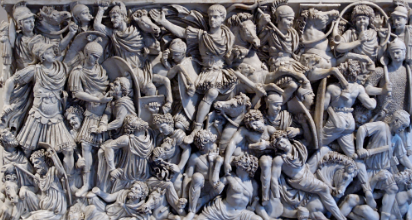
Ludovisi Sarcophagis, 250-260: LATE ROMAN EMP
- displays what was going on in the mid Third century
- Rome was no longer winning against enemies
- all pushed to the foreground, no architecture or empty space, not interested in depth or clarity but chaos
- Distinct difference between Romans and “barbarians”
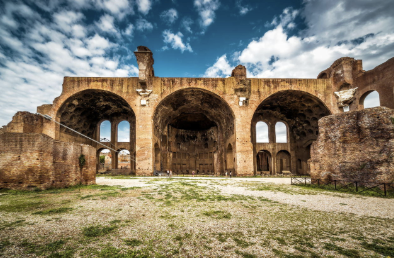
Basilica of Maxentius and Constantine, Roman forum: LATE ROMAN EMP
- began by Maxentius, finished by Constantine
- gigantic barrel vaults
- shows impact of baths of Caracalla
- opens up huge spaces for windows ~ impressive architecture
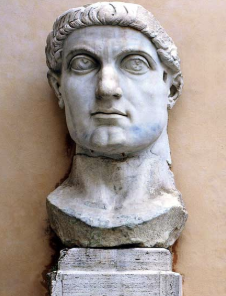
30 foot statue of Constantine, HIGH ROMAN EMP:
- made of many different components
- participates in tetrarchic style ~ abstraction, cubic, especially through the eyes
- Augustus-esc haircut, nod to Trajan
- designed to create image of transcendent, unrelatable ruler
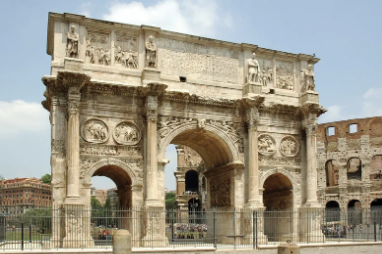
Arch of Constantine, 315, HIGH ROMAN EMP:
- has pieces of other arches ~ taking roundels from Hadrian, square panels from Trajan and Marcus Aurelius
- not just imitating other monuments, but taking them and inserting them into his own art
- “avenged the republic” “inspiration of divinity”
- has not had victory against enemies, only against other Romans
- clash of different elements and styles
- Hadrian’s roundels very classical and illusionistic, Constantine’s frieze very clear, frontality and centrality of the emperor
- flanked by images of previous emperors he wants to connect with
- plebian style more accessible, know exactly who is who, no overlap/depth
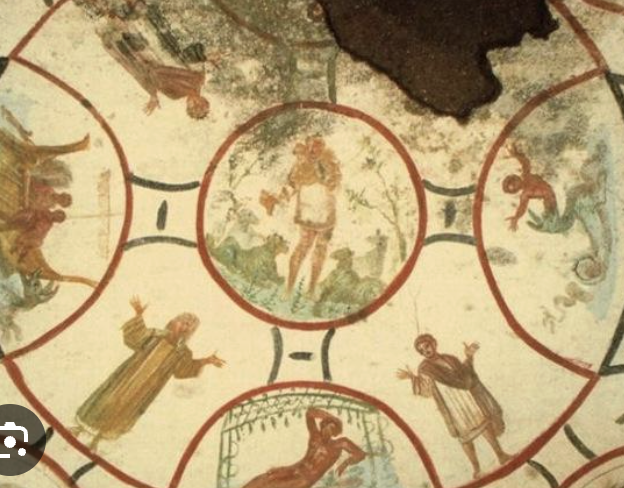
Cubiculum ceiling of the Catacomb of Saints Peter and Marcellinus, 4th century: LATE ROMAN EMP/ANTIQUE
- Christian’s buried
- series of frescos give earliest images of Christ/Christianity
- represented as the good shepherd
- sheep represent the Christian flock ~ Jesus takes care of
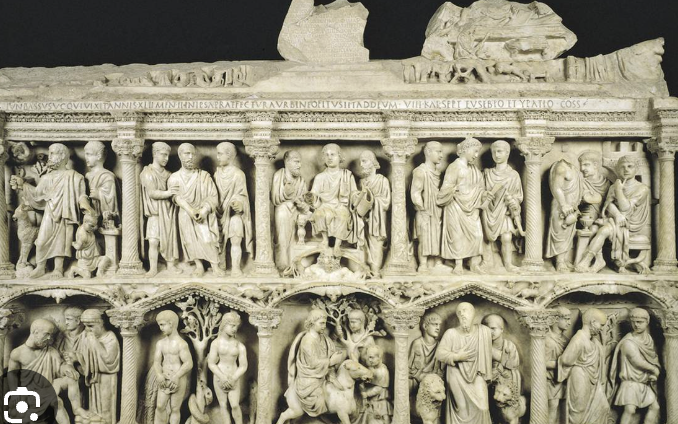
Sarcophagus of Junius Bassus, 359: LATE ROMAN/ANTIQUE
- important roman government official ~ converted and baptised right before he died
- full of Christian imagery ~ sacrifice of Isaac, capturing of St Peter
- imagery of ‘Cupids’ on side of sarcophagus ~ making wine
- Dionysus revisited ~ Jesus’s blood made of wine, given new meaning
Christ standing on head of Pagan god, detail of North frieze:
- takes exact pose of Roman empire giving of the law
- mix of late Antique style and late Imperial iconography (Arch of Constantine)
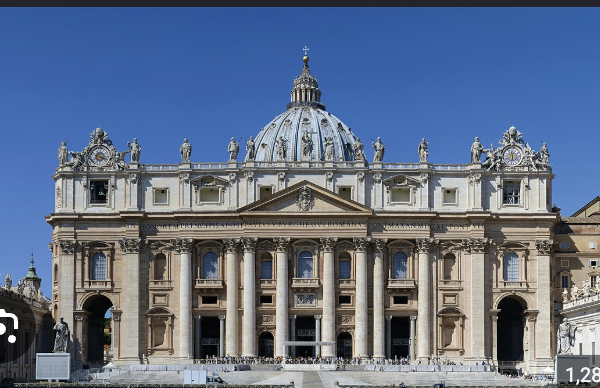
Basilica of St. Peter:
- Roman building type adapted to new context ~ looks back to old basilicas in forums
Republican period/Roman Republic (509-27 BC):
- Roman temples combine elements of Greek and Etruscan temples
- actuality and symmetry, facade mentality
- introduction of curves, freed from rectilinear post and lentil
- Two origin stories of Rome’s founding:
- Romulus and Remus or Anais
- traditional founding is April 21, 753 BCE (during Geometric period of Greece) - Romulus, first king
- evolution of Italic society out of larger society of Etruscans
- Spoke early version of latin – different from what Etruscans speak
- Preferred cremation over burial ~ cinerary urns
- Etruscans (1000-50 BCE):
- central and northern Italy, dominant civilization
- indigenous, strongly influenced by Greece
- regal rule, predate the Romans – did they rule them?
- 509 – expulsion of last Etruscan king in Rome
- Hellenistic Art: 323-100 BCE: Alexander the Great
- “Social war” ends in 89 BCE, Romans widen citizenship to people from other Italic states they control
Early Roman Empire
27 BC - 96 AD
High Roman Empire
96-192 AD
Late Empire
A.D 192-337 AD
Julius Caesar: EARLY ROMAN EMP
- imagining self as most powerful but also pretending he's just a part of elite republic
- puts self in coin
- Julius Caesar assassinated by group of supporters/senators of republic in 44
- public not happy, civil war breaks out
- Octavius and Marc Antony win, avenge Julius Caesar (dad of Octavian)
Augustus: EARLY ROMAN EMP
- use of Hegemony, “humble”, “savior”
- handed over his power to the senate and Roman people after civil war
- most important priest
- peace for Rome, Augustus pretends he has saved Republic and was going to continue it
- bring back sense of order, restoration of temples
TRAJAN: HIGH ROMAN EMP
first new emperor
- created pontoon bridge to move troops across Danude river
- wants to look like Augustus, not veristic ~ neo-Augustus
HADRIAN: HIGH ROMAN EMP
architect, art lover, intellectual, “Greekling”
- represent himself in guise of Pericles, Greek intellectual
- wears a beard (Greek)
- built circuit of walls to limit expansion of Rome
- avant-garde in taste, progressive
Marcus Aurelius, 161-180: HIGH EMPIRE
- workaholic emperor-philosopher, hated war but fought many campaigns
- live in the present moment ~ mindfullness
- Meditations, private diary about how to live virtuous life
- we’re all part of one big human family ~ greater natural world, the most important
THE SEVERUS FAMILY: LATE ROMAN EMP
- Marcus Aurelius gives dynasty over to his son, incites civil war
- The Severans, Caracalla becomes emperor
- Septimius wants to look like Marcus Aurelius ~ provides legitimacy
- Caracalla has his brother Geta killed and erased from history
CARACALLA: LATE ROMAN EMP
- “The Beast”, angry, wants to show you that he’s out for blood
- wanted to be associated with Hercules
- didn’t spend time with senate, but with gladiators
DIOCLETIAN AND THE TETRARCHY: LATE ROMAN EMP
- eventually brings empire back together under Tetrarchy: 4 rulers
- don’t get near him, not relatable, otherworldly
- son of a former slave
- raises the Roman army to over 400,000 troops and enforces
- divides empire into West and East
- Diocletian eventually left and made palace in Croatia
CONSTANTINE: LATE ROMAN TO ANTIQUE
- defeats Maxentius in another civil war in 312 AD
- appropriation
- steers things towards and creates conditions for monotheistic Christian society
- 313 Edict of Milan ~ decriminalizes Christianity
- 325 ~ Christianity becomes official state religion
- Pagan worship is banned, must practice in secret