depth, size and auditory perception
 Call Kai
 Learn
Learn Practice Test
 Spaced Repetition
 Match
Match Flashcards
 Knowt Play
1/21

There's no tags or description
Looks like no tags are added yet.
Name | Mastery | Learn | Test | Matching | Spaced | Call with Kai |
|---|
No analytics yet
Send a link to your students to track their progress
22 Terms
perceiving depth
oculomotor cues, monocular cues, biocular cues
oculomotor cues
cues based on our ability to sense the position and state of our eyes
monocular cues
cues based on the visual information avaliable within one eye
binocular cues
cues based on the visual information within both eyes
two main types of oculomotor cues
binocular convergence, accomodation
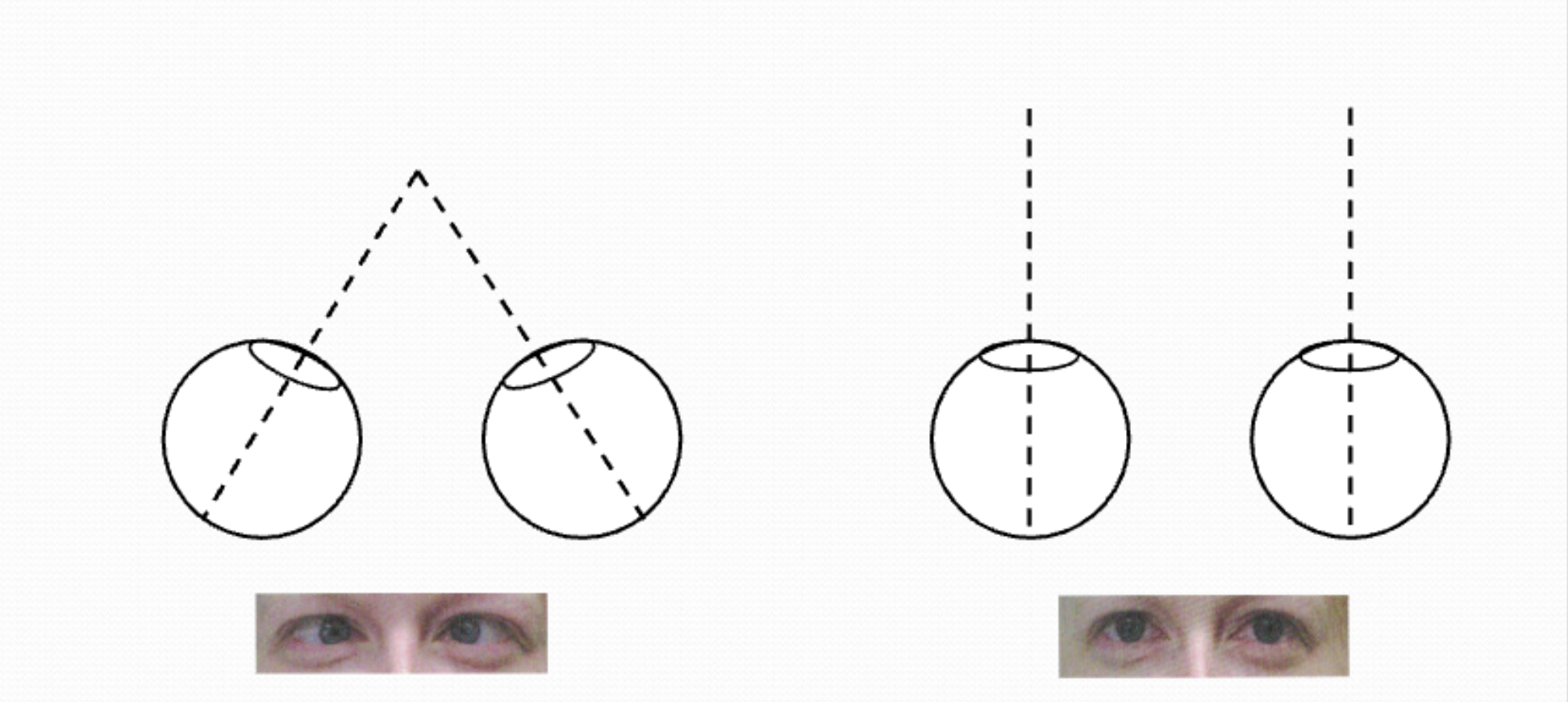
binocular convergence
the simultaneous, inward rotation of both eyes towards each other to focus on a single close object .eyes converging, used to sense how far something is.
accomodation
the act of the lens of our eye fattens or thins based off how far the thing we are looking for is at. far point = thin, near point = fat
three types of monocular cues
accommodation, pictorial cues, movement-based cues
pictorial cues
occlusion, relative height, familiarity and relative size, perspective convergence, atmospheric perspective, texture gradient, shadows
shadows
cue for depth perceptin (humans assume light is coming from above)
movement based cues
motion parallax, delection and accretion
motion parallax
estimating how far an object is based on how fast it moves. objects far away seem slower; objects closer seem faster
deletion
objects occulde others
accretion
objects present again.
why? objects far away seem slower; objects closer seem faster
far - less movement needs to be done across retina = moves slowly
close - more movement needs to be done across the retina. moves faster
binocular cues - binocular disparity
our left and right eyes are offset relative to eachother, see world from slightly different viewpoitns
horopter
the specific, imaginary curve or surface in 3D space where all objects project onto exactly corresponding, identical points on both retinas.
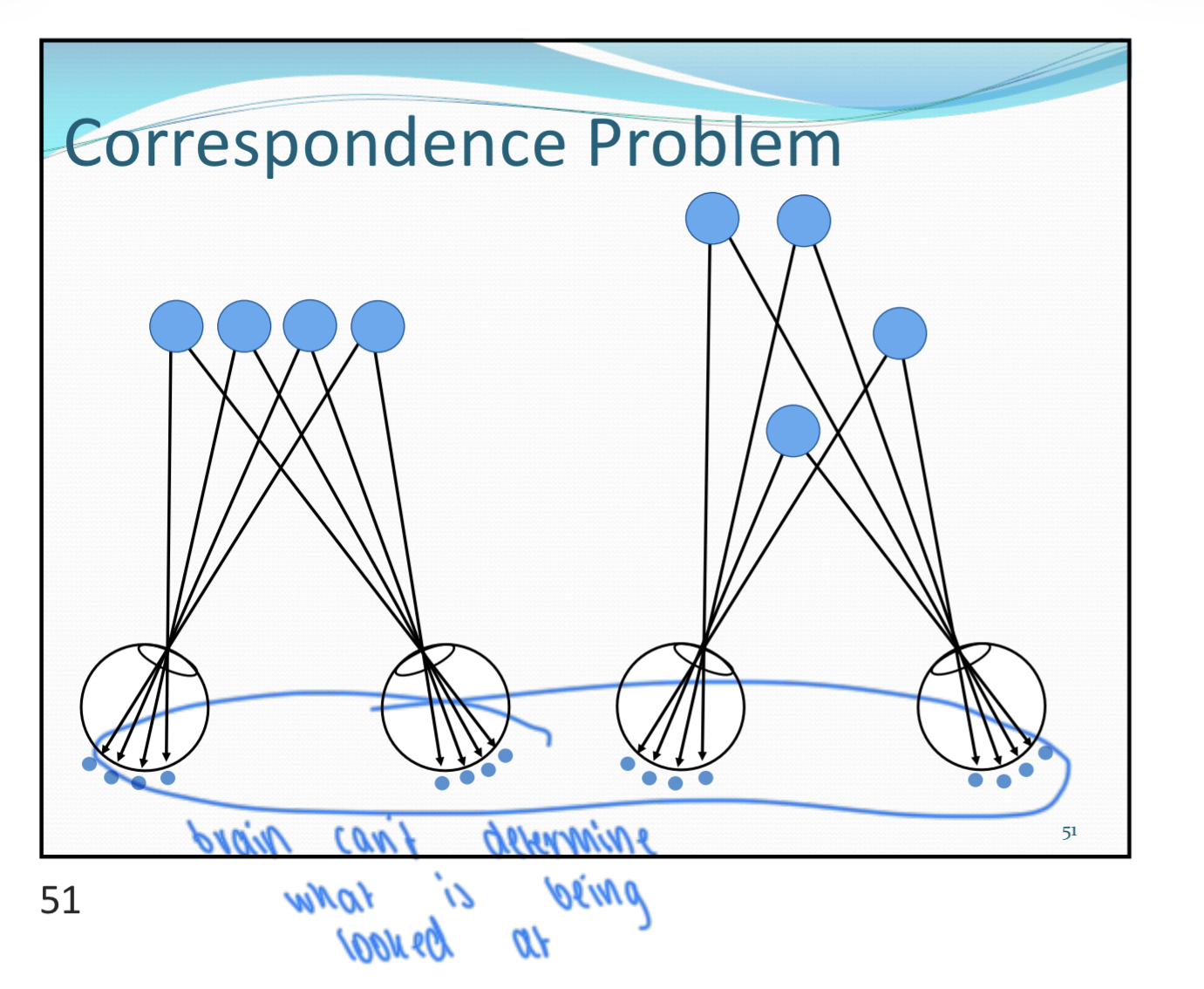
correspondence problem
The two retinal images are slightly different. The visual system must correctly "correspond" or pair up points between the two images to extract depth information.
percieved state is determined by
angular size, percieved depth
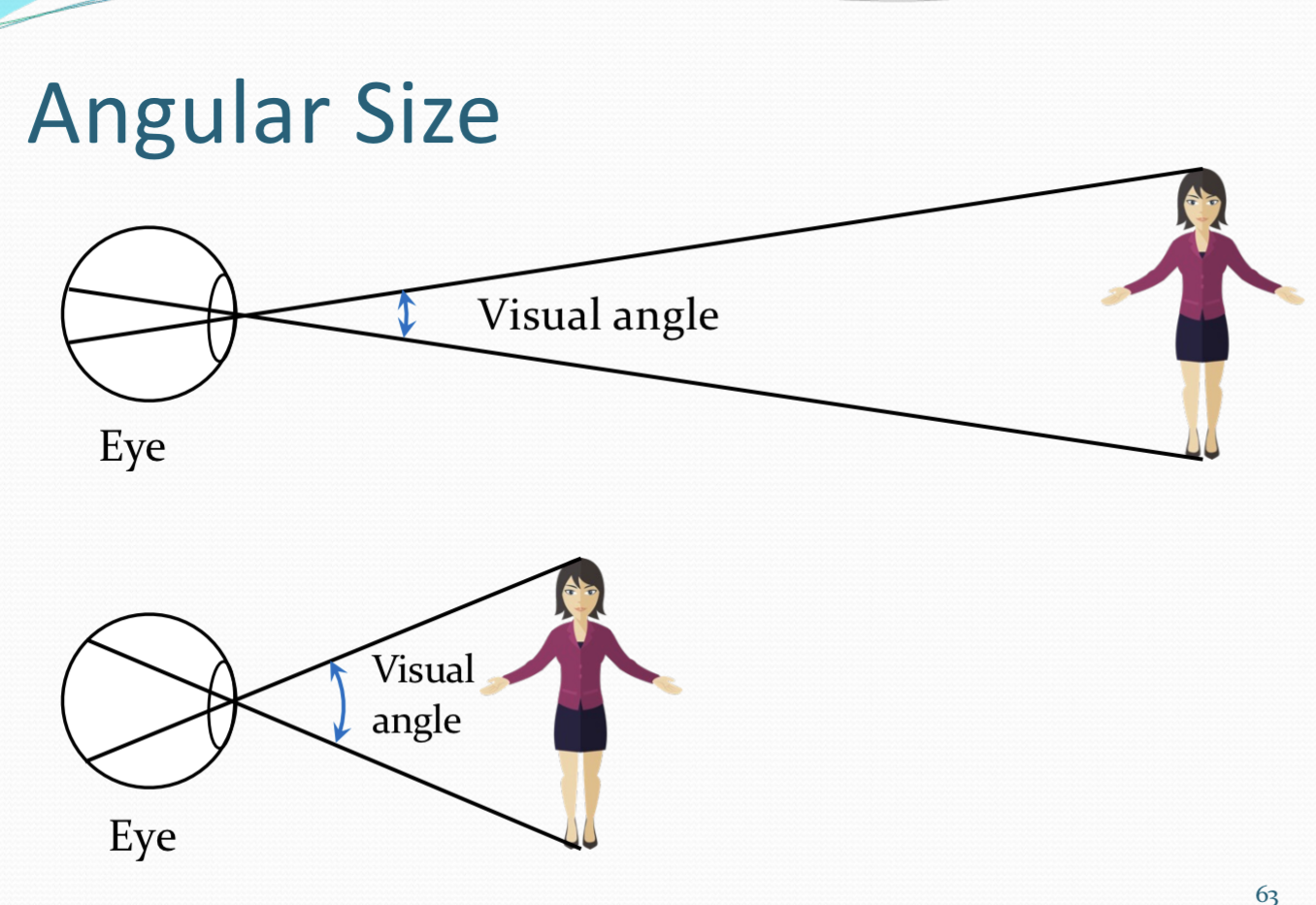
angular size
the visual angle an object subtends in the observer's field of view.
size constancy
phenomenon where an object’s apparent size does not depend on it’s physical distance. observer needs to consider both size of retinal imae and distance of object s = k x (rxd)
size illusions
caused by causing people to mistake the distance to an object so that it appears larger or smaller than it really is eg. ames room