Autonomic Nervous System: Structure, Function, and Regulation
 Call Kai
 Learn
Learn Practice Test
 Spaced Repetition
 Match
Match Flashcards
 Knowt Play
1/26

There's no tags or description
Looks like no tags are added yet.
Name | Mastery | Learn | Test | Matching | Spaced | Call with Kai |
|---|
No analytics yet
Send a link to your students to track their progress
27 Terms
What is the autonomic nervous system (ANS)?
A motor nervous system that controls glands, cardiac, and smooth muscle, also known as the visceral motor system.
What processes does the ANS regulate?
Unconscious processes that maintain homeostasis, such as blood pressure, body temperature, and respiratory airflow.
How does the ANS operate?
It carries out its actions automatically, without our intent.
What are visceral reflexes?
Unconscious, automatic responses to stimulation of glands, cardiac, or smooth muscle.
What role do receptors play in visceral reflexes?
They detect internal stimuli such as stretch, blood chemicals, and body temperature.
What is the function of afferent neurons in the ANS?
They connect to interneurons in the CNS to relay signals from receptors.
What do efferent neurons do in the ANS?
They carry motor signals to effectors such as glands, smooth, or cardiac muscle.
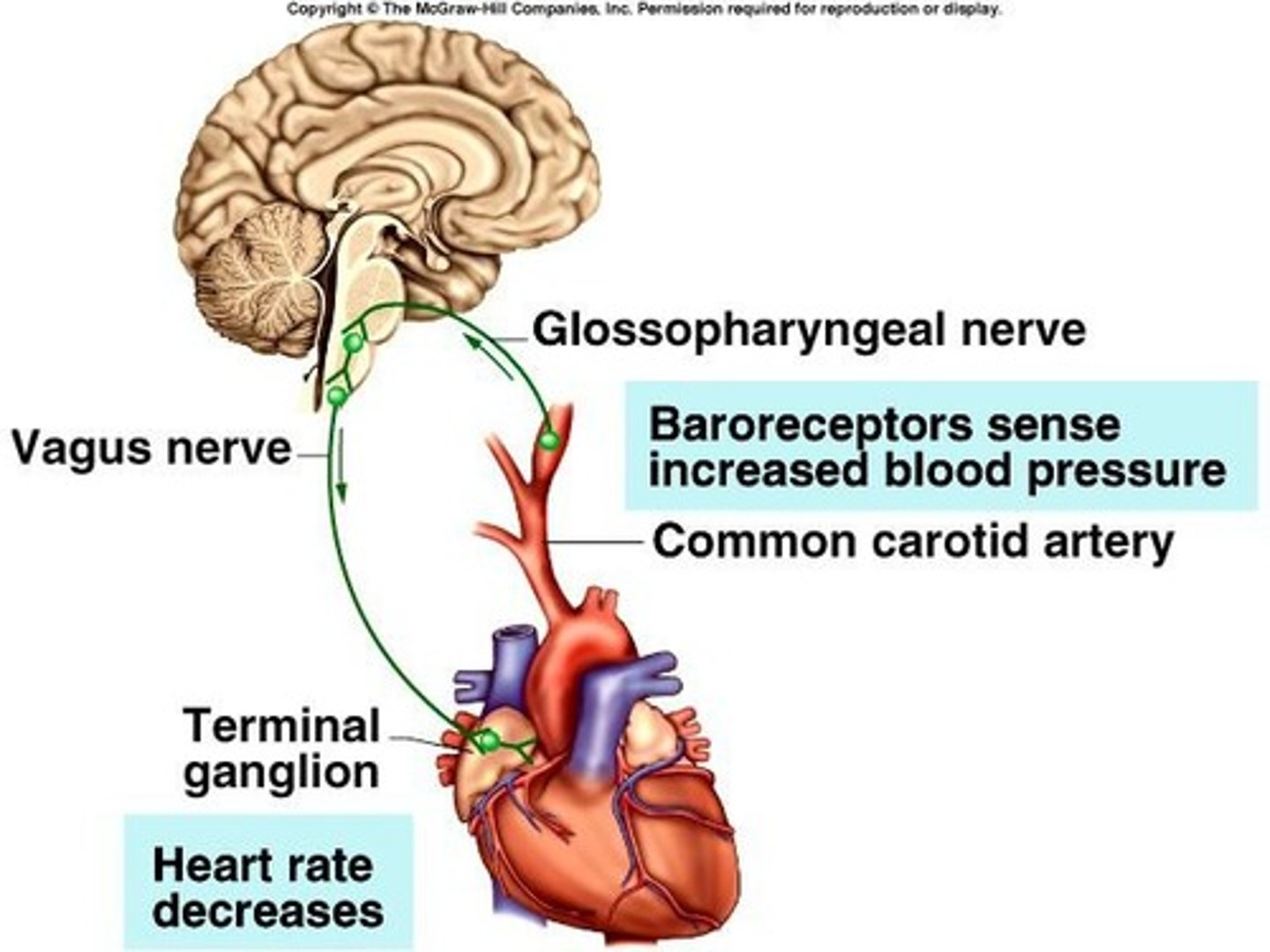
What happens during a visceral reflex to high blood pressure?
High BP is detected by arterial stretch receptors, signals are sent to the CNS, and efferent signals slow the heart to reduce BP.
What are the two divisions of the ANS?
The sympathetic division and the parasympathetic division.
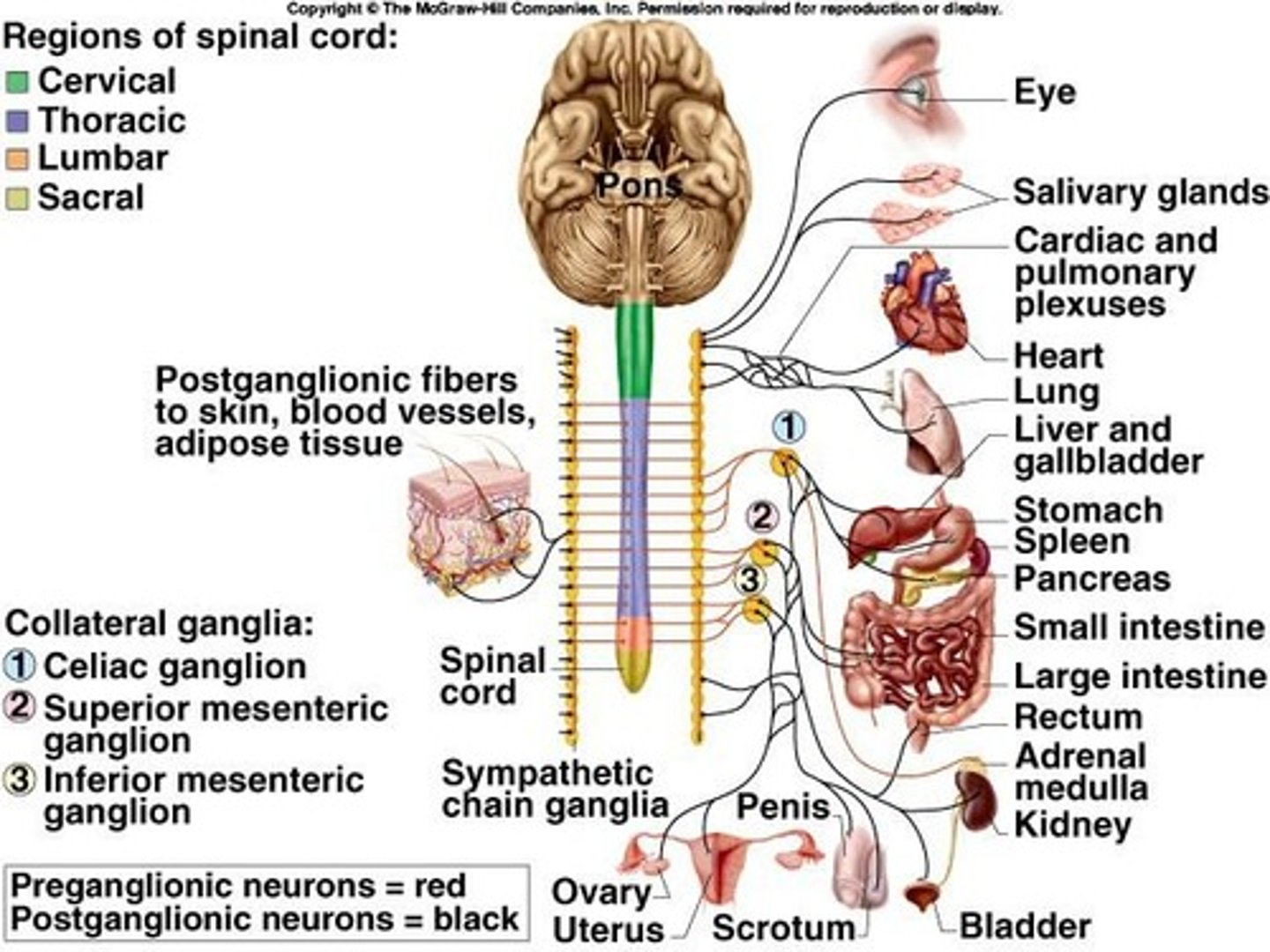
What is the primary function of the sympathetic division?
To prepare the body for physical activity, increasing heart rate, BP, airflow, and blood glucose levels.
What is the primary function of the parasympathetic division?
To have a calming effect on many body functions and assist in bodily maintenance, such as digestion and waste elimination.
What is autonomic tone?
The normal rate of activity that represents the balance between the sympathetic and parasympathetic systems.
How many neurons span the distance from the CNS to effectors in the ANS?
Two neurons: a presynaptic neuron in the CNS and a postsynaptic neuron in a peripheral ganglion.
Where does the sympathetic division arise from?
The thoracic and lumbar regions of the spinal cord.
What characterizes the sympathetic division's fibers?
It has short preganglionic and long postganglionic fibers.
What is the origin of presynaptic neurons in the sympathetic division?
Lateral horns of gray matter of the thoracic to lumbar cord (T1-L2).
What are the types of receptors for norepinephrine (NE)?
Alpha adrenergic receptors (excitatory) and beta adrenergic receptors (inhibitory).
What is dual innervation?
Most viscera receive nerve fibers from both sympathetic and parasympathetic divisions, which can have antagonistic effects.
What is the enteric nervous system?
The nervous system of the digestive tract, composed of 100 million neurons found in the walls of the digestive tract.
What neurotransmitter binds to cholinergic receptors?
Acetylcholine (ACh).
What are the two classes of cholinergic receptors?
Nicotinic receptors (excitatory) and muscarinic receptors (either excitatory or inhibitory).
What is the role of the hypothalamus in the ANS?
It is the major visceral motor control center, regulating primitive functions like hunger, thirst, and sexuality.
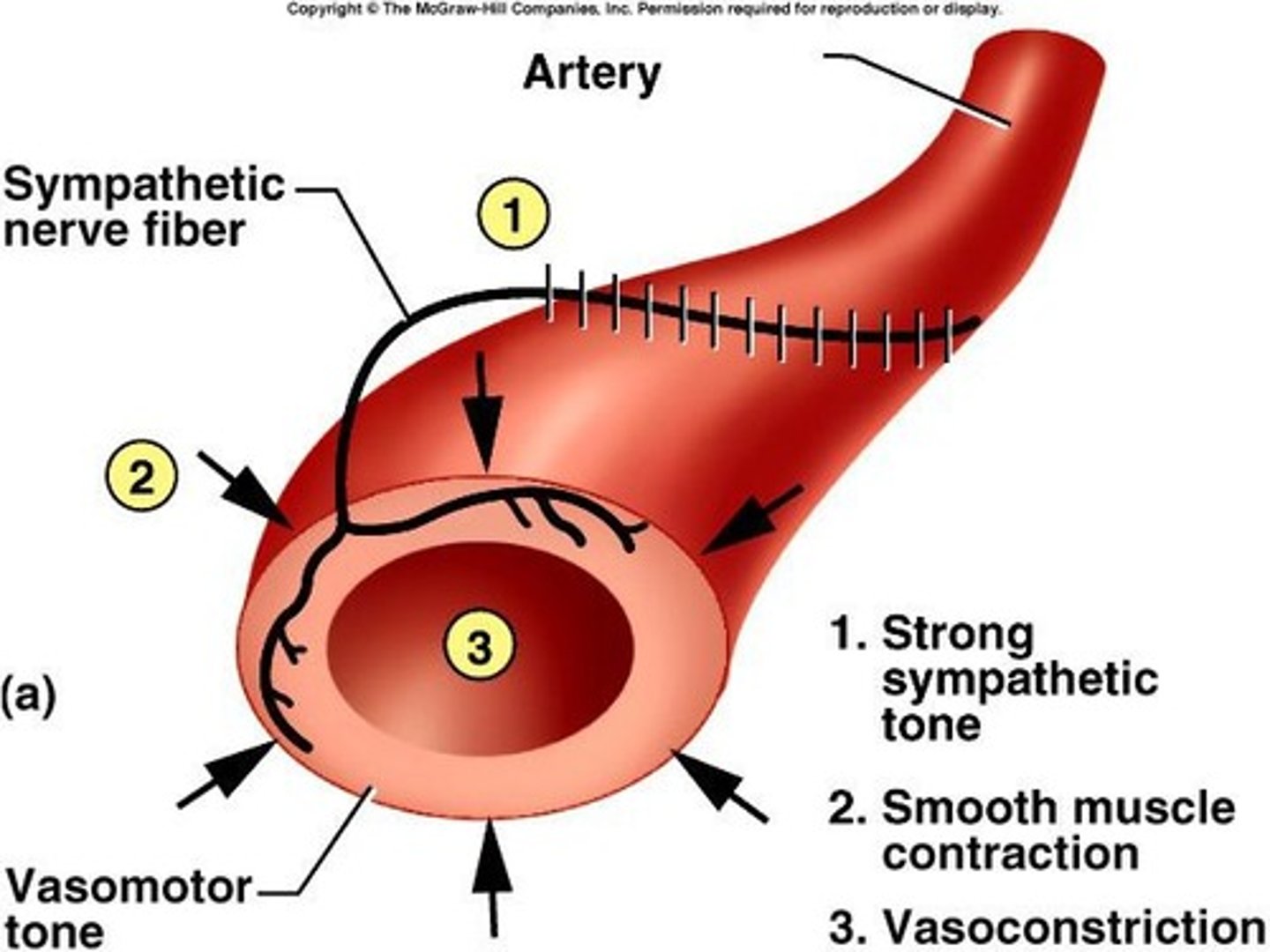
What is sympathetic tone?
A baseline firing frequency that provides partial constriction of blood vessels, known as vasomotor tone.
What happens to blood vessels during sympathetic stimulation?
Blood vessels to skeletal and cardiac muscles receive increased blood flow, while blood flow to skin is reduced.
What cranial nerves are involved in the parasympathetic division?
Oculomotor (III), Facial (VII), Glossopharyngeal (IX), and Vagus (X).
What is the effect of the vagus nerve (X) in the parasympathetic division?
It regulates muscles and glands of the viscera as far inferiorly as the proximal half of the colon.
What is the significance of the spinal cord in autonomic reflexes?
It integrates reflexes for defecation and urination.