Water Transport in Plants: Xylem
 Call Kai
 Learn
Learn Practice Test
 Spaced Repetition
 Match
Match Flashcards
 Knowt Play
1/23

There's no tags or description
Looks like no tags are added yet.
Name | Mastery | Learn | Test | Matching | Spaced | Call with Kai | Chat |
|---|
No analytics yet
Send a link to your students to track their progress
24 Terms
xylem is the tissue primarily response for
movement of water
plants are able to transport water through a combination of
water potential
evapotranspiration
stomatal regulation
all without using any cellular energy
water potential
(Ψ) measure of the potential energy in water based on potential water movement between 2 systems
water potential = difference in potential energy between any given water sample and pure water (at atmospheric pressure + ambient temp)
expressed in megapascals (units of pressure)
can be positive or negative
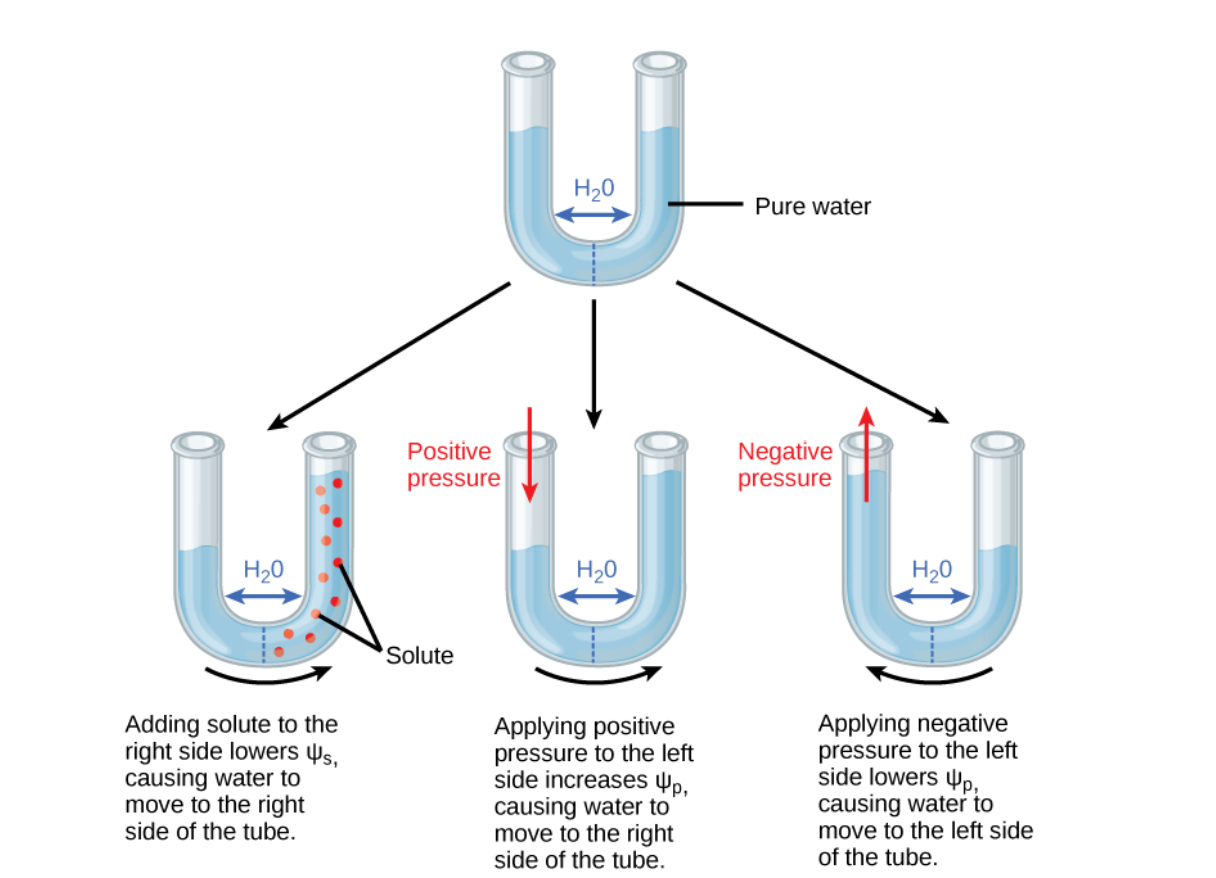
Ψsystem = Ψs + Ψp, where Ψs = solute potential, and Ψp = pressure potential
add more dissolved solute with ___ the water potential
decrease
removing dissolved solutes will ___ the water potential
increase
adding more pressure (positive pressure) will ___ the water potential
increase
removing pressure (including creating a vacuum, or negative pressure) will ___ the water potential
decrease
water always moves
from a region of high water potential to an area of low water potential
until it equilibriates the water potential of the system
at equilibrium, there is no difference in water potential on either side of the system
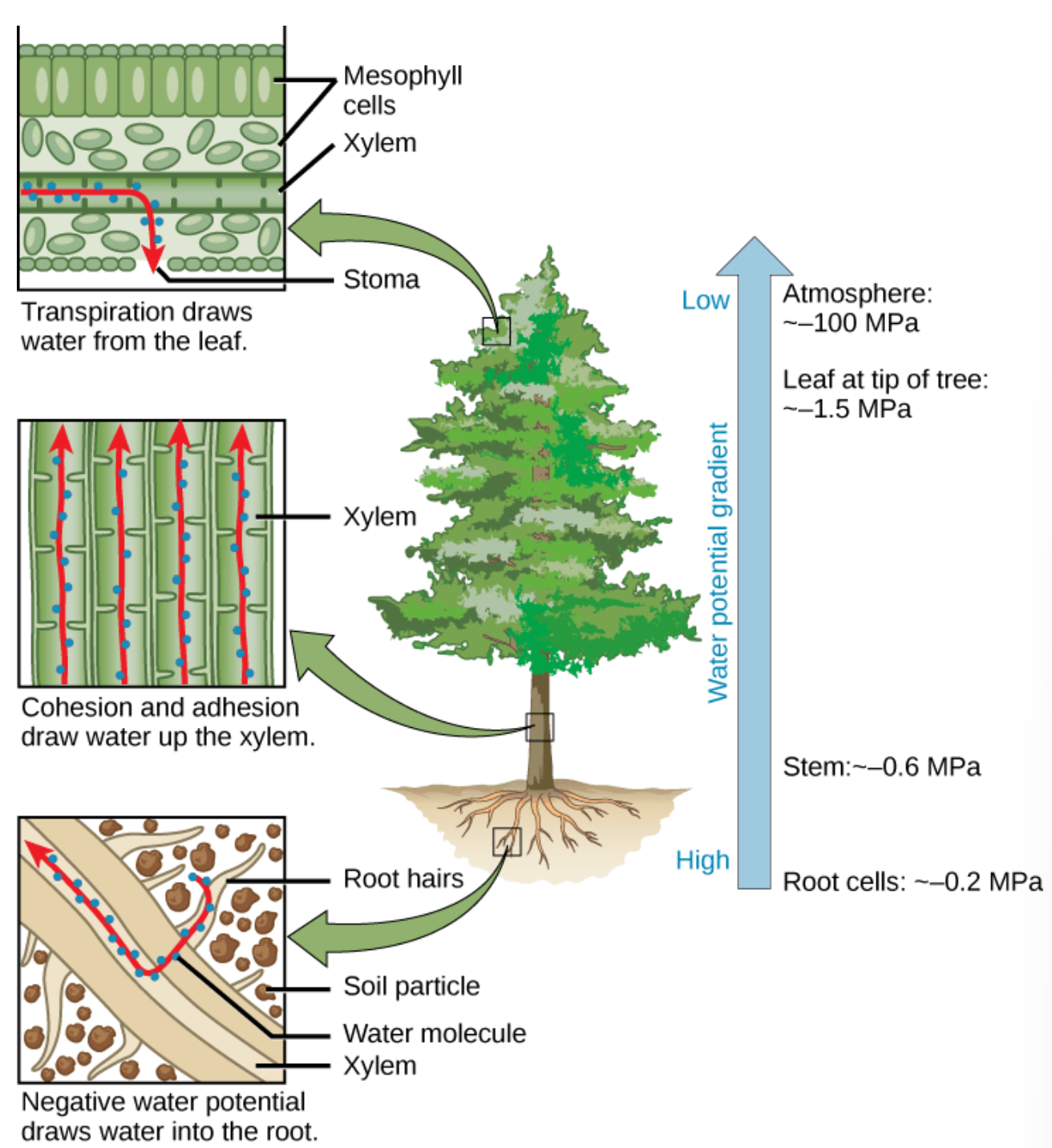
Ψsoil must be > Ψroot > Ψstem > Ψleaf > Ψatmosphere
potential energy of pure water =
zero
in order for transpiration to occur:
Ψsoil must be > Ψroot > Ψstem > Ψleaf > Ψatmosphere
solute potential (osmotic potential) Ψs
proportion to the number of dissolved molecules
is 0 for pure water
dissolving more solutes = decreased water potential → solute potential is negative bc of high solute concentration of cytoplasm
as long as the water pot in the plant root cells is lower than the water pot in the soil, then water will move from the soil into a plant’s root cells via osmosis
plant cells can metabolically manipulate Ψs by adding/removing solute molecules to increase water uptake from the soil during drought conditions
pressure potential (turgor potential) Ψp
the physical pressure on a solution
may be positive or negative
positive pressure (compression) increases Ψp and negative pressure (vacuum) decreases Ψp
pos pressure inside cells is contained by a rigid cell wall → produces turgor pressure
plant cells can indirectly manipulate Ψp via their ability to directly manipulate Ψs and by the process of osmosis: if a plant cell increases the cytoplasmic solute concentration, then Ψs will decline and water will move into the cell by osmosis, causing Ψp to increase.
stomatal openings allow water to evaporate from the leaf, reducing Ψp and Ψtotal of the leaf and increasing the water potential difference between the water in the leaf and the petiole, thereby allowing water to flow from the petiole into the leaf
example of the effect of turgor pressure is the wilting of leaves and their restoration after the plant has been watered. Water is lost from the leaves via transpiration (approaching Ψp = 0 MPa at the wilting point) and restored by uptake via the roots
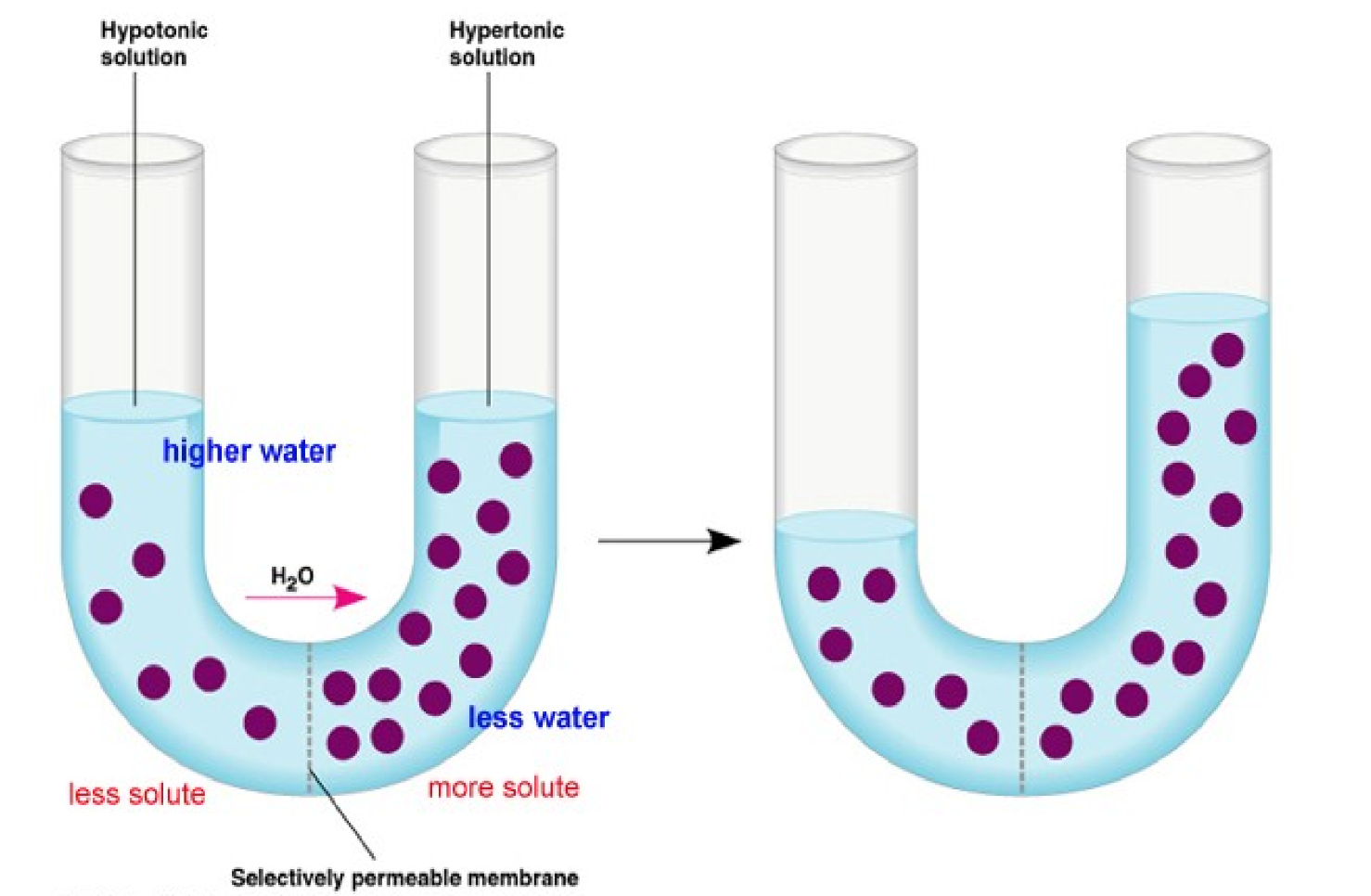
hypotonic
the solution on one side of the membrane where the solute concentration is less than the other side
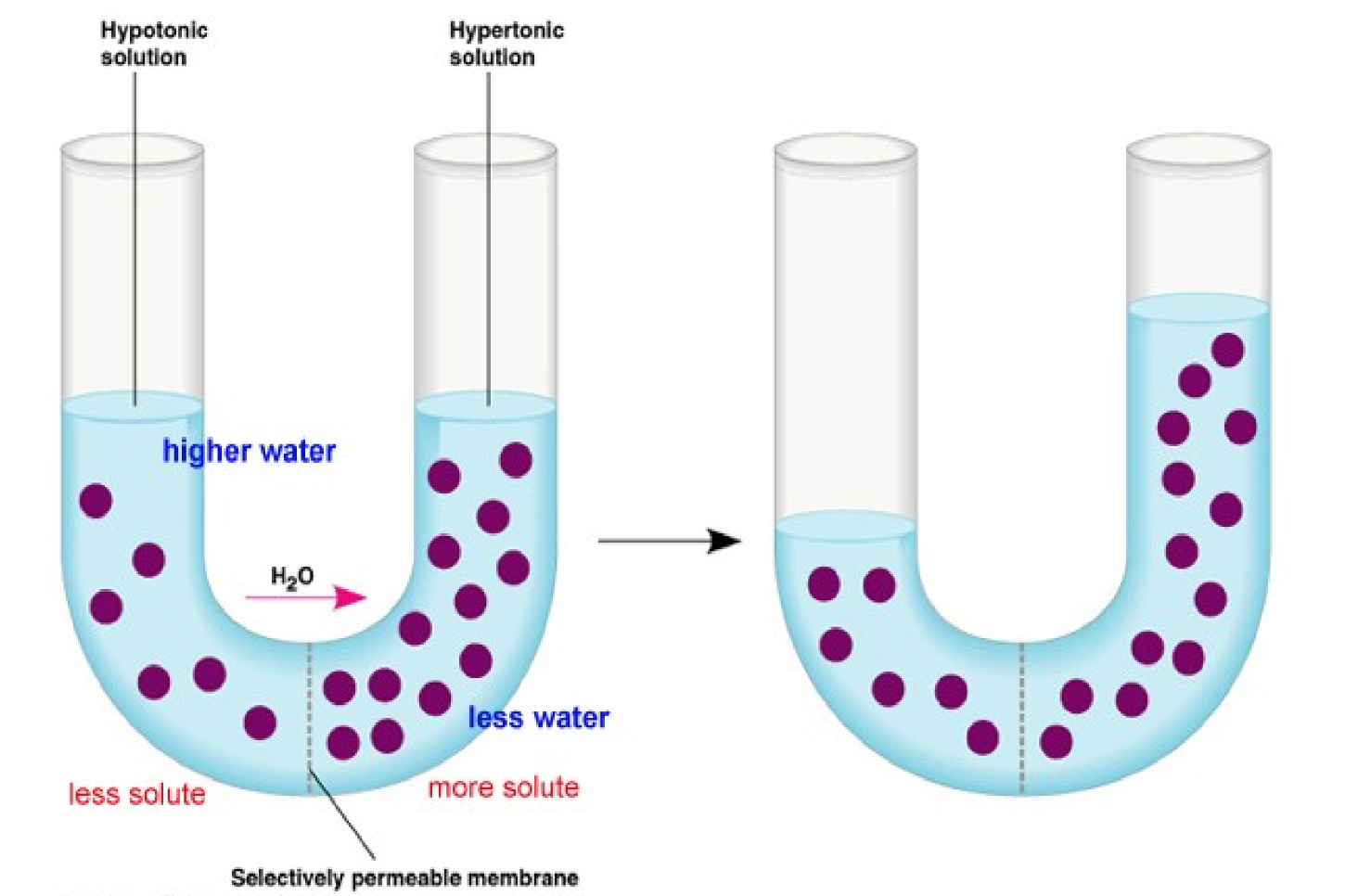
hypertonic
the solution on one side of the membrane where the solute concentration is greater than the other side
transpiration
evaporation of water from the plant stomata resulting in the continuous movement of water through a plant via the xylem, from soil to air, without equilibrating
Ψsoil must be > Ψroot > Ψstem > Ψleaf > Ψatmosphere
ATP is not required- energy source that drives the process of transpiration is the extreme difference in water potential between the water in the soil and the water in the atmosphere
relies on a water potential gradient- water potential decreases at each point from soil to atmosphere as it passed through plant tissues
impact of soil and environmental conditions on the plant water potential gradient
if soil becomes too dry → decreased solute potential (dt same amount of solutes dissolved in smaller quantity of water) as well as decreased pressure potential in severe droughts (dt negative pressure/vacuum in soil due to loss of water volume)
if water potential becomes sufficiently lower in the soil that in the plant’s roots → water will move out of the root and into the soil
pathways of water and mineral movement in the roots
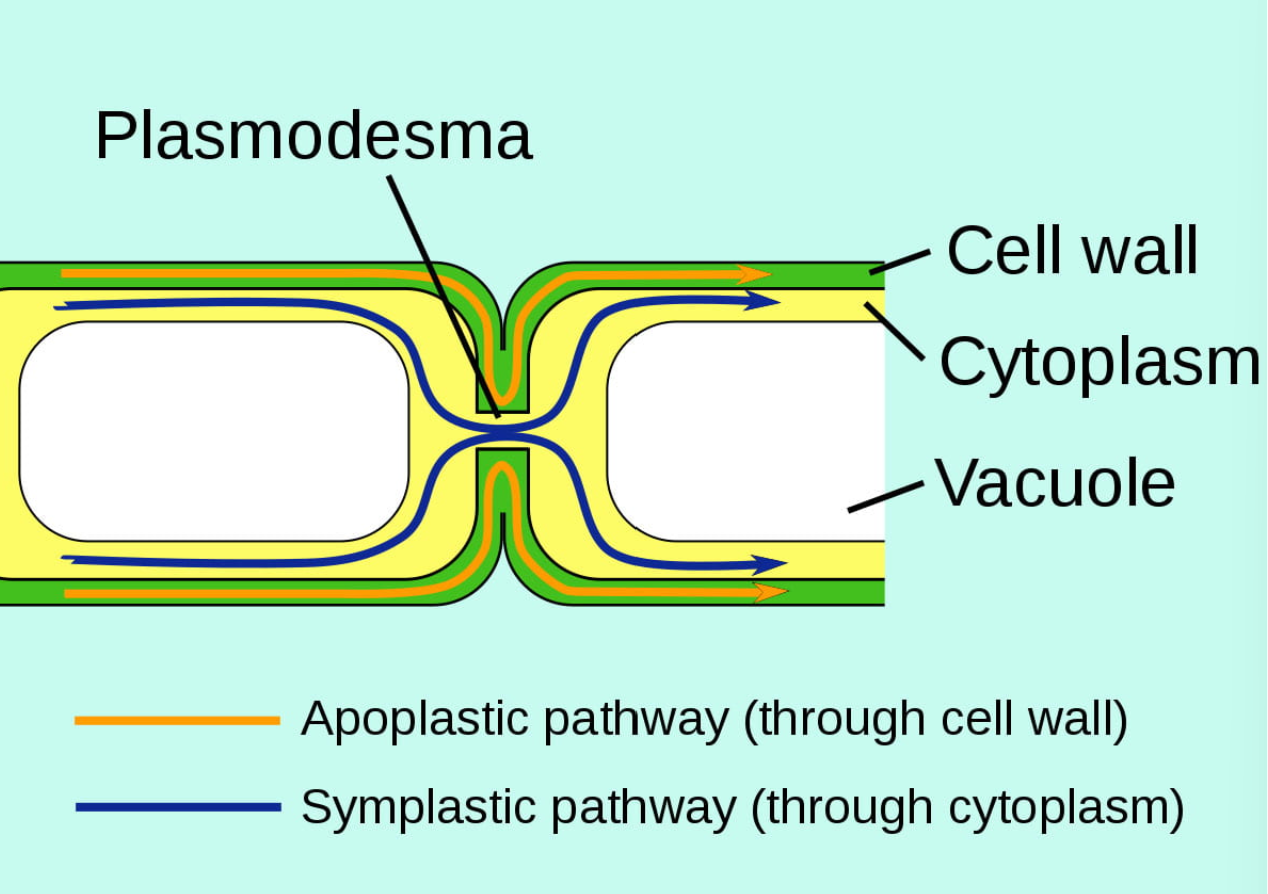
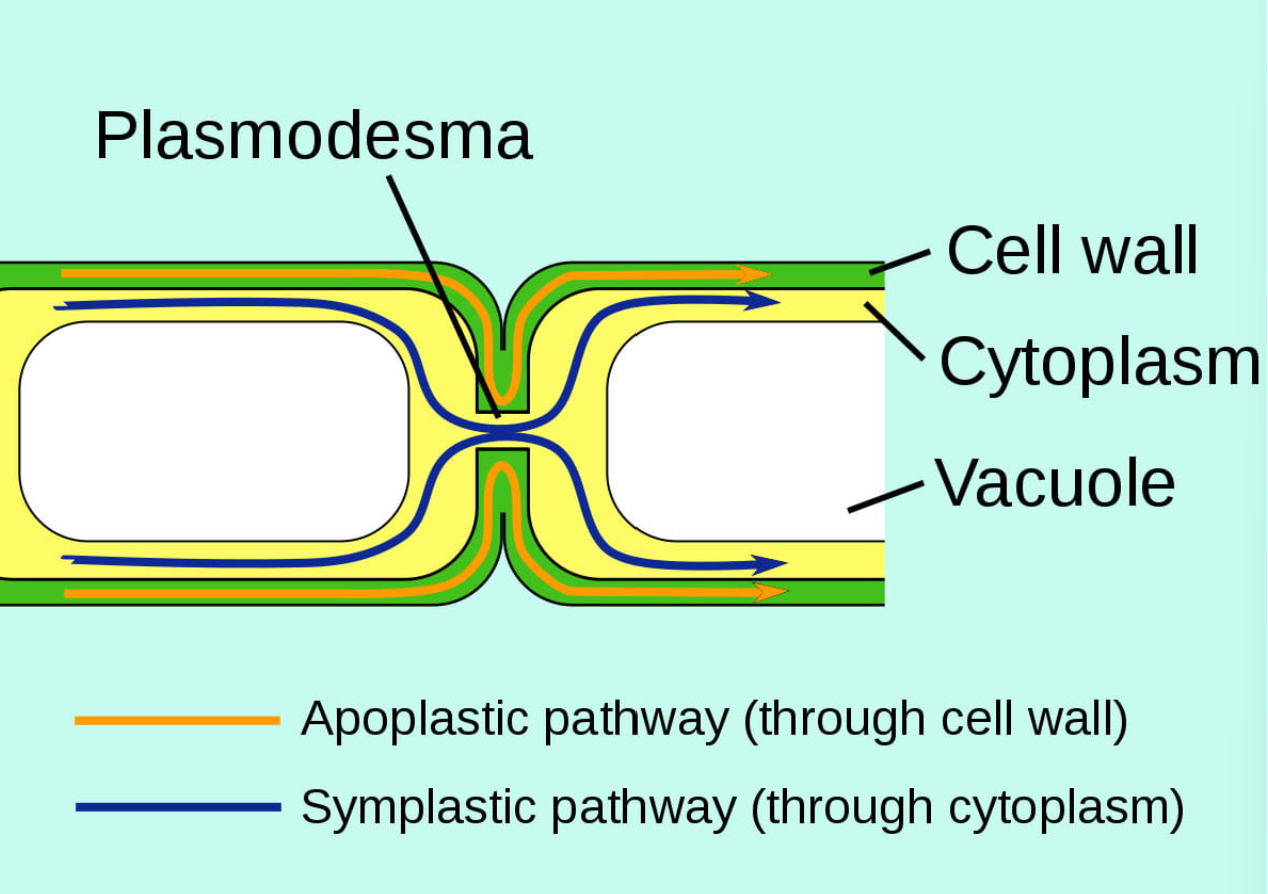
symplast
transmembrane pathway
apoplast
the symplast
“shared cytoplasm”
pathway where water and minerals move from cytoplasm of one cell into the next via plasmodesmata that physically join diff plant cells until eventually reaching the xylem
the transmembrane pathway
water moves through water channels present in plant cell plasma membranes, from one cell to the next until reaching the xylem
the apoplast
“outside of the cell”
pathway where water and dissolved minerals never move through a cell’s plasma membrane but instead travel through the porous cell walls that surround plant cells
water and minerals in this pathway do not encounter a filtering step (within plasma membrane for other pathways) until they reach a layer of cells known as the endodermis (separate vascular tissue from the ground tissue in the outer portion of the root)
endodermis is only present in roots and serves as a checkpoint for materials entering root’s vascular system
waxy region of suberin (waxy substance) on the walls of endodermal cells = casparian strip- forces water and solutes to cross the plasma membranes of endodermal cells instead of slipping between the cells → ensures only materials required by the root pass through the endo dermis
explanation for movement of water up against gravity
root pressure pushes water up
capillary action draws water up within the xylem
cohesion-tension pulls water up the xylem
root pressure
relies on positive pressure that forms in the roots as water moves into the roots from the soil
water moves into the roots from the soil by osmosis → intake of water increases Ψp in root xylem → pushes water up
when stomata are closed at night preventing water from evaporating from the leaves, root pressure results in guttation, or secretion of water droplets from stomata in the leaves
root pressure can only move water against gravity by a few meters, so it is not sufficient to move water up the height of a tall tree
capillary action
tendency of a liquid to move up against gravity when confined in a narrow tube (capillary)
ex: a meniscus is an effect of capillary action
occurs due to three properties of water:
surface tension: hydrogen bonding between water molecules is stronger at the air-water interface than among molecules within the water
adhesion: molecular attraction between unlike molecules- molecules of xylem cell walls and water molecules
cohesion: molecular attraction between like molecules- in water, it is due to hydrogen bonding between water molecules
on its own, capillarity can work well within a vertical stem for up to approximately 1 meter, so it is not strong enough to move water up a tall tree
cohesion-tension
most widely accepted model for movement of water in vascular plants
combines the process of capillary action with transpiration (evaporation of water from the plant stomata) → transpiration is the main driver of xylem water movement combined with the effects of capillary action
cohesion-tension model:
transpiration (evaporation) occurs bc stomata in leaves are open to allow gas exchange for photosynthesis → as transpiration occurs, evap of water deepens meniscus of water in the leaf → creates negative pressure (tension/suction)
tension created by transpiration pulls water in the plant xylem → drawing water upward like sucking water through a straw
cohesion causes more water molecules to fill the gap in the xylem as the top-most water is pulled toward end of the meniscus within the stomata
transpiration results in a phenomenal amount of negative pressure within the xylem vessels and tracheids, which are structurally reinforced with lignin to cope with large changes in pressure. The taller the tree, the greater the tension forces (and thus negative pressure) needed to pull water up from roots to shoot