Digestive System and Metabolism: Organs, Processes, and Regulation
 Call Kai
 Learn
Learn Practice Test
 Spaced Repetition
 Match
Match Flashcards
 Knowt Play
1/317

There's no tags or description
Looks like no tags are added yet.
Name | Mastery | Learn | Test | Matching | Spaced | Call with Kai |
|---|
No analytics yet
Send a link to your students to track their progress
318 Terms
What is the primary function of the gastrointestinal tract?
To extract nutrients from the food we ingest.
What are the three macronutrients processed by the digestive system?
Proteins, carbohydrates, and lipids.
What is the goal of the digestive tract?
To absorb as much of the ingested nutrients as possible.
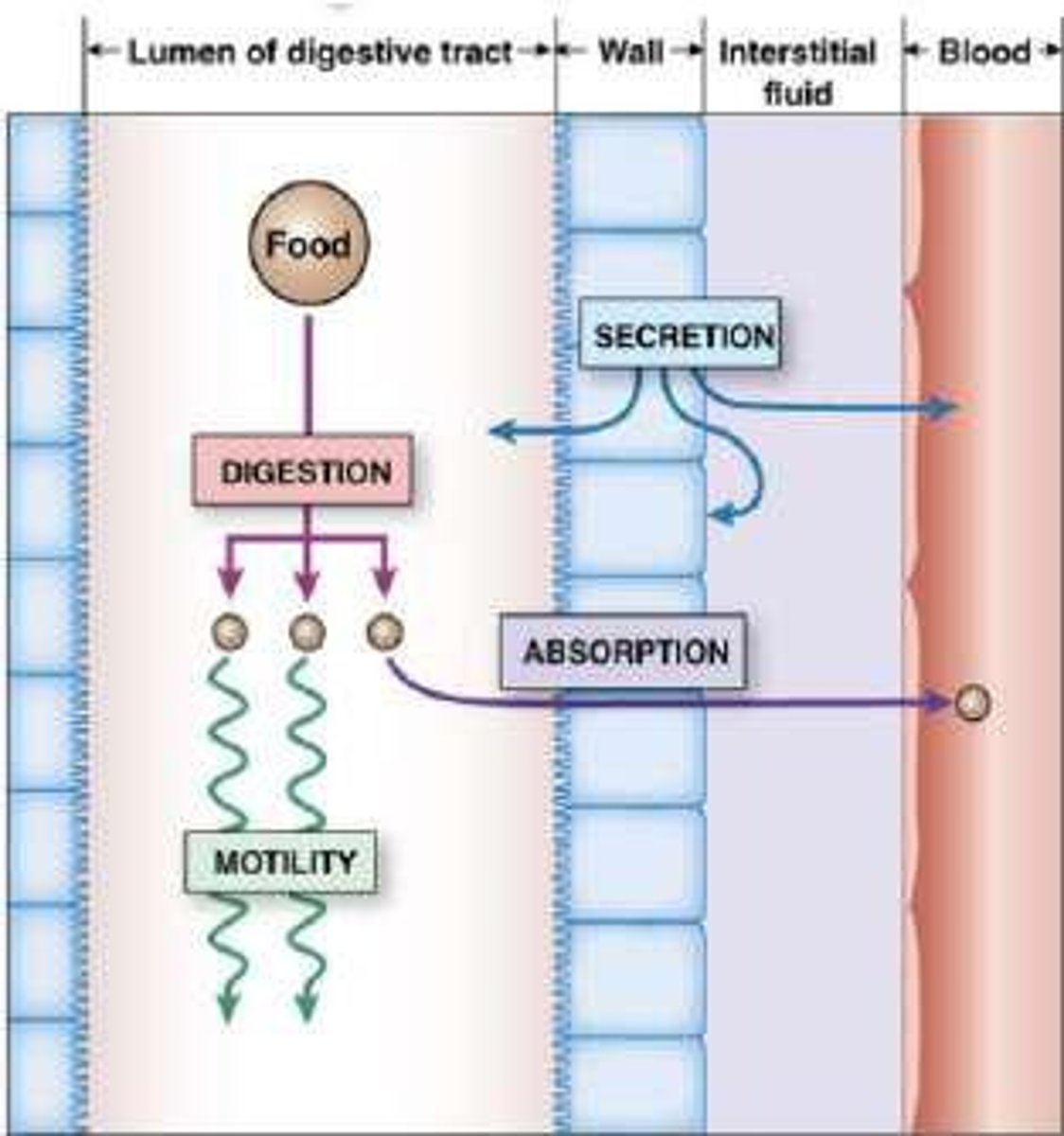
What are the four processes of the digestive system?
Digestion, secretion, motility, and absorption.
What is mechanical digestion?
Physical actions like chewing that make food smaller.
What is chemical digestion?
The breaking of bonds to turn food into absorbable units.
What role do epithelial cells play in the digestive tract?
They secrete enzymes and absorb food.
What is the difference between exocrine and endocrine secretions?
Exocrine secretions are released into the lumen, while endocrine secretions are released into the blood.
What is the function of the submucosa layer in the digestive tract?
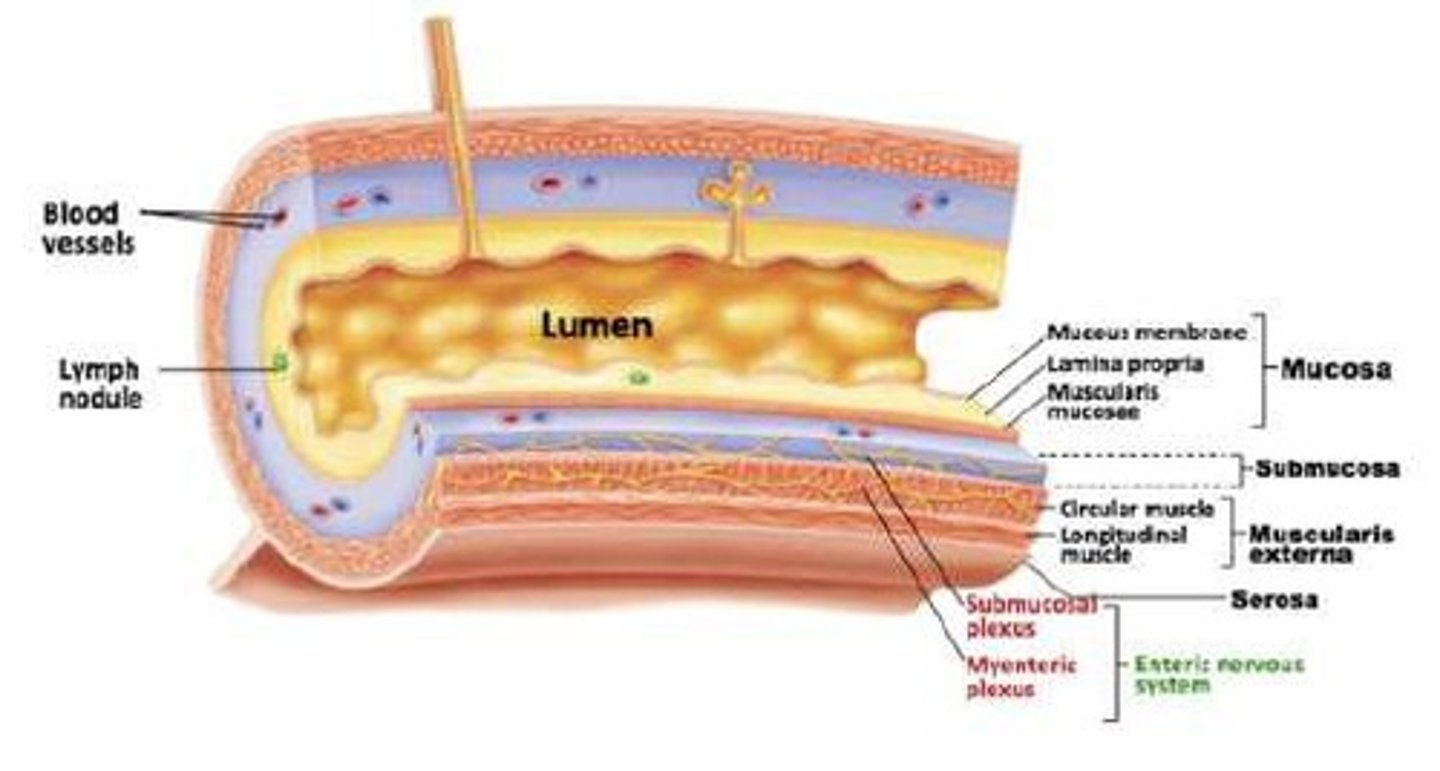
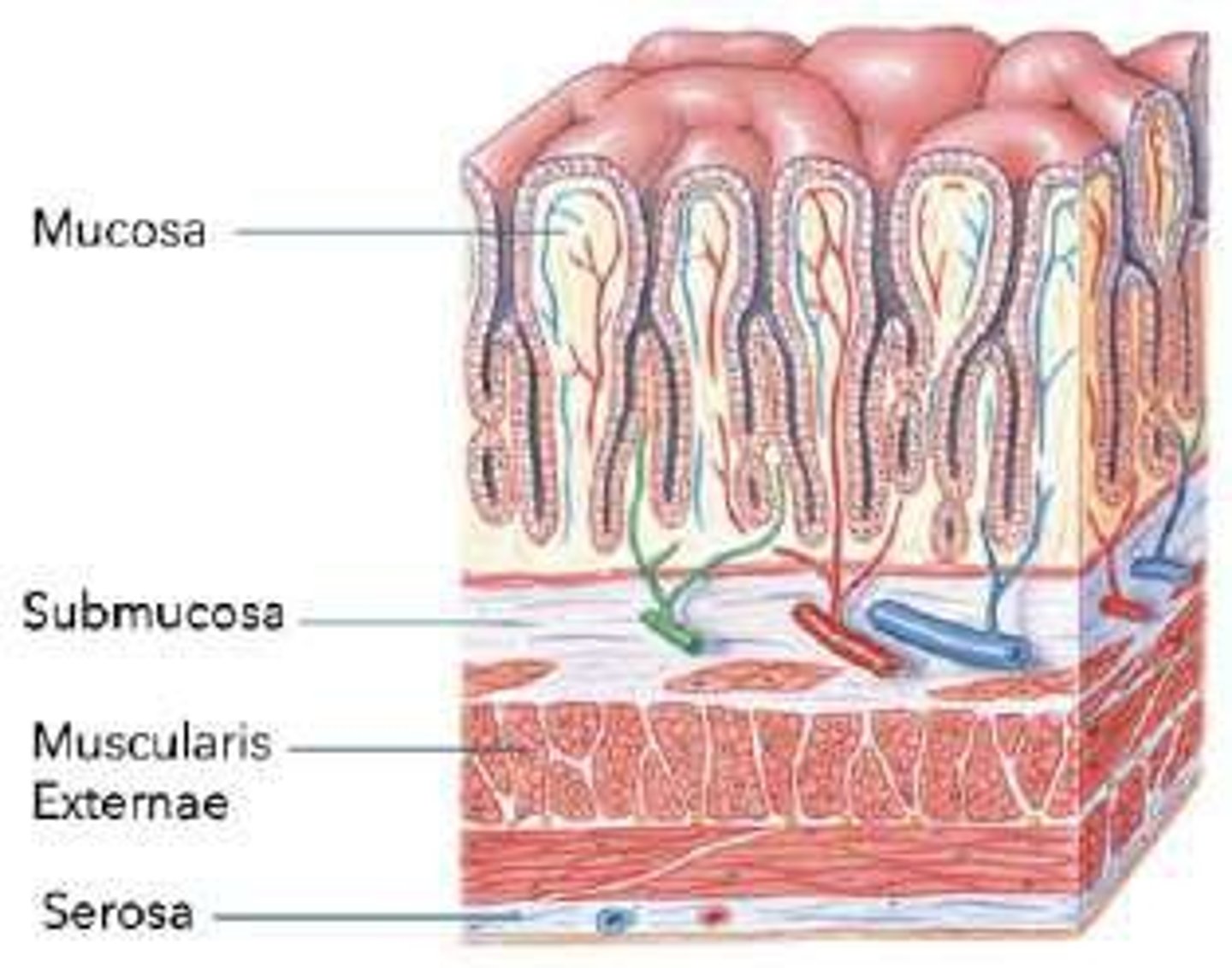
It connects the mucosa to the muscularis externa and contains blood vessels.
What is the muscularis externa made up of?
Two layers of smooth muscle: circular and longitudinal.
What is the role of the serosa in the digestive system?
It is the outer protective tissue layer that is continuous with the mesentery.
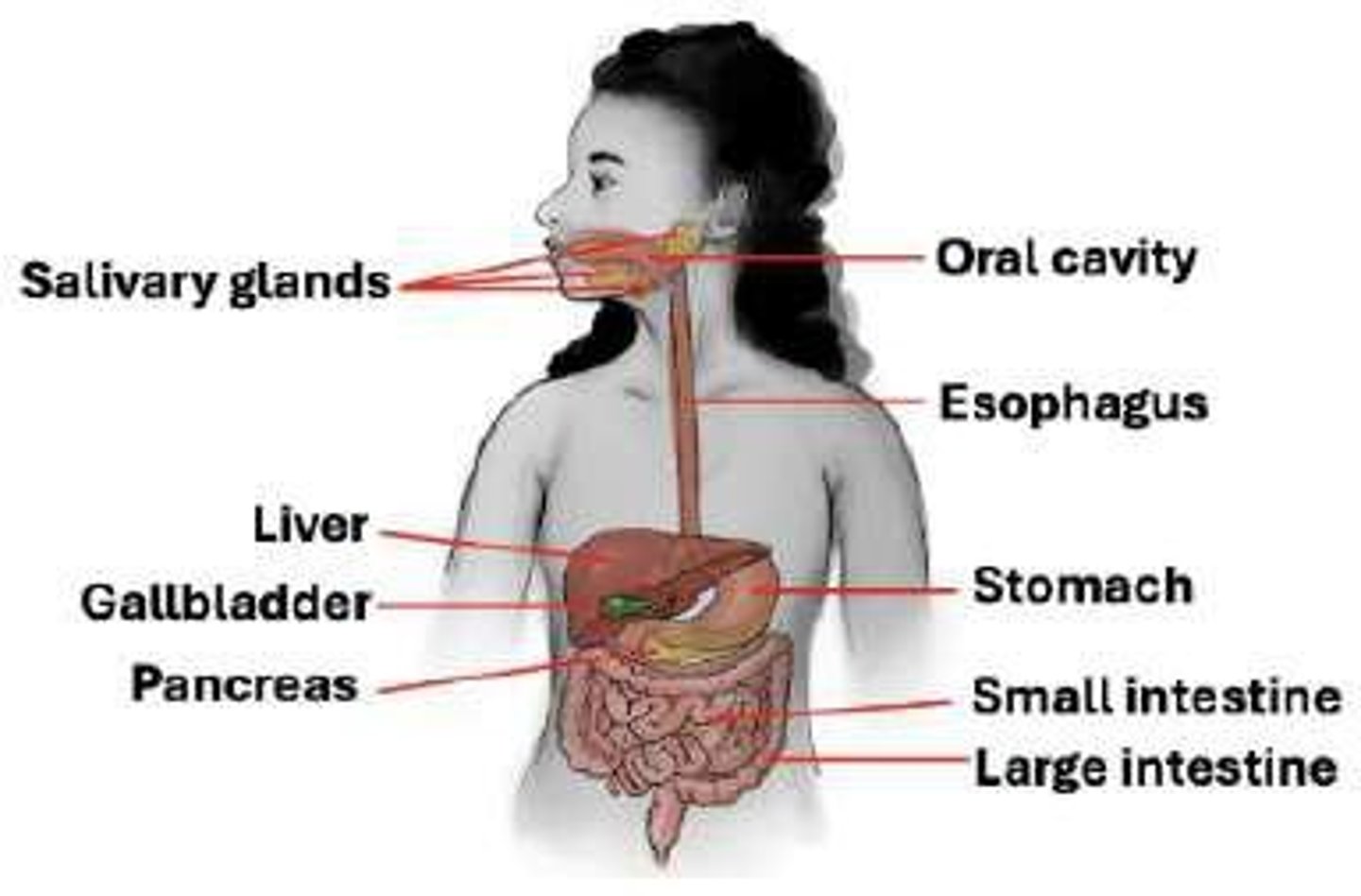
What are the accessory organs of the digestive system?
Salivary glands, pancreas, liver, and gallbladder.
How do secretions from the oral cavity contribute to digestion?
They help in the chemical digestion of food through enzymes and saliva.
What is the function of the stomach in digestion?
It mechanically and chemically digests food, breaking it down into smaller units.
What is the primary site for nutrient absorption in the digestive tract?
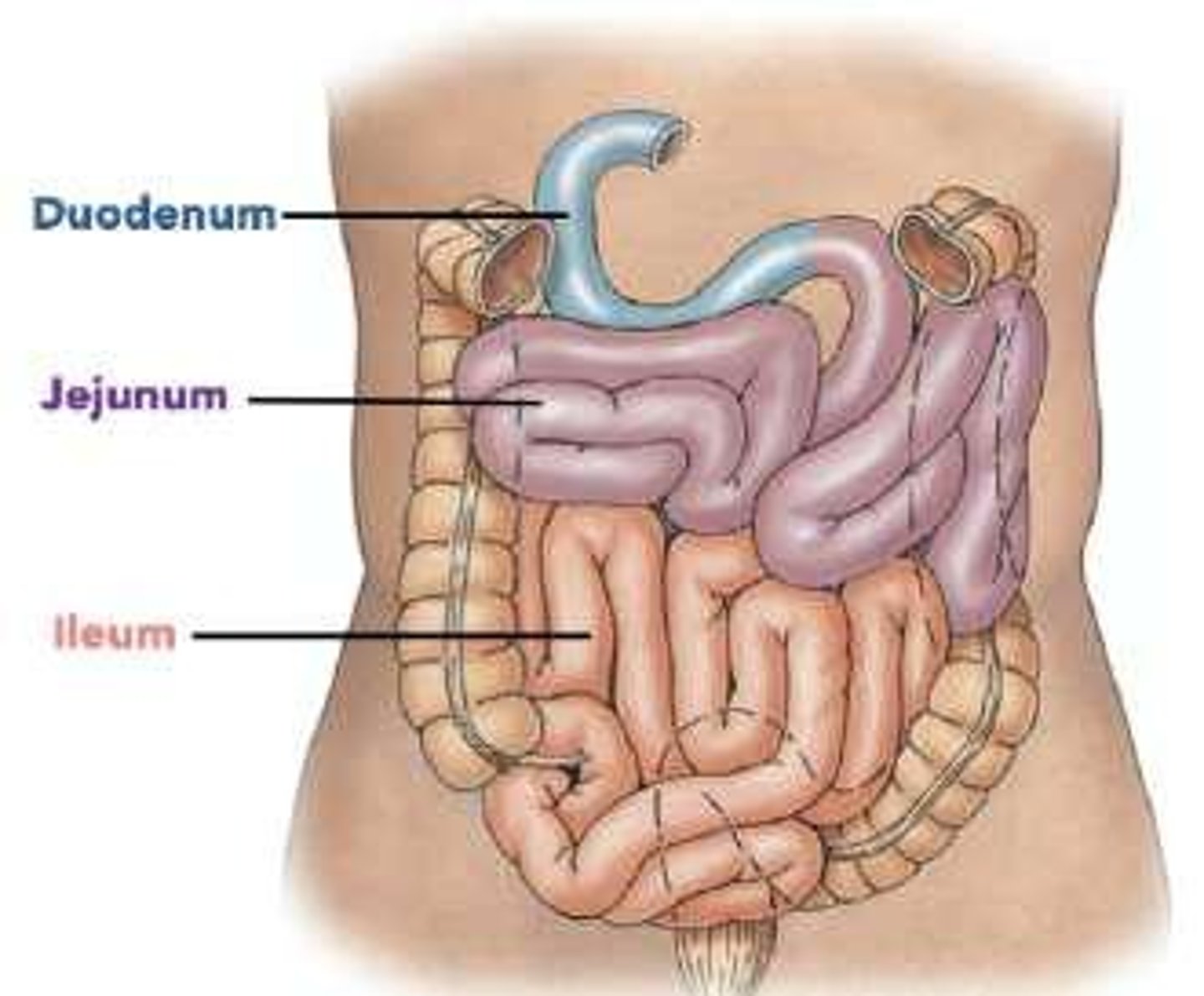
The small intestine.
What is the role of the large intestine in digestion?
It absorbs water and electrolytes and compacts waste for elimination.
What is the function of the mucosa layer?
It comes into direct contact with the lumen contents and secretes various substances.
What is the enteric nervous system?
A network of neurons that regulates digestive processes.
What happens if motility through the digestive tract is too fast?
It can lead to digestive issues such as diarrhea.
What happens if motility through the digestive tract is too slow?
It can lead to digestive issues such as constipation.
What is the function of bile in digestion?
It helps to emulsify fats for easier digestion and absorption.
What are the three layers of the mucosa?
Mucous membrane, lamina propria, and muscularis mucosa.
What is the role of the gallbladder in digestion?
It stores and concentrates bile before releasing it into the small intestine.
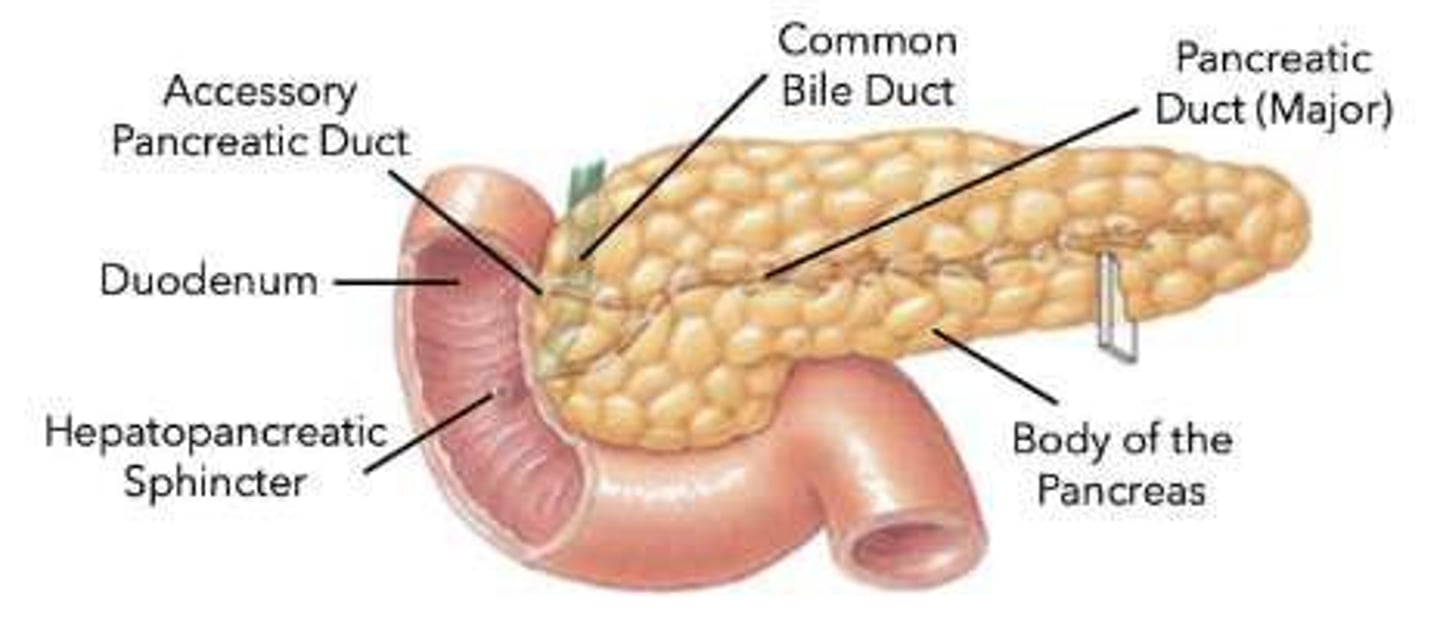
What is the primary function of the pancreas in digestion?
It secretes digestive enzymes and bicarbonate into the small intestine.
What is paracrine secretion?
Secretion from epithelial cells that can trigger changes in neighboring cells.
What is the lumen in the context of the digestive system?
The inside space of the digestive tract where food passes through.
How does the digestive system protect the body?
By preventing harmful pathogens and toxins from entering the body through food.
What is the significance of the vomiting reflex?
It helps to expel harmful substances from the digestive tract.
What is the primary function of connective tissue in the digestive system?
To act as support or protection, keeping everything together.
What are the two main plexuses of the enteric nervous system?
Submucosal plexus and myenteric plexus.
Where is the submucosal plexus located?
Within the submucosa layer of the gastrointestinal tract.
Where is the myenteric plexus located?
Within the muscularis externa layer of the gastrointestinal tract.
What is the role of the enteric nervous system (ENS)?
To coordinate multiple organs throughout the abdominal cavity and signal through the gastrointestinal tract.
How does the enteric nervous system function in relation to the central nervous system?
The ENS is autonomous and can function without inputs from the CNS, but works better with additional information from the CNS.
What is the primary role of saliva in the oral cavity?
To lubricate food, aid in tasting, protect the mouth and teeth, and assist in speech.
What are the three pairs of salivary glands?
Parotid gland, submandibular gland, and sublingual gland.
What is the composition of saliva?
Mostly water, ions (Na+, Cl-, HCO3-), mucus, proteins, and digestive enzymes (salivary amylase and lingual lipase).
What is mastication?
The mechanical manipulation of food through chewing.
What is the bolus?
A softened mass of food formed in the mouth after chewing and mixing with saliva.
What does salivary amylase digest?
Complex carbohydrates, specifically amylose.
When is lingual lipase activated?
In the stomach, when the pH is lower.
What are the three stages of swallowing?
Voluntary phase, pharyngeal stage, and esophageal stage.
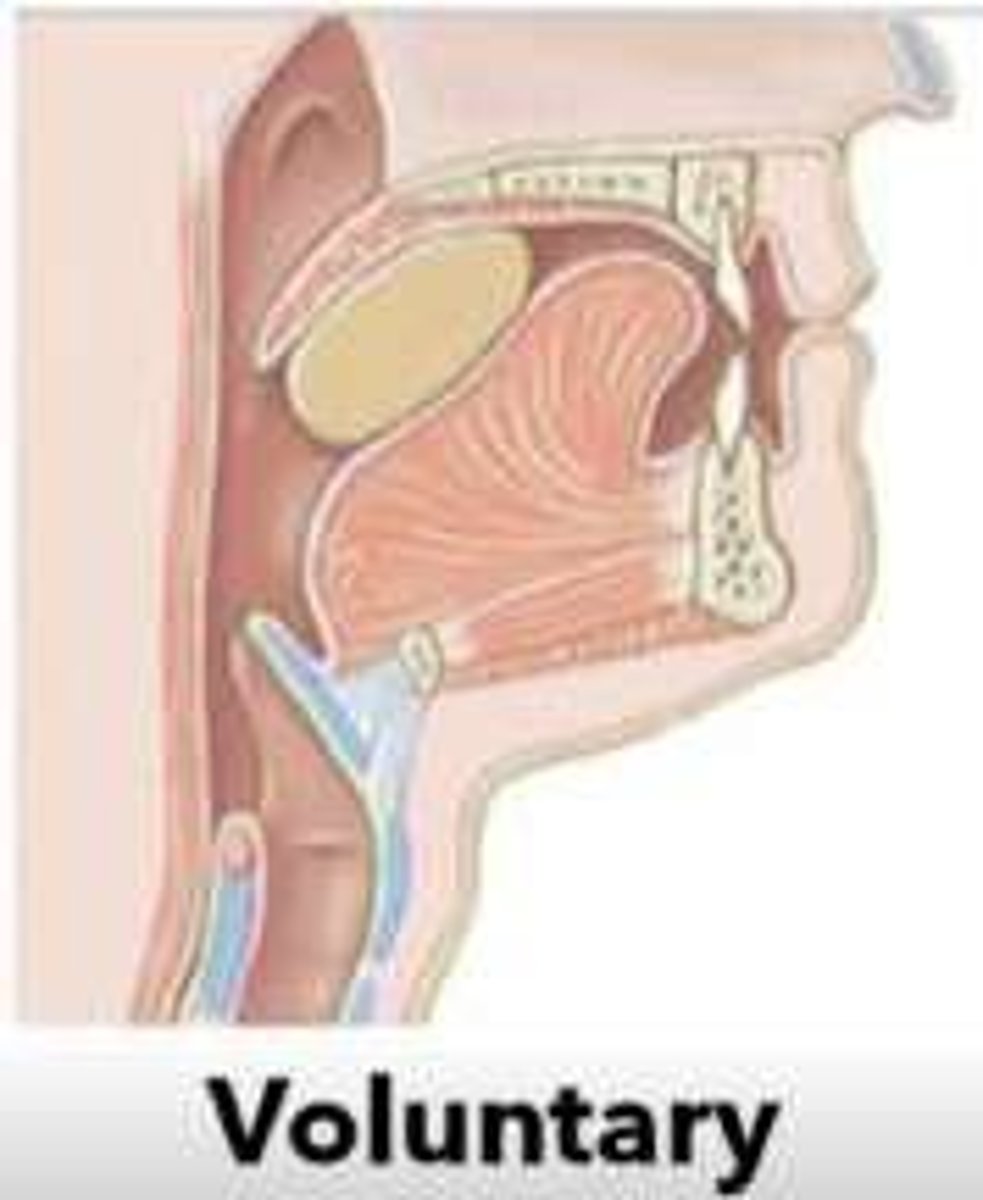
What occurs during the voluntary phase of swallowing?
The bolus is pushed to the back of the oral cavity under voluntary control.
What triggers the pharyngeal stage of swallowing?
The sensation of the bolus at the pharynx.
What happens to the nasopharynx during swallowing?
The uvula lifts to close off the nasopharynx.
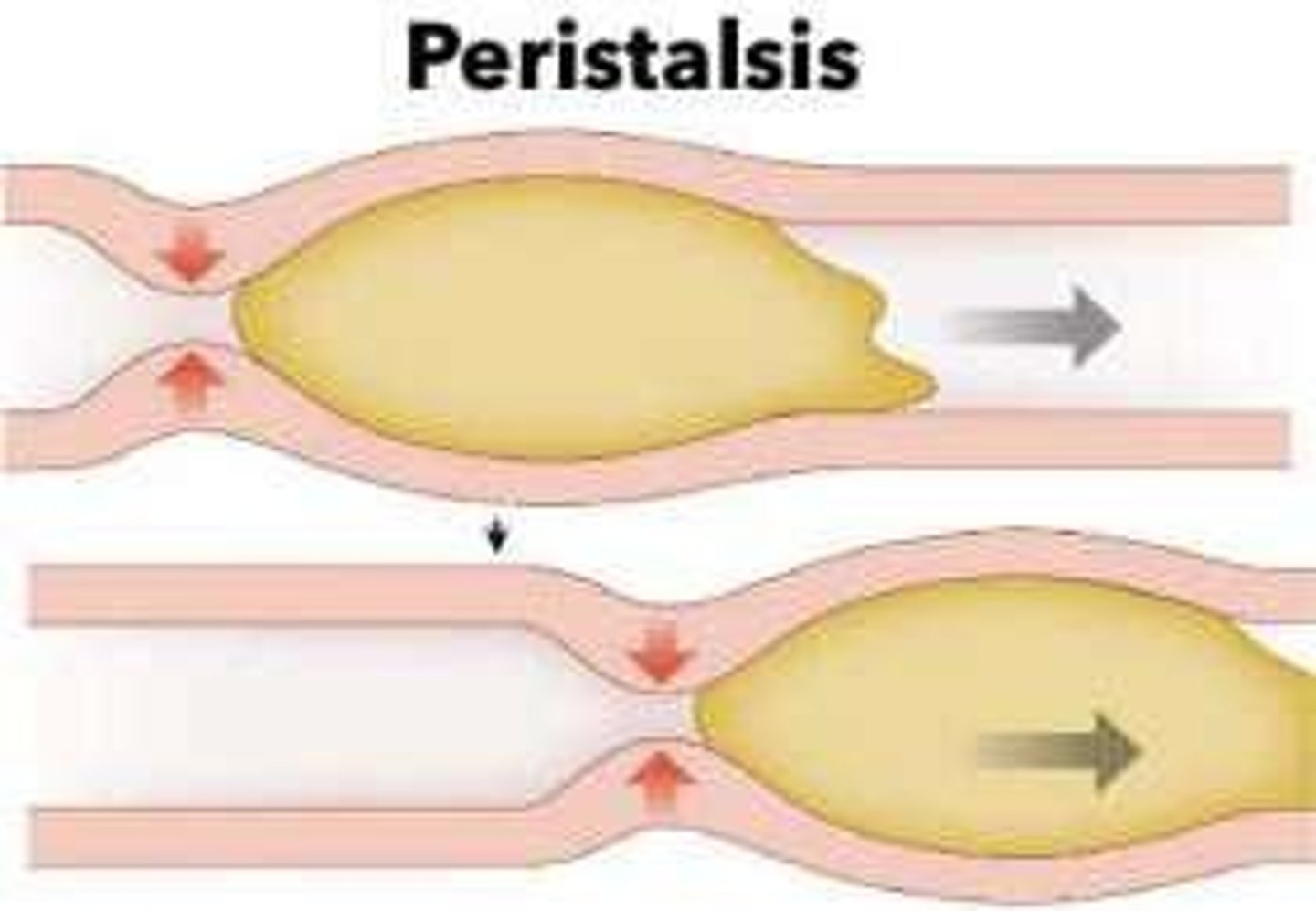
What is peristalsis?
The coordinated muscular contractions and relaxations that push the bolus down the esophagus.
What is the primary function of the submucosal neurons?
To trigger secretions from epithelial cells and detect the composition of the lumen.
What is the role of the myenteric plexus?
To regulate the muscular contractions of the digestive tract.
How does saliva protect the mouth and teeth?
By neutralizing acids and providing a barrier against bacteria.
What type of secretion does the parotid gland produce?
Watery saliva rich in enzymes.
What type of secretion does the submandibular gland produce?
A mixture of watery saliva and mucus.
What type of secretion does the sublingual gland produce?
More mucus-like secretion.
What is the significance of the enteric nervous system's neuron count?
The ENS has as many neurons as the spinal cord, indicating its complexity.
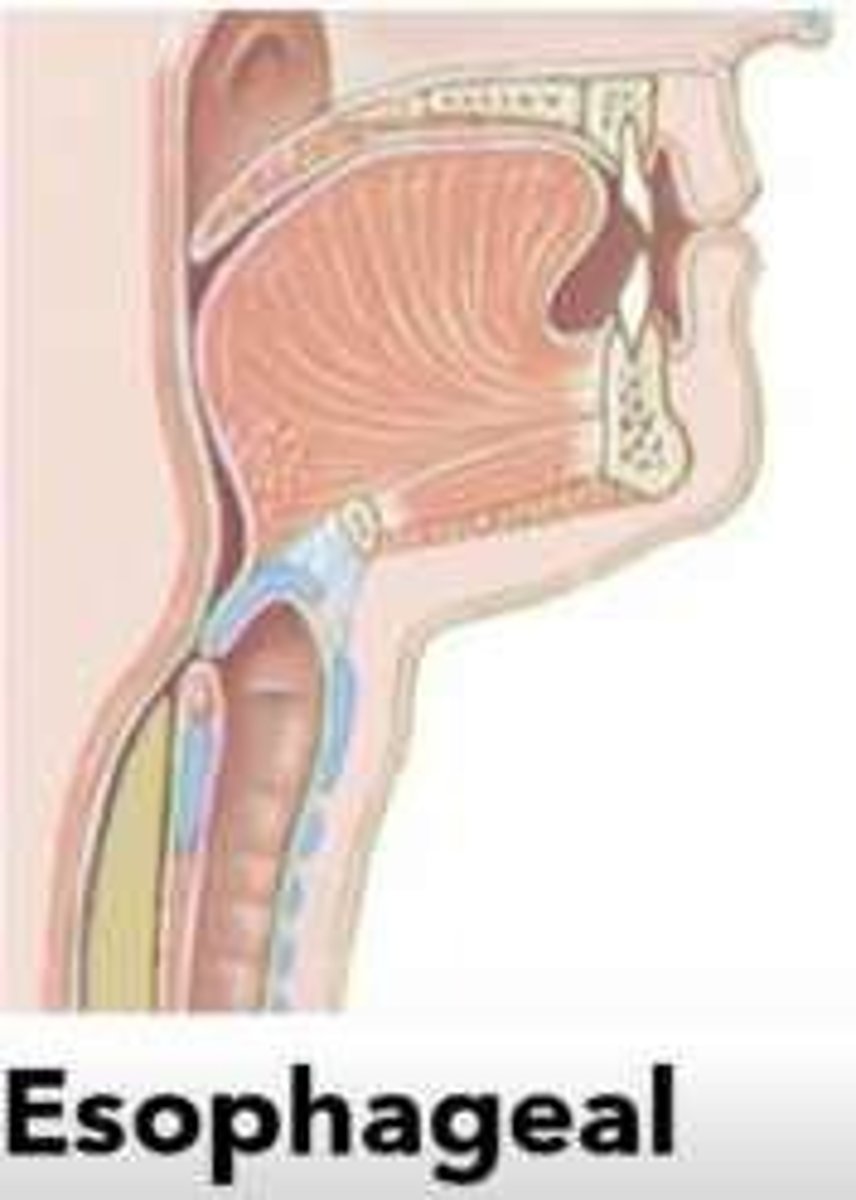
What is the function of the upper esophageal sphincter during swallowing?
To relax and allow the bolus to enter the esophagus.
What is the primary digestive function of the oral cavity?
Mechanical breakdown of food and initial chemical digestion.
What is the function of the lower esophageal sphincter?
To relax and allow the bolus to enter the stomach.
What must be closed off during swallowing to prevent aspiration?
The sinus cavity and the trachea.
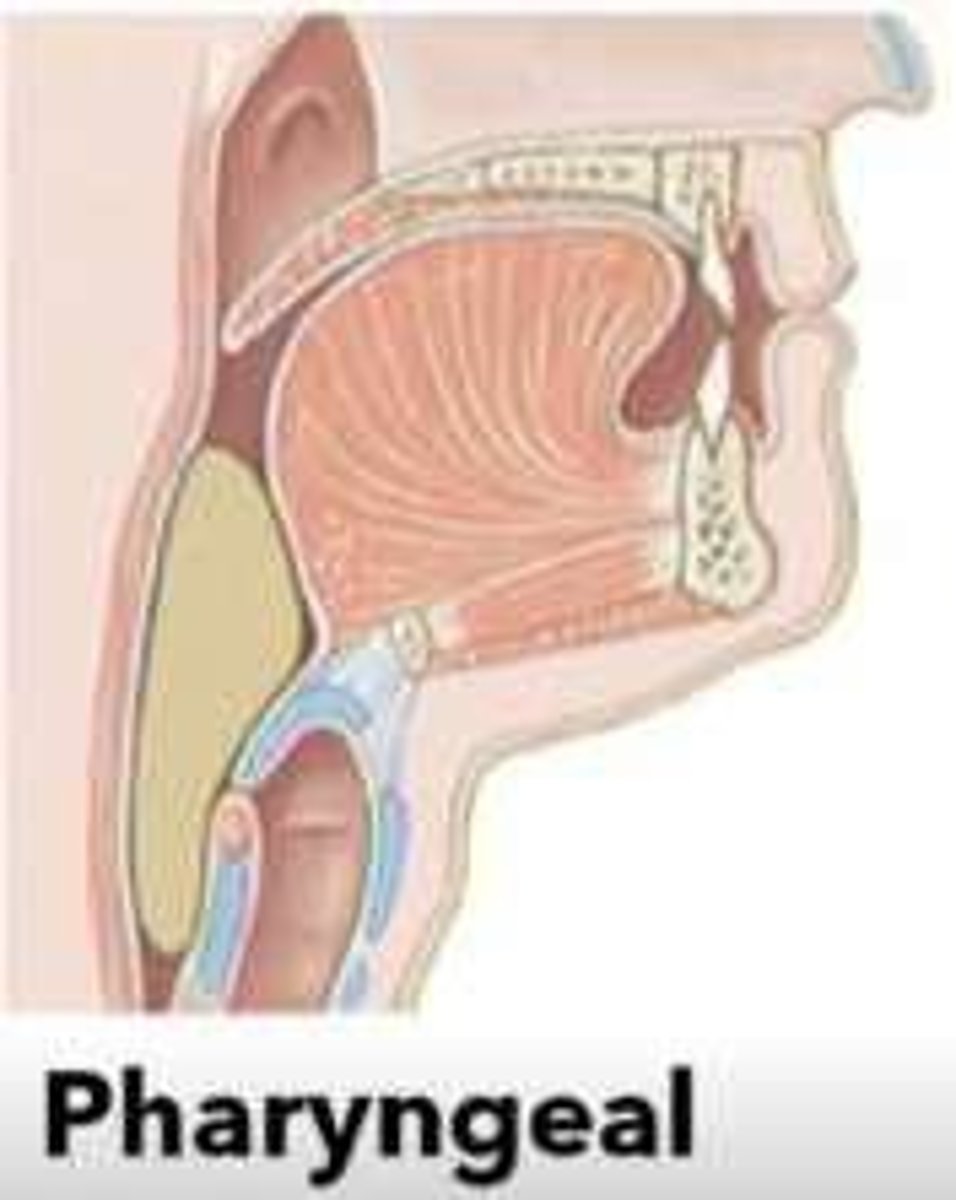
What is the voluntary phase of swallowing?
The phase where you consciously push the bolus to the back of the oral cavity.
What happens during the pharyngeal phase of swallowing?
The airway is closed off, and the bolus is pushed down the esophagus.
What is the esophageal phase of swallowing?
An involuntary phase where the bolus is pushed down the esophagus by peristalsis.
What triggers secondary peristalsis?
If a bolus does not successfully make it to the stomach.
What is the primary site of absorption in the oral cavity?
Minimal absorption occurs, but glucose can be absorbed sublingually.
What condition is characterized by reduced salivary production?
Xerostomia, or dry mouth.
What is the function of the stomach?
To act as a reservoir for food before it enters the intestines.
What is the greater curvature of the stomach?
The side of the stomach that extends out more than the other.
What is the fundus of the stomach?
The upper portion that first receives the bolus.
What is receptive relaxation?
The stretching of the stomach in response to the bolus.
What is chyme?
The liquefied solution formed from the bolus mixing with gastric juices.
What is the pyloric sphincter?
The sphincter that opens to allow chyme to enter the small intestine.
What are rugae?
Folds in the stomach that allow it to stretch to contain food.
What additional layer of muscle does the stomach have?
An oblique layer of smooth muscle.
What is the role of the mucosa layer in the stomach?
It secretes substances that aid in digestion, including acid.
What can cause xerostomia?
Conditions like Sjögren's Disease, radiation therapy, medication side effects, and nerve damage.
What is the antrum of the stomach?
The last part of the stomach before chyme enters the small intestine.
What happens to the bolus in the body of the stomach?
It is liquefied by muscular contractions and mixed with gastric juices.
What is the role of smooth muscles in peristalsis?
They contract behind the bolus and relax in front, allowing it to move down.
What is the difference between primary and secondary peristalsis?
Primary peristalsis is the normal wave of contraction, while secondary is a more vigorous response if the bolus is stuck.
What is the role of neurons in the swallowing process?
They detect the presence of the bolus and coordinate the muscular contractions.
How does the stomach prepare for food intake?
It stretches and opens the lower esophageal sphincter to receive the bolus.
What happens when the pyloric sphincter opens?
Chyme is released into the first part of the small intestine.
What is the significance of the oral cavity in digestion?
It is primarily for mechanical digestion and minimal chemical digestion.
What is the main function of saliva?
To lubricate food, aid in digestion, and protect the oral cavity.
What is the muscularis externa layer of the stomach composed of?
It consists of longitudinal, circular, and oblique smooth muscles.
How much gastric juice is secreted into the stomach daily?
Approximately 2 to 3 liters.
What types of cells are found in the gastric glands?
Exocrine and endocrine cells.
What do mucus neck cells secrete?
Mucus and bicarbonate.
What is the function of parietal cells in the stomach?
They secrete hydrochloric acid (HCl) and intrinsic factor.
What is the role of intrinsic factor?
It aids in the absorption of vitamin B12 in the intestine.
What do chief cells secrete?
Gastric lipase and pepsinogen.
What is pepsinogen?
A zymogen that, when activated, becomes the enzyme pepsin.
What hormones do G cells secrete?
Gastrin.
What is the function of gastrin?
It controls gastric motility and stimulates acid secretion from parietal cells.
What do D cells secrete?
Somatostatin, which inhibits gastrin release.
What is the primary role of acid in the stomach?
To activate enzymes, denature proteins, and destroy ingested microbes.
What is the process of converting a bolus into chyme called?
Mechanical digestion.
What are the three motility patterns of the stomach?
Propulsion, grinding, and retropulsion.
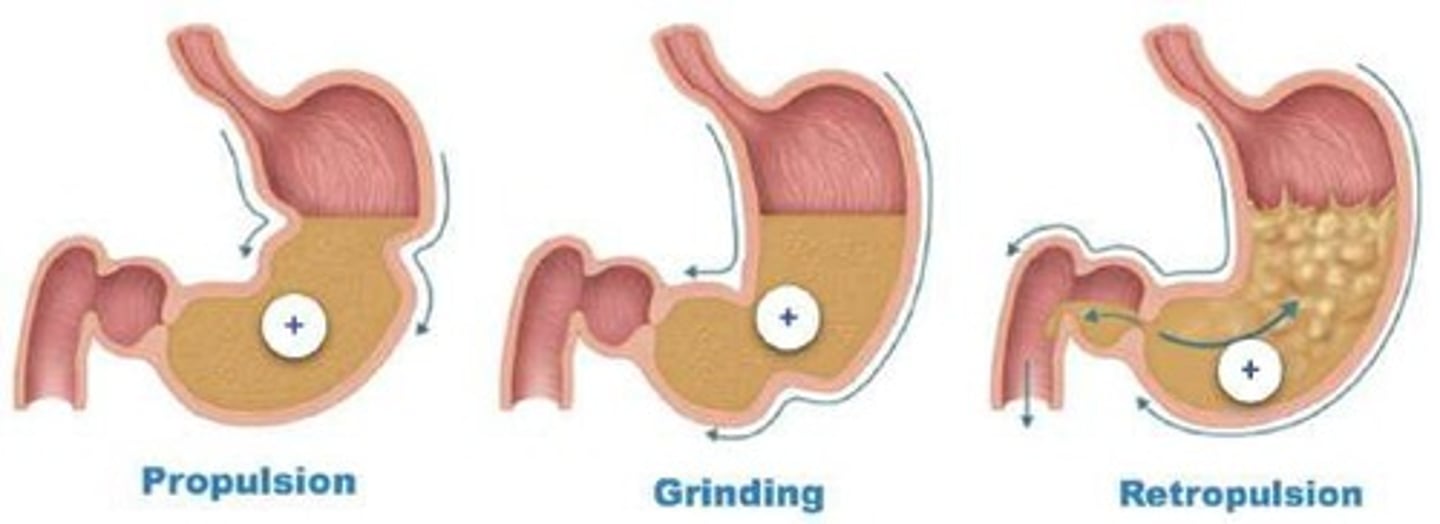
What triggers the pyloric sphincter to open?
The thorough digestion of stomach contents.
What is gastric emptying?
The movement of stomach contents into the small intestine.
What is the absorption capability of the stomach?
Minimal, primarily limited to substances like alcohol.
What protects the stomach from its own acidic secretions?
A thick layer of mucus secreted by epithelial cells.