Biology 151 Exam 3 - UW Madison Diagram | Quizlet
 Call Kai
 Learn
Learn Practice Test
 Spaced Repetition
 Match
Match Flashcards
 Knowt Play
1/230

There's no tags or description
Looks like no tags are added yet.
Name | Mastery | Learn | Test | Matching | Spaced | Call with Kai |
|---|
No analytics yet
Send a link to your students to track their progress
231 Terms
Miller-Urey Experiment
Experiment that found that organic molecules can form in a strongly reducing atmosphere.
- many synthesis problems
- too many wrong molecules
- chirality
What were the difficulties with the Miller-Urey Experiment?
RNA world hypothesis
hypothesis that RNA served as the genetic information of early life
Colony
collection of "individuals" - from colonies to true multicellularity
Protists
single-celled eukaryotes
Fungi, plants, algae and animals
complex multicellular life that evolved from protists several times
same DNA just express different genes
All cells have...
signaling
coordination and information flow between cells : depends on the type of organism it is
fungus
has cytoplasmic connections between cells
Hyphae
thread-like, filamentous structures that form the main body of a fungus (mycelium), playing crucial roles in nutrient absorption, growth, and reproduction
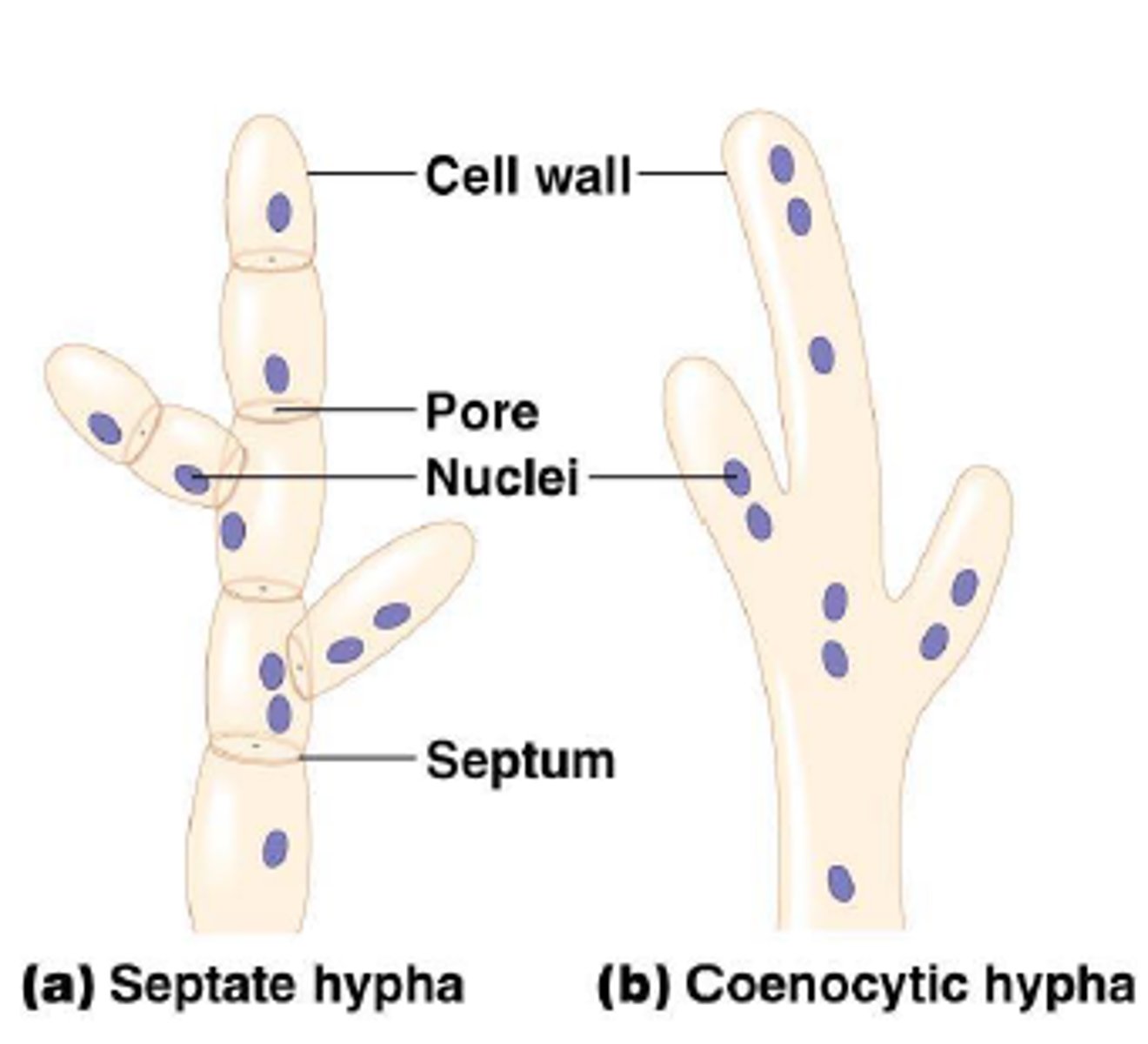
syncytial
a multinucleated cell or mass of cytoplasm resulting from the fusion of multiple cells or from nuclear division without cell division, forming a single, coordinated unit
Animals
not usually syncytial; multicellular heterotrophic organisms that lack cell walls
gap junctions
provide cytoplasmic channels between adjacent animal cells ; pass small molecules such as sugar, amino acids and nucleotides
Plants
is multi-cellular and has cell walls : have plasmodesmata
Plasmodesmata
channels through cell walls that connect the cytoplasms of adjacent cells, can pass molecules as large as MRNA and proteins
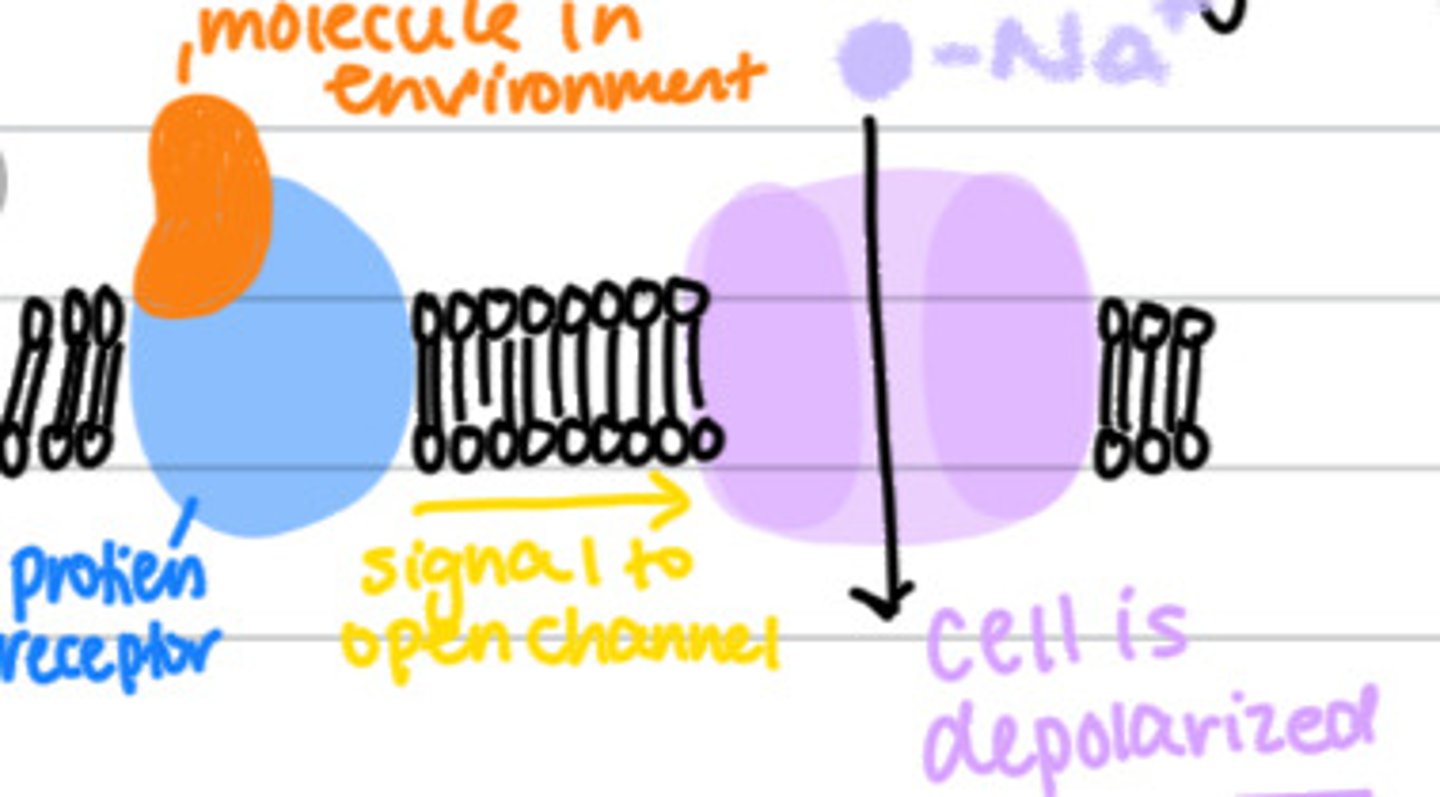
ligand-gated ion channel
Type of membrane receptor that has a region that can act as a "gate" when the receptor changes shape.
signal transduction pathway
The process by which a signal on a cell's surface is converted into a specific cellular response.
steroid
lipid molecule with four fused carbon rings; can diffuse through a membrane
Protein, amino acid, sugar, nucleotides
What cannot diffuse through a membrane
Transmembrane proteins
Integral proteins spanning the entire membrane
Receptors
transmembrane proteins at cell surface; extracellular part of receptor changes shape and activity of intracellular part of receptor
cAMP
second messenger; acts as a signal, regulating various cellular processes like metabolism, gene expression, and immune function.
cGMP
Second messenger; modulates various downstream effects, including retinal phototransduction, calcium homeostasis, and neurotransmission
phosphodiesterase
enzyme that degrades cAMP, producing AMP, to terminate signaling
protein kinases
transfer phosphates from ATP to protein, a process called phosphorylation inactivating/activating the target proteins
protein phosphatases
An enzyme that removes phosphate groups from proteins, often functioning to reverse the effect of a protein kinase.
complex multicellularity
3-D, transfers environmental signals internally
grow bigger, specialize, longer life span due to repair
pros of multicellularity
- Increased energy reqs.
- Infections
- Longer time to reach adulthood/reproduce
- Can no longer rely on osmosis and simple diffusion
cons of multicellularity
surface area and volume is small
diffusion in a cell is limiting when...
unicellular
Made of a single cell
1. Derive: get everything from the environment
2. Expel: expel waste (like multicellular)
3. Energy: heat up/cool down quickly
Steps of Unicellular organisms
-size must be small
-not a lot of energy
-small available environment
-reproduce and die a lot
Ramifications of unicellular organisms
Diffusion
Movement of molecules from an area of higher concentration to an area of lower concentration.
bulk transport
The process by which large particles and macromolecules are transported through plasma membranes. Inc. exocytosis and endocytosis
connective tissue
A body tissue that provides support for the body and connects all of its parts (fat, bone, cartilage)
epithelial tissue
A body tissue that covers the surfaces of the body, inside and out (skin)
muscular tissue
Contracts and moves the various parts of the body (skeletal, cardiac and smooth)
nervous tissue
A body tissue that carries electrical messages back and forth between the brain and every other part of the body.
-communicating, translation of signals to actions
-distributing nutrients and O2 to muscles
-removal of waste/breakdown of energy
-defense against evils
challenges of multicellularity
Homeostasis
A tendency to maintain a balanced or constant internal state; the regulation of any aspect of body chemistry, such as blood glucose, around a particular level
negative feeback
when a change in some condition triggers a response that reduces the changed condition
form follows function
the shape of an object should be primarily determined by how it works
sea anemone
nerve net
flatworm
eye spots, ganglia paired, ventral nerve cord
earthworm
brain, ventral nerve cord, segmental ganglia
insect
brain, eye, central nerve cord
squid
brain, giant axon
frog
brain, eye, dorsal spinal cord, nerves
Cephalization
concentration of sense organs and nerve cells at the front of an animal's body
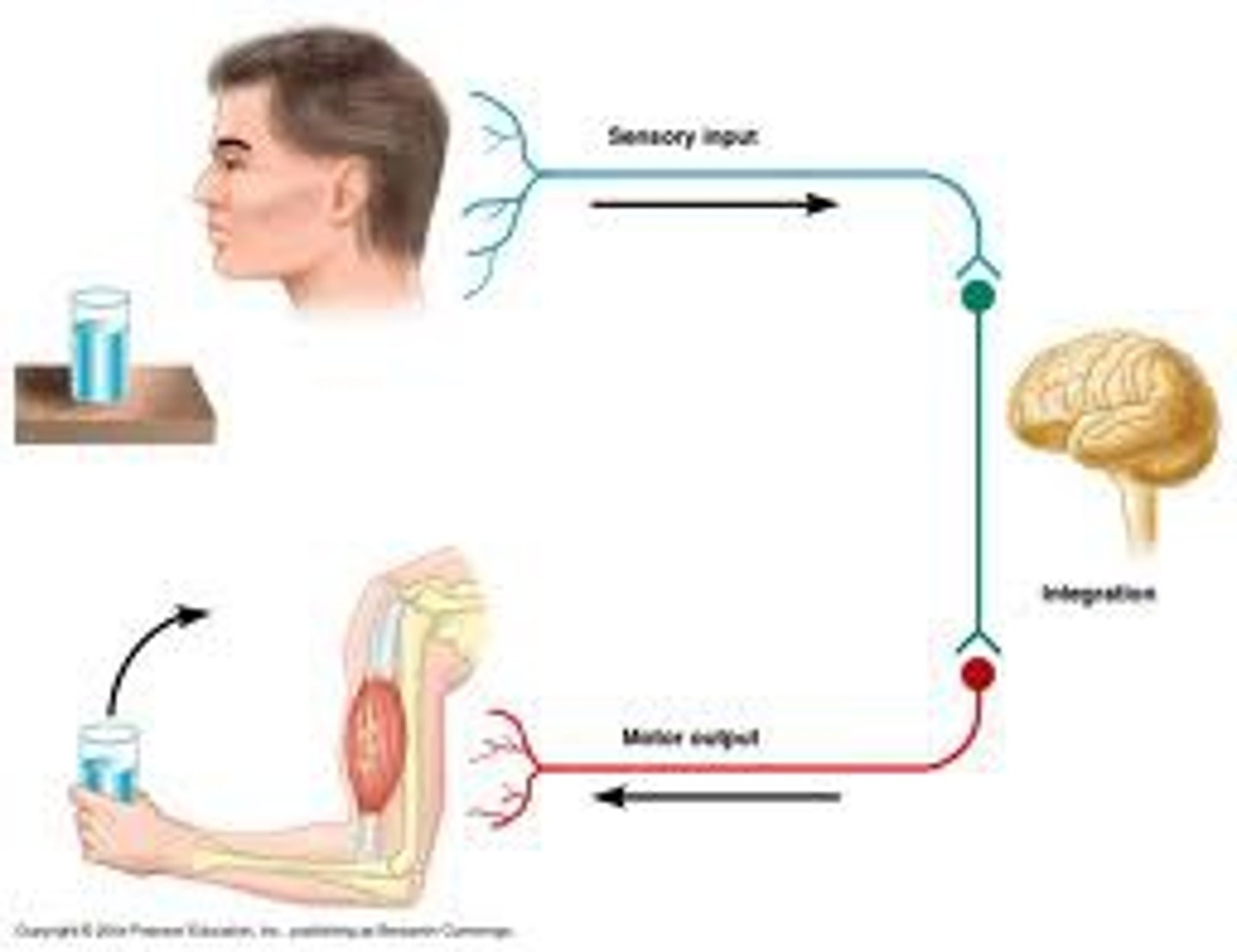
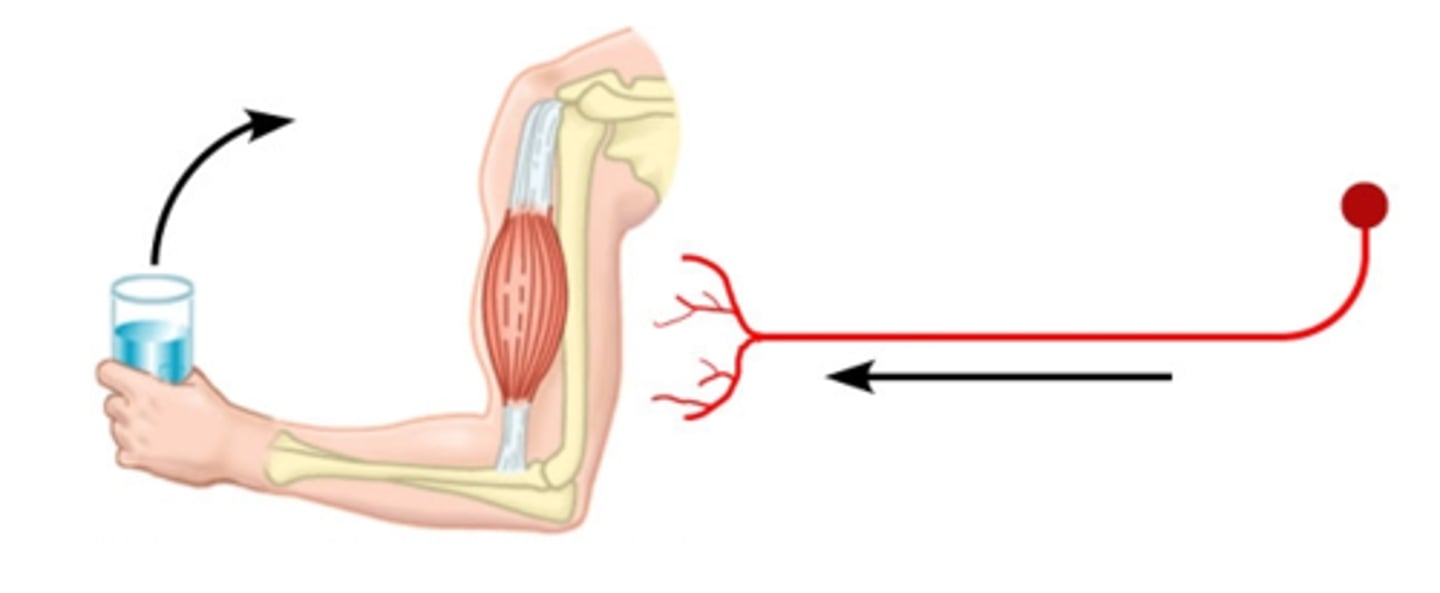
nervous system chain of reaction
sensor > sensory input > integration in CNS > motor output (PNS) > movement
sensory neuron
transmits afferent impulses to the CNS
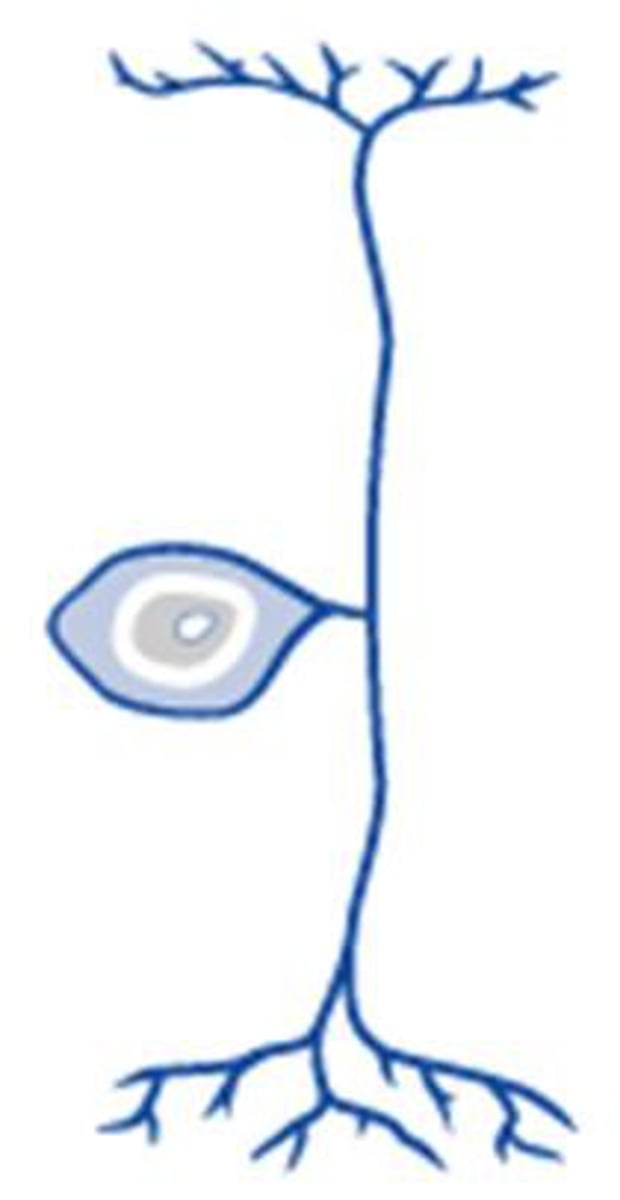
interneruron
neuron that communicates between the sensory inputs and motor outputs
motor neuron
a neuron that sends an impulse to a muscle or gland, causing the muscle or gland to react
TERM
cell membrane
DEFINITION
A cell structure that controls which substances can enter or leave the cell.
TERM
dendrites
DEFINITION
Branchlike parts of a neuron that are specialized to receive information.
TERM
cell body
DEFINITION
Largest part of a typical neuron; contains the nucleus and much of the cytoplasm
TERM
axon
DEFINITION
the extension of a neuron, ending in branching terminal fibers, through which messages pass to other neurons or to muscles or glands
TERM
axon hillock
DEFINITION
Cone shaped region of an axon where it joins the cell body.
TERM
myelin sheath
DEFINITION
A layer of fatty tissue segmentally encasing the fibers of many neurons; enables vastly greater transmission speed of neural impulses as the impulse hops from one node to the next.
TERM
node of Ranvier
DEFINITION
A gap between successive segments of the myelin sheath where the axon membrane is exposed.
TERM
synaptic end bulbs
DEFINITION
found at end of axon terminal & contain synaptic vesicles that are filled with neurotransmitters
TERM
axon terminal
DEFINITION
the end of an axon
1. Stimulus is received by the dendrites and cell body
2. synaptic stimuli summoned at hillock and action potential is triggered
3. action potential in axon and releases neurotransmitters which then bind to postsynaptic membrane
Neuron Organization
Na+, Cl-, Ca2+
Outside the cell has higher [ ] of... (more +)
K+ and anions (large proteins)
Inside the cell has a higher [ ] of... (more -)
equilibrium potentials
Even with all the K+ inside the cell, the negative molecules inside and all of the sodium outside, the cell is more negative inside compared to outside.
This potential difference can be measured as a voltage.
Because the membrane is so permeable to K+, this difference is often maintained by K+ concentration gradient
voltage
an electromotive force or potential difference expressed in volts.
interstitial
between, but not within, the parts of a tissue
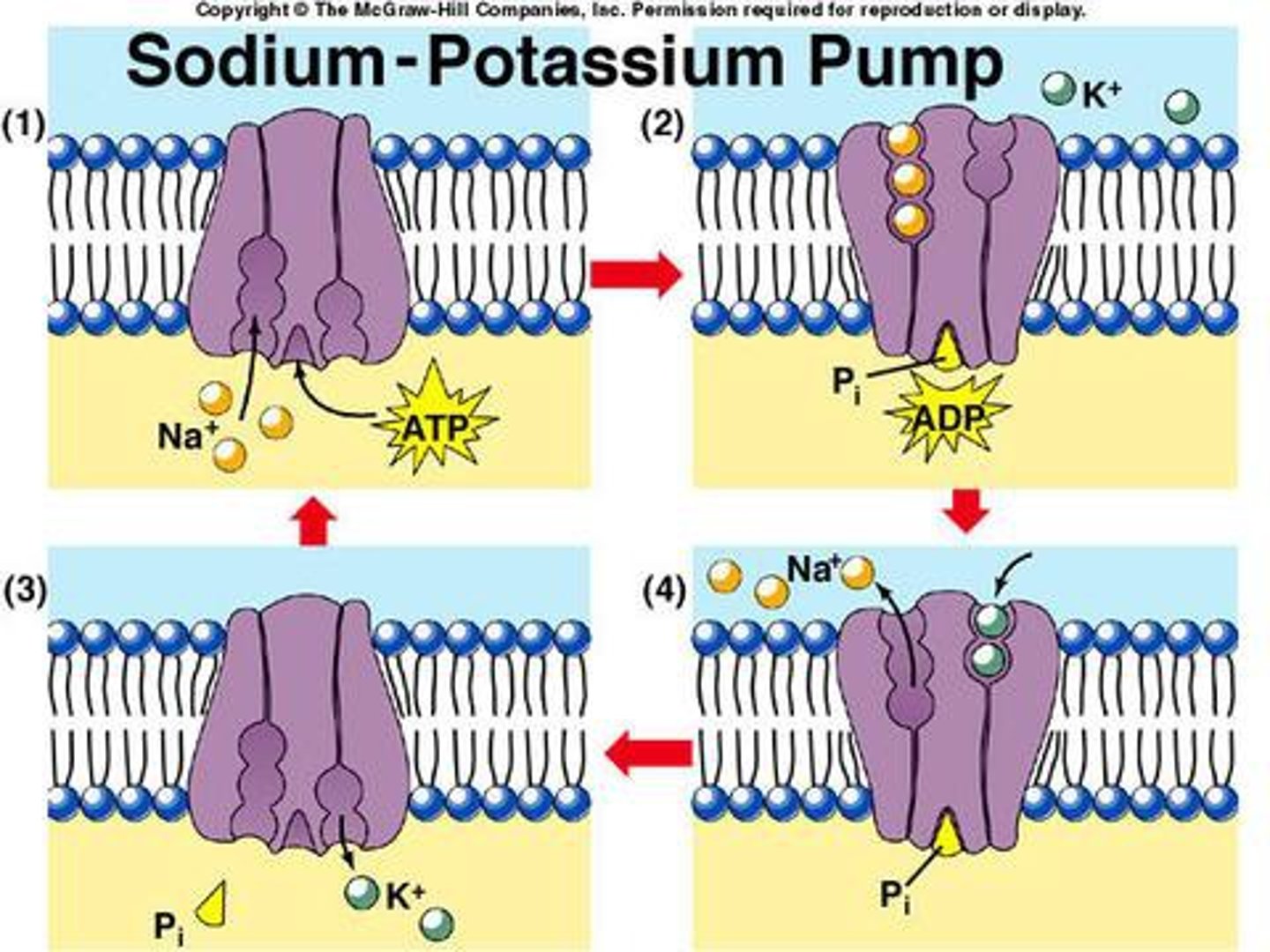
sodium-potassium pump
a carrier protein that uses ATP to actively transport sodium ions out of a cell and potassium ions into the cell
1. 3 Na+ ions located in the cytoplasm bind to a carrier protein
2. a phosphate group is removed and binds to the carrier protein
3. the binding of the phosphate group changes the shape of the carrier protein, allowing Na+ ions to be released outside the cell membrane
4. 2 K+ ions located outside the cell bind to a carrier protein
5. a phosphate group is released, changing the shape of the carrier protein
6. K+ ions are released into the cytoplasm and the cycle is ready to repeat
steps of sodium potassium pump
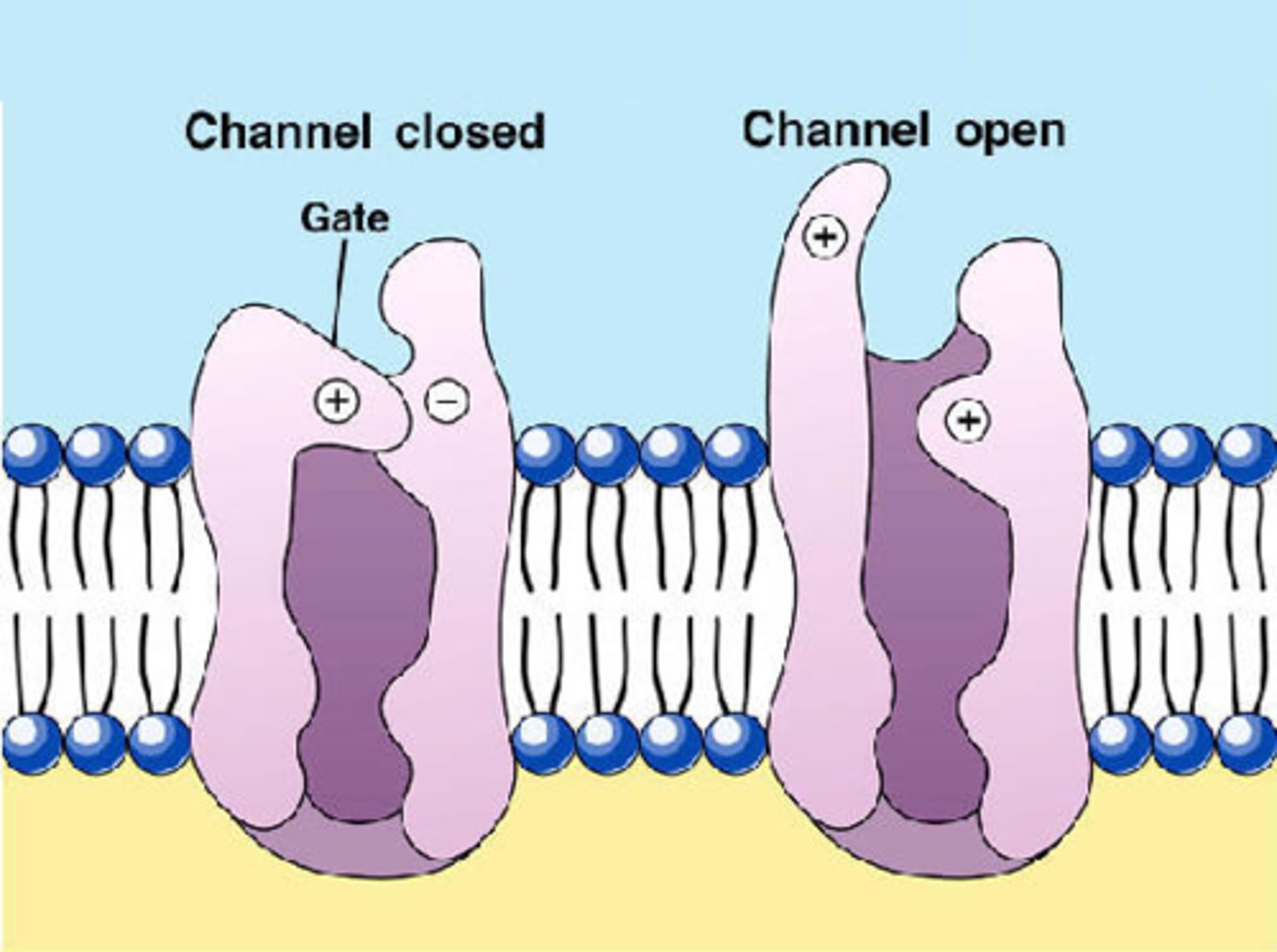
voltage gated channels
open and close in response to changes in membrane potential
action potential
the change in electrical potential associated with the passage of an impulse along the membrane of a muscle cell or nerve cell.
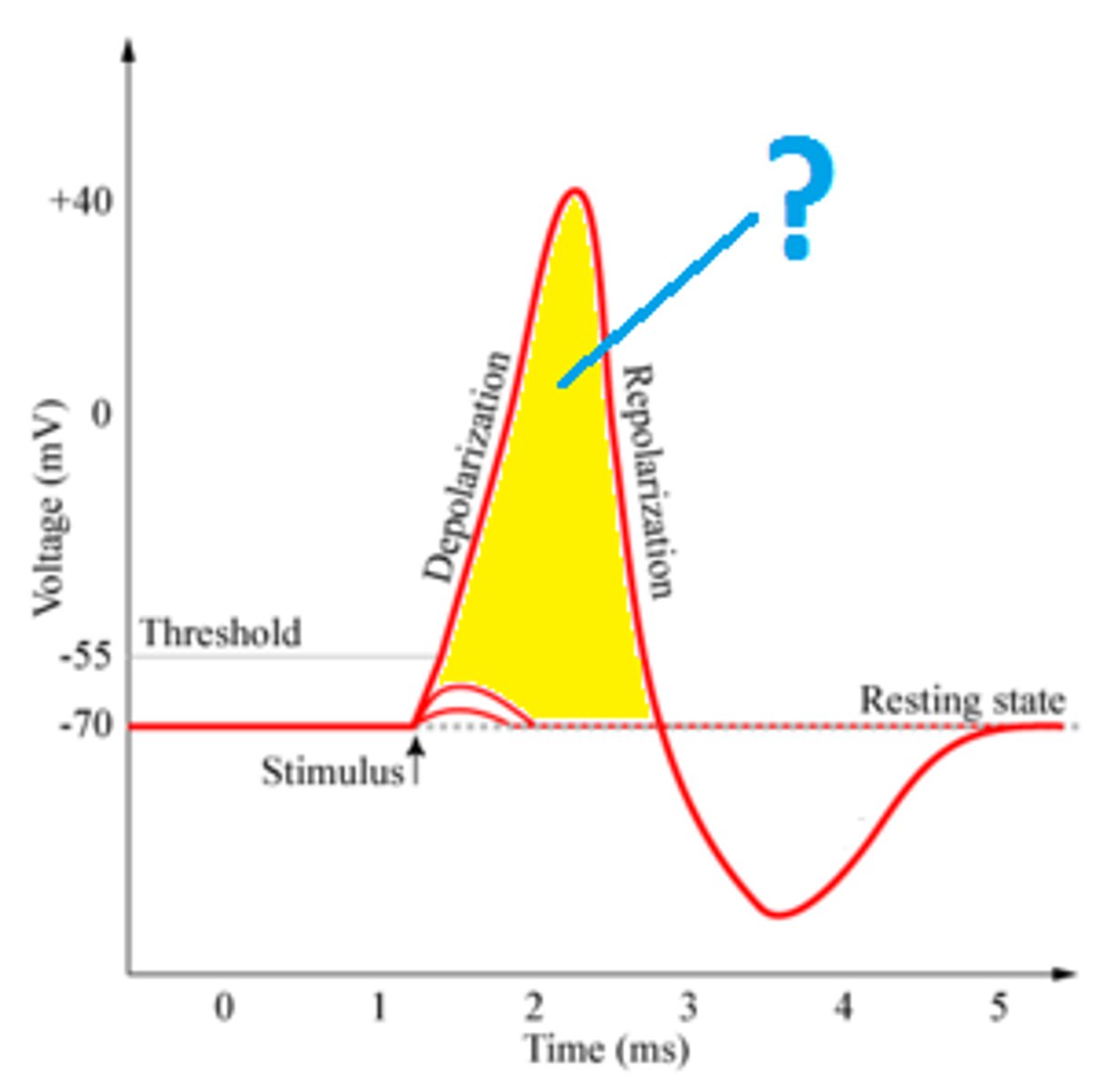
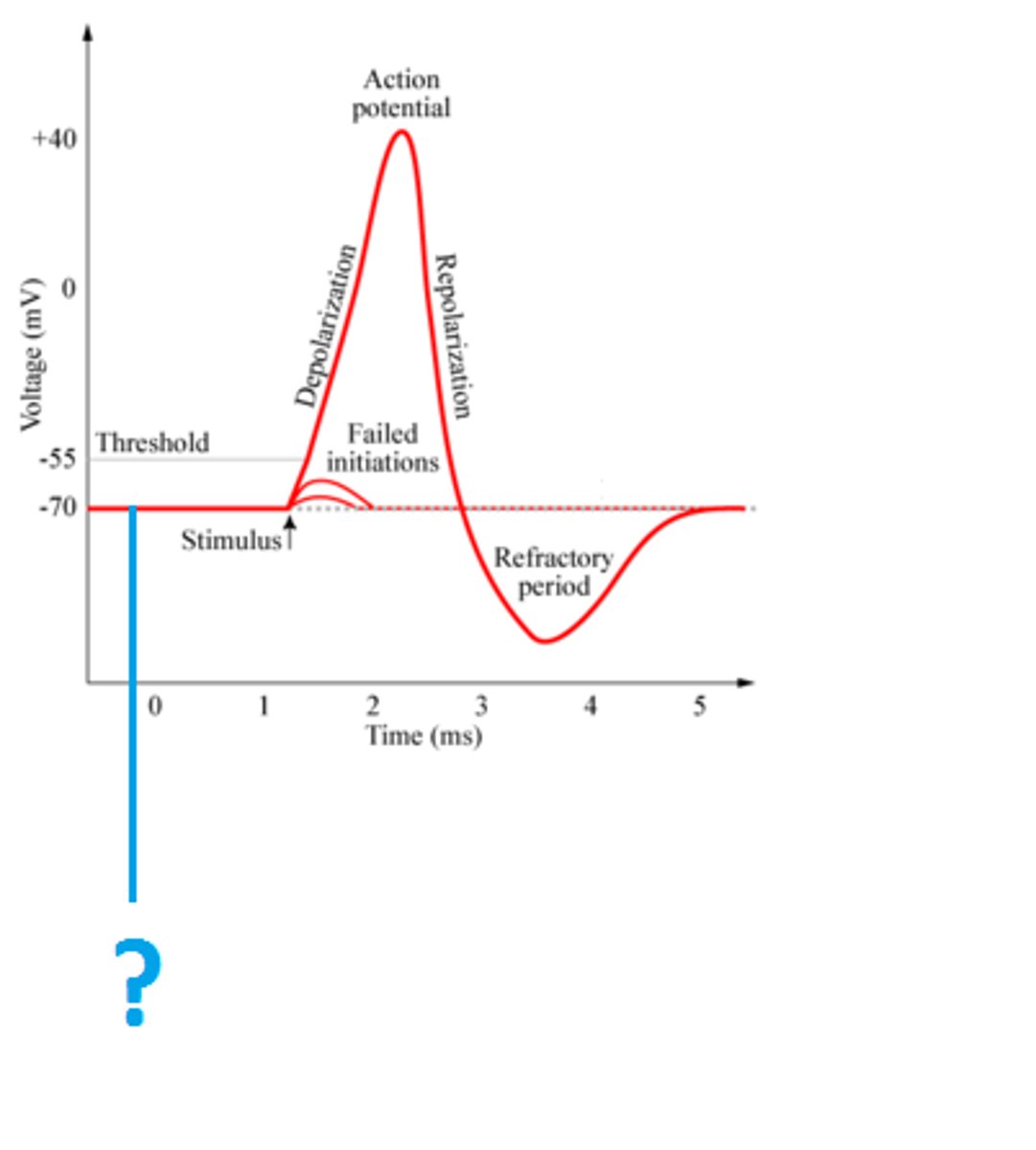
resting potential
- 70mv, nothing firing
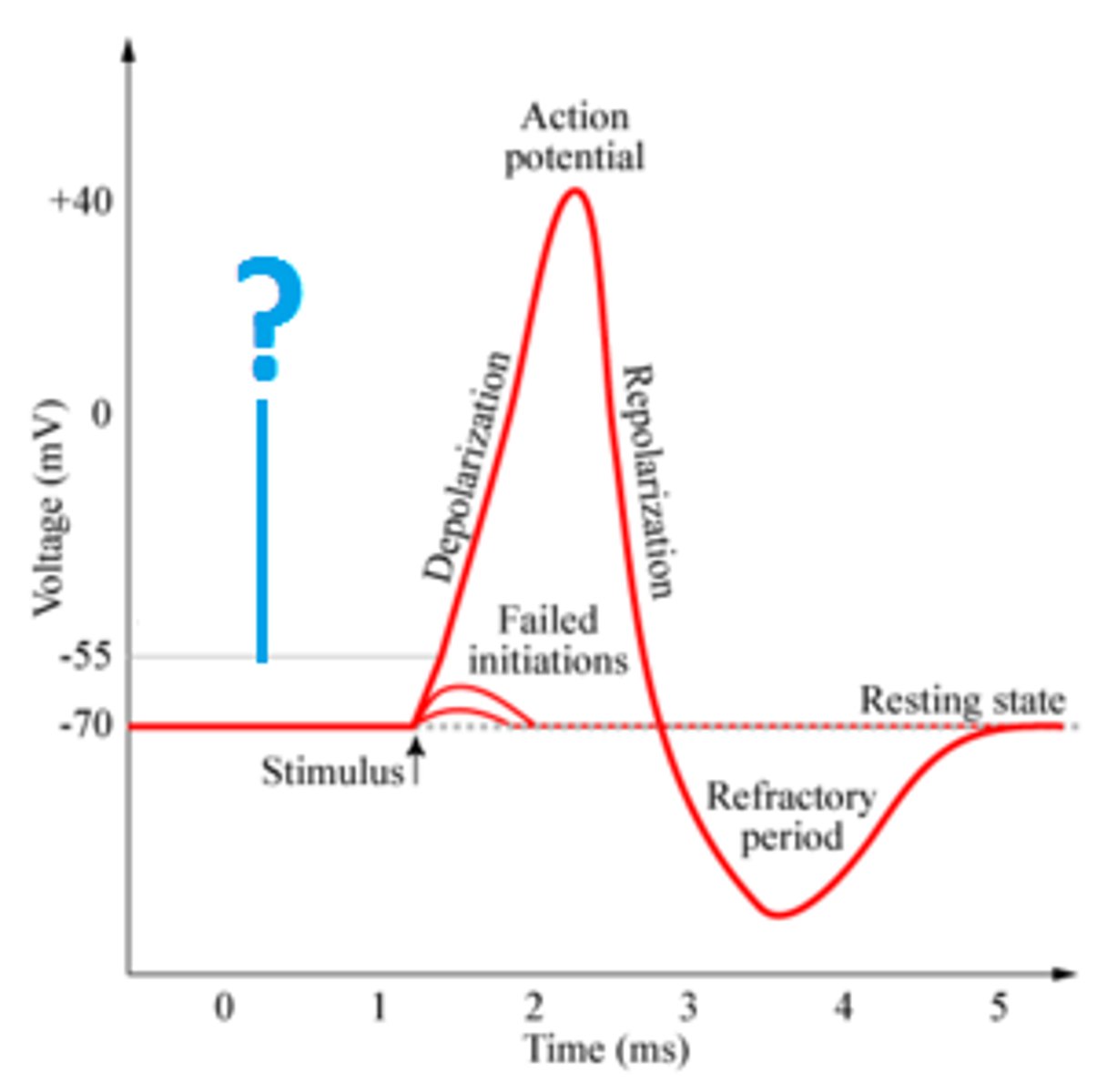
threshold potential
-55mV, the minimum membrane potential that must be reached in order for an action potential to be generated.
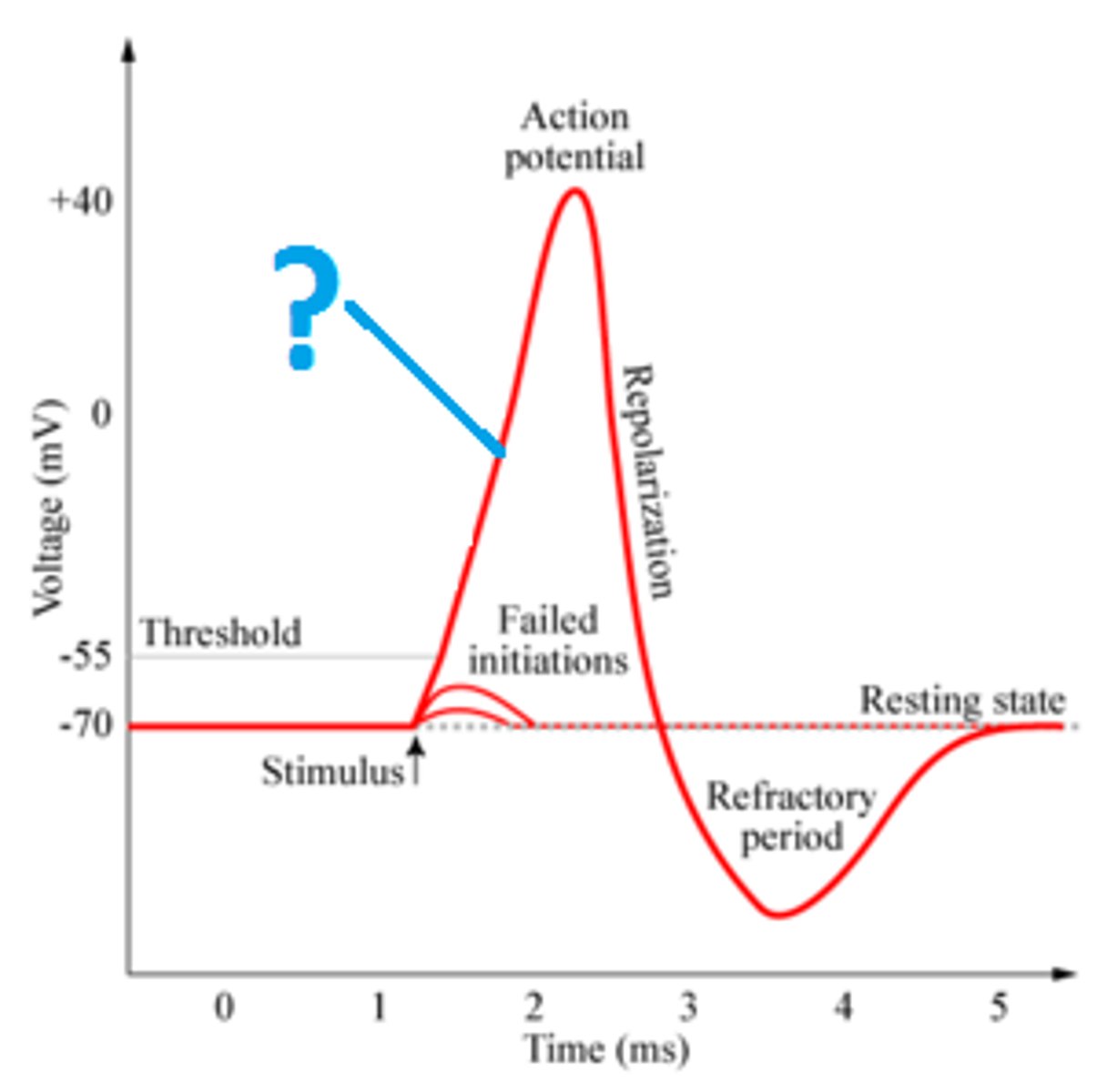
depolarization
peaks at +40mV, the process during the action potential when sodium is rushing into the cell causing the interior to become more positive.
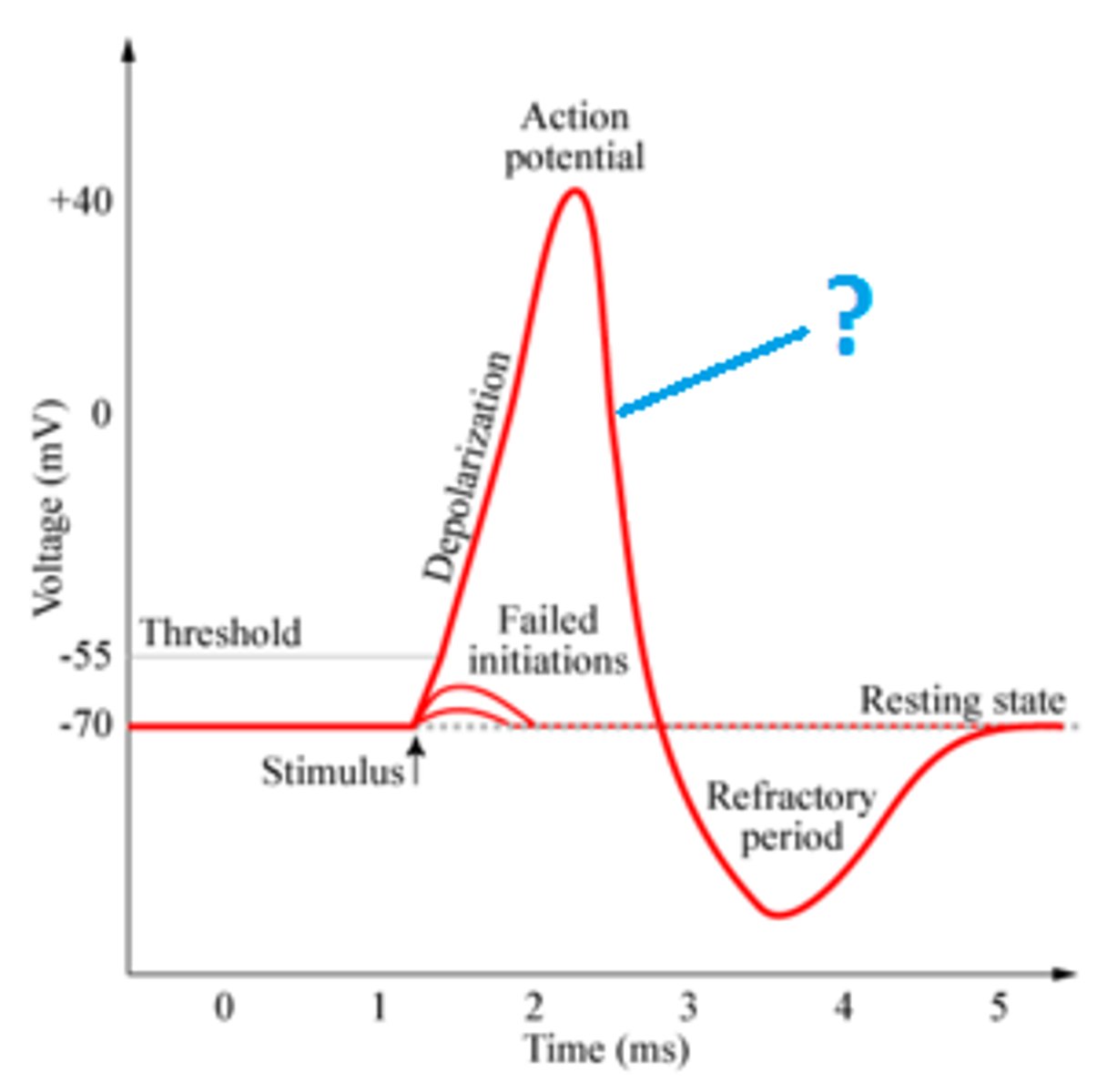
repolarization
back to -70mV; Return of the cell to resting state, caused by reentry of potassium into the cell while sodium exits the cell.
refractory period
a period of inactivity after a neuron has fired
gilal cells
cells in the nervous system that support, nourish, and protect neurons
equilibrium potential of Na+
+60 mV
Equalibrium potential K+
-90mV
leaky channels
channels that are always open
- prior to release, neurotransmitter molecules are stored in membrane-bound vesicles in nerve terminal
-when AP reaches nerve terminal, voltage gated calcium channels open allowing calcium to flow into cell
-sudden increase in Ca triggers fusion of vesicles w/ the membrane at the synapse causing exocytosis of the neurotransmitter
-once released into synapse, neurotransmitter molecules diffuse across the cleft and bind to receptors on post-synaptic membrane
Neurotransmitter release
EPSP (excitatory postsynaptic potential)
A positive change in the postsynaptic membrane potential.: move likely to transmit and respond to signals
IPSP (inhibitory postsynaptic potential)
A negative change in the postsynaptic membrane potential. : inhibits neurons form sending an action potential
temporal summation
Multiple EPSP's arrive quickly at a single synapse to fire an action potential
spatial summation
The sum of multiple synapses firing at different locations at one time to create a net effect.
Glutamate
excitatory neurotransmitter
Glycine and GABA
inhibitory neurotransmitters
No summation
2 stimuli separated in time cause EPSPs that do not add together - no action potential
cancellation
EPSP and IPSP cancel each other out so no action potential is set off
CNS
brain and spinal cord
centralized ganglia
organism with no brain has a ...
cranial nerves
12 pairs of nerves that carry messages to and from the brain (smell, vision, taste, hearing, neck and upper body)
spinal nerves
31 pairs of nerves arising from the spinal cord (axons of both sensory and motor neurons from the spine to the periphery
PNS
the sensory and motor neurons that connect the CNS to the rest of the body, homeostasis
Somatic NS
voluntary movement, sensing and responding to the environment, motor neurons initiate contraction through acetylcholine binding
sensory receptors
sensory nerve endings that respond to stimuli by developing action potentials
Chemoreceptors
respond to chemicals (smell and taste)
Mechanoreceptors
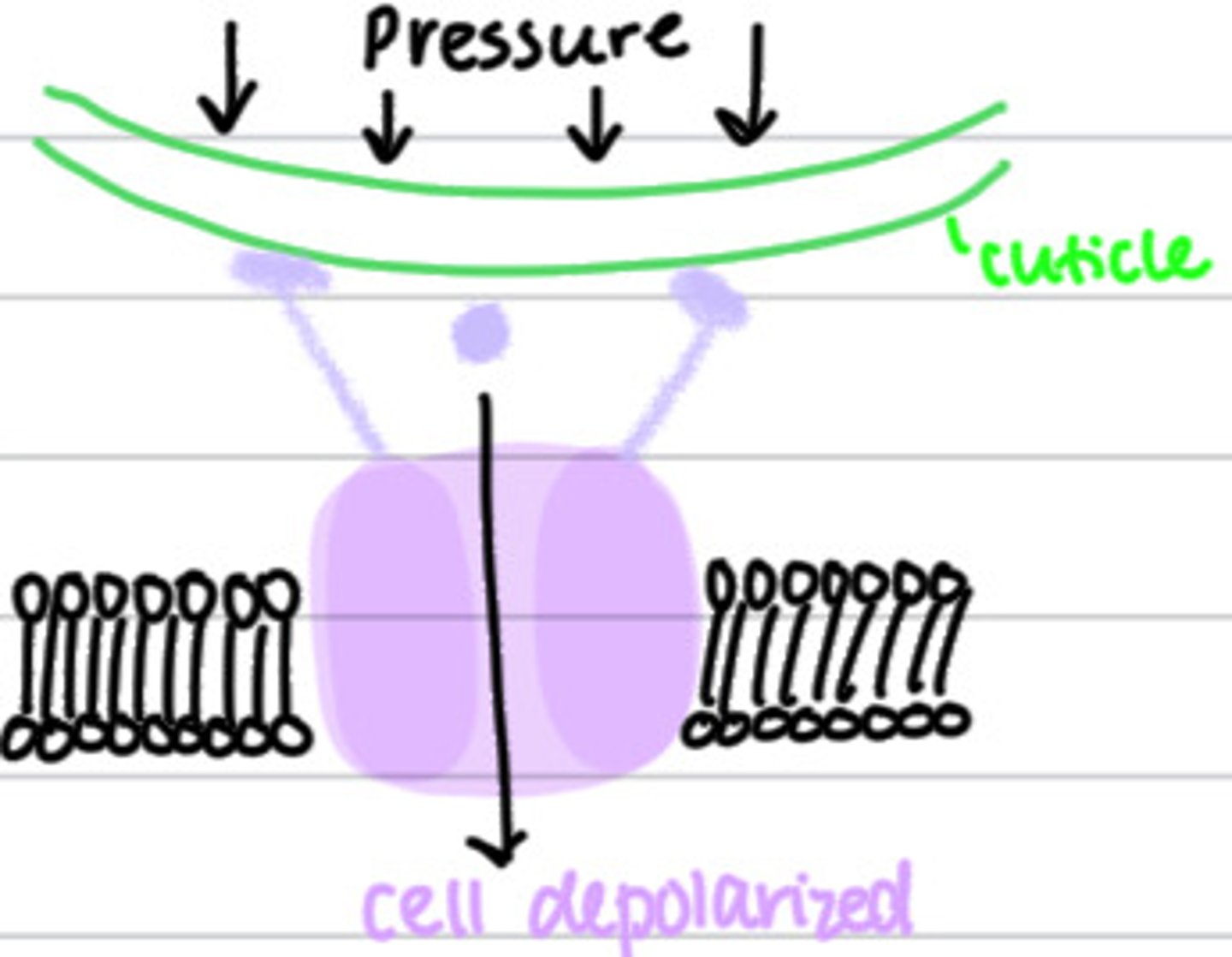
found in skin; respond to touch, pressure and sound and motion (more pressure = higher firing rate)