LCA Midterm
 Call Kai
 Learn
Learn Practice Test
 Spaced Repetition
 Match
Match Flashcards
 Knowt Play
1/50

There's no tags or description
Looks like no tags are added yet.
Name | Mastery | Learn | Test | Matching | Spaced | Call with Kai |
|---|
No analytics yet
Send a link to your students to track their progress
51 Terms
purposes of LCA?
support broad environmental assessments
establish baseline info for a process
public policy
guide product + process dev
functional unit (def + requirements)
the basis on which a system is evaluated in an LCA
Requirements:
precise + measureable
captures the service performed + compares products or systems on the basis of equiv service
True / False: system boundaries have to include all life cycle stages for a comprehensive LCA
False - only includes selected processes; does not have to include all stages, but must support the goal statement
Foreground processes
are specific to the system under study and may be under the control of the analyst or the analyst’s organization
background processes
are more generic and will exist without the system of study
good example is electricity production
cradle-to-grave vs. cradle-to-grate
“to-grave” include end of life operations
“to gate” cut off before use + end of life
product is sitting in the factory ready to go out T
True / False: cradle-to-gate LCAs include transportation and distribution, but not use + end of life
False - ends after processing / before transportation + dist
primary energy
energy content of fuels found in nature
secondary energy
converted forms of primary energy
is crude oil primary / secondary energy?
crude oil = primary
converted to gasoline (secondary energy) for use
coal is primary or secondary E?
primary
purchased energy
the amt of electricity/natural gas on the bill; commercial buildings + facilities have this
full fuel cycle energy
the full amount of energy required to get purchased energy to the point of use
considers extraction, processing, transportation etc
purchased energy + all energy from earlier steps
what type of E is electricity (primary / secondary) ?
secondary
what type of E is steam (primary / secondary) ?
secondary
what type of E is tidal energy (primary / secondary) ?
primary (ocean tides)
what’s the diff between lower heating value (LHV) and higher heating value (HHV)?
LHV excludes latent heat of vaporization of water
How can you measure methane leakage for an LCA / what is the diff between these two approaches?
bottom-up: isolate + measure emissions from diff equipment
top-down: fly over emissions measurements with helicopters
What are some top-down ways to measure methane emissions ?
satellites
aircrafts
drones
What are some bottom-up ways to measure methane emissions ?
wheeled vehicles
handheld tools
Nationally, we get electricity naturally from which source the most?
natural gas
What is the general formula used to calculate the energy needed to produce a product?
mf = mass of functional unit [ kg ]
mi = mas flow, i [ kg ]
ei = energy flow [ MJ ]
Ki = full fuel cycle value of the impact category of interest per unit mass or energy of i [ MJ / kg or MJ / MJe]
![<p>mf = mass of functional unit [ kg ] </p><p>mi = mas flow, i [ kg ] </p><p>ei = energy flow [ MJ ] </p><p>Ki = full fuel cycle value of the impact category of interest per unit mass or energy of i [ MJ / kg or MJ / MJe] </p>](https://assets.knowt.com/user-attachments/29ae6bf7-ee75-4f3d-9777-e71bfc5dd81f.png)
What is the impact vector used to calculate the energy needed to produce a product?

what are some primary sources of data?
national emissions inventory
toxics release inventory
USDA stats center
What is a Monte Carlo?
a sampling approach which determines the effect of input uncertainties on the output
What is a data quality matrix?
A tool used to quantify the quality of data in an LCA
evaluates points across 5 key indicators on a score of 1-5
What are the 5 indicators on a data quality matrix?
reliability
completeness
temporal correlation
geographical correlation
technological correlation
True / False: “completeness” on the data quality matrix reviews how old the data is compared to your study year
False - that is temporal correlation
true / false: “reliability” on the data quality matrix reviews if the data is based on estimates or actual measurements
true
How does a Monte Carlo work? (4 main steps)
each input has its own probability distrubution
random values are sampled from each distribution
output data is simulated for each sampled imput
this would be the impact factor like energy of GHGs
based on the distribution of outputs, we can calculate a confidence interval for the results
What does allocation mean ?
divide the input burdens and output burdens among the different co-products so that each co-product has its unique LCA.
Energy allocation
considers energy content of co-products
What are some examples of energy allocation?
petroleum refineries produce energy products valued for their energy content
power plants may produce steam alongside electricity
mass allocation
allocates burdens based on mass share
What is a “burden” in terms of co-product handling ?
resource consumption: energy, water
emissions: greenhouse gas, water pollutants, etc
when can market value allocation / economic be used?
when a plant or facility would shift its slate of co-products depending on market factors
when a process exists because it produces a very high market value product. Co-products come along for the ride
Allocation governing equation
unallocated flow * allocation factor = allocated flow
system expansion (displacement)
give the main product credit for co-products displacing existing products
what’s the difference between allocation and displacement?
allocation : divides the environmental “blame” among co-products based on a specific physical or economic factor
displacement: gives the main product a “credit” for avoiding the production of the co-product elsewhere
System-level allocation
A "Black Box" approach where burdens are divided based on the final outputs of the entire facility.
You draw one large boundary around the whole plant. You take the total inputs (energy, water) and total emissions, then split them among the co-products using a single factor (like total mass or total market value)
process-level allocation
A "Pay-for-What-You-Use" approach that assigns burdens step-by-step to specific unit operations.
you break the plant down into individual sub-processes (e.g., Cooking, Fermentation, Distillation).
True / False: your displaced burdens should sum to total burdens
false - allocated burdens should sum to total burdens
false for displacement because you are giving “credits” based on other systems outside the factory
Pros & Cons of Allocation
pros:
simple
always sums to 100% of total impact
data availability - only need inputs + outputs of own process
stability - results don’t change based on other facilities
Cons:
arbitrary slicing
ignores how co-product may be helping the environment
Pros & Cons of Displacement
Pros:
ISO preferred bc it models actual consequences
rewards product for efficiency
policy advantage - can result in much lower (even negative) carbon intensity scores
Cons:
high data burdem = need lots of accurate data on other processes
more mathematically complex than allocation
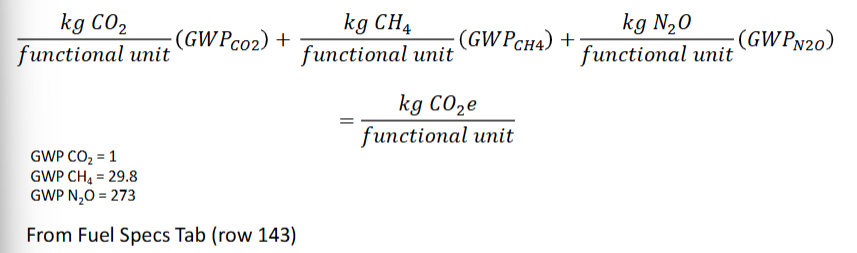
What is the formula for Global Warming Characterization?
What website can you use to track human health / toxicity of substances?
TRACI
Ecotoxicity units in TRACI
CTU per kg
What is CTU
comparitive toxicity units
what does CTU estimate?
the increase in morbidity in the total human population per mass of a chemical unit emitted
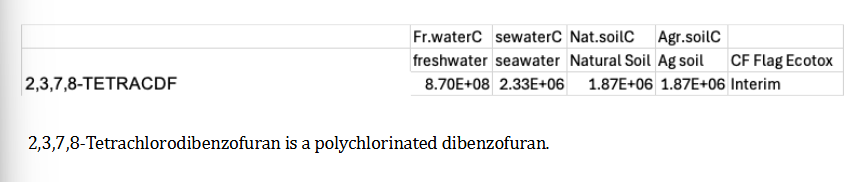
what substance has the highest ecotoxicity score?
Why would u pick mass / energy / market value allocation over the others?
mass: system produces products sold based on quantity
energy: produces products used as energy carriers (i.e. electricity, gas, fuel)
market value: products vary in the value and system may exist because one of the co-products has a very high market value