Lecture 3: Capital Markets & Risk Pricing: risk premium, expected return, variance, standard deviation, volatility, annual return, standard error, Beta
 Call Kai
 Learn
Learn Practice Test
 Spaced Repetition
 Match
Match Flashcards
 Knowt Play
1/18

There's no tags or description
Looks like no tags are added yet.
Name | Mastery | Learn | Test | Matching | Spaced | Call with Kai |
|---|
No analytics yet
Send a link to your students to track their progress
19 Terms
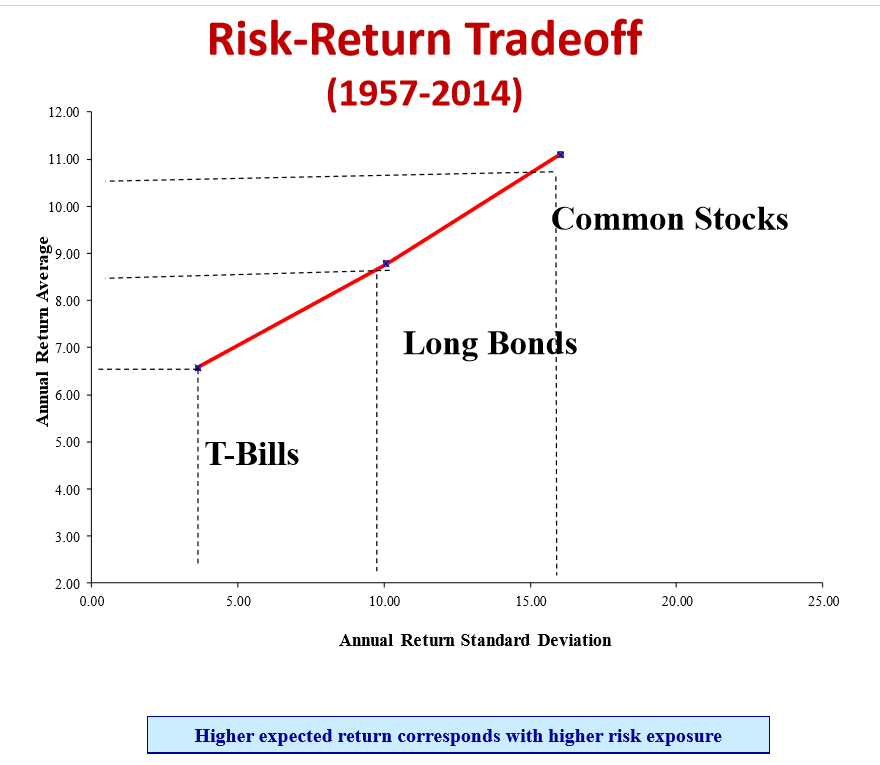
What is the risk-return tradeoff?
In order to gain higher returns, you have to have more risk
What is a risk premium & the required rate of return on risky investments?
The extra return as compensation for more risk
r = risk-free rate + risk premium
What is expected return & its formula?
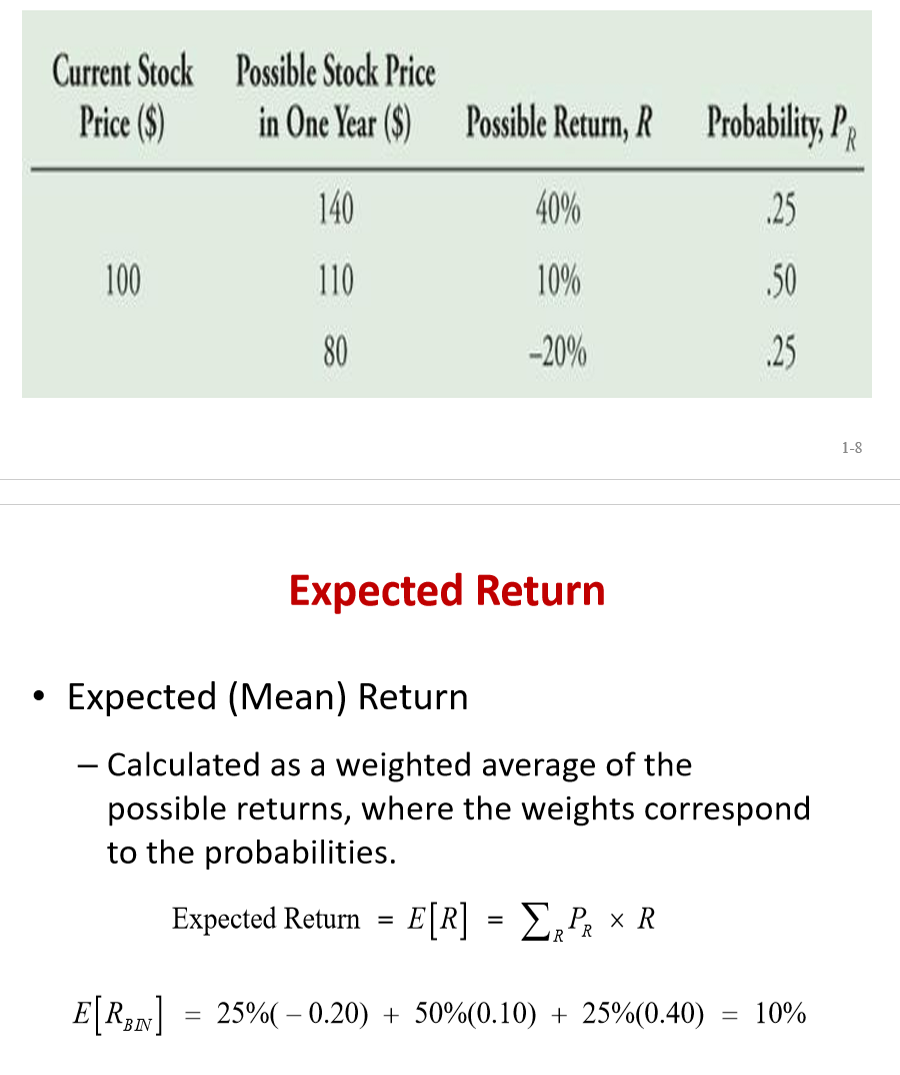
The mean return → weighted average of the possible returns
weights correspond to the probabilities
What is variance and standard deviation?
Both measures risk of a probability distribution
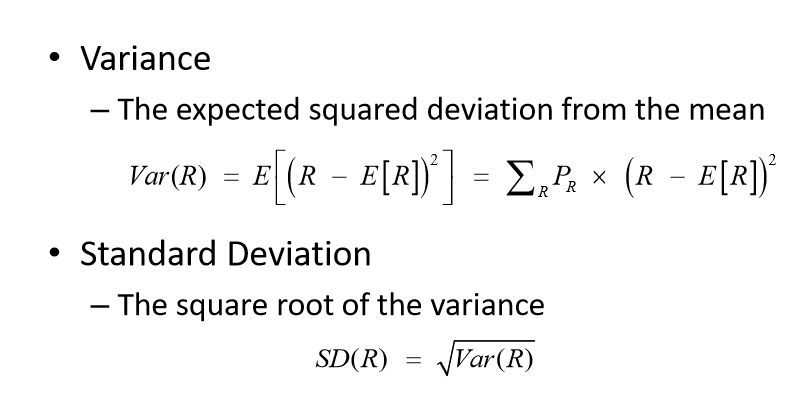
Variance - expected squared deviation from the mean
Standard deviation - square root of variance
What is volatility?
Measure of total risk → systematic + diversifiable risk
another term for standard deviation (square root of variance)
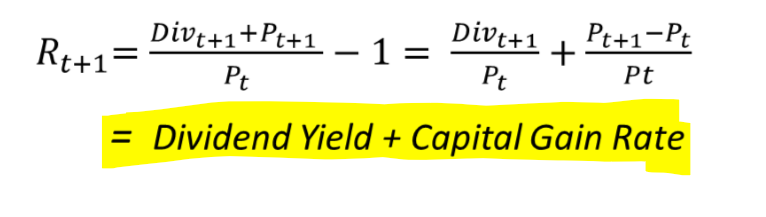
What are historical returns of stocks & bonds (realized annual returns)?
Realized return → actually occurs over a particular time period
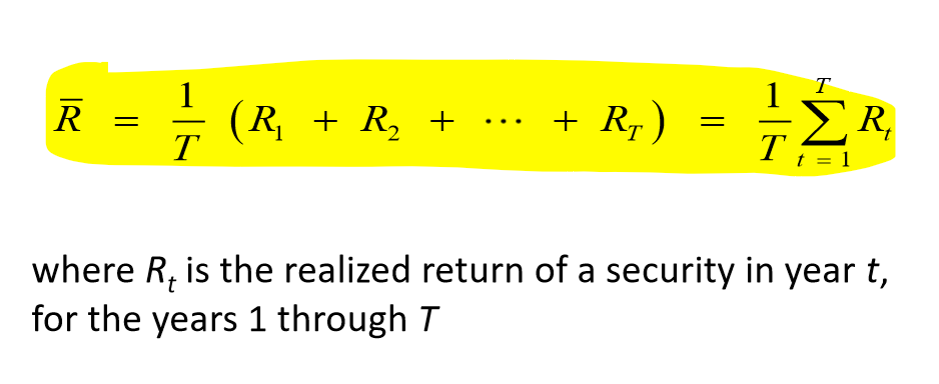
What is the average annual return formula?
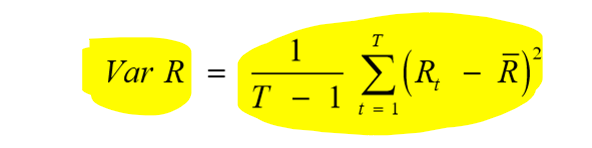
What is the variance and volatility of returns?
The variance estimate using realized returns
the standard deviation is the square root of the variance
What are 2 issues with using past returns to predict the future (estimation error)?
2 Issues:
Don’t know what investors expected in the past, only know the realized actual returns
Average return is just an estimate of the true expected return
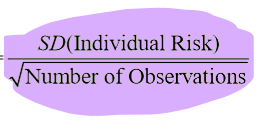
How can we measure the estimation error (standard error)?
Standard error: A statistical measure of the degree of the estimation error
the estimate of the expected return
How does risk and return differ for large portfolios and individual stocks?
Large: more risk, more return
Individual: more risk, less return
Why is total risk (volatility) a bad measure of risk?
Because volatility measures = systematic/market risk + firm-specific risk
but firm-specific risk can be diversified and averaged out → and is eliminated!
systematic risk can’t be diversified → need a new measure
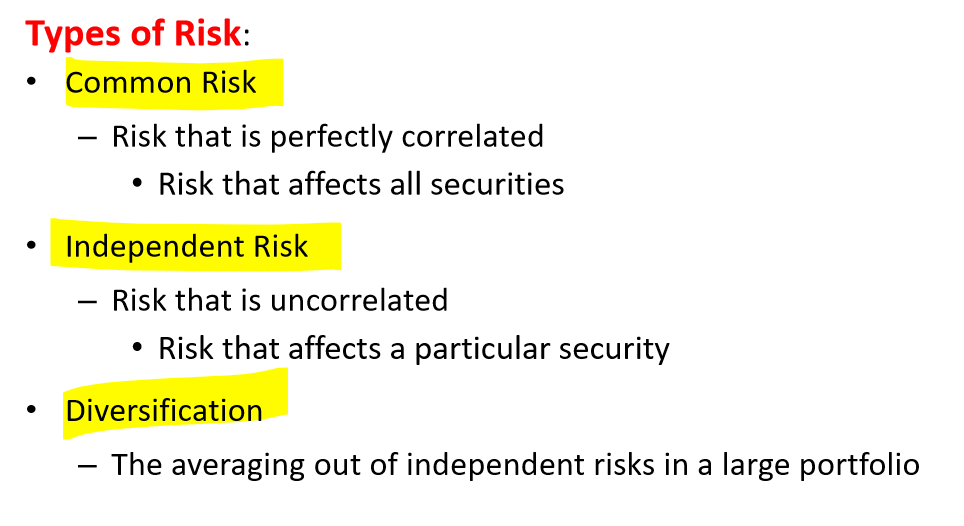
What is common & independent risk and diversification?
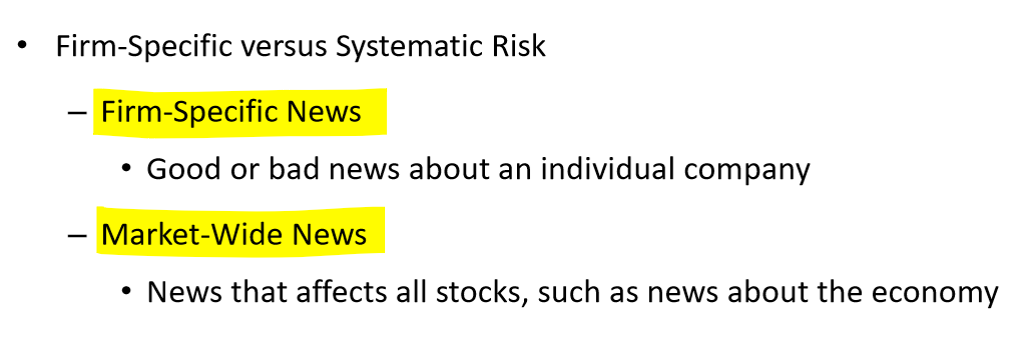
What is firm specific and market-wide news?
Firm-specific vs. systematic
What is the risk premium for market and firm-specific risks?
Market → reward for bearing market risk, can’t be diversified out
Firm-specific → can eliminate through diversification (no risk premium from holding firm-specific risky stocks, no reward because it can easily eliminate for free)
How do you measure systematic risk?
Beta → measures ONLY systematic risk
Measure investment’s systematic risk
determine risk premium require to compensate for that amount of systematic risk
(volatility measures systematic risk + firm-specific risk)
What is an efficient and market portfolio?
Efficient → only systematic risk (no firm-specific), can’t reduce volatility (total risk, standard deivation) without reducing expected return
Market → efficient portfolio has all shares & securities in market
What is Beta?
How sensitive its underlying revenues & cash flows are to general economic conditions
How we move with the market
Measures only systematic risk
→ 1% change in return of market, leads to a x change in s firm’s return on average
How do you find the cost of capital?
Capital Asset Pricing Model → used to find the return of any security
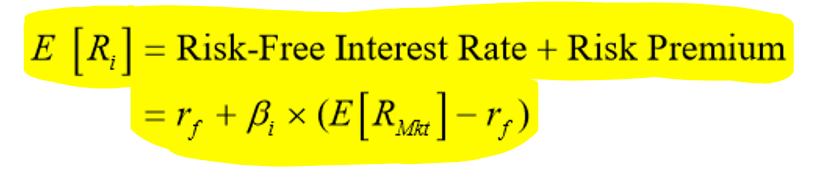
risk free interest rate + B x market risk premium