Key Terms chapter 4, 9, 10, 11
 Call Kai
 Learn
Learn Practice Test
 Spaced Repetition
 Match
Match Flashcards
 Knowt Play
1/43

There's no tags or description
Looks like no tags are added yet.
Name | Mastery | Learn | Test | Matching | Spaced | Call with Kai |
|---|
No analytics yet
Send a link to your students to track their progress
44 Terms
Personality/Persona
traits and patterns that cause people to consistently think, feel, and behave in specific ways.
also Persona comes from Latin word
Congruence
When our thoughts about our real self and ideal self are very similar aka when our self-concepts accurate.
「ありのままの自分(経験)」と「自分が思っている自分(自己概念)」がピタッと重なっている状態のことを指すで。
self efficacy
an individual's level of confidence in their own ability to complete a task. Unlike self-esteem, which is a global evaluation of self-worth, self-efficacy is domain-specific and cognitive.
self-efficacy affects how we approach goals, tasks, and challenges
inferiority complex
This refers to a state where an individual feels they lack worth and do not measure up to the standards of others or society. Adler believed that these feelings are often rooted in childhood experiences where a child may feel small and powerless compared to adults.
自分が他人に比べて劣っているという感覚が強く、それに見合うだけの価値がないと感じている状態
Freudian Slip
slips of the tongue are actually sexual or aggressive urges, accidentally slipping out of our unconscious. Speech errors such as this are quite common. Seeing them as a reflection of unconscious desires, linguists today have found that slips of the tongue tend to occur when we are tired, nervous, or not at our optimal level of cognitive functioning
自分が意図した言葉とは別の、本音や隠れた願望が思わず口に出てしまう
Freud’s Id, Ego, Superego
Ego is to balance the aggressive(Id) / pleasure-seeking drives of the id. with the moral control of the superego
Rorschach Test
It is a series of symmetrical inkblot(インクのしみ) cards that are presented to a client by a psychologist. Upon presentation of each card, the psychologist asks the client, “What might this be?” What the test-taker sees reveals unconscious feelings and struggles (Piotrowski, 1987; Weiner, 2003). The Rorschach has been standardized using the Exner system and is effective in measuring depression, psychosis, and anxiety.
何の意味もない図形に対して、その人がどう解釈するかを見ることで、無意識(Unconscious)にある欲望や恐怖、性格の特性をあぶり出そうとするもの
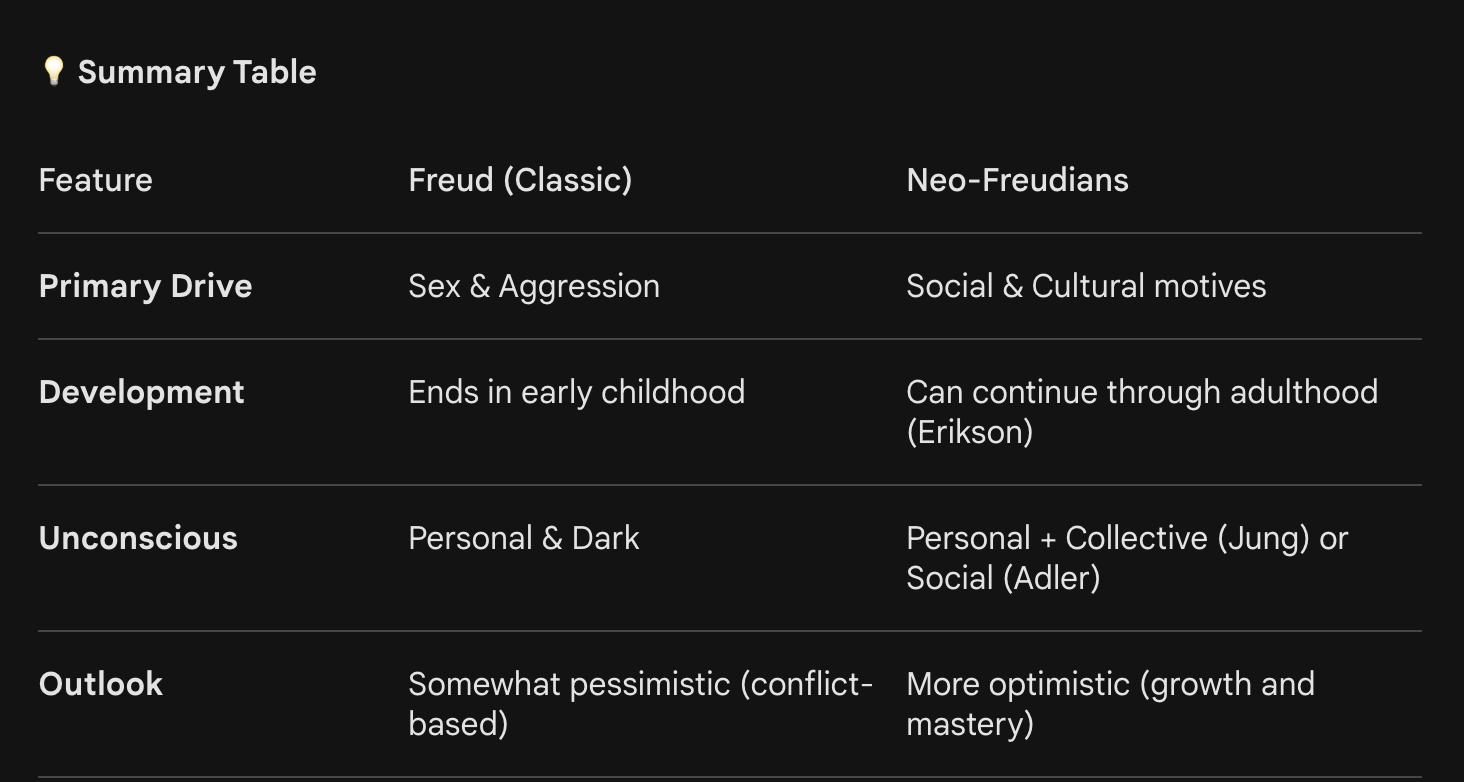
Freud vs Neo-Fresdians
Freud: Believed personality is driven by biological, sexual, and aggressive drives (the Id). He argued that our behavior is essentially a way to satisfy these basic urges or defend against them.
Neo-Freudians: De-emphasized sex and instead focused on the social environment and cultural effects on personality. They believed we are motivated by social needs and the need to feel secure or superior within a community.
Karen Horney’s 3 styles of coping
moving towards people(: Seeking affection, approval, and belonging)
moving against people(Seeking power, prestige, and control over others.)
moving away from people(Seeking self-sufficiency, independence, and isolation.)
Extrinsic vs Intrinsic
motivation comes from either extrinsic or intrinsic
extrinsic(motivation arises from outside the individuals)
Intrinsic(motivation arises from within the individuals)
motivations
describes the wants or needs that direct behavior towards a goal
Eating disorders
Bulimia Nervosa
= Binge eating behavior. Followed by an attempt to compensate(代償)for the large amount of food consumed. Pursing the food by inducing vomiting, excessive exercise
Core fear: Anger, SadnessBinge eating disorder
= followed by distress feelings of guilt embarrassment. No vomiting and excessive exercise to lose weight.
Core fear: Triggers for bingeing can include poor body self-image and the availability of preferred binge foods.Anorexia Nervosa
= Characterized by the maintenance of a body weight well below average through starvation or excessive exercise
A type of body dysmorphia( viewing themselves as overweight even though they are not)
Core fear: Gaining weight
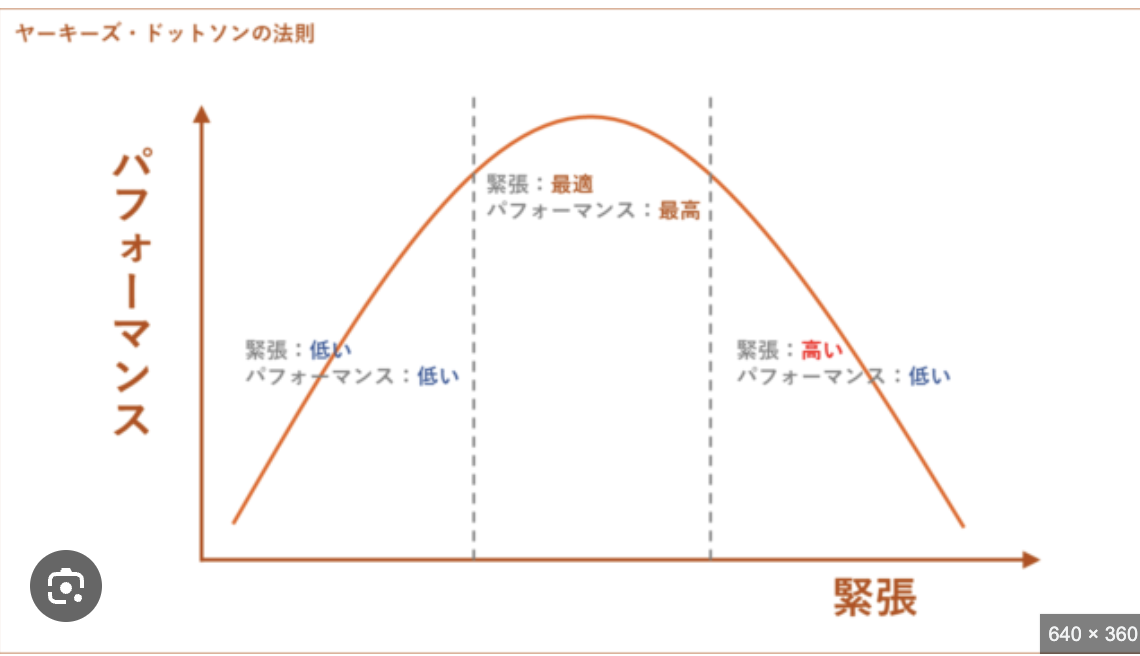
Yerkes-Dodson Law
Main idea: a simple take is performed best when arousal levels are relatively high.
complex tasks are best performed when arousal levels are lower
1. 逆U字型の法則
「覚醒レベル(緊張やストレス)」と「パフォーマンス」の関係を表した法則や。
低すぎ: 退屈、眠気。やる気が出ず、パフォーマンスは低い。
適度(最適): ピーク。 程よい緊張感があり、最高のパフォーマンスを発揮できる(「ゾーン」に入った状態)。
高すぎ: 過度の不安、パニック。緊張しすぎてミスが増え、パフォーマンスが急落する。
2. タスクの難易度による違い
ここがテストに出やすいポイントや。
単純なタスク(掃除、単純作業など): 高い覚醒レベルの方がうまくいく。気合を入れて一気にやるのが効率的。
複雑なタスク(数学の難問、プログラミング、テストなど): 低い(穏やかな)覚醒レベルの方がうまくいく。リラックスして集中力を維持せなあかんから、ストレスが高すぎるとすぐ詰まってしまう。
Refractory Period
a period of time that follows an orgasm during which an individual is incapable of experiencing another orgasm. The duration of the refractory period can vary dramatically from individual to individual with some refractory periods as short as several minutes and others as long as a day. As people age, their refractory periods tend to span longer periods of time.
Sexual Response cycle
There are four phases ,excitement, plateau, orgasm, and resolution
1. excitement(the arousal phase of the sexual response cycle, and it is marked by erection of the penis or clitoris and lubrication and expansion of the vaginal canal)
2.plateau(the vagina swells further and blood flow to the labia minora increases, and the penis becomes fully erect and may exhibit pre-ejaculatory fluid. People experience increases in muscle tone during this time)
3.orgasm(females by rhythmic contractions of the pelvis and uterus along with increased muscle tension. In males, pelvic contractions are accompanied by a buildup of seminal fluid near the urethra that is ultimately forced out by contractions of genital muscles,)
. 女性の場合 (Females)
動き: 骨盤(pelvis)と子宮(uterus)が、リズム良く収縮(rhythmic contractions)する。
状態: 全身の筋肉の緊張(muscle tension)がピークに達する。
2. 男性の場合 (Males)
動き: 骨盤が収縮すると同時に、生殖器周辺の筋肉が強く収縮する。
液体の動き: 尿道(urethra)付近に溜まった精液(seminal fluid)が、筋肉の収縮によって一気に体外へ押し出される(射精)。
4.resolution(the relatively rapid return to an unaroused state accompanied by a decrease in
blood pressure and muscular relaxation)賢者タイム
Gender Dysphoria
describes individuals who do not identify as the gender that most people would assume they are
Gender Dysphoria(性別違和)とは、Chapter 10の「Gender and Sexuality」で登場する診断名で、「自分の自認する性(Gender Identity)」と「出生時に割り当てられた性(Assigned Sex)」の間の不一致によって生じる、非常に強い苦痛や不快感
Instinct
instinct is a species - specific - pattern of behavior that is not learned(biological perspective)
Habit
habit is a pattern of behavior in which we regularly engage.
Drive theory
A need waiting to be met
this motivation will do what it needs to get your body back to homeostasis.
continuous vs discontnuous
continuous development is a belief that development is cumulative process, gradually improving on existing skills (ie. gradual change
Discontinuous development is a belief that development takes place in unique stages (i.e, occuring at specific times or ages
the change is more sudden
Development
Our development is often divided into 3 stages.
Physical development
Cognitive development
Psychological development
Ego identity
How we interact with others is what affects our sense of self.
In Erikson’s view, Ego Identity is the conscious sense of self that we develop through social interaction.
Dynamic Nature: It is not static; it constantly changes due to new experiences and information we acquire in our daily interactions with others.
The Goal: During adolescence (your current stage in the lifespan!), the challenge is to integrate all your different "selves" (the student, the athlete, the son, the friend) into one cohesive Ego Identity.
「どの自分も、間違いなく俺(ハル)やな」って一本の筋が通ってる感覚。これが Ego Identity や。
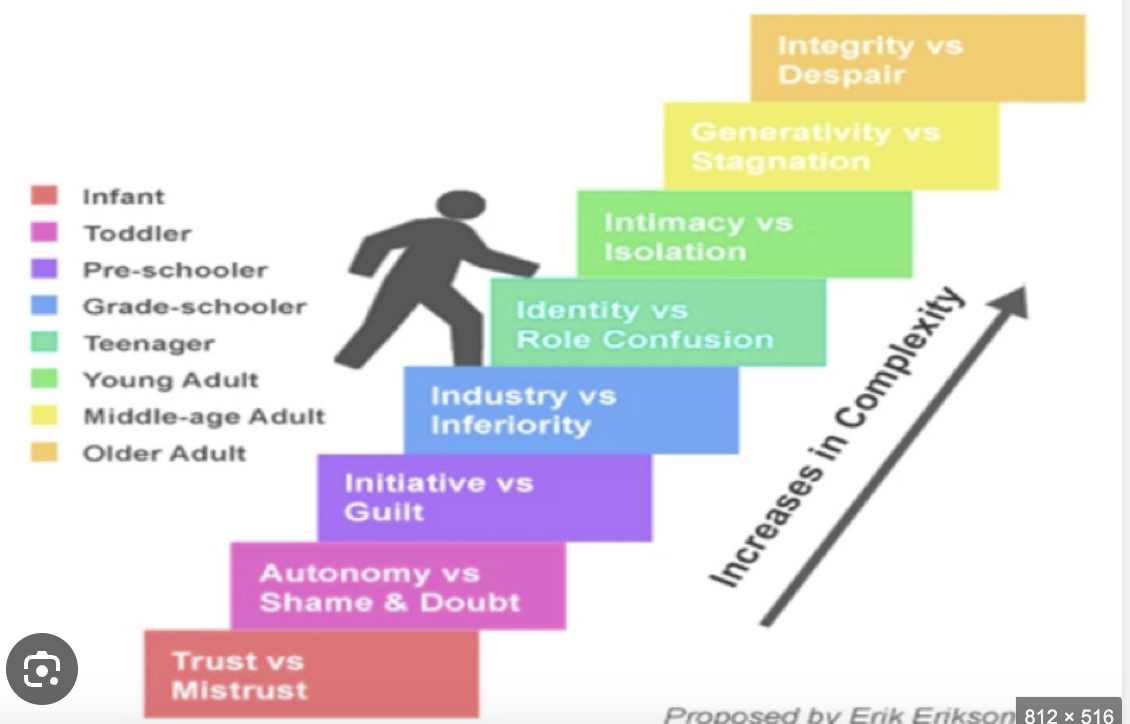
Psychosocial Theory of Development
In each stage of it, there is a psychological task that we must master in order to feel a sense of competence.
Erik Erikson
known for psychosocial theory of development
whats the emphasis on?
the importance of social relationships at each stage of personality development
stage of personality development
= Each represents a conflict or developmental task.
Schemata
concepts(mental models) that are used to help us categorize and interpret information.
Assimilation vs Accommodation
Assimilation os when kids take in information that is comparable to what they already know.
Accommodation describes when they change their schemata based on information. this process continues as children interact with their environment.
子供が「4本足で毛が生えている=犬」という Schema(スキーマ) を持っている場合:
Assimilation(同化)
近所の「ゴールデンレトリバー」を見た時、その子は「あ!大きいワンワンや!」と理解する。
ポイント: すでに持っている「犬のフォルダ」に新しい情報を放り込んだだけ。
Accommodation(調節)
次に「牛」を見た時、その子は最初「ワンワン!」と言うけど、鳴き声も大きさも全然違う。
そこで「4本足でも、モーモー鳴くのは『牛』っていう別の生き物なんや!」と脳内のフォルダを新しく作る。
ポイント: 既存のフォルダでは対応できないから、フォルダ自体を修正・新設した。
Teratogen
any environmental agent- biological, chemical, or psysical that crosses the placenta and causes damage to the developing embryo or fetus.
(i.e, alcohol, smoking, drugs, heroine, cocaine
Motor Skills
Our ability to move our bodies and manipulate objects.
Nature vs Nurture
nature is innate stuff, and Nuture , on the other hand, is environmental stuff
Fine Motor skills
the muscles in our fingers, toes, eyes, and enable coordination of small actions.
(i.e, grasping a toy, writing with a pencil, and using a spoon)
Stage 5 and 6 of Erickson’s Psychosocail Dev.
stage5: age(12-18): Developmental task ( identity and confusion)
Experiment with and develop identity and roles
stage6: age(19-29): Developmental task( Intimacy vs isolation)
Establish intimacy and relationships with others
まさにその通り!今の君(19歳)は、理論上はStage 6(Intimacy vs. Isolation)に足を踏み入れたばかりのタイミングやな。
この2つのステージのつながりを、テストに出やすいポイントと合わせて整理するで。
Stage 5: Identity vs. Role Confusion (12–18歳)
核心: 「自分は何者か?」という問いへの答えを見つける時期。
行動: いろんなグループに属してみたり、ファッションを変えたり、将来の夢をコロコロ変えたりして「実験(Experiment)」する。
Stage 6: Intimacy vs. Isolation (19–29歳)
核心: 他者と深く、親密な関係(Intimacy)を築けるかどうか。
前提条件: Stage 5でアイデンティティが確立していること。 自分が誰か分かってへん人は、他者と本当の意味で深くつながるのが難しいと考えられとるんや.
Object Permanence
understanding that even if something is out of sight, it still exists According to Piaget, young infants do not remember an object after it has been removed from sight. Piaget studied infants’ reactions when a toy was first shown to an infant and then hidden under a blanket. Infants who had already developed object permanence would reach for the hidden toy, indicating that they knew it still existed, whereas infants who had not developed object permanence would appear confused.
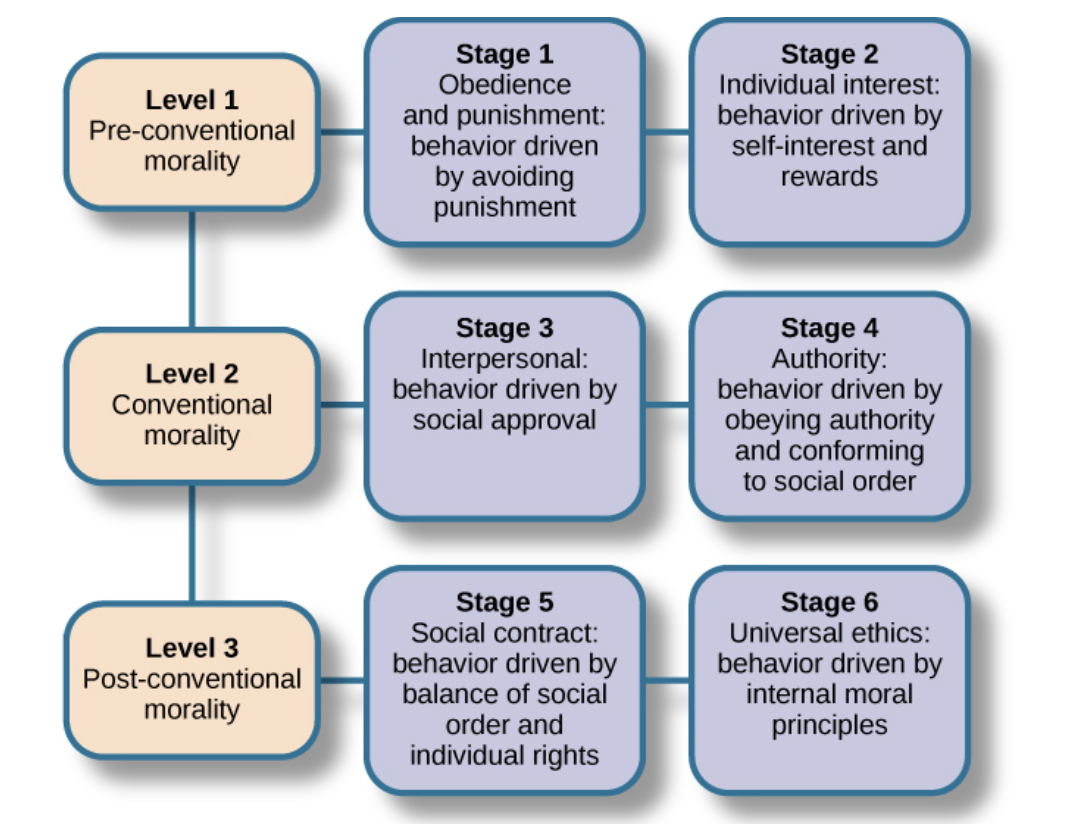
Kohlberg’s Stages of moral reasoning
Preconventional morality(before age9
whether objects have upside to themconventional morality(Early adolescence
respect hierarchy, relationshippostconventional morality(Once formal operational thought is attained
individuals’ right, universal ethics
1. Pre-conventional Morality(道徳以前:9歳未満)
この時期の子供にとって、正義とは「自分にメリットがあるかどうか」や。
判断基準: 身体的な罰を避けること、または報酬を得ること。
ハインツの例:
盗まない派: 「警察に捕まって刑務所に入れられる(罰)からダメ」
盗む派: 「妻がいないと寂しくて自分が困る(利益)から盗む」
特徴: ルールそのものに意味があるのではなく、「見つからなければOK」という感覚が強い。
2. Conventional Morality(道徳的:思春期〜)
社会の一員として、「他者との関係や秩序」を重んじる段階や。
判断基準: 他人の目(承認)と、法律やルール(社会の維持)。
ハインツの例:
盗まない派: 「盗みは法律違反や。みんなが盗んだら社会がめちゃくちゃになる(秩序)」
盗む派: 「愛する妻を助けるのは夫として当然や。周りからも『いい夫だ』と思われる(承認)」
特徴: 「社会が決めたルール=正しいこと」と捉える。多くの大人はこの段階(特に法律重視のStage 4)におるで。
3. Post-conventional Morality(脱道徳的:形式的操作期以降)
法律よりもさらに上位の「普遍的な倫理」で考える、最も高度な段階や。
判断基準: 個人の権利や、生命の尊厳といった普遍的な正義。
ハインツの例:
盗まない派: 「薬剤師にも所有権という権利がある。感情に流されて他人の権利を侵害すべきではない(社会契約)」
盗む派: 「法律よりも、一つの『命』の価値の方が重い。人間として命を救うことが最優先されるべきや(普遍的倫理)」
特徴: ピアジェの「形式的操作期(Formal Operational Thought)」に達し、抽象的な思考ができるようになって初めて到達できる。ただし、全員がここに辿り着くわけやない。
4 types of attachment in children
Secure attachment
avoidant attachment
resistant attachment
disorganized attachment
1. Secure attachment(安定型)
英語: The child uses the parent as a secure base to explore. They are distressed when the parent leaves but happy when they return.
日本語: 親を「安心の拠点」として周囲を探索するタイプ。親がいなくなると不安がるけど、戻ってくるとすぐに喜んで安心し、また遊び始める。
背景: 親が子供のニーズに対して、一貫して敏感に、適切に応えている場合に形成されるで。
2. Avoidant attachment(回避型)
英語: The child is unresponsive to the parent and does not use them as a secure base. They don't care if the parent leaves or returns.
日本語: 親に対して無関心なタイプ。親がいなくなっても平気そうで、戻ってきても反応が薄い。
背景: 親が子供の要求に対して、拒絶的だったり、あまり反応しなかったりする場合に多く見られるな。
3. Resistant attachment(抵抗型 / 不安・アンビバレント型)
英語: The child shows clingy behavior but rejects the parent's attempts to interact. They are extremely distressed when the parent leaves and difficult to comfort upon return.
日本語: 親にベッタリやけど、いざ親が戻ってくると怒ったり拒絶したりする矛盾したタイプ。親がいなくなるとパニックになるくらい泣くけど、戻ってきてもなかなか泣き止まへん。
背景: 親の反応が「ある時は過保護、ある時は無視」といった感じで、一貫性がない場合に形成されやすいで。
4. Disorganized attachment(混乱型)
英語: The child shows erratic or confused behavior (e.g., freezing or running around). This is often seen in cases of abuse.
日本語: どう反応していいか分からず、固まったり変な動きをしたりするタイプ。親が「安心の対象」であると同時に「恐怖の対象」になってしまっている。
背景: 虐待やネグレクトなど、非常に不安定な環境で育った子供に見られることが多い、最も深刻なタイプや。
Circadian Rhythm
a biological rhythm that takes place over a period of about 24 hours
some circadian rhythm play a role in changes in our state of consciousness.
Sleep
a state with low levels of physical activity and reduced sensory awareness ( different periods of rest during wakefulness)
Sleep debt
stats how long you are lack on the time of sleeping
Latent Dream
the hidden meaning of a dream. For instance, if a woman dreams about being chased by a snake, Freud might have argued that this represents the woman’s fear of sexual intimacy, with the snake serving as a symbol of a man’s penis.
1. 夢の「裏の意味」
昨日見た夢のストーリーそのもの(空を飛んだ、誰かに追いかけられた等)は、単なる「着ぐるみ」みたいなもんや。フロイトは、その着ぐるみを脱がした中身にある、無意識の願望や葛藤こそが Latent Content(潜在内容) やと考えたんや。
2. 「検閲」された結果
もし無意識にあるエグい欲求や不安がそのまま夢に出てきたら、ショックで飛び起きてまうやろ?だから脳の検閲官が、その内容を分からないように「シンボル(象徴)」に置き換えて見せてる。その置き換えられる前の元データがこれやな。
Parasomnia
parasomniais one of a group of sleep disorders in which unwanted, disruptive motor activity and/or experiences during sleep play a role. Parasomnias can occur in either REM or NREM phases of sleep. Sleepwalking, restless leg syndrome, and night terrors are all examples of parasomnias
Consciousness
our awareness of internal and external stimuli. Awareness of internal stimuli includes feeling pain, hunger, thirst, sleepiness, and being aware of our thoughts and emotions. Awareness of external stimuli includes experiences such as seeing the light from the sun, feeling the warmth of a room, and hearing the voice of a friend.
Sleep rebound
individuals fall a sleep more quickly than usual
REM sleep
Rapid Eye Movement
darting movements of the eyes under closed eyelids
Brain waves during REM sleep are very similar to brain waves during wakefulness
REM睡眠がなぜ「矛盾(Paradoxical)」しているかというと:
脳はバキバキに活動して夢を見ているのに、
体は完全に麻痺(Muscle paralysis)して動けない状態やからや。 脳が「よし、夢の中で野球しよう!」と思って体が動いてもうたら危ないから、脳が筋肉への信号をブロックしとるんやな。
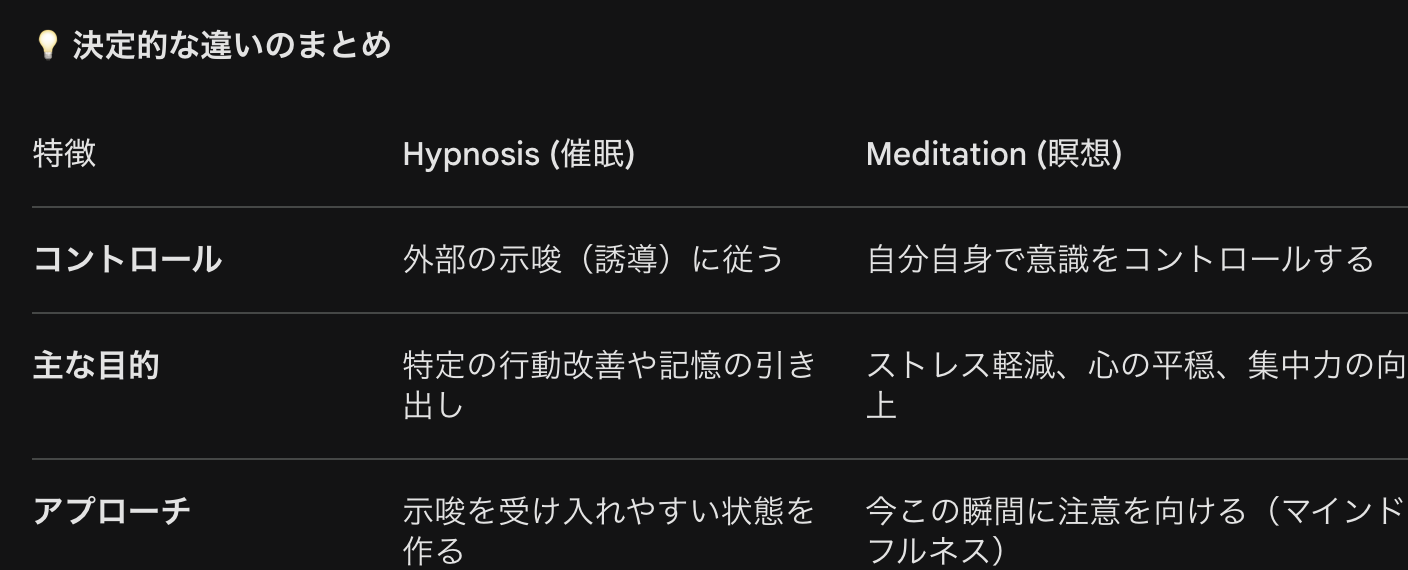
Hypnosis vs Meditation
Hypnosis
Extreme self focus and attention
Minimal attention is given to external stimuli
Four guided steps
Meditation
Focusing on a single target
Breath or repeated sound
Goal is to increase awareness of the moment
Rosalind Cartwright
dreams simply reflect real life events that are important to the dreamer