Muscles of the Head, Neck, and Torso (Part 2)
 Call Kai
 Learn
Learn Practice Test
 Spaced Repetition
 Match
Match Flashcards
 Knowt Play
1/15

There's no tags or description
Looks like no tags are added yet.
Name | Mastery | Learn | Test | Matching | Spaced | Call with Kai |
|---|
No analytics yet
Send a link to your students to track their progress
16 Terms
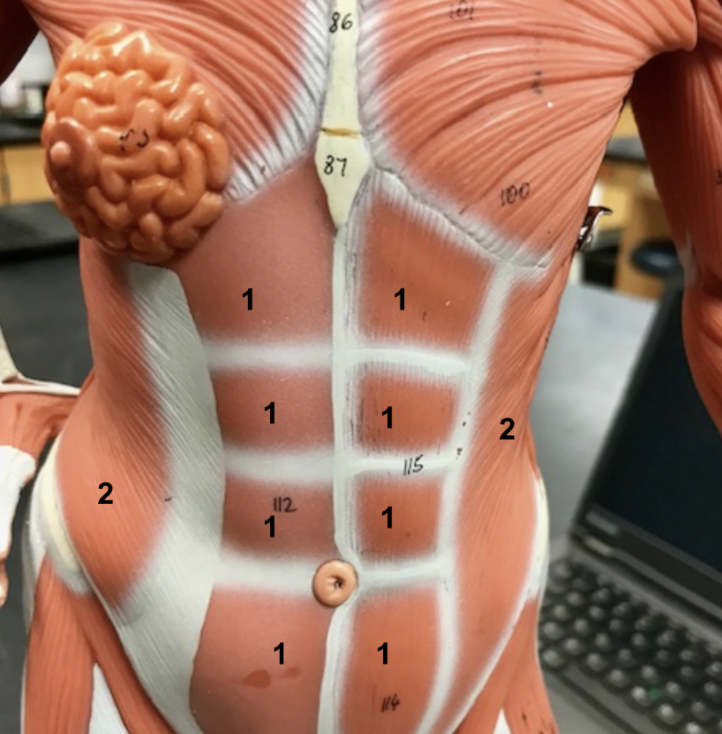
Two of the major torso muscles are shown. What are their names?
Rectus abdominis (1)
originates on the crest of the pubis and inserts on the costal cartilage and the xiphoid process of the sternum. Its action is to flex the trunk.
External oblique (2)
acts to flex the trunk and causes contralateral rotation of the trunk.
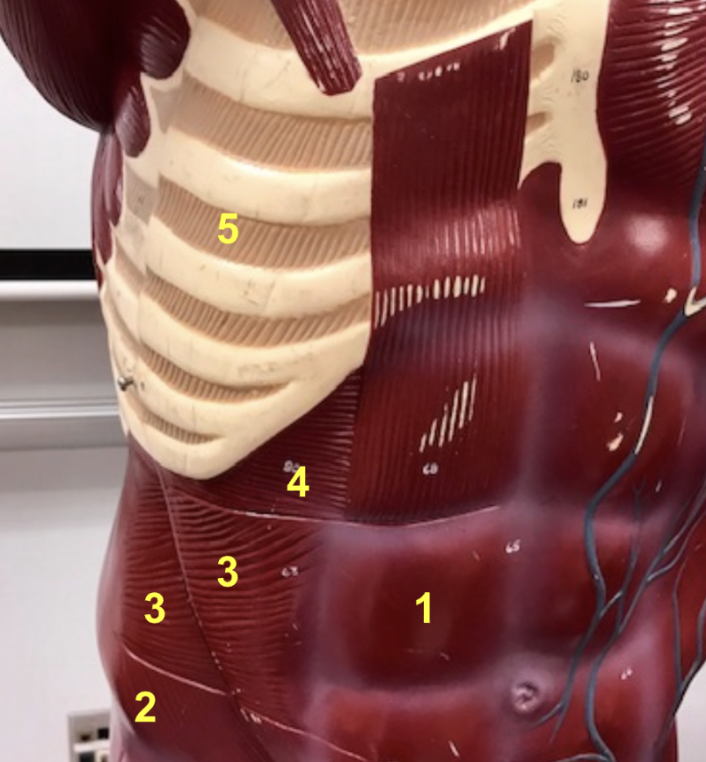
This model shows the rectus abdominis (1) and external oblique (2). What muscle is indicated by 3?
The internal oblique compress the abdomen and cause ipsilateral rotation when one side contracts.
It is covered by both the rectus abdominis (1) and external oblique (2).
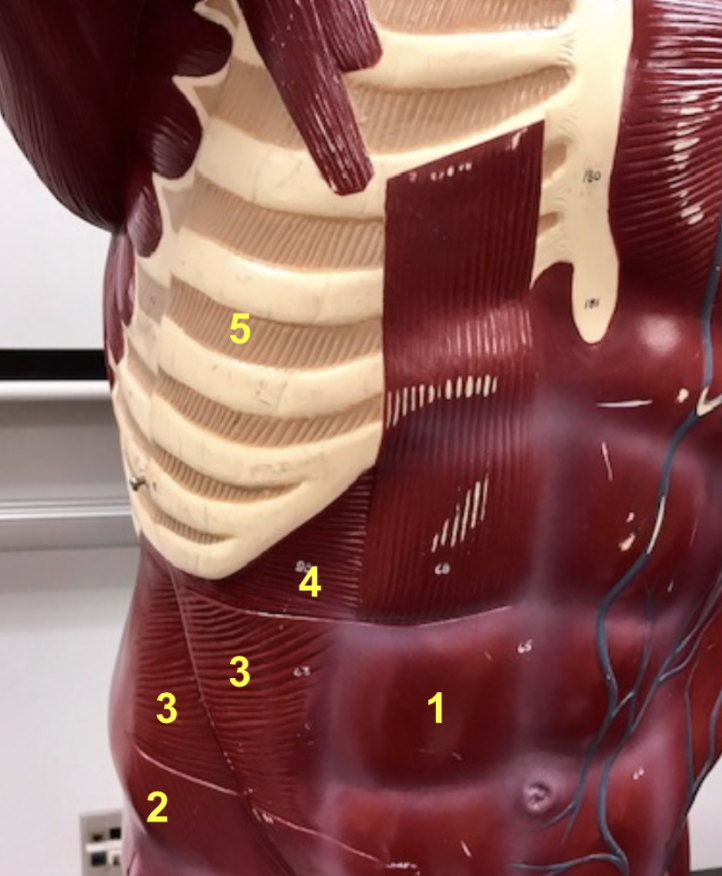
What muscle is indicated by 4?
The transverse abdominis, compresses the abdominal cavity.
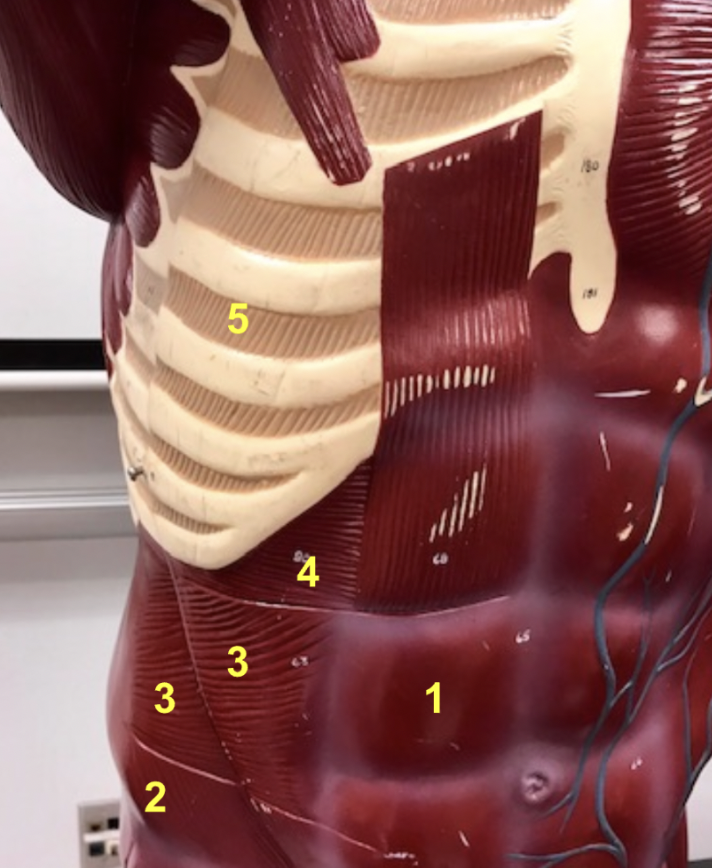
What muscle is indicated by 5?
The external intercostal muscles, elevate the ribs to expand the thoracic cavity during inhalation.
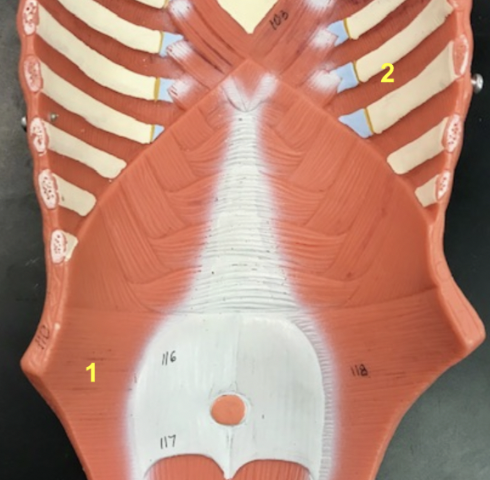
Here we have an internal view of the thoracic and abdominal walls. What muscles are labeled by 1 and 2?
The complete transverse abdominis (1)
internal intercostal muscles (2) that lie deep to the external intercostals. They pull the ribs down, decreasing the thoracic volume during active forceful expiration.
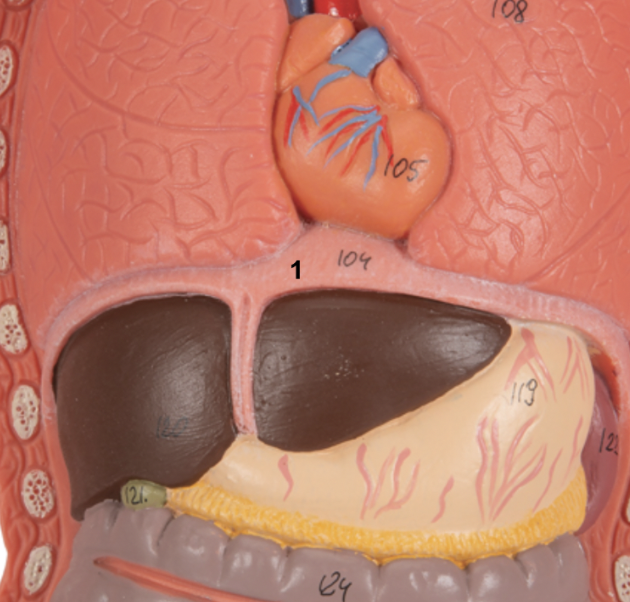
What muscle is labeled by 1?
The diaphragm, separates the thoracic and abdominal cavities. It increase the volume of the thoracic cavity during inhalation.
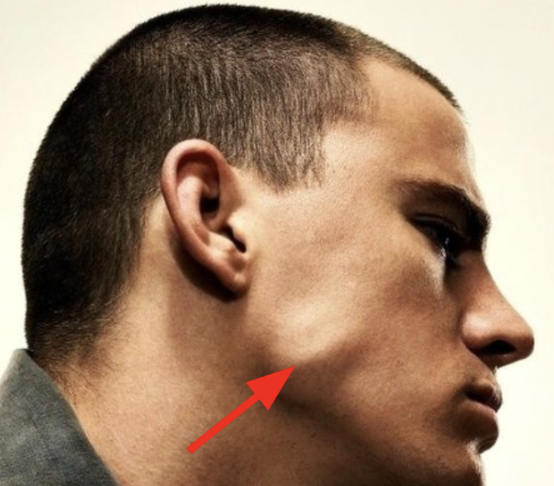
What muscle is being shown?
The masseter
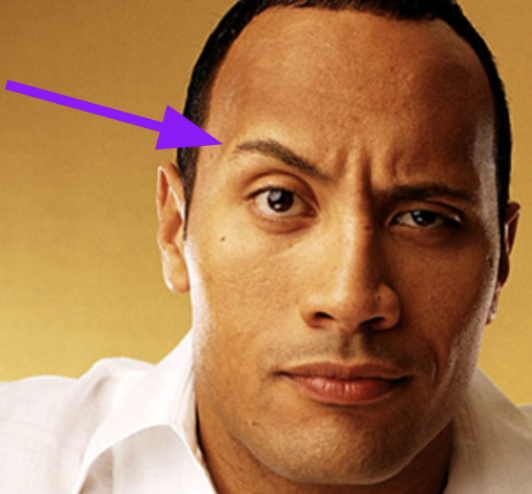
Which muscle brings the eyebrow up?
The epicranius
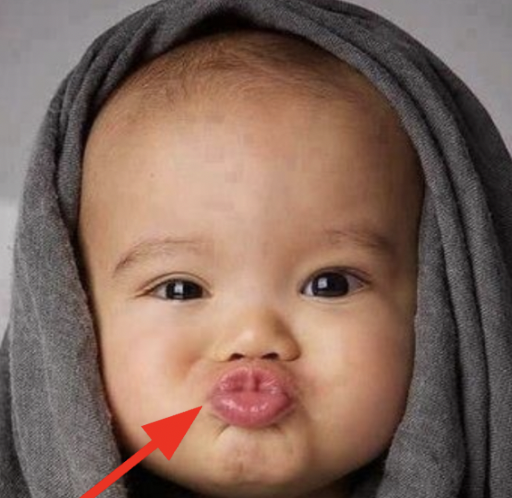
Which muscle brings the mouth into this position?
The orbicularis oris
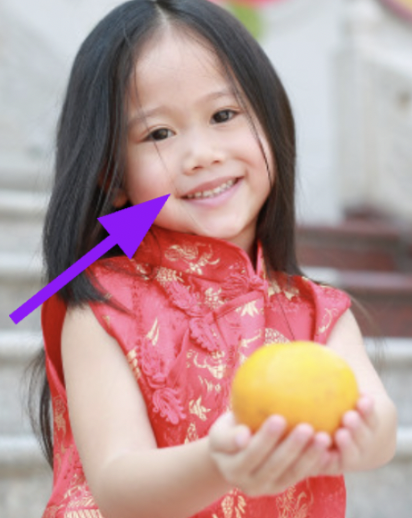
Which muscle allows you to smile?
The zygomaticus major
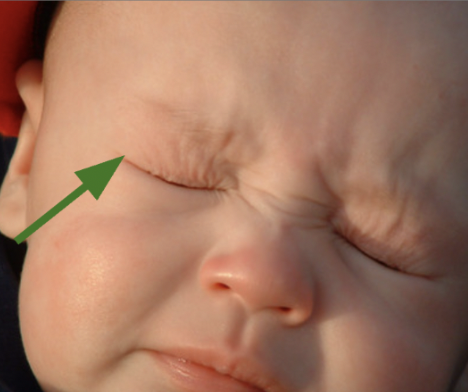
Which muscle brings the eye into this position?
The orbicularis oculi
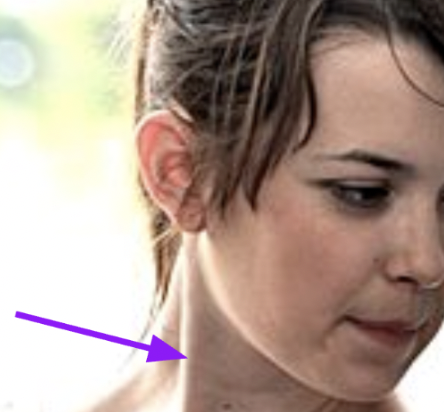
Which muscle allows her to turn her neck?
The sternocleidomastoid
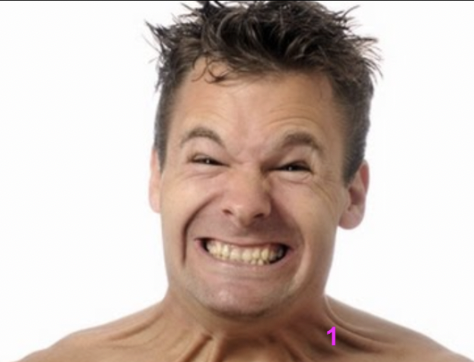
What muscle is this?
The platysma
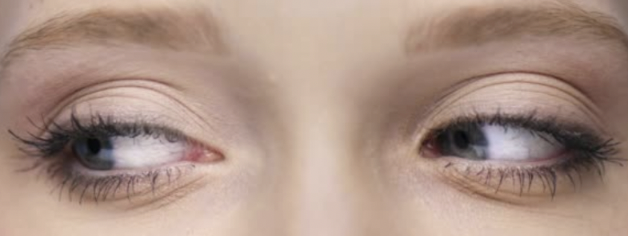
What muscle allows you to look to the right?
The lateral rectus muscle

Can you identify the two found in this picture?
The external oblique and rectus abdominis
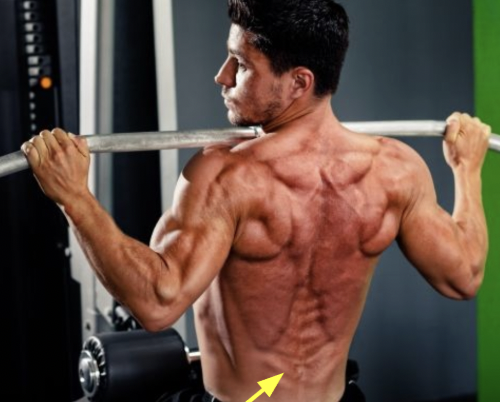
What muscles are being shown here?
The erector spinae muscles