[OB] LE 6 - Infections
 Call Kai
 Learn
Learn Practice Test
 Spaced Repetition
 Match
Match Flashcards
 Knowt Play
1/80

There's no tags or description
Looks like no tags are added yet.
Name | Mastery | Learn | Test | Matching | Spaced | Call with Kai |
|---|
No analytics yet
Send a link to your students to track their progress
81 Terms
1.Criteria for the diagnosis of bacterial vaginosis includes the following: A.Presence of clue cells, pH 4.5, and presence of thin, homogenous, foul smelling discharge B.Presence of clue cells, (+) Whiff test, and presence of thin, homogenous foul-smelling discharge C.(+) Whiff test, pH 4.5, and presence of thin, homogenous foul-smelling discharge D.Presence of clue cells, pH 4.5, and (+) Whiff test
B.Presence of clue cells, (+) Whiff test, and presence of thin, homogenous foul-smelling discharge
2.Recommended treatment for this lesion includes the following: A.Azithromycin and Ceftriaxone B.Azithromycin and Doxycycline C.Cefotetan and Doxycycline D.Ceftriaxone and Doxycycline
D.Ceftriaxone and Doxycycline
3.The drug choice for the treatment of bacterial vaginosis is: A.Estrogen B.Progesterone C.Testosterone D.Metronidazole
D.Metronidazole
🖼️‼️(same photo style/diagnosis reused in #21)4.A painless, “beefy-red” ulcer with irregular erythematous borders found in the vulva is typical of: A.Molluscum contagiosum B.Granuloma inguinale C.Lymphogranuloma venereum D.Chancroid
B.Granuloma inguinale
5.True about Pelvic Inflammatory Disease? A.OCP decreases risk B.OCP increases risk C.Risky D.Rick Astley
A.OCP decreases risk
6.Complication of gonococcal infection during pregnancy except: A.Preterm labor B.Premature rupture of membrane C.Postpartum hemorrhage D.Chorioamnionitis
C.Postpartum hemorrhage
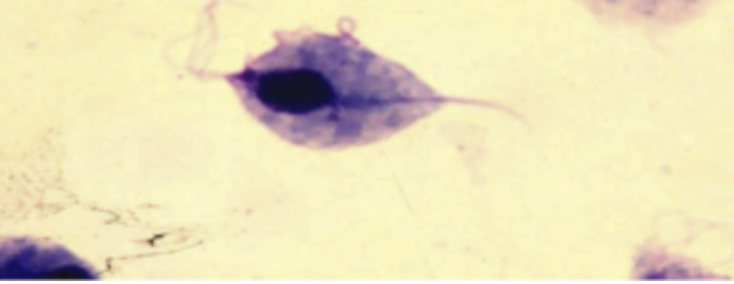
⚠‼(#38)7.These organisms can cause what type of infection in the lower reproductive tract: A.Trichomoniasis B.Molluscum contagiosum C.Bacterial vaginosis D.Chancroid
A.Trichomoniasis
🖼️‼️(#41)8.This cervical lesion can be seen in genital tract infections caused by: A.Bacterial vaginosis B.Herpes simplex type 2 C.Trichomoniasis D.Candidiasis
C.Trichomoniasis
🖼️9.A patient complains of a curd-like, yellow vaginal discharge associated with pruritus at the OPD. Which among the following tests would best help support your clinical diagnosis? A.KOH wet mount B.Tzanck smear C.Saline wet mount D.Pap smear
A.KOH wet mount
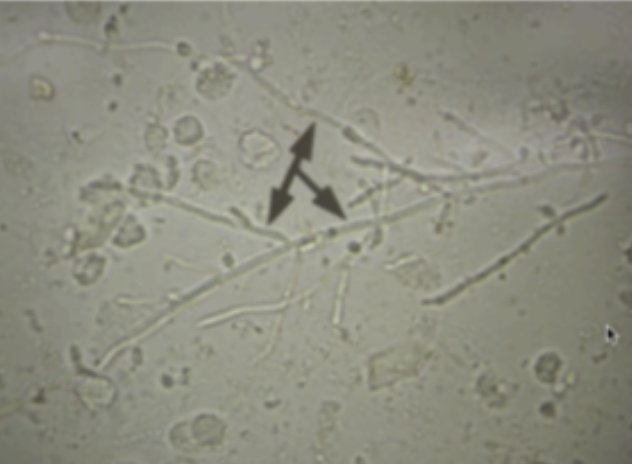
⚠️10.These structures are seen in KOH wet mount taken from a vaginal discharge. These type of infections is best treated by the use of: A.Ceftriaxone 250 mg IM B.Fluconazole 150 mg single dose C.Doxycycline 100 mg BID x 10 days D.Metronidazole 400 mg single oral dose
B.Fluconazole 150 mg single dose
🖼️11.A 26-year-old GRO complains of a profuse, thin, grayish vaginal discharge. Addition of KOH to the discharge releases a “fishy odor”. Your most likely diagnosis is: A.Candidiasis B.Trichomoniasis C.Bacterial vaginosis D.Gonorrhea E.Herpes simplex type 2
C.Bacterial vaginosis
12.Amsell’s criteria for the diagnosis of bacterial vaginosis includes the following except: A.Presence of clue cells B.pH <4.5 C.Presence of thin homogenous foul smelling discharge D.(+) whiff test
B.pH <4.5
🖼️‼️(#35)13.A female with multiple sexual partners developed these cauliflower-like lesions on the vulvar area. The most likely diagnosis is: A.Granuloma inguinale B.Chancroid C.Condyloma acuminata D.Lymphogranuloma venereum E.None of the above
C.Condyloma acuminata
14.Condyloma acuminata is caused by: A.Poxvirus B.Hemophilus ducreyi C.Human papilloma virus D.Calymmatobacterium granulomatis
C.Human papilloma virus
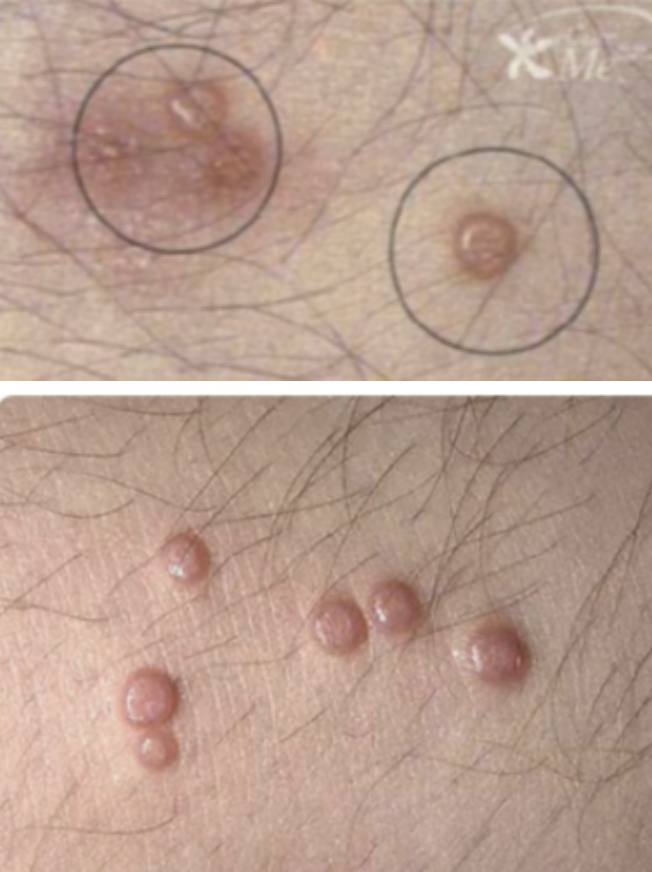
⚠️‼️15.Identify the lesion: A.Molluscum contagiosum B.Lymphogranuloma venereum C.Granuloma inguinale D.Condyloma acuminata
A.Molluscum contagiosum
16.The following statements regarding Molluscum contagiosum are correct except: A.Typical lesions are described as raised, shiny, pearl-like nodules B.Causes widespread systemic illness C.More common in children than in adult D.Caused by a poxvirus
B.Causes widespread systemic illness
🖼️‼️(#37)17.A sexually promiscuous female student develops clear vesicles on her labia. After 8 days, the vesicle ruptures and forms shallow, painful ulcers with reddish borders. The following tests will be of value in establishing the diagnosis except: A.Viral culture B.Tzanck smear C.KOH wet mount D.Pap smear
C.KOH wet mount
🖼️‼️(#19,#27)18.This exquisitely painful ulcer is generally a hallmark of which infection? A.Granuloma inguinale B.Syphilis C.Chancroid D.Lymphogranuloma venereum
C.Chancroid
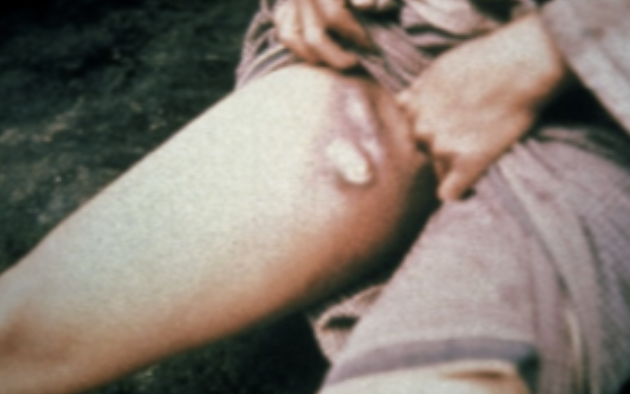
⚠️‼️(#18,#20,#27,#31)19.The lesion can be found in infections caused by _____. Choose the best answer. A.Both H. ducreyi and LGV B.H. ducreyi C.Lymphogranuloma venereum D.Calymmatobacterium granulomatis
A.Both H. ducreyi and LGV
🖼️‼️(#31)20.The pathognomonic lesion of this infection is seen when an inflamed inguinal lymph node is divided into two equal halves by the Poupart’s ligament. What is the drug of choice for treatment of this infection? A.Metronidazole B.Ceftriaxone C.Penicillin G D.Azithromycin
D.Azithromycin
⚠️‼️(#4)21.These pathognomonic lesions with safety pin appearance are caused by: A.Calymmatobacterium granulomatis B.Hemophilus ducreyi C.HSV type 2 D.Neisseria gonorrhea
A.Calymmatobacterium granulomatis
🖼️22.A 29-year-old G2P2 female with multiple sexual partners complains of a mucopurulent cervicovaginal discharge with presence of lymphadenopathy. Your most likely diagnosis based on clinical presentation alone is: A.Chlamydia infection B.Neisseria infection C.Bacterial vaginosis D.Syphilis
A.Chlamydia infection
23.Empiric treatment for Pelvic Inflammatory Disease in a high-risk patient should be initiated when the following symptoms (minimum criteria) is present: A.Cervical motion tenderness B.Abdominal pain and adnexal tenderness C.Any of these mentioned symptoms D.Fever of >38.3 degree C
C.Any of these mentioned symptoms
24.Which of the following is not considered an indication for hospitalization in a woman with PID? A.Fever >38degC B.Non-responsive to out-patient treatment regimens C.Pregnancy D.Presence of adnexal mass
A.Fever >38degC
25.Drug of choice for Trichomoniasis: A.Ceftriaxone 250 mg IM B.Fluconazole 150 mg single oral dose C.Doxycycline 100mg BID for 7 days D.Metronidazole 4gm single oral dose
D.Metronidazole 4gm single oral dose
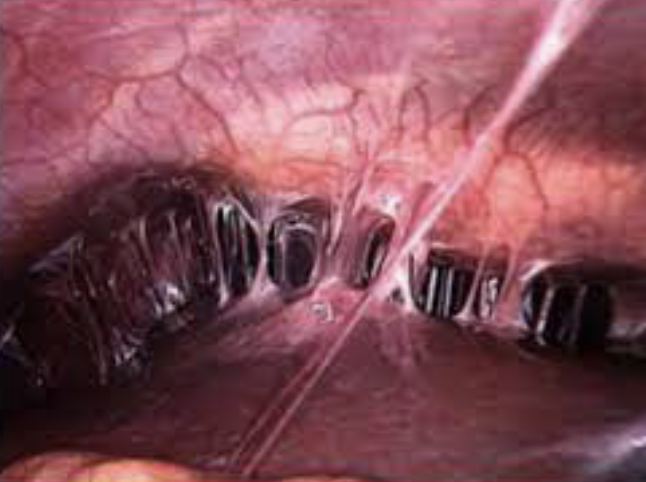
⚠️26.This “violin-string” lesion in PID caused by? A.Neither B.Neisseria only C.Chlamydia only D.Both
D.Both
27.True inguinal buboes can be found in: A.Both chancroid and LGV B.Lymphogranuloma venereum only C.Chancroid only D.Neither chancroid nor LGV
A.Both chancroid and LGV
28.Pelvic inflammatory diseases are commonly caused by the following organisms EXCEPT: A.Candida albicans B.Neisseria gonorrhea C.E. coli D.Chlamydia trachomatis
A.Candida albicans
29.The gold standard for the diagnosis of pelvic inflammatory disease is: A.Bacterial culture B.Laparoscopy C.Ultrasound D.Laparotomy
B.Laparoscopy
30.Which of the following statements regarding management of tubo-ovarian abscesses is INCORRECT? A.Surgery is indicated if there is no clinical response to medical therapy within 48-72 hours B.Unruptured TOA can be managed conservatively by ultrasound or CT scan guided aspiration and drainage C.A ruptured TOA can be managed conservatively D.Surgical
C.A ruptured TOA can be managed conservatively
🖼️‼️(#20)31.The pathognomonic “groove sign” of Lymphogranuloma venereum is seen when an inflamed inguinal lymph node is divided into two equal halves by which ligament? A.Round ligament B.Cooper’s ligament C.Poupart’s ligament D.Uterosacral ligament
C.Poupart’s ligament
🖼️‼️(#17,#37)32.Cytologic examination of scrapings from the base of a painful ulcer reveals the presence of a multinucleated giant cell. Which of the following diseases are you most likely dealing with? A.Lymphogranuloma venereum B.Syphilis C.Granuloma inguinale D.Herpes simplex
D.Herpes simplex
33.Which of the following statements regarding chancroids is INCORRECT? A.Caused by Calymmatobacterium granulomatis B.Transmission is almost exclusively sexual contact C.The ulcers are extremely painful D.The chancre lacks induration and is often referred to as soft chancre
A.Caused by Calymmatobacterium granulomatis
34.Which of the following sexually transmitted diseases does not form ulcerative lesions: A.Lymphogranuloma venereum B.Condyloma acuminata C.Herpes simplex type 2 D.Granuloma inguinale
B.Condyloma acuminata
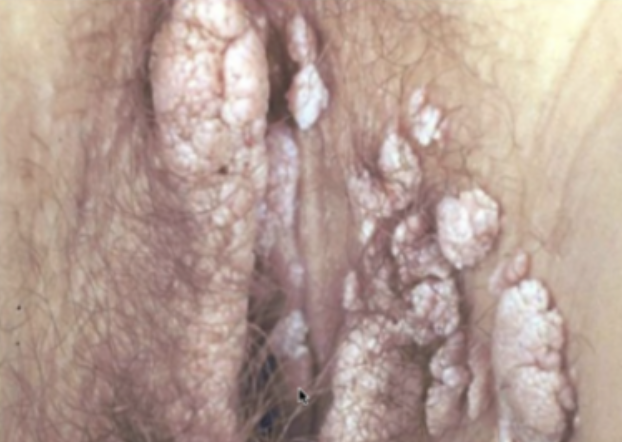
⚠️‼️(#13)35.Identify the lesion: A.Herpes simplex type 2 B.Condyloma acuminata C.Granuloma inguinale D.Lymphogranuloma venereum
B.Condyloma acuminata
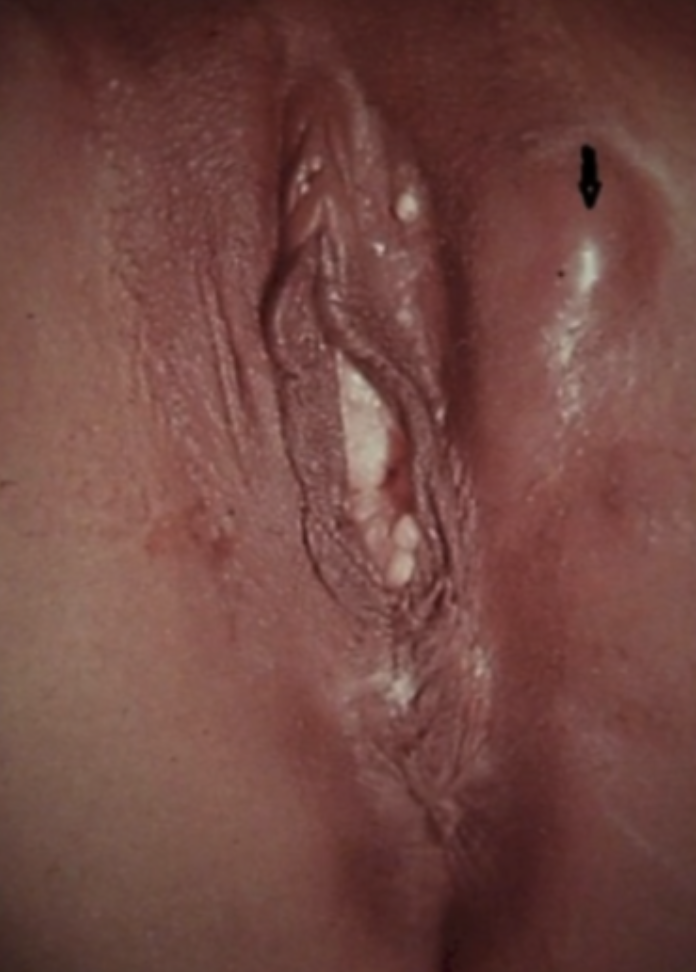
⚠️‼️36.This lesion is typically seen in what lower genital tract infection: A.Lymphogranuloma venereum B.Condyloma acuminata C.Molluscum contagiosum D.Granuloma inguinale
A.Lymphogranuloma venereum
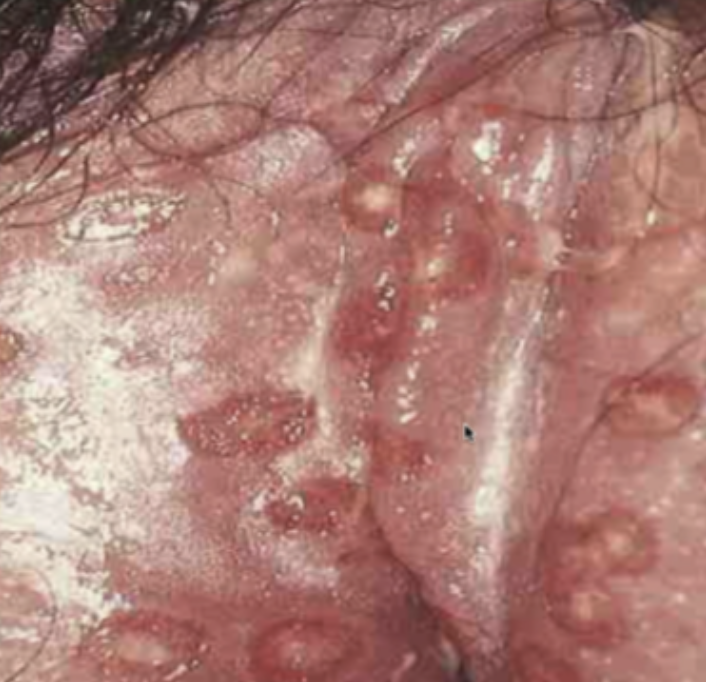
⚠️‼️(#17,#32)37.Identify the lesion: A.Granuloma inguinale B.Lymphogranuloma venereum C.Syphilis D.Herpes simplex
D.Herpes simplex
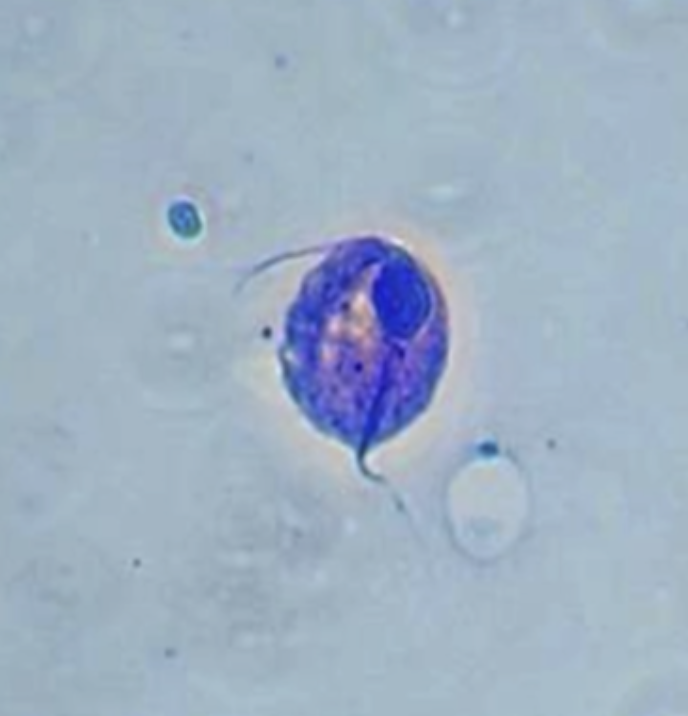
⚠️‼️(#7)38.This lesion is typically seen in what lower genital tract infection: A.Candidiasis B.Herpes simplex type 2 C.Bacterial vaginosis D.Trichomoniasis
D.Trichomoniasis
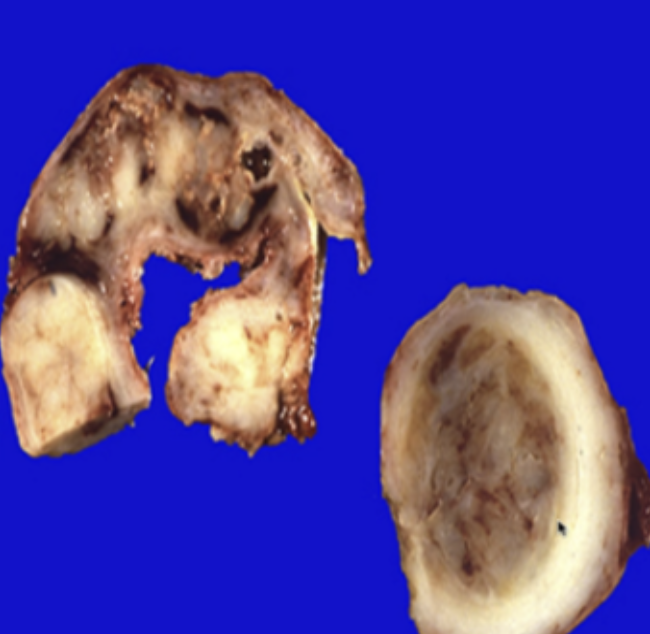
⚠️39.Identify the causative organism of this fallopian tube lesion: A.Bacteroides B.Actinomyces israelii C.Mycobacterium tuberculosis D.Peptostreptococcus
C.Mycobacterium tuberculosis
40.Recommended parenteral regimen A of the 2010 CDC guidelines for the treatment of PID includes the following except: A.Cefotetan B.Doxycycline C.Cefoxitin D.Ceftriaxone
D.Ceftriaxone
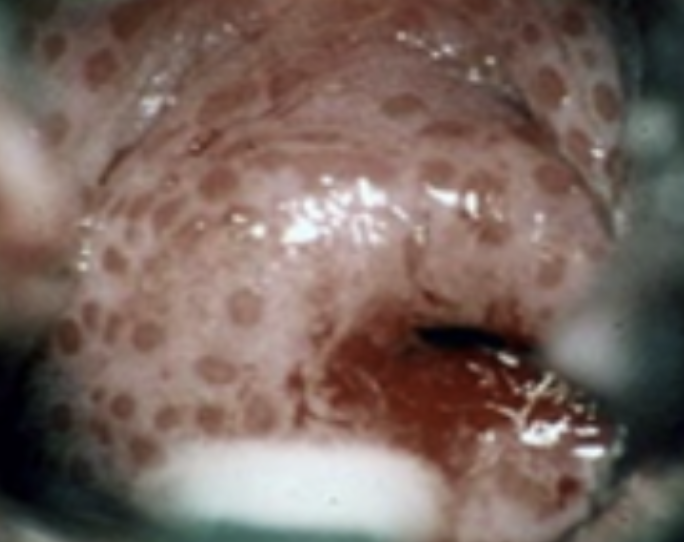
🖼️‼️(#8)41.This cervical lesion can be seen in genital tract infections caused by: A.Candidiasis B.Trichomoniasis C.Herpes simplex type 2 D.Bacterial vaginosis
B.Trichomoniasis
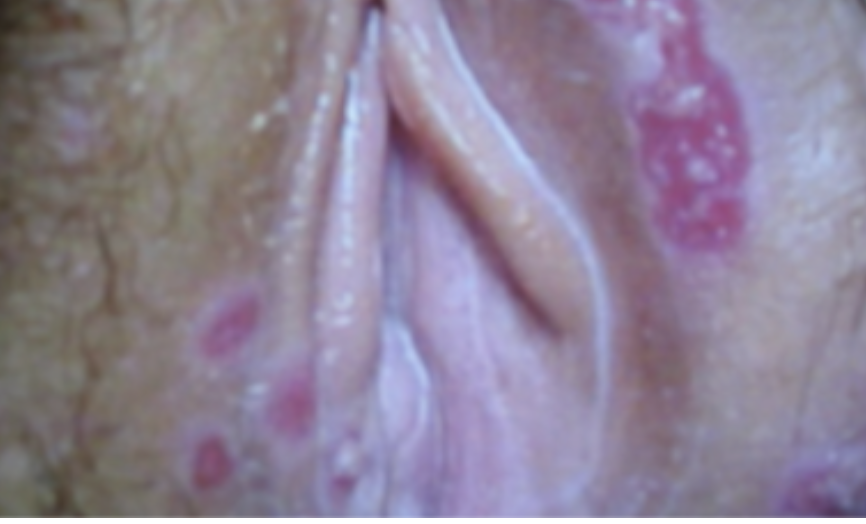
🖼️‼️(#18,#71)42.Recommended treatment for this lesion includes the following EXCEPT: A.Azithromycin B.Ceftriaxone C.Ciprofloxacin D.Doxycycline
D.Doxycycline
43.The lymphogranuloma venereum is caused by: A.Chlamydia trachomatis B.Hemophilus ducreyi C.Mycobacterium D.Neisseria gonorrhea
A.Chlamydia trachomatis
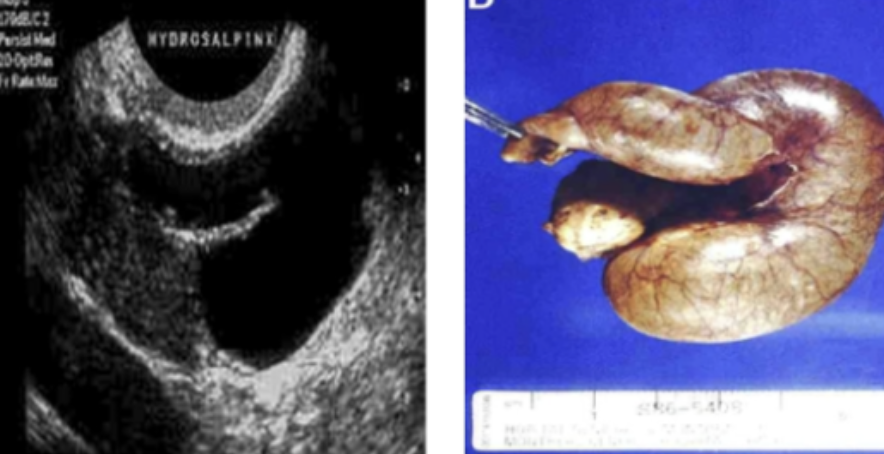
⚠️‼️(#39,#49,#51)44.Identify the lesion: A.Hydrosalpinx B.Tobacco pouching C.Endometritis D.Fitz-Hugh Curtis Syndrome
A.Hydrosalpinx
🖼️‼️(#20,#31)45.A patient presents with painful, matted unilateral inguinal lymphadenopathy. Upon physical examination, the clinician observes a linear furrow where the Poupart (inguinal) ligament divides the swollen lymph node masses into upper and lower segments. Which of the following is the specific name for this pathognomonic sign, and what is the most likely causative agent? A.Strawberry cervix; Trichomonas vaginalis B.Groove sign; Chlamydia trachomatis (L1, L2, L3) C.Donovan bodies; Klebsiella granulomatis D.Violin-string adhesions; Neisseria gonorrhoeae
B.Groove sign; Chlamydia trachomatis (L1, L2, L3)
46.Which organism is most commonly implicated in pelvic inflammatory disease (PID) among patients using an intrauterine device (IUD)? A.Bacteroides B.Peptostreptococcus C.E. coli D.Actinomyces israelii
D.Actinomyces israelii
47.OCPs decrease risk of STDs due to: A.Thicker cervical mucus B.Shorter duration and amount of menstrual flow C.AOTA
C.AOTA
48.Which two pathogens are recognized as the most common etiologic agents of Sexually Transmitted Diseases (STDs) in the Philippines? A.Treponema pallidum and Haemophilus ducreyi B.Neisseria gonorrhoeae and Chlamydia trachomatis C.Trichomonas vaginalis and Gardnerella vaginalis D.Human Papillomavirus (HPV) and Herpes Simplex Virus (HSV)
B.Neisseria gonorrhoeae and Chlamydia trachomatis
⚠️‼️(#44,#51)49.A 32-year-old woman undergoing an infertility evaluation has a transvaginal ultrasound. The sonographer identifies a thick-walled, sausage-shaped, and fluid-filled tubular mass in the right adnexa with incomplete septations. The clinician describes this as the "end-stage" result of a previous pelvic infection. What is the most likely diagnosis? A.Tubo-ovarian abscess B.Hydrosalpinx C.Tubal tuberculosis D.Fitz-Hugh-Curtis Syndrome
B.Hydrosalpinx
50.A 34-year-old woman presents with a 2-year history of primary infertility and chronic pelvic pain. She was treated twice in the past year for Pelvic Inflammatory Disease (PID) with standard "Triple Therapy" (Ceftriaxone, Doxycycline, and Metronidazole), but her symptoms never fully resolved. A transvaginal ultrasound reveals a sausage-shaped, fluid-filled mass in the adnexa, and a subsequent chest X-ray shows an old calcified granuloma. Which of the following is the most likely uncommon cause of this patient’s hydrosalpinx? A.Chlamydia trachomatis B.Neisseria gonorrhoeae C.Tubal Tuberculosis (TB) D.Actinomyces israelii
C.Tubal Tuberculosis (TB)
⚠️‼️(#39,#44)51.A 35-year-old woman presents with primary infertility and chronic pelvic pain that has not responded to standard broad-spectrum antibiotic therapy for Pelvic Inflammatory Disease (PID). An endometrial biopsy is performed. Which of the following sets of findings—both gross and microscopic—is most characteristic of this patient’s likely condition? A.Gross: "Violin-string" adhesions; Microscopic: Gram-negative intracellular diplococci B.Gross: Sausage-shaped, thick-walled tubular mass; Microscopic: Acute inflammatory cells and pus C.Gross: "Tobacco-pouch" eversion of the oviducts; Microscopic: Langhans giant cells, granulomas, and caseous necrosis D.Gross: "Strawberry" appearance of the cervix; Microscopic: Multinucleated giant cells with nuclear inclusions
C.Gross: "Tobacco-pouch" eversion of the oviducts; Microscopic: Langhans giant cells, granulomas, and caseous necrosis
52.A 33-year-old woman is being evaluated for primary infertility. She has a history of multiple treated episodes of Pelvic Inflammatory Disease (PID). Which of the following combinations of diagnostic tests is most appropriate to identify the characteristic "sausage-shaped" tubal mass and confirm distal tubal obstruction? A.Endometrial biopsy and Tzanck smear B.Saline infusion sonography (SIS) and Pap smear C.Transvaginal Ultrasound (TVUS) and Hysterosalpingography (HSG) D.KOH wet mount and Nucleic Acid Amplification Test (NAAT)
C.Transvaginal Ultrasound (TVUS) and Hysterosalpingography (HSG)
53.A 27-year-old patient with a history of recurrent Pelvic Inflammatory Disease (PID) presents to the emergency department with a high-grade fever (39.2°C), nausea, and severe, localized lower abdominal pain. On bimanual examination, the clinician identifies an extremely tender, palpable mass in the left adnexa. Transvaginal ultrasound (TVUS) reveals a complex, thick-walled adnexal mass containing fluid with low-to-medium internal echogenicity (pus). Which of the following is the most likely diagnosis? A.Endometritis B.Hydrosalpinx C.Tubo-ovarian abscess (TOA) D.Fitz-Hugh-Curtis Syndrome
C.Tubo-ovarian abscess (TOA)
54.Which of the following statements regarding prevention of Pelvic Inflammatory Diseases is true? A.Majority of cases of PID are ascending infections from the lower genital tract B.PID is typically caused by a single pathogen and is effectively prevented by a single dose of Penicillin G C.Oral contraceptive pills (OCPs) increase the risk of PID by facilitating the entry of bacteria into the upper tract D.Treatment of asymptomatic sexual partners is not recommended as it does not reduce the rate of PID recurrence
A.Majority of cases of PID are ascending infections from the lower genital tract
55.Which of the following statements is true? A.Partners of women with PID should also be treated B.Treatment should be delayed until laboratory documentation of N. gonorrhoeae or C. trachomatis is obtained C.PID is typically caused by a single pathogen, making narrow-spectrum antibiotic monotherapy the gold standard D.Bacterial vaginosis (BV) is a true STI and routine treatment of the male partner is required to prevent PID recurrence
A.Partners of women with PID should also be treated
56.A 24-year-old patient presents with lower abdominal pain and cervical motion tenderness. She is hemodynamically stable, has no adnexal masses on ultrasound, and is able to tolerate oral intake. The clinician decides on outpatient (ambulatory) management for acute Pelvic Inflammatory Disease (PID). Which of the following antibiotic regimens is the most appropriate according to standard clinical guidelines? A.Ceftriaxone 250 mg IM in a single dose PLUS Doxycycline 100 mg BID for 14 days (with or without Metronidazole 500 mg BID for 14 days) B.Ceftriaxone 500 mg IM in a single dose PLUS Azithromycin 1 g orally in a single dose C.Metronidazole 500 mg BID for 7 days as monotherapy D.Doxycycline 100 mg BID for 21 days
A.Ceftriaxone 250 mg IM in a single dose PLUS Doxycycline 100 mg BID for 14 days (with or without Metronidazole 500 mg BID for 14 days)
57.A 28-year-old patient is hospitalized with a diagnosis of acute Pelvic Inflammatory Disease (PID) because she is unable to tolerate oral intake due to severe nausea and vomiting. The clinician decides to initiate Parenteral Regimen A. Which of the following is the most appropriate antibiotic combination and administration route for this inpatient according to standard guidelines? A.Clindamycin 900 mg IV every 8 hours PLUS Gentamicin loading dose (2 mg/kg) followed by maintenance (1.5 mg/kg) every 8 hours B.Cefotetan 2 g IV every 12 hours PLUS Doxycycline 100 mg orally (PO) every 12 hours C.Ceftriaxone 250 mg IM in a single dose PLUS Doxycycline 100 mg BID for 14 days D.Cefotetan 2 g IV every 12 hours PLUS Doxycycline 100 mg IV every 12 hours as the preferred route for all hospitalized patients
B.Cefotetan 2 g IV every 12 hours PLUS Doxycycline 100 mg orally (PO) every 12 hours
58.The following are alternative management of Acute PID, except: A.Ampicillin-sulbactam 3 g IV every 6 hours plus Doxycycline B.Cefotetan 2 g IV every 12 hours plus Doxycycline C.Clindamycin 900 mg IV every 8 hours plus Gentamicin D.Azithromycin 500 mg IV for 1–2 doses followed by oral therapy
B.Cefotetan 2 g IV every 12 hours plus Doxycycline
59.A 22-year-old patient is diagnosed with acute Pelvic Inflammatory Disease (PID) and started on the CDC-recommended outpatient antibiotic regimen (Ceftriaxone, Doxycycline, and Metronidazole). According to clinical guidelines, within what timeframe should a clinical follow-up be conducted to ensure treatment efficacy and determine if hospitalization is necessary? A.24 hours B.48–72 hours C.1 week D.3 months
B.48–72 hours
60.Methods of preventing PID: A.Monogamy & Abstinence B.Barriers C.Vaccinations D.Oral antibiotics E.Local hygienic practices F.AOTA
F.AOTA
🖼‼(#65,#76)61.A 30-year-old sexually active woman presents with vaginal pruritus and a frothy, yellow-green discharge. Pelvic examination reveals vulvovaginal erythema and a “strawberry cervix.” The image shown demonstrates motile, flagellated organisms on a wet mount. What is the causative organism? A.Candida albicans B.Gardnerella vaginalis C.Neisseria gonorrhoeae D.Trichomonas vaginalis
D.Trichomonas vaginalis
62.What should be suspected in women who do not respond to antibiotic treatment for Acute PID? A.Reinfection with Neisseria gonorrhoeae B.Poor medication compliance C.Tubo-ovarian abscess D.Vulvovaginal candidiasis
C.Tubo-ovarian abscess
63.The following organisms are probable causes of ulcerative lesions found in the lower genital tract EXCEPT: A.Human Papilloma Virus type 6 and 11 B.Hemophilus ducreyi C.Chlamydia trachomatis D.Herpes simplex type 2
A.Human Papilloma Virus type 6 and 11
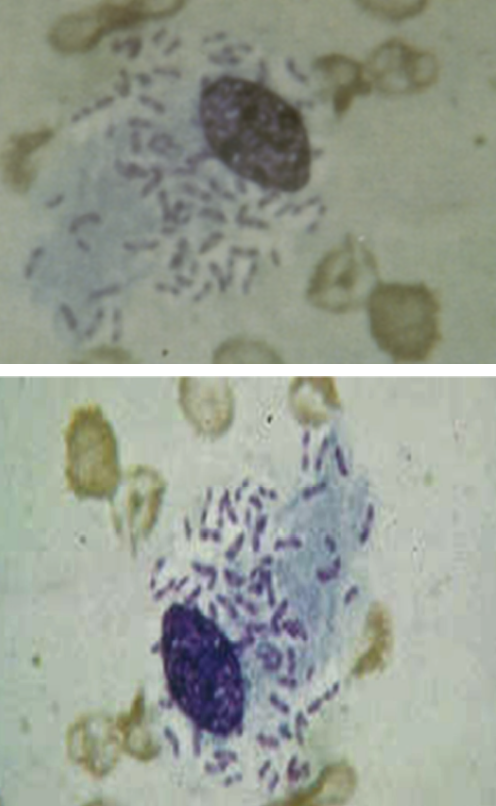
🖼(#1,#76)64.A saline wet mount done reveals the presence of epithelial cells with numerous bacilli on the surface. This confirms the diagnosis of: A.Bacterial vaginosis B.Trichomoniasis C.Gonorrhea D.Genital herpes
A.Bacterial vaginosis
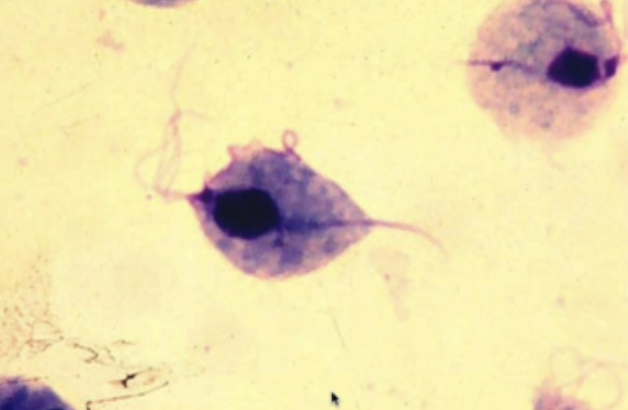
⚠️‼️(#7,#38)65.This organism can cause what type of infection in the lower reproductive tract? A.Molluscum contagiosum B.Chancroid C.Bacterial vaginosis D.Trichomoniasis
D.Trichomoniasis
66.Which of the following statements regarding prevention of Pelvic Inflammatory diseases is true? A.None of these statements are correct B.Condoms, diaphragms, and spermicides provide poor protections against PID C.Oral contraceptive pills decrease the risk of PID D.Most cases of PID are caused by endogenous organisms commonly found in the human body
C.Oral contraceptive pills decrease the risk of PID
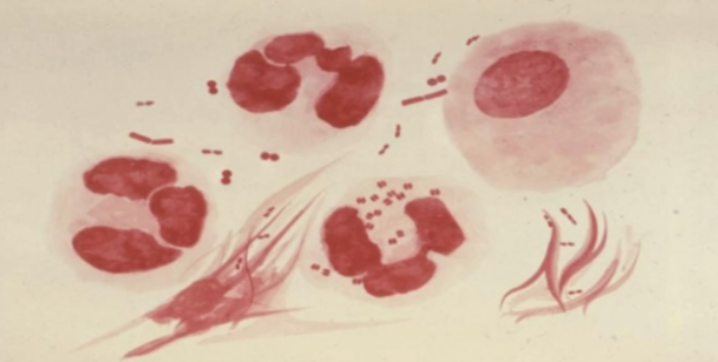
⚠️67.The gold standard for the diagnosis of this gram (-) intracellular diplococci is: A.Sabouraud’s medium B.Saline wet mount C.Dark-field microscopy D.Thayer-martin culture
D.Thayer-martin culture
68.A 28-year-old female with multiple sexual partners complains of a mucopurulent cervicovaginal discharge with the presence of lymphadenopathy. Your most likely diagnosis based on clinical presentation alone is: A.Neisseria infection B.Chlamydia infection C.Bacterial vaginosis D.Syphilis
B.Chlamydia infection
69.Which of the following statements regarding Chlamydial infection is incorrect? A.The drug of choice for treatment is ceftriaxone B.Most infected patients are asymptomatic C.All of these statements are correct D.It is the most common cause of non-gonococcal urethritis among females
A.The drug of choice for treatment is ceftriaxone
70.Which statement regarding Fitz-Hugh-Curtis Syndrome is incorrect? A.Clinical symptoms include right upper quadrant pain and pleurisy B.Findings during laparoscopy include presence of “violin strings” C.Perihepatic inflammation is the hallmark of the disease D.Exclusively caused by Neisseria gonorrhea
D.Exclusively caused by Neisseria gonorrhea
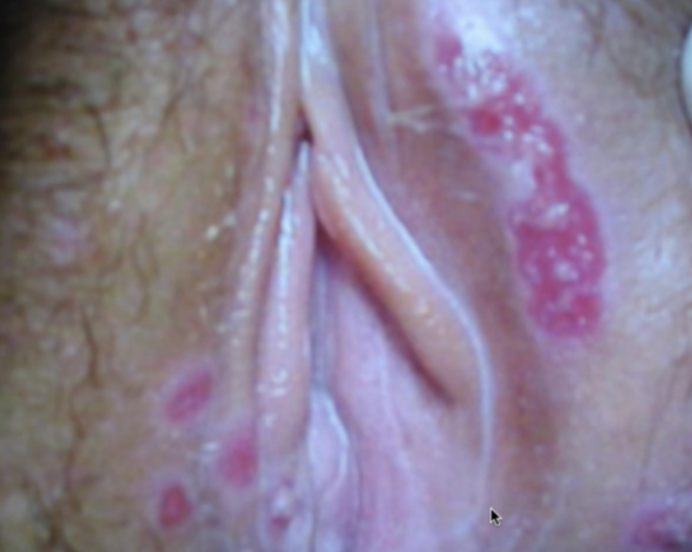
⚠️‼️(#18,#42)71.Identify the lesion: A.Chancroid B.Herpes simplex type 2 C.Lymphogranuloma venereum D.Granuloma inguinale
A.Chancroid
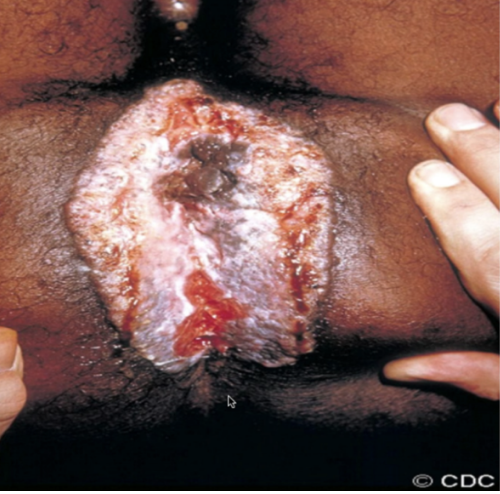
⚠️‼️(#4)72.Identify the lesion: A.Molluscum contagiosum B.Condyloma acuminate C.Lymphogranuloma venereum D.Granuloma inguinale
D.Granuloma inguinale
73.DOC for the treatment of vagina candidiasis: A.Fluconazole 150 mg single oral dose B.Ceftriaxone 250 mg IM C.Doxycycline 100mg BID for 7 days D.Metronidazole 4gm single oral dose
A.Fluconazole 150 mg single oral dose
74.Which of the following drugs is not included in the out-patient treatment of Acute PID according to 2010 CDC guideline? A.Cefotetan B.Ceftriaxone C.Doxycycline D.Metronidazole
A.Cefotetan
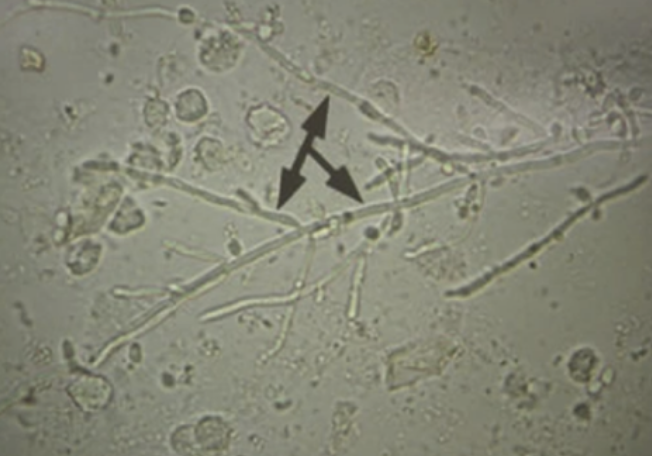
⚠️‼️(#10)75.These structures were seen in a KOH wet mount taken from a vaginal discharge caused by: A.Gardnerella sp B.Trichomonas C.Neissera sp. D.Candida albicans
D.Candida albicans
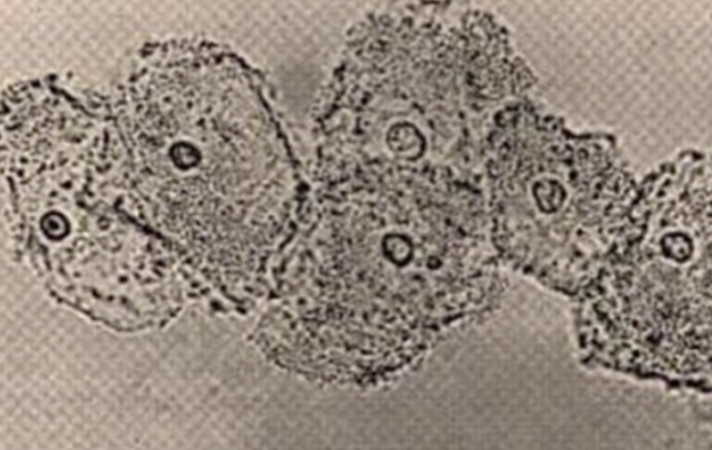
⚠️76.The drug of choice for the treatment of this condition with this pathognomonic lesion is: A.Ceftriaxone B.Fluconazole C.Tetracycline D.Metronidazole
D.Metronidazole
77.Which of the following statement regarding mucopurulent cervicitis is true? A.Most sensitive and specific test for MPCs associated with Neisseria is through nucleic acid amplification testing B.Gram negative intracellular diplococci seen on Giemsa-wright stain is associated with chlamydial infections C.Majority of symptomatic MPCs are caused by Chlamydia trachomatis
A.Most sensitive and specific test for MPCs associated with Neisseria is through nucleic acid amplification testing
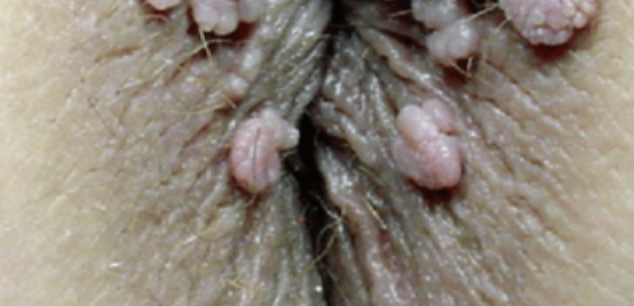
⚠️‼️(#13,#35)78.Identify the lesion. A.Granuloma inguinale B.Herpes simplex type 2 C.Lymphogranuloma venereum D.Condyloma acuminata
D.Condyloma acuminata
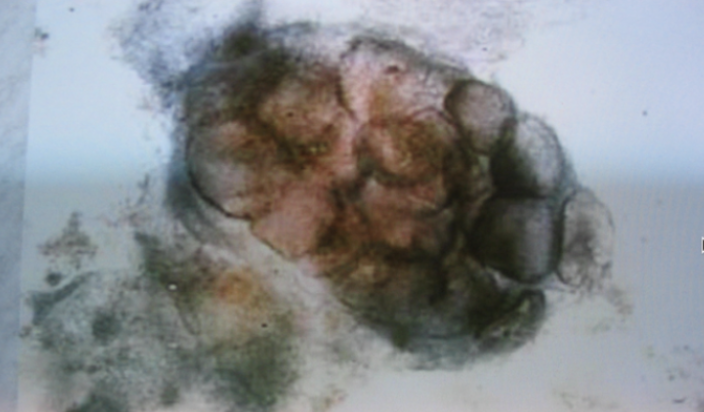
⚠️‼️(#17,#32,#37)79.This pathognomonic lesion can be seen in infections caused by: A.Lymphogranuloma venereum B.Granuloma inguinale C.Herpes simplex D.Syphilis
C.Herpes simplex
80.Which of the following statements regarding chancroids is true? A.Ulcers are painless B.Caused by chlamydia trachomatis C.Chancre lacks induration and is often referred to as a soft chancre D.Transmission is exclusively by sexual contact
C.Chancre lacks induration and is often referred to as a soft chancre
81.A 22-year-old female with multiple sexual partners complains of mucopurulent cervicovaginal discharge with presence of lymphadenopathy. Your most likely diagnosis based on clinical presentation alone is: A.Neisseria gonorrhoeae infection B.Chlamydia trachomatis infection C.Bacterial vaginosis D.Syphilis
B.Chlamydia trachomatis infection