regulating and integrating metabolism
 Call Kai
 Learn
Learn Practice Test
 Spaced Repetition
 Match
Match Flashcards
 Knowt Play
1/14

There's no tags or description
Looks like no tags are added yet.
Name | Mastery | Learn | Test | Matching | Spaced | Call with Kai |
|---|
No analytics yet
Send a link to your students to track their progress
15 Terms
insulin
what is it secreted by
which nervous sytem
what does it do
secreted by pancreas in response to high blood sugar and parasympathetic nervious system
indicates fed state and stimulate use and storgage of fuels
decrease hepatic glucose production
increase glycogensisand glycolysis
increase protein synthesis
increase lipogenesis and decrease lipolysis
GLUT 4
where is it expressed
where is it seqestered within
insulin responsive glucose transporter
expressed is skeletal muscle, apidose tissue, cardiac muscle
sequestered within specialised storage vesicles within the cytoplasm GSVs
activation of the PI3K pathway in response to insulin signalling results in phosophorylation of AS160 (an activating protein) which stimulates translocation of GSVs (GLUT4 storage vesicles) to the plasma membrane from the cytoplasm
GLUT 4 at the plasma membrane permits facilitated diffusion of glucose into cells
GLUT 4 translocation in skeletal muscle is also stimulated by exercise mediated mechanism
hexokinase
expressed in most tissues, high affinity for glucose
active enzyme even when blood glucose is low
glucokinase
expressed in liver and pancreas, low affinity for glucose
enzyme active when blood glucose is high
what determines ability of GLUT isoforms to take up glucose
tissue expression patterns
glucagon
secreted by pancreas in response to low circulating blood sugar levels
indicates the fasted state and stimulates the release of stored fuels as well as changing fuel usage
increase hepatic glucose production, glycogenolysis, protein catabolism, lipolysis
liver function in omnivores
buffers large changes in blood glucose
liver function in carnivores and ruminants
continually produces glucose
carnivores-adaptive insulin resistance
metabolically adapted to a high protein low carb diet
adaptations such as low expression and activity of heptatic glucokinase
liver therefore maintains consistent blood glucose through protein metabolism and gluconeogesis using gluconeogenic amino acids
carnivores tend to be naturally insulin resistant ot conserve glucose for vital tisses
so suscpetible to periods of fasting hyperglycaemia which can cause compensator hyperinsulinemia. in chronic cases due to obesity or poor diet domestic cats can develop diabetes
ketogenesis
normal part of the exended fasting response
low insulin/high glucagon ratio stimulates the breakdown of stores
fatty acids from triacylglycerol undergo beta oxidaition to produce acetyl coA
then Aceyl coa is converted to ketone bodies:β-hydroxybutyrate • Acetoacetate • Acetone
used as fuel by the brain, heart and muscles where they are onverted abck to acetyl coa to enter the tca cycle to produce nadh and fadh2 that are used by the etc and oxidative phosphorylation ot produce atp
ketosis
normal metabolic state where the body predominantly metabolises fat due to insufficient glycogen stores and the accumulted acetyl coa is used to geenrate ketone bodies
ketoacidosis
dangerous, life threatening condition where the blood becomes too acidic due to ketone body accumulation
can cause coma and death
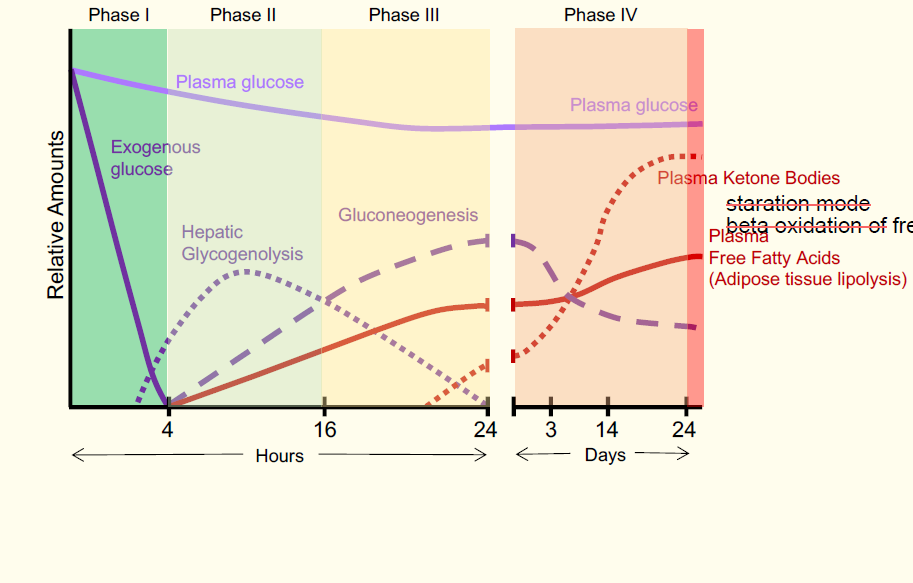
overview of phases of glucose control
exogenous glucose, blood glucose concentration increases
insulin is released decreasing plasma glucose conc
hepatic glycogenolysis occurs
gluconeogenesis then surpasses glycogenolysis as a result of glycogen store depletion
free fatty acid concentration increases as a result of lowering insulin concentration allowing for apidose tissue lipolysis
enters starvation, free fatty acids undergo beta oxidation to increase plasma ketone body concentration
mechanism of the activation of the PI3K pathway in response to insulin signalling
where doe insulin bind
what does this phosphorylate and where
what binds to the new molecule
what does this catalyse
what does the reuslting molecule act as and what does it bind to
what does this phosphorylate
what does this phosphorylate
what does this activate
what does this trigger
insulin binds to the insulin receptor, activating it
this phosphorylates the IRS-1 proteins on tyrosine residues
PI3K binds to the phosphorylated tyrosine residues activating PI3K
this catalyses the conversion of PIP2 to PIP3
PIP3 acts as a second messenger, and binds to pdk1 causing a conformational change which activates it
pdk1 phosphorylates akt
this phosphorylates AS160
phosphorylated AS160 causes activation of Rab
this triggers translocation of GSV
km
low means a higher affinity for glucose
high means a lower affinity for glucose