U1 Foundation
 Call Kai
 Learn
Learn Practice Test
 Spaced Repetition
 Match
Match Flashcards
 Knowt Play
1/20

There's no tags or description
Looks like no tags are added yet.
Name | Mastery | Learn | Test | Matching | Spaced | Call with Kai |
|---|
No analytics yet
Send a link to your students to track their progress
21 Terms
Name and explain all 4 of the value systems
Anthropocentric
Human centered
Nature is instrumental
Ecocentric
Nature centered
Nature’s intrinsic values
Pluricentric
Instead of only humans or only nature it is combined and should be balanced
Technocentric
Technology centered
Focuses on innovation to help the environment
Name and explain all worldviews
Imperialist
A sacred bond between humans and their god
Nature is separate
Stewardship
Humans have responsibilities towards the env on a local and global scale
Romantic
Nature is valuable bc it is beautiful
Utilitarian
Nature is instrumental
Actions w outcomes that promotes greatest good for humans are morally right
2 inputs, processes and outputs of the environmental value system
Inputs
Education
Science
Process
Values
Arguments
Outputs
Actions
Decisions
Explain cultural theory
Individual env beliefs are influenced by their preferences for group belonging and they way societies regulate behaviour
Like people align w their cultural groups or political category
Name a environmental movement and its influence
Montreal protocol
1980-1990 to stop ozone depletion
NGOs, media, public campaigns raised awareness about skin cancer, eye damage and env risks
Led to legally binding global treaties w all UN member states
99% key ozone depleting chemical were phased out
What is the Gaia hypothesis
The idea that Earth’s living and non-living parts interact like a single self-regulating system that keep conditions suitable for life
Explain how energy flows through the ecosystem
Enters from sun as light
Converted and stored as chemical potential energy
Organic molecules pass down through chains
Respiration releases the energy
All energy will be lost
Explain how matter cycles through an ecosystem
Nitrogen is fixed by bacteria
Plants assimilate nitrogen
Herbivores consume the plants
Nitrogen passes through the food chain
When plants/animal dies it decomposes and organic matter returns to soil
Explain transformations vs transfers in flow diagram
Transformation
Water changes from solid to liquid to gas (Matter)
Light is transformed into heat as it is re-radiated from earth’s surface (energy)
Transfers
Ocean current move energy around the planet like they drift and flow through
Food web moves matter through living organisms in its links
Closed vs open systems
Closed
Energy exchanges but not matter
Very rare
Major ones:
Nitrogen, carbon, hydrological cycle
Open
Energy and matter are exchanged across boundaries
Rainforest, ecosystems
Steady state vs Static equilibrium
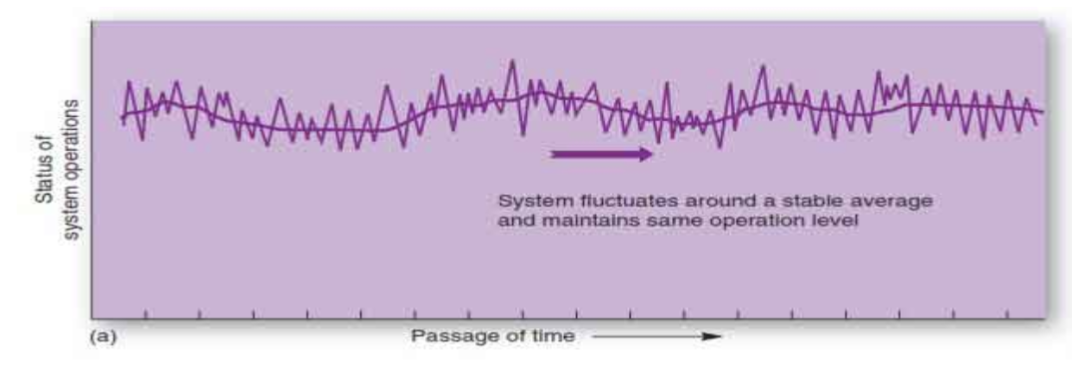
Steady
Maintains a stable system die to constant flows of outputs and inputs
Static
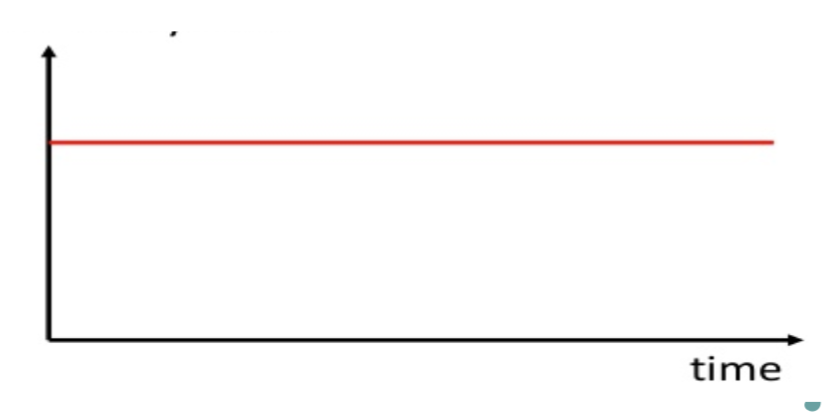
Doesnt apply to natural systems cus no input / output = no change
Always in balance
Inanimaye objects
Negative vs positive feedback loop
Negative
Dampens effects and returns to stability
Predator - prey relationships
Human body temperatures
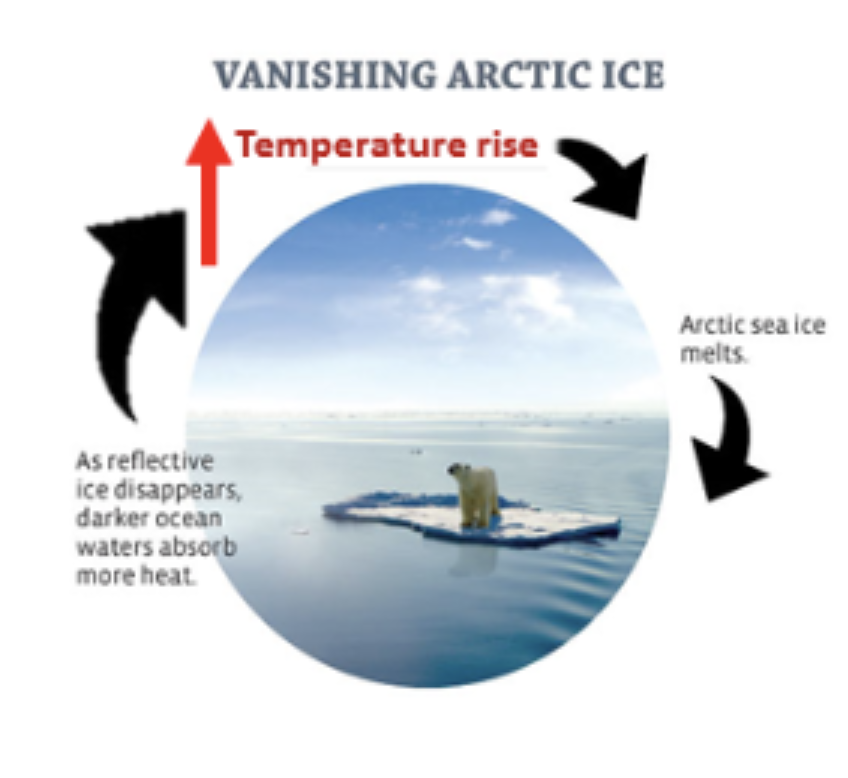
Positive
Destabilizing = amplify changes + drive the
system towards a tipping point where a new equilibrium is adopted
Change in X causes a change in Y which causes a bigger change in X
Name 3 social sustainability pillars
Providing quality education that promotes lifelong learning and awareness of sustainability issues
Addressing inequality and ensuring all community members have a voice in decisions that affect them
Ensuring access to healthcare and nutritious food etc
Define environmental justice
The right of all people to live in a pollution free environment and equitable access to natural resources regardless of race gender abcdefg
What is ecological footprint
How much land and water that is needed to:
provide all the resources a group of people uses
absorb all the waste they produce
What is biocapacity
How much nature in an area can produce (renewable resources) and clean up (absorb wastes) over time.
Unsustainable when people’s ecological footprint is bigger than that area’s biocapacity.
Name 2 strengths and.2 limitations of carbon footprint
Strengths
Useful snapshot of sustainability of a population’s lifestyle
Popular symbol for raising awareness of environmental issues
Limitations
A simplification that lacks precision
Does not show the type of reosurces used but the total
2 strengths and limitations of planetary boundary model
Strengths
Highlights the need to change focus on more than climate change
Alerts the public and policymakers
Cons
Focuses only on ecological systems and not the human dimension necessary to take action for env justice
Not be a useful guide for local and country level action
2 pros and cons of doughnut economics model
Pros
Env justice
Can be used at different scales
Cons
Rejects the goal of econ growth
work in progress model
What are the 3 principles of the circular economy
Eliminate waste and pollution
Circulate products and materials
Regenrate nature
What is the linear economy
Extraction → production → distribution → consumption → disposal