AP Music Theory Chapter 9 Questions
 Call Kai
 Learn
Learn Practice Test
 Spaced Repetition
 Match
Match Flashcards
 Knowt Play
1/19

Earn XP
Description and Tags
Name | Mastery | Learn | Test | Matching | Spaced | Call with Kai |
|---|
No analytics yet
Send a link to your students to track their progress
20 Terms
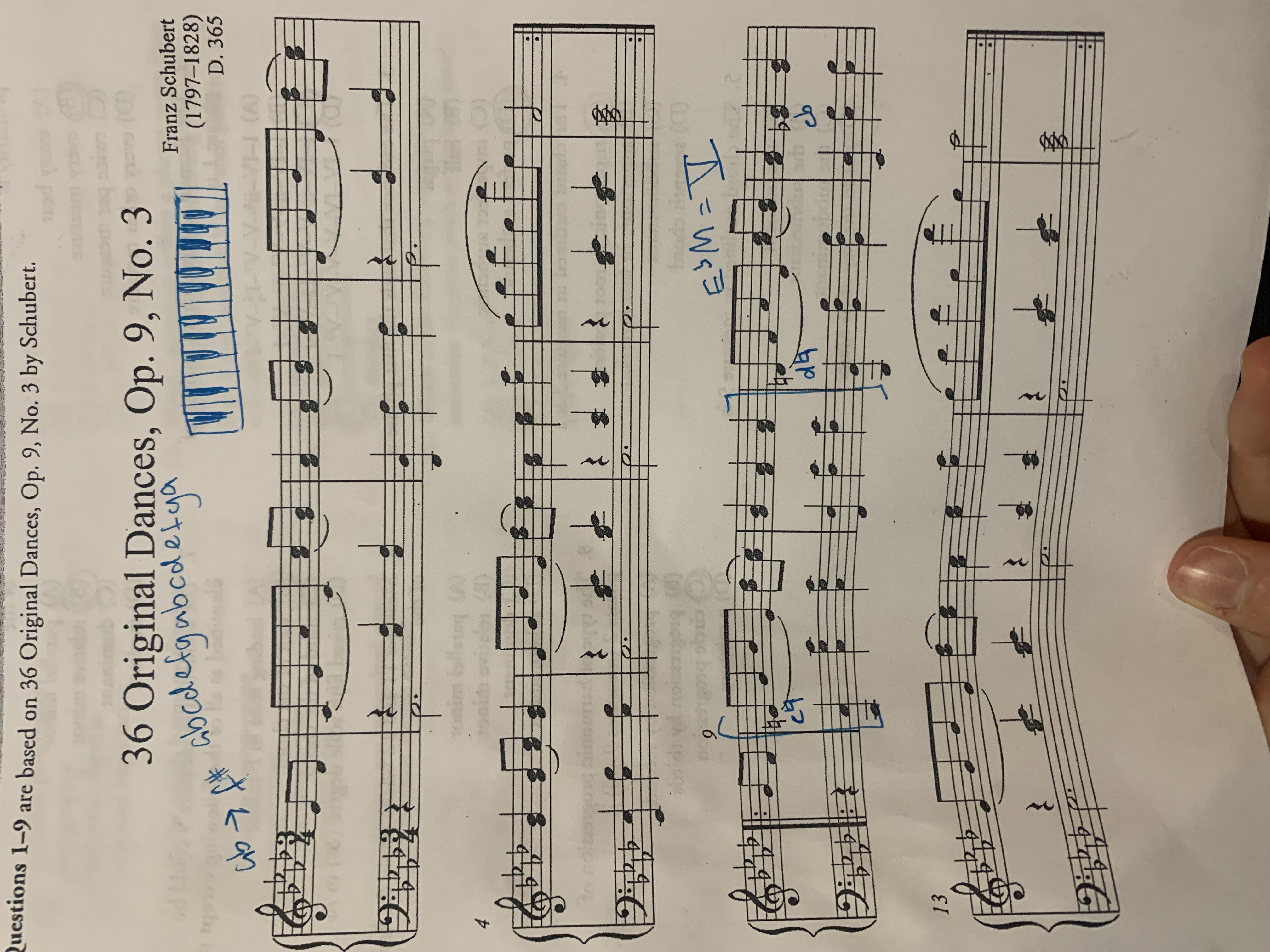
The harmonic rhythm in this example primarily is
B) every measure
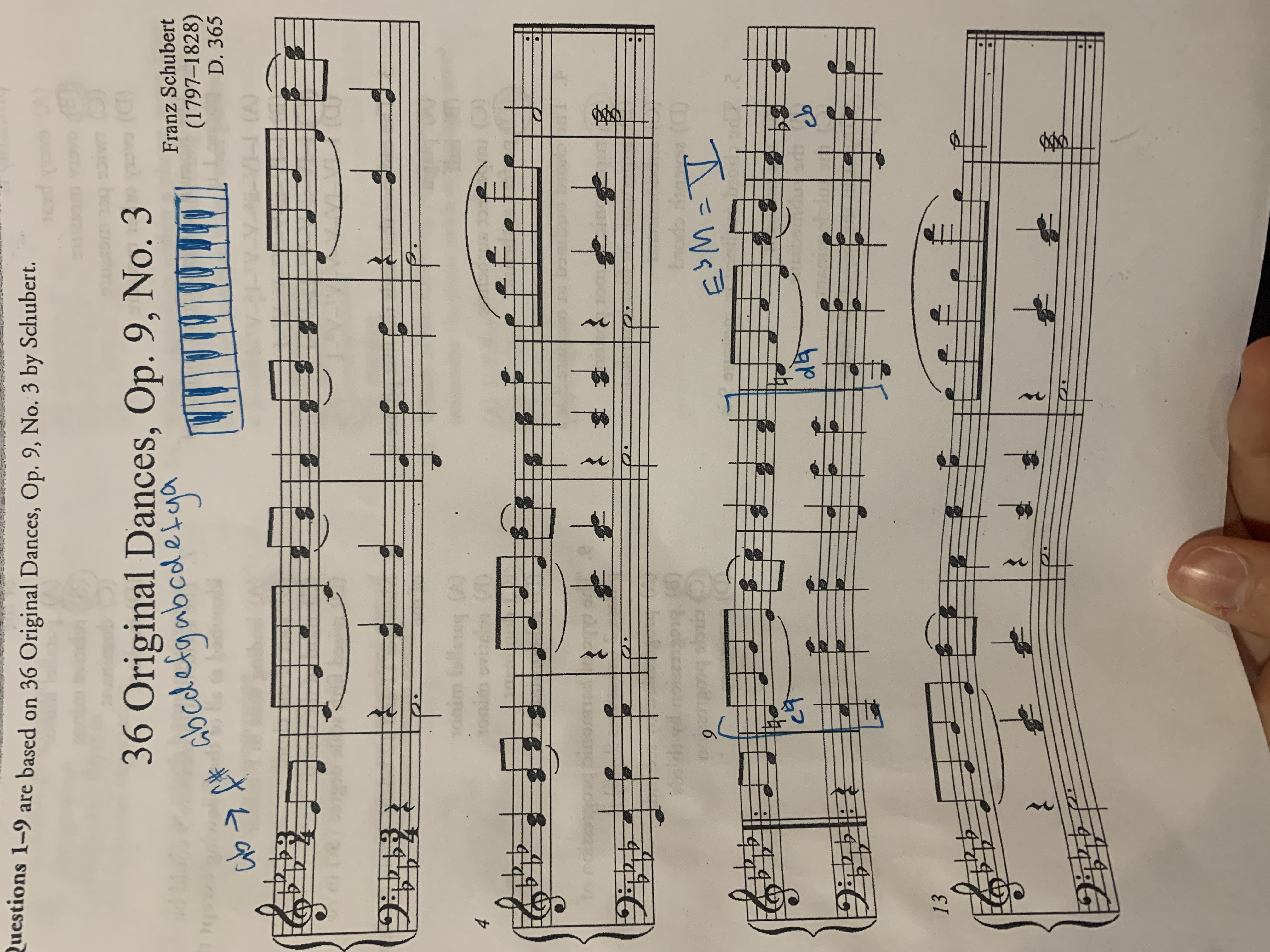
The roman numeral chord analysis of phrase 1 is
C) I—IV-ii-V—V7—I64—V7—I
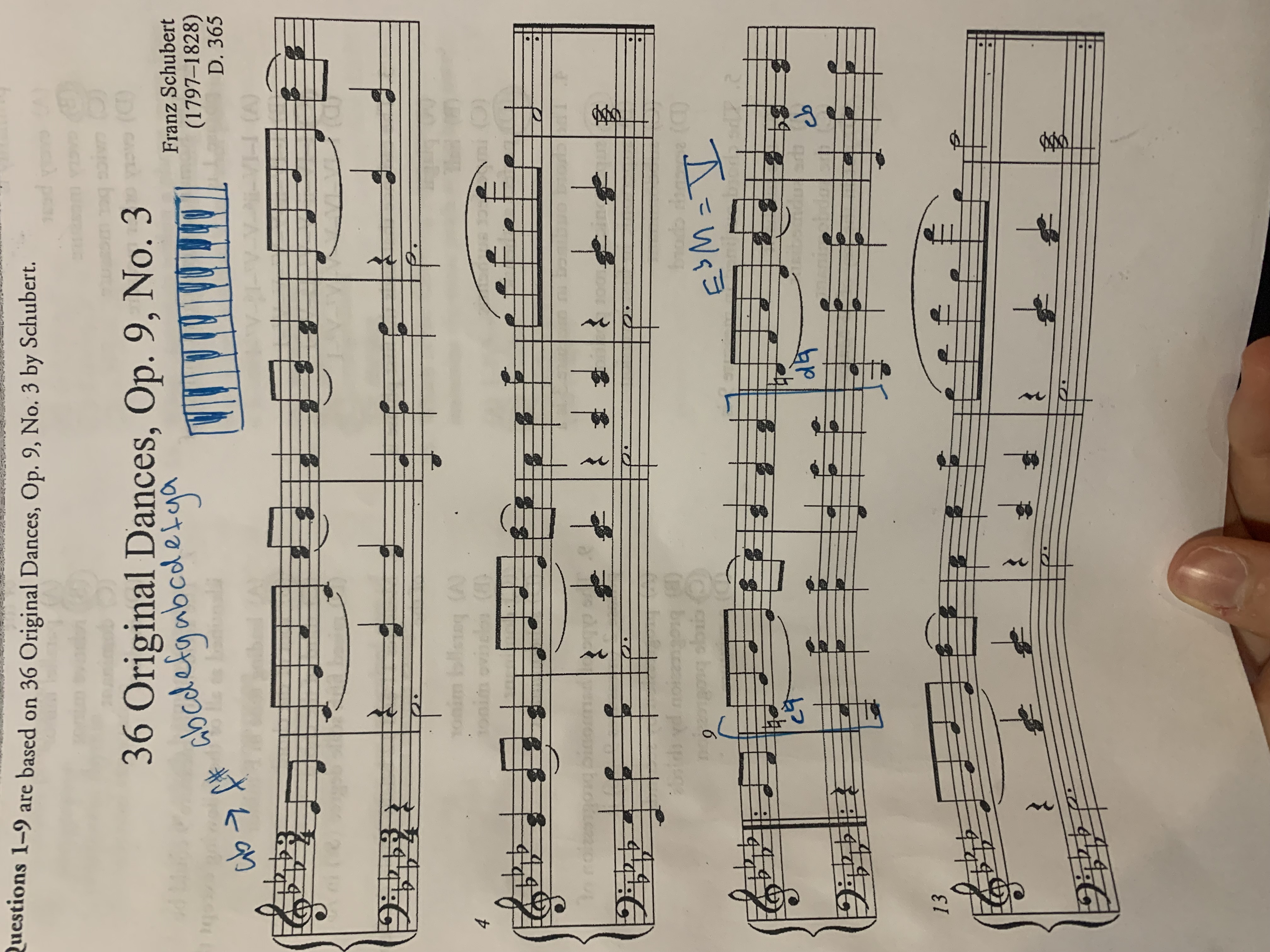
The cadence that ends the first phrase is
D) perfect authentic
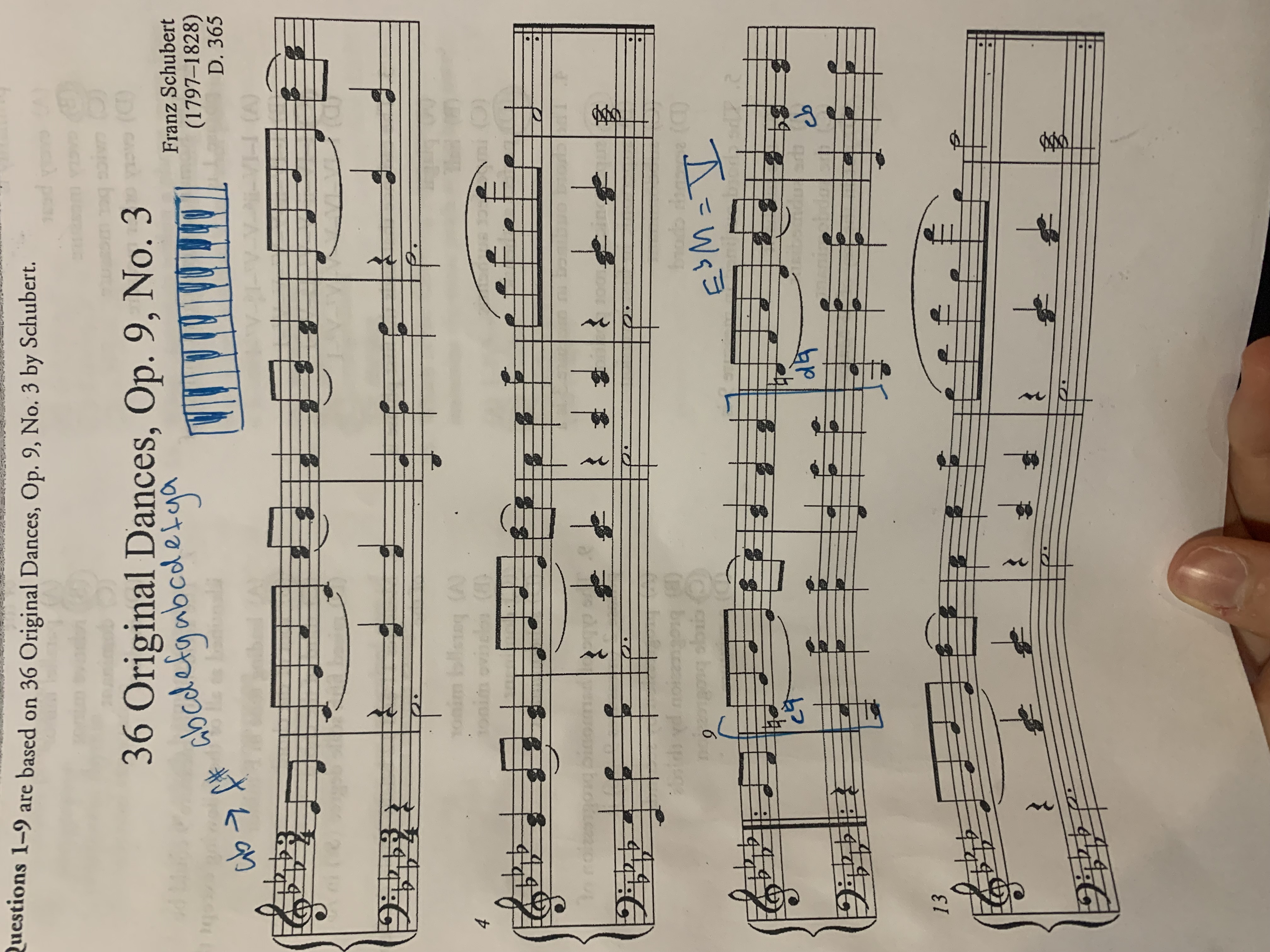
The chord outlined in measure 3 is a
A) supertonic in root position
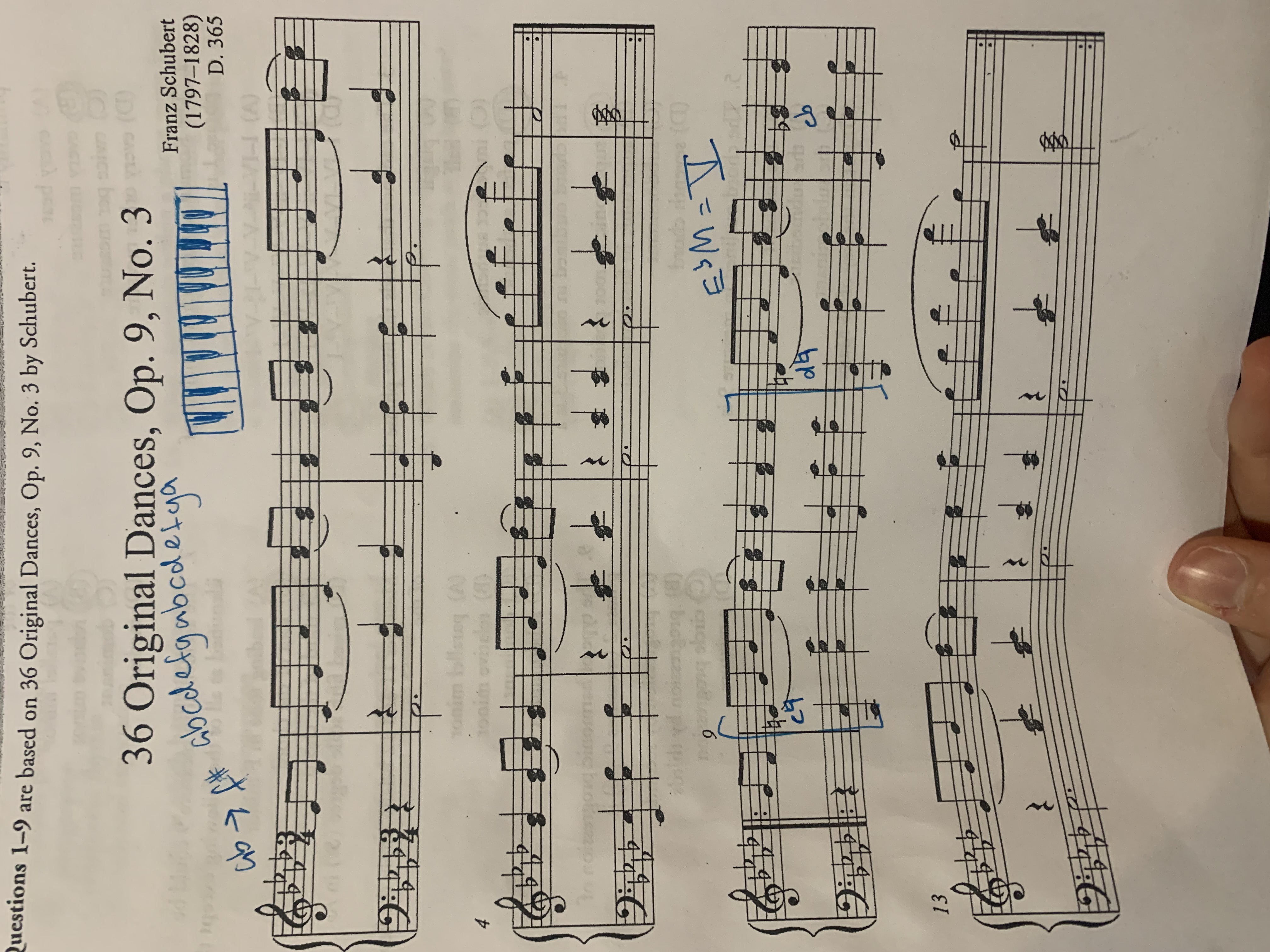
The chord outlined in measure 9 is
D) Not in the key of A♭ Major
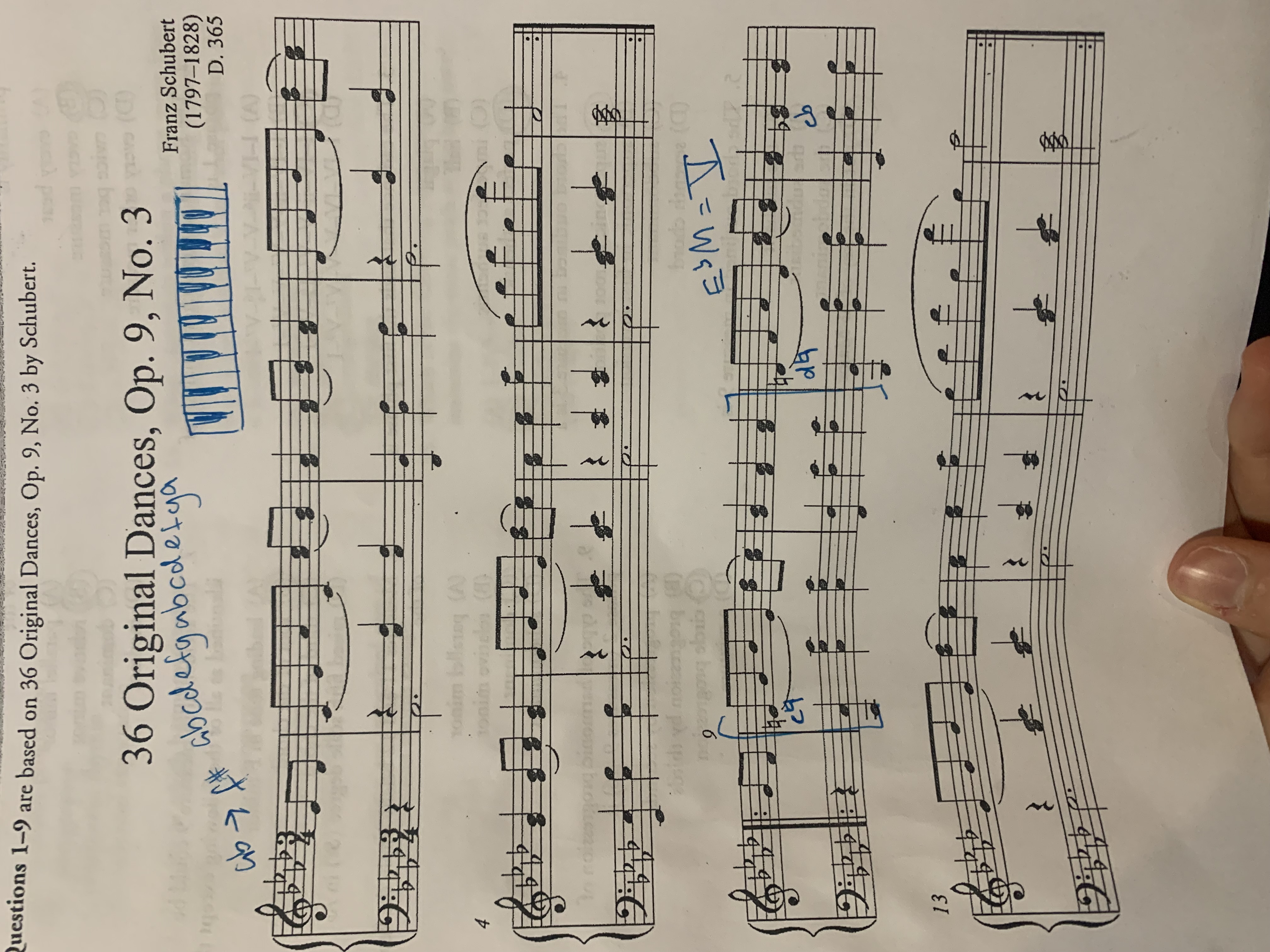
Measures 9 and 10 briefly imply the key of the
B) relative minor
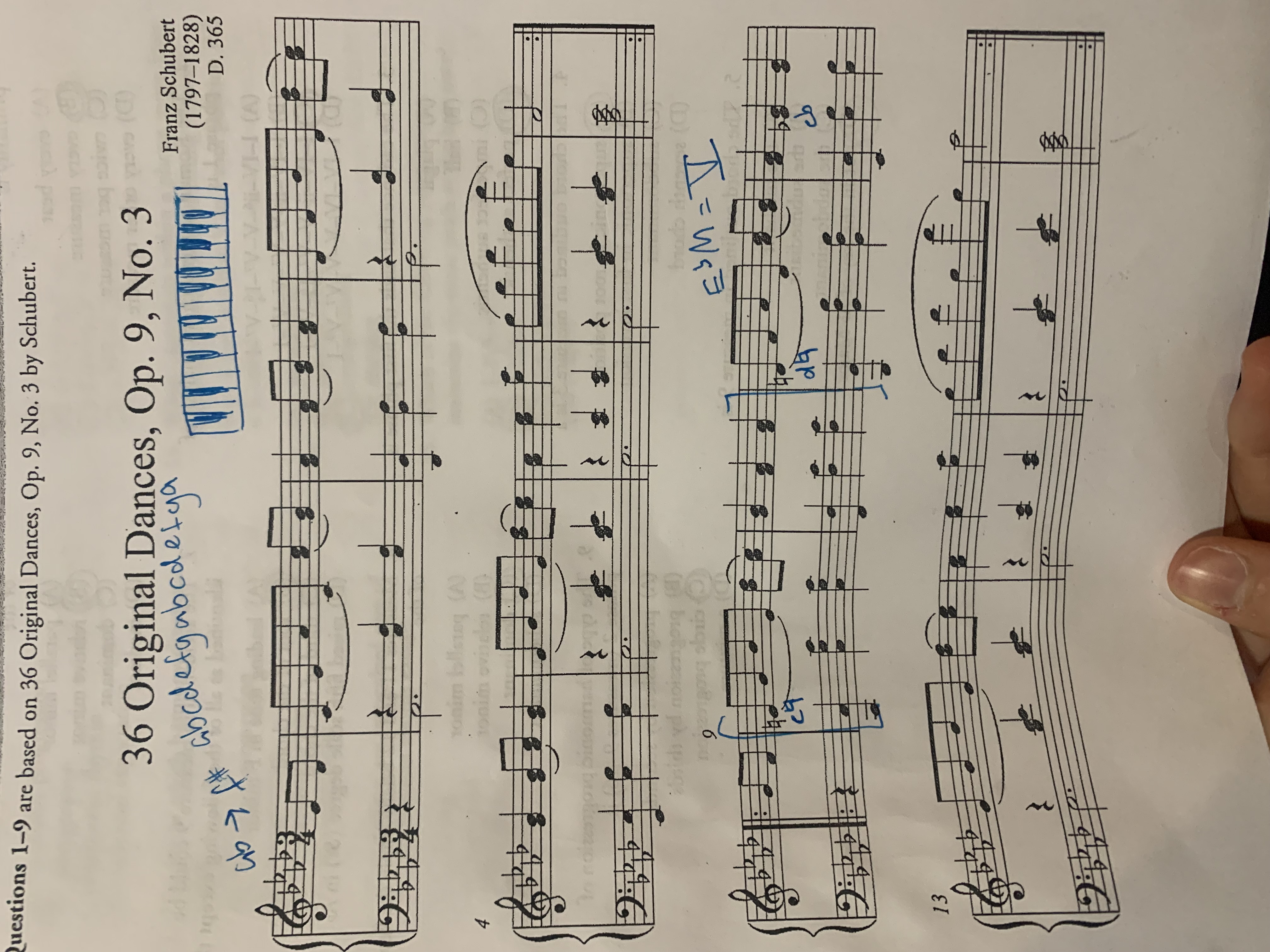
The accidental in measure 9 could be identified as all of the following except the
B) root of the chord
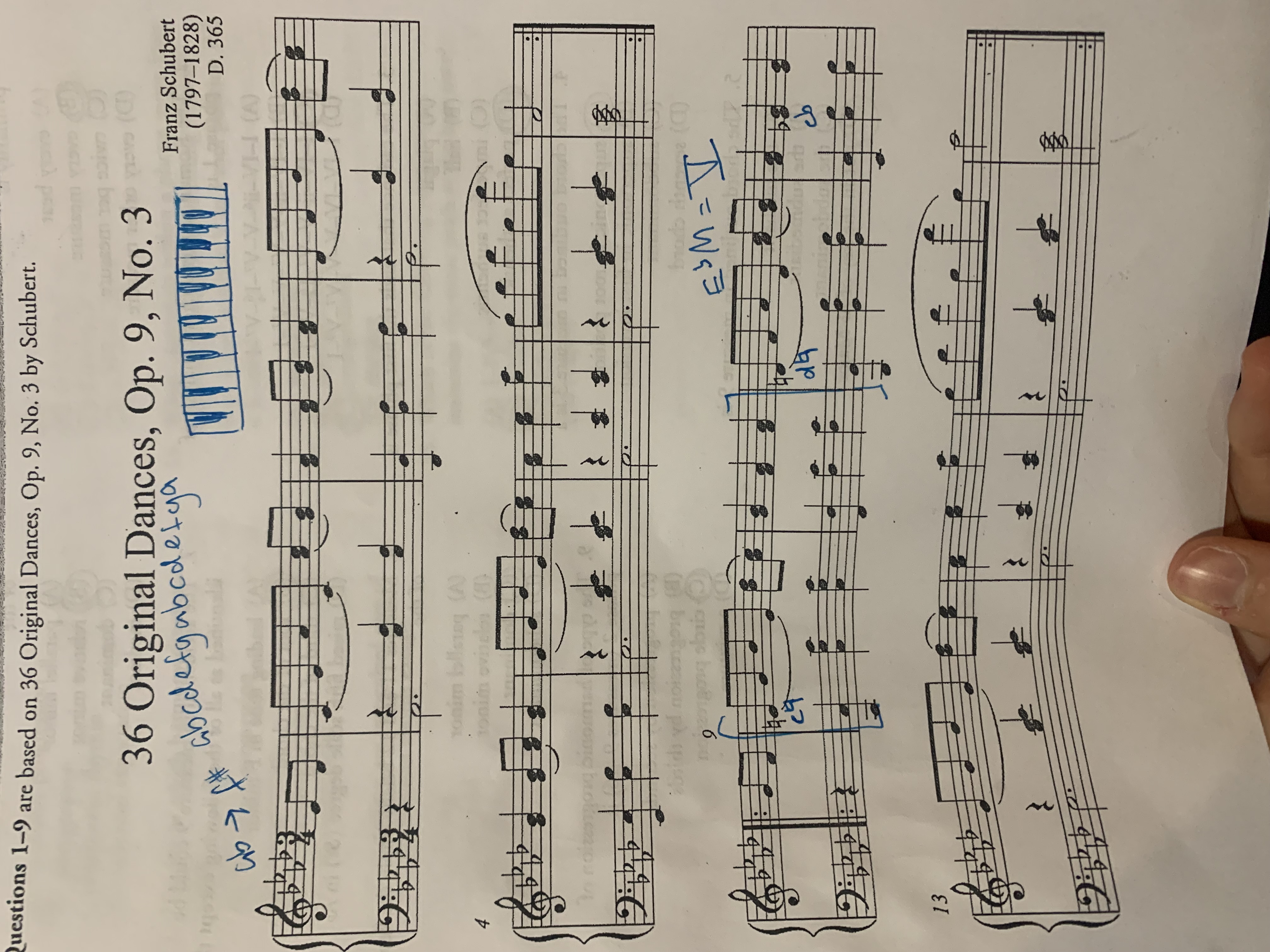
Measures 11 and 12 briefly imply the key of the
C) Dominant
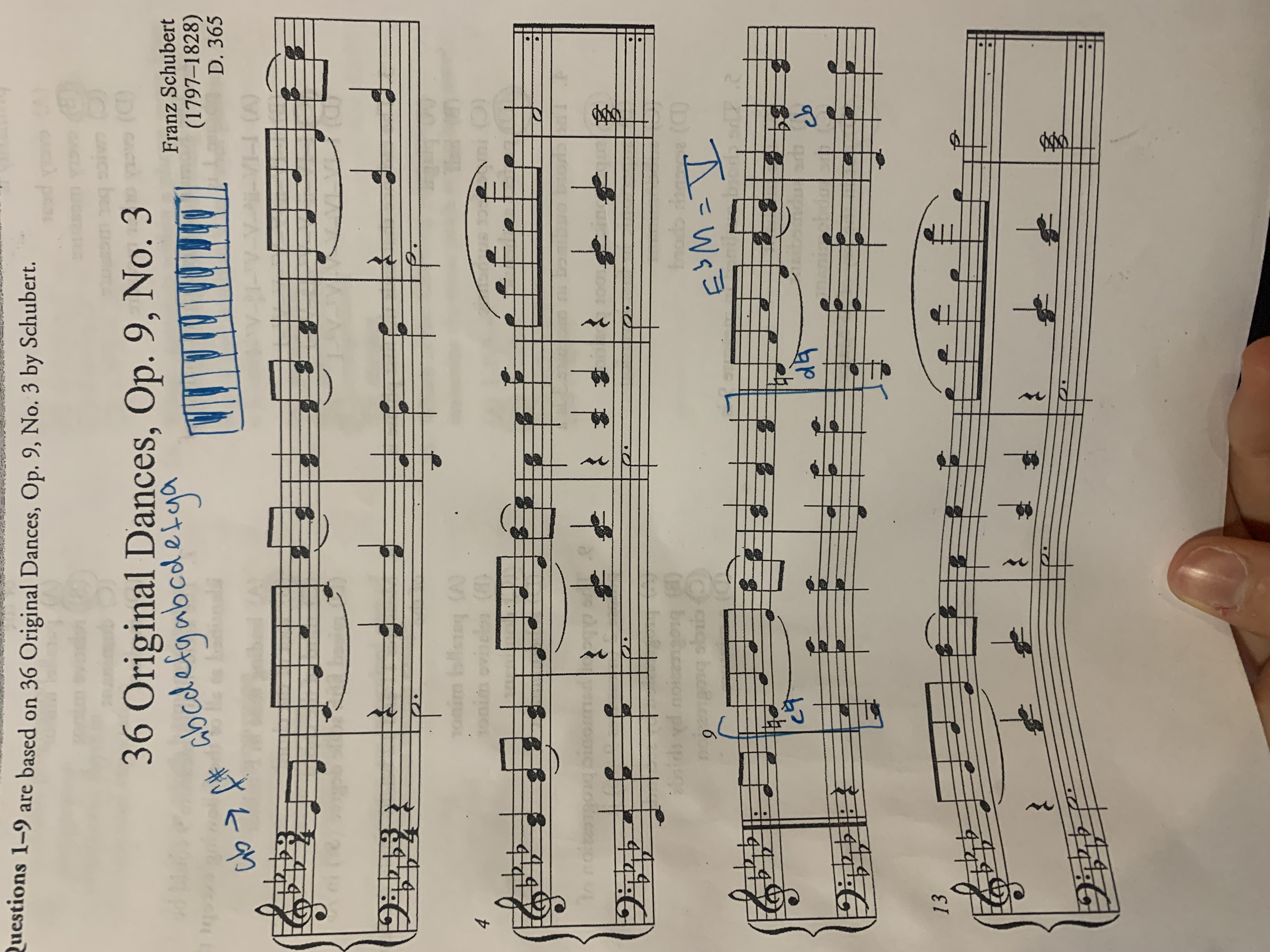
The type of harmonic progression in phrase 2 is
C) circle progression
The progress of relating chords to where they naturally lead is called
A) harmonic progression
The rate at which harmony changes is called
C) harmonic rhythm
The following are recognized uses of second inversion chords except
C) accented
Which of the following is not a viable progression in common-practice style?
A) I—ii—IV—V—I
When harmonies within a phrase move from a strong intensity to a less strong intensity, it is called
C) Retrogression
Which of the following progressions maintains the tonic pitch as the bass note?
I—IV64—I
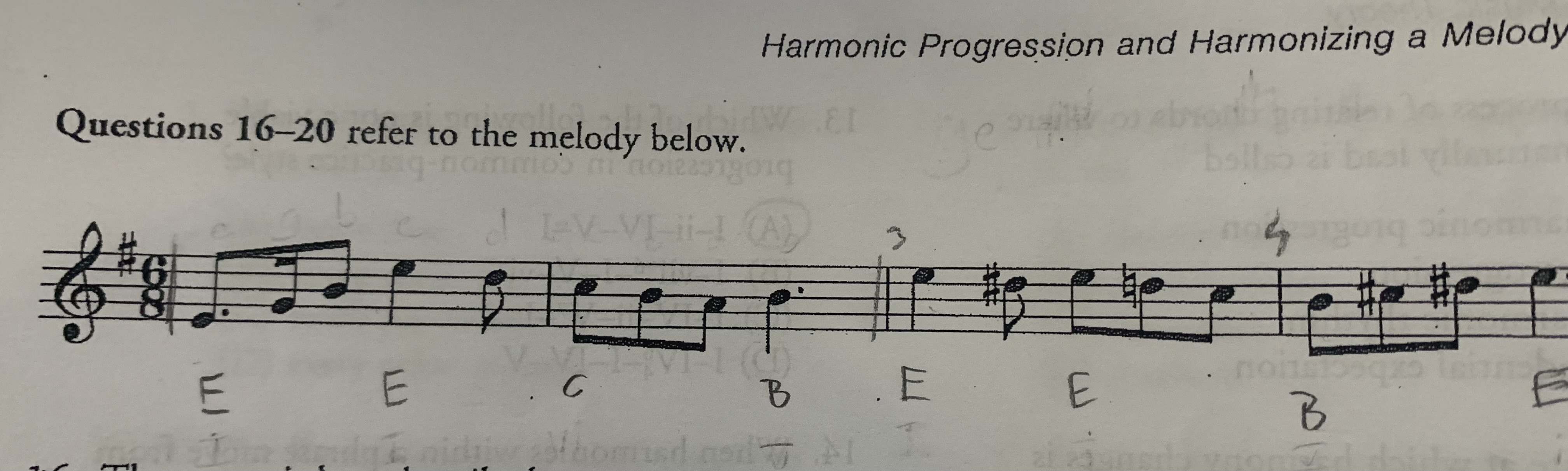
The meter is best described as
B) compound duple
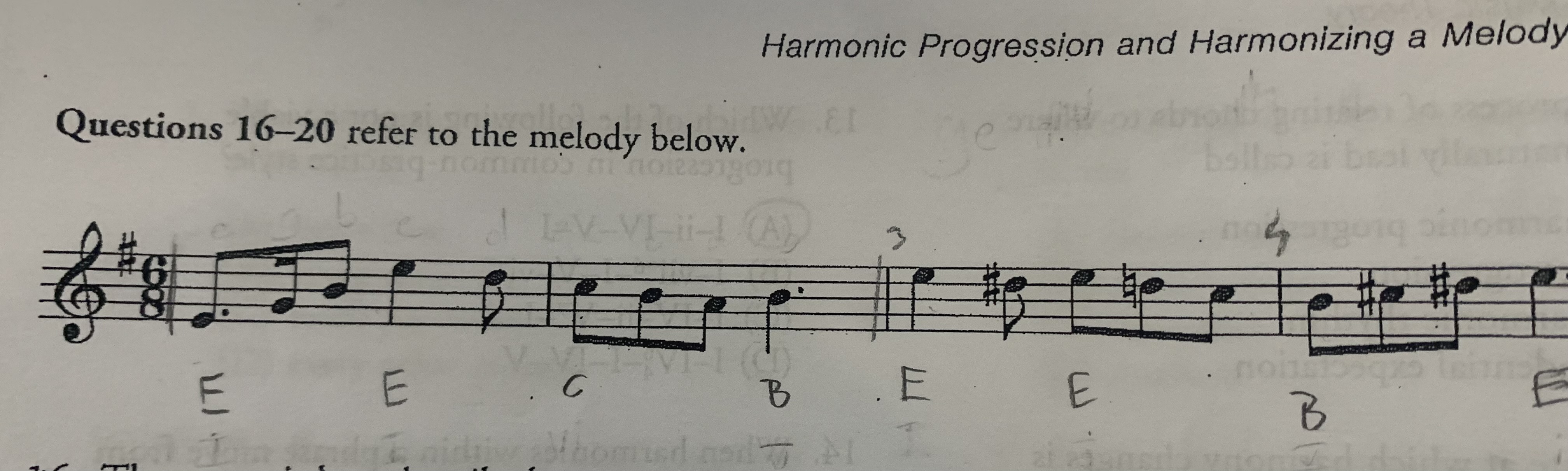
Which scale pattern is used in measures 3 and 4?
C) Melodic minor
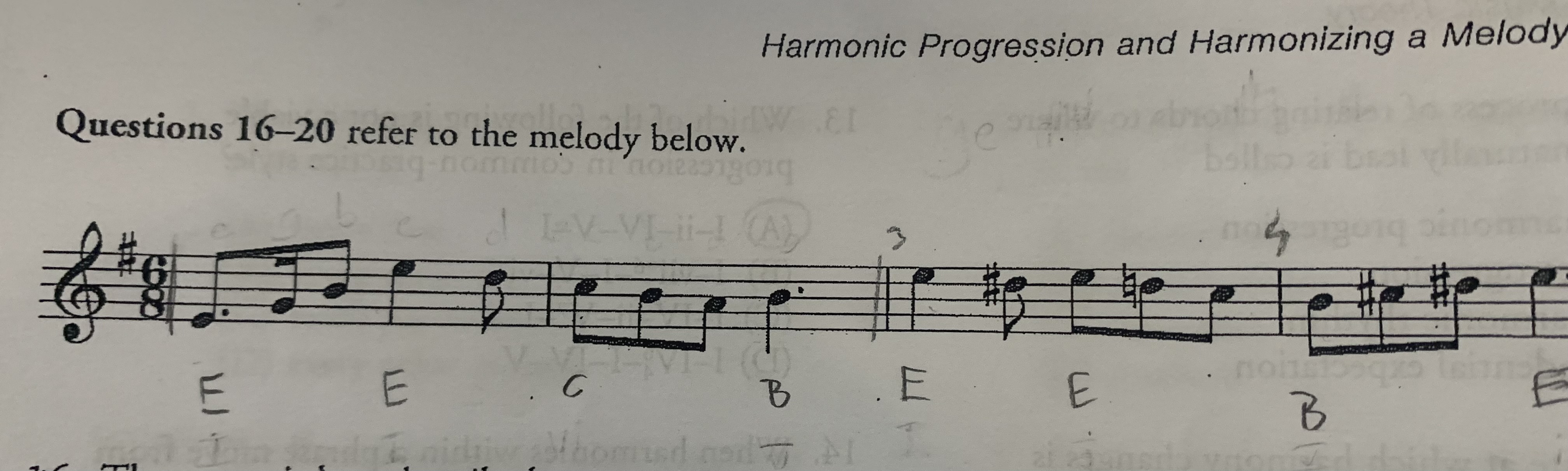
Measure 1 is described as all of the following except
C) the most conjunct of the four measures
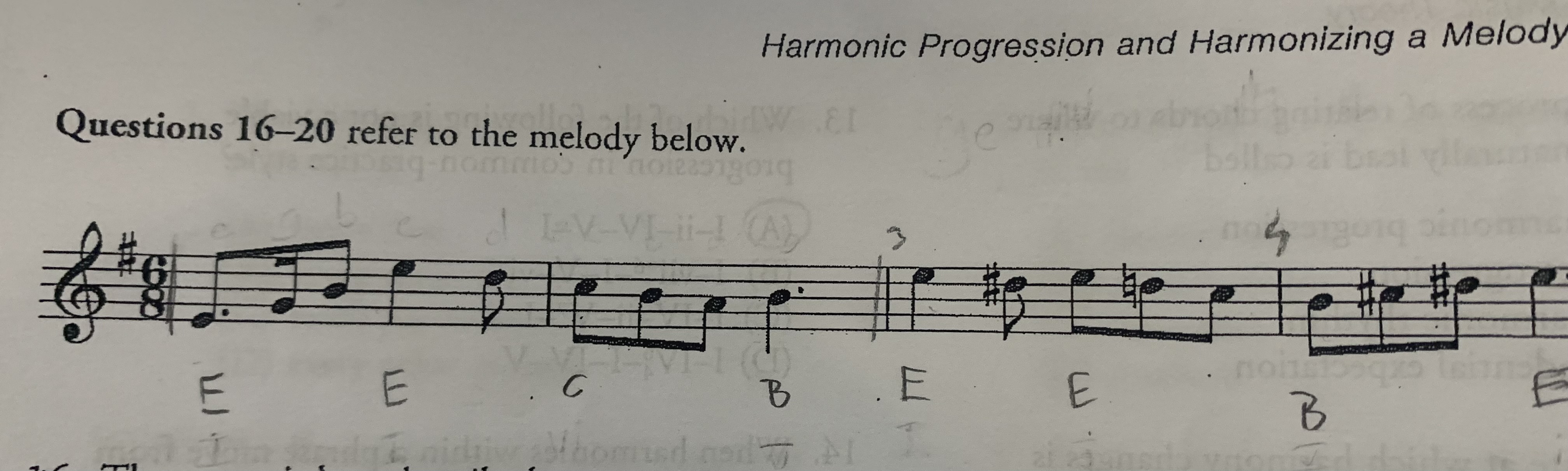
Which harmonic pattern works best under the melody in measures 1 and 2?
C) i—VI—ii°—V
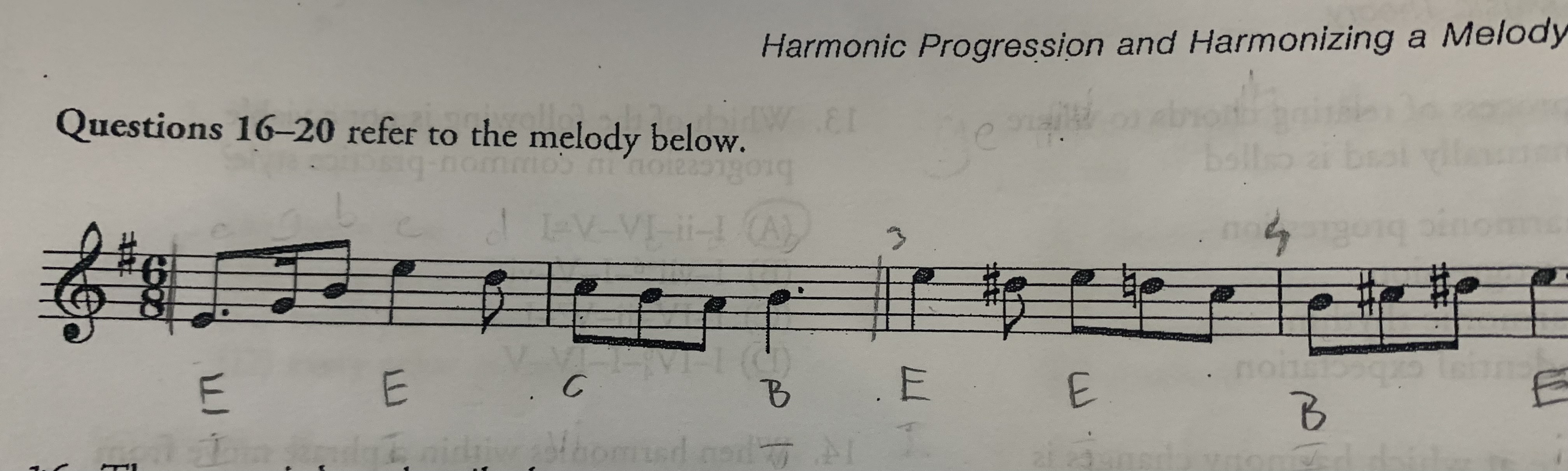
A cadence occuring at the end of measure 2 would be
A) Half