Microbio LAB QUIZ 3 REVIEW

0.0(0)
Studied by 1 person
call kaiCall Kai
learnLearn
examPractice Test
spaced repetitionSpaced Repetition
heart puzzleMatch
flashcardsFlashcards
GameKnowt Play
Card Sorting

1/24

encourage image

There's no tags or description

Looks like no tags are added yet.

Last updated 12:31 AM on 4/22/26
Name
Mastery
Learn
Test
Matching
Spaced
Call with Kai

No analytics yet

Send a link to your students to track their progress

25 Terms

1
New cards

What is selective media?

Contains chemicals that PREVENT the growth of the desired bacteria without inhibiting the growth of the desired bacteria.

2
New cards

What is enrichment media?

Contains chemicals that ENHANCE the growth of the desired bacteria, other bacteria will grow, but the growth of the desired bacteria will be increased.

3
New cards

What is differential media?

Contains various nutrients that allow us to distinguish one bacteria from another based on how they metabolize.
4
New cards
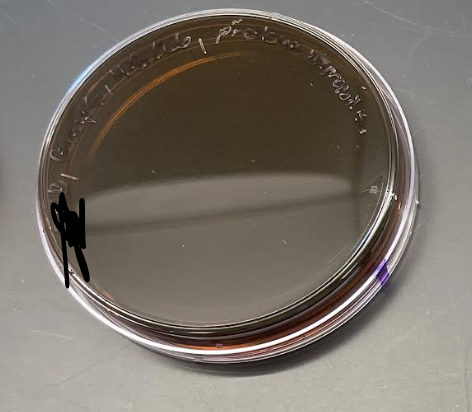
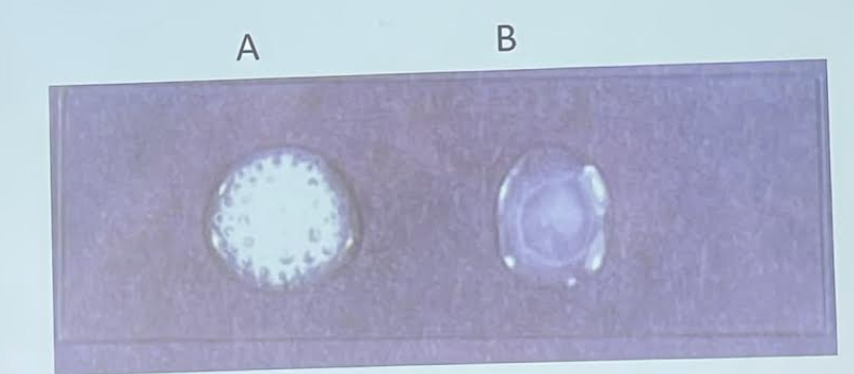
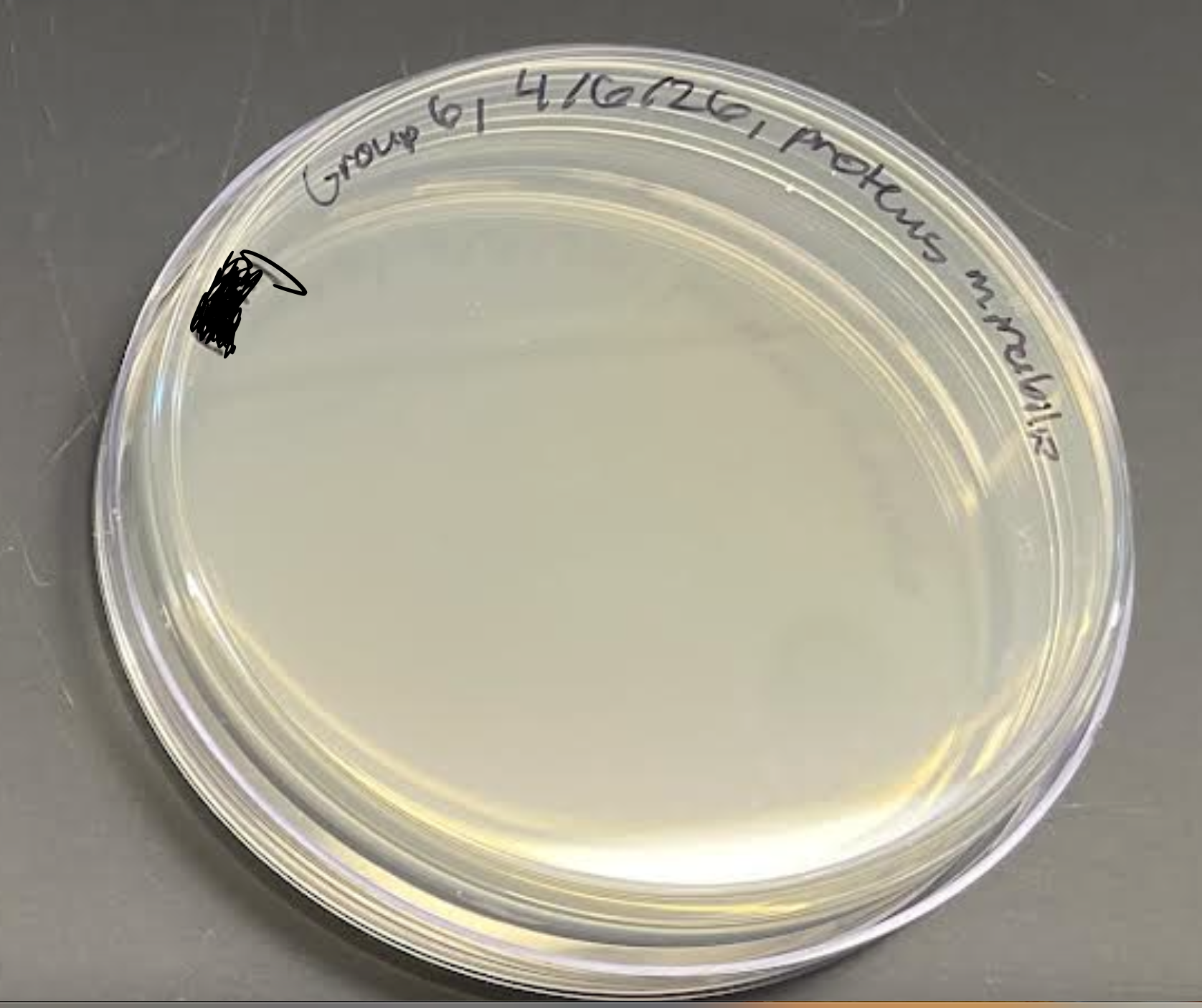
<p>What is this plate’s name, selective agent, results and everything about it?</p>

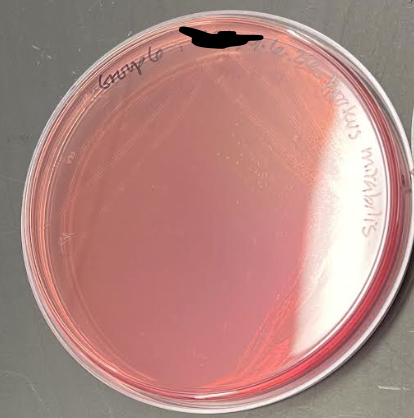
What is this plate’s name, selective agent, results and everything about it?

Name: Phenylethyl Alcohol Agar Plate(PEA)

  • SELECTIVE AGENT: Phenylethyl Alcohol

  • Disrupts membrane —> P(phosphorus) leaks out

  • —→ stops DNA synthesis

  • SELECTS FOR: Gram (+) bacteria

  • RESULTS: Growth = Gram (+), No Growth = Gram (-)
5
New cards
<p>What is the plate’s name, selective agent, selects for, differential agents, differentiates between, and everything about it?</p>

What is the plate’s name, selective agent, selects for, differential agents, differentiates between, and everything about it?

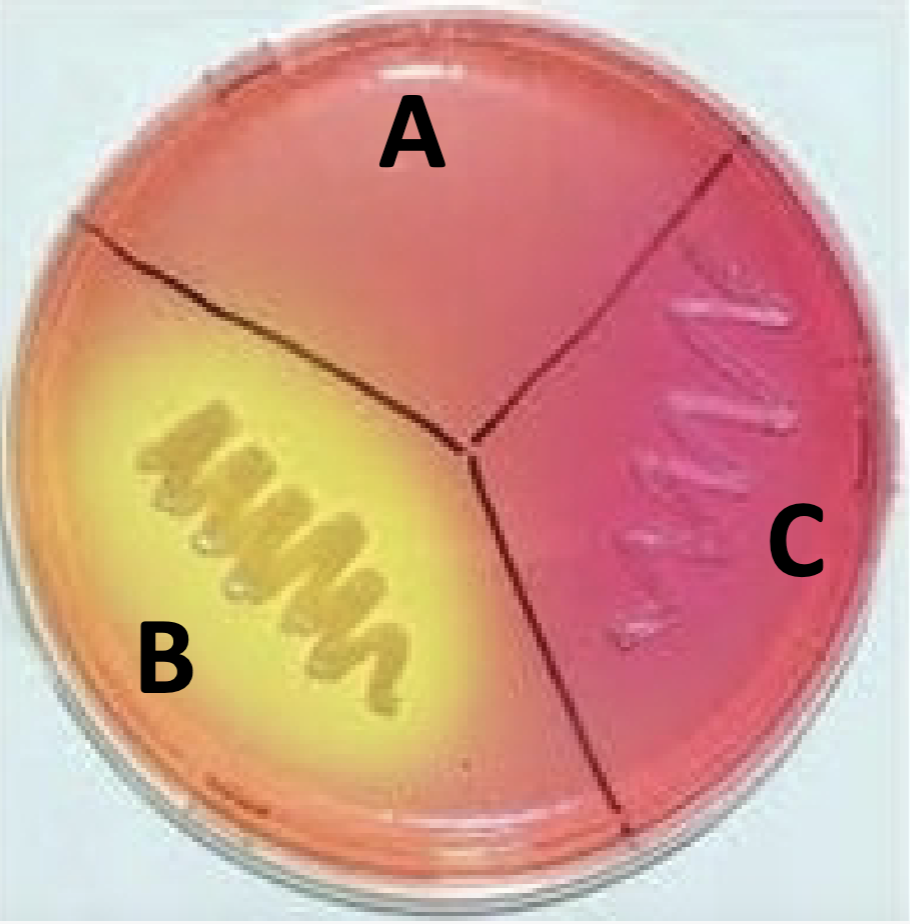
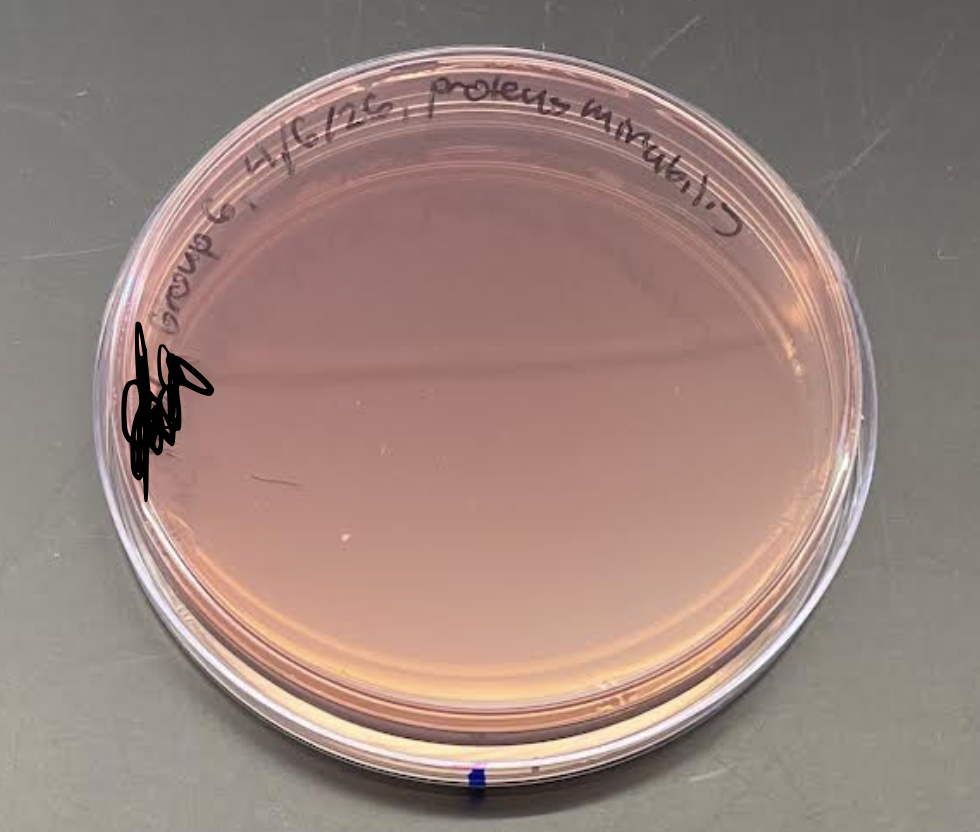
Name: Mannitol Salt Agar(MSA)

SELECTIVE AGENT: 7.5% NaCl

SELECTS FOR: salt tolerant bacteria (halophiles)

DIFFERENTIAL AGENTS:

1. Mannitol: fermentable sugar

2. Phenol Red: pH indicator

- Acidic = yellow

- Neutral = red

- Basic = shocking pink (like a fuschia)

DIFFERENTIATES BETWEEN:

- Mannitol fermentors: yellow around the colony(halo)

- Non-mannitol fermentors: red or shocking pink around the colony

Extra info: WHEN AN ORG IS NOT SALT TOLERANT WE CAN’T TELL IF IT IS MANNITOL OR NON-MANNITOL, JUST THAT IT’S NON-SALT TOLERANT
<p><strong>Name:</strong> Mannitol Salt Agar(MSA)</p><p><strong>SELECTIVE AGENT:</strong> 7.5% NaCl</p><p><strong>SELECTS FOR</strong>: salt tolerant bacteria (halophiles)</p><p><strong>DIFFERENTIAL AGENTS</strong>:</p><p>1<u>. Mannitol: </u>fermentable sugar</p><p><u>2. </u><span style="color: red;"><u>Phenol Red:</u></span><u> </u>pH indicator</p><p>- Acidic = <mark data-color="#d5d714" style="background-color: rgb(213, 215, 20); color: inherit;">yellow</mark></p><p>- Neutral = <span style="color: red;">red</span></p><p>- Basic = <span style="color: rgb(210, 27, 224);">shocking pink</span> (like a fuschia)</p><p><strong>DIFFERENTIATES BETWEEN:</strong></p><p>- <u>Mannitol fermentors</u>:<mark data-color="#e9d91b" style="background-color: rgb(233, 217, 27); color: inherit;"> yellow </mark>around the colony(halo)</p><p>- <u>Non-mannitol fermentors</u>: <span style="color: red;">red </span>or <span style="color: rgb(247, 14, 243);">shocking pink</span> around the colony</p><p>Extra info: WHEN AN ORG IS NOT SALT TOLERANT WE CAN’T TELL IF IT IS MANNITOL OR NON-MANNITOL, JUST THAT IT’S NON-SALT TOLERANT</p><p></p>
6
New cards
<p>What is the plate’s name, selective agents, select for, differential agents, differentiates between, and everything about it?</p>

What is the plate’s name, selective agents, select for, differential agents, differentiates between, and everything about it?

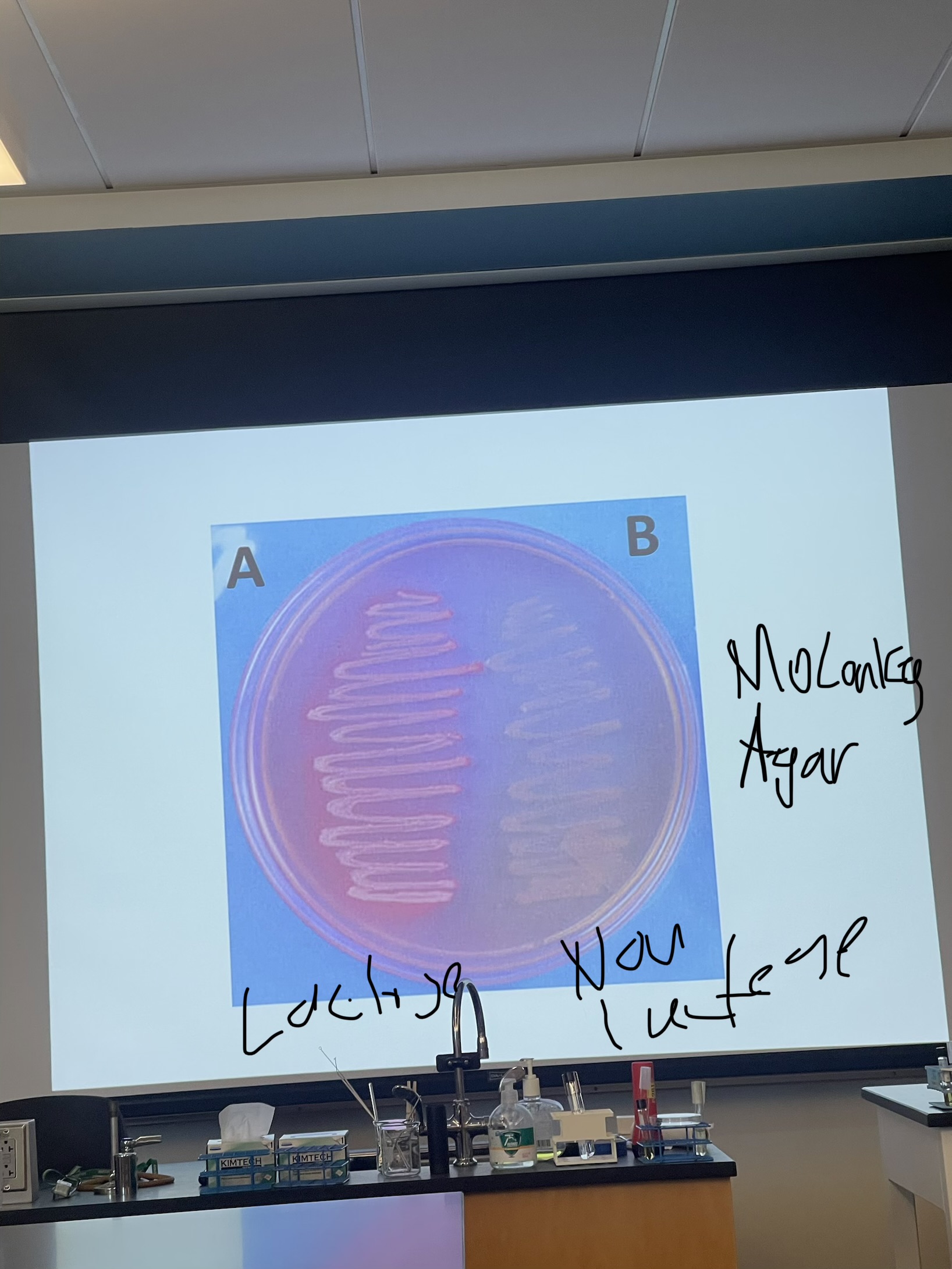
Name: MaConkey Agar(MAC) Plate)

SELECTIVE AGENTS:

  1. Bile Salts: Inhibits Gram (+) bacteria

  2. Crystal Violet: inhibits Gram (+)

SELECTS FOR: Gram (-) bacteria

DIFFERENTIAL AGENTS:

  1. Lactose: fermentable sugar

  2. Neutral Red: pH indicator

  • Neutral or basic = colorless

  • Acidic = red

DIFFERENTIATES BETWEEN:

  • Lactose fermentors: colonies turn a shade of red (or possibly pink)

  • Non-lactose fermentors: colonies remain opaque or colorless

ALWAYS TRUST MaConkey AND IF THERE’S NO GROWTH = GRAM(+) NOTHING ELSE
<p><strong>Name: </strong>MaConkey Agar(MAC) Plate)</p><p><strong>SELECTIVE AGENTS:</strong></p><ol><li><p><u>Bile Salts: </u>Inhibits Gram (+) bacteria</p></li><li><p><u>Crystal Violet: </u>inhibits Gram (+)</p></li></ol><p><strong>SELECTS FOR: </strong>Gram (-) bacteria</p><p><strong>DIFFERENTIAL AGENTS:</strong></p><ol><li><p><u>Lactose: </u>fermentable sugar</p></li><li><p><u>Neutral Red: </u>pH indicator</p></li></ol><ul><li><p>Neutral or basic = colorless</p></li><li><p>Acidic = <span style="color: red;">red</span></p></li></ul><p><strong>DIFFERENTIATES BETWEEN:</strong></p><ul><li><p><u>Lactose fermentors: </u>colonies turn a shade of <span style="color: red;">red</span> (or possibly <span style="color: rgb(202, 24, 204);">pink)</span></p></li><li><p><u>Non-lactose fermentors: </u>colonies remain opaque or colorless</p></li></ul><p>ALWAYS TRUST MaConkey AND IF THERE’S NO GROWTH = GRAM(+) NOTHING ELSE</p>
7
New cards
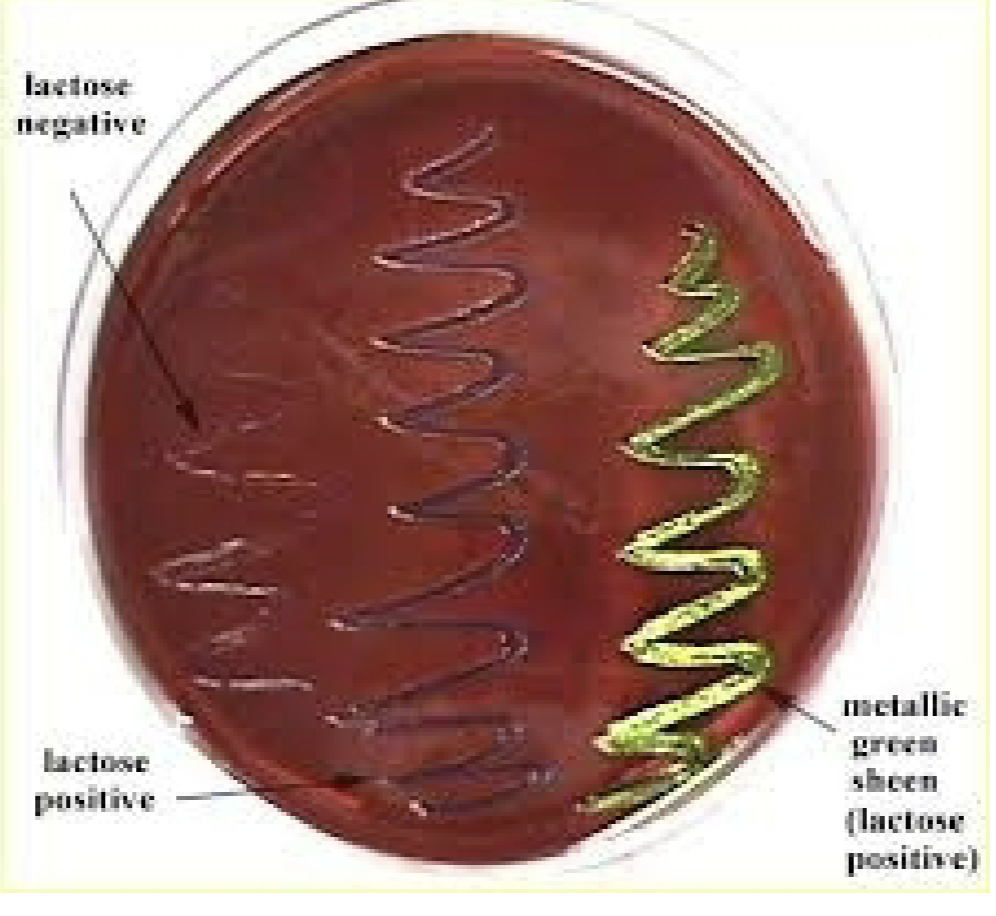
<p>What is the plate’s name, selective agents, select for, differential agents, differentiates between, everything about it?</p>

What is the plate’s name, selective agents, select for, differential agents, differentiates between, everything about it?

Name: Eosin Methylene Blue Agar (EMB) - has a dark jolly rancher purple

SELECTIVE AGENT:

  1. Eosin

  2. Methylene Blue

SELECTS FOR: Gram (-) bacteria

DIFFERENTIAL AGENTS:

  • Lactose: fermentable sugar

  • Eosin

  • Methylene Blue

  1. Lactose fermentors: colonies are dark purple, and leads to a green metallic sheen(metal looking green)

  2. Non-lactose fermentors: colonies are colorless or pink

Extra info:

MAC is still more accurate

  • Gram (+) if it didn’t grow at all

<p><strong>Name: </strong>Eosin Methylene Blue Agar (EMB) - has a dark jolly rancher purple</p><p><strong>SELECTIVE AGENT:</strong></p><ol><li><p>Eosin</p></li><li><p>Methylene Blue</p></li></ol><p><strong>SELECTS FOR: </strong>Gram (-) bacteria</p><p><strong>DIFFERENTIAL AGENTS:</strong></p><ul><li><p><u>Lactose: </u>fermentable sugar</p></li><li><p><u>Eosin</u></p></li><li><p><u>Methylene Blue</u></p></li></ul><ol><li><p><u>Lactose fermentors: </u>colonies are <span style="color: rgb(105, 4, 155);">dark purple</span>, and leads to a <span style="color: rgb(59, 218, 26);">green metallic sheen</span>(metal looking green)</p></li><li><p><u>Non-lactose fermentors: </u>colonies are colorless or <span style="color: rgb(186, 40, 213);">pink</span></p></li></ol><p>Extra info:</p><p>MAC is still more accurate</p><ul><li><p>Gram (+) if it didn’t grow at all</p></li></ul><p></p>
8
New cards
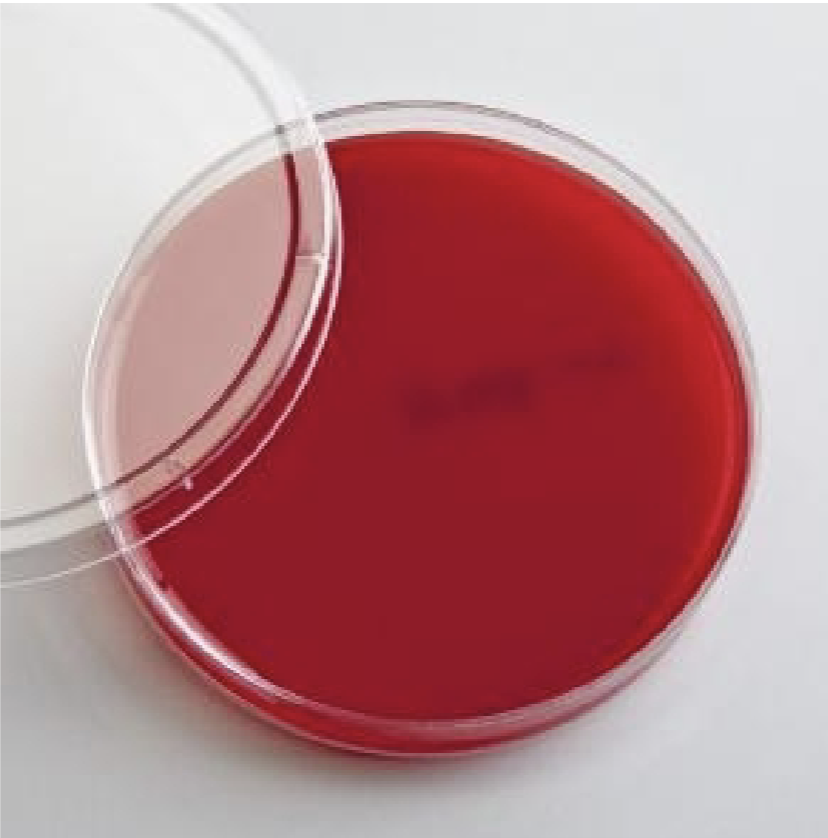
<p>What is the plate’s name, differentiates between, everything about it?</p>

What is the plate’s name, differentiates between, everything about it?

Name: Blood Agar Plate(BAP) - red, blood color

ENRICHED WITH: 5% defibrinated sheep blood

DIFFERENTIAL AGENT: 5% defibrinated sheep blood

DIFFERENTIATES BETEWEEN:

  1. Beta-hemolysis: complete hemolysis (meaning there is a clear zone around the colony).

  2. Alpha-hemolysis: partial hemolysis (meaning it is cloudy or green around the colony)

  3. Gamma-hemolysis: no hemolysis, no change around colony.

TRICK TO RMB: Beta = bad, Alpha = alright, and Gamma = good.

  • Hold up to light to see how to differentiate the results.

STUDY RESULTS FROM LAB MANUAL PAGE AROUND 100 SOMETHING, and extra pictures taken from his review.
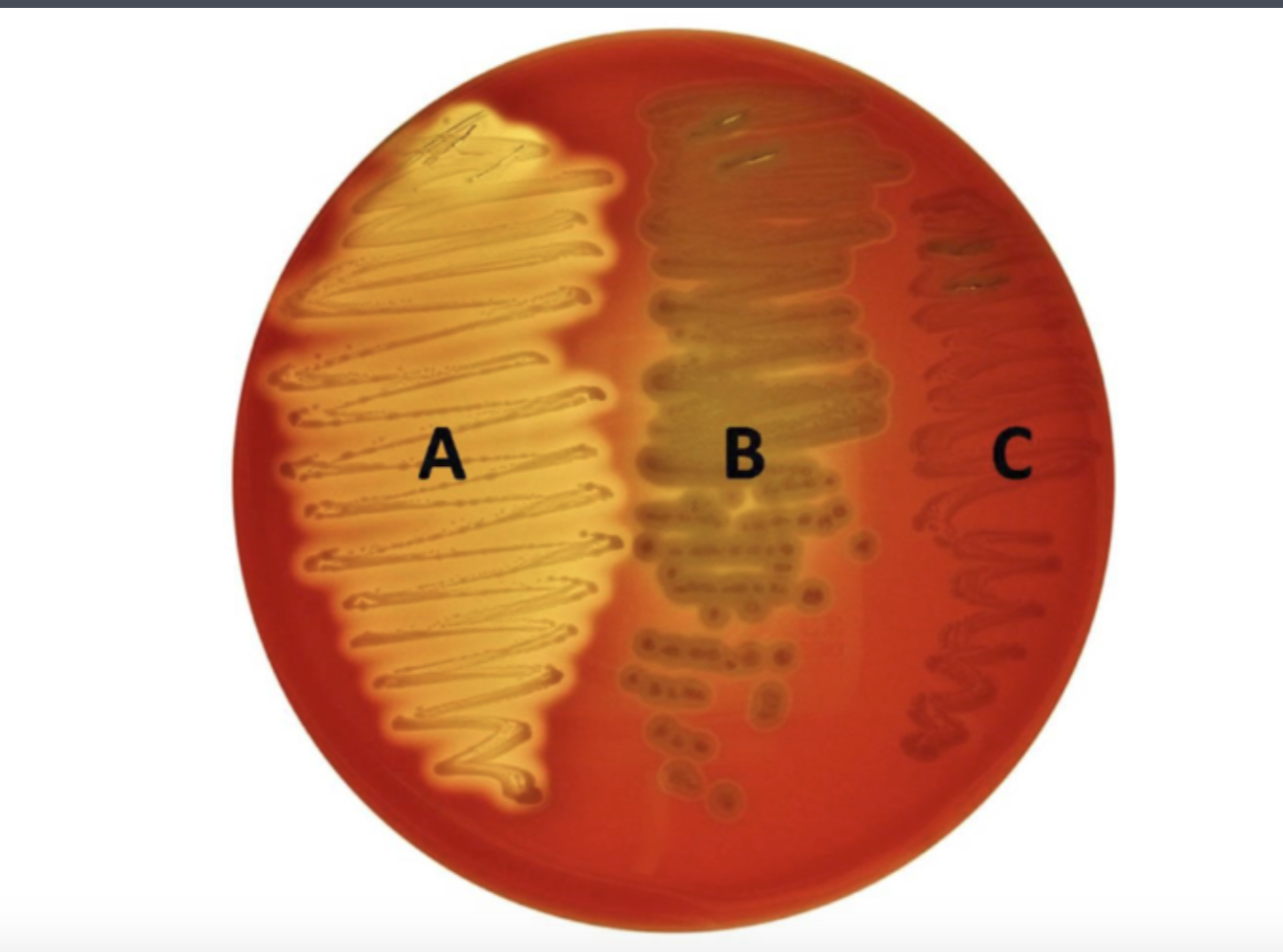
<p><strong>Name: </strong>Blood Agar Plate(BAP) - red, blood color</p><p><strong>ENRICHED WITH: </strong>5% defibrinated sheep blood</p><p><strong>DIFFERENTIAL AGENT: </strong>5% defibrinated sheep blood</p><p><strong>DIFFERENTIATES BETEWEEN:</strong></p><ol><li><p><u>Beta-hemolysis: </u>complete hemolysis (meaning there is a clear zone around the colony).</p></li><li><p><u>Alpha-hemolysis: </u>partial hemolysis (meaning it is cloudy or green around the colony)</p></li><li><p><u>Gamma-hemolysis: </u>no hemolysis, no change around colony.</p></li></ol><p><mark data-color="#NaNNaNNaN" style="color: inherit;">TRICK TO RMB: </mark>Beta = bad, Alpha = alright, and Gamma = good.</p><ul><li><p>Hold up to light to see how to differentiate the results.</p></li></ul><p>STUDY RESULTS FROM LAB MANUAL PAGE AROUND 100 SOMETHING, and extra pictures taken from his review.</p>
9
New cards

What are enzymes and the two different types?

DEFINITION: Are proteins that catalyze biological reactions

  1. Endoenzymes: function inside the cell

  2. Exoenzymes: function outside the cell(so they’re released from the cell to catalyze reactions out of the cell
10
New cards
<p>What is the plate used here, what kind of test is conducted, media, inoculation guide, incubation, theory, results, and everything else about it?</p>

What is the plate used here, what kind of test is conducted, media, inoculation guide, incubation, theory, results, and everything else about it?

Name: Casein Hydrolysis Test

EXOENZYME TESTED: Caseinase

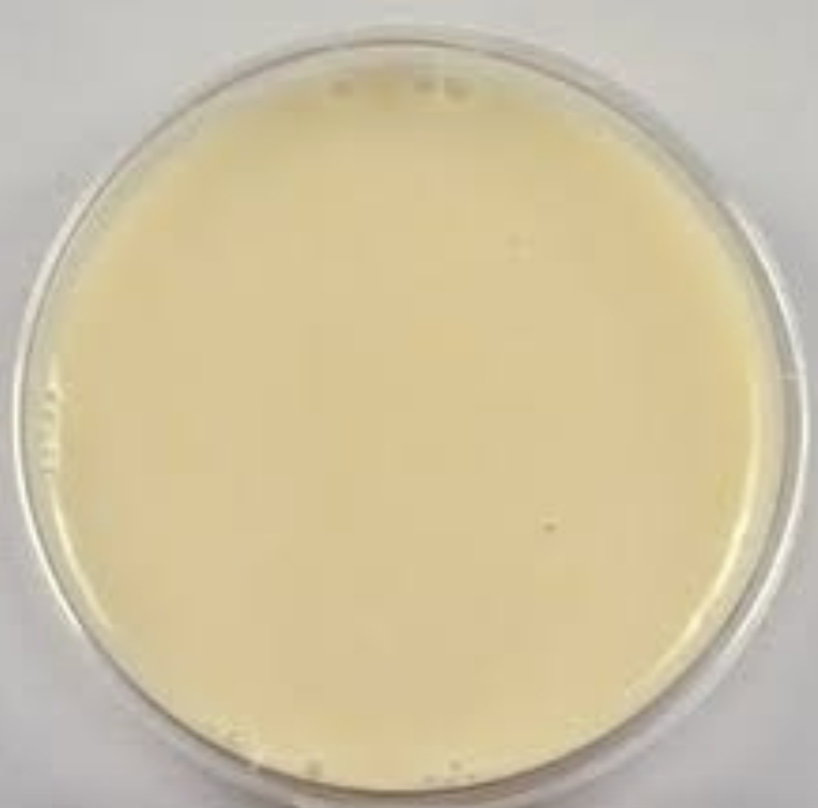
MEDIA: Skim milk agar(is like a milk color on plate)

INOCULATION GUIDE: loopful streak

INCUBATION: 37°C for 48 hrs

Theory:

Casein(substrate, white) ——→ caseinase —> amino acids(clear, broke down into this)

RESULTS:

(+): clear around the growth (since you released casein to be around you)

(-): white around the growth

REVIEW TABLE’S LAB RESULT PLATE TOO
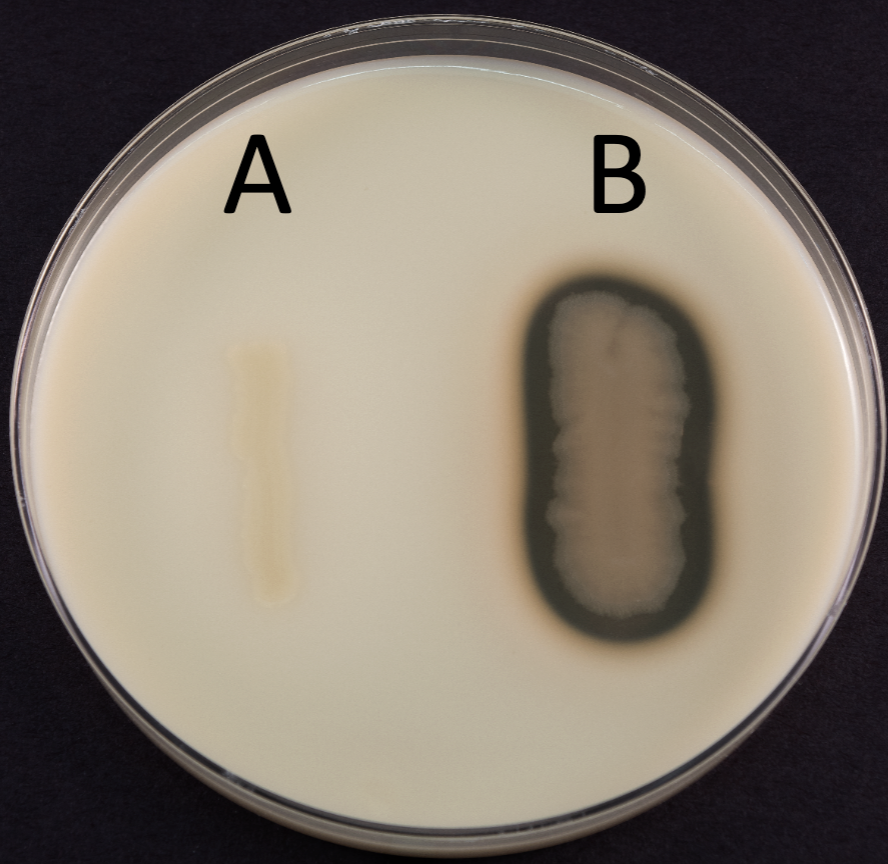
<p><strong>Name: </strong>Casein Hydrolysis Test</p><p><strong>EXOENZYME TESTED: </strong>Caseinase</p><p><strong>MEDIA: </strong>Skim milk agar(is like a milk color on plate)</p><p><strong>INOCULATION GUIDE: </strong>loopful streak</p><p><strong>INCUBATION: </strong>37°C for 48 hrs</p><p><strong>Theory:</strong></p><p>Casein(substrate, white) ——→ caseinase —&gt; amino acids(clear, broke down into this)</p><p><strong>RESULTS:</strong></p><p>(+): clear around the growth (since you released casein to be around you)</p><p>(-): white around the growth</p><p>REVIEW TABLE’S LAB RESULT PLATE TOO</p>
11
New cards
<p>What is the plate used here, what kind of test is conducted, media, incoulation, incubation, theory, results and everything else about it?</p>

What is the plate used here, what kind of test is conducted, media, incoulation, incubation, theory, results and everything else about it?

Name: Starch Hydrolysis Test

EXOENZYME TESTED: amylase

MEDIA: Starch agar plate

INOCULATION GUIDE: loopful streak

*After incubation: add iodine over the plate(this will bind to the starch)

INCUBATION: 37°C for 48 hrs

THEORY:

Starch —→ amylase —> simple sugars(is broken down into this)

*Add iodine: starch = blue/black, simple sugar = yellow

RESULTS:

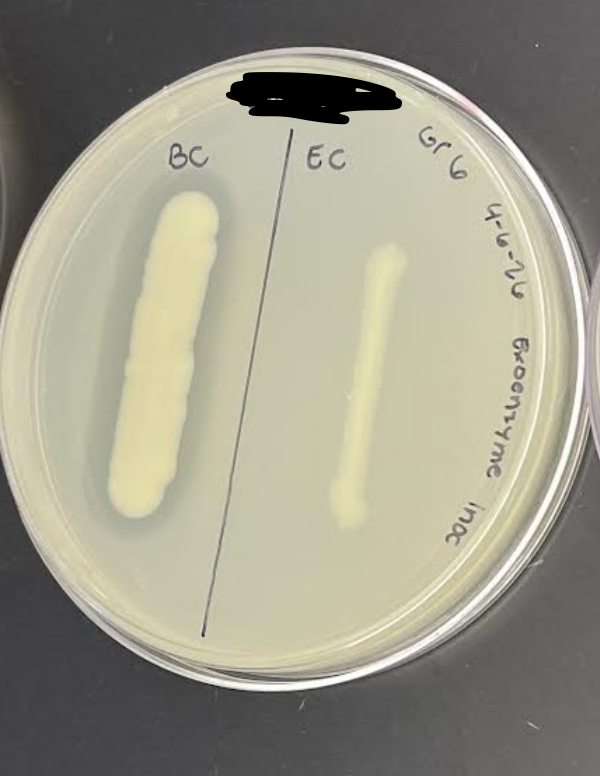
(+): yellow around growth (like a halo)

(-): blue/black around growth

Extra info:

  • BC = postive because it is yellow around

  • EC lights up, but not positive

WE ALWAYS LOOK AROUND THE COLONY, LIGHTING UP DOESN’T MATTER.
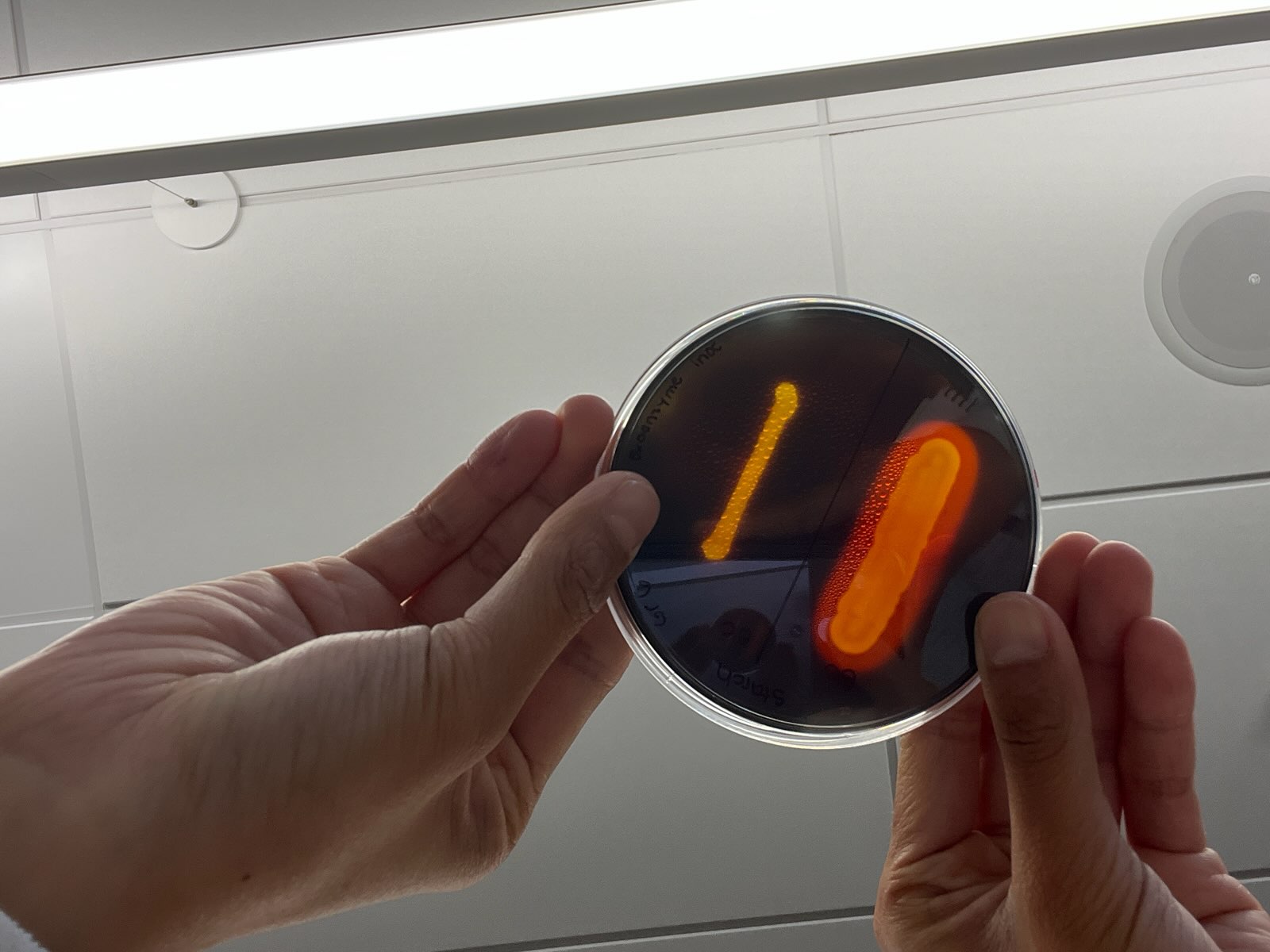
<p><strong>Name: </strong>Starch Hydrolysis Test</p><p><strong>EXOENZYME TESTED: </strong>amylase</p><p><strong>MEDIA: </strong>Starch agar plate</p><p><strong>INOCULATION GUIDE: </strong>loopful streak</p><p>*<span style="color: rgb(200, 29, 29);"><strong>After incubation:</strong> </span><span style="color: rgb(16, 13, 13);">add iodine over the plate(this will bind to the starch)</span></p><p><span style="color: rgb(16, 13, 13);"><strong>INCUBATION: </strong>37°C for 48 hrs</span></p><p><span style="color: rgb(16, 13, 13);"><strong>THEORY:</strong></span></p><p><span style="color: rgb(16, 13, 13);">Starch —→ amylase —&gt; simple sugars(is broken down into this)</span></p><p><span style="color: rgb(16, 13, 13);">*</span><span style="color: rgb(225, 19, 19);"><strong>Add iodine: </strong></span><span style="color: rgb(1, 1, 1);">starch </span><span style="color: rgb(225, 19, 19);">=</span><span style="color: rgb(18, 152, 224);"> blue</span><span style="color: rgb(0, 0, 0);">/black,</span><span style="color: rgb(225, 19, 19);"> </span><span style="color: rgb(12, 10, 10);">simple sugar = </span><span style="color: rgb(23, 17, 17);"><mark data-color="#e7bf1d" style="background-color: rgb(231, 191, 29); color: inherit;">yellow</mark></span></p><p><span style="color: rgb(23, 17, 17);"><strong>RESULTS:</strong></span></p><p><span style="color: rgb(23, 17, 17);">(+): <mark data-color="#e2cc10" style="background-color: rgb(226, 204, 16); color: inherit;">yellow </mark><mark data-color="yellow" style="background-color: yellow; color: inherit;">a</mark>round growth (like a halo)</span></p><p><span style="color: rgb(23, 17, 17);">(-): </span><span style="color: rgb(19, 192, 237);">blue</span><span style="color: rgb(23, 17, 17);">/</span><span style="color: rgb(10, 8, 8);">black</span><span style="color: rgb(23, 17, 17);"> around growth</span></p><p></p><p><span style="color: rgb(23, 17, 17);">Extra info:</span></p><ul><li><p><span style="color: rgb(23, 17, 17);"><strong>BC = postive because it is yellow around</strong></span></p></li><li><p><span style="color: rgb(23, 17, 17);"><strong>EC lights up, but not positive</strong></span></p></li></ul><p>WE ALWAYS LOOK AROUND THE COLONY, LIGHTING UP DOESN’T MATTER.</p><p></p><p></p><p></p><p></p>
12
New cards
<p>What is the test name, purpose, application, media, theory and everything else about it?</p>

What is the test name, purpose, application, media, theory and everything else about it?

Name: Catalase Test

PURPOSE: to determine if your organism has the enzyme catalase(meaning it breaks down hydrogen peroxide)

APPLICATION: differentiates GPC (gram (+) cocci)

  • (+): Staphylococcus and Micrococcus

  • (-): Streptococcus and Enterococcus

MEDIA: TSA plate

INOCULATING GUIDE: loopful streak (could do a quadrant or just one line)

INCUBATION: 37°C for 48 hrs

THEORY:

2H2O2(substrate,hydrogen peroxide) —> catalase —> 2H2O + O2 (bubbles)

*After incubation: use a toothpick to put the bacteria on a slide

  • Add 1 drop of H2O2(hydrogen peroxide)

RESULTS:

(+): bubbles

(-): no bubbles
13
New cards
<p>What is the the test name, purpose, media, theory, and everything else about it?</p>

What is the the test name, purpose, media, theory, and everything else about it?

Name: Oxidase Test

PURPOSE: to determine, if your organism has the enzyme cytochrome C oxidase.

MEDIA: TSA plate

INOCULATING GUIDE: loopful streak

INCUBATE: 37°C for 48 hrs

THEORY:

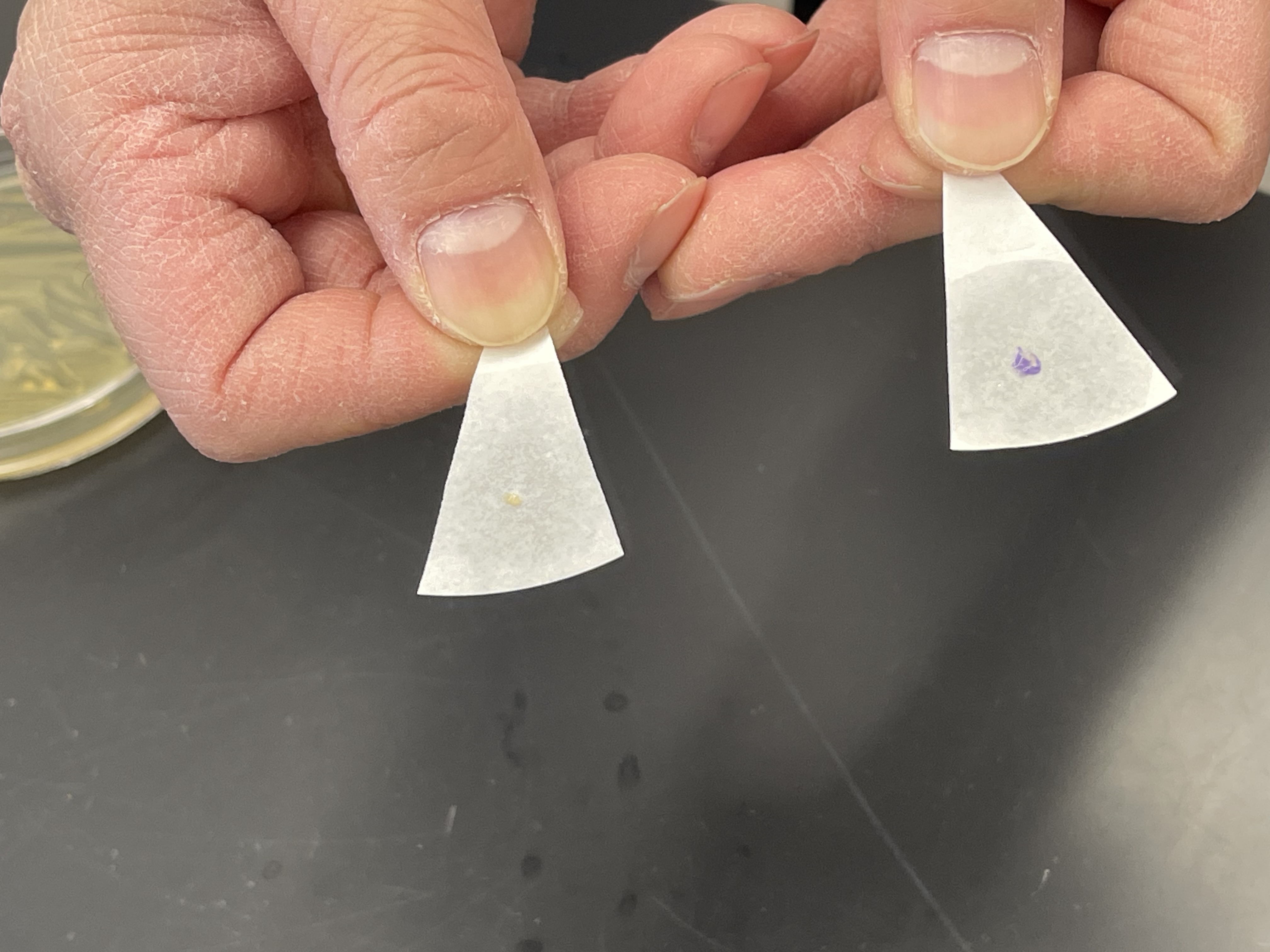
  • After incubation, use a toothpick to put the bacteria on a piece of filter paper

  • Add 1 drop of oxidase reagent(this will detect cytochrome C oxidase)

RESULTS:

(+): purple (within 30 seconds)

(-): color of the bacteria
14
New cards
<p>What is the test name, purpose, media used, theory and everything about it?</p>

What is the test name, purpose, media used, theory and everything about it?

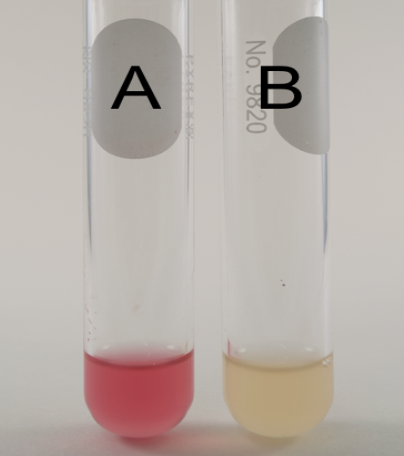
Name: Sugar Fermentation Test

PURPOSE: to determine if your organism ferments in desired sugar into an acid or acid and gas(or not at all).

MEDIA: PR(Phenol Red) _________ broth (blank means it depends on what carbohydrate is there)

  • Fermentable sugar (depends on what the sugar is)

  • Phenol Red: pH indicator

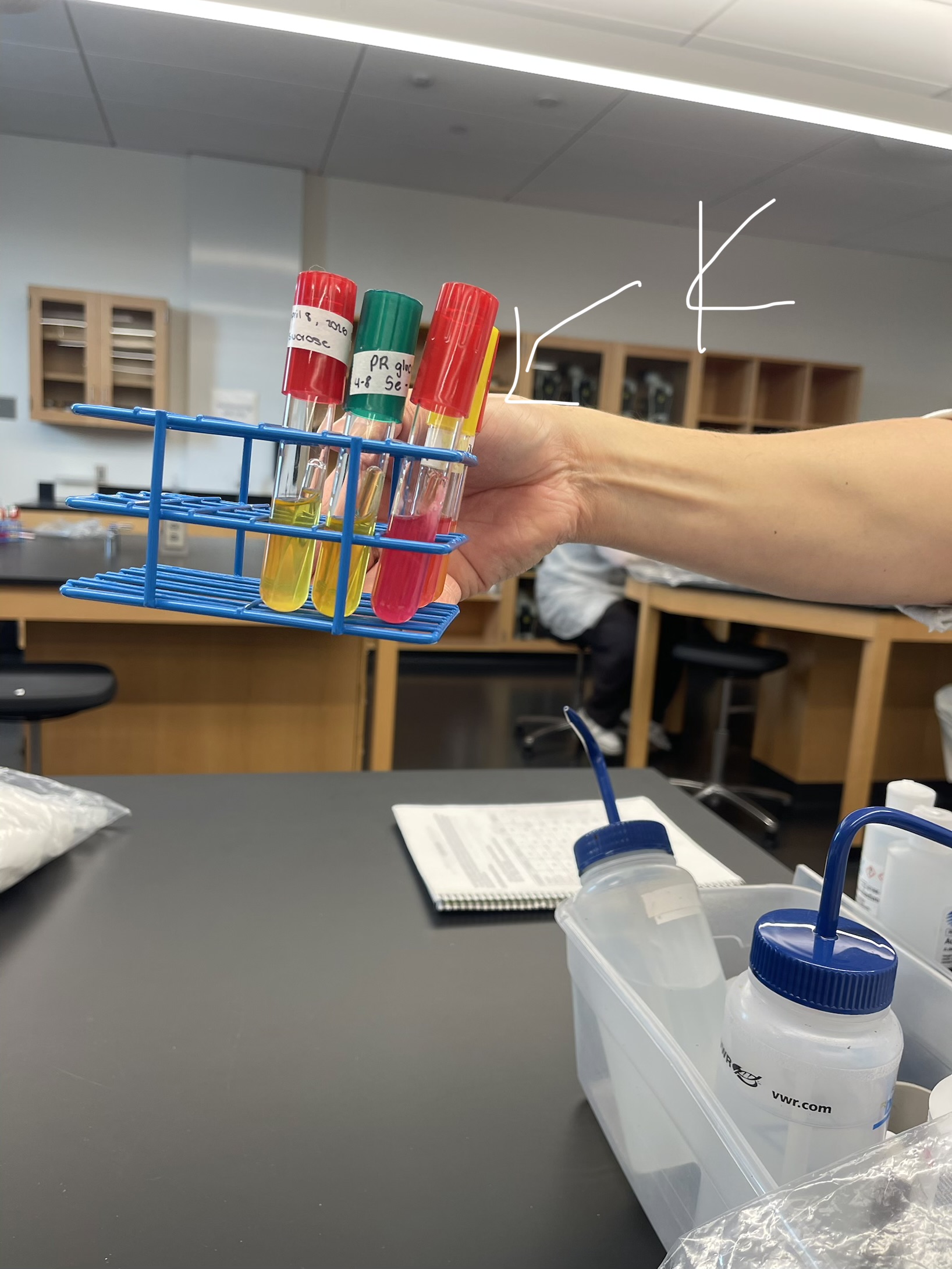
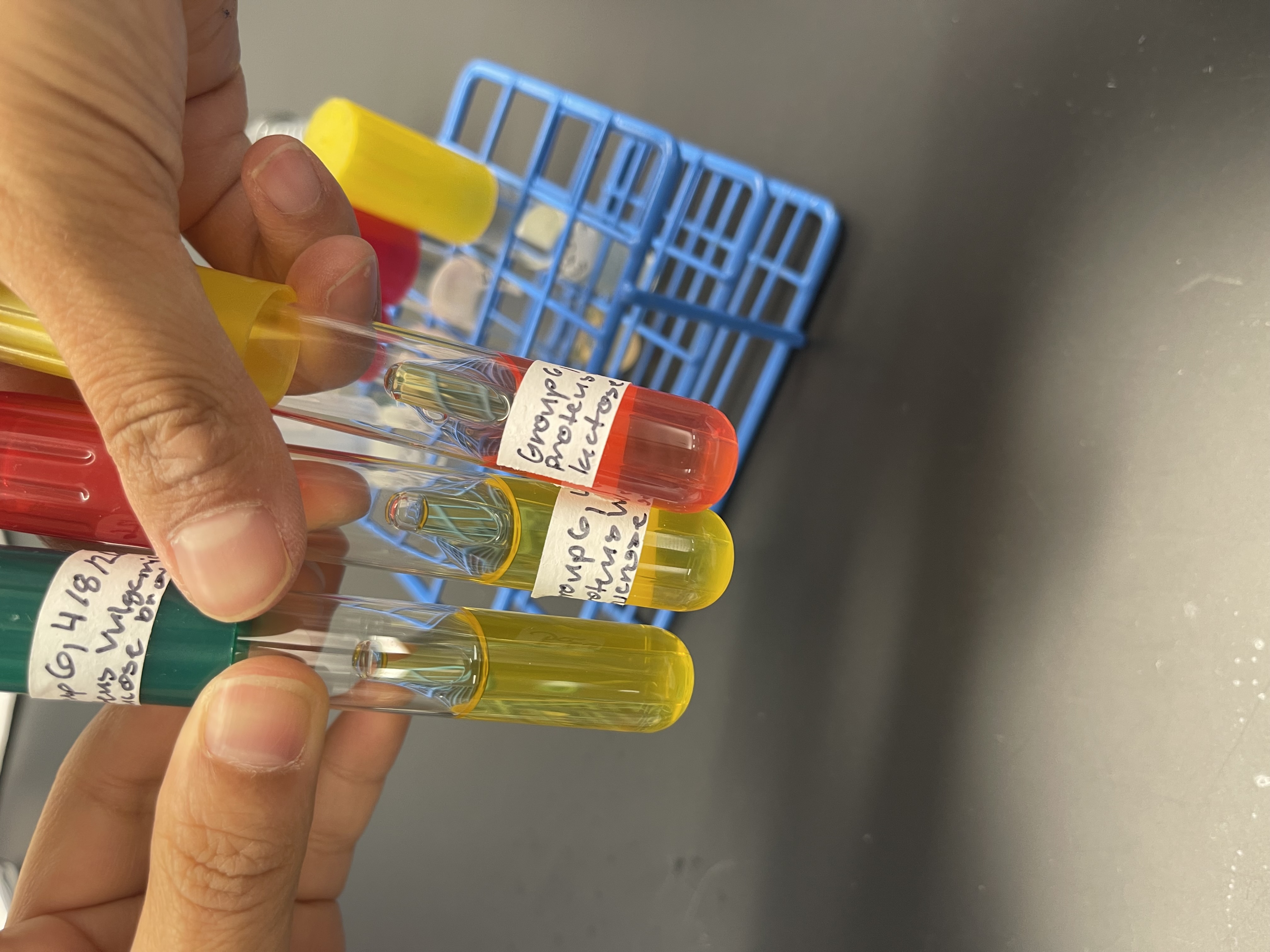
Acidic = yellow

Neutral = red

Basic = shocking pink

  • Durham tube: traps gas(upside down glass tube, red cap, gas accumulates inside tube producing a bubble).

INOCULATION GUIDE: loopful incoculation

INCUBATION: 37°C for 48 hrs

THEORY:

Sugar is fermented —> acid (reacts with Phenol Red)

RESULTS:

(+) For Acid ONLY: yellow tube, no gas bubble

(+) For Acid and Gas: yellow tube, gas bubble

(-) For Acid and Gas: red or shocking pink tube, no gas bubble.
<p><strong>Name: </strong>Sugar Fermentation Test</p><p><strong>PURPOSE: </strong>to determine if your organism ferments in desired sugar into an acid or acid and gas(or not at all).</p><p><strong>MEDIA: </strong>PR(Phenol Red) _________ broth (blank means it depends on what carbohydrate is there)</p><ul><li><p>Fermentable sugar (depends on what the sugar is)</p></li><li><p><span style="color: rgb(215, 36, 36);">Phenol Red</span>: pH indicator</p></li></ul><p>Acidic =<mark data-color="#dac32b" style="background-color: rgb(218, 195, 43); color: inherit;"> </mark><span style="color: rgb(0, 0, 0);"><mark data-color="#dac32b" style="background-color: rgb(218, 195, 43); color: inherit;">yellow</mark></span></p><p>Neutral = <span style="color: red;">red</span></p><p>Basic = <span style="color: rgb(222, 15, 199);">shocking pink</span></p><ul><li><p>Durham tube: traps gas(upside down glass tube, red cap, gas accumulates inside tube producing a bubble).</p></li></ul><p><strong>INOCULATION GUIDE: </strong>loopful incoculation</p><p><strong>INCUBATION: </strong>37°C for 48 hrs</p><p><strong>THEORY:</strong></p><p>Sugar is fermented —&gt; acid (reacts with <span style="color: red;">Phenol Red</span>)</p><p><strong>RESULTS:</strong></p><p>(+) <u>For Acid ONLY: </u><mark data-color="#e1d11a" style="background-color: rgb(225, 209, 26); color: inherit;">yellow </mark>tube, no gas bubble</p><p>(+) <u>For Acid and Gas: </u><mark data-color="#ece82f" style="background-color: rgb(236, 232, 47); color: inherit;">yellow </mark>tube, gas bubble</p><p>(-) <u>For Acid and Gas: </u><span style="color: red;">red</span> or <span style="color: rgb(253, 9, 248);">shocking pink tube</span>, no gas bubble.</p>
15
New cards

What are the two different lactose fermentors, and what is a late lactose fermentor?

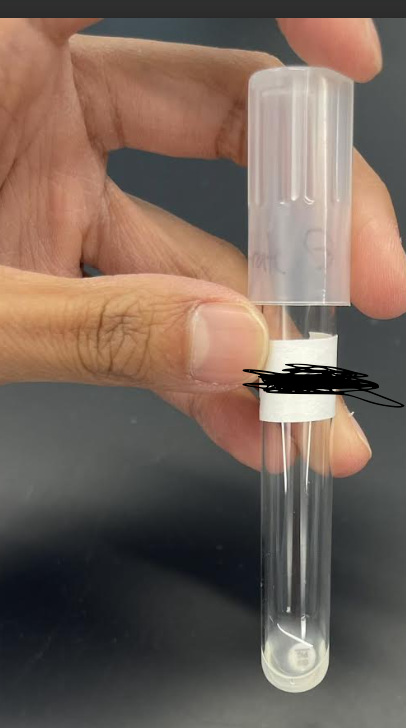
Requires 2 enzymes:

  • B-galactoside permease(beta-galactoside permease): allows lactose to enter the cell

  • B-galactosidase:(beta-galactosidase): breaks lactose —> glucose and galactose forms.

Late lactose fermentors: ONLY have B-galactosidase.
16
New cards
<p>What is the test name, purpose, media used, inoculation guide, theory and everything about it?</p>

What is the test name, purpose, media used, inoculation guide, theory and everything about it?

Name: ONPG Test

PURPOSE: to detect B-galactosidase in an organism.

MEDIA: TSA plate(tryptic soy agar, previously grown)

INOCULATION GUIDE:

* Add a heavy inoculum from previously grown plate to test tube with 1mL of water(scrap A LOT of the bacteria)

* Add ONPG Tablet

INCUBATION: 37°C for 48 hrs.

THEORY: ONPG

  • Is a synthetic substrate of B-galactosidase, does not require a permease to enter cell.

  • ONPG(substrate) —> B-galactosidase(breaks)—> O-nitrophenol(yellow enzyme)

RESULTS:

(+): yellow

(-): clear or foggy

Note:

ONPG does not require permease to enter the cell.
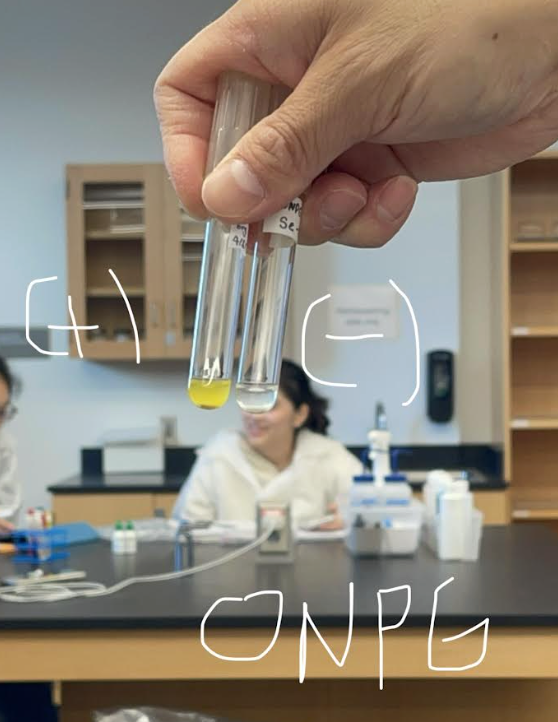
<p><strong>Name: </strong>ONPG Test</p><p><strong>PURPOSE: </strong>to detect B-galactosidase in an organism.</p><p><strong>MEDIA: </strong>TSA plate(tryptic soy agar, previously grown)</p><p><strong>INOCULATION GUIDE: </strong></p><p>* Add a heavy inoculum from previously grown plate to test tube with 1mL of water(scrap A LOT of the bacteria)</p><p>* Add ONPG Tablet</p><p><strong>INCUBATION: </strong>37°C for 48 hrs.</p><p><strong>THEORY: </strong>ONPG </p><ul><li><p>Is a synthetic substrate of B-galactosidase, does not require a permease to enter cell.</p></li><li><p>ONPG(substrate) —&gt; B-galactosidase(breaks)—&gt; O-nitrophenol(<mark data-color="#e2de18" style="background-color: rgb(226, 222, 24); color: inherit;">yellow </mark>enzyme)</p></li></ul><p><strong>RESULTS: </strong></p><p>(+): <mark data-color="#f5f00d" style="background-color: rgb(245, 240, 13); color: inherit;">yellow</mark></p><p>(-): clear or foggy</p><p>Note: </p><p>ONPG does not require permease to enter the cell. </p><p></p>
17
New cards

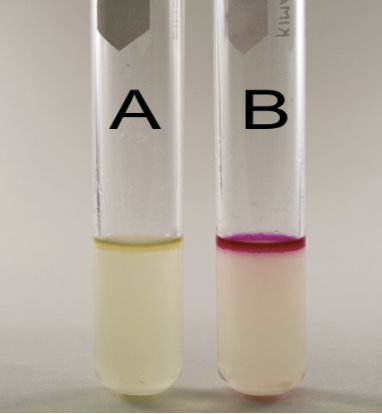
What is the IMVIC test/what does each part of IMVIC stand for?

IMVIC: is a series of tests to differentiate GNRs.

I: Indole Production Test

M: Methyl Red Test

V: Voges-Proskauer Test

C: Citrate Utilization Test
18
New cards
<p>What is the name of the test, purpose, the media, inoculation guide, incubation, theory, results, and everything about it?</p>

What is the name of the test, purpose, the media, inoculation guide, incubation, theory, results, and everything about it?

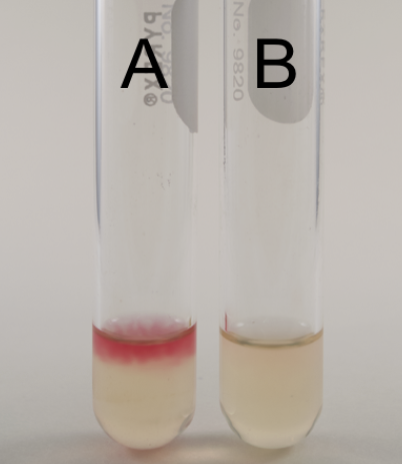
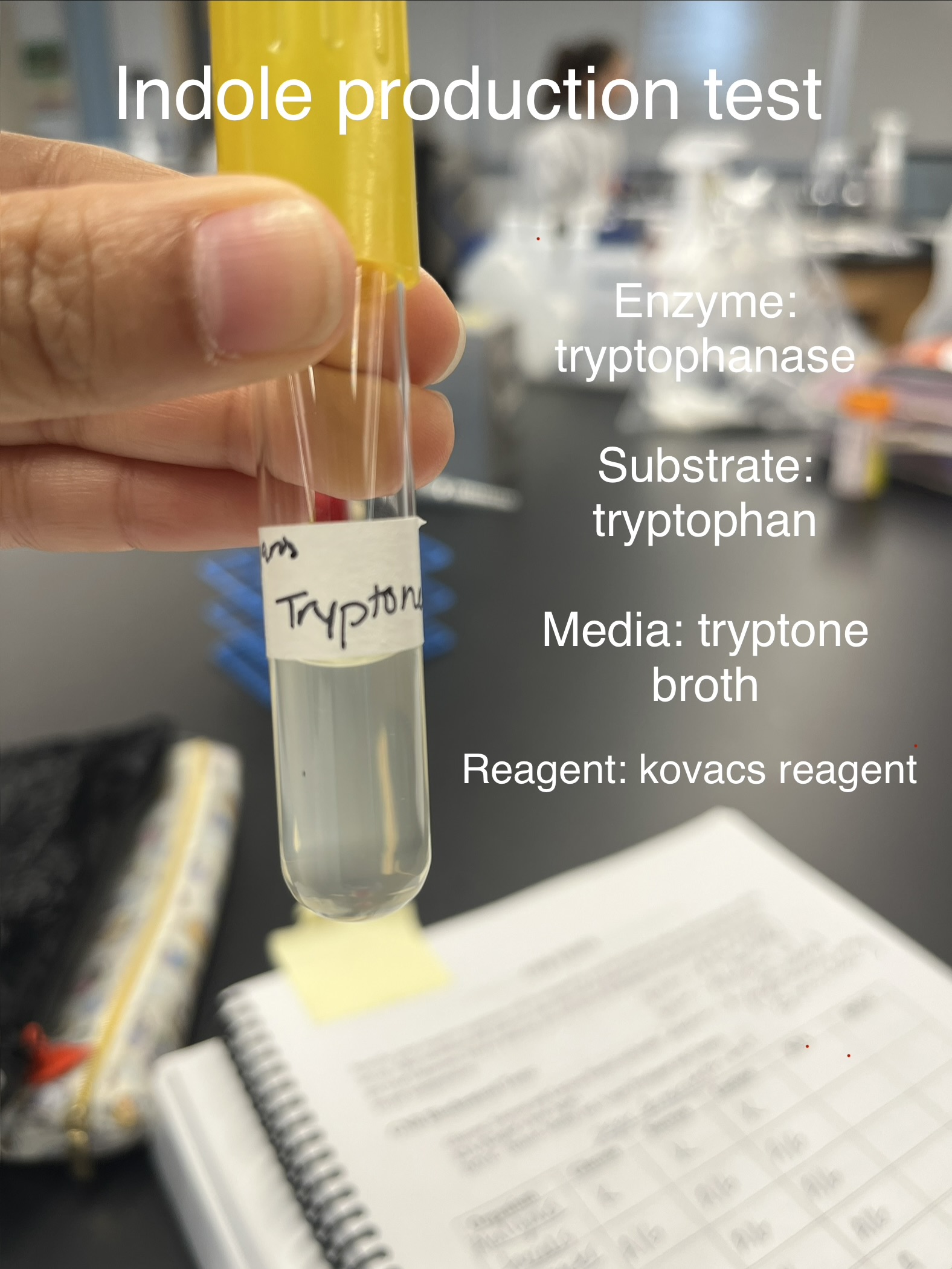
Name: Indole Production Test

PURPOSE: to determine if your organism has the enzyme tryptophanase (produces indole)

MEDIA: Tryptone broth —> clear color

INOCULATION GUIDE: loopful

INCUBATION: 37°C for 48 hrs.

THEORY: Tryptophan(substrate) —> tryptophanase—> pyruvic acid + NH3 + indole

*After incubation, add 5 drops of kovac’s reagent

indole + kovacs reagent (yellow)

RESULTS:

*After adding 5 drops of kovacs reagent:

(+): pink on top(has the enzyme tryptophanase)

(-): yellow on top
<p><strong>Name: </strong>Indole Production Test</p><p><strong>PURPOSE: </strong>to determine if your organism has the enzyme tryptophanase (produces indole)</p><p><strong>MEDIA: </strong>Tryptone broth —&gt; clear color</p><p><strong>INOCULATION GUIDE: </strong>loopful</p><p><strong>INCUBATION: </strong>37°C for 48 hrs.</p><p><strong>THEORY: </strong>Tryptophan(substrate) —&gt; tryptophanase—&gt; pyruvic acid + NH3 + indole</p><p>*<strong>After incubation, </strong>add <strong>5 drops </strong>of<u><mark data-color="#e5ed11" style="background-color: rgb(229, 237, 17); color: inherit;"> kovac’s reagent</mark></u></p><p>indole + kovacs reagent (<mark data-color="#e3ec0e" style="background-color: rgb(227, 236, 14); color: inherit;">yellow</mark>)</p><p><strong>RESULTS:</strong></p><p>*<strong>After adding 5 drops of kovacs reagent:</strong></p><p>(+): <span style="color: rgb(240, 19, 236);">pink </span>on top(has the enzyme tryptophanase)</p><p>(-): <mark data-color="#e7e30a" style="background-color: rgb(231, 227, 10); color: inherit;">yellow </mark>on top</p><p></p>
19
New cards
<p>What is the name of the test, the purpose, media, inoculation guide, incubation, theory, and results? </p>

What is the name of the test, the purpose, media, inoculation guide, incubation, theory, and results?

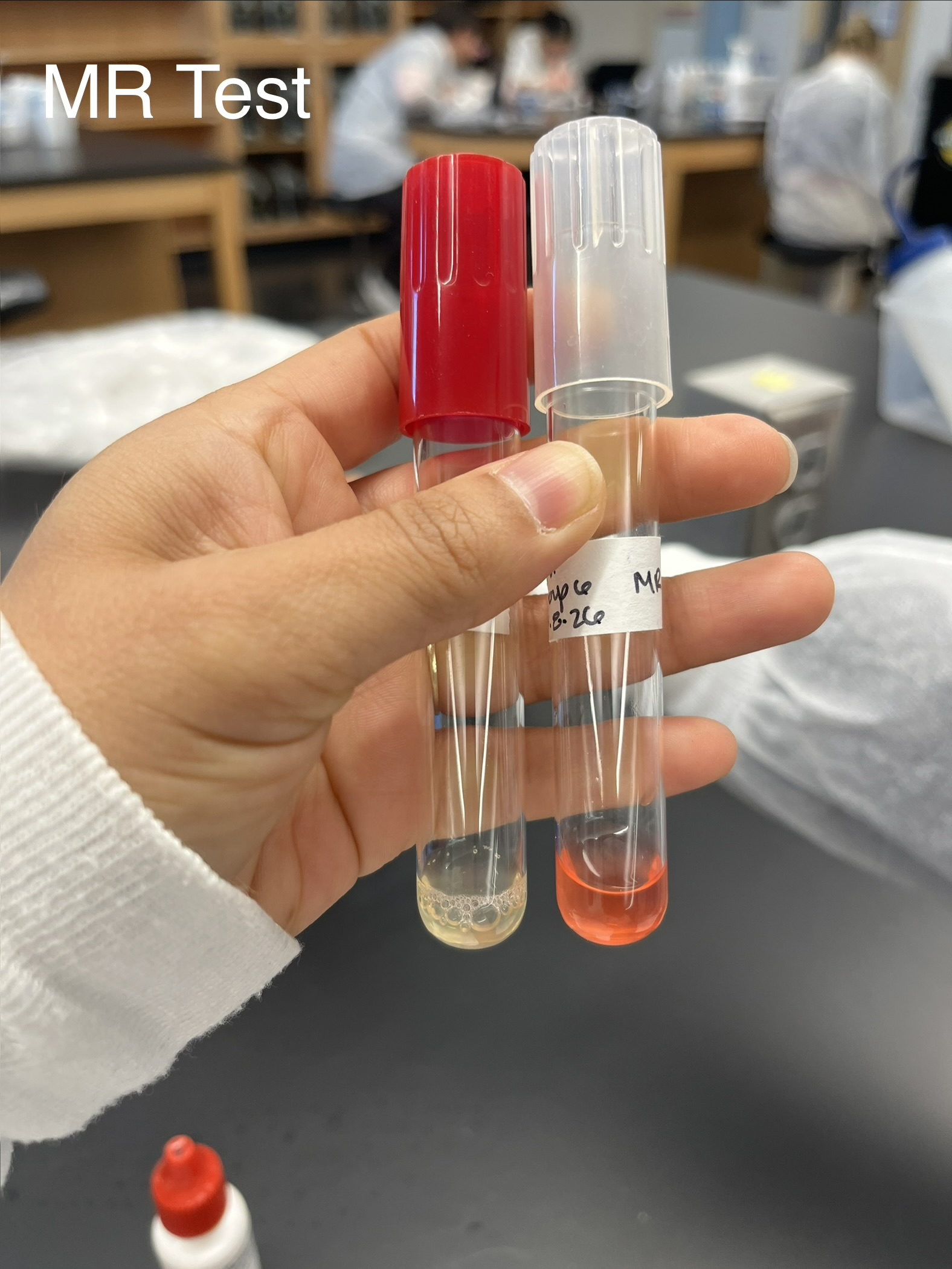
Name: Methyl Red Test

PURPOSE: to determine if your organism ferments glucose into mixed acids.

MEDIA: glucose supplemented nutrient broth

INOCULATION GUIDE: loopful

INCUBATION: 37°C for 48 hrs.

THEORY: glucose is fermented into —> organic acids

After incubation, add 5 drops of

  • Methyl Red: pH indicator

- Acidic: red

- Neutral or basic: yellow

RESULTS:

(+): red

(-): yellow
<p><strong>Name: </strong><span style="color: red;">Methyl Red </span>Test</p><p><strong>PURPOSE: </strong>to determine if your organism ferments glucose into mixed acids.</p><p><strong>MEDIA: </strong>glucose supplemented nutrient broth</p><p><strong>INOCULATION GUIDE: </strong>loopful</p><p><strong>INCUBATION: </strong>37°C for 48 hrs.</p><p><strong>THEORY: </strong>glucose is fermented into —&gt; organic acids</p><p><strong>After incubation, add 5 drops of </strong></p><ul><li><p><span style="color: red;">Methyl Red</span>: pH indicator</p></li></ul><p>- Acidic:<span style="color: red;"> red</span></p><p>- Neutral or basic: <mark data-color="#ecda0b" style="background-color: rgb(236, 218, 11); color: inherit;">yellow</mark></p><p><strong>RESULTS: </strong></p><p>(+): <span style="color: red;">red</span></p><p>(-): <mark data-color="#f3f51d" style="background-color: rgb(243, 245, 29); color: inherit;">yellow </mark></p><p></p>
20
New cards
<p>What is the name of the test, purpose, media, inoculation guide, incubation, theory, and results?</p>

What is the name of the test, purpose, media, inoculation guide, incubation, theory, and results?

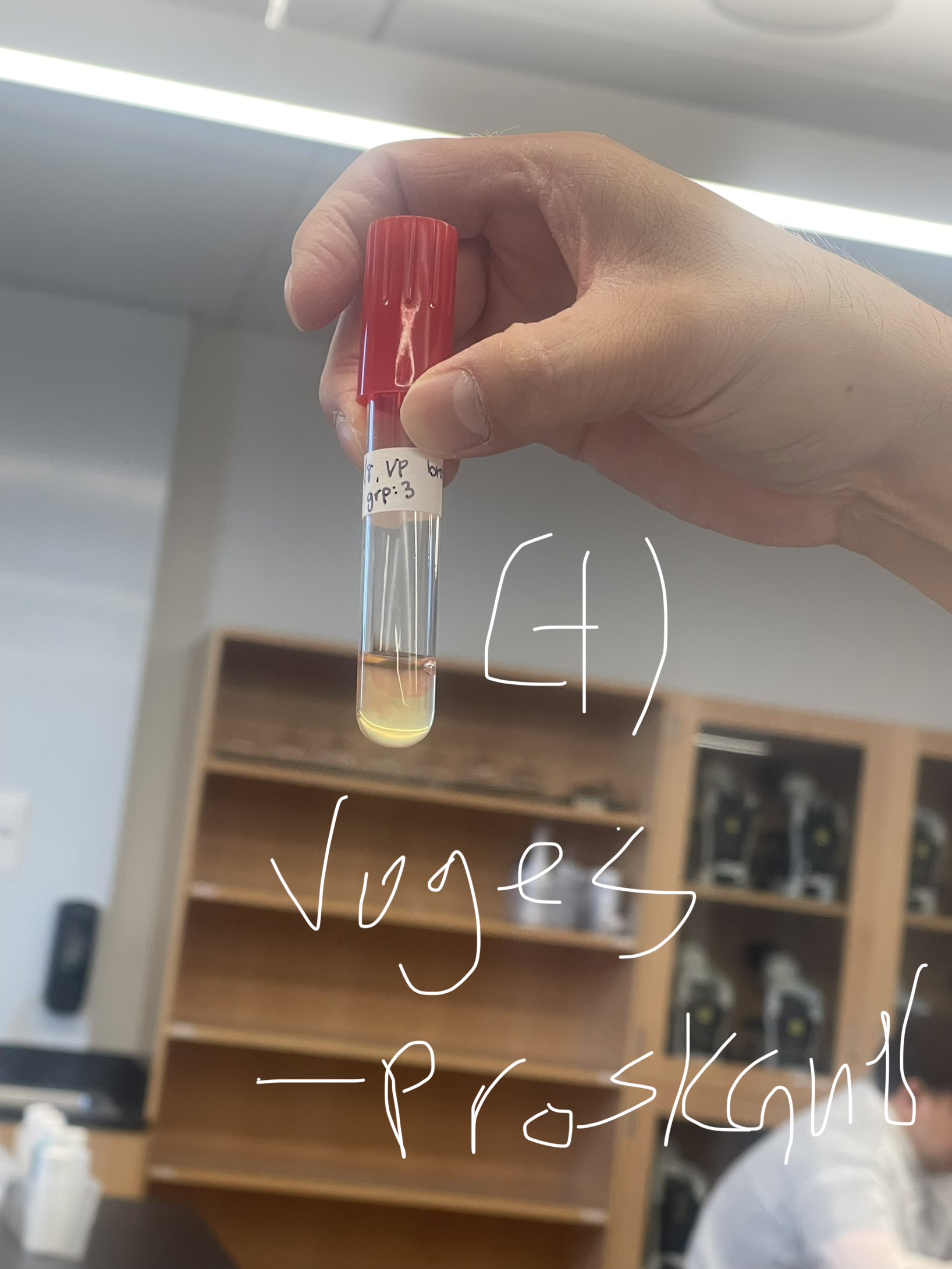
Name: Voges-Proskauer Test

PURPOSE: to determine if your organism ferments glucose into a neutral product called acetoin.

MEDIA: glucose supplemented nutrient broth

INOCULATION GUIDE: loopful

INCUBATION: 37°C for 48 hrs.

THEORY:

  • glucose is fermented —> neutral product acetoin

  • After incubation, to detect acetoin, add:

  1. Alpha-naphthol(8 drops)

  2. KOH(4 drops) - potassium hydroxide

RESULTS: NEED TO WAIT AT LEAST 15-30 MIN. AFTER ADDING KOH

(+): red

(-): yellow (didn’t have acetoin)
<p><strong>Name: </strong>Voges-Proskauer Test</p><p><strong>PURPOSE: </strong>to determine if your organism ferments glucose into a neutral product called acetoin.</p><p><strong>MEDIA: </strong>glucose supplemented nutrient broth</p><p><strong>INOCULATION GUIDE: </strong>loopful</p><p><strong>INCUBATION: </strong>37°C for 48 hrs.</p><p><strong>THEORY:</strong></p><ul><li><p>glucose is fermented —&gt; neutral product acetoin</p></li><li><p><strong>After incubation, </strong>to detect acetoin, add:</p></li></ul><ol><li><p>Alpha-naphthol(<strong>8 drops</strong>)</p></li><li><p>KOH(<strong>4 drops</strong>) - potassium hydroxide</p></li></ol><p><strong>RESULTS: NEED TO WAIT AT LEAST 15-30 MIN. AFTER ADDING KOH</strong></p><p>(+): <span style="color: red;">red</span></p><p>(-): <mark data-color="#efd819" style="background-color: rgb(239, 216, 25); color: inherit;">yellow </mark>(didn’t have acetoin)</p><p></p>
21
New cards
<p>What is the name of the test, purpose, media used, inoculation guide, incubation, theory and result?</p>

What is the name of the test, purpose, media used, inoculation guide, incubation, theory and result?

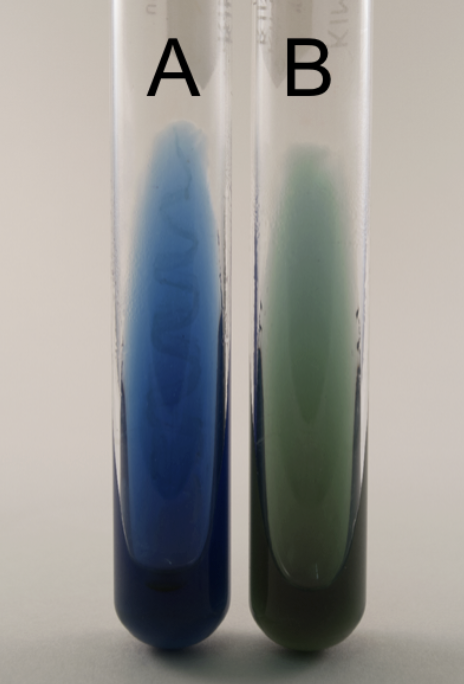
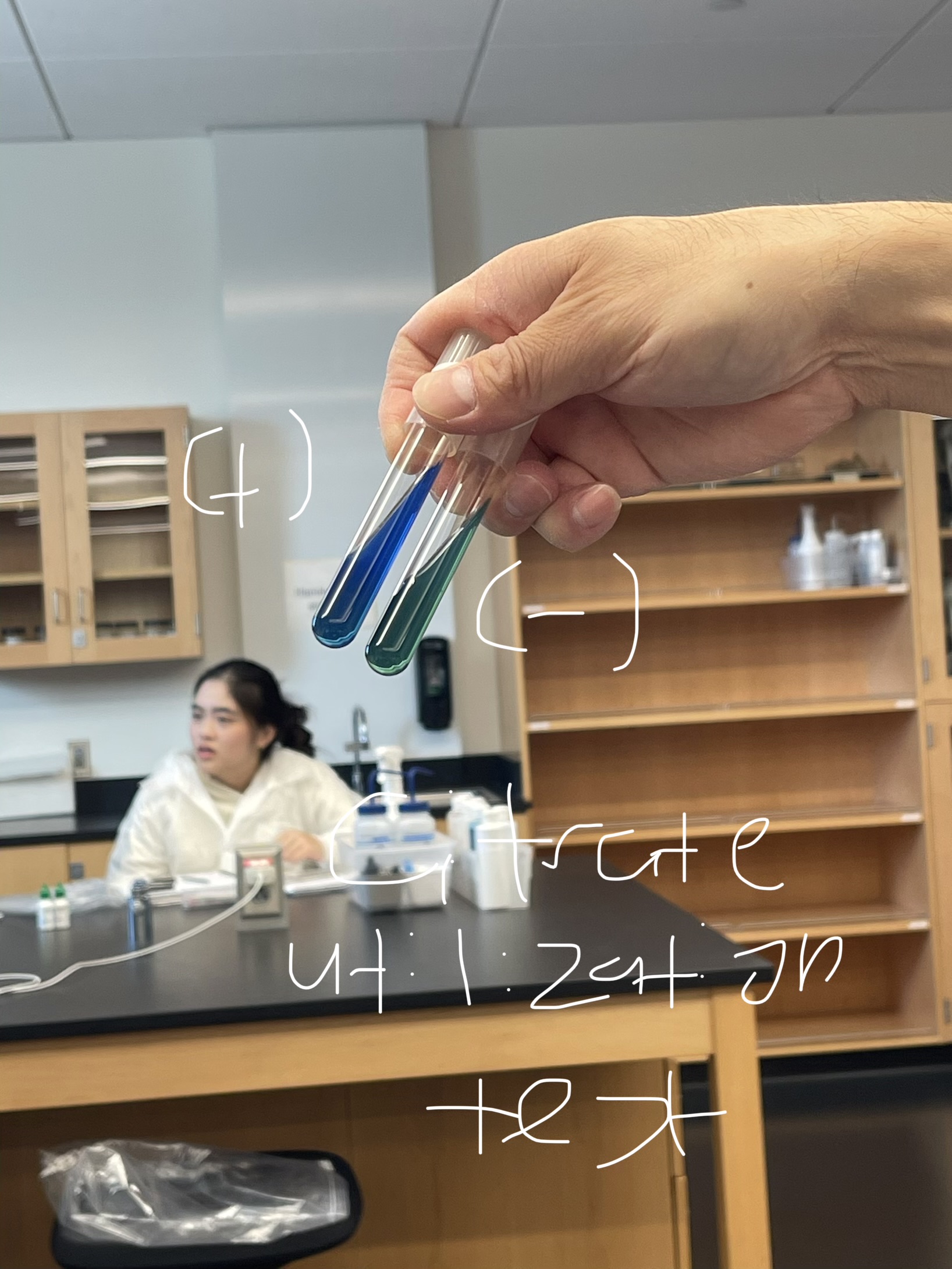
Name: Citrate Utilization Test

PURPOSE: to determine if your organism can use Na citrate as the only carbon source

MEDIA: Simmons citrate agar slant (greenish color)

  • Na citrate: only carbon (C) source

  • Ammonium phosphate: only (N) nitrogen source

  • Bromthymol Blue: pH indicator

- Acidic = yellow

- Neutral = green

- Basic = blue

INOCULATION GUIDE: loopful streak in slant

INCUBATION: 37°C for 48 hrs

THEORY:

  • If your organism can use Na citrate and ammonia phosphate as the only C and N source (produces ammonia)

—> NH3(basic) - reacts with bromthymol blue

RESULT:

(+): growth, blue (can use Na citrate)

(-): no growth, green
<p><strong>Name: </strong>Citrate Utilization Test</p><p><strong>PURPOSE: </strong>to determine if your organism can use Na citrate as the only carbon source</p><p><strong>MEDIA: </strong>Simmons citrate agar slant (greenish color)</p><ul><li><p><u>Na citrate:</u> only carbon (C) source</p></li><li><p><u>Ammonium phosphate: </u>only (N) nitrogen source</p></li><li><p><span style="color: blue;"><u>Bromthymol Blue</u></span><u>: </u>pH indicator</p></li></ul><p>- Acidic = <mark data-color="#eaec1c" style="background-color: rgb(234, 236, 28); color: inherit;">yellow</mark></p><p>- Neutral = <span style="color: rgb(68, 152, 81);">green</span></p><p>- Basic =<span style="color: rgb(33, 158, 225);"> </span><span style="color: rgb(34, 79, 224);">blue</span></p><p><strong>INOCULATION GUIDE: </strong>loopful streak in slant</p><p><strong>INCUBATION: </strong>37°C for 48 hrs</p><p><strong>THEORY: </strong></p><ul><li><p>If your organism can use Na citrate and ammonia phosphate as the only C and N source (produces ammonia)</p></li></ul><p>—&gt; NH3(basic) - reacts with bromthymol blue</p><p><strong>RESULT: </strong></p><p>(+): growth, <span style="color: rgb(8, 103, 237);">blue</span> (can use Na citrate)</p><p>(-): no growth, <span style="color: rgb(10, 209, 122);">green</span></p><p></p>
22
New cards
<p>What is the name of the test, purpose, the media, incoculation guide, incubation, theory, and results?</p>

What is the name of the test, purpose, the media, incoculation guide, incubation, theory, and results?

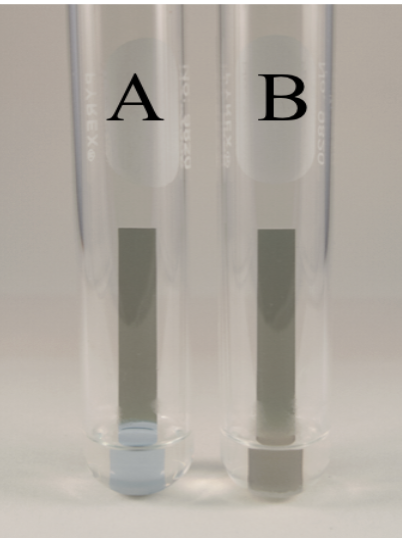
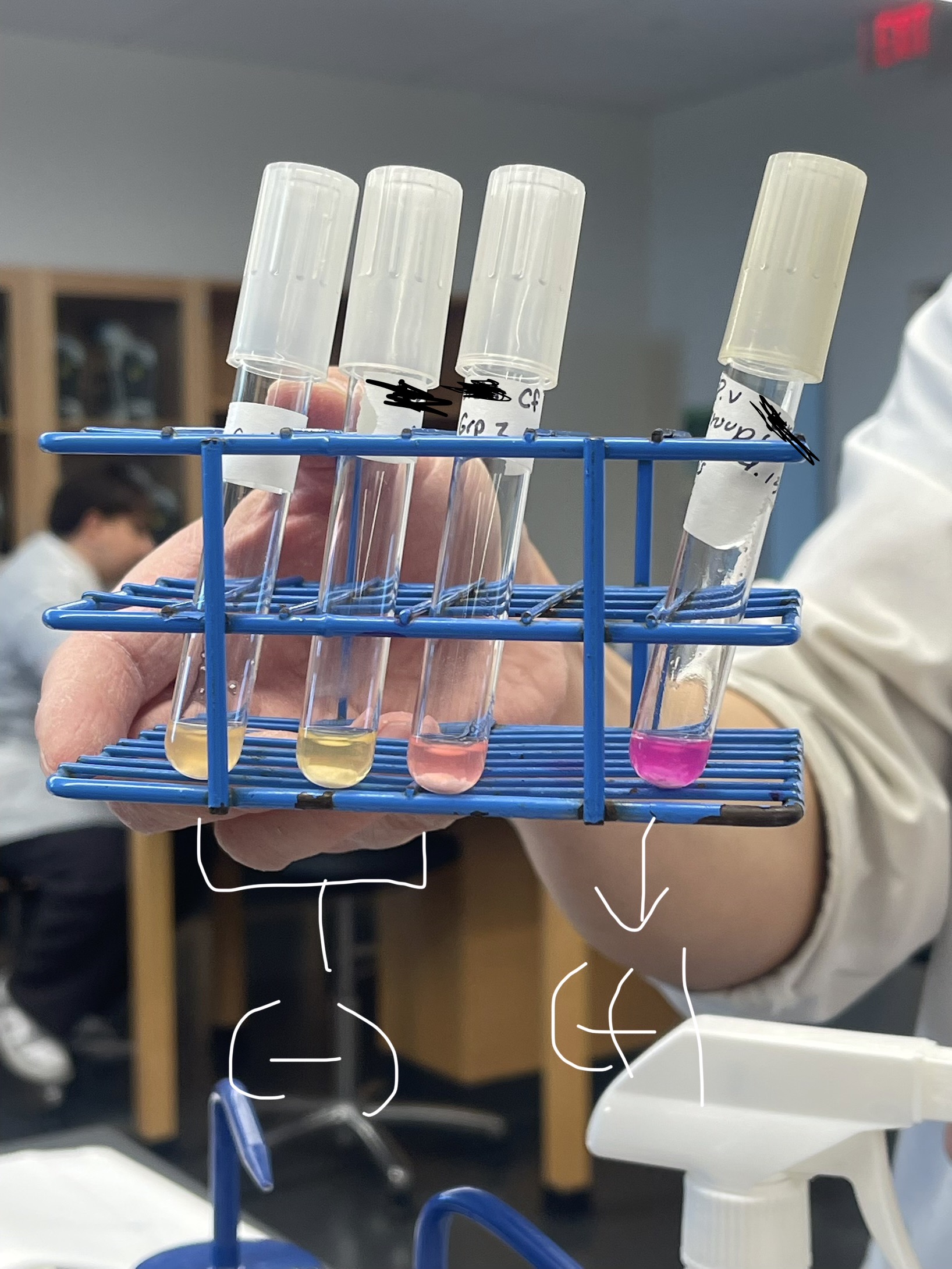
Name: Gelatin Hydrolysis Test

PURPOSE: To detect the present of gelatinase(breaking down gelatin).

MEDIA: Nutrient broth

INOCULATION GUIDE: loopful

*After incubation(1st incubation): add gelatin strip, and re-incubate.

INCUBATION: 37° for 48 hrs. (2x) HAVE TO DO THIS TWICE

THEORY:

Gelatin(protein, substrate, solid, at room temperature)-→ gelatinase(enzyme) —> amino acids(liquid)

  • Gelatin strip is a clear blue plastic(underneath the coat of green), and covered with green gelatin(like a sage green, flexible, on both sides).

RESULTS:

(+): strip is clear blue

(-): strip is green(sage green, same color as the top)

*Basically wherever gelatin is working, gelatin will fall off, so you dip it into the broth to figure it out.
23
New cards
<p>What kind of test is this, purpose, application, it’s media, inoculation guide, incubation, theory, and results?</p>

What kind of test is this, purpose, application, it’s media, inoculation guide, incubation, theory, and results?

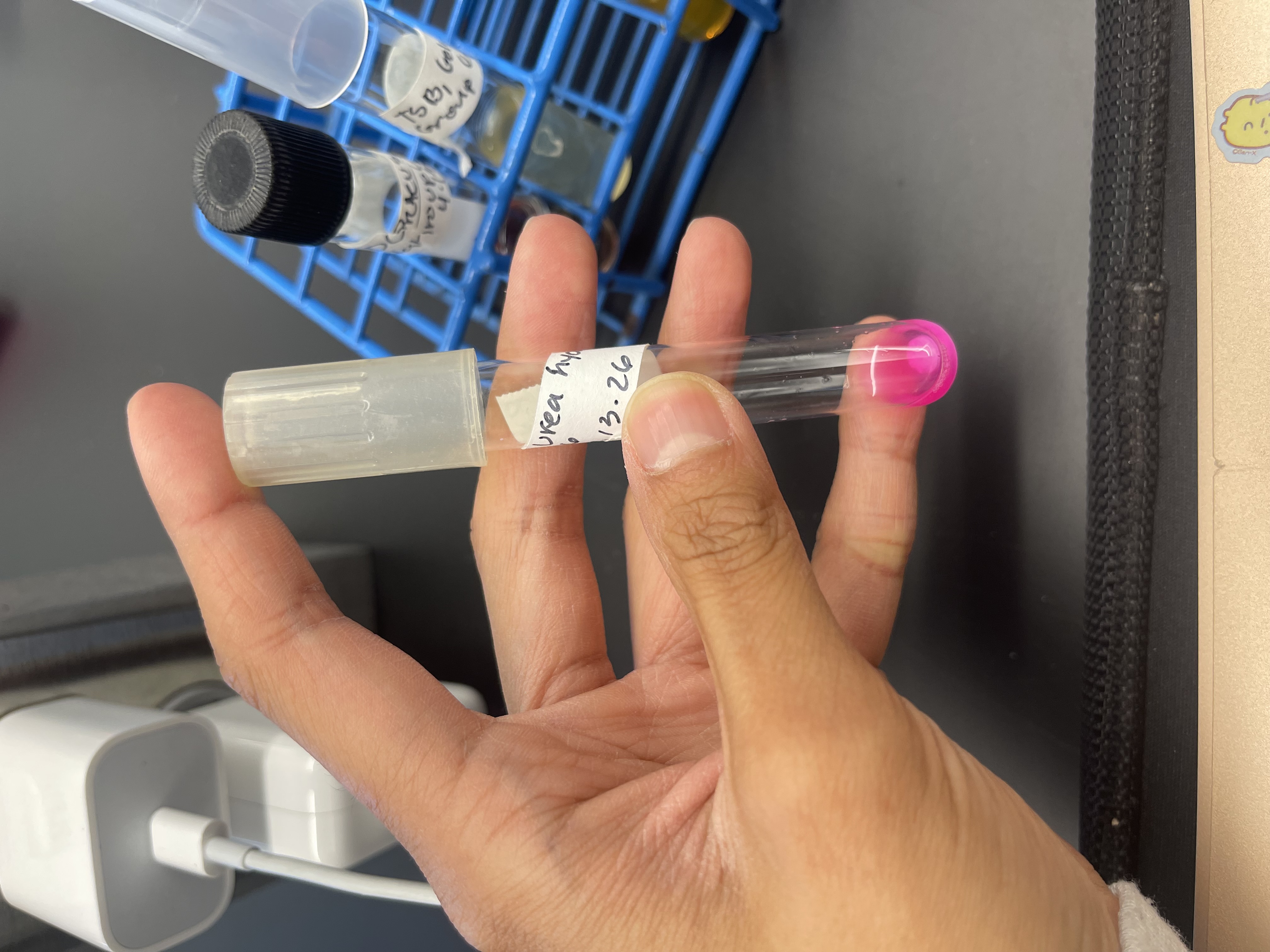
Name: Urea hydrolysis Test

PURPOSE: to detect the presence of urease(enzyme)

APPLICATION: helps differentiate GNR's (gram (-) rods)

MEDIA: TSA plate (previously grown)

  • 1 mL tube of water(sterile water)

  • Urea tablet(look like yellow vitamin tablets)

- yeast extract: nutrients

- Urea: substrate

- Phenol red: pH indicator

INOCULATION GUIDE: heavy inoculation into water(pick up about 3-4 colonies to transfer in the test tube)

  • Add urea tablet to 1mL of water

INCUBATION: 37°C for 48 hrs.

THEORY:

Urea(substrate in tablet) —> urease —> 2NH3(basic, ammonia) + CO2

RESULTS:

(+): shocking pink(reacts with phenol red)

(-): no color change or yellow(or like a bright yellow, salmon, soft pink/peach color)
<p><strong>Name: </strong>Urea hydrolysis Test</p><p><strong>PURPOSE: </strong>to detect the presence of urease(enzyme)</p><p><strong>APPLICATION: </strong>helps differentiate GNR's (gram (-) rods)</p><p><strong>MEDIA: </strong>TSA plate (previously grown)</p><ul><li><p>1 mL tube of water(sterile water)</p></li><li><p>Urea tablet(look like yellow vitamin tablets) </p></li></ul><p>- <u>yeast extract:</u> nutrients</p><p>- <u>Urea:</u> substrate </p><p>- <span style="color: red;"><u>Phenol red:</u></span><u> </u>pH indicator</p><p><strong>INOCULATION GUIDE: </strong>heavy inoculation into water(pick up about 3-4 colonies to transfer in the test tube)</p><ul><li><p><u>Add urea tablet to 1mL of water</u></p></li></ul><p><strong>INCUBATION: </strong>37°C for 48 hrs.</p><p><strong>THEORY: </strong></p><p>Urea(substrate in tablet) —&gt; urease —&gt; 2NH3(basic, ammonia) + CO2</p><p><strong>RESULTS: </strong></p><p>(+):<span style="color: rgb(237, 0, 233);"> shocking pink</span>(reacts with <span style="color: red;">phenol red</span>)</p><p>(-): no color change or <mark data-color="#f0f316" style="background-color: rgb(240, 243, 22); color: inherit;">yellow(</mark>or like a bright yellow, salmon, soft pink/peach color)</p><p></p><p></p>
24
New cards
<p>What is the name of the test, purpose, application, media, inoculation guide, incubation, theory, and results?</p>

What is the name of the test, purpose, application, media, inoculation guide, incubation, theory, and results?

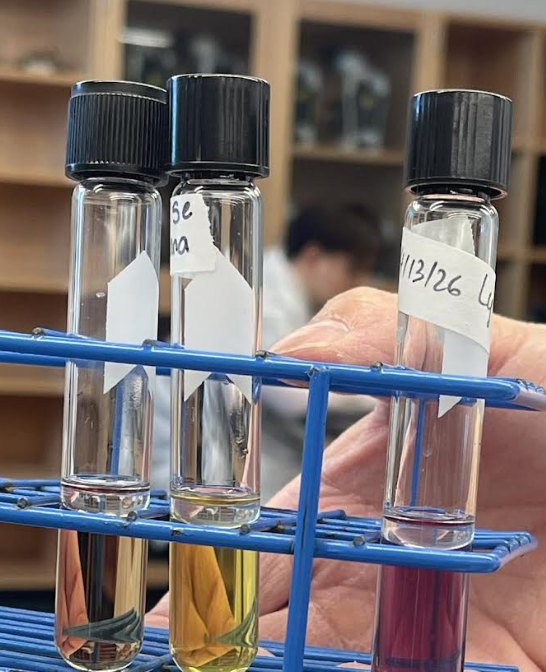
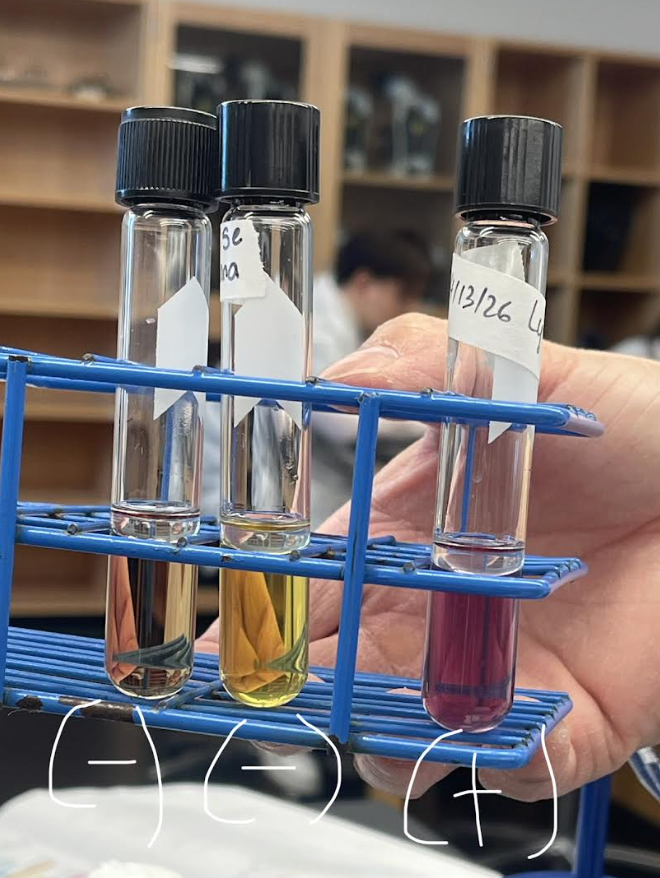
Name: Lysine Decarboxylase Test(LDC):

PURPOSE: to detect the presence of lysine decarboxylase.

APPLICATION: to help differentiate GNRs (Gram negative rods)

MEDIA: Mollers Lysine Decarboxylase media(tea color can identify on practicum by oil on top)

  • peptone: nutrients

  • glucose: induce fermentation

  • lysine: amino acid substrate for lysin decarboxylase

- Bromcresol purple: pH indicator

  • Acidic = yellow(like a soft baby yellow)

  • Neutral = gray(tea color, isn’t really consistent)

  • Basic = purple (vibrant purple)

INOCULATION GUIDE: loopful

  • layer with mineral oil: keeps O2 out, induces fermentation (so about 1 mL of oil, will be on top of media and block off O2).

INCUBATION: 37°C for 48 hrs. *MUST DO FULL 48 HOURS

THEORY:

- Decarboxylation will occur if:

  • Amino acid substrate is present

  • There is a drop in pH: glucose + mineral oil —> induces fermentation

Lysine —→ lysine decarboxylase —→ cadaverine(basic) + CO2

RESULTS:

(+): purple(vibrant, reacts with bromcresol purple)

(-): yellow or no change(gray)
<p><strong>Name: </strong>Lysine Decarboxylase Test(LDC):</p><p><strong>PURPOSE: </strong>to detect the presence of lysine decarboxylase. </p><p><strong>APPLICATION: </strong>to help differentiate GNRs (Gram negative rods)</p><p><strong>MEDIA: </strong>Mollers Lysine Decarboxylase media(tea color<strong> can identify on practicum by oil on top</strong>)</p><ul><li><p><u>peptone:</u> nutrients</p></li><li><p><u>glucose:</u> induce fermentation</p></li><li><p><u>lysine:</u> amino acid substrate for lysin decarboxylase</p></li></ul><p>- <span style="color: rgb(167, 25, 238);"><u>Bromcresol purple: </u></span>pH indicator</p><ul><li><p>Acidic = <mark data-color="#f1ed2c" style="background-color: rgb(241, 237, 44); color: inherit;">yellow(l</mark>ike a soft baby yellow)</p></li><li><p>Neutral = <span style="color: rgb(117, 79, 34);">gray(tea</span> color, isn’t really consistent)</p></li><li><p>Basic = <span style="color: rgb(89, 20, 238);">purple </span>(vibrant purple)</p></li></ul><p><strong>INOCULATION GUIDE: </strong>loopful </p><ul><li><p><u>layer with mineral oil</u>: keeps O2 out, induces fermentation (so about 1 mL of oil, will be on top of media and block off O2).</p></li></ul><p><strong>INCUBATION:</strong> 37°C for 48 hrs. *<strong>MUST DO FULL 48 HOURS</strong></p><p><strong>THEORY: </strong></p><p>- Decarboxylation will occur if:</p><ul><li><p>Amino acid substrate is present</p></li><li><p><u>There is a drop in pH</u>: glucose + mineral oil —&gt; induces fermentation </p></li></ul><p>Lysine —→ lysine decarboxylase —→ cadaverine(basic) + CO2</p><p><strong>RESULTS: </strong></p><p>(+): <span style="color: rgb(113, 21, 233);">purple</span>(vibrant, reacts with bromcresol purple)</p><p>(-):<span style="color: rgb(14, 14, 11);"> <mark data-color="#e0d61b" style="background-color: rgb(224, 214, 27); color: inherit;">yellow</mark> </span>or no change(gray)</p><p></p>
25
New cards
<p>What is the name of the test, purpose, application,it’s media, inoculation guide, incubation, theory, and results including what is H2S production?</p>

What is the name of the test, purpose, application,it’s media, inoculation guide, incubation, theory, and results including what is H2S production?

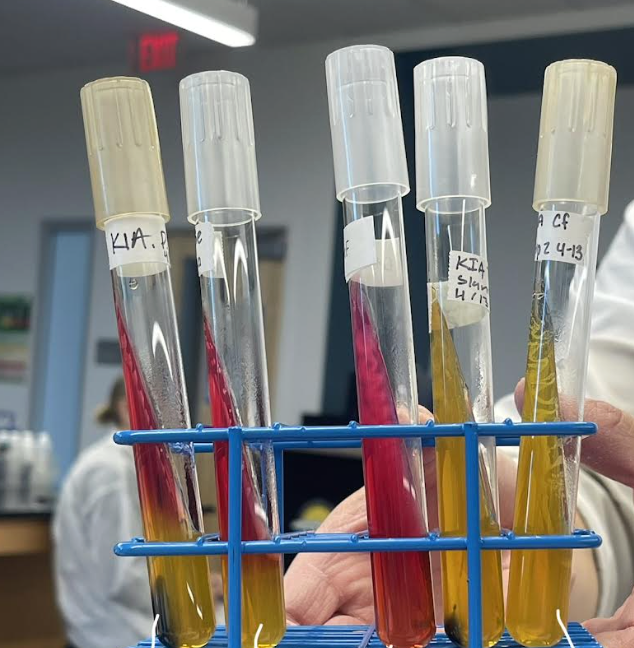
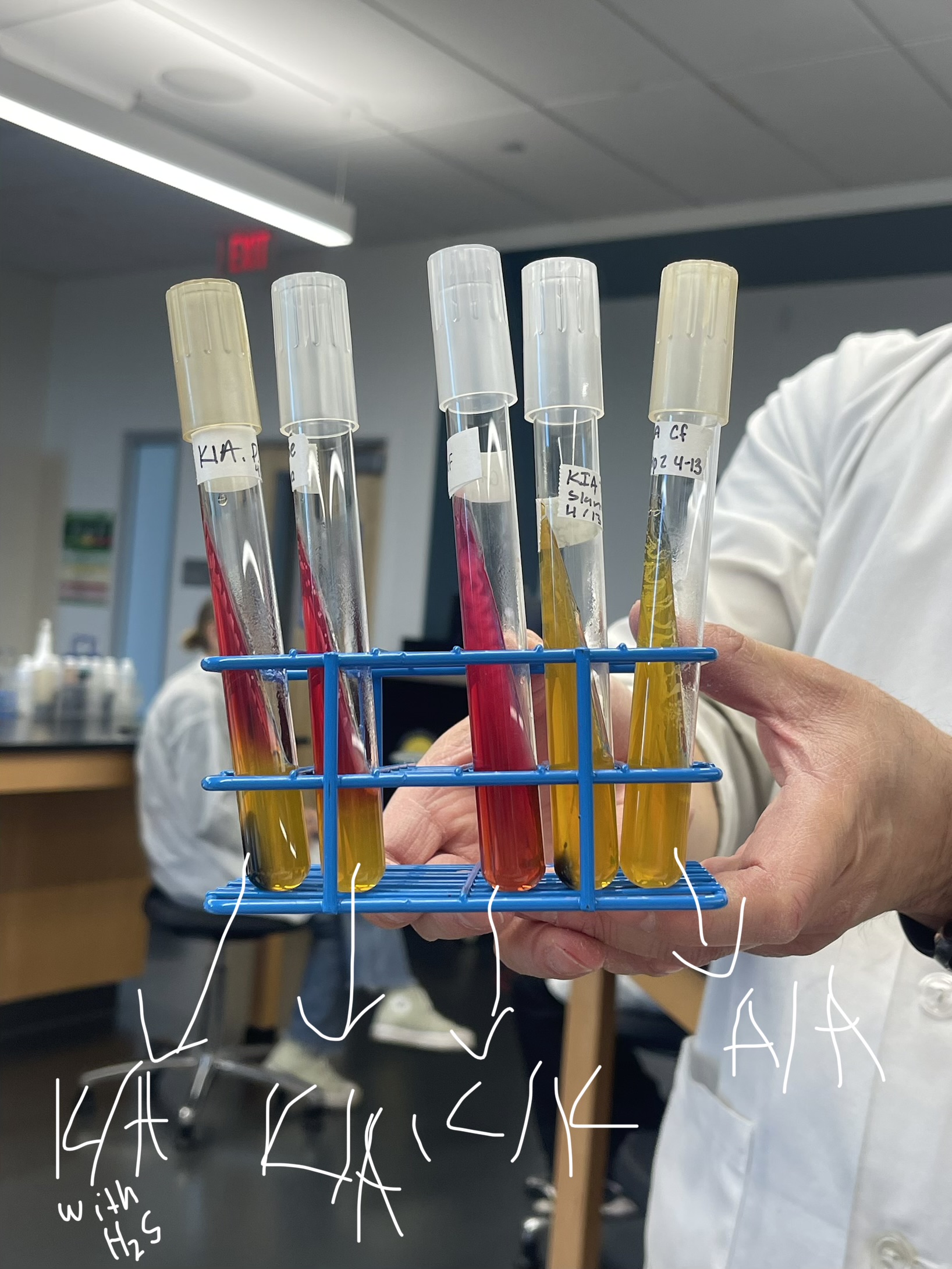
Name: Kligler Iron Agar(KIA) Test

PURPOSE: differential screening media based on:

  • glucose fermentation

  • lactose fermenetation

  • H2S (hydrogen sulfide) production

APPLICATION: differentiate GNRs(gram(-) rods)

MEDIA: Kligler Iron Agar Slant

  • 0.1% glucose: fermentable sugar, low concentration (K/A) only glucose

  • 1% lactose: fermentable sugar, high concentration(yellow, yellow, K/K)

  • 0.02% ferrous sulfate: detects H2S —> black color.

MEDIA:

  • Phenol red: pH indicator

  • Nutrient agar(slant)

INOCULATION GUIDE: loopful streak on slant surface,

  • needle stab the butt(then remove)

INCUBATION: 37°C for 48 hrs/

THEORY AND RESULTS;

  1. Ferments ONLY glucose:

  • Yellow butt: acid reacts with Phenol Red

  • Red Slant: after low concentration of glucose is used up, amino acid oxidation occurs —> produces ammonia(basic)

  1. Ferments lactose OR lactose and glucose:

  • Yellow butt and slant: acid reacts with phenol red, so there is a high concentration of lactose.

  1. Does NOT ferment either sugar:

  • Red or shocking pink butt and slant(so both red slant and butt, doesn’t produce any acid, so nothing should be yellow).

H2S Production:

(+): black percipitant(like a black product)

  • Gas production:

(+): butt lift (like there is a lift in the medium)

Extra info:

  • Break in yellow tube, ferments into acid as well as gas(no black = (-) for H2S)

  • black in bottom = H2S production

  • tube with red top, black middle, yellow bottom ONLY ferments glucose(+) for H2S production.
<p><strong>Name: </strong>Kligler Iron Agar(KIA) Test</p><p><strong>PURPOSE: </strong>differential screening media based on: </p><ul><li><p>glucose fermentation</p></li><li><p>lactose fermenetation</p></li><li><p>H2S (hydrogen sulfide) production</p></li></ul><p><strong>APPLICATION: </strong>differentiate GNRs(gram(-) rods)</p><p><strong>MEDIA: </strong>Kligler Iron Agar Slant </p><ul><li><p><u>0.1% glucose:</u> fermentable sugar, low concentration (K/A) only glucose</p></li><li><p><u>1% lactose:</u> fermentable sugar, high concentration(yellow, yellow, K/K)</p></li><li><p><u>0.02% ferrous sulfate</u>: detects H2S —&gt; <span style="color: rgb(255, 255, 255);"><mark data-color="#534444" style="background-color: rgb(83, 68, 68); color: inherit;">black color. </mark></span></p></li></ul><p><strong>MEDIA: </strong></p><ul><li><p><span style="color: rgb(225, 27, 27);">Phenol red:</span> pH indicator</p></li><li><p>Nutrient agar(slant)</p></li></ul><p><strong>INOCULATION GUIDE: </strong>loopful streak on slant surface, </p><ul><li><p>needle stab the butt(then remove)</p></li></ul><p><strong>INCUBATION: </strong>37°C for 48 hrs/</p><p><strong>THEORY AND RESULTS;</strong></p><ol><li><p><u>Ferments </u><strong><u>ONLY</u></strong><u> glucose: </u></p></li></ol><ul><li><p>Yellow butt: acid reacts with Phenol Red</p></li><li><p>Red Slant: after low concentration of glucose is used up, amino acid oxidation occurs —&gt; produces ammonia(basic)</p></li></ul><ol start="2"><li><p><u>Ferments lactose </u><strong><u>OR </u></strong><u>lactose and glucose: </u></p></li></ol><ul><li><p>Yellow butt and slant: acid reacts with phenol red, so there is a high concentration of lactose.</p></li></ul><ol start="3"><li><p><u>Does </u><strong><u>NOT </u></strong><u>ferment either sugar:</u></p></li></ol><ul><li><p>Red or shocking pink butt and slant(so both red slant and butt, doesn’t produce any acid, so nothing should be yellow).</p></li></ul><p><strong>H2S Production: </strong></p><p>(+): black percipitant(like a black product)</p><ul><li><p>Gas production: </p></li></ul><p>(+): butt lift (like there is a lift in the medium)</p><p>Extra info:</p><ul><li><p>Break in yellow tube, ferments into acid as well as gas(no black = (-) for H2S)</p></li><li><p>black in bottom = H2S production</p></li><li><p>tube with red top, black middle, yellow bottom <strong>ONLY </strong>ferments glucose(+) for H2S production. </p></li></ul><p></p>