nitrous oxide pt. 1
 Call Kai
 Learn
Learn Practice Test
 Spaced Repetition
 Match
Match Flashcards
 Knowt Play
1/95

There's no tags or description
Looks like no tags are added yet.
Name | Mastery | Learn | Test | Matching | Spaced | Call with Kai |
|---|
No analytics yet
Send a link to your students to track their progress
96 Terms
who was known as the father of anesthesia?
horace wells
never go above ____% nitrous. never go below ____% oxygen
70 ; 30
what is michigan’s practice act state law?
direct supervision: the dentist must be present (ages 18+)
we CANNOT administer more than 50% nitrous oxide
what is minimal sedation (anxiolysis)?
a drug-induced state during which patients respond normally to verbal commands
accomplished when concentrations are less than 50%
what is moderate sedation / analgesia?
a drug-induced depression of consciousness during which patients respond purposefully to verbal commands (reflex withdrawal from a painful stimulus is NOT considered a purposeful response), either alone or accompanied by light tactile stimulation
N2O concentrations are greater than 50% or when concentrations less than 50% are given concomitantly with another sedative
what is deep sedation / analgesia?
patients have to be aroused after repeated or painful stimulation
what is general anesthesia?
a drug-induced loss of consciousness during which patients are not arousable, even by painful stimulation
in ambulatory settings, N2O is used for _______ periods of time with _____ percentage concentrations
minimal ; lower
when the patient is mildly sedated, they can…
reply to verbal commands
cough and gag
nitrous oxide _________ the patient’s pain threshold
increases
The number of deaths associated with N2/O2 sedation in a dental office as the sole sedative agent and using appropriate equipment and technique is
A. none.
B. approximately 10.
C. approximately 100.
D. approximately 1000.
A. none
mixture of 20% N2O and 80% O2 has the analgesic equipotency of…
15 mg of morphine
T/F: level of pain control will vary due to individual biovariability
true
painful stimuli can be ___________ in an anxious patient
exaggerated
T/F: pediatric patients have shown positive behavior and lowered anxiety levels on sequential visits
TRUE
does N2O/O2 have a rapid onset of action?
yes
how long is the onset of action?
less than 30 seconds
peak usually in less than 5 mins
what is titration and why is it important?
the process of administering a drug incrementally to a specific level or endpoint of sedation
it allows for the exact amount of the drug necessary to be delivered to every patient
is N2O metabolized in the liver?
no ; it is rapidly eliminated from the body after discontinuation of use
for complete elimination, the hygienist should…
use 100% oxygen for a minimum of 5 minutes after termination of the drug
does the patient need an escort following dismissal?
no
should nitrous be administered alone?
no
The rapid onset of action with N2O/O2 sedation is
advantageous. Effects are usually first seen within how
many minutes?
A. 5
B. 15
C. 30
D. 45
A. 5
define pharmacokinetics
the activity or fate of drugs in the body over a period of time, including the processes of absorption, distribution, localization in tissues, biotransformation, and excretion
define pharmacodynamics
the study of the biochemical and physiological effects of drugs and the mechanisms of their actions, including the correlation of actions and effects of drugs with their chemical structure, and the effects on the actions of a drug or drugs
which gas is sweet smelling, colorless, and becomes a liquid when compressed into a cylinder?
dinitrogen monoxide (N2O)
USDOT classifies N2O as a non-flammable, BUT…
it supports combustion
what should NOT be used on any N2O storage or distribution equipment?
no hydrocarbons (lubricants, grease or oil)
do NOT store by flammables either
opening the tanks valves too quickly could cause a rapid pressure increase, raising the temperature which can cause…
a fire or explosion (think of opening a gas grill)
what kind of pressure gradient does nitrous move by?
from higher to lower
what is blood-gas coefficient?
how quickly the agent crosses the pulmonary membrane and enters the bloodstream
nitrous easily crosses the alveolar membrane
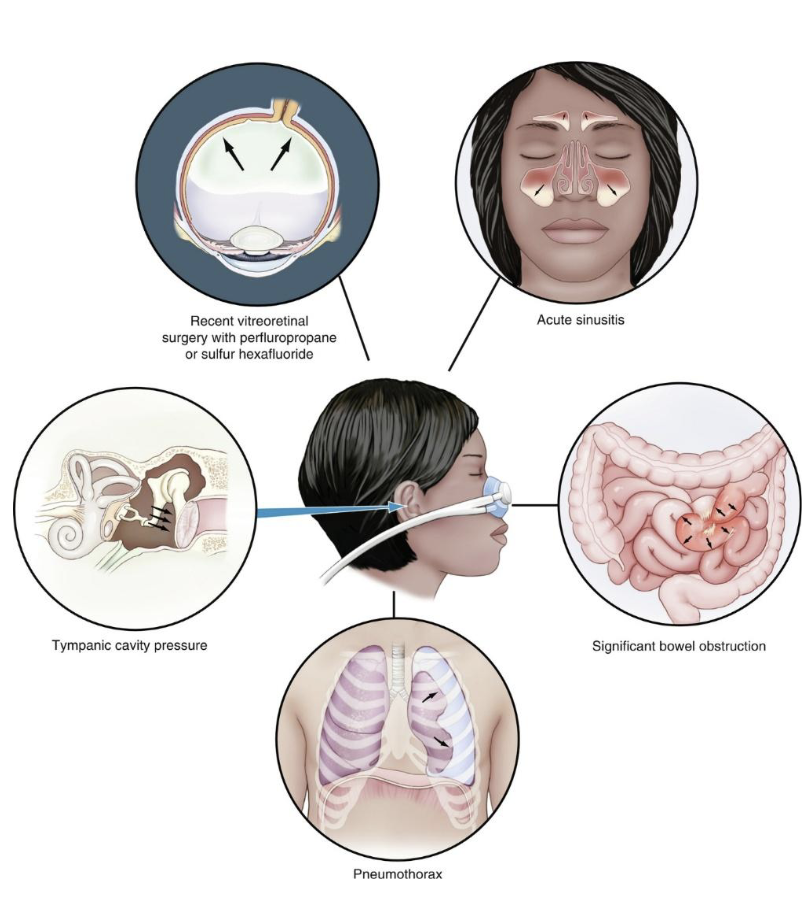
why can nitrous oxide increase pressure in closed body spaces?
nitrous enters spaces 34x faster than nitrogen leaves, increasing pressure and volume
N2O is the _____ potent of all inhalation general anesthetics
least
what is drug potency determined by?
minimum alveolar concentration (MAC)
MAC is the amount of drug necessary to prevent movement in 50% of subjects responding to surgical incision
what is MAC for N2O?
104% to 105%
what is the MAC for inhalation anesthetics halothane and isoflurane?
halothane: 0.75%
isoflurane: 1.2%
All are reasons why N2O is not used as a sole anesthetic agent for surgery in the operating room at a hospital except one. Which one is this exception?
A. Because it is the least potent (weakest) of all inhalation general anesthetics.
B. Because it has a MAC value of 104% to 105%.
C. Because profound surgical anesthesia is unattainable unless it is used under hyperbaric conditions.
D. Because it is much more expensive than halothane or sevoflurane, which are agents commonly used.
D. Because it is much more expensive than halothane or sevoflurane, which are agents commonly used.
Hydrocarbons such as oil, grease, or other lubricants should not be used near valves, gauges, regulators, or any fittings on N2O/O2 equipment because they may cause
A. leaking of the gas cylinder.
B. malfunctioning of the regulator.
C. a catastrophic explosion.
D. rusting inside the gauges.
C. a catastrophic explosion.
which two structures aid in respiratory function?
driven automatically by the brain stem (medulla oblongata) and voluntarily by the cerebral cortex
why are swollen tonsils or a deviated septum concerns for nitrous oxide sedation?
the patient must be able to breathe comfortably through the nose for nitrous oxide to work properly
if the larynx is irritated, what reflex is initiated?
cough reflex
what structure marks the bifurcation to the right and left bronchi, and initiates an even stronger cough reflex?
the carina
which bronchi is shorter?
right side
more aspirations into right side
what are bronchioles?
continuous division of the bronchi but w/o cartilage
which generation begins the respiratory zone?
17
T/F: it is the 300 million alveoli that the exchange between air and blood takes place
TRUE
which 2 structures aid in active respiration, and how do they move?
diaphragm: moves downward
external intercostal muscles: move outward
what is minute ventilation?
the amount of gas brought into the lungs each minute
why do we begin nitrous administration with 6 L/min of oxygen?
to determine the patient's tidal volume (minute ventilation) before titration
atmospheric air is composed of…
~79% nitrogen, ~21% oxygen, and 0.04% carbon dioxoide
combined, the gases produce a pressure of 760 mm Hg at sea level
where is N2O eliminated through?
99% is eliminated through the lungs
a healthy patient with no pulmonary or CVD, O2 saturation should be between what?
96% and 100%
oxygen below ___% is dangerous
90
what is diffusion hypoxia?
decreased oxygen saturation levels in the blood caused by the rapid exit of nitrous on its termination
what are some side effects of diffusion hypoxia?
postoperative headache
lethargy
nausea
what should you do to prevent diffusion hypoxia?
administer 100% pure oxygen for the first 3 to 5 minutes
continue oxygen until patient fully recovers
if choking occurs:
abdominal thrusts, chest thrusts and/or back blows until the foreign object is expelled
if patient becomes unconscious, call 911 and perform chest thrusts and attempt to ventilate the lungs
head tilt-chin lift
full face mask filled with oxygen can provide positive pressurized oxygen
pulse oximeter must be on
what should you do if vomiting occurs?
roll the patient on their side and use suction to remove any vomitus
general guidelines pediatrics (can they eat before sedation, etc.?)
suggest a light meal with no fried or fatty foods be consumed at least 6 hours before sedation procedures and that no liquids be consumed within 2 hours of the procedure
fasting is not required before minimal sedation
The term used to define the decrease in blood oxygen saturation caused by the rapid exit of nitrous oxide upon its discontinuation is called:
A. diffusion hypoxia
B. pulmonary effusion
C. arterial anoxia
D. aortic stenosis
A. diffusion hypoxia
The pulse oximeter uses light wavelengths to measure the amount of oxygen saturation of arterial blood. Which values would be considered normal for a healthy individual?
A. 68
B. 78
C. 88
D. 98
D. 98
where does air (gas) exchange occur in the body with the use of nitrous oxide?
alveoli
a COMMON area of spasm etalsdenced by significant cough and gag reflex occurs at the:
A. larynx
B. trachea
C. carina
D. nasopharynx
A. larynx
(carina is the last resort)
flushing around the patient’s face and neck indicates what?
vasodilation
currently, how many conditions involving the cardiovascular system should indicate medical consultation or postponement of N2O/O2 use?
zero
the sinuses are non-expansive which leads to an ________ in pressure when N2O is administered
increase
may be uncomfortable for the patient
T/F: patient is NOT susceptible to hypoxia due to airway resistance, impaired function, or movement
FALSE ; they are susceptible
has there ever been an allergy reported to N2O?
no
what respiratory condition is positively influenced by nitrous oxide?
asthma
what respiratory disease is a contraindication to nitrous oxide?
COPD
how does nitrous oxide affect the central nervous system?
it depresses the CNS
chronic exposure to N2O can lead to…
numbness and weakness in the extremities
why is vitamin B12 deficiency a contraindication?
nitrous interferes with vitamin B12-dependent reactions (can potentially worsen it). avoid use or obtain medical consultation
during which trimester of pregnancy is nitrous contraindicated?
first trimester
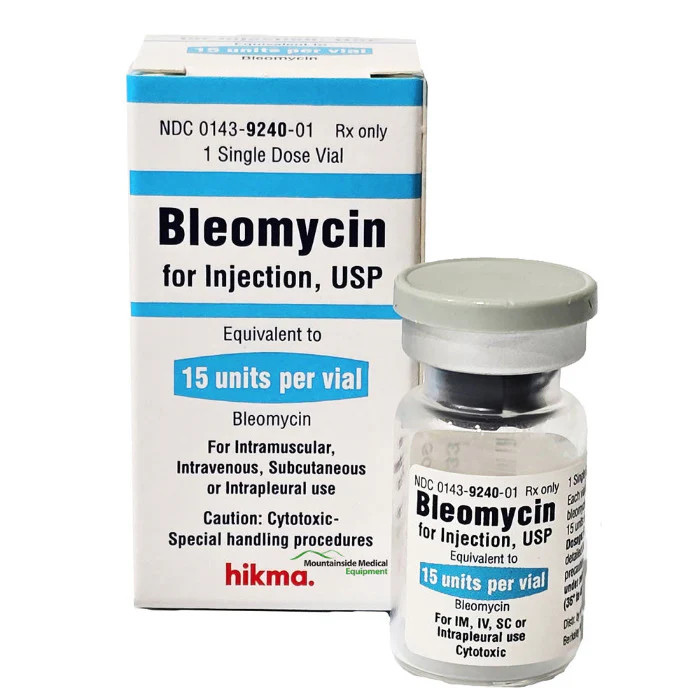
what cancer therapy is a contraindication to nitrous oxide?
bleomycin sulfate therapy
is nitrous oxide a trigger for malignant hyperthermia?
no. it may be safely administered to MH-susceptible individuals
when is nitrous appropriate for patients with cognitive impairments?
only if the patient can understand the procedure and communicate discomfort
which patients should NOT receive nitrous because of mental status concerns?
patients with:
psychological impairment
current psychotropic drug use
current/recovering addiction
inability to understand or consent to treatment
what ear-related condition is a contraindication?
middle ear disturbance or surgery
what eye-related condition is a contraindication?
recent eye surgery involving perfluoropropane or sulfur hexafluoride gas
what are the major nitrous oxide contraindications?
COPD
B12 deficiency/pernicious anemia
Bowel obstruction
First trimester pregnancy
Psychological impairment
Current psychotropic drug use
Current/recovering addiction
Unable to understand/consent
Middle ear surgery
Recent eye surgery
Pneumothorax
Acute sinusitis/URI
Cystic fibrosis (some cases)
Abusers of N2O
which condition is NOT a contraindication to nitrous oxide?
hepatits C
Each are relative contraindications to the use of N2O/O2 sedation except one. Which one is the exception?
A. Patient with psychotic illness taking several medications
B. Patient who does not have the mental capacity to understand the procedure
C. Operator who cannot communicate with the patient because of a language barrier
D. Patient has undiagnosed anorexia with nutritional deficiencies
E. Patient is being treated for hepatitis C
E. Patient is being treated for hepatitis C
An indication for use of N2O/O2 sedation is a patient who
A. has a hypersensitive gag reflex.
B. has severe claustrophobia.
C. has current upper respiratory tract infection.
D. is in the first trimester of pregnancy.
E. is currently intoxicated or high.
A. has a hypersensitive gag reflex
what are the signs and symptoms of appropriate sedation?
patient is comfortable and relaxed
reduced fear and anxiety
aware of surroundings
responds to directions and conversation
eyes become less active and glazed look appears
what physical sensations may occur during appropriate sedation?
tingling in fingers, toes, or around mouth
heaviness in arms/legs
light feeling
body warmth
vasodilation in face and neck
circumoral (around the mouth) numbness
how does facial expression change during appropriate sedation?
expression becomes flat/relaxed
no forehead tension
patient may smile or giggle easily
during appropriate sedation, can the patient follow directions?
yes. the patient remains aware of surroundings and can maintain conversation and follow directions
what should you stress the patient refrain from?
talking
what should you ask a patient during nitrous sedation?
ask HOW they are feeling, not WHAT they are feeling
what should you do if a patient becomes uncomfortable?
immediately decrease the nitrous concentration
what are common signs of oversedation?
floating or flying sensation
detachment from surroundings
dreamlike state
hallucinations/fantasizing
out-of-body experiences
humming or vibrating sounds that progressively worsen
uncontrolled laughter
what physical symptoms may occur with oversedation?
drowsiness
dizziness
nausea
light-headedness
diaphoresis (sweating)
feeling too warm/hot
fixed eyes
what signs can oversedation progress to?
sluggish, delayed responses
slurred words or no verbal sense
agitated or combative behavior
vomiting
unconsciousness
Each are signs of administering too much N2O except one. Which one is this exception?
A. Slow blink rate
B. Dizziness
C. Nausea
D. Slurred speech
E. Floating sensation
A. Slow blink rate
Monitoring a patient’s signs and symptoms throughout the entire sedation experience is vital to success. Which indicates an appropriate sequence of events leading to a relaxed and comfortable patient?
A. Awareness of surroundings to detachment of environment
B. Active eyes to slowed blink rate to inability to keep eyes open
C. Appropriate verbal response to conversation to slurred, inaudible speech
D. Slight tingling in extremities to vasodilation in face and neck
D. Slight tingling in extremities to vasodilation in face and neck