quiz 4: chapter 10 - adolescent development
 Call Kai
 Learn
Learn Practice Test
 Spaced Repetition
 Match
Match Flashcards
 Knowt Play
1/3

There's no tags or description
Looks like no tags are added yet.
Name | Mastery | Learn | Test | Matching | Spaced | Call with Kai |
|---|
No analytics yet
Send a link to your students to track their progress
4 Terms
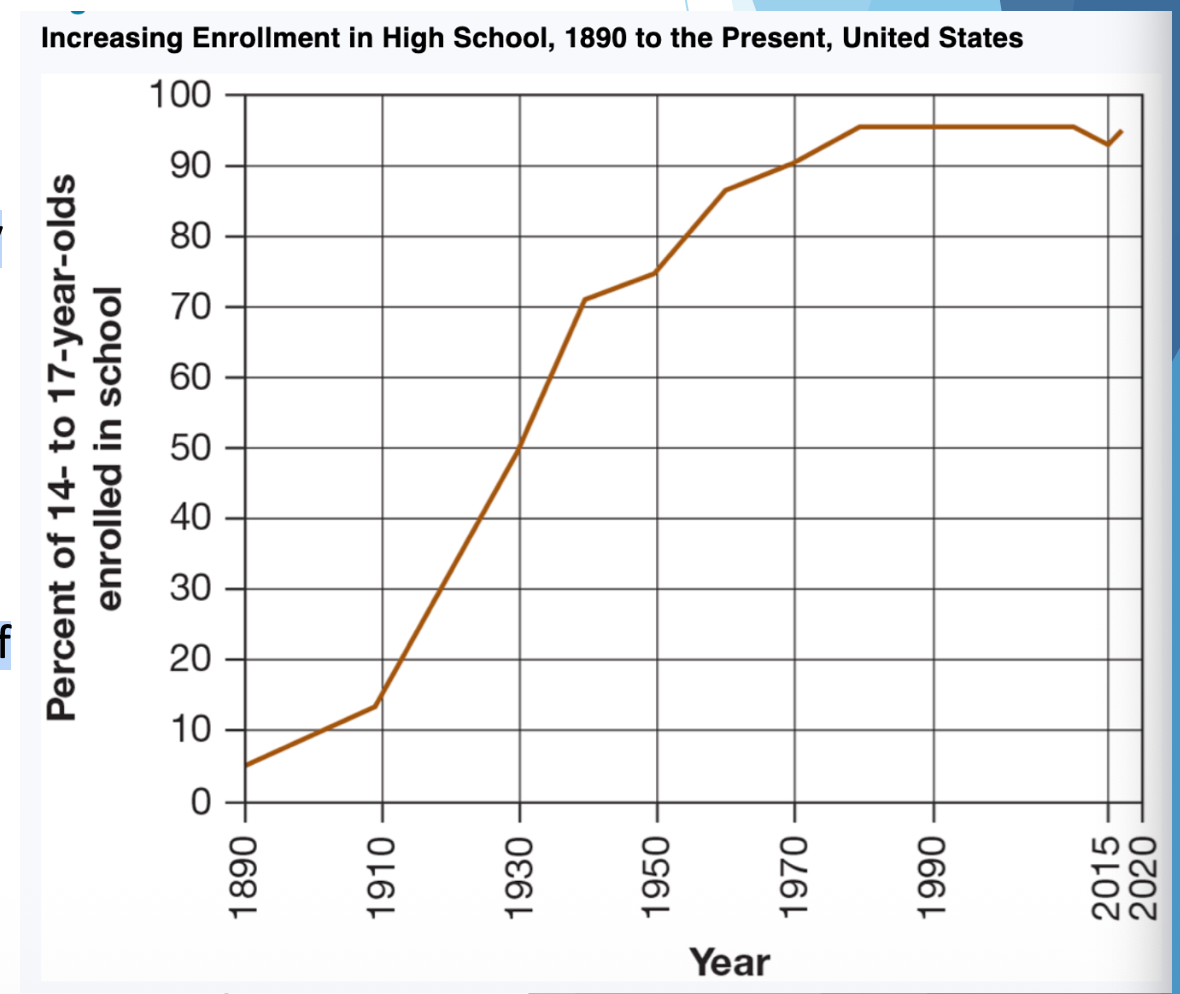
A Brief History of Secondary Schools
Almost all adolescents in developed/developing countries are enrolled in school, and in developing countries the proportion of adolescents attending school is steadily rising/declining.
T/F: Mandatory secondary school education is relatively recent in the US.
In other developed countries, a similar trend occurred during these decades; schooling became the normative experience for adolescents.
↪ For example, in Norway, as recently as 1950 only 20% of adolescents continued school past age 15.
↪ Today, education is compulsory until age 16, and over 95% are enrolled in ? school.
developed. rising.
TRUE.
secondary.
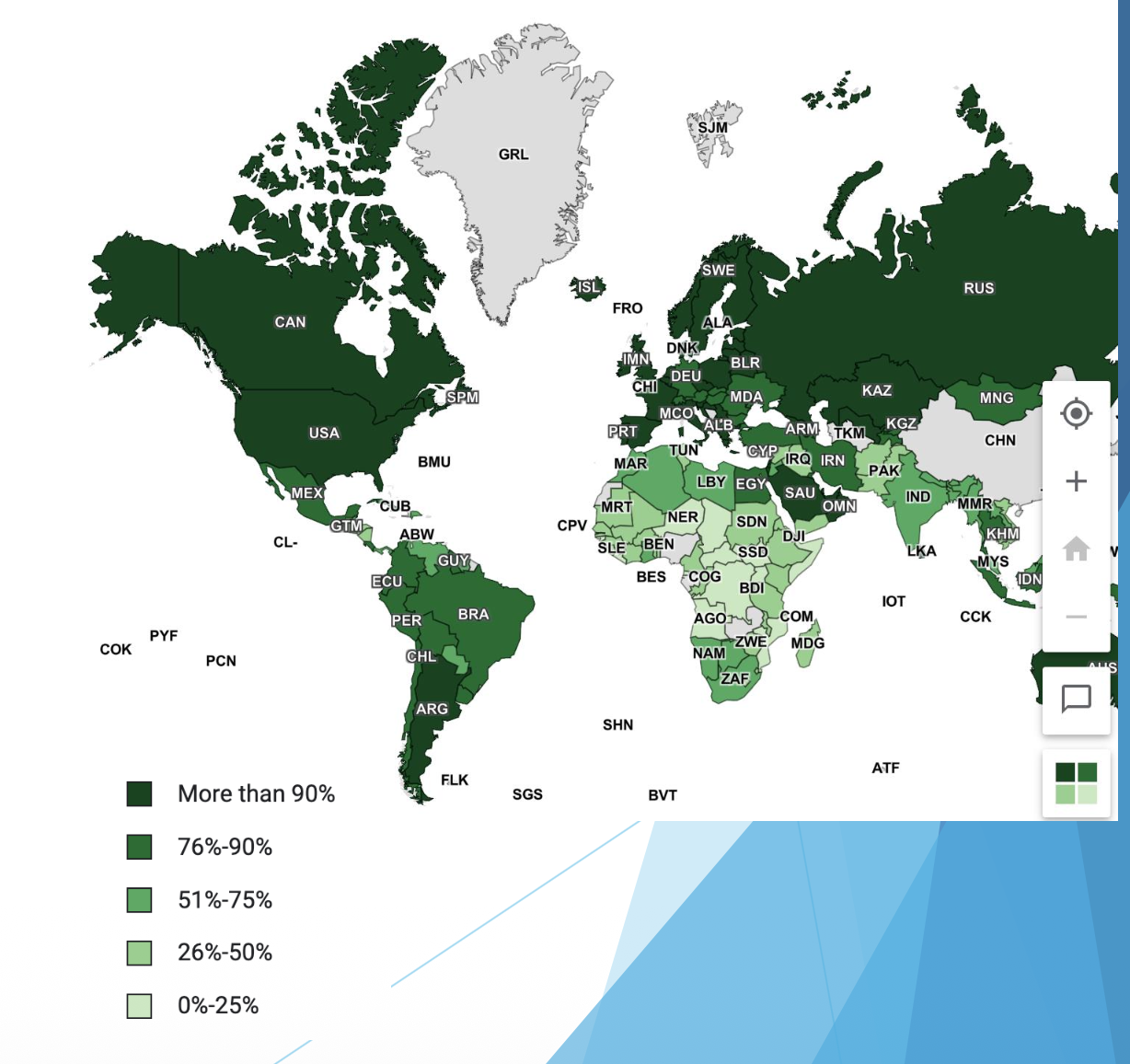
A Brief History of Secondary Schools
In contrast, even now adolescents often do not attend secondary school in developing/developed countries.
The map illustrates that enrollment remains lower/higher in developing countries than in developed countries (World Bank, 2020).
↪ About 60% of adolescents are enrolled in secondary education in economically developing countries, compared to about __% in developed countries.
developing.
lower.
90.
A Brief History of Secondary Schools
Something to keep in mind whenever you hear or read about national educational policies in the United States is that the federal government has limited/maximum power to implement policies in American schools.
Unlike every other developed country in the world, most decisions about education in the United States are controlled on the ? and ? levels, not on the national level.
T/F: Because schools are funded and controlled by states and cities rather than nationally, a great deal of variability exists across the different U.S. school districts in the curriculums they use and in school rules and requirements.
limited.
local and state levels.
TRUE.
Does School Size Matter?
Large schools can be alienating, but they also have the advantage of being able to offer a more diverse/narrow range of classes than smaller schools.
Although smaller schools offer less diversity in extracurricular activities, students in smaller schools are actually more likely to __ in them.
Students at smaller/larger schools are more likely to be placed in positions of leadership and responsibility—vice president of the drama club, treasurer of the girls’ chorus, and so on.
↪ These students typically report that their __ makes them feel more confident in their abilities and more needed and important.
One systematic review of 127 studies across 41 countries concluded that class size had essentially no effect/huge effect on student achievement (Filges et al., 2018).
↪ However, for students with academic difficulties, researchers agree that small/large classes are preferable because each student is likely to need more individual attention.
diverse.
participate.
smaller.
participation.
no effect.
small.