anatomy chapter 6
0.0(0)
Studied by 0 people Call Kai
 Learn
 Practice Test
 Spaced Repetition
 Match
 Flashcards
 Knowt Play
Card Sorting
1/46

Earn XP
Description and Tags
47 Terms
1
New cards
how often are bones replaced
bones are very dynamic and actively replace themselves about every 7 years
2
New cards
functions of the skeletal system
* support
* protection
* movement
* storage
* blood cell production (hematopoiesis)
SSM-PB
* protection
* movement
* storage
* blood cell production (hematopoiesis)
SSM-PB
3
New cards
SUPPORT function of the skeletal system
* bone is hard and rigid, cartilage is flexible yet strong
* cartilage in nose, external ear, thoracic cage and trahcea
* ligaments - bone to bone
* cartilage in nose, external ear, thoracic cage and trahcea
* ligaments - bone to bone
4
New cards
PROTECTION function of the skeletal system
* skull around brain
* ribs, sternum, vertebrae protect organs of thoracic cavity
* ribs, sternum, vertebrae protect organs of thoracic cavity
5
New cards
MOVEMENT function of the skeletal system
* produced by muscles o bones, via. tendons
* ligaments allow some movement between bones but prevent excessive movement
* ligaments allow some movement between bones but prevent excessive movement
6
New cards
STORAGE function of the skeletal system
* Ca and P; stored then released as needed
* adipose tissue stored in marrow cavities
* adipose tissue stored in marrow cavities
7
New cards
BLOOD CEL PRODUCTION (HEMATOPOIESIS) function of the skeletal system
* bone marrow that gives rise to blood cells and platelets
8
New cards
how many bones in body
\~206
9
New cards
3 ways skeleton is divided
* location (axial vs. appendicular)
* shape (long, short, flat, irregular)
* internal structure (compact and spongy)
* shape (long, short, flat, irregular)
* internal structure (compact and spongy)
10
New cards
axial
bones along the vertebral axis (skull, vertebral column, and rib)
11
New cards
appendicular
limbs and what the limbs use to attach to the axial bones (pelvis, shoulder blades, arms, and legs)
12
New cards
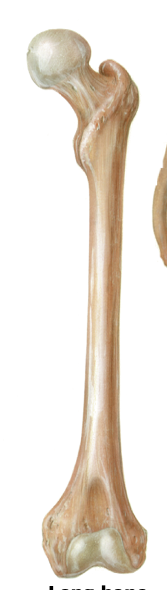
long bones
ex. upper and lower limbs
* femur/thigh
* femur/thigh
13
New cards
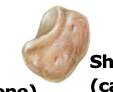
short bones
ex. carpals and tarsals
14
New cards
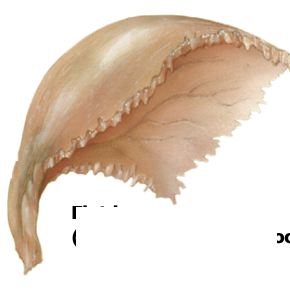
flat bones
* ribs, sternum, skull, scapulae
15
New cards
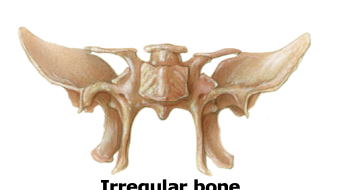
irregular bones
ex. vertebrae, facial
16
New cards
compact bone
* har, smooth bone
17
New cards
spongy bone
* light, softer, porous bone
18
New cards
compact bone in flat, short, and irregular bones
* hard exterior
* surfaces
* organized in lamellae
* surfaces
* organized in lamellae
19
New cards
spongy bone in flat, short, and irregular bones
* softer interior (porous)
* like a sandwich
* organized in trabeculae
* like a sandwich
* organized in trabeculae
20
New cards
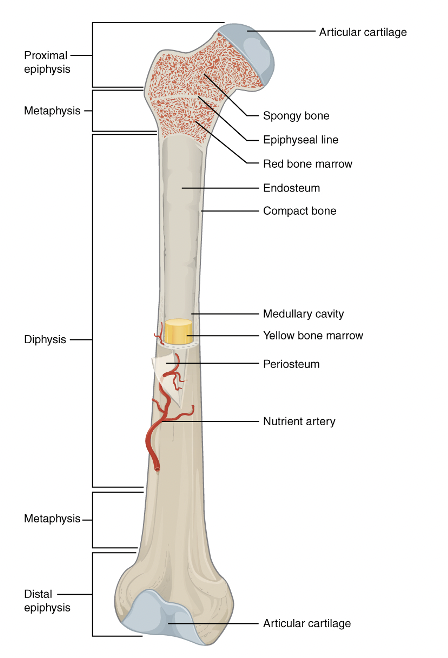
compact bone in long bones
* hard exterior
* external surface and diaphysis (middle)
* organized in lamellae
* external surface and diaphysis (middle)
* organized in lamellae
21
New cards
spongy bone in compact bones
* softer interior (porous)
* concentrated more in epiphysis (ends)
* organized in trabeculae
* concentrated more in epiphysis (ends)
* organized in trabeculae
22
New cards
compact bones contain
* lamellae
* central canals
* osteocytes
* osteons
* central canals
* osteocytes
* osteons
23
New cards
lamellae
concentric rings that run in opposite directions for strength
24
New cards
central canals
parallel to long axis, hold nerves and blood vessels
25
New cards
osteocyte
bone cells
26
New cards
osteon
central canal, contents, associated concentric lamellae and osteocytes
27
New cards
trabeculae
* organization of spongy bone
* interconnecting rods or plates of bone. like scaffolding
* spaces filled with marrow
* interconnecting rods or plates of bone. like scaffolding
* spaces filled with marrow
28
New cards
bone cells
* osteocytes
* osteoblasts
* osteogenic
* osteoclasts
* osteoblasts
* osteogenic
* osteoclasts
29
New cards
osteocytes
* mature bone cells
* make small mount of bone, but mostly just maintain bone
* lacunae: spaces occupied by osteocyte cell body
* make small mount of bone, but mostly just maintain bone
* lacunae: spaces occupied by osteocyte cell body
30
New cards
lacunae
spaces occupied by osteocyte cell body
31
New cards
osteoblasts
formation of bone through ossification or osteogenesis
32
New cards
ossification
format ion of bone by osteoblasts
33
New cards
osteogenic
(osteoprogenitor) - stem cells that can turn into any osteo cell
34
New cards
osteoclasts
resorption of bone
35
New cards
mechanical stress and bone strength
* stress causes bone remodeling to
* increase bone mass (density)
* align trabeculae with stress
* changes causes by:
* osteoblast activity
* increases with stress
* increase bone mass (density)
* align trabeculae with stress
* changes causes by:
* osteoblast activity
* increases with stress
36
New cards
bone remodeling
* converts fetal or damaged into lamellar bone
* groups of osteoclasts and osteoblasts that remodel bones
* involved in bone growth, changes in bone shape, adjustmets in bone due to stress, bone repair, and Ca ion regulation
* groups of osteoclasts and osteoblasts that remodel bones
* involved in bone growth, changes in bone shape, adjustmets in bone due to stress, bone repair, and Ca ion regulation
37
New cards
formation of new osteons in compact bone
* osteoclasts enter the osteon from blood in the central canal and iternally remove lamellae.
* osteoclasts remove bone from the exterior, and the bone is rebuilt
* osteoclasts remove bone from the exterior, and the bone is rebuilt
38
New cards
calcium homeostasis
* ca+ is used for several psychological processes
* muscle contractions
* nerve signaling
* salt that is used in bone formation
* muscle contractions
* nerve signaling
* salt that is used in bone formation
39
New cards
major storage site for calcoum
* bone; like our bodies calcium “bank”
* blood calcium depends upon movement of calcium in or out of bone
* calcium enters bone when osteoblasts build new bone. calcium leaves bone when osteoclasts resorb bone
* blood calcium depends upon movement of calcium in or out of bone
* calcium enters bone when osteoblasts build new bone. calcium leaves bone when osteoclasts resorb bone
40
New cards
two hormones that control blood calcium levels
* parathyroid hormone
* calcitonin
* calcitonin
41
New cards
calcium __ bone when osteoblasts new bone
enters
42
New cards
open (compound)
bone break with open wound. bone may be sticking out of wound
43
New cards
closed (simple)
skind not perforated
44
New cards
incomplete/hairline
doesn’t extend across the bone. common in skull fractures
45
New cards
comminuted fractures
complete with break into more than two pieces
46
New cards
impacted fractures
one fragment is driven into the spongy portion of the other fragment
* classified on the basis of direction of fracture
* linear
* transverse
* spiral
* oblique
* greenstick
* classified on the basis of direction of fracture
* linear
* transverse
* spiral
* oblique
* greenstick
47
New cards