Topic 3: Chemistry
 Call Kai
 Learn
Learn Practice Test
 Spaced Repetition
 Match
Match Flashcards
 Knowt Play
1/10

There's no tags or description
Looks like no tags are added yet.
Name | Mastery | Learn | Test | Matching | Spaced | Call with Kai |
|---|
No analytics yet
Send a link to your students to track their progress
11 Terms
Atomic theory
The atomic theory was developed by many people throughout time. The ones that helped develop this theory are: Democritus, Aristotle, Dalton, Thomson, Rutherford, Bohr.
Subatomic particles
The particles the atom is made of. Protons, neutrons, and electrons.
Neutrons
No charge, makes up part of the mass in an atom, located in the nucleus.
Protons
Positive charge, cation, makes up part of the mass in an atom, located in the nucleus.
Electrons
Negative charge, anion, found in the electron cloud(energy levels).
Atomic number
Number of protons. Unique to each atom. #p+ = #e-(except in an ion).
Atomic mass
Composed of neutrons and protons.
Isotopes
Atoms of the same element that have different numbers of neutrons in the nucleus. Mass number is determined by the number of protons and neutrons in the nucleus. Average atomic mass is a mixture of isotopes. Same atomic number, different amounts of neutrons.
Valance electrons
they are located in the outermost shell and are responsible for forming chemical bonds. The number of valence electrons is equal to the group number.
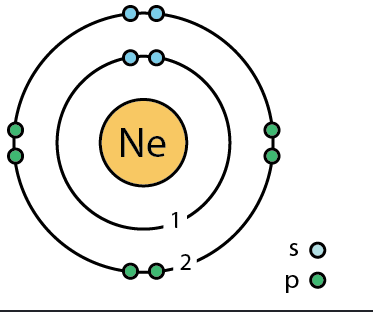
Bohr model
Proposed that electrons move in paths at certain distances around the nucleus. Electrons can jump from a path on one level to a path on another level.
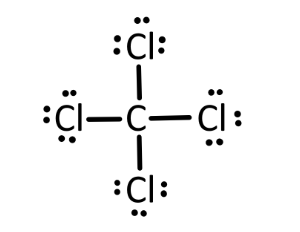
Lewis structure
Electrons of an atom are of two types: core electrons and valence
electrons. Only the valence electrons are shown in Lewis dot-line structures.Shows or represent valence electron as a dot surrounding the element symbol.