ECON 311 Ray TAMU Exam 4 Study
 Call Kai
 Learn
Learn Practice Test
 Spaced Repetition
 Match
Match Flashcards
 Knowt Play
1/113

There's no tags or description
Looks like no tags are added yet.
Name | Mastery | Learn | Test | Matching | Spaced | Call with Kai |
|---|
No analytics yet
Send a link to your students to track their progress
114 Terms
Two Types of Monetary Policy
Expansionary and Contractionary
Contractionary Policy
A decrease in monetary expansion by the Federal Reserve
Use contractionary policy when...
When the economy has inflation
Expansionary Policy
An increase in monetary expansion by the Federal Reserve
Use expansionary policy when...
The economy is in a recession (to stimulate economy)
Conventional (Traditional) Monetary Policy
Policy used by the Federal Reserve to control either 1) interest rate payable for short-term borrowing or 2) money supply
Why use conventional monetary policy?
To promote maximum output and stable prices
What are conventional monetary policy tools?
Discount rates (borrowed reserves), reserve requirements, OMOs (open market operations)
What is the newest monetary policy tool (2008)?
Interest on reserves
Unconventional (Nontraditional) Monetary Policy
Nonstandard monetary policies
Unconventional monetary policy tools
Negative interest rates, forward guidance, quantitative easing, collateral adjustments
Open Market Operations (OMOs)
Consist of purchases and sales of short-term Treasury securities and other securities on the secondary market that the Federal Reserve conducts to affect market interest rates and economic activity.
According to the textbook, the two types of OMOs are...
1) Outright purchases or sales of securities, and 2) repurchase agreements and reverse repurchase agreements
Outright OMOs
A permanent purchase or sale of securities in the open market by the Federal Reserve; not reversible and have a lasting economic effect.
Why are all Outright OMOs Dynamic OMOS, but not all Dynamic OMOs are Outright OMOs? What's the difference?
Dynamic Open Market Operations are defined by their purpose: to change the level of reserves and the monetary base to influence the economy.
Outright (or Permanent) Open Market Operations are defined by their method: buying or selling securities permanently (without a reversal date).
Dynamic OMOs
A monetary policy enacted to cause a direct change in the bank reserves and the monetary base.
What's the opposite of Dynamic OMOs?
Defensive OMOs
What's the opposite of Defensive OMOs?
Dynamic OMOs
Defensive OMOs
An open market operation intended to offset movements in other factors that influence the monetary base, such as changes in Federal Reserve float.
What are Outright OMOs classified as? Defensive or Dynamic?
Dynamic
How are Defensive OMOs used?
To increase or decrease reserves available to the banking system on a short-term basis, addressing reserve needs that are considered to be temporary in nature.
What are the two types of Defensive OMOs?
Repos and Reverse Repos
Repo (Repurchase Agreement)
A transaction in which the Federal Reserve buys securities from a counterparty subject to an agreement to resell the securities later, thus temporarily increasing the supply of reserves in the banking system.
Purpose of repos?
Temporarily increases a bank's reserves
What does the difference between the purchase price and repurchase price imply?
Adjusted for the term of the repurchase agreement, it implies the interest rate for the repurchase agreement
Reverse Repo (reverse repurchase agreement)
A transaction in which the Federal Reserve sells securities to a counterparty subject to an agreement to repurchase the securities later, thus temporarily decreasing the supply of reserves in the banking system.
Purpose of reverse repos?
Temporarily decrease the supply of reserves in the banking system.
What do reverse repos indicate?
Excess liquidity in the banking system, suggesting that banks have money left over after covering their liabilities
Quantitative Easing
A monetary policy action in which the Federal Reserve buys government bonds or other financial assets to inject monetary reserves into the economy, thus stimulating economic activity.
That is, the Federal Reserve can "create money out of thin air."
What is the Fed Reserve doing with quantitative easing?
Targeting a particular quantity of securities and bank reserves, and then implements open market transactions to achieve this target.
Intention of quantitative easing?
To result in an increase in the money supply, a decline in long-term interest rates, an increase in bank lending, and a rise in economic activity. That is, the Federal Reserve can "create money out of thin air."
Forward Guidance
Communication from the Federal Reserve about the path of the economy and the likely future direction of monetary policy.
Intention of forward guidance?
By signaling the Federal Reserve's intentions, and clarifying its view of the economy, the Federal Reserve can guide long-term interest rates and other market decisions.
What do critics say about forward guidance?
Forward guidance can be a policy failure
What happened pre-2008 without Interest on Reserves?
Depository institutions had the incentive to minimize their reserves at Federal Reserve Banks because they earned no interest on these deposits.
How might the Fed Reserve combat inflation using Interest on Reserves?
The Federal Reserve can accomplish this policy by raising the interest rate that it pays on reserves maintained at Federal Reserve Banks.
What does a higher rate on reserve holdings do?
Provides banks greater incentive to decrease risky lending and thus increase their reserve deposits at Federal Reserve Banks, which earn a riskless interest rate.
What might the Fed Reserve do to combat recession? (Regarding Fed Reserves)
It will reduce the interest rate that it pays on bank holdings of reserves at Federal Reserve Banks.
What does a lower rate on reserve holdings do?
Will make it less attractive for banks to hold reserves, thus increasing the incentive for them to increase lending that stimulates the economy.
Who does payment of interest on reserves apply to?
Depository institutions that maintain reserve balances at Federal Reserve Banks: commercial banks, savings and loan associations, mutual savings banks, and credit unions.
Negative Interest Rate
A strategy of the Federal Reserve that establishes its target nominal interest rate at less than zero percent.
When has the Federal Reserve used a policy of negative interest rates (as of April 2026)?
Never
Why has a negative interest rate been used previously?
To stimulate a weak economy
How can a negative interest rate be problematic?
It can punish savers
Lender of Last Resort
An institution, usually a country's central bank, that provides loans to banks that are near collapse. In the U.S., it is the Fed Reserve Banks.
What is the interest on discount loans called?
Discount rate
What does the Fed Reserve provide to regional banks?
Discount loans
Primary Credit Program
A Federal Reserve lending program that serves as the main safety valve for providing sufficient liquidity in the banking system.
Who qualifies for primary credit?
Only banks that are in sound financial condition are eligible for primary credit.
Restrictions on use of primary credit?
No restrictions on the borrower's use of primary credit as long as borrowing appears to be consistent with the backup nature of the facility.
Secondary Credit Program
A Federal Reserve lending program available to depository institutions that are not eligible for primary credit.
Who qualifies for secondary credit?
Banks that are not in generally sound financial condition
What questions will the Fed Reserve Banks ask secondary borrowers?
They will ask questions about the borrower's financial situation and the reasons for a loan from the Federal Reserve.
What is the rate on secondary credit?
Primary credit rate plus one-half of a percentage point
Seasonal Credit Program
A Federal Reserve lending program to help small depository institutions with liquidity pressures of a seasonal nature.
Who does seasonal credit target/apply to?
Banks serving farmers or resort area motels and restaurants, seasonal-in-nature
What is the discount rate on seasonal credit?
Floating rate that fluctuates in accordance with the federal funds rate and the rate on three-month CDs
What economic effect does changing the discount rate have?
Changes in the discount rate result in negligible economic effects
Required Reserve Ratio
The fraction of checkable deposits that a depository institution must hold as reserves at its local Federal Reserve Bank, or in its own bank vault.
To combat recession, what might happen to the Required Reserve Ratio?
The Federal Reserve would reduce the required reserve ratio
What does a decrease in the Required Reserve Ratio do to the money multiplier?
A decrease in the required reserve ratio increased the money multiplier
To combat inflation, what might happen to the Required Reserve Ratio?
The Fed Reserve would raise the required reserve ratio
What happens to the money multiplier when there is an increase in the Required Reserve Ratio?
An increase in the required reserve ratio decreased the money multiplier
Primary mission of the Federal Reserve's founding?
Make the American financial system more stable in view of bank panics which plagued the U.S. economy.
Liquidity Provisions
Discount window expansion, term auction facility (borrowing at lower rate and with less stigma than the
discount window), Fed lending to investment banks and nonfinancial institutions
Large Scale Asset Purchases
Mortgage-backed securities, long-term treasury bonds
Credit Easing
Credit easing changes the composition of the Fed's balance sheet to improve functioning of specific segments (e.g. housing)
Why are reverse repos and repos defensive?
They offset temporary fluctuations in the demand or supply of bank reserves.
What was the main tool used by the early Fed Reserve?
Discount-window loans were its main monetary tool
When did OMOs become popular with the Fed Reserve?
In the 1920s
When was the dual mandate established?
In 1977
Dual Mandate
Promote maximum employment and stable prices
Limited Reserve Market v.s. Ample Reserve Market
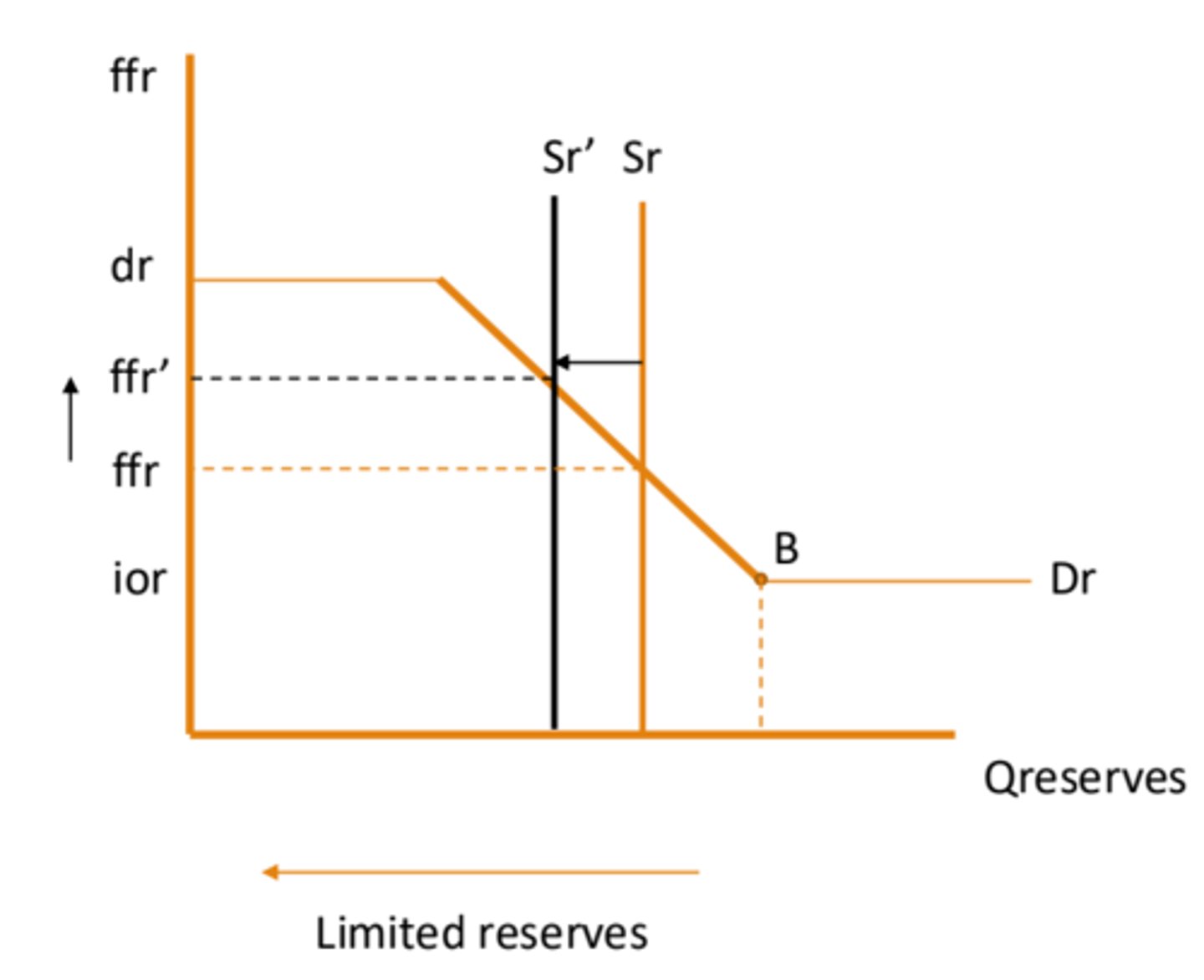
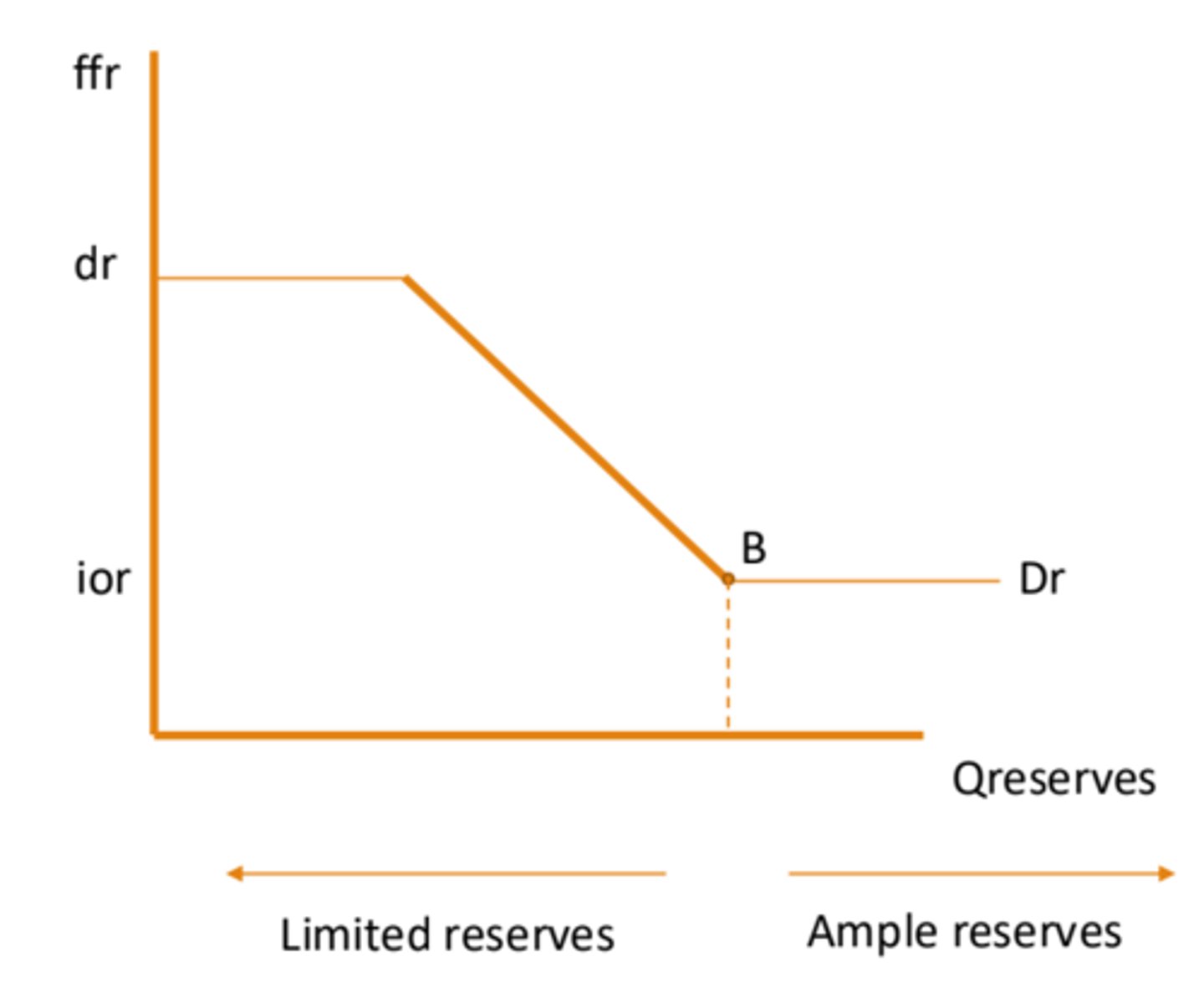
Limited reserves refer to a situation where the central bank has the minimum amount of reserves required to meet its immediate obligations.
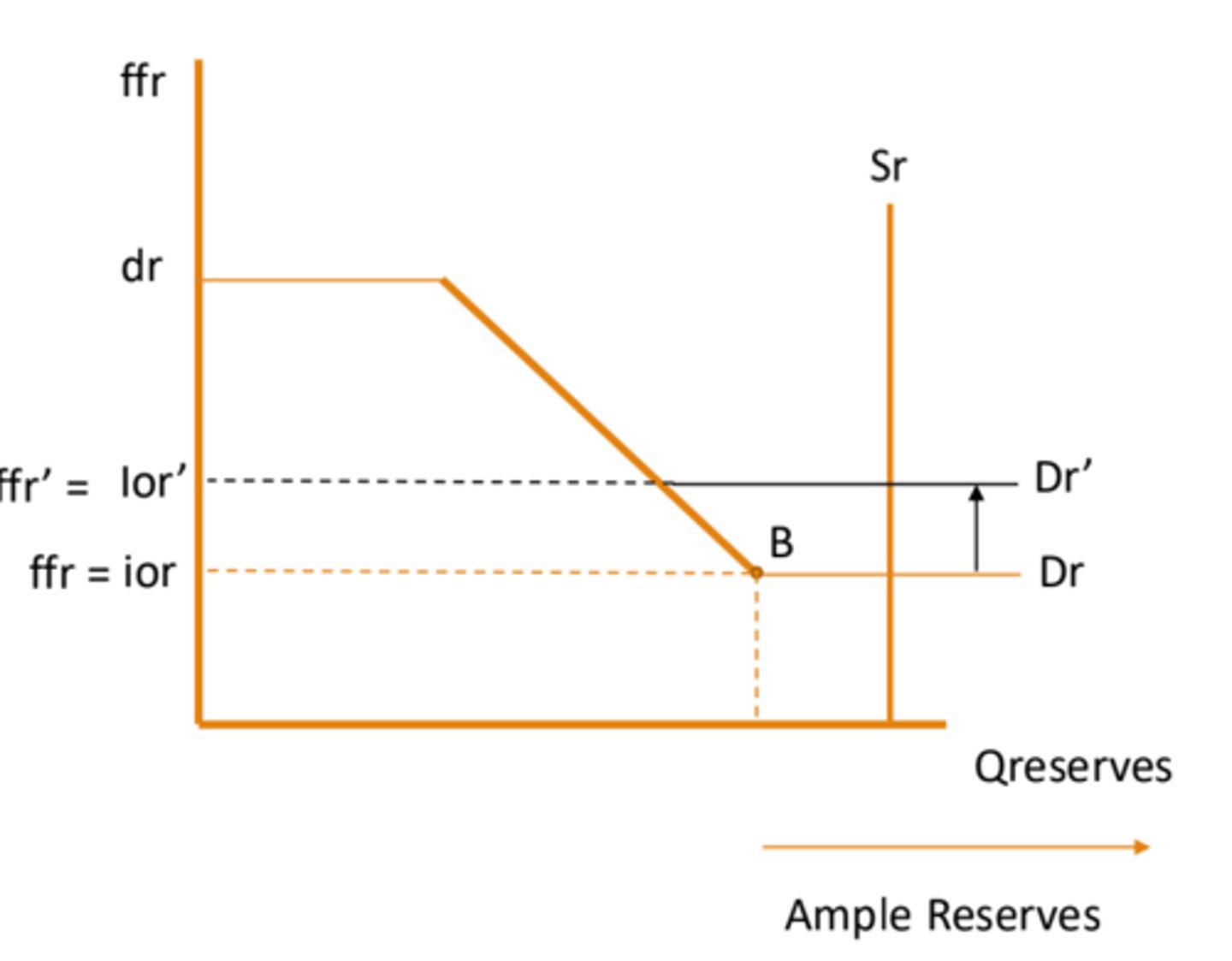
Ample reserves refer to a situation where the central bank has an abundant amount of excess reserves, meaning it has reserves that are more than what are considered necessary for immediate financial stability.
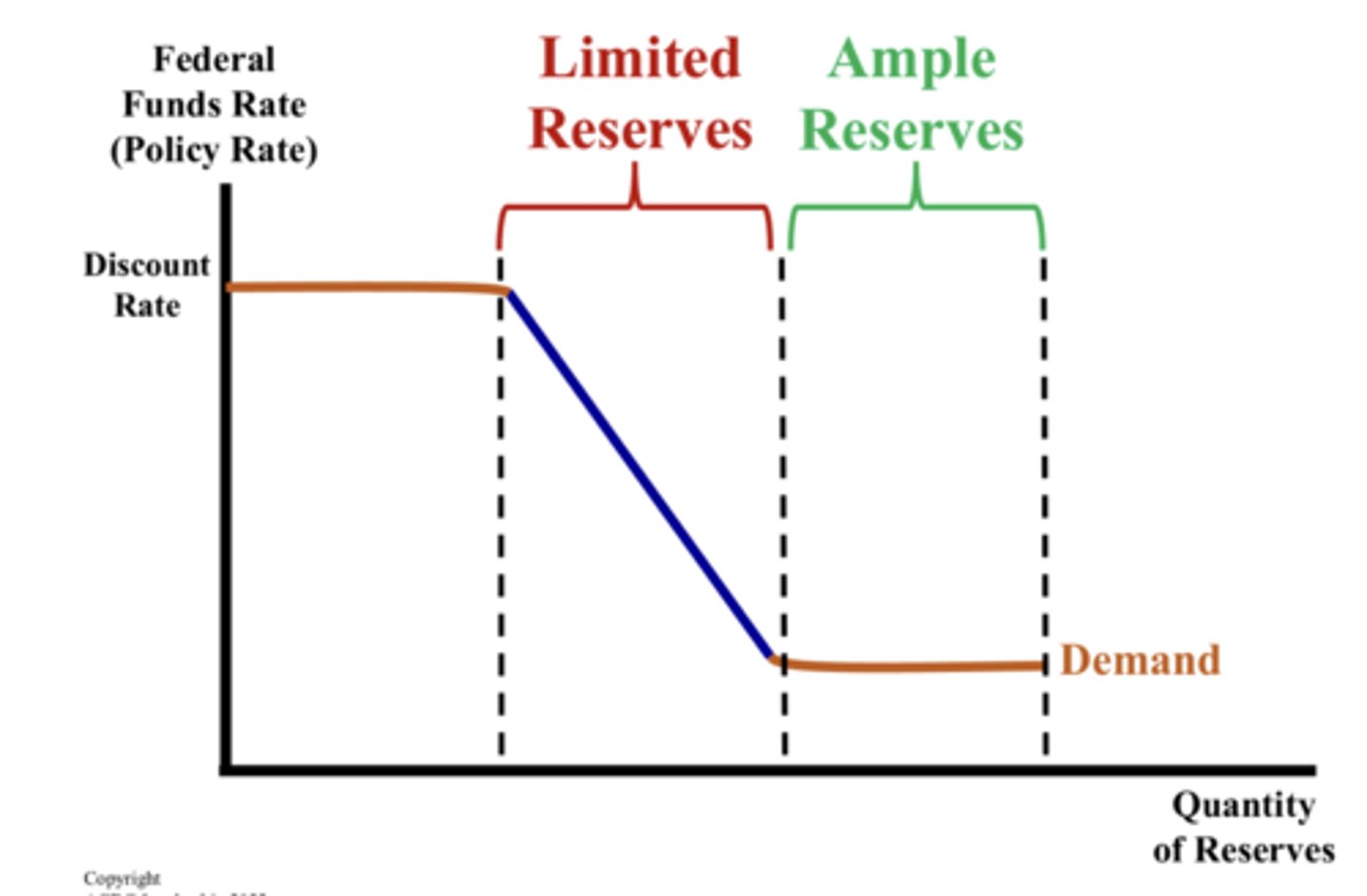
Operation of Monetary Policy
1) Federal Open Market Committee (FOMC) defines federal funds target range
2) Impacts short-term interest rates
3) Impacts long-term interest rates and overall financial conditions
4) Impacts aggregate spending of consumers and businesses and also net exports
5) Impacts the economy's employment and price levels

Federal Funds
Overnight borrowings of reserves between banks or other depository institutions to maintain their reserves balances at regional Federal Reserve Banks.
Federal Funds Rate (FFR)
Interest rate paid on borrowings of federal funds.
How to determine the federal funds rate?
Determined in the market for federal funds reserves, which embodies the supply and demand schedules of bank reserves.
Why set a target for the federal funds rate?
Acts as a guidepost for monetary policy.
According to Feldstein, how many points must short-term interest rates be reduced by to revive an economy after a recession?
To revive the economy after a recession, the Federal Reserve typically must reduce short-term interest rates by about five percentage points
The Taylor Rule (Definition)
A guideline that the Federal Reserve can use to adjust interest rates to stabilize the economy.
Taylor Rule Equation
Federal Funds Rate (Target) = Real Risk-Free Interest Rate + Current Actual Inflation Rate + Inflation Gap - Unemployment Gap
Inflation Gap
Equals the current actual inflation rate minus the 2 percent inflation target of the Federal Reserve.
Unemployment Gap
Equals the current actual unemployment rate minus the full-employment rate of unemployment, which is thought to be between 4 and 5 percent for the American economy.
Bank Reserves (Equation)
Required Reserves + Excess Reserves
Relationship between FFR and quantity of reserves demanded
Inverse (law of demand)
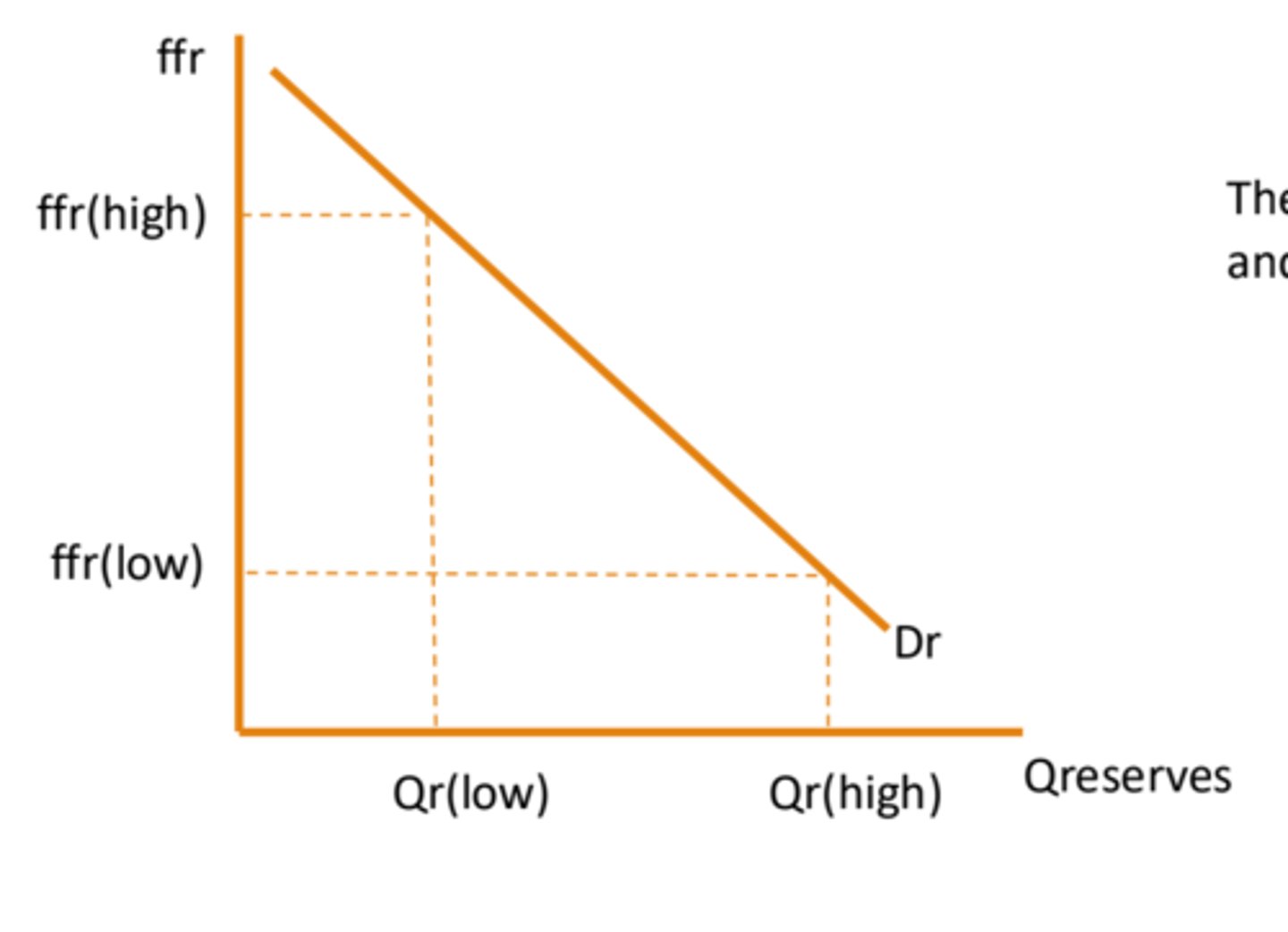
What will the FFR not exceed?
Discount rate
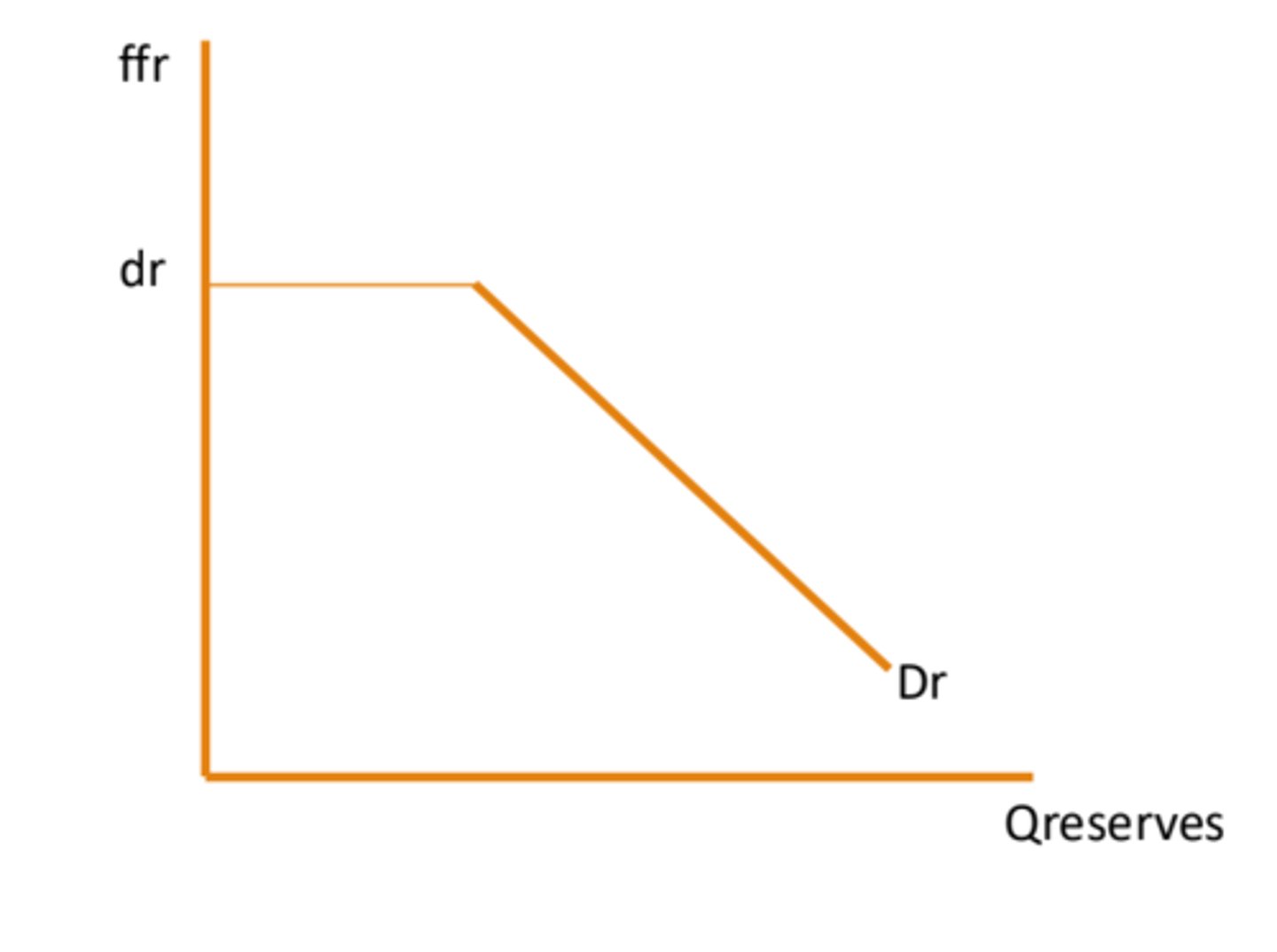
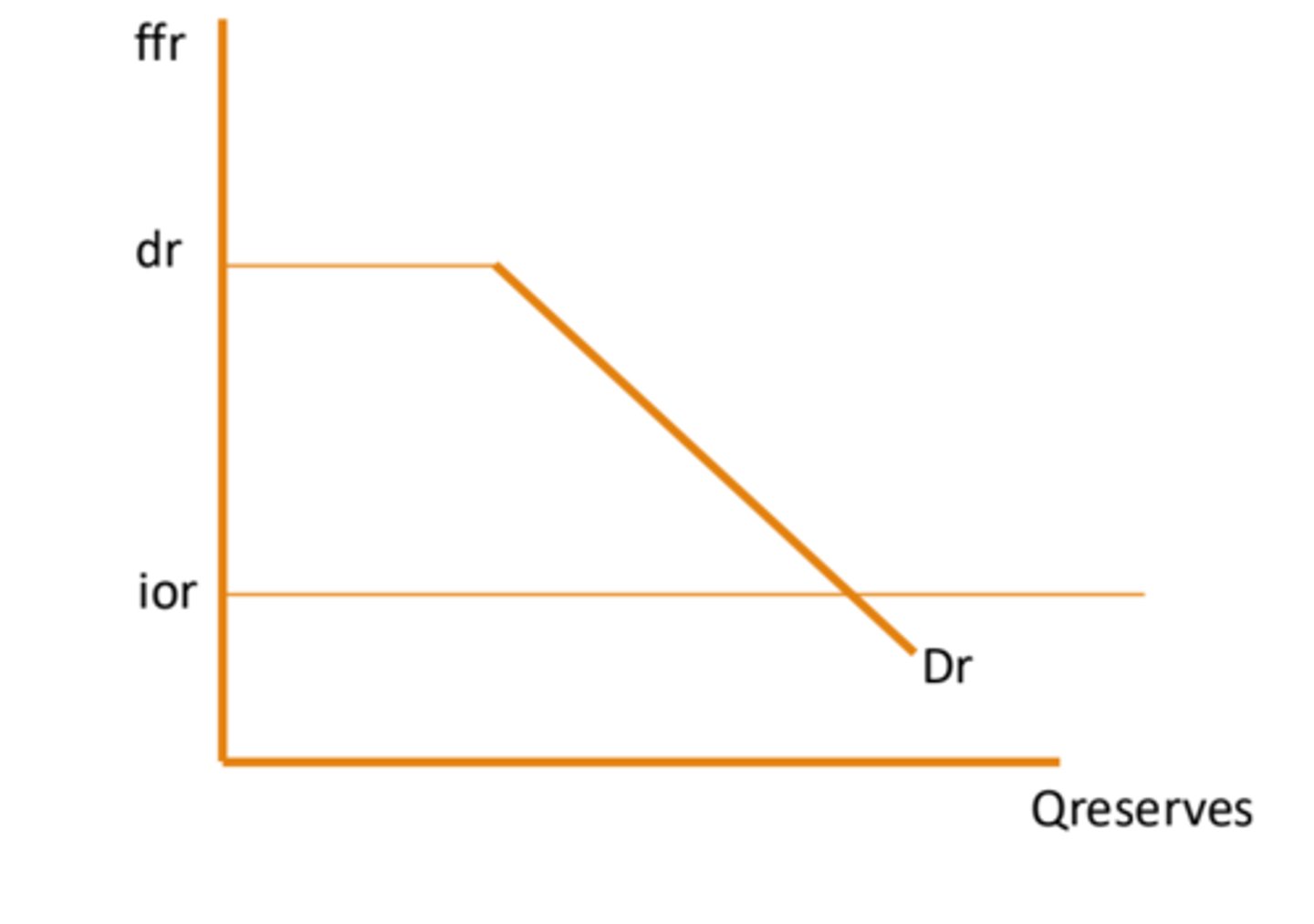
What will the FFR not go below?
The interest on reserves
Changing the FFR: Limited Reserves
Changing the FFR: Ample Reserves
Demand for Reserves
Costs of Inflation
Social and economic
Uncertainty hampers economic growth (imperfect information and decision making)
"Public hostility"
What to do with cost of inflation?
Tie the price level to a nominal anchor, e.g. inflation rate.
The "time-Inconsistency" problem
Need a "behavior rule" for the central bank to prevent
expansionary policy to lower unemployment/raise output from creating inflation. Day-to-day
discretionary policy leads to poor long-term outcomes.
Inflation Targeting
Long-run goal of price stability + nominal anchor
The central bank announces a target for inflation, commits to achieving it, and is transparent
Advantages of Inflation Targeting
Reduce time-inconsistency problem, Transparency, Accountability, Democratic (accountability to elected officials), Improved performance
Disadvantages of Inflation Targeting
Lags between policy and effect, inflexibility, Increased output/employment fluctuations, Low economic growth
NAIRU
The rate of unemployment at which there is no tendency for inflation to change
Monetary Policy Lags
Data, Recognition, Legislative, Implementation, Effectiveness
Why will the ffr NOT exceed the discount rate?
because banks would borrow at the discount rate rather than pay more in the market.
Why will the ffr not go below the IOR?
No bank would loan funds at a lower rate than they can earn by keeping them at the Fed.