L7-Lipids + test
 Call Kai
 Learn
Learn Practice Test
 Spaced Repetition
 Match
Match Flashcards
 Knowt Play
1/25

There's no tags or description
Looks like no tags are added yet.
Name | Mastery | Learn | Test | Matching | Spaced | Call with Kai |
|---|
No analytics yet
Send a link to your students to track their progress
26 Terms
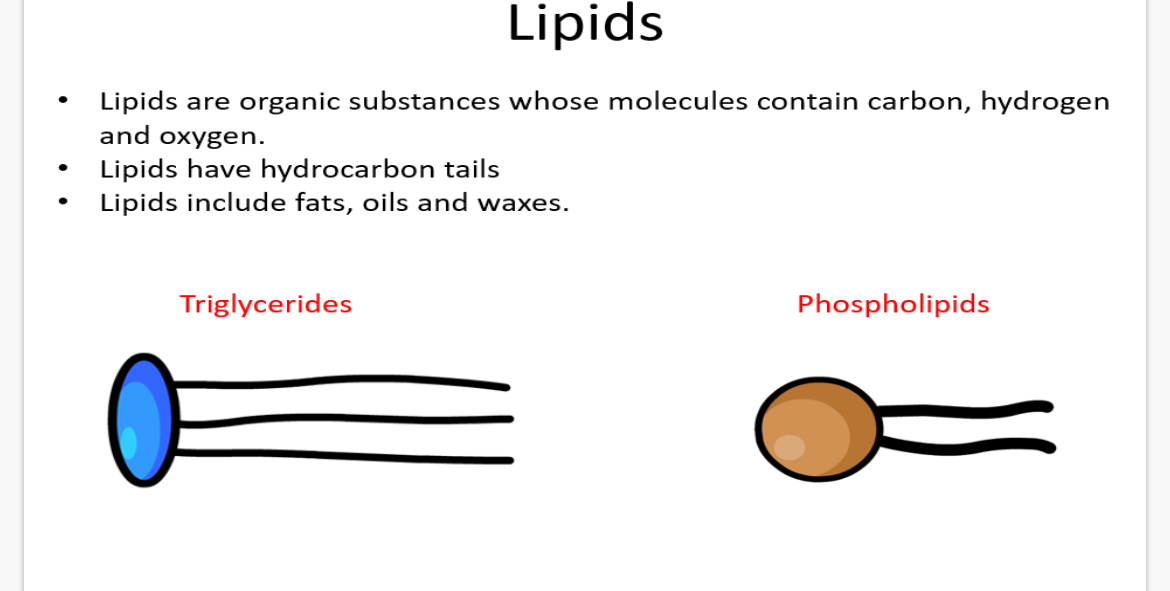
• Lipids are organic substances whose molecules contain carbon, hydrogen and _1?.
• Lipids have _2? tails
• Lipids include _3?, oils and waxes.
1.Oxygen
2.hydrocarbon
3.fats
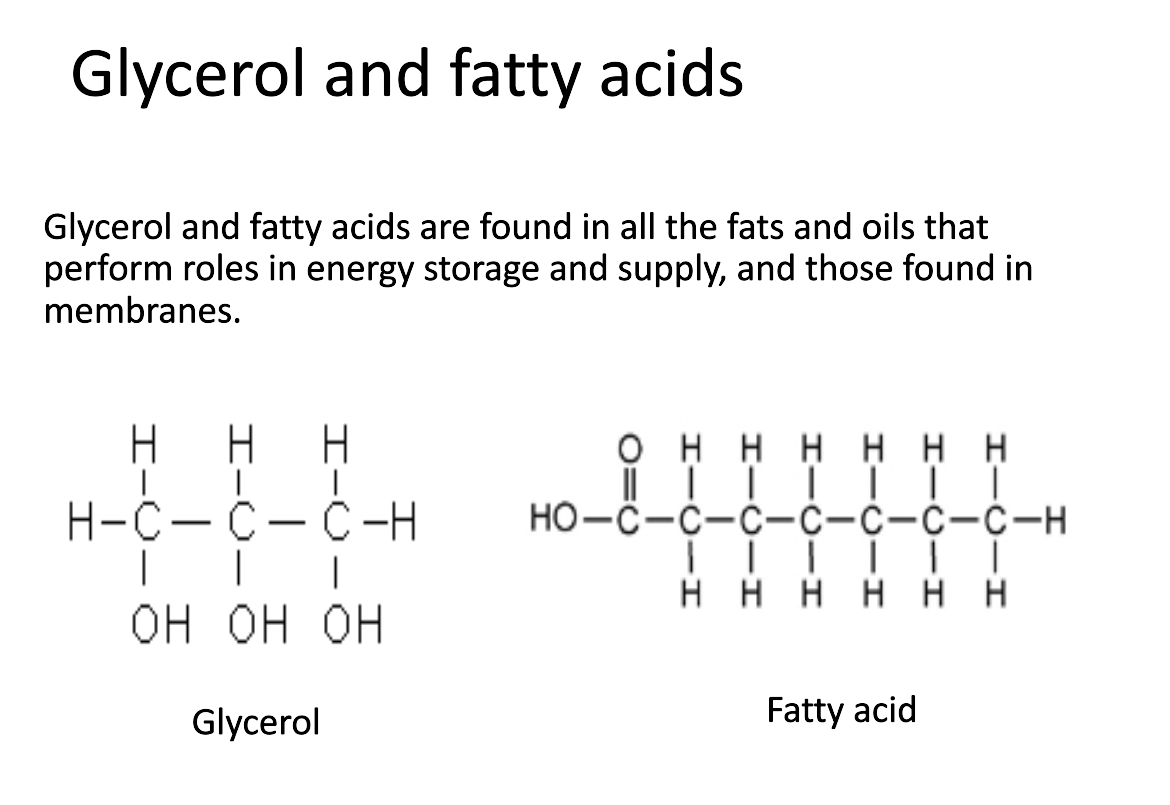
Glycerol and fatty acids are found in all the fats and oils that perform roles in energy storage and supply, and those found in membranes.
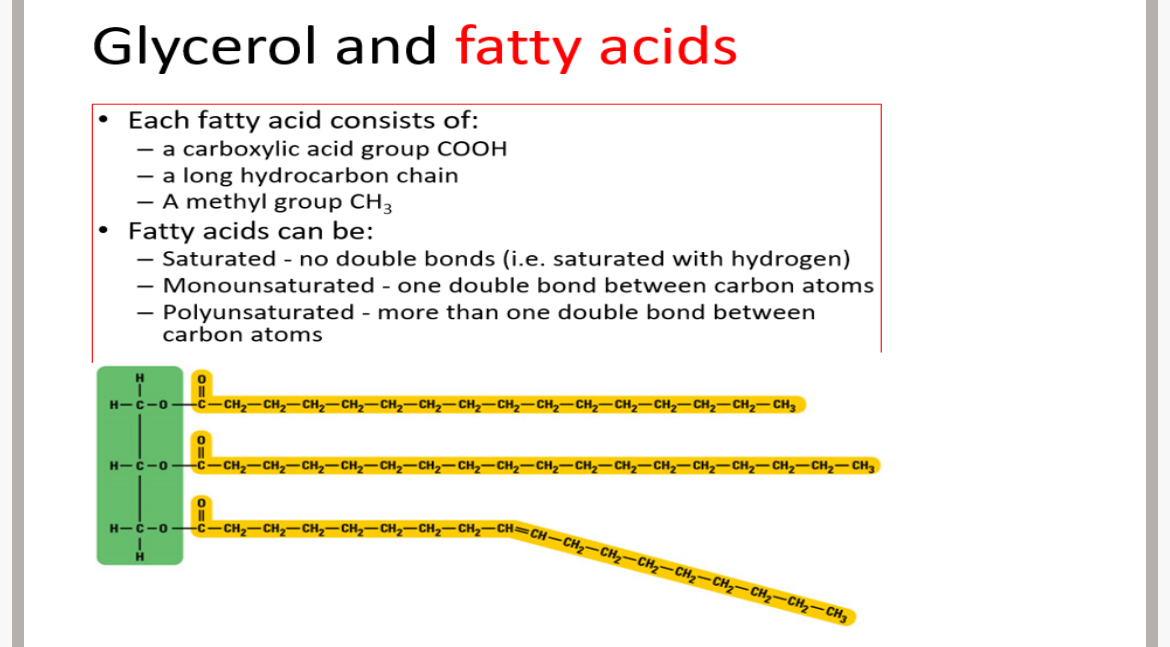
Each fatty acid consists of: - a …1? acid group COOH
- a …2? hydrocarbon chain
- A methyl group CH3•
Fatty acids can be:
- …3? - no double bonds (i.e. saturated with hydrogen)
- …4? - one double bond between carbon atoms
- …5? - more than one double bond between carbon atoms
1.carboxylic. 2.long. 3.Saturated. 4.Monounsaturated. 5.polyunsaturated

what are triglycerides made of?
How are they formed? (3 condensation reactions)
In lipids, The R groups are fatty acids and they can either be saturated or …?
They are made of three fatty acids attached to one glycerol molecule
By the condensation reaction between 1 glycerol molecule and 3 fatty acid molecules which forms ester bonds and H2O.
Unsaturated(contains a carbon carbon double bond)
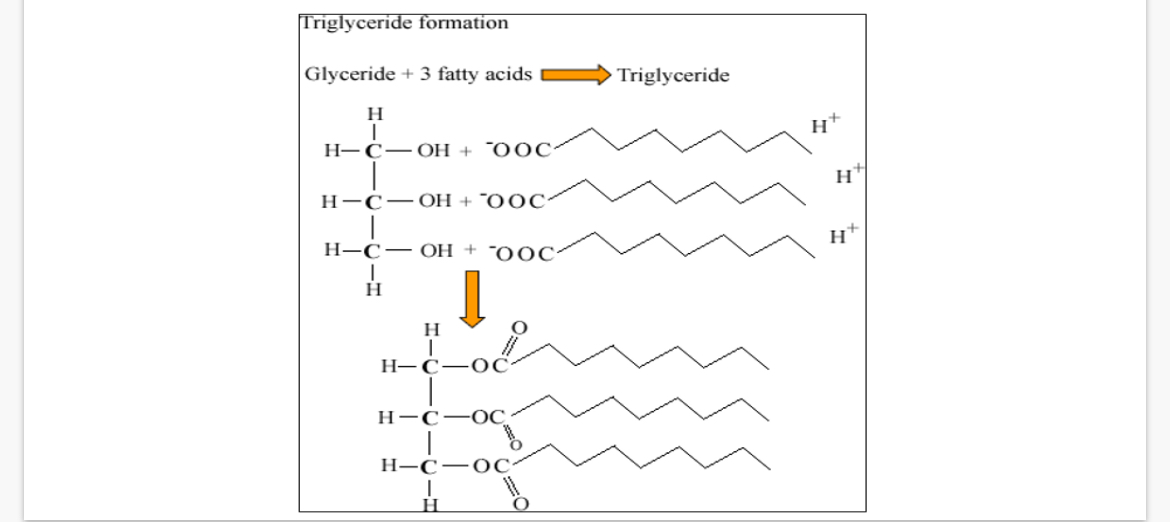
The carboxyl groups of fatty acids react with the hydroxyl groups(esterification reaction-a type of condensation reaction) glycerol, forming…
•Triglycerides are …1? because they have are non-polar (even distribution of charges around the molecule)
•Triglycerides are also insoluble
Ester bonds(strong covalent bonds)
1.hydrophobic
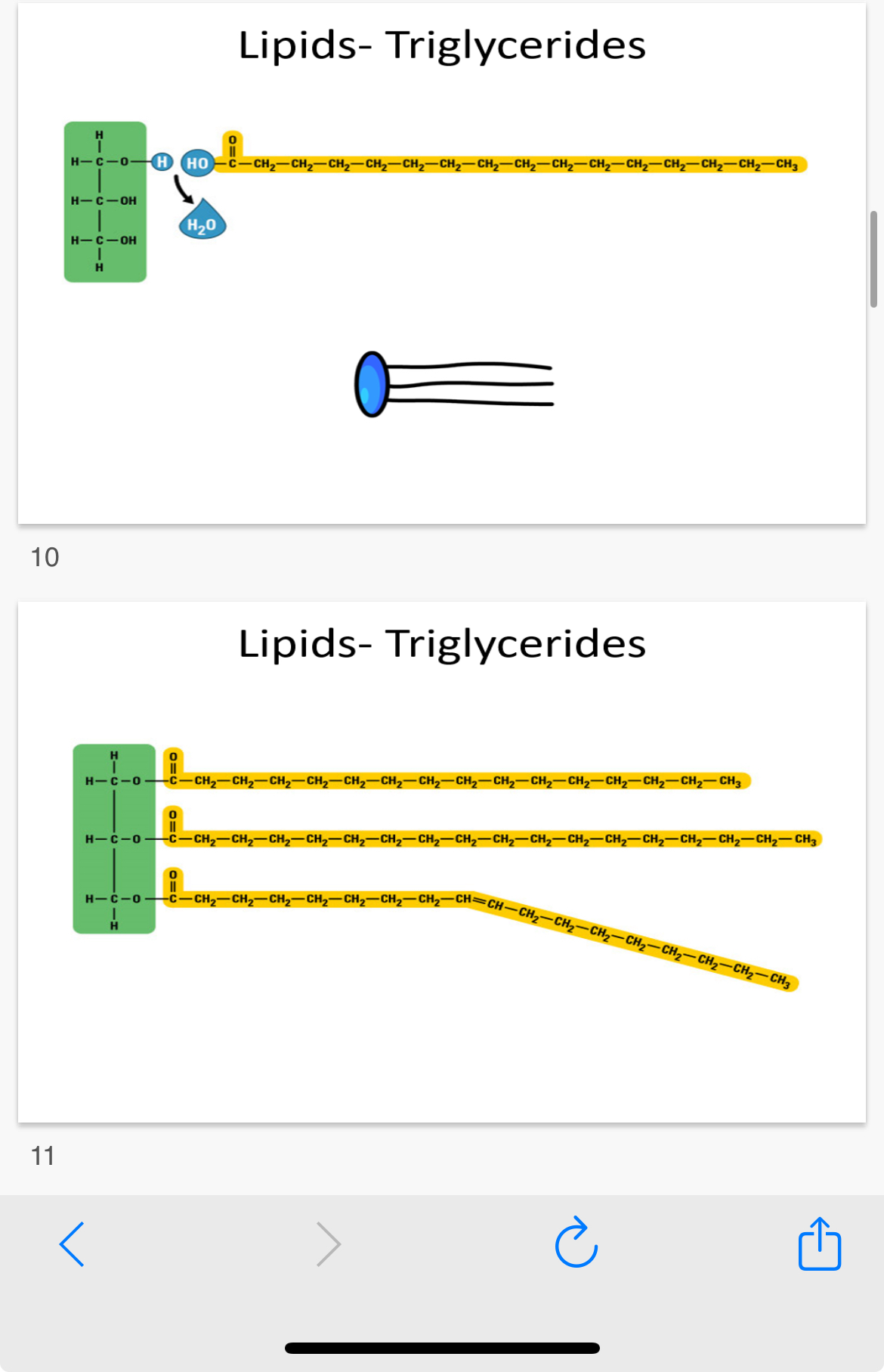
Link triglyceride structure to properties
1. Energy …1?: high ratio of energy-storing carbon-hydrogen bonds to carbon atoms
2. …2?: large, non-polar molecules so are insoluble in water, therefore they do not affect osmosis or water potential. (Stored as droplets inside cells)
3. Metabolic water source: Due to their high ratio of hydrogen to …3? Atoms, they can release water if oxidised (essential for dessert animals like camels)
4. Relatively Low …? : They can be stored without increasing the mass and preventing movement
1.storage
2.insoluble
3.oxygen
Mass
Why do animals have large amounts of fat under the skin in adipose tissue(and in humans beneath the skin and around the organs)?
To use as energy stores ,buoyancy ,insulation and protection
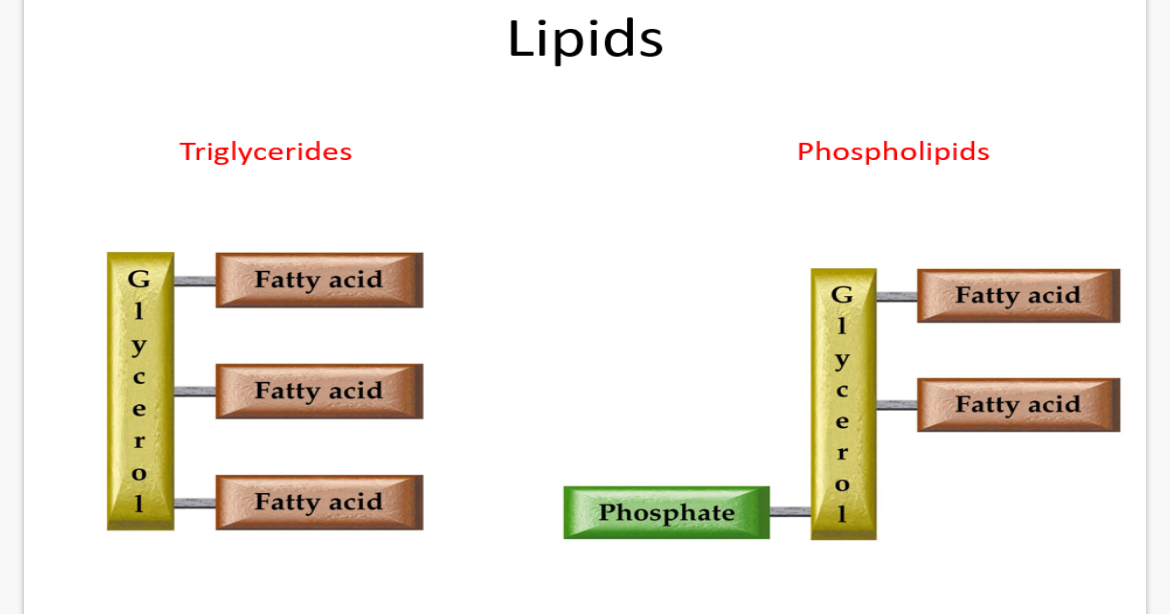
In phospholipids, one of the fatty acids of a triglyceride is substituted by a …1?-containing group (PO4*-3).
The phosphate group is polar(due to O-) and therefore …2? in water (hydrophilic) and repels fats. The fatty acid tails are non-polar and therefore …3? in water (hydrophobic).
Because phospholipids have both hydrophobic and hydrophilic parts, it is known as …4?. Because of this they form monolayers or bilayers in water.
Note: Phospholipids are formed from 2 condensation reactions between glycerol and the 2 fatty acid molecules forming two ester bonds + 2 water molecules, with a phosphate group attached to the glycerol.
1.phosphate 2.soluble. 3.insoluble
4.amphipathic
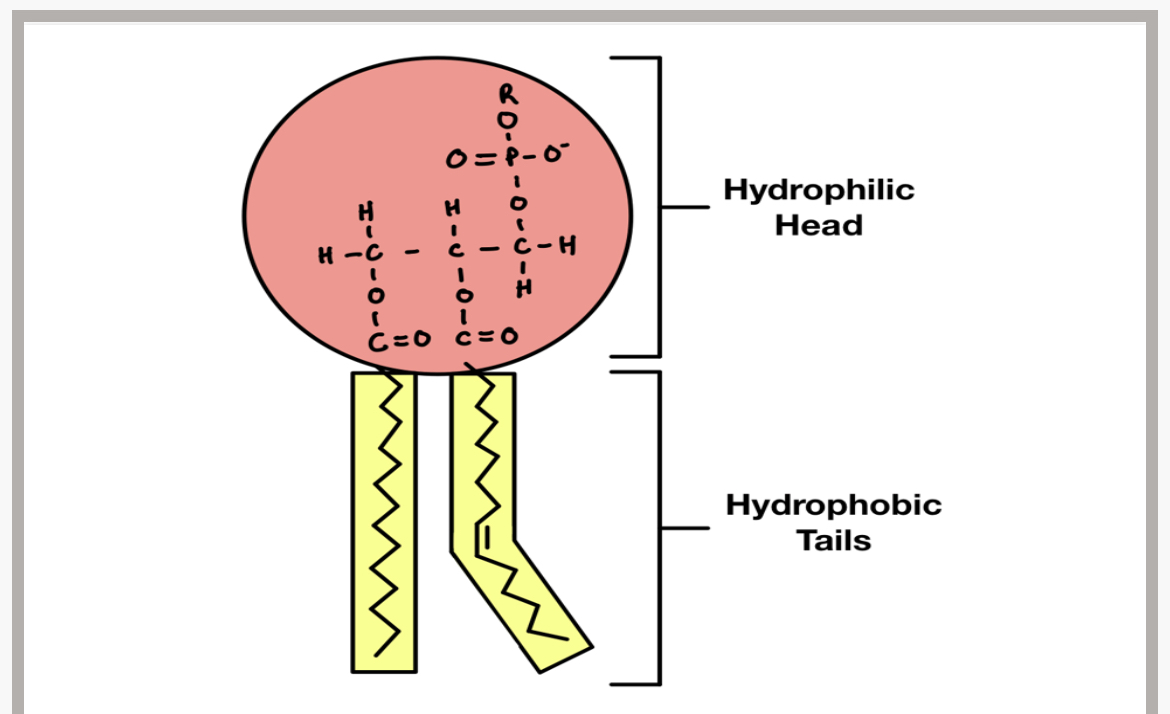
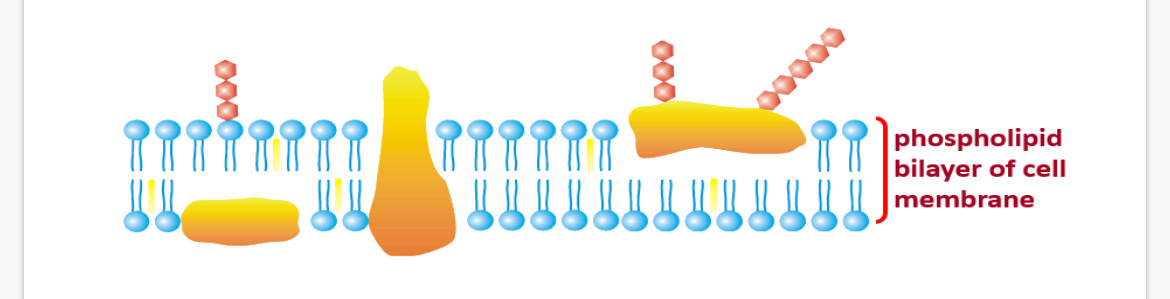
The water-loving and water-hating parts of the phospholipid molecules results in the formation of …1? membranes in water.
This structure forms the phospholipid bilayer which is the basic structure of the plasma membrane surrounding all cells.
Water soluble substances can't pass through the middle layer.
Link phospholipid structure to properties:
1. Polar …2? - molecules cluster to form phospholipid bilayer
2. Cell …3? integrity - hydrophilic phosphate 'heads'
1.bilayer. 2.molecule. 3.surface
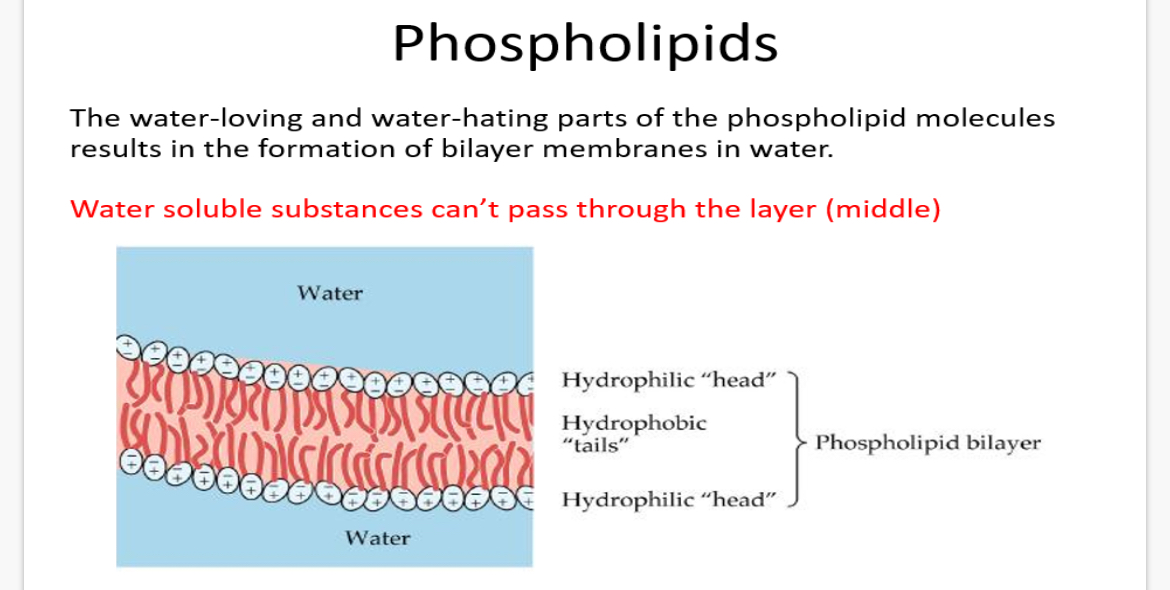
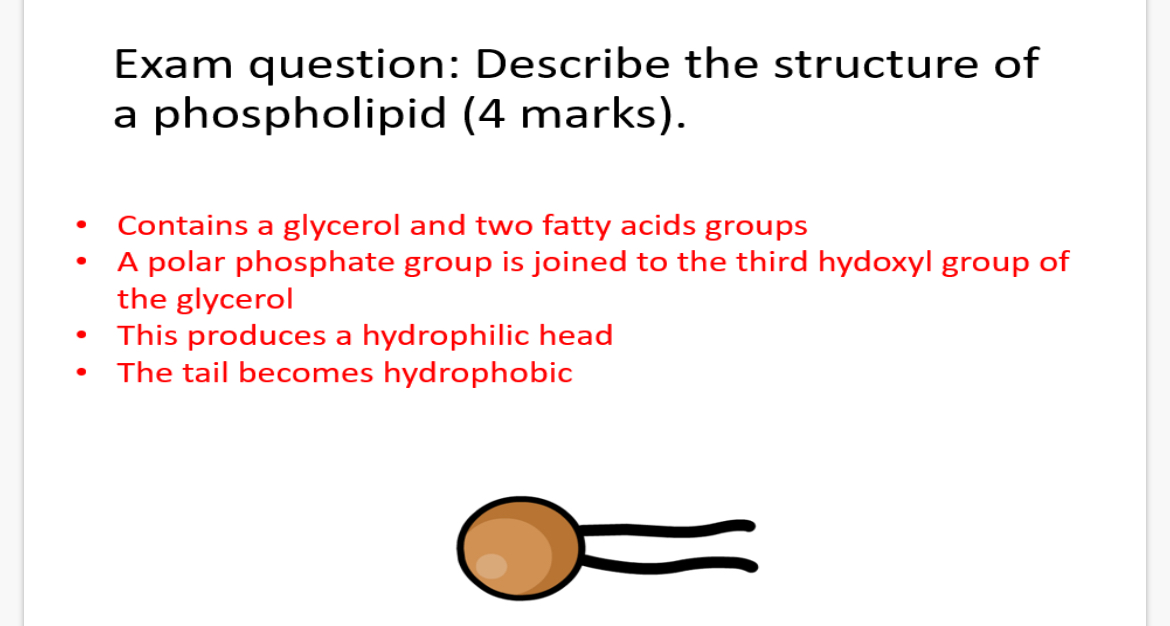
Describe the structure of a phospholipid (4marks)
• Contains a glycerol and two fatty acids groups
• A polar phosphate group is joined to the third hydroxyl group of
the glycerol
• This produces a hydrophilic head
• The tail becomes hydrophobic
Steroids
…1? molecules are located between the tails of the phospholipid molecules where they serve to stabilise the membrane.
These cholesterol molecules are also classed as …2? although they belong to a very different sub - group known as …3?
Info* Steroids :•Important structural role in animal cells
info* • Protects membrane integrity and cell viability
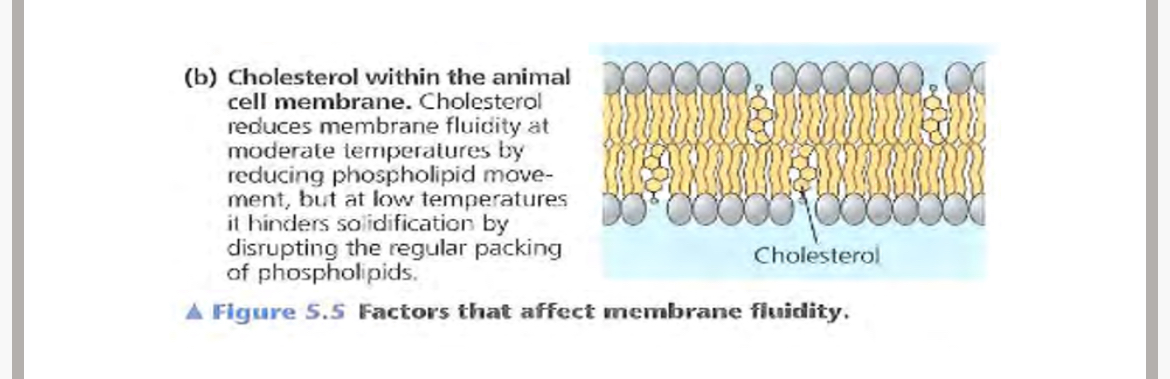
(b) Cholesterol within the animal cell membrane:
Cholesterol reduces membrane fluidity at moderate temperatures by reducing …4? movement, but at low temperatures, it hinders solidification by disrupting the regular packing of …5?.
1.cholesterol 2.lipids. 3.steroids. 4.phospholipid. 5.phospholipids
Steps to test for lipids?
1. Sample is placed into a grease-free test-tube.
2. Ethanol is added and the mixture is shaken to dissolve any lipid present in the sample.
3. An equal volume of distilled water is added and the mixture is shaken.
4. A cloudy white colour (emulsion) indicates the presence of a lipid or otherwise the solution would remain clear
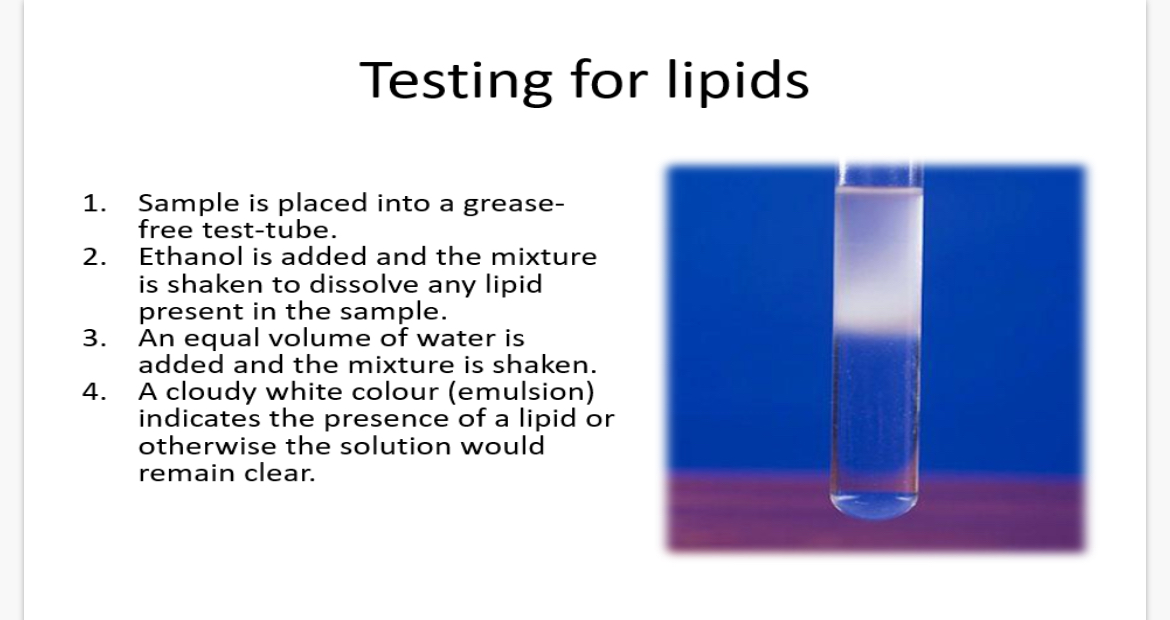
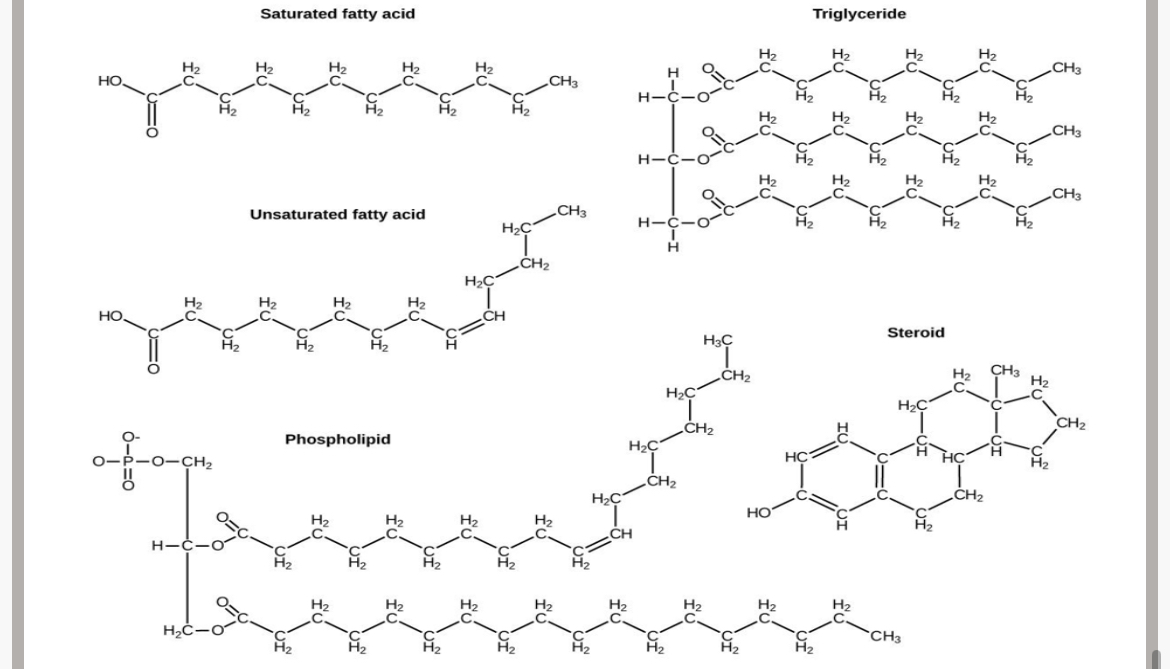
Diagram that need to be recognised
Note: saturated fatty acids may only have carbons joined by single bonds but unsaturated fatty acids contain at least 1 double bond between carbons.
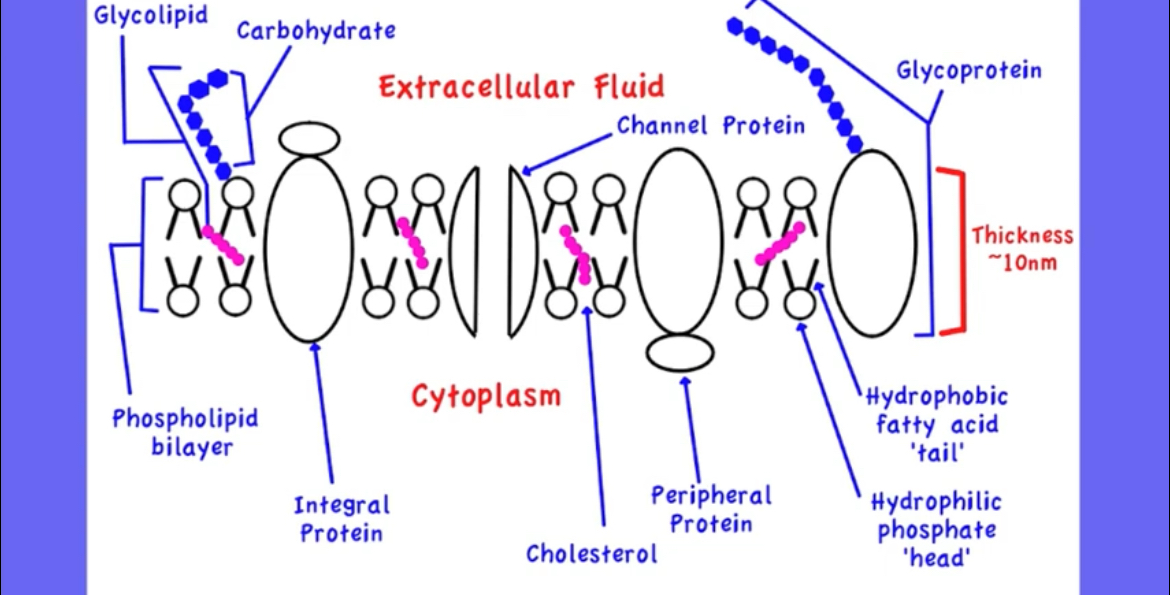
Name the main components of the cell surface membrane?
Phospholipid bilayer,proteins,cholesterol,carbohydrates
Explain why some triglycerides do not form a solid at room temperature?
Triglycerides with polyunsaturated fatty acids are liquid at room temperature because the double bonds create kinks in the fatty acid chains. These kinks prevent tight packing, resulting in weaker intermolecular forces and a lower melting point.
State 2 functions of phospholipids in the bilayer?
To form a selectively permeable barrier
To provide structural integrity and fluidity to the membrane.
(The bilayer's hydrophobic core blocks large, water-soluble molecules, allowing only small, non-polar ones and regulating the passage of substances, while its inherent fluidity permits membrane movement essential for cellular processes.)
Which lipid sits between phospholipids and stabilises the bilayer?
Cholesterol
Cholesterol is a steroid lipid with a rigid four-ring structure.
It is small and …1?, so it fits between phospholipid tails in the bilayer.
Functions in membranes:
…2?: prevents membranes from becoming too fluid at high temperatures
…4?: prevents membranes from becoming too rigid at low temperatures.
…5?: reduces passive leakage of small water-soluble molecules.
Cholesterol is especially important in animal cells, which lack a cell wall.
1.hydrophobic/non polar
2.Stability
3.Flexibility
4.permeability
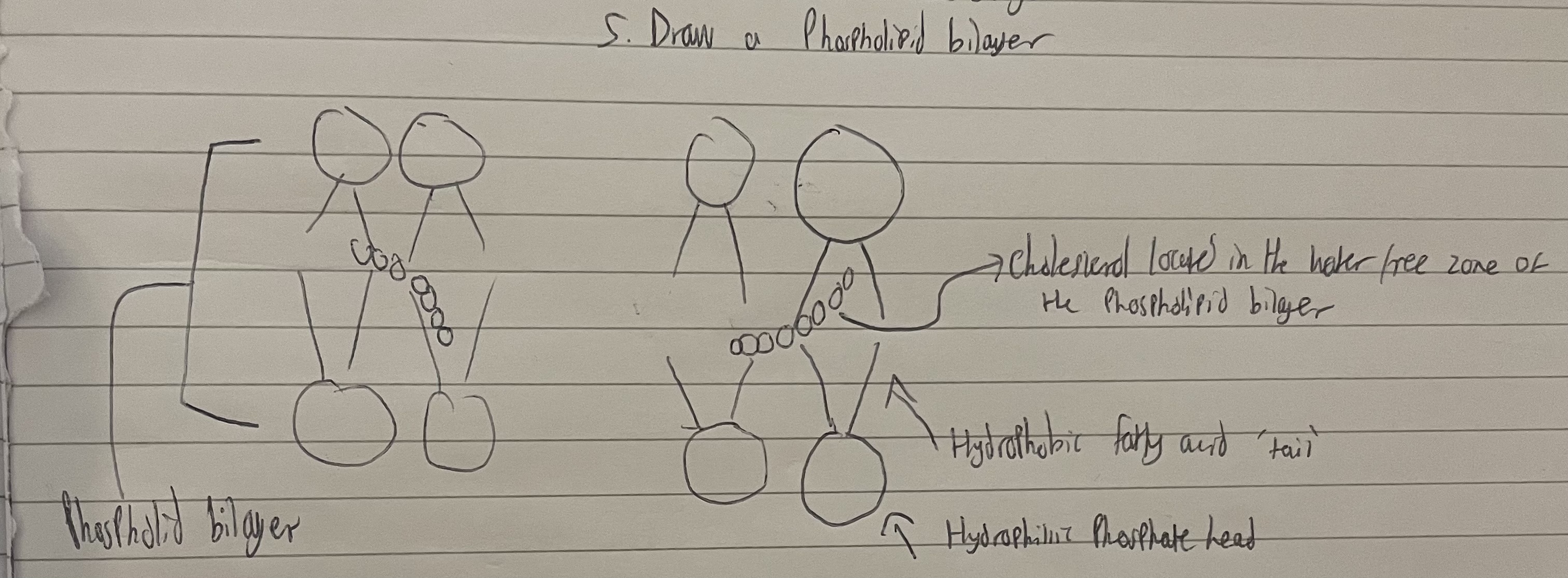
Here is an image of a phospholipid bilayer:
Explain how cholesterol restricts the movement of fatty acid tails?
Cholesterol restricts the movement of fatty acid tails in cell membranes by its rigid structure interfering with the tails' mobility. At high temperatures, it reduces fluidity by limiting movement. At low temperatures, it maintains fluidity by preventing tight packing. Thus, cholesterol acts as a fluidity buffer.
How does cholesterol make the phospholipid bilayer less permeable?
Cholesterol reduces the permeability of phospholipid bilayers by fitting between phospholipids tails, increasing packing density and Van der Waals interactions. This reduces phospholipid movement, making it harder for molecules to pass through.
How does cholesterol maintain fluidity across temperatures?
At high temperatures, cholesterol reduces fluidity. Cholesterol's rigid ring structure interacts with the fatty acid tails of phospholipids, limiting their movement and preventing the membrane from becoming too fluid. This is because the rigid structure of cholesterol hinders the phospholipids from moving excessively.
At low temperatures, cholesterol increases fluidity. Cholesterol disrupts the tight packing of phospholipids. By inserting itself between the phospholipids, it prevents them from packing closely together and solidifying, thereby maintaining fluidity.
Cholesterol acts as a "fluidity buffer." It prevents drastic changes in fluidity, ensuring the membrane remains functional over a range of temperatures. This is crucial for maintaining the proper environment for membrane proteins and cellular processes.
Why is cholesterol particularly important for animals cells compared with plant cells?
Cholesterol is more important for animal cells than plant cells because animal cells lack a cell wall and rely on cholesterol to maintain membrane integrity and fluidity. Animal cells also experience temperature variations that cholesterol helps manage. Plant cells have rigid cell walls and use different sterols, reducing their need for cholesterol.
How does cholesterol act as a fluidity buffer?
Cholesterol maintains cell membrane fluidity by preventing it from becoming too fluid at high temperatures and too solid at low temperatures. It does this by inserting its rigid structure between phospholipids, which restricts movement when it's hot and prevents tight packing when it's cold.
Suggest how cholesterol might vary between cell types with different functions?
Cholesterol levels in cell membranes vary among cell types based on their function and environment. Cells exposed to temperature changes or needing rigidity may have …1? cholesterol. Cells involved in signalling or transport …2? cholesterol for these processes.
1.higher
2.optimise
Explain why a decrease in cholesterol might make membranes leaky?
Cholesterol maintains membrane structure by packing tightly between phospholipids, reducing permeability. Lower cholesterol increases fluidity, creating gaps that enhance permeability and leakiness. This disrupts ion gradients, cell volume, signalling, and organelle function, compromising cellular processes.
Describe 2 properties of lipids in terms of energy release?
Lipids have high energy density due to many carbon-hydrogen bonds, offering more energy per gram. They also provide a slow, sustained energy release because they are digested and metabolized slowly, making them ideal for long-term storage.
Explain how phospholipids form a bilayer in water?
1.phospholipids are polar and have hydrophobic and hydrophilic regions
2.hydrophilic heads/phosphate groups are attracted to water so face to the surface, meanwhile the hydrophobic tails repel water so face toward the centre of the bilayer.