Lecture 23 - Gymnosperms
 Call Kai
 Learn
Learn Practice Test
 Spaced Repetition
 Match
Match Flashcards
 Knowt Play
1/52

There's no tags or description
Looks like no tags are added yet.
Name | Mastery | Learn | Test | Matching | Spaced | Call with Kai |
|---|
No analytics yet
Send a link to your students to track their progress
53 Terms
Selaginella
heterosporous; similar to conifer life cycle
microgametophyte
microsporangia contain microspore mother cells which undergo meiosis and divide into 4 spores clustered in a tetrad — each spore develops into a pollen grain
microgametophyte spores
one of the 4 cells is a generative cell — divides, producing 1 sterile and 1 spermatogenous cell
spermatogenous cell
divides, producing 2 sperm cells
microgametophyte GP
mature male GP only has 6 cells, no antheridia — just 2 sperm cells
megagametophyte
ovule eventually develops into seed
ovule
megaspore mother cell, megasporangium, and integument
megasporangium
nucellus
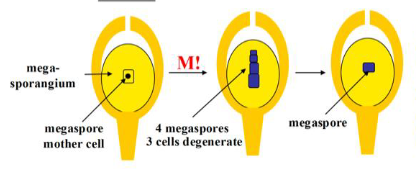
meiosis in megagametophyte
megaspore mother cell produces 4 megaspores, 3 disintegrate—1 functional megaspore left
megagametophyte gamete
1 functional megaspore forms mega-GP within megasporangium
mega-GP form
produces 2+ archegonia (each has egg cell)
pollination (megagametophyte)
pollen lands on ovule, finds micropyle to contact megasporangium; pollen tube grows into GP tissue toward archegonia
pollen grains
one sperm cell is delivered to the egg cell, the other sperm cell disintegrates (two pollen grains needed to fertilize two egg cells) → fertilization
mega-GP zygote
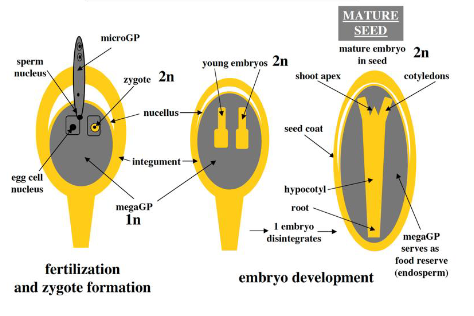
zygote develops into embryo which develops within mega-GP (1 of 2 embryo dies)
mega-GP purpose
food reserve for developing embryo
mature embryo
differentiation in root, shoot, and leaves (cotyledons); integuments dry out and harden to form the seed coat
gymnosperms
have archegonia, female GP has 7,000 cells
gymnosperm life cycle
pollen (male GP) is distributed by wind to female mega-GP — developed on base of cone scale (ovuliferous scale)
gymnosperm ovule
female GP develops within ovule, structure contains megasporangium surround by layers of cells (integument)
maturing ovule (Gymnosperm)
ovule matures as GP develops and fertilization takes place, finally becoming seed
pollen
male micro-GP
gymnosperm zygote
one cell of 6 cell micro-GP fertilizes egg cell within archegonium of female GP
seed
embryo + mega-GP + seed coat derived from ovule integuments
seed coat favorable conditions
water loss causes hardening of seed coat — seed enters dormancy state until favorable conditions.
seed germination — gymnosperms
root grows into the soil and anchors the young seedling, then hypocotyl elongates and pushes cotyledons into air
cotyledons become green, unfold, and produce energy (photosynthesis) → new sporophyte tree
difference between pollination and fertilization
pollen lands on micropyle of ovule, while nuclei of egg and sperm fuse to form zygote; separated in space and time
gymnosperm anatomy
leaves (needles in Conifers), and wood formation through secondary growth
needles
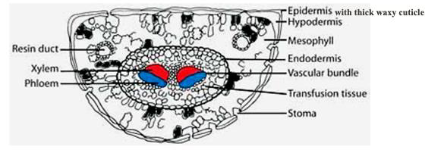
adaption to environment with shortage of water, epidermis with thick waxy cuticle, stomata below leaf surface, mesophyll cells are the main photosynthetic cells, vascular bundle in center
needs retain for 2-4 years in pine, functional needles can be as old as 45; some conifers are deciduous trees
conifer needles
wood formation through secondary growth
vascular cambium produces lignified xylem cells (secondary xylem) toward the inside of the stem and phloem toward the outside
xylem tissue in a stem
makes up the wood of a tree or shrub
secondary growth
increase in stem diameter
conifer xylem
consists of lignified dead cells that form a water-conducting structure that reaches from root to canopy
annual rings
Trees in cold and temperate climates go through periods of intense growth in the spring, slower growth in summer and fall, and a stop of growth in winter
tree ring growth in spring
most intense growth results in big xylem cells with relatively thin walls
tree ring growth in late summer
growth is ceasing and cells are small with thick walls; as a consequence, the wood is compacting towards the end of the growing season producing a thin dark ring, the year ring
tropical trees
don’t generally produce year rings
evolution of gymnosperms
arose in late Devonian, dominant during age of dinos
extant groups of gymnosperms
coniferophyta, cycadophyta, ginkgophyta, gnetophyta (all trees except gnetophyta)
cycadophyta, cycads
palm-like plants, abundant during dinosaur era, cycads are living fossils (reached peak in Mesozoic) — often very toxic, 140 species mostly in tropics
cycad life cycle
male and female cones on different plants, insects important for pollination
cycad reproduction
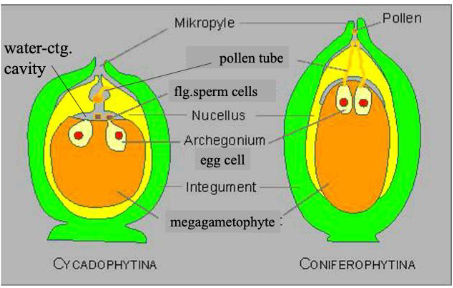
have flagellated sperm and fertilization depends on presence of water; cycads may represent a transition between SLVPs and gymnosperms
male GP produces pollen tube that doesn’t reach archegonium
cycad male GP pollen tube
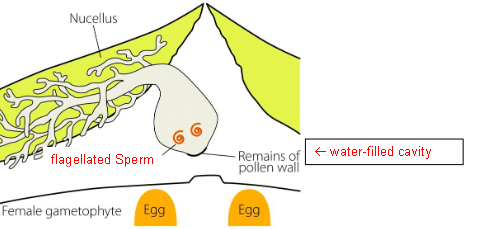
pollen tubes grow and anchor themselves in the remaining megasporangium tissue (helps absorb nutrients for developing male gametophyte sperm cells)
pollen tube ruptures and 2 multi-flagellated sperm are released which actively swim towards archegonium to fertilize egg cell (combo of flagellated sperm and pollen tube)
cycadophyta and conifers
gingkophyta (Ginkgo biloba)
unchanged over last 150 million years, no wild representatives but cultivated (originally in Japan and China), deciduous
deciduous
plants that seasonally shed their leaves, usually in response to environmental changes
ginkgophyta reproduction
ovule and microsporangia on different trees, ovules produce fleshy coated seeds (most cultivated trees are male); fertilization by flagellated sperm
ginkgophyta seeds
seeds inside a fleshy seed coat — derived from integuments (gymnosperms)
male gametophyte in Ginkgo biloba
development of seed from ovule
only one megaspore mother cell is formed per megasporangium
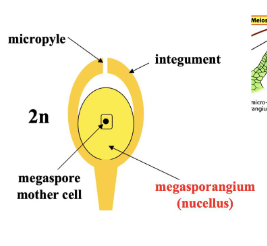
megaspore within megasporangium
development of microgametophyte
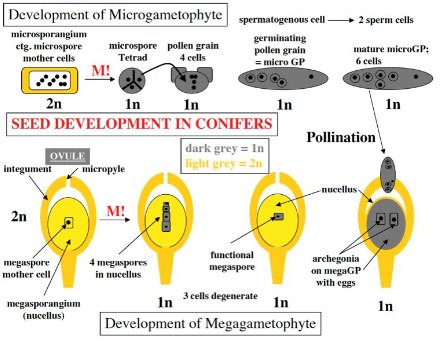
seed development in conifers