Chapter 13: How Cells Obtain Energy from Food
 Call Kai
 Learn
Learn Practice Test
 Spaced Repetition
 Match
Match Flashcards
 Knowt Play
1/34

There's no tags or description
Looks like no tags are added yet.
Name | Mastery | Learn | Test | Matching | Spaced | Call with Kai |
|---|
No analytics yet
Send a link to your students to track their progress
35 Terms
What are the pros of a stepwise sugar oxidation process as opposed to a one step process?
-one-step processes are too much for our cells to handle
-one-step processes would release heat, which we SHOULD NOT have in a cell (remember cells need order and heat is very entropic)
-stepwise processes allow for energy to be captured in small reactions in the form of activated carriers, which can be used in later processes
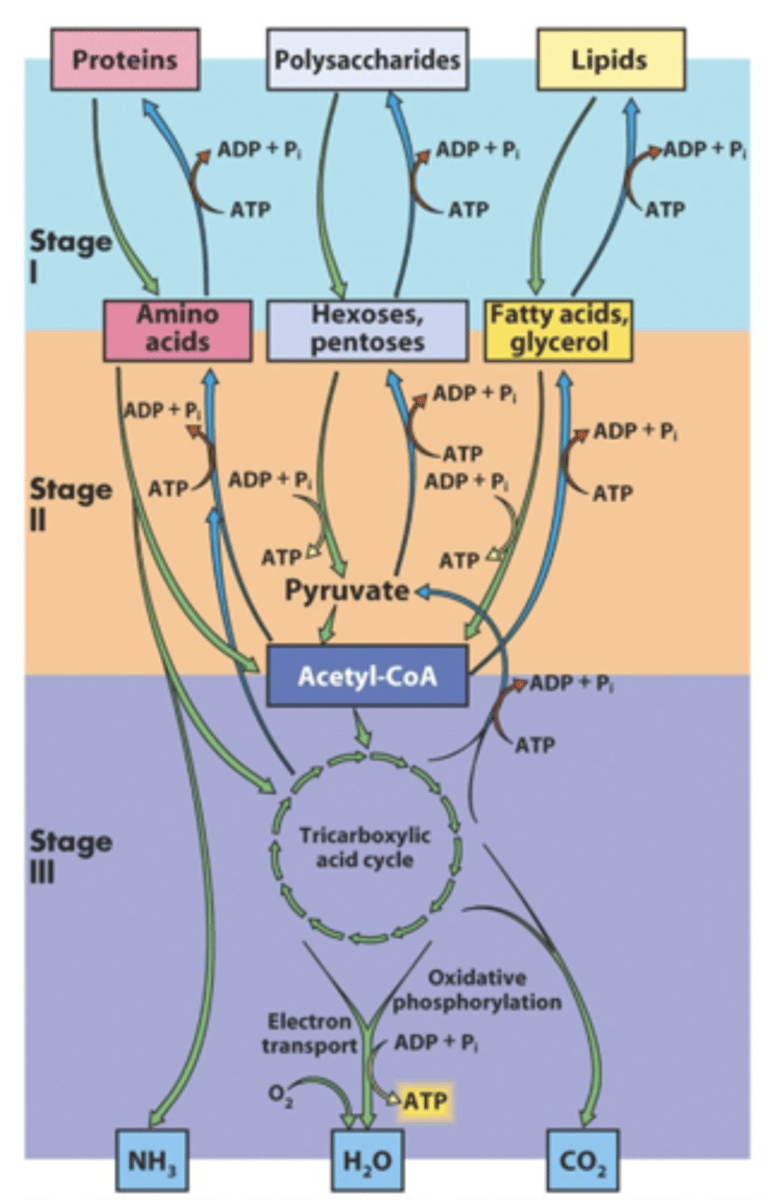
What are the three stages of metabolism
1) digestion: food is broken down and nutrients are absorbed
2) glycolysis (cytosol): glucose molecules are split into pyruvate
3) Krebs Cycle and Electron transport chain (mitochondria): oxidative phosphorylation breaks down molecules further, producing ATP and consuming O2
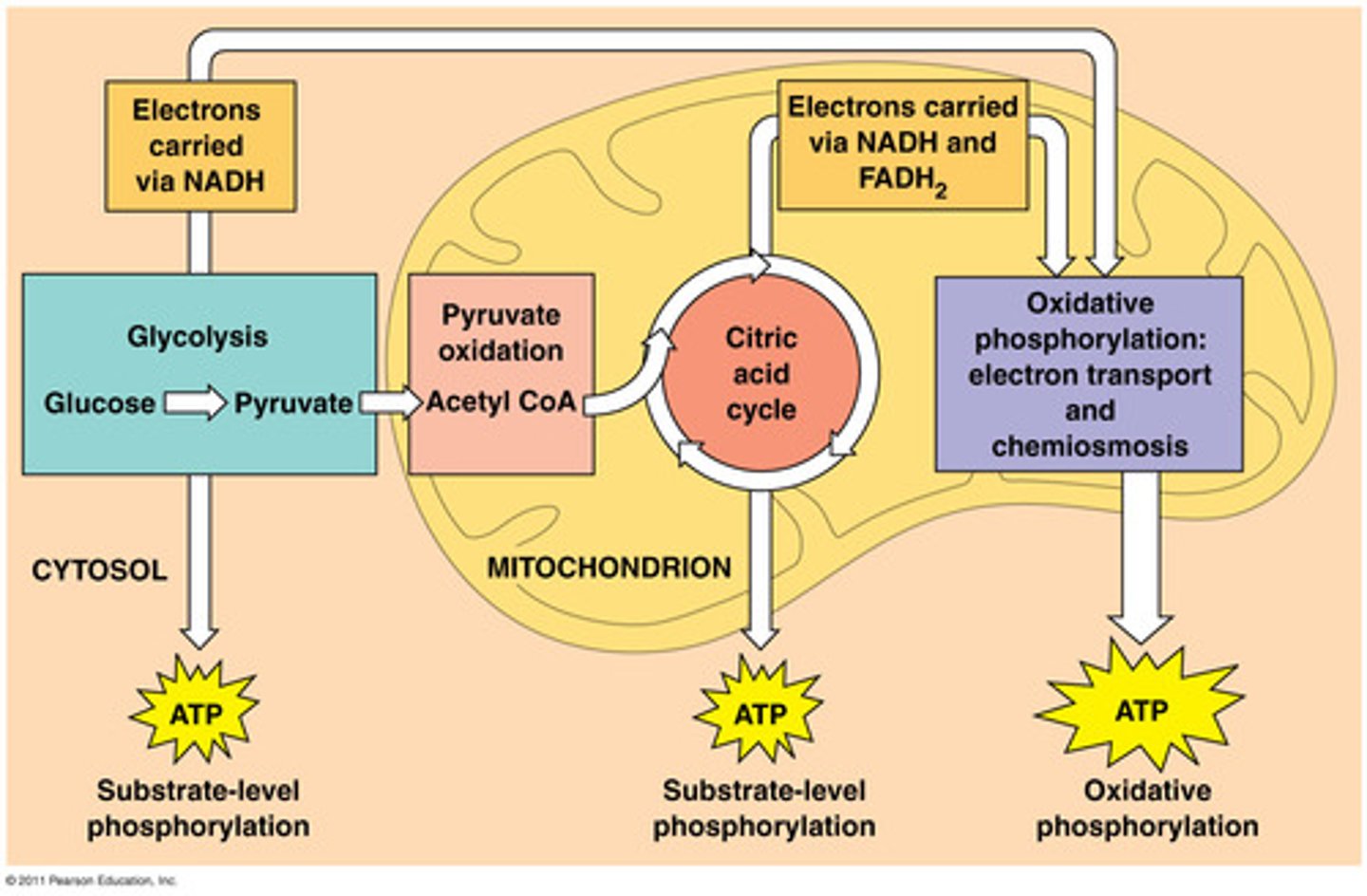
Cellular Respiration Process
1) glycolysis
2) acetyl CoA formation
3) Krebs cycle
4) electron transport chain and chemiosmosis
overall: food + O2 -> ATP, NADH, CO2, H2O
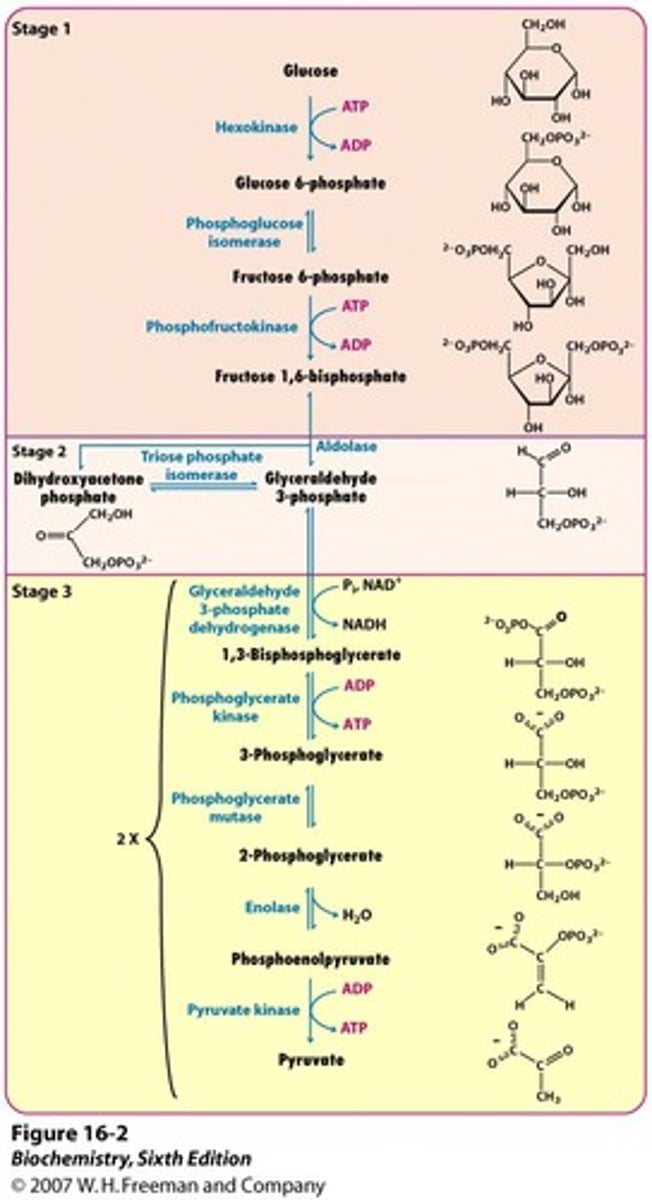
Glycolysis
-glucose split into two pyruvate molecules
(1 glucose + 2 ATP -> 2 pyruvate +2 ATP + 2 NADH +2 H2O) net amount
-happens in cytosol
-ATP produced without oxygen
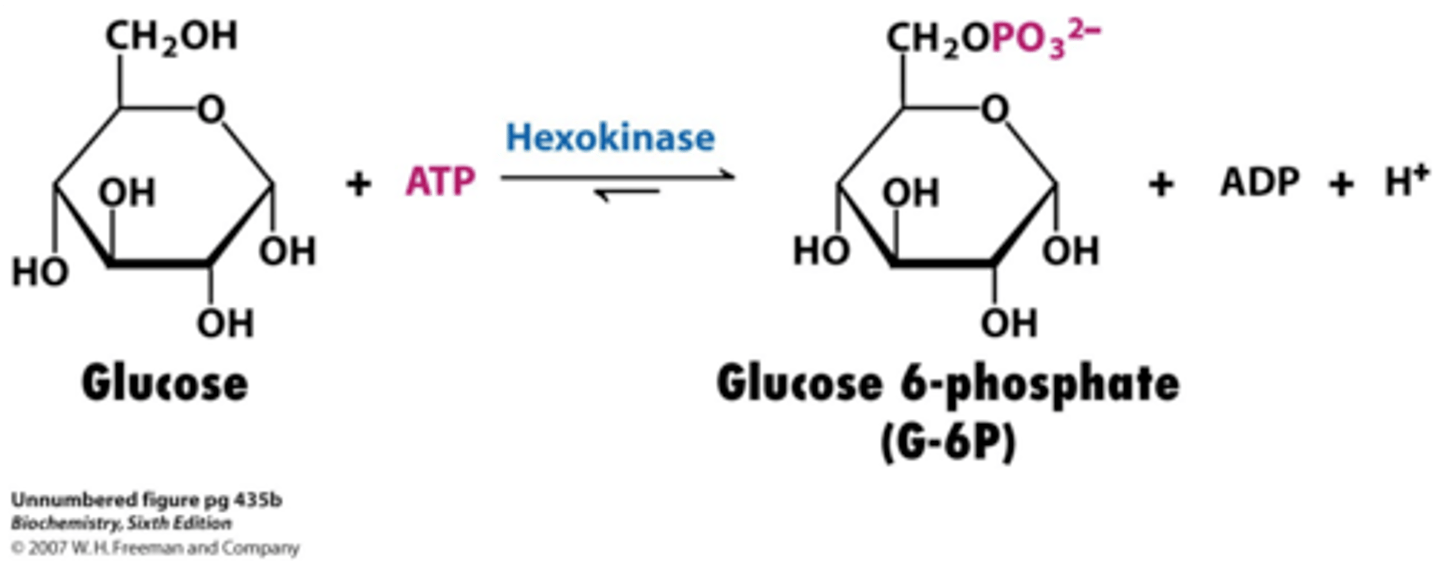
Glycolysis step 1
What happens: glucose phosphorylated
Reactants: glucose + ATP
Products: glucose 6-phosphate + ADP + H+
Enzyme used: hexokinase
overall ATP used: 1
overall ATP produced: 0
Glycolysis step 2
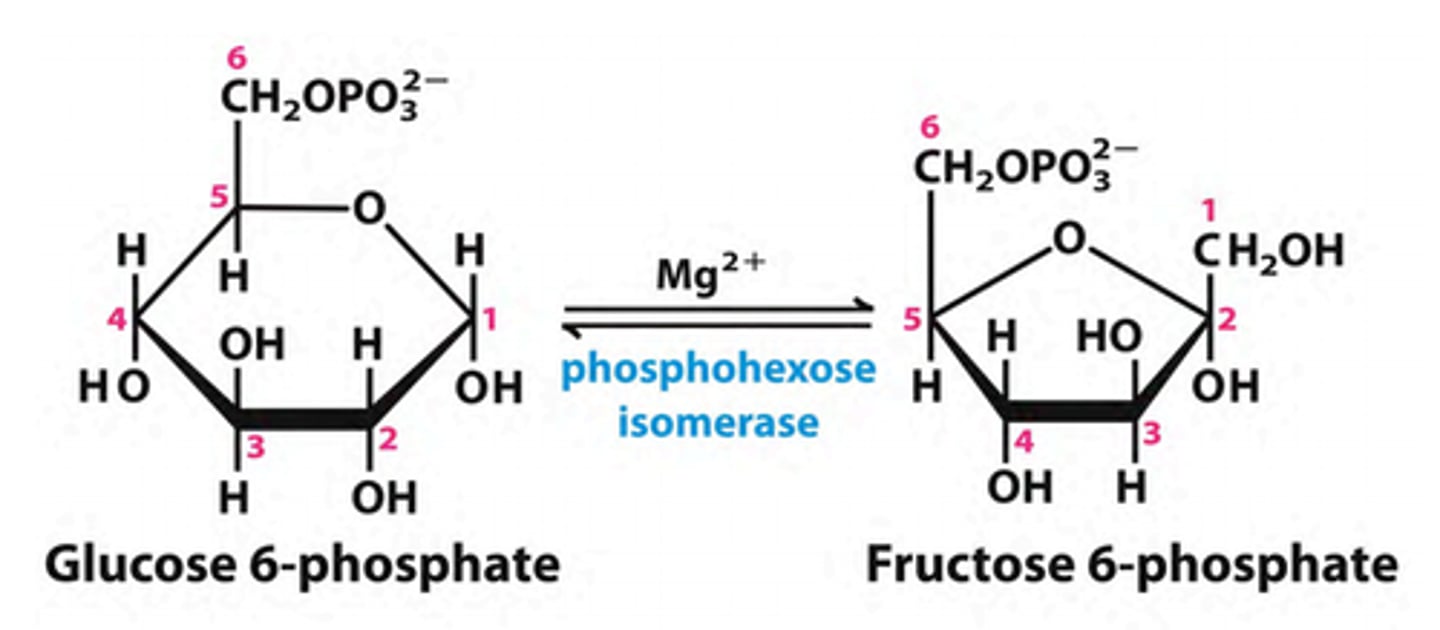
what happens: isomer of glucose 6-phosphate formed
reactants: glucose 6-phosphate
products: fructose 6-phosphate
enzyme used: phosphoglucose isomerase
overall ATP used: 1
overall ATP produced: 0
glycolysis step 3
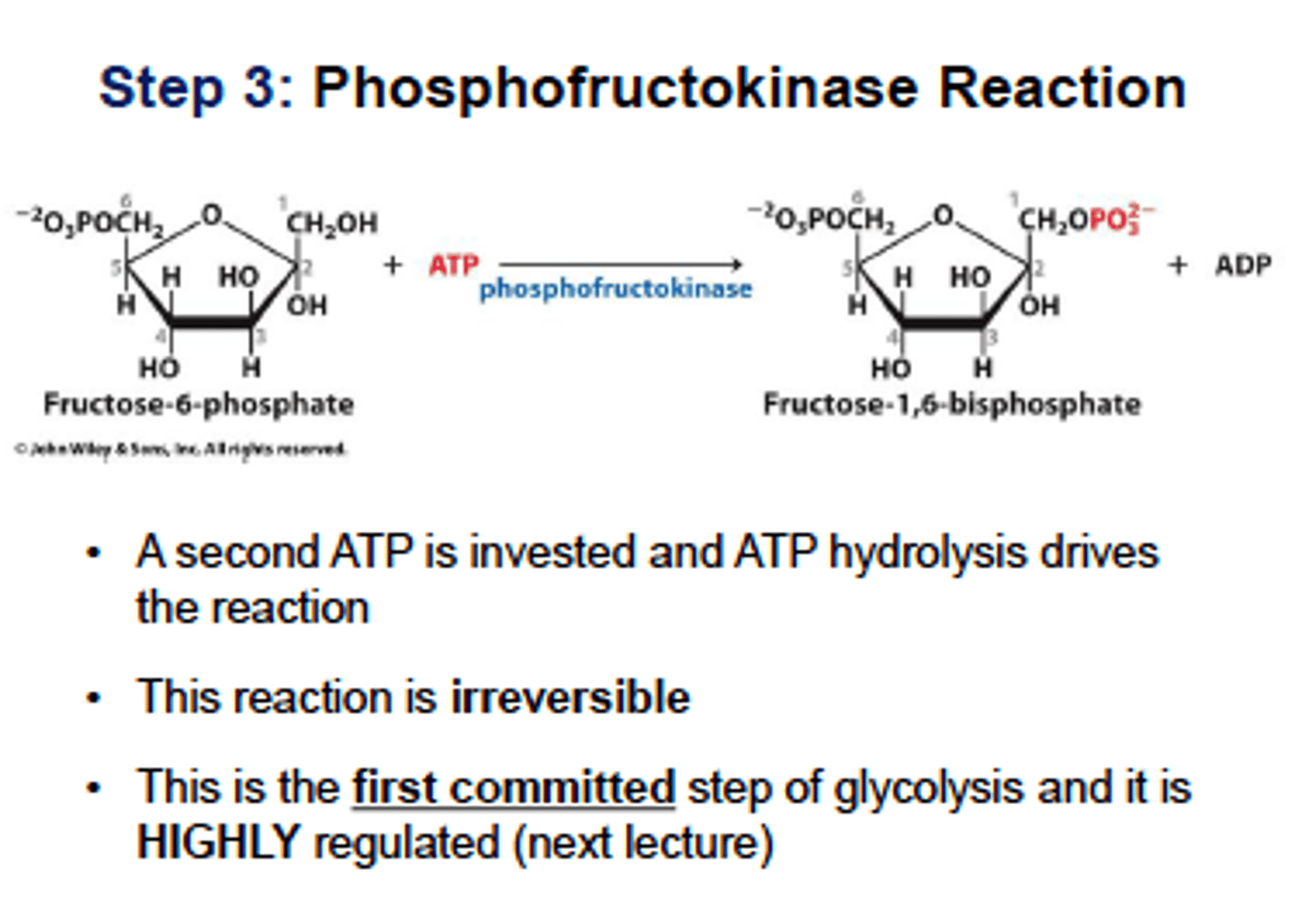
what happens: fructose 6-phosphate is phosphorylated
reactants: fructose 6-phosphate + ATP
products: fructose 1,6-bisphosphate
enzyme: phosphofructokinase
overall ATP used: 2
overall ATP produced: 0
glycolysis step 4
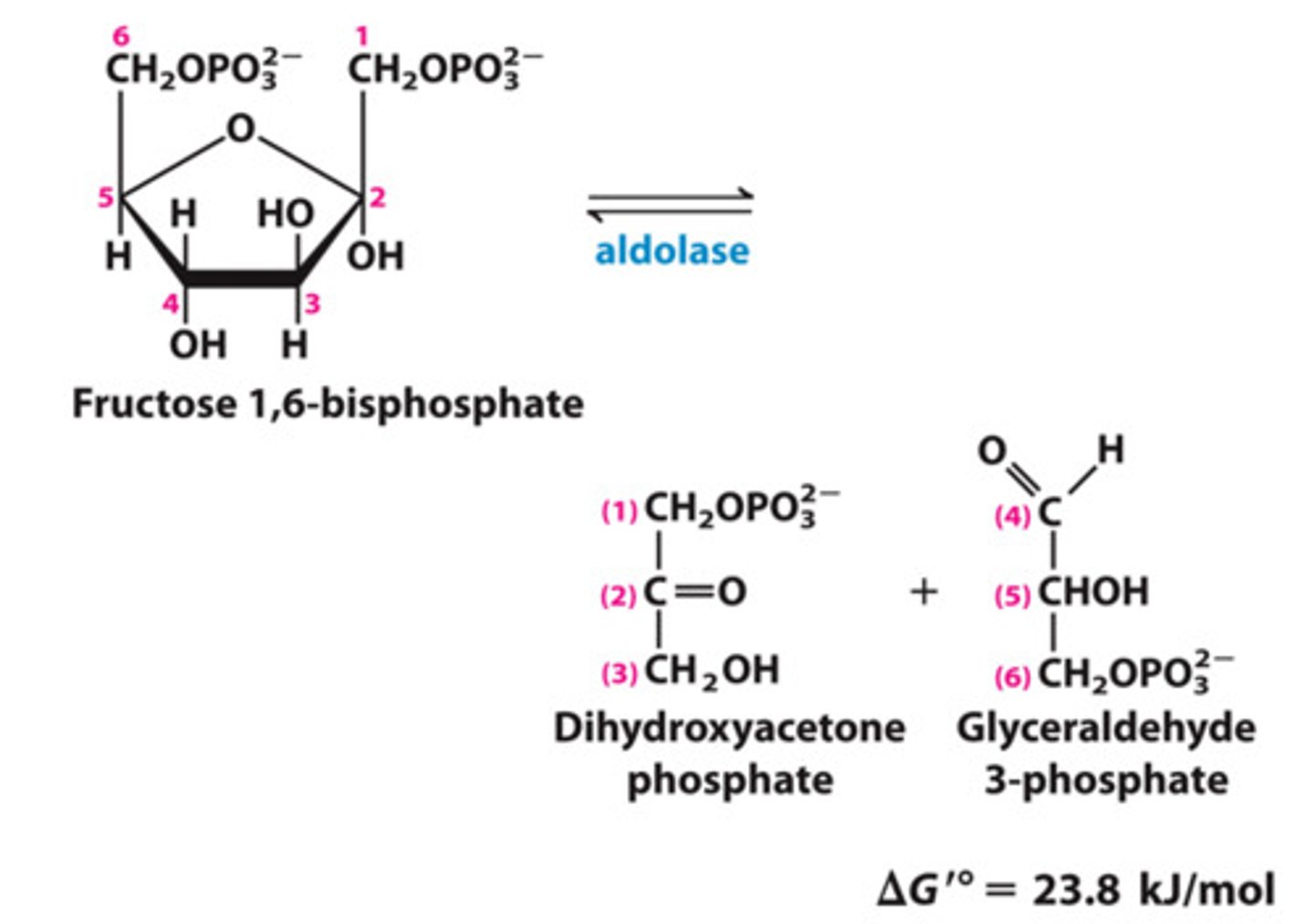
what happens: Fructose 1,6 bisphosphate is cleaved
reactants: fructose 1,6-bisphosphate
products: dihydroxyacetone phosphate + glyceraldehyde 3-phosphate
enzyme: aldolase
overall ATP used: 2
overall ATP produced: 0
glycolysis step 5
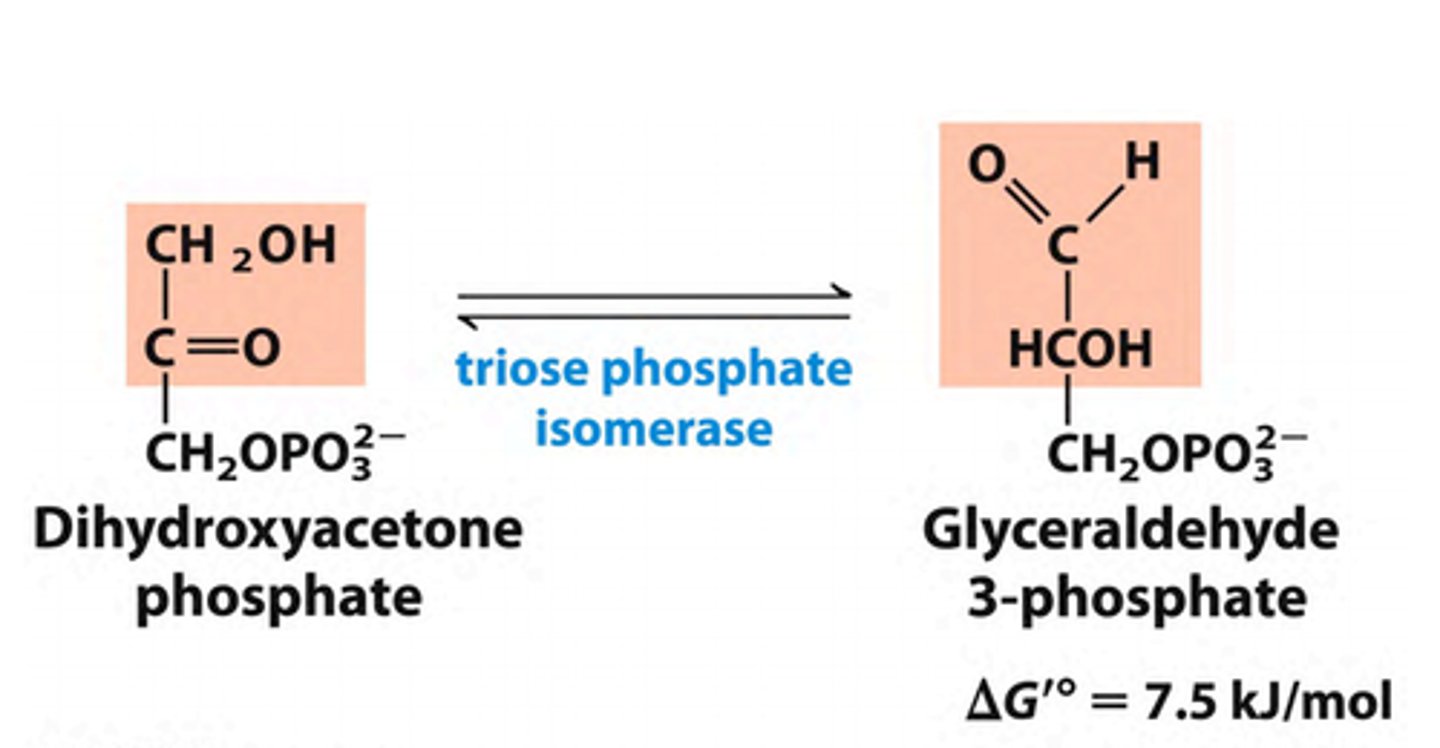
what happens: dihydroxyacetone phosphate is rearranged/isomerized
reactants: dihydroxyacetone phosphate
products: glyceraldehyde 3-phosphate (notice how this is the same as the other product formed in step 4)
enzyme: triose phosphate isomerase
*note: since there are now two molecules of glyceraldehyde 3-phosphate, each step (6-10) is now doubled.
overall ATP used: 2
overall ATP produced: 0
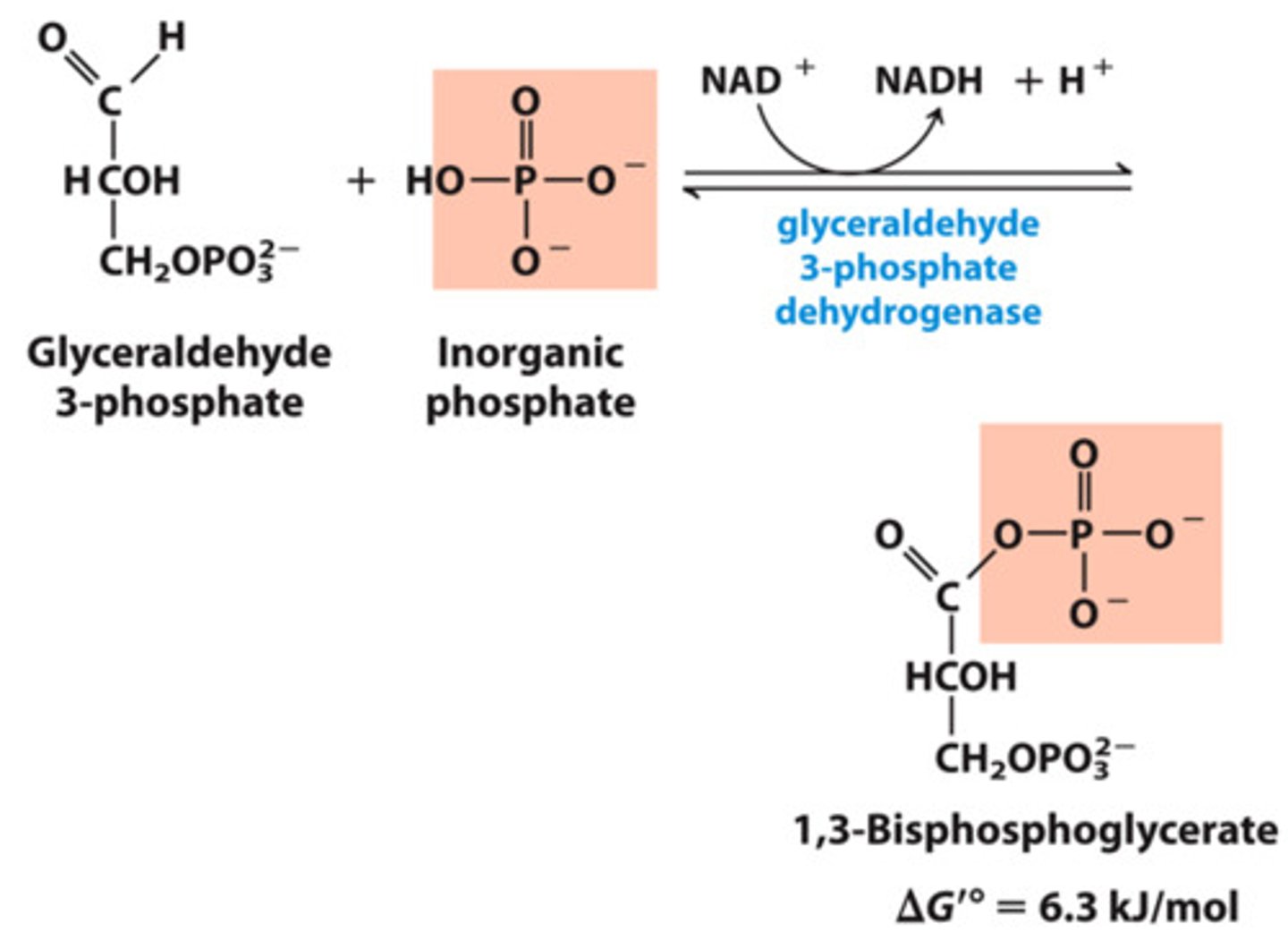
glycolysis step 6
what happens: glyceraldehyde 3-phosphate molecules are oxidized
reactants: glyceraldehyde 3-phosphate + NAD+ + phosphate
products: 1, 3-bisphosphoglycerate + NADH + H+
enzyme: glyceraldehyde 3-phosphate dehydrogenase
overall ATP used: 2
overall ATP produced: 0
overall NADH produced: 2
glycolysis step 7
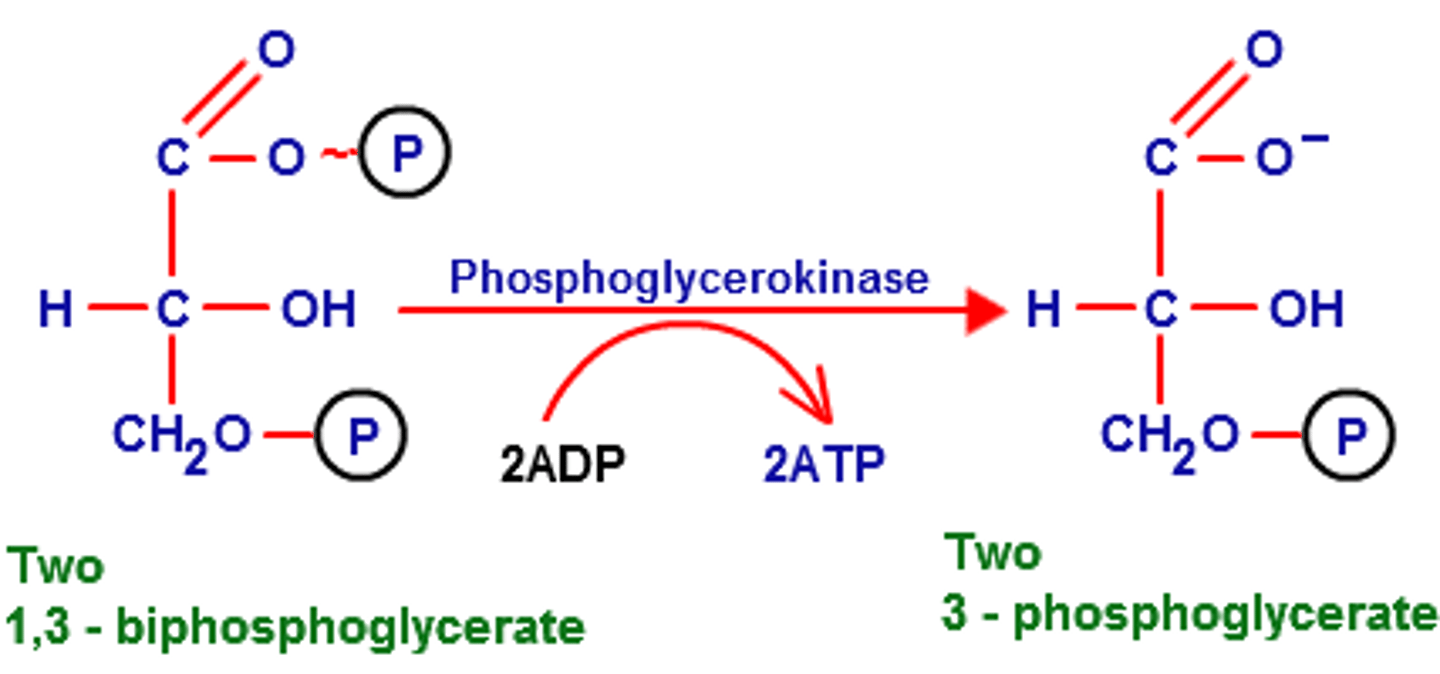
what happens: phosphate from previous step transferred to ADP
reactants: 1,3-bisphosphoglycerate + ADP
products: 3-phosphoglycerate + ATP
enzyme: phosphoglycerate kinase
overall ATP used: 2
overall ATP produced: 2
overall NADH produced: 2
glycolysis step 8
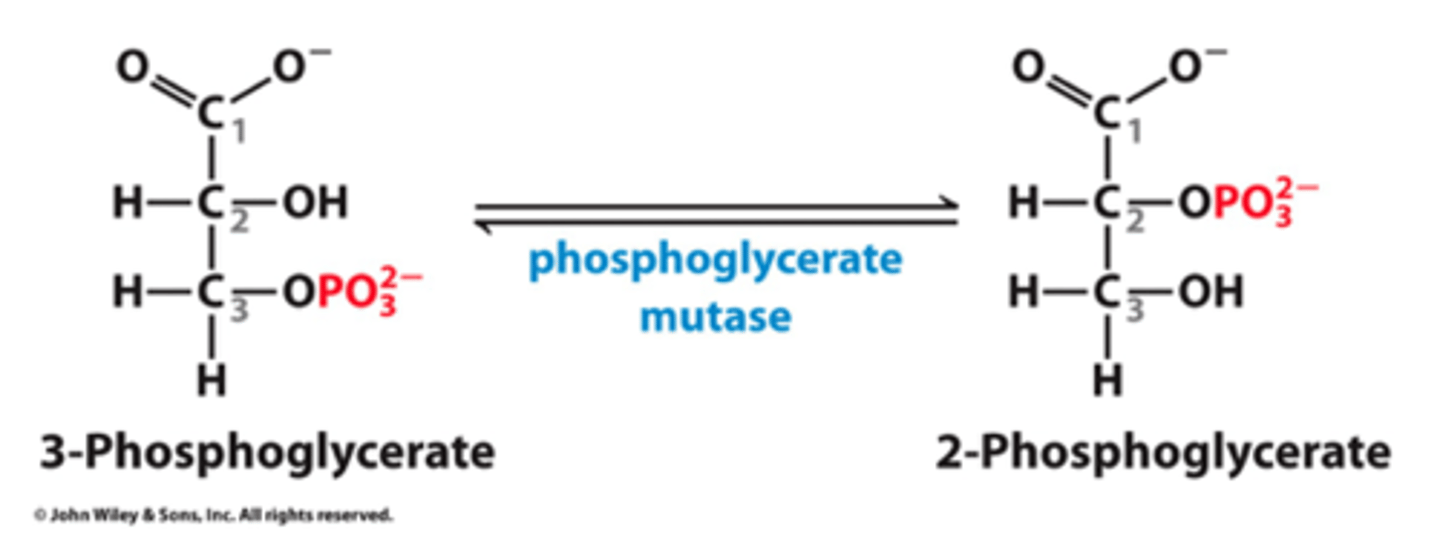
what happens: ester linkage is rearranged
reactants: 3-phosphoglycerate
products: 2-phosphoglycerate
enzyme: phosphoglycerate mutase
overall ATP used: 2
overall ATP produced: 2
overall NADH produced: 2
glycolysis step 9
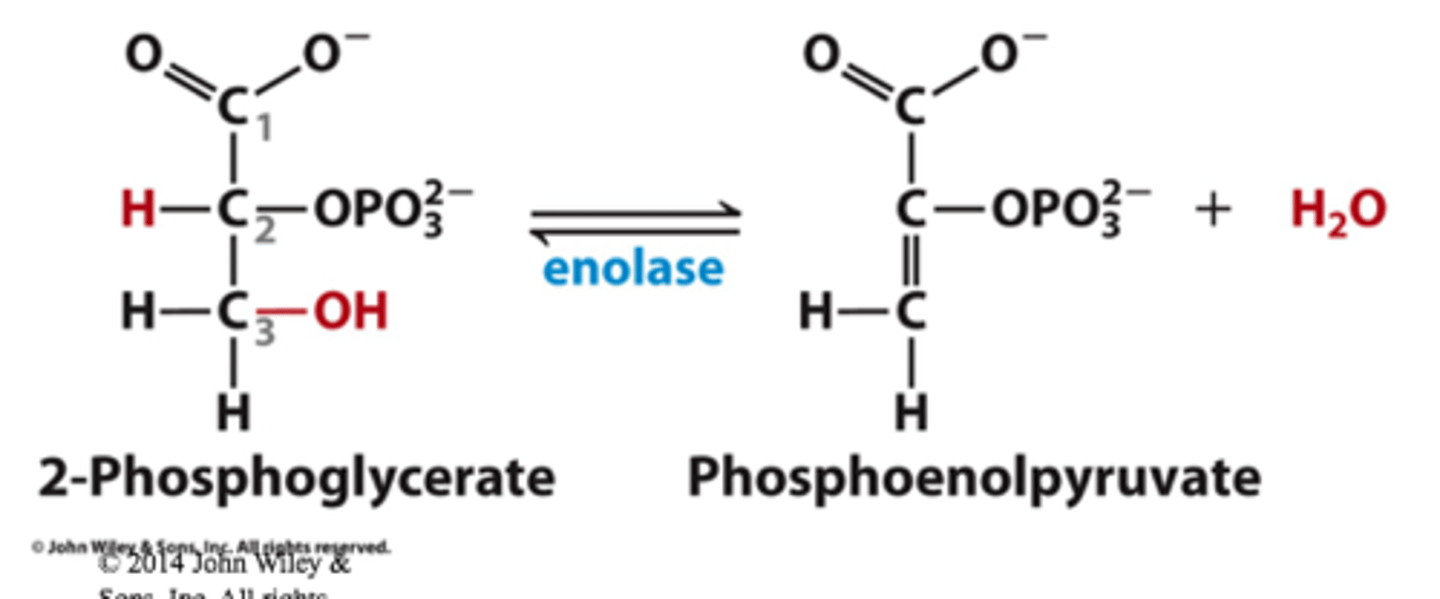
what happens: water molecule removed from 2-phosphoglycerate; high energy enol linkage created
reactants: 2-phosphoglycerate
products: phosphoenolpyruvate, H2O
enzyme: enolase
overall ATP used: 2
overall ATP produced: 2
overall NADH produced: 2
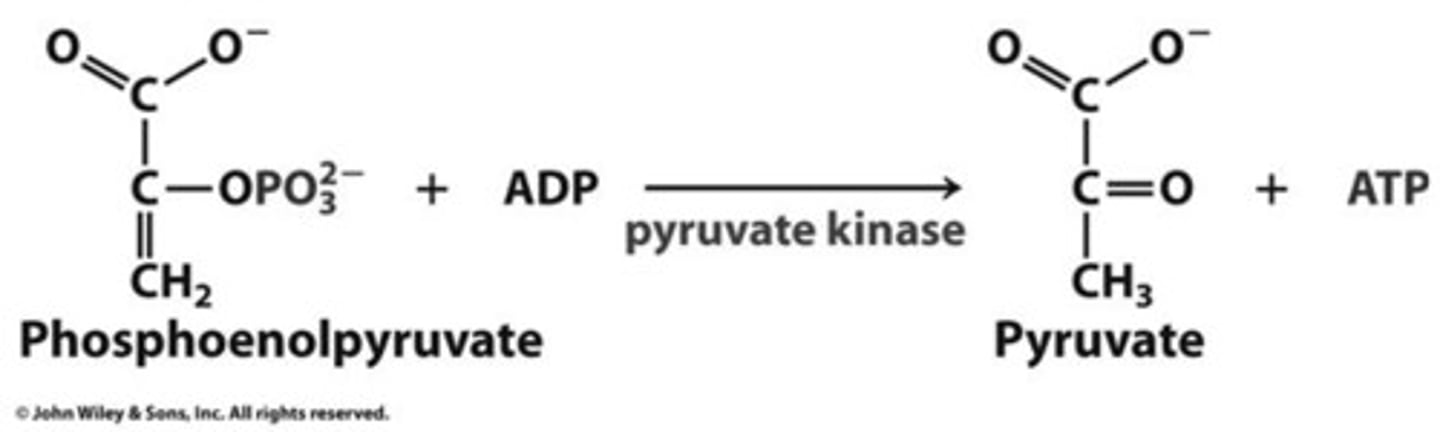
glycolysis step 10
what happens: high energy enol-phosphate linkage transferred to ADP
reactants: phosphoenolpyruvate + ADP + H+
products: pyruvate + ATP
enzyme: pyruvate kinase
overall ATP used: 2
overall ATP produced: 4
overall NADH produced: 2
what is the net amount of ATP molecules produced during glycolysis
2
kinase
an enzyme that catalyzes the transfer of a phosphate group to a specified molecule.
-in steps 1 + 3 of glycolysis kinases transfer phosphates from ATP to a substrate
-in steps 7 and 10 of glycolysis kinases transfer phosphates to ADP to make ATP
isomerase
enzyme that catalyzes the rearrangement of bonds in the molecule
-in steps 2 and 5 of glycolysis
dehydrogenase
enzyme that catalyzes oxidation by removing a hydride (H-) ion
-step 6
Mutase
enzymes that catalyze the shifting of a chemical group from one location to another
-step 8
fermentation
Process by which cells break down sugars and release energy in the absence of oxygen
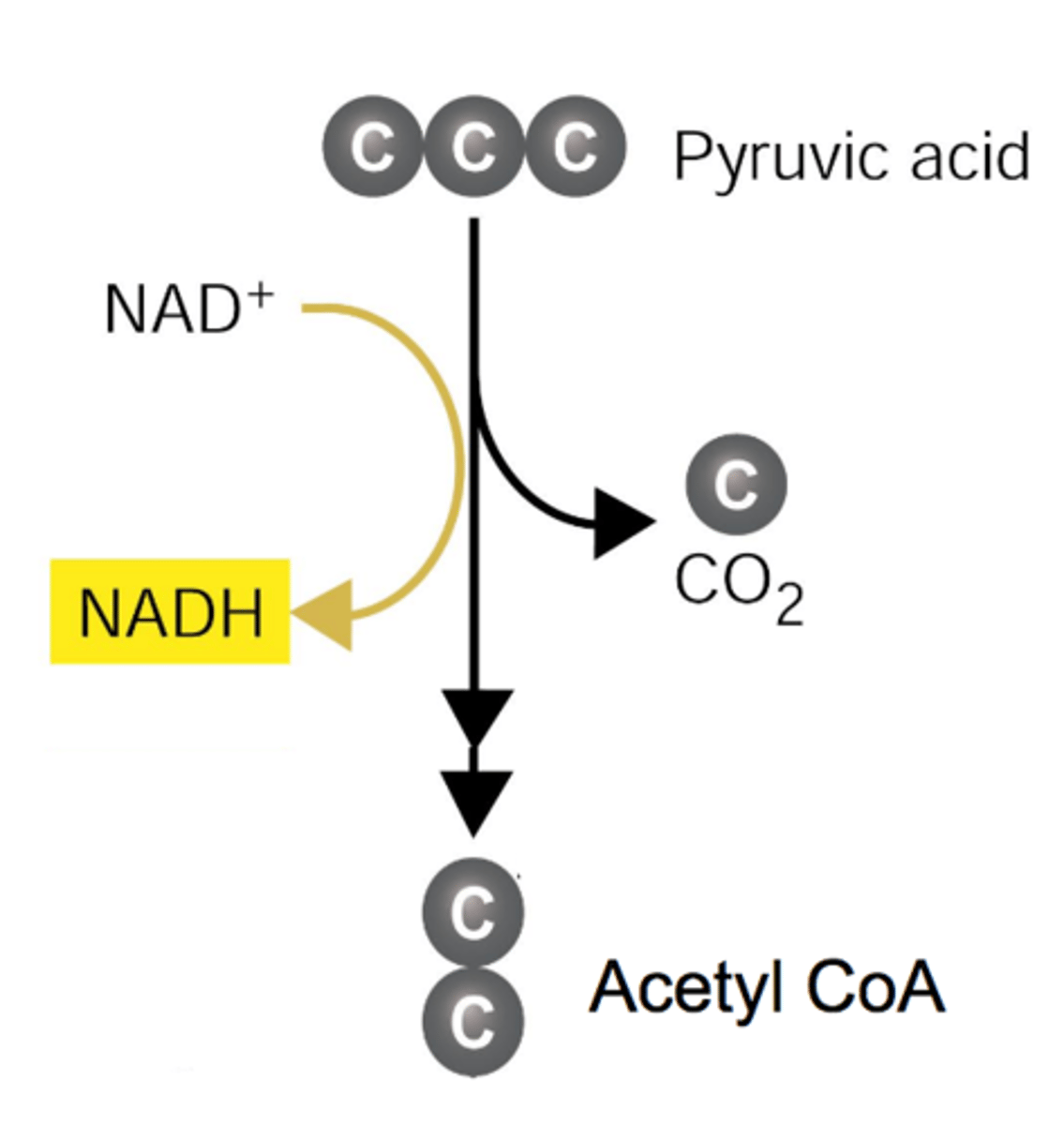
acetyl CoA formation
-pyruvate formed in glycolysis is transported to the mitochondria
-pyruvate dehydrogenase catalyzes the formation of acetyl CoA
-overall: pyruvate -> acetyl CoA + NADH + CO2
what is always required for the Krebs Cycle
Acetyl CoA
what is the net result of the Krebs cycle
2CO2, GTP, 3NADH, FADH2
GTP
-an activated carrier that is similar to ATP
-not used in electron transport chain
FADH2
-electron carrier that is similar to NADH, as it gives up electrons
-participates in the electron transport chain
NADH
electron carrier that stores energy used to make ATP
true or false: oxygen directly enters the Krebs cycle
false.
true or false: the Krebs cycle can function in an anaerobic environment
false, the Krebs cycle requires oxygen, even though oxygen does not enter the cycle directly
oxidative phosphorylation
the chemical energy is captured by activated carriers used to generate ATP
Fatty acid oxidation
-fatty acids can be converted into Acetyl CoA in the mitochondrial matrix by
-removes 2 carbons from the molecule per cycle
-REQUIRES OXYGEN
Which is preferred by our bodies for energy production: glycolysis or fatty acid oxidation
glycolysis, since it is anaerobic
gluconeogenesis
-"reverses" glycolysis to restore glucose supply by building it from pyruvate
-typically occurs during a fasting state
glycogen
-branched glucose polymer that provides energy when we fast
-when more ATP is needed than gained from food, glycogen is broken down via phosphorylation to provide additional ATP
true or false: ATP synthase can work in both directions
true. if the proton gradient is disrupted, ATP synthase can work in the opposite direction to return protons to the matrix. This USES ATP.
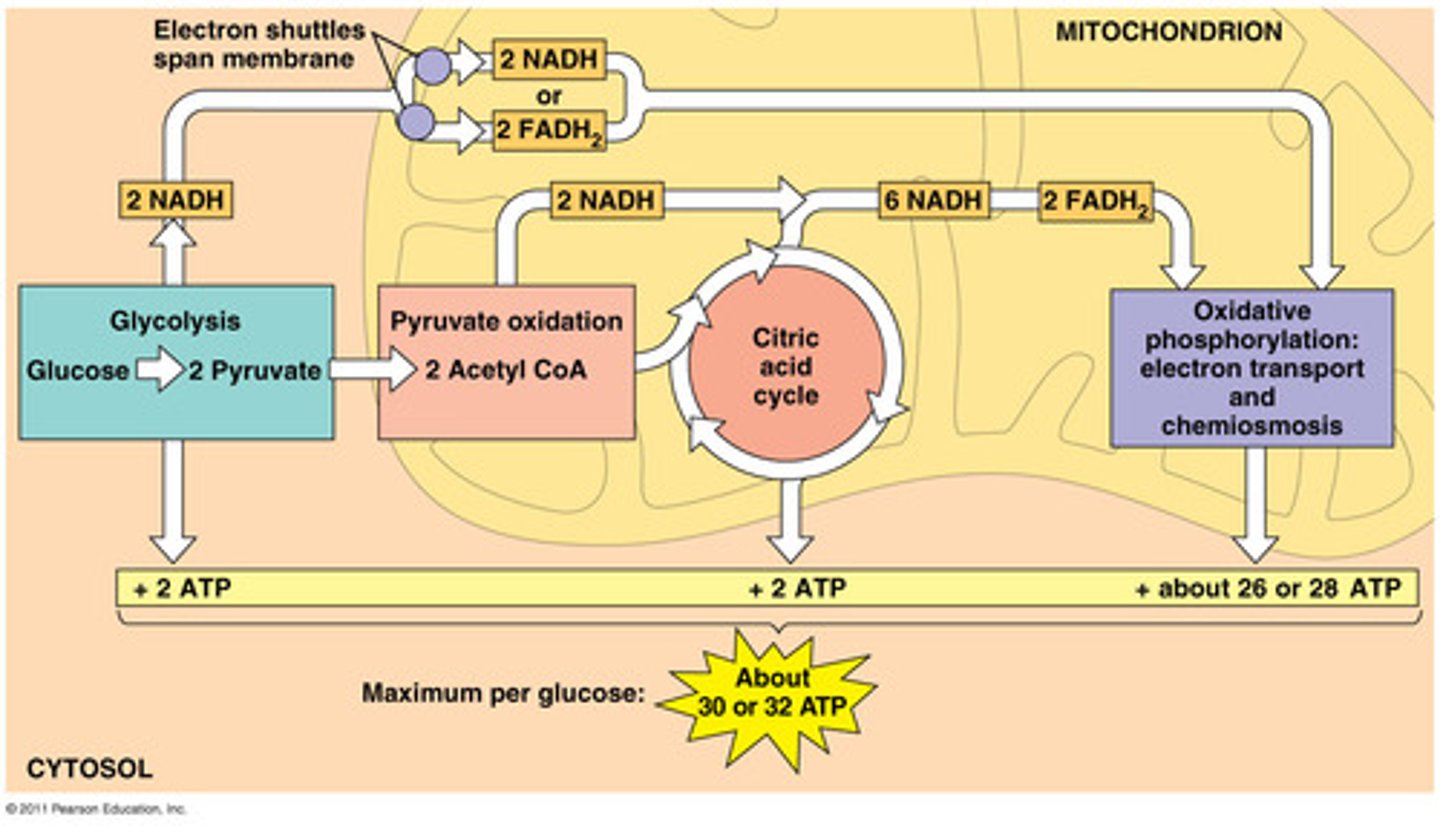
Roughly how many ATP molecules are produced from one glucose molecule
about 28-36