Ch. 15 Benzene
 Call Kai
 Learn
Learn Practice Test
 Spaced Repetition
 Match
Match Flashcards
 Knowt Play
1/38

There's no tags or description
Looks like no tags are added yet.
Name | Mastery | Learn | Test | Matching | Spaced | Call with Kai |
|---|
No analytics yet
Send a link to your students to track their progress
39 Terms
Benzene does not readily do addition due to
high degrees of unsaturation
**needs catalyst to activate (Lewis acid) + will not react w/Br
results in substitution, not addition
true structure of benzene
resonance hybrid
true bond lengths are intermediates b/w single and double bonds
each carbon in benzene
trigonal planar (sp2)
has p-orbital with 1 e- that extends above and below plane of molecule
overlap of 6 p-orbitals creates…
2 rings of e- density (1 above, 1 below ring)
makes benzene e- rich, reacts with strong e- phile
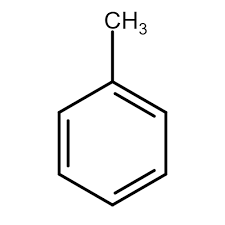
Naming 1 substituent benzene
name substituent + add benzene
toluene
monosub. w/common name
methylbenzene
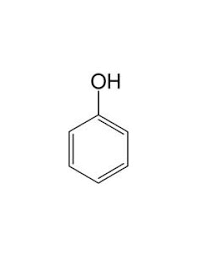
phenol
monosub. w/common name
hydroxybenzene
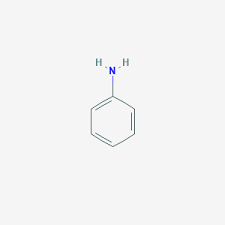
aniline
monosub. w/common names
aminobenzene
naming 2 diff substituent names
alphabetize 2 diff substituent names
Criteria for aromaticity
must be cyclic
molecule must be planar
completely conjugated
# of electrons in pi system = [4n+2]
Aromaticity - must be cyclic
each p-orbital must overlap with p-orbitals on adjacent atoms so they can share
Aromaticity - planar
ensures p-orbitals are aligned, delocalizes electron density
aromaticity - completely conjugated
p-orbital on every atom
aromaticity - 4n+2 pi electrons
Huckel’s rule = 4n + 2pi electrons, where n=0, 1, 2, 3, etc.
antiaromatic
fully conjugated
cyclic
planar
4n pi electrons
nonaromatic compound
lacks 1+ req. for aromaticity (planar, fully conjugated, cyclic)
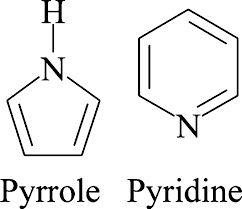
heterocycles can be aromatic
lone pair must be part of delocalized system (not localized to heteroatom)
ex: pyridine, pyrrole
Cyclopentadienyl anion vs cation vs radical
anion has 6 pi electrons, fully conj, planar, cyclic —> aromatic
cation has 4 pi electrons, fully conj, planar, cyclic —> anti-aromatic
radical has 5 pi electrons —> non aromatic
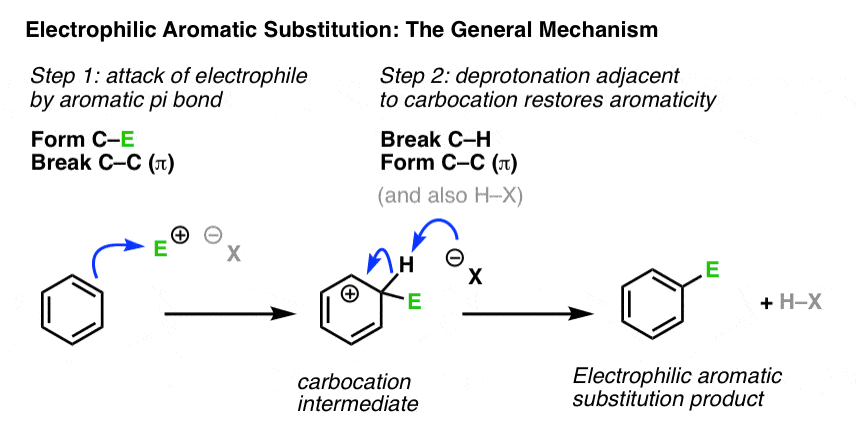
Electrophilic Aromatic Substitution (EAS)
H atom replaced by electrophile (lewis acid)
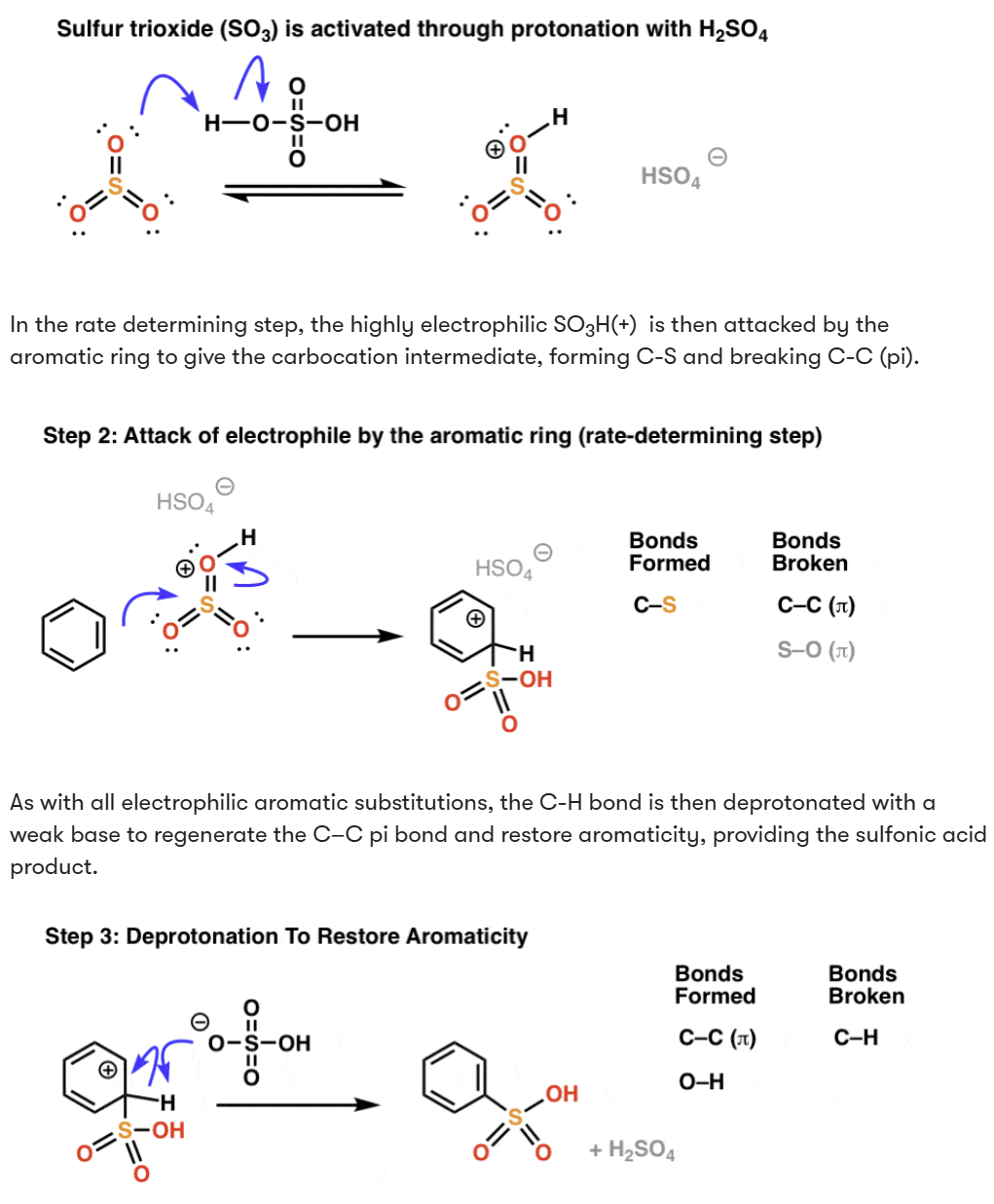
Aromatic Sulfonation
sulfur trioxide is activated by fuming H2SO4
rate determining step: attack of electrophile by aromatic ring
deprotonate to restore aromaticity
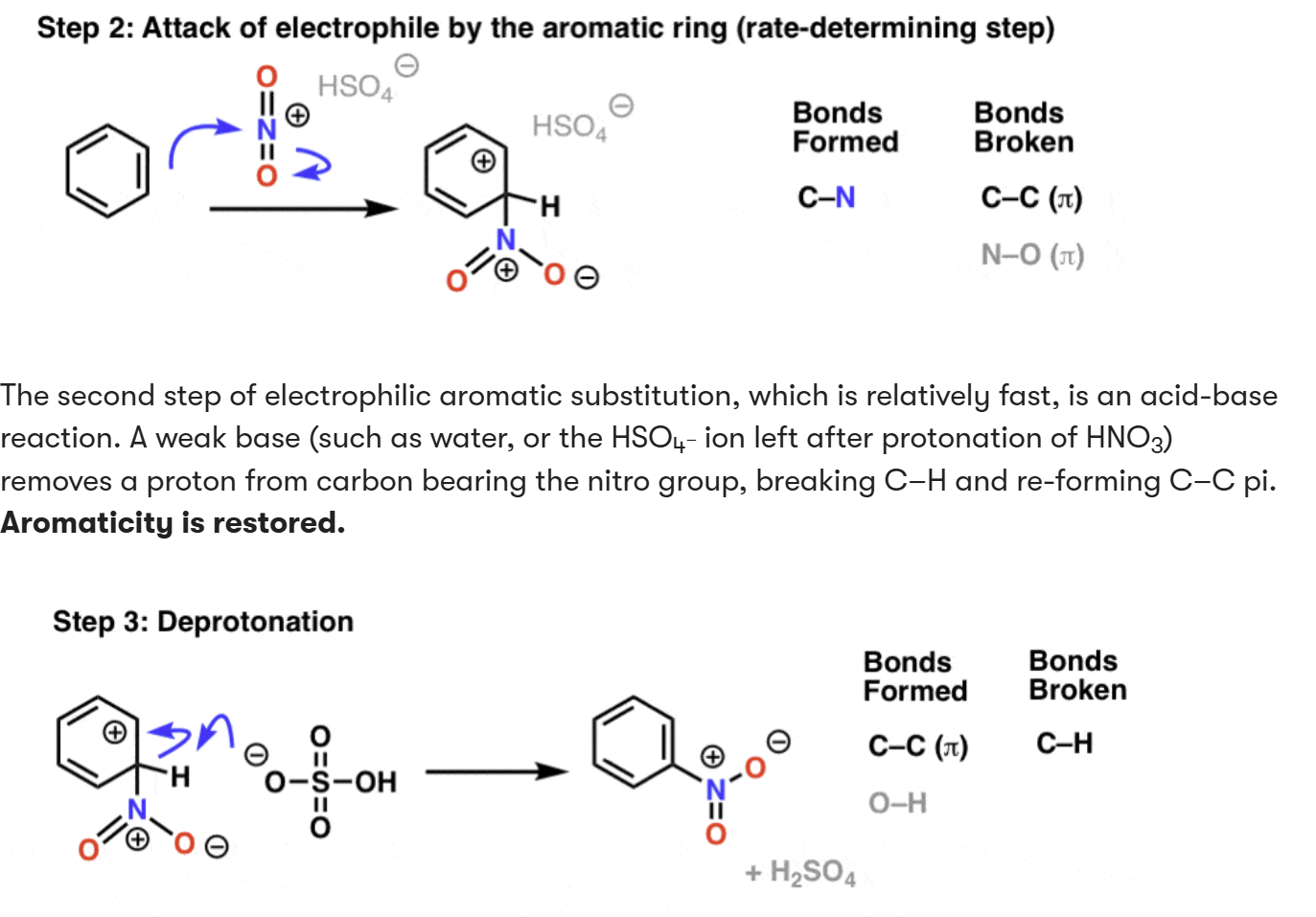
Nitration of benzene
Generate highly reactive NO2+ (nitronium ion) by reacting HNO3 with H2SO4
attack of electrophile (aromatic ring) — RDS
deprotonation with HSO4-
desulfonation of benzene
reverse sulfonation at high temps
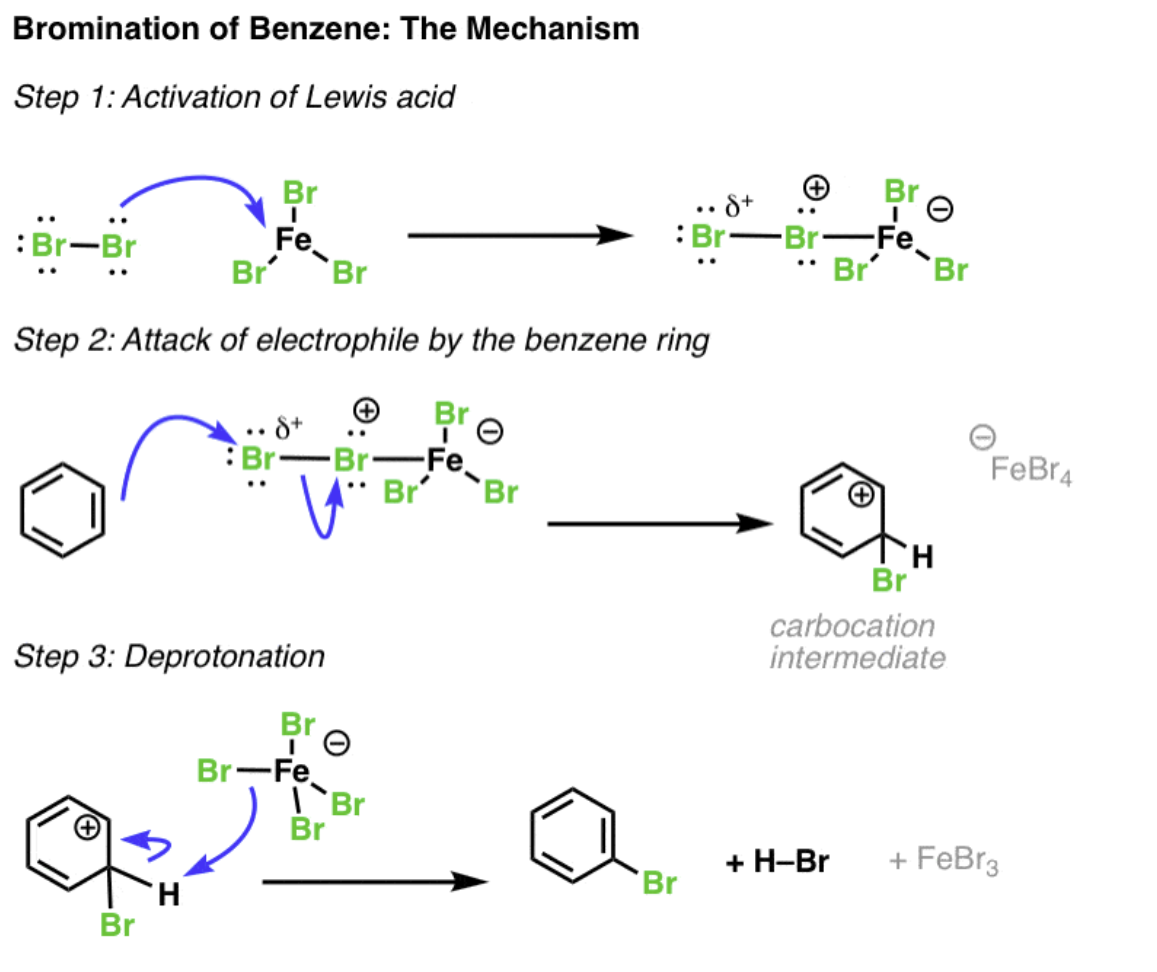
Aromatic halogenation
FeBr3 or FeCl3 (AlCl3) catalyst required to activate halogen to strong electrophile
attack of electrophile by benzene ring
deprotonation to restore aromaticity
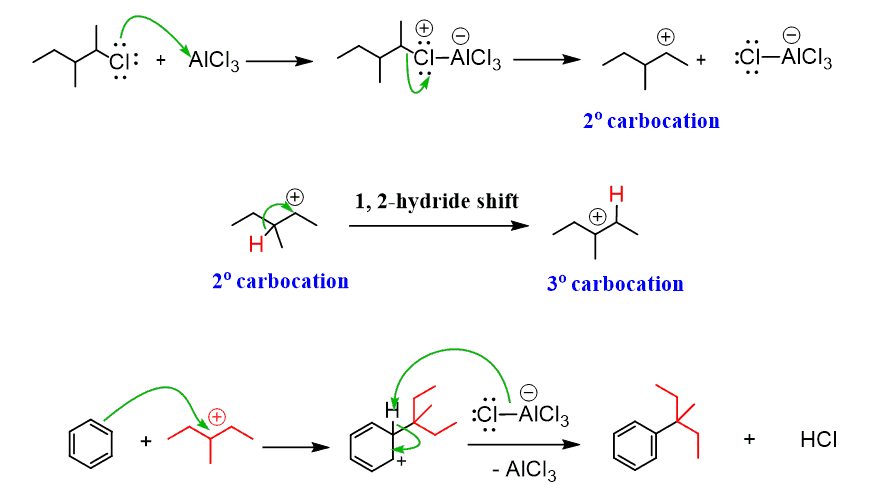
Friedel crafts akylation
alkyl group sub. on to aromatic ring using AlCl3
not good for forming primary connection because hydride shifts
carbocation is made and serves as electrophile, can rearrange
activation
attack of electrophile ring, rate determining
deprotonate
Friedel-Crafts Acylation
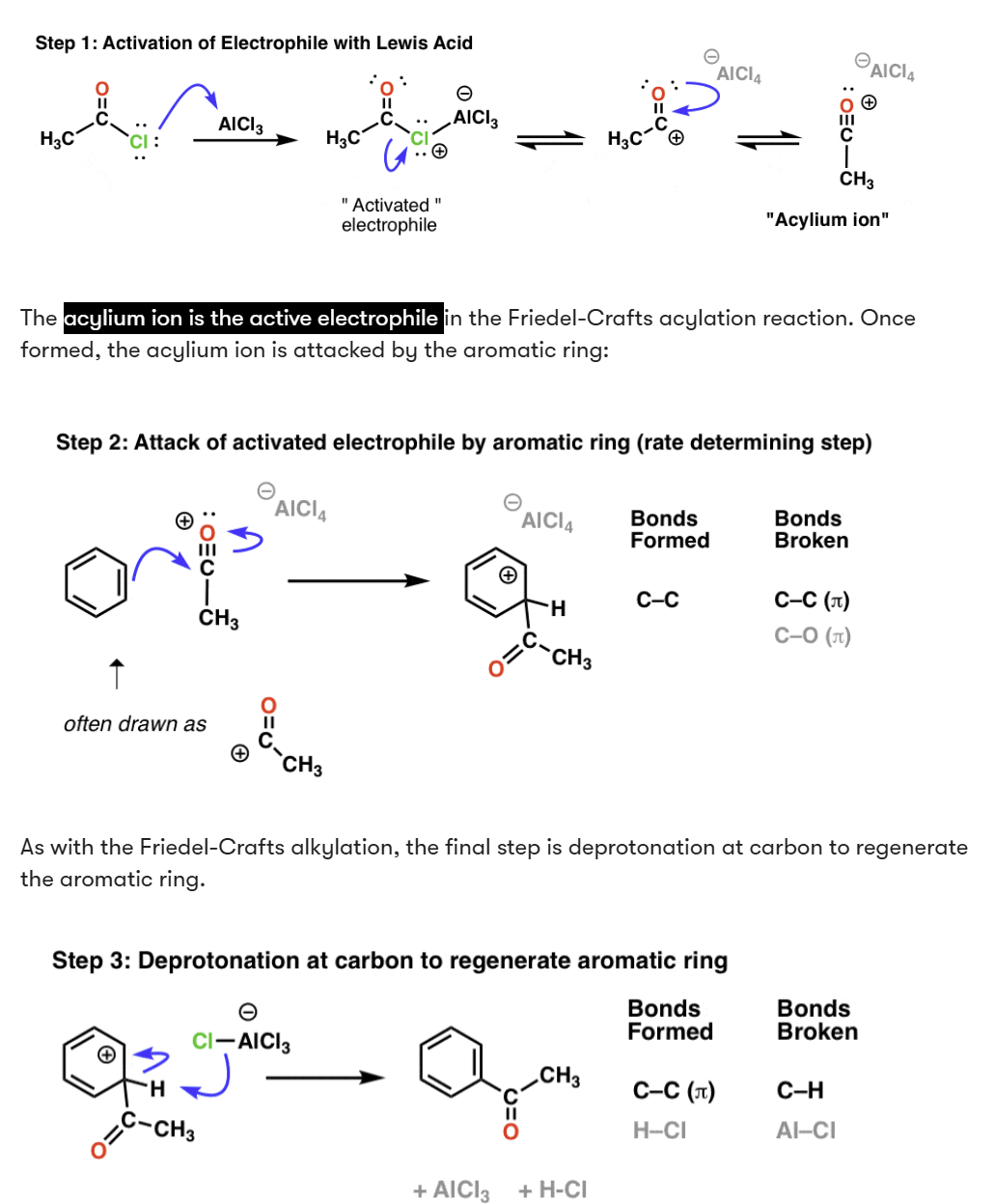
places acyl group on ring (RC=O)
must use acid chloride and catalyst
better way to make a primary connection, can’t make tertiary connection b/c starts w/carbonyl
NO rearranging
activation of electrophile (acylium ion is the active electrophile)
attack of electrophilic ring - RDS
deprotonation
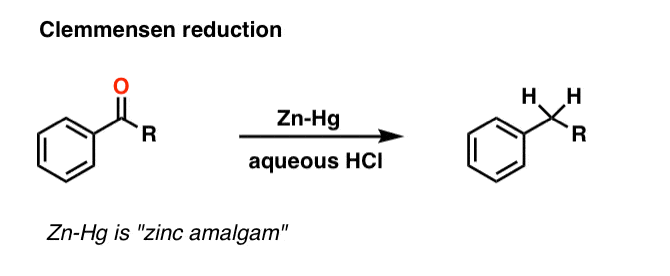
Clemmensen reduction of ketones
done under strongly acidic conditions
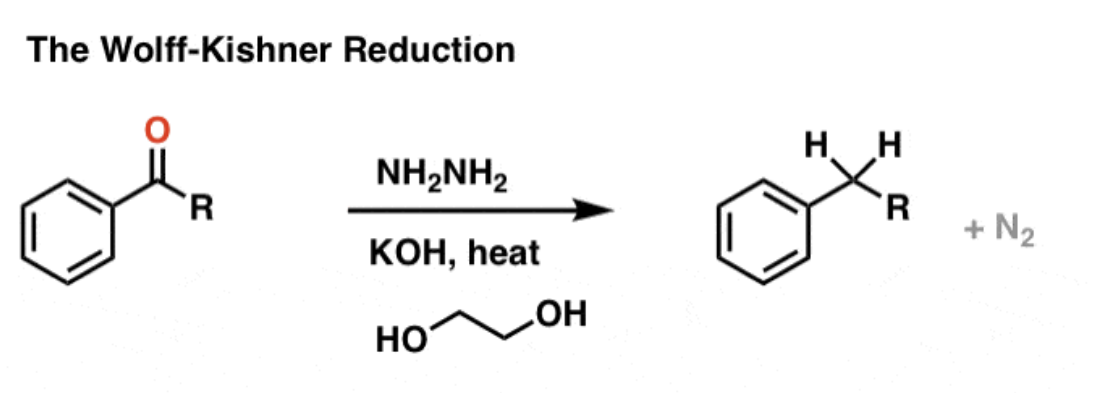
Wolff-Kishner Reduction of Ketones
uses hydrazine (NH2NH2) as reducing agent in presence of strong base (KOH) —- done under strongly basic conditions
in a high-boiling protic solvent (ethylene glycol)
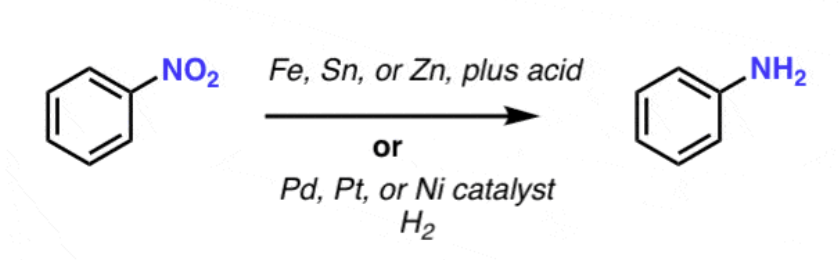
Reduction of Nitro to amine — Hydrogenation of Benzene
2 general methods
reduction with a metal in the presence of acid
Reduction with a noble metal in presence of H2
Diazonium Salts From Aromatic Amines
treatment of aromatic amine with nitrous acid (HNO2) in presence of strong acid (HCl)
leads to loss of H2O and forms new N-N triple bond
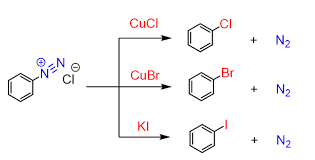
Sandmeyer reactions
transform diazonium salt by treating with copper
Three key examples are:
CuCl transforms aryl diazonium salts into aryl chlorides
CuBr transforms aryl diazonium salts into aryl bromides
CuCN transforms aryl diazonium salts into aryl cyanides (nitriles).
Heteroaromatic compounds
lower resonance energies than benzene
activating groups activate ___ sites
ortho and para
deactivating groups
deactivate ortho/para sites, direct to meta sites
substitution sites is dictated by
resonance stability
inductive effects are produced by
ewg and edg through sigma bond
ewg diminish ring’s nucleophilic strength
substituents direct position of added group
stronger activating group dictates substitution
methyl directs
ortho para
nitro directs
meta
SNAR (Nucleophilic Aromatic Subsitution)
substituted aromatic ring = electrophile
only benzene with strong ewg can undergo snar
LG must be ortho/para to ewg