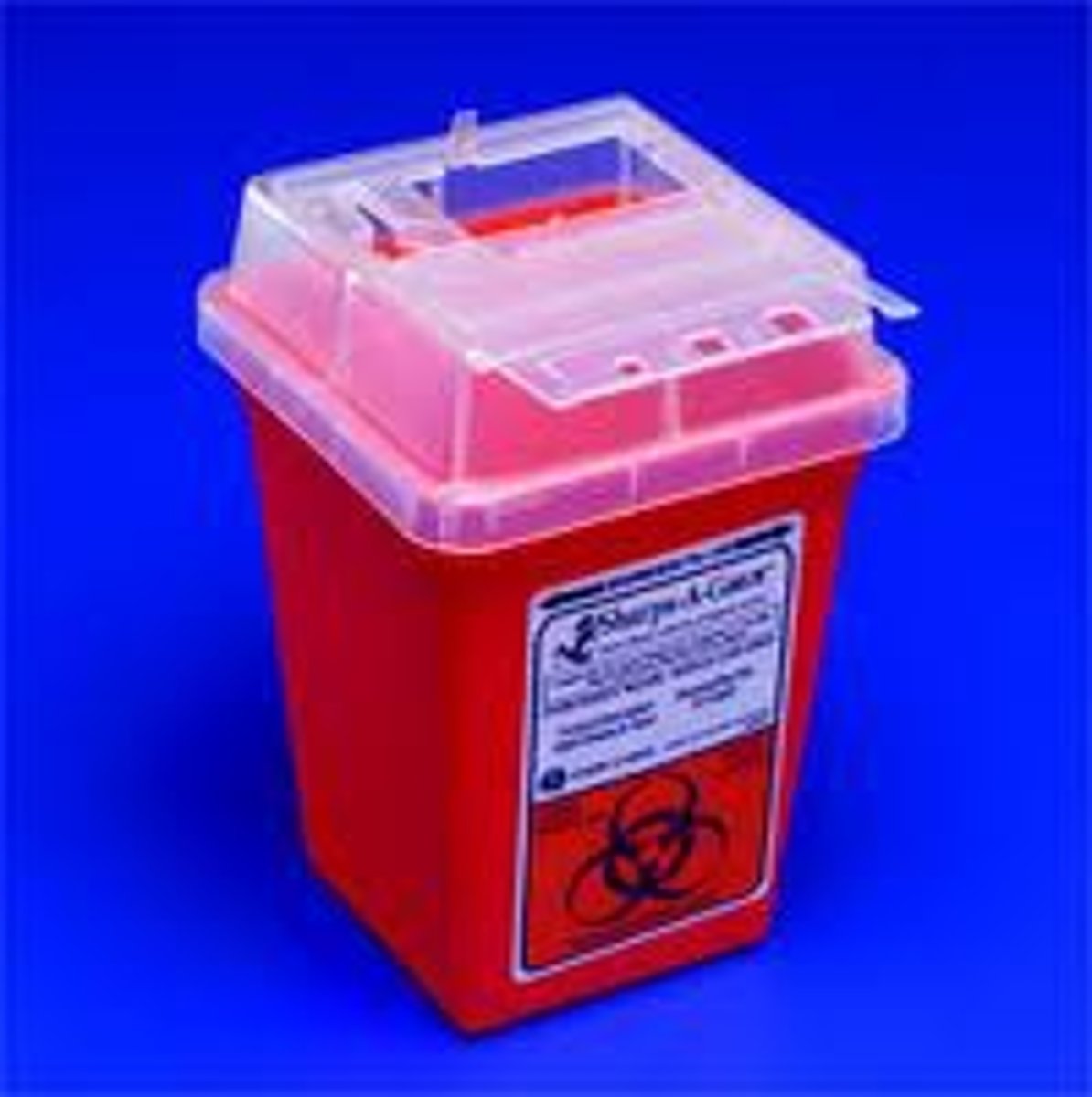
10: Infection Control Practice Quiz
 Call Kai
 Learn
Learn Practice Test
 Spaced Repetition
 Match
Match Flashcards
 Knowt Play
1/14

There's no tags or description
Looks like no tags are added yet.
Name | Mastery | Learn | Test | Matching | Spaced | Call with Kai |
|---|
No analytics yet
Send a link to your students to track their progress
15 Terms
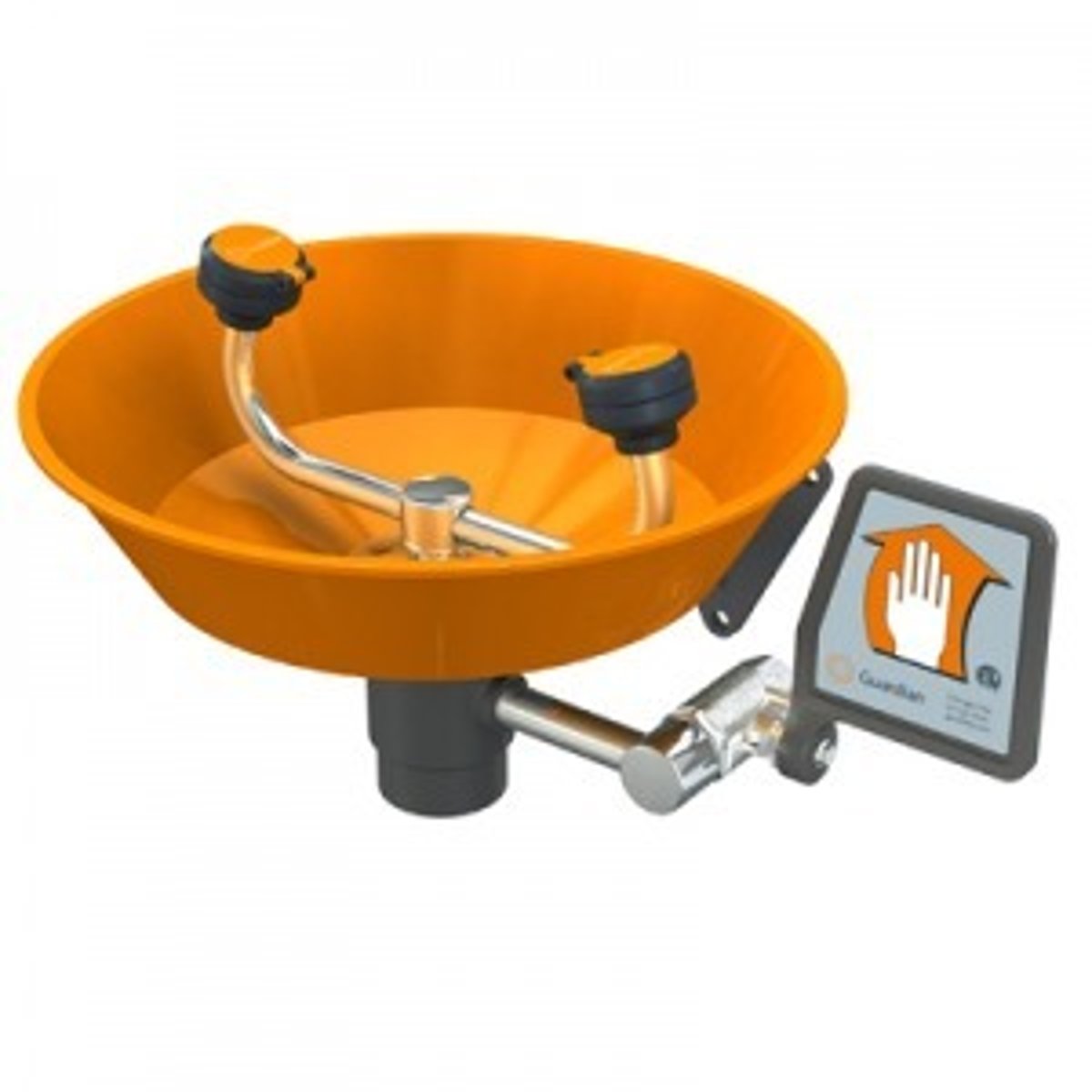
A medical assistant receives as plash of potentially infectious material to the eyes while collecting a urine specimen. Which of the following actions should the medical assistant take to prevent the spread of infection?
A. Rinse eyes with mild soap and water for 5 min.
B. Flush eyes at an eyewash station for at least 15 min.
C. Apply a cool compress to eyes for 1 hr.
D. Massage eyes with a clean cloth for 10 min
B. CORRECT. The medical assistant should flush their eyes with water at an eyewash station for at least 15 min following exposure to potentially infectious material. Flushing eyes with water is the recommended method for preventing the spread of infection.
A. Soap applied to the eyes can cause eye irritation.
C. A cool compress will not remove the material from the eyes and will not prevent the spread of infection.
D. Massaging the eyes will not remove the material from the eyes and will not prevent the spread of infection.
Which of the following concentrations of bleach solution should a medical assistant use as a disinfectant in a clinical setting?
A. 1:10
B. 1:5
C. 1:20
D. 1:1
A. CORRECT. A 1:10 bleach solution is recommended for use as a disinfectant in a clinical setting.
B. A 1:5 bleach solution is too strong of a concentration for clinical use.
C. A 1:20 bleach solution is too weak of a concentration for clinical use.
D. A 1:1 bleach solution is too strong of a concentration for clinical use.
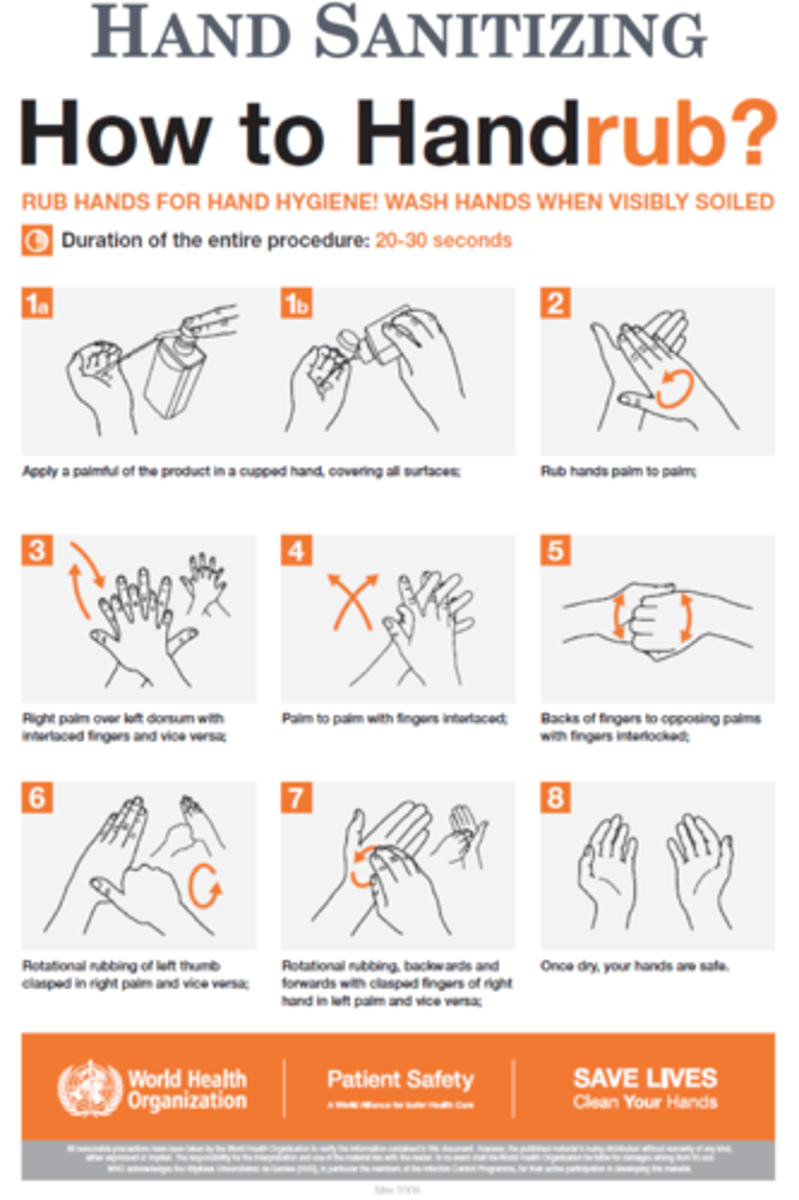
Which of the following statements about alcohol-based hand sanitizer is correct?
A. Hand sanitizer should be used when there is visible debris on the hands.
B. Hand sanitizer should have at least 50% alcohol content.
C Hand sanitizer should be sued in conjunction with a bleach solution.
D. Hand sanitizer should be applied to dry hands.
D. CORRECT. Hands should be dry when sanitizer is applied.
A. If visible debris is present, the medical assistant should wash hands with water rather than using hand sanitizer.
B. The alcohol content of hand sanitizer should be at least 60%.
C. Hand sanitizer alone is enough to provide disinfection.
Which of the following is recommended regarding fingernail care and hand hygiene?
A. Wash hands under running water with the fingers pointing upward.
B. Keep reusable cloth towels at handwashing stations.
C. Trim natural fingernails to 1.3 cm (0.5 in) past the tip of the finger.
D. Remove artificial nails when working with high-risk populations.
D. CORRECT. The medical assistant should not
wear artificial nails or nail extensions when working
percentage of gram-negative bacteria found on artificial nails than on natural fingernails.
A. When performing hand hygiene, the medical assistant should wash hands under running water with hands lower than the elbows and with fingers pointing downward to direct water away from the rest of the arm.
B.. The medical assistant should use paper towels when performing hand hygiene. Cloth towels are more likely
to collect and develop bacteria and micro-organisms.
C. The CDC recommends that natural fingernails not be longer than 0.64 cm (0.25 in) past the tip of the finger.
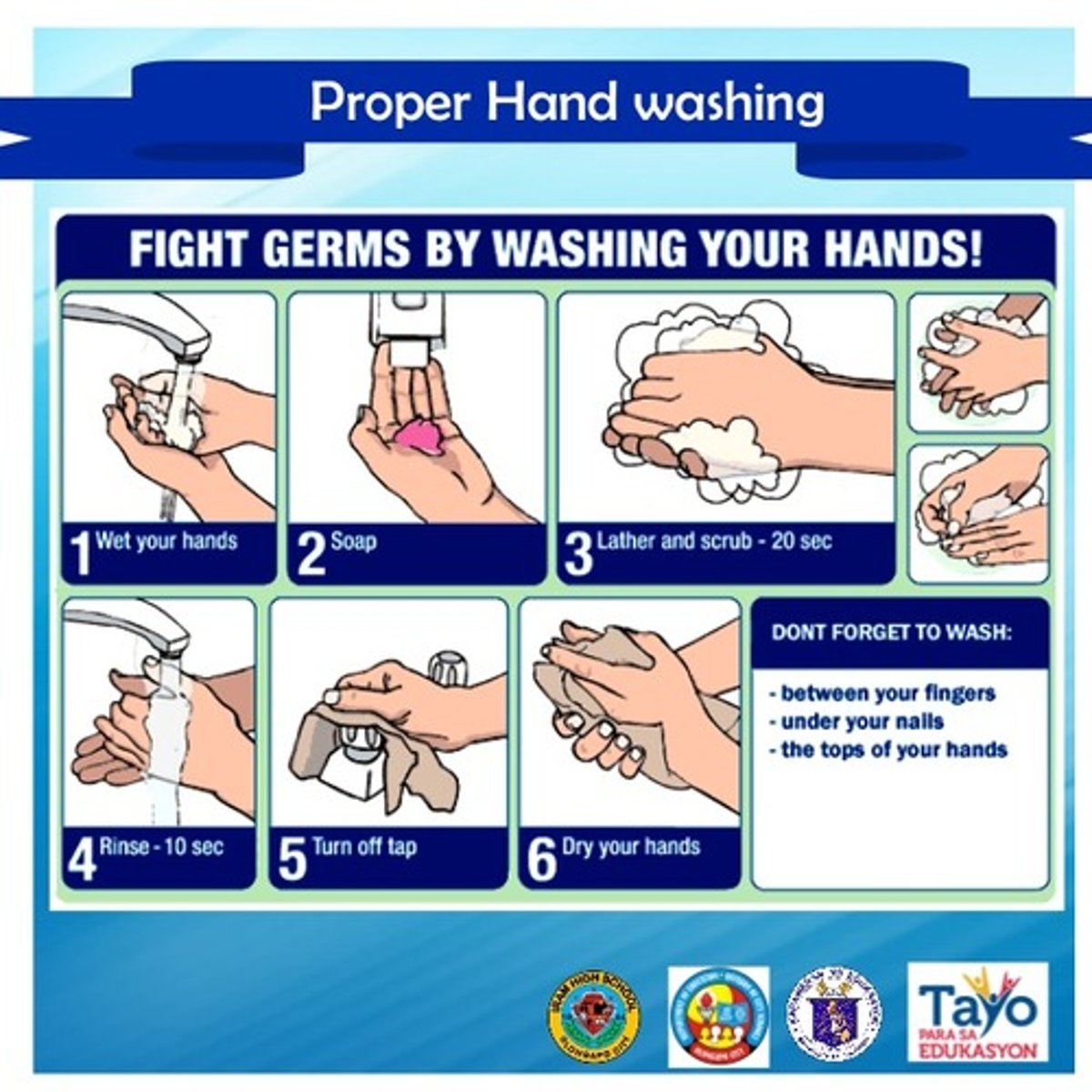
According to CDC recommendations, what is the minimum length of time a medical assistant should spend scrubbing hands with soap and water when performing hand hygiene?
A. 10 seconds
B. 15 seconds
C. 20 seconds
D. 25 seconds
B. CORRECT. The CDC recommends scrubbing the hands with soap and water for a minimum of 15 seconds.
A. Scrubbing the hands for only 10 seconds is not sufficient to remove bacteria.
C. Scrubbing the hands for 20 seconds would remove bacteria. However, the minimum length of
time that the CDC recommends is 15 seconds.
D. Scrubbing the hands for 25 seconds would remove bacteria. However, the minimum length of time that the CDC recommends is 15 seconds.
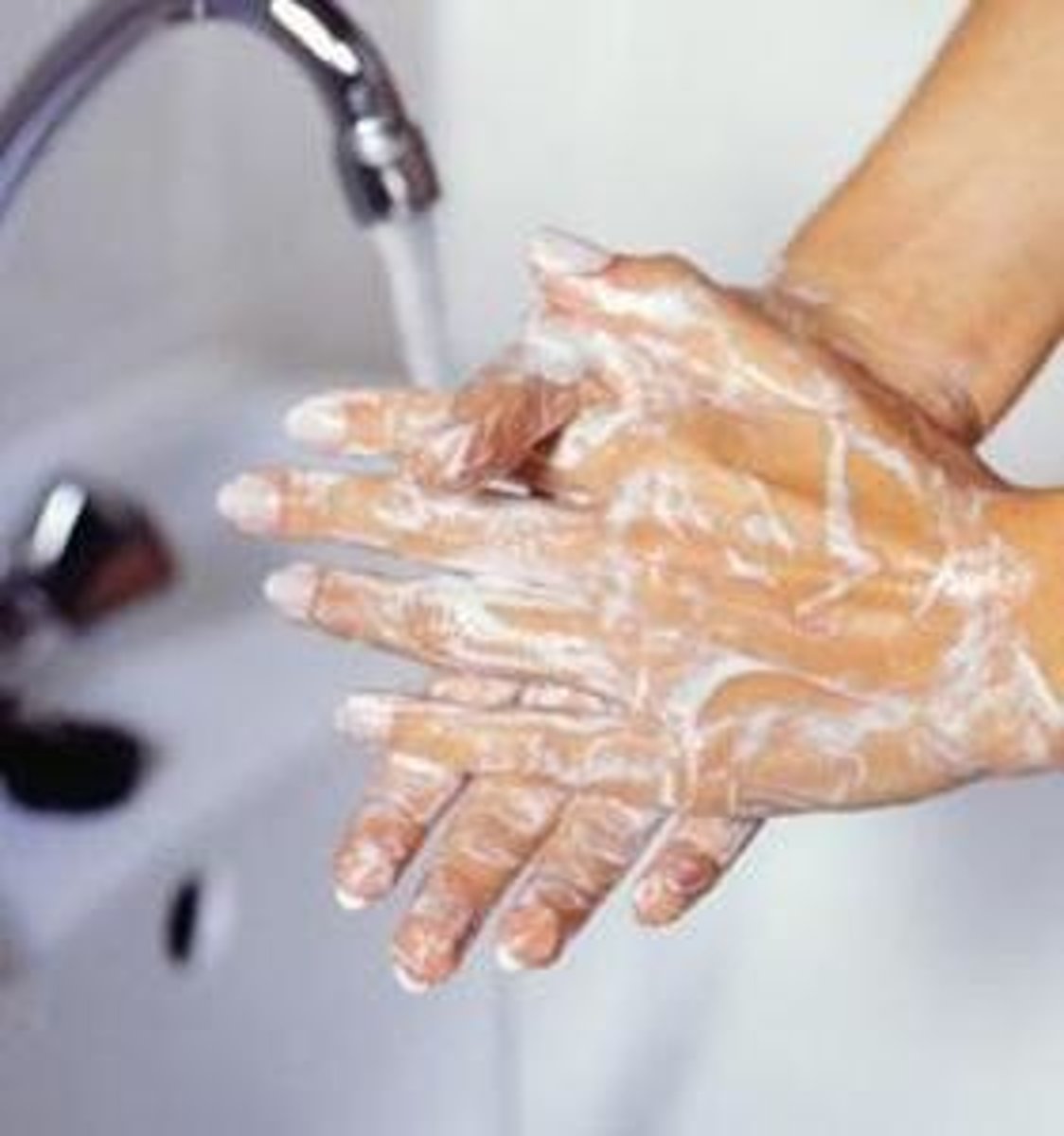
A medical assistant is washing infectious debris off several sharp surgical instruments. Which of the following actions should the medical assistant take?
A. Keep all hinged instruments closed.
B. Use a soft-bristled brush to clean the surface of the instruments.
C. Soak the instruments in a bleach solution to sterilize them prior to sanitization.
D. Wear utility globes while sanitizing the instruments.
D. CORRECT. The medical assistant should wear utility gloves when sanitizing sharp objects to be protected from instrument penetration
or laceration, which could transmit infections. Utility gloves also protect the medical assistant
from the harsh effects of chemical solutions.
A. Hinged instruments should be open so that all grooves, crevices, and serrations can
be scrubbed with a firm-bristled brush.
B. The medical assistant should use a firm-bristled, stiff nylon brush when scrubbing the
surface of the instruments to guarantee that all infectious debris is removed during cleaning.
C. Sterilization is performed after sanitization. Bleach would not be used to sterilize the instruments.
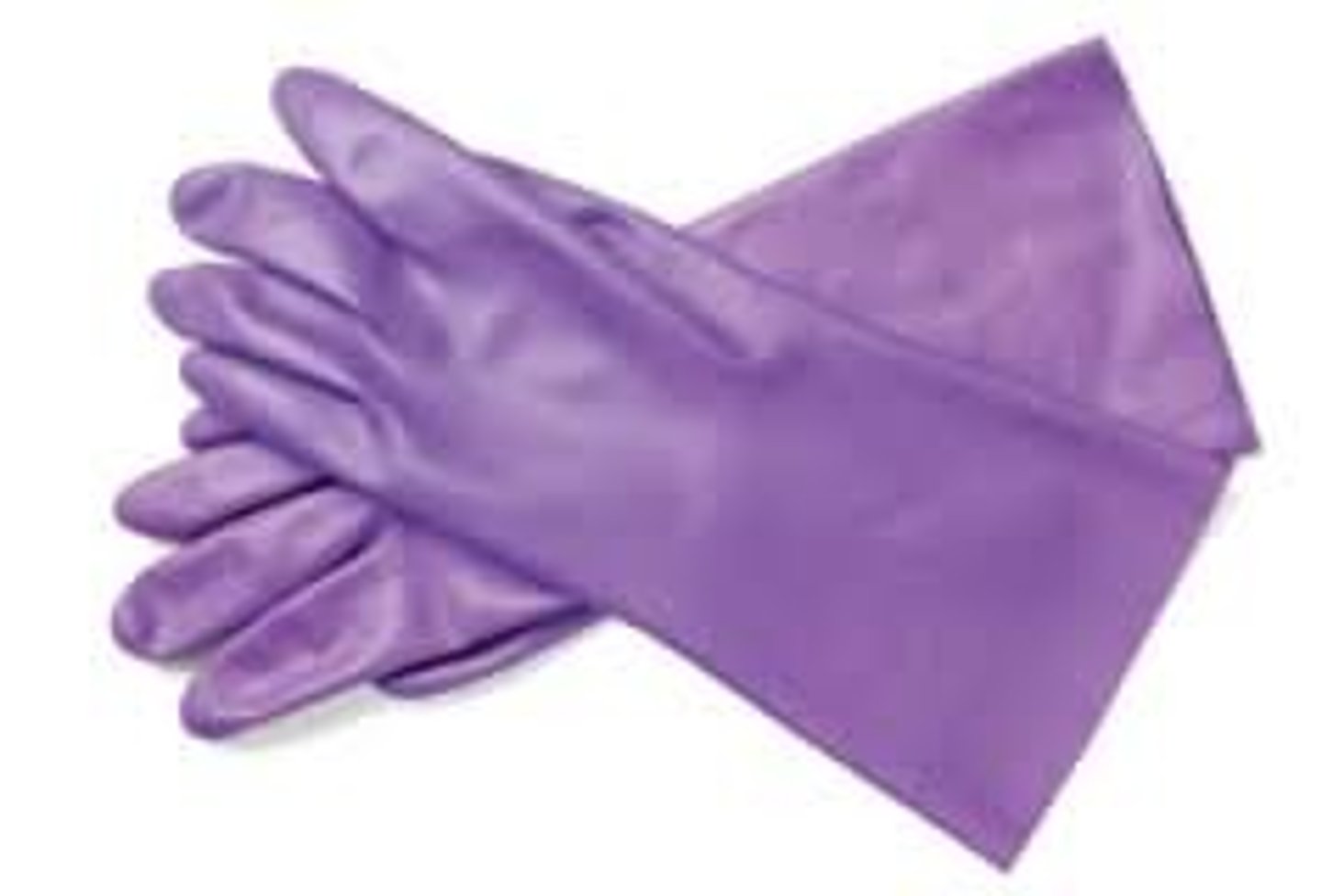
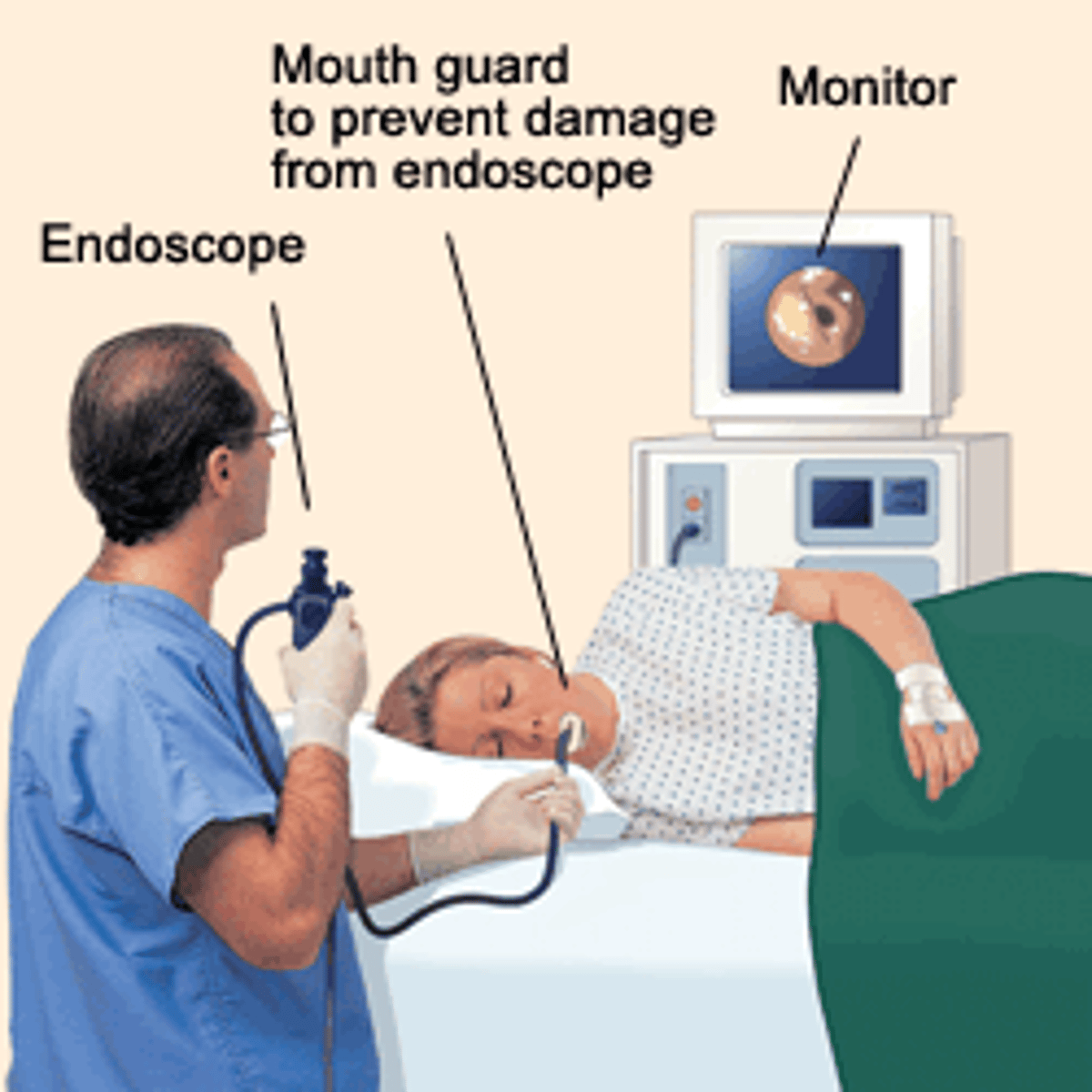
Which of the following methods should a medical assistant use when storing a disinfected endoscope?
A. Hang vertically
B. Flat on a clean, dry surface
C. An airtight container
D. Its original container
A. CORRECT. The medical assistant should store the endoscope vertically so that any residual fluid can drain and the equipment can dry.
B. Storing the endoscope flat can cause moisture to pool within the tube.
C. Storing the endoscope in an airtight container does not allow the endoscope to dry properly and could cause contamination and bacteria growth.
D. The medical assistant should not place the endoscope in its original container because this could cause contamination and bacteria growth.
A medical assistant is preparing to sterilize a vaginal speculum. Which of the following sterilization techniques should the medical assistant use?
A. Ultrasonic
B. Gas
C. Autoclave
D. Ionizing radiation
C. CORRECT. Autoclave sterilization is a quick and effective method that uses steam under pressure to sterilize on-site medical
equipment. The medical assistant should use
this method to sterilize a vaginal speculum.
A. Ultrasonic sterilization uses sound waves to sanitize delicate instruments. A vaginal speculum is not a delicate instrument.
B. Gas sterilization uses gas to sterilize sensitive equipment that can be damaged by heat and moisture and, due to size, cannot be sterilized by other methods. A vaginal speculum is heat- and moisture-resistant.
D. lonizing radiation is a method of sterilization
that is not used in health care facilities.
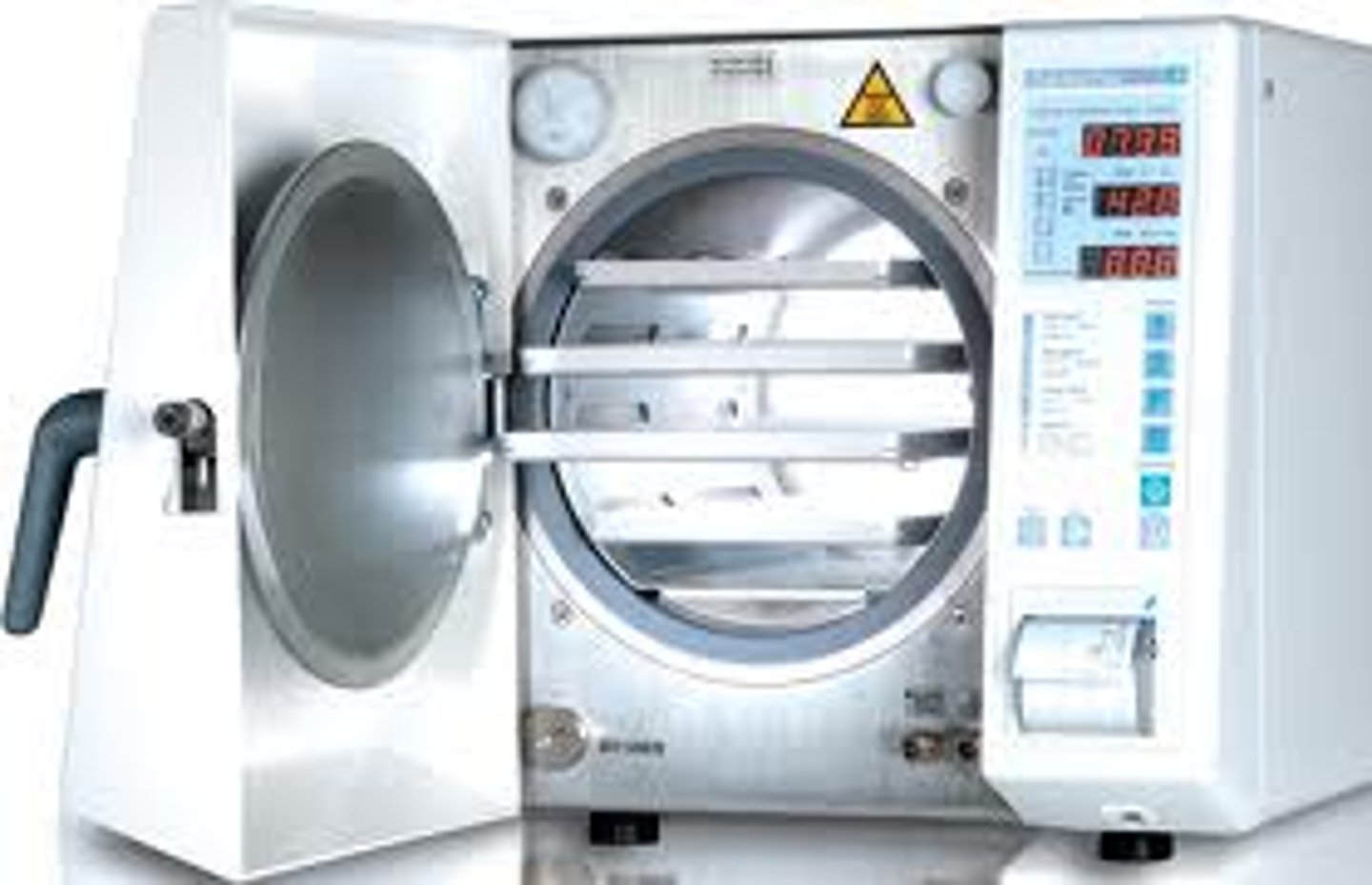
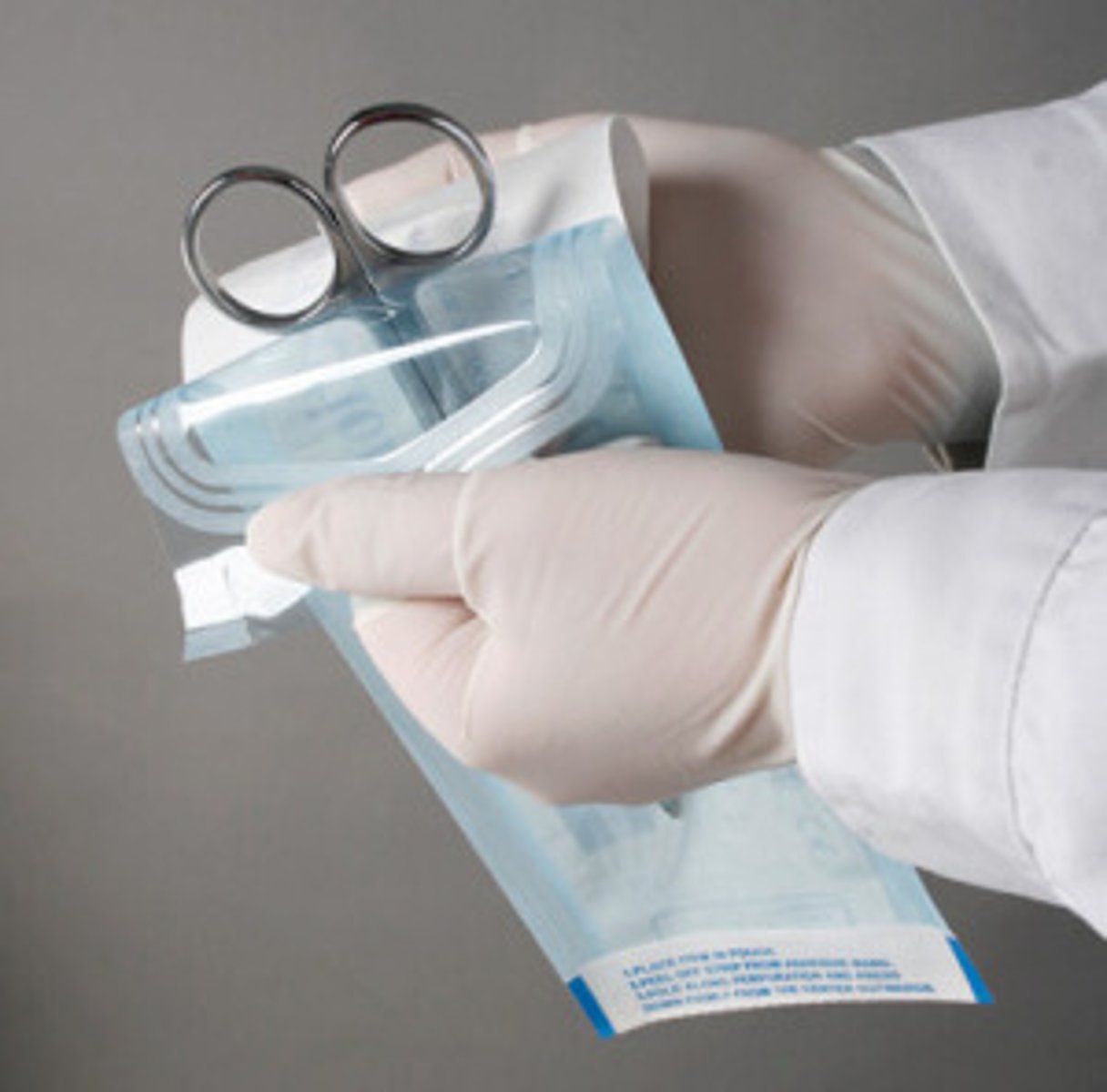
A medical assistant is loading prepackaged hemostats into an autoclave. Which of
the following actions should the medical assistant take to ensure sterilization?
A. Layer the packages so that they overlap one another.
B. Alternate the packages with unwrapped instruments.
C. Organize the packages loosely without touching the walls of the autoclave.
D. Submerge the packages in disinfectant before placement in the autoclave.
C. CORRECT. To ensure optimal sterilization of
all surfaces, the packaged instruments should be spread out and organized as loosely as possible within the autoclave. Steam penetration is optimized when there is sufficient space between packages.
A. When loading an autoclave, the medical assistant should organize the packages so there is enough room for the flow of steam to allow for proper steam penetration. Steam penetration is compromised when packages are crowded together.
B. Unwrapped instruments should be placed on a perforated stainless steel tray and stored in a clean area. Unpackaged items are not considered sterile.
D. Adisinfectant is not necessary when an instrument is to be autoclaved. This would be a redundant step in the sterilization process. To ensure sterilization of all surfaces, the packaged instruments should be spread out and organized loosely within the autoclave.
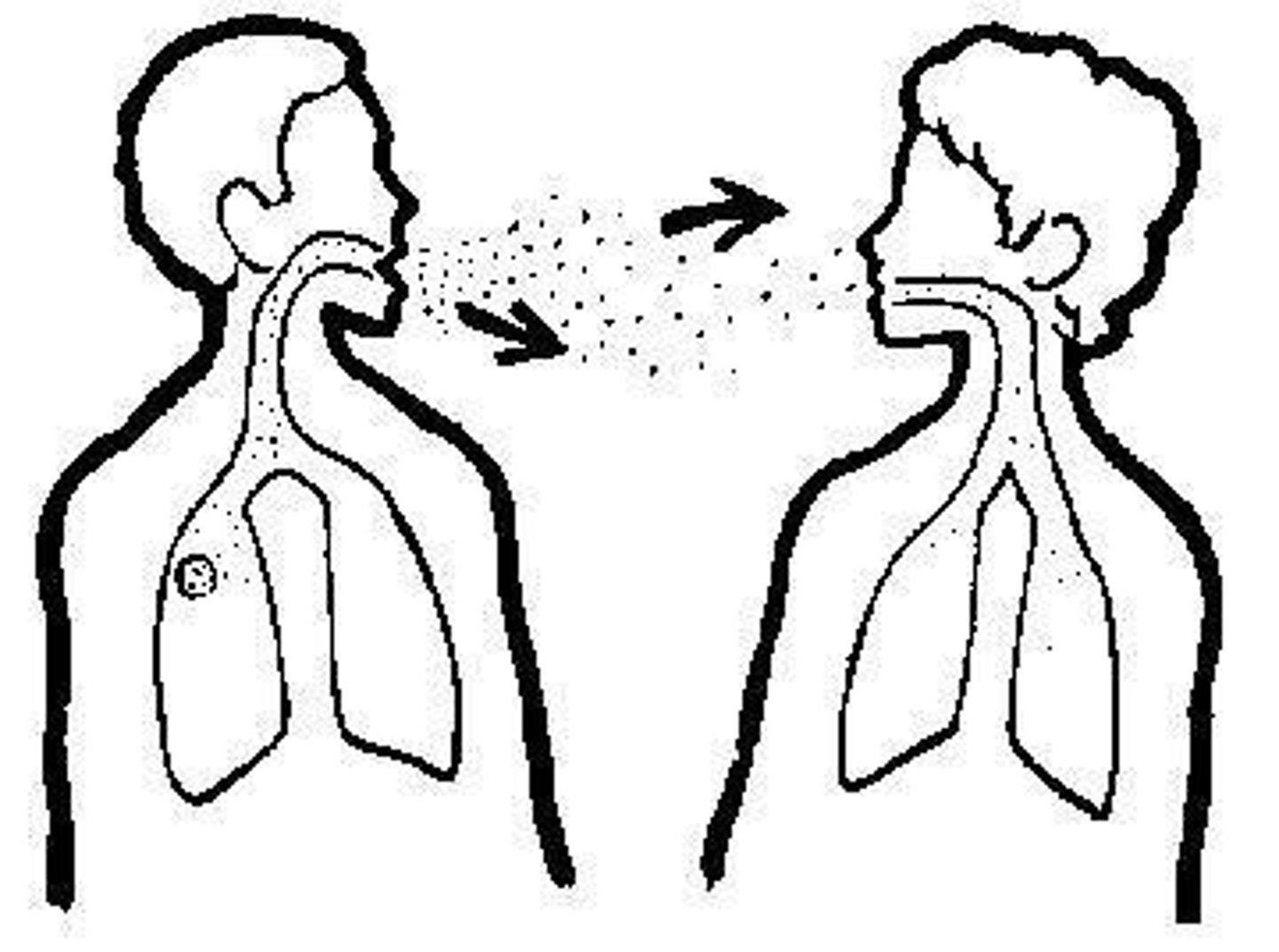
A patient who is coughing and sneezing repeatedly enters the reception area at a clinic. Which of the following actions should a medical assistant take?
A. Allow the patient to remain in the reception area.
B. Assist the patient into an examination room.
C. Notify the provider of the patient's condition immediately.
D. Distribute masks to other patients in the reception area.
B. CORRECT. If a patient is visibly sick and potentially spreading the infection, the medical assistant should move the patient to a separate
area or into an examination room to wait.
A. The medical assistant should take action to ensure the other patients are protected from infection.
C. The patient has an appointment to see the provider, so it is not necessary to notify the provider of the patient's condition.
D. This might cause the other patients to become concerned about contracting the illness. It can also cause the coughing and sneezing patient to feel singled-out.
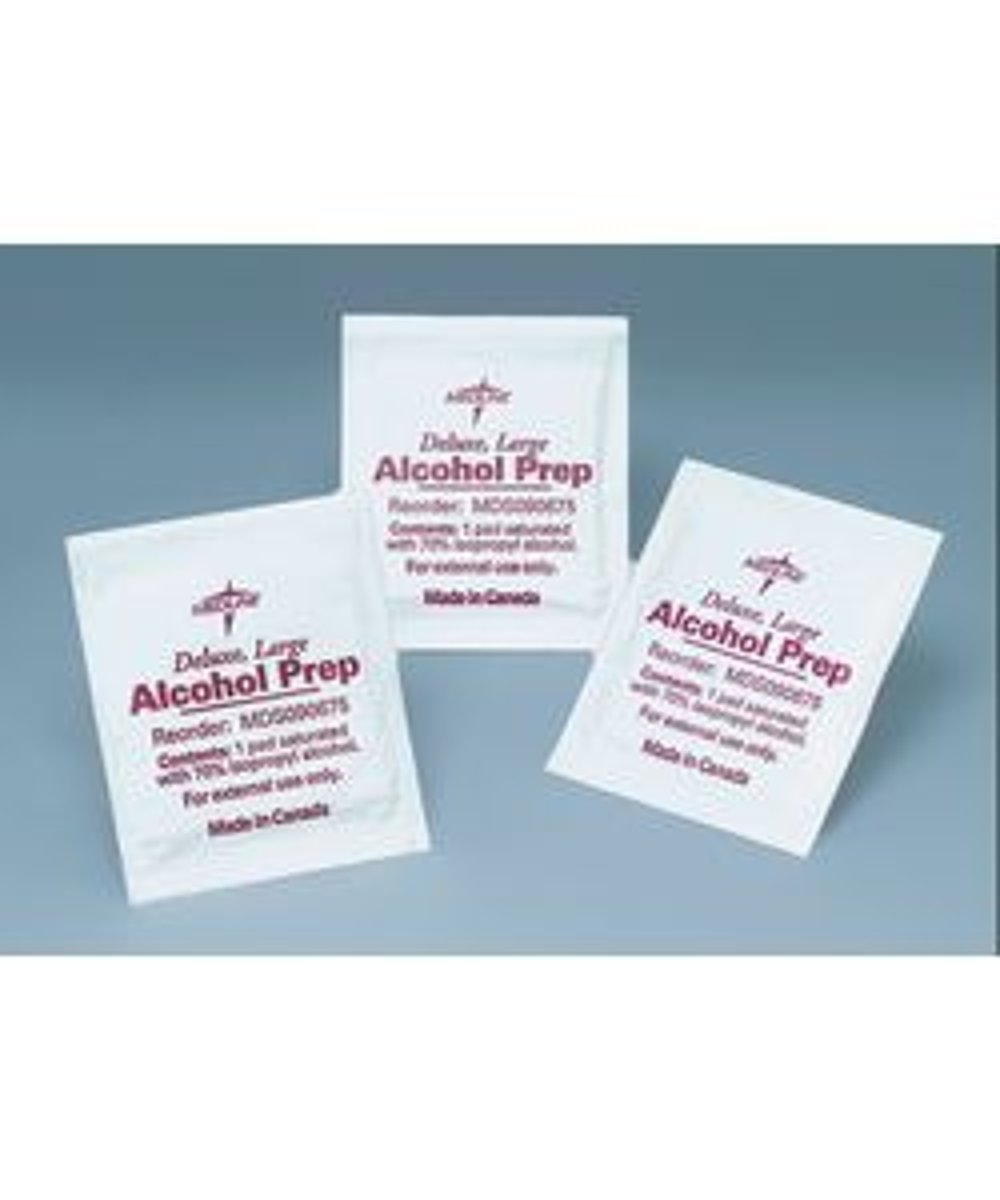
Which of the following steps should a medical assistant take to follow aseptic guidelines when administering injections?
A. Don full personal protective equipment (PPE).
B. Wipe the injection site with an alcohol pad.
C. Dispose of the syringe with the needle pointed upward.
D. Use the same needle for drawing and injecting.
B. CORRECT. The medical assistant should wipe the patient's skin with an alcohol pad prior to an injection when following aseptic guidelines.
A. The medical assistant does not need to wear full PPE for injections.
C. When disposing of the syringe, the medical assistant should point the needle downward.
D. The medical assistant should use separate, sterile needles for drawing from a vial and for injecting.
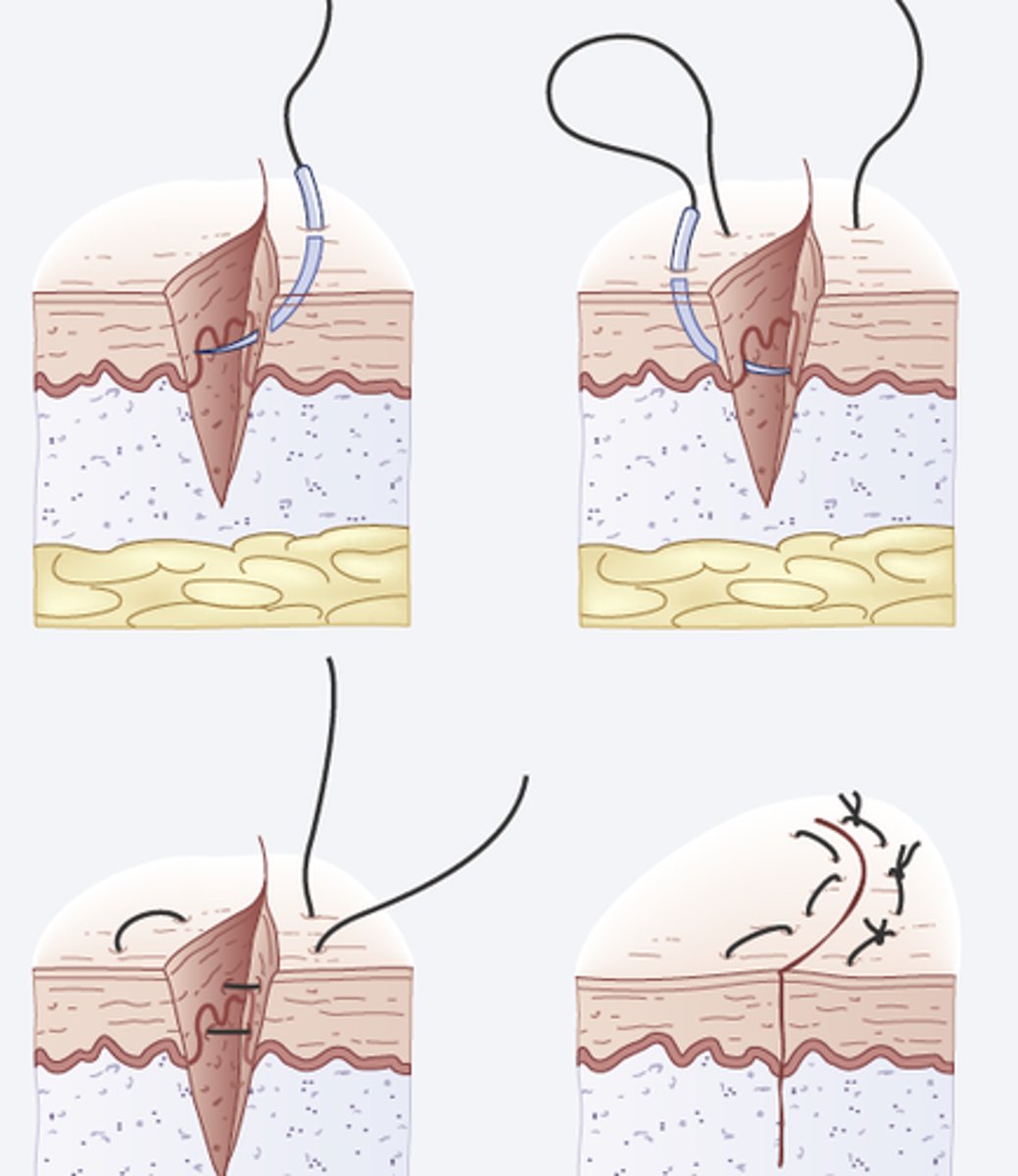
Which of the following procedures requires a medical assistant to use aseptic technique?
A. Cryosurgery
B. Sonogram
C. Sigmoidoscopy
D. Suturing
D. CORRECT. Suturing requires surgical aseptic technique. The procedure is invasive, and the risk of infection is higher than it is during noninvasive procedures.
A. Aseptic technique is not necessary for cryosurgery because this procedure is less invasive than traditional surgery. The extremely low temperatures involved in cryosurgery prevent colonization by bacteria.
B. Aseptic technique is not necessary for a sonogram because the procedure is noninvasive.
C. Aseptic technique is not necessary for a sigmoidoscopy because the rectum and colon are colonized by bacteria.
13.
Which of the following disposal methods should a medical assistant use in accordance with OSHA guidelines for handling biohazardous waste?
A. Dispose of soiled bandages in a covered trash receptacle.
B. Contact a local waste management company for disposal instructions.
C. Label chemicals with their names and data before disposal.
D. Place used syringes in a red biohazard bag.
C. CORRECT. The medical assistant should label chemicals with their names and any applicable data before disposal. Biohazard waste disposal companies need this information to dispose of the chemicals safely.
A. The medical assistant should discard biomedical waste in leak-proof containers that are labeled with the biohazard symbol.
B. A trained, OSHA-certified company should be contacted for biomedical waste collection.
D. The medical assistant should place used syringes in a puncture-proof sharps container.
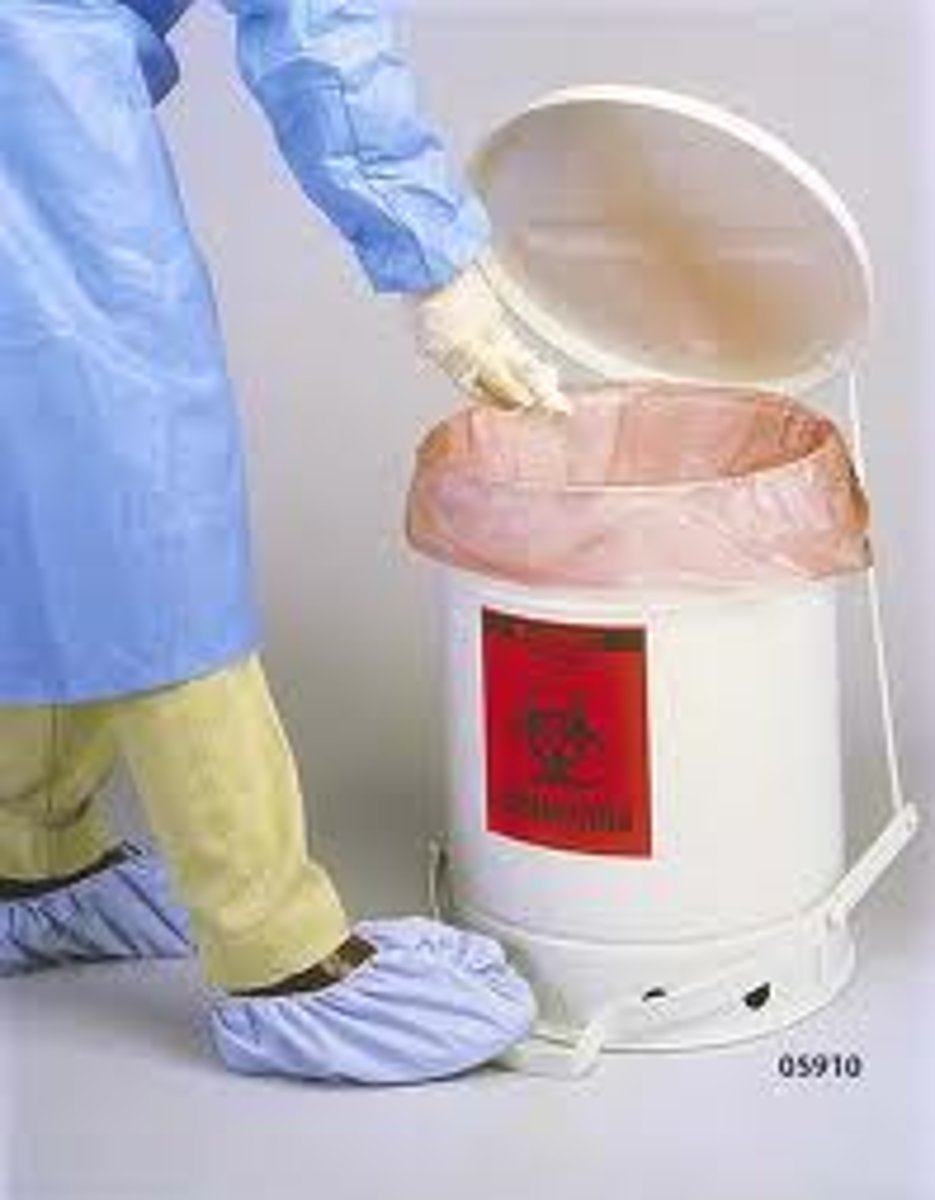
A medical assistant is cleaning a room following a surgical procedure. Which of
the following actions should the medical assistant take to ensure proper biohazardous waste handling of used gauze pads?
A. Place the gauze pads in a red polyethylene bag.
B. Dispose of the gauze pads in a covered trash bin.
C. Soak the gauze pads in a sterilizing solution.
D . Place the gauze pads in a sharps container.
A. CORRECT. The medical assistant should discard materials contaminated with blood or bodily fluid in a red polyethylene bag.
B. Only items that are noninfectious, such as patient gowns, should be disposed of in a regular garbage bin.
C. Gauze pads are disposable and cannot be sterilized after use.
D. The medical assistant should only place items that are sharp in sharps containers.
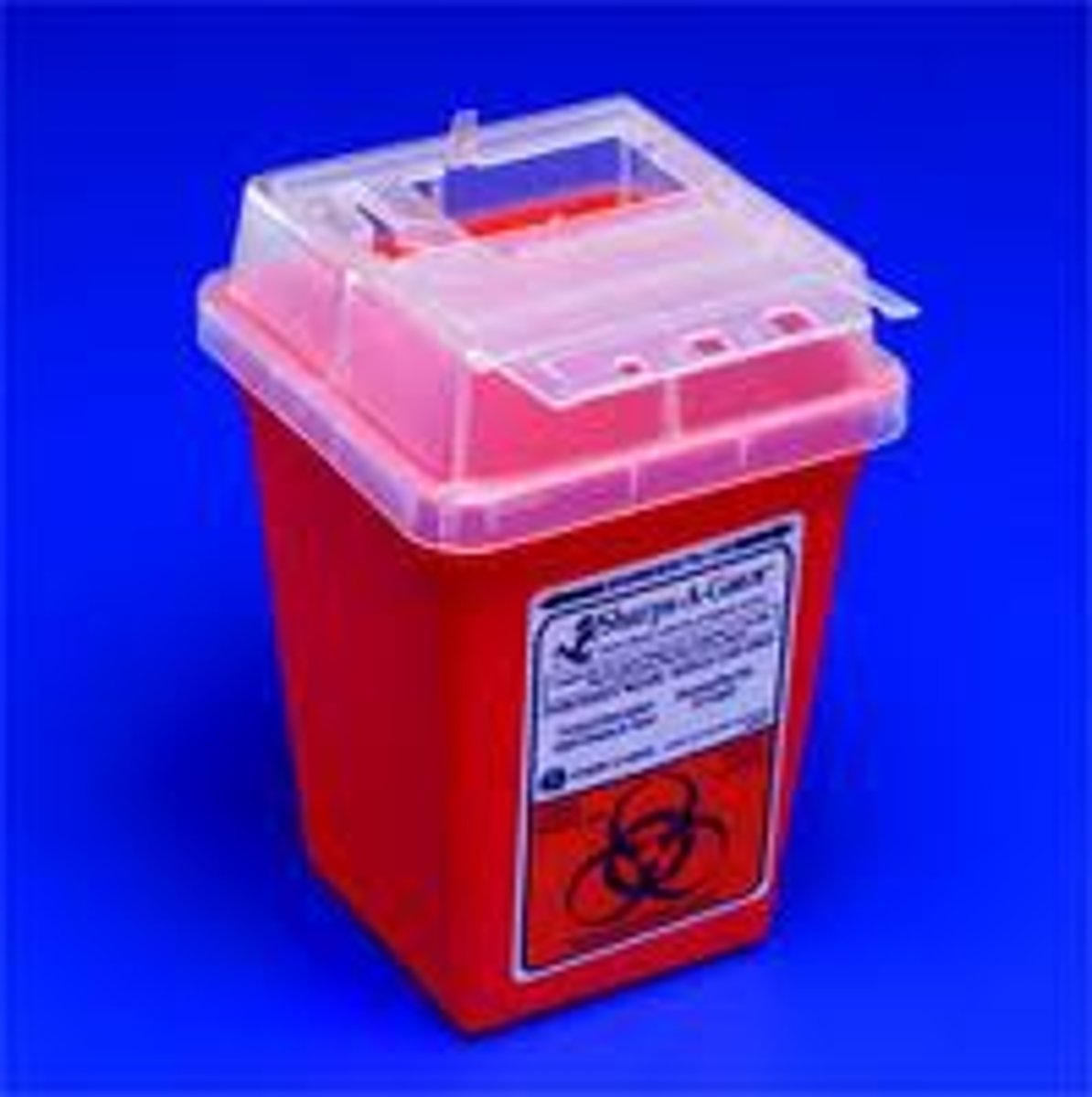
A medical assistant is reviewing OSHA regulations regarding sharps container placement. In which of the following locations should the medical assistant place a sharps container?
A. Reception area
B. Centrally located between exam rooms
C. Exam room
D. Nurses' station
C. CORRECT. Sharps containers should be
placed in locations closest to patient treatment areas. The medical assistant should place
the sharps container in the exam room.
A. Sharps containers should be placed in locations closest to patient treatment areas. The reception area is not used for patient treatment.
B. Sharps containers should be placed in locations closest to patient treatment areas. Patient treatment occurs inside the exam rooms.
D. Sharps containers should be placed ni locations closest to patient treatment areas. The nurses' station is not used for patient treatment.