Gastric Emptying Imaging
 Call Kai
 Learn
Learn Practice Test
 Spaced Repetition
 Match
Match Flashcards
 Knowt Play
1/39

There's no tags or description
Looks like no tags are added yet.
Name | Mastery | Learn | Test | Matching | Spaced | Call with Kai |
|---|
No analytics yet
Send a link to your students to track their progress
40 Terms
Explain the purpose of a gastric emptying study
To assess gastric motility and rate of emptying into the small intestine.
Explain the structure and function of the stomach
A hollow, muscular organ that stores, mechanically and chemically digests as well as empties food into the small intestine.
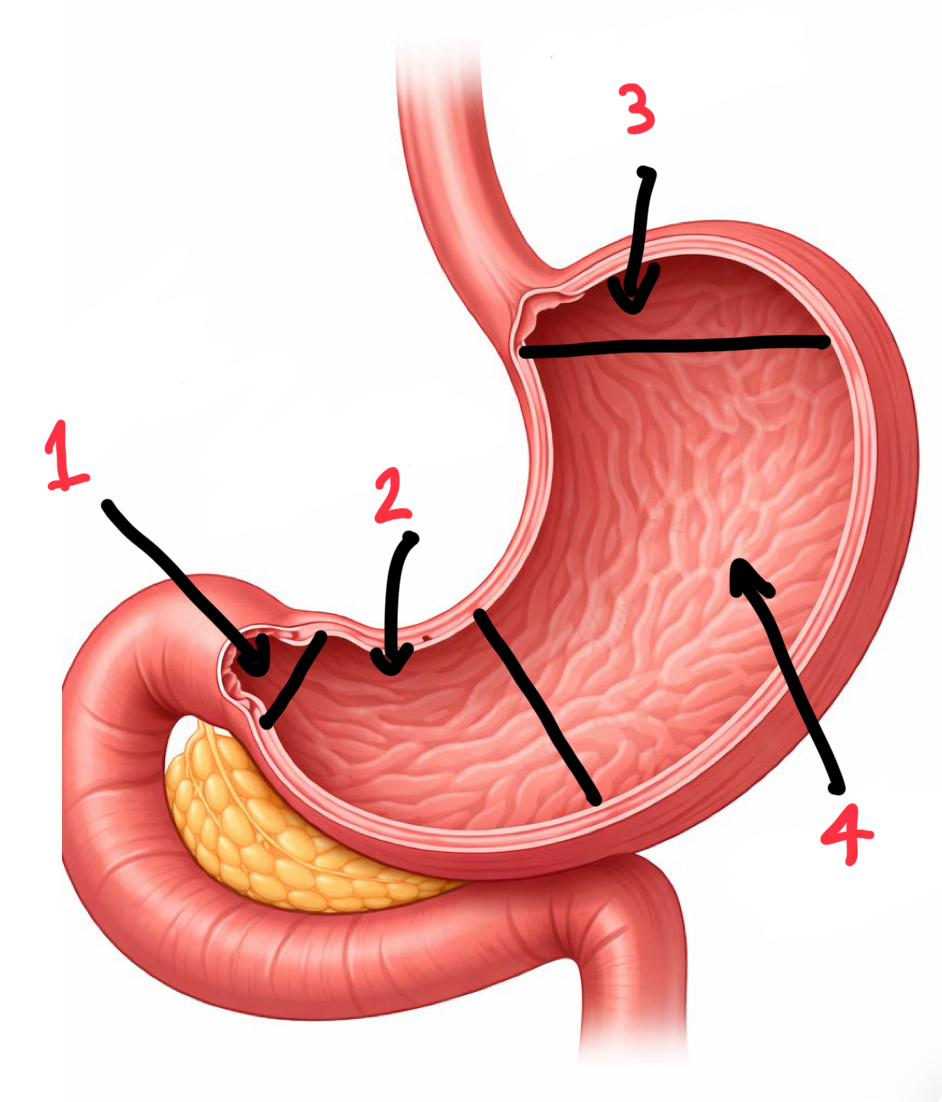
Name these regions of the stomach
Pylorus
Antrum
Fundus
Body
Explain the structure and function of the fundus
The dome-shaped superior portion that initially holds food as it enters the stomach
Explain the structure and function of the body
The largest portion of the stomach that undergoes the majority of digestion
Explain the structure and function of the antrum
Distal portion of the stomach that undergoes grinding and propulsion.
Explain the structure and function of the pylorus
The terminal portion of the stomach that regulates gastric emptying into the duodenum
Name the 4 layers of the stomach wall
Mucosa
Submucosa
Muscularis externa
Serosa
Name the primary functional structures of the mucosa
Gastric pits
Explain the structure of the gastric pits
Pits within the mucosa containing specialised cells including, parietal, chief and enteroendocrine cells.
Explain the function of parietal cells
Secrete HCl and intrinsic factor required for B12 absorption
Explain the function of chief cells
Secrete pepsinogen which becomes pepsin when entering the stomach, chemically breaking down proteins.
Explain the purpose of the secretion of a thick, viscous gel containing bicarbonate
Lines the stomach, creating an alkaline barrier that neutralises gastric acid to prevent damage.
Explain rugae
The anatomical folding and ridges of the mucosa that allow the stomach to shrink and expand to accomodate for food.
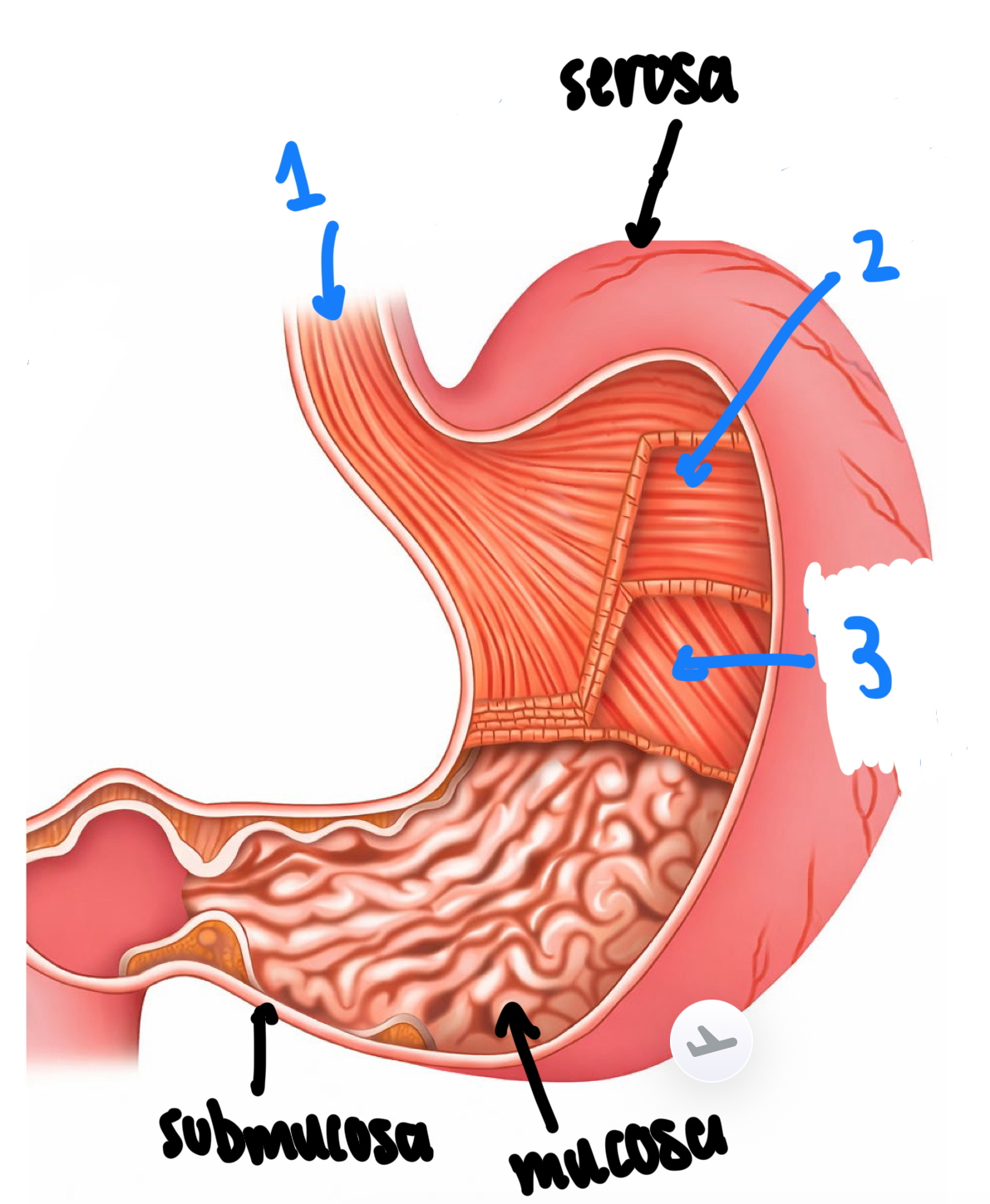
Name these layers of the muscularis externa
Outer longitudinal layer
Middle circular layer
Inner oblique layer
List the clinical indications of gastric emptying studies
Gastroparesis
Dumping Syndrome
Functional Dyspepsia
Nausea/vomiting/bloating symptoms
Pre/post surgery
Reflux
Define gastroparesis
Delayed gastric emptying
Define dumping syndrome
Rapid gastric emptying
Define functional dyspepsia
A gut-brain disorder causing upper abdominal pain and early satiety with no structural abnormalities.
Name the 2 types of reflux
GERD - gastroeosophageal reflux disease
Silent/laryngopharyngeal reflux
Explain patient preparation for gastric transit studies
Fasting for at least 6 hours
Cease prokinetics for 24 hours
Cease opiates and antispasmodics for 48 hours
State the BSL that diabetics must meet before gastric emptying studies
Between 4-11mmol/L
Explain why diabetic patients BSL must be between 4-11mmol/L
<4mmol/L - symptoms and imaging can mimic dumping syndrome
>11mmol/L - symptoms and imaging can mimic gastroparesis
Define prokinetics
Medications that enhance GIT motility
Define opiates
Medications that delay gastric emptying
Define antispasmodic agents
Medications that relax smooth muscle
Name the 3 most common RPs for gastric emptying studies
99mTc Colloids - solid meals
99mTc DTPA - liquid meals
99mTc MAA - patients with sulphuric allergies
Name the dose for gastric emptying studies
40 MBq
Explain the standard meal for gastric emptying studies
2 egg whites scrambled with the RP
2 pieces of bread with jam
1 glass of water
Explain the meal for patients allergic to eggs
Packet of instant oats mixed with water and the RP
Explain why eggs and porridge are used as standard meals
Allows the RP to be physically incorporated into the protein matrix as it cooks and solidifies, remaining bound to the food during emptying.
Why are eggs preferred
Because the greater protein content allows for stronger binding to the protein matrix.
Explain the liquid meal for gastric emptying studies
1 glass of water mixed with the RP
Explain the camera and patient positioning for gastric emptying scans
Camera positioned for anterior and posterior acquisitions as the patient is positioned supine
Explain the imaging parameters for gastric emptying studies
Static 2 min images at T0 and every 30 mins for up to 4 hours
128 × 128 matrix
Explain image processing for gastric emptying studies
Apply ROI around stomach at each time point (anterior and posterior)
Calculate geometric mean and use to create TAC with trendline
Calculate half-clearance time
State the normal range of half-clearance time using a standard meal
44-110 mins
State normal % retention of standard meal
<10% after 4 hours
State 2 types of abnormal % retention of a standard meal
Rapid emptying - <10% after 2 hours
Delayed emptying - >10% after 4 hours
Explain lag time and how it appears on a TAC
An initial plateau or shallow slope after ingestion in which food is held in the fundus and no gastric emptying occurs