UNIT 1 DEMOCRATIC FOUNDATIONS and FED VS STATE
 Call Kai
 Learn
Learn Practice Test
 Spaced Repetition
 Match
Match Flashcards
 Knowt Play
1/42

There's no tags or description
Looks like no tags are added yet.
Name | Mastery | Learn | Test | Matching | Spaced | Call with Kai |
|---|
No analytics yet
Send a link to your students to track their progress
43 Terms
direct democracy
the people directly vote on laws and policies, instead of through representatives
-citizens propose new laws and vote on existing ones
participatory democracy
-unlike direct, it ensures people are involved in all of gov and throughout
-the people influence/complement the representative gov
(example: think town halls)
representative gov
-power to govern comes from the people, but their wants are represented through elected officials (U.S FOLLOWS THIS)
Pluralist democracy
recognizes groups, not individuals (prevents tyrrany)
-gov acts as a mediator between these groups
Elite democracy
-decisions made by elected representatives, elite people
-advocated for by alexander hamilton
Majoritarianism
theory that gov must do what majority wants
Majority rule
principle that 50% + one means majority, and can make decisions for the whole
Creedal Passion View
View that elites who drive change have morals, not only motivated by money
Bureaucratic theory (also what are bureacracies usually?)
-hierachy of officials who specialize in certain fields
-BUREACRACIES ARE USUALLY DEPARTMENTS OR AGENCIES
-carry out laws, unlike congress who writes them and pres who signs them
red tape
excessive regulations that sometimes slow down gov processes
Iron triangle
-tight formal group between congress, beauracracy, interest groups
-unlike issue networks, iron triangles usually benefit their OWN interests
Ex: military-industrial complex- Burea is dep of defense, interest groups are like LOCKHEED, congress includes senate
Single issue networks
usually temporary, informal, looser group between interest groups, lobbyists, researchers who work on specific issues
-ex: Environmental issue network
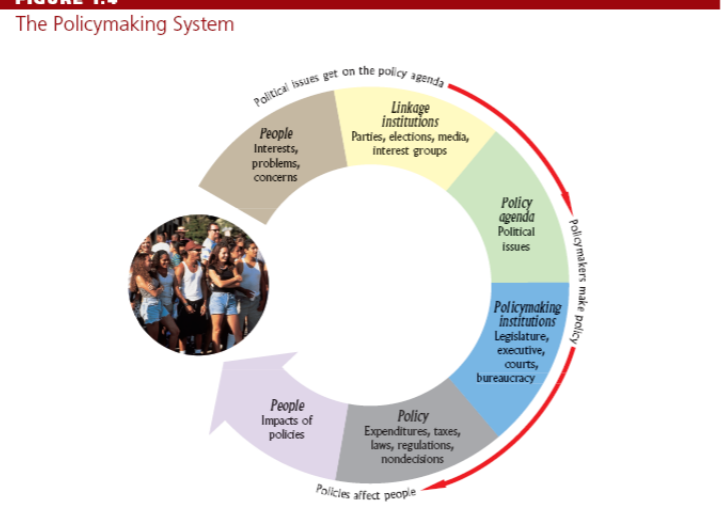
Linkage institutions
-CONNECT CITIZENS TO GOV
-groups of MEDIA, elections, political parties, interest groups
policy making institutions (list) who has power to influence policy
congress, president, courts, state+fed bureacracy
policy making process
THREE TYPES OF POLITICS
MAJORITARIAN POLITICS: policy benefiting everyone and almost everyone pays (like social security and public education)
INTEREST GROUP POLITICS: competing interest groups that fight for a policy
CLIENT POLITICS: small group benefits, but larger group pays for said policy
DECLARATION OF INDEPENDENCE
-official statement for colonist and views
-breaking away from britian
THE CONSITUTION (no admendments yet, just what is it and what did it to)
Establish seperation of branches
established federalism
FEDERALISM WHAT IS IT
system of government where power is divided and shared between a central national authority and smaller regional governments, such as state
JOHN LOCKE
believed in right to life, liberty, happiness—> protected by Bill of rights
republicanism is the same thing as
a representative democracy
IMPORTANT DOC: BRUTUS 1
-ANTI-FED doc against ratifying constitution
-feared centralized gov was too powerful, argued for states to hold power instead
-feared elastic and supremacy claue
ELASTIC CLAUSE
aka nessecary and proper clause
-gives right for congress to pass any law they deem needed to fufill constitutional duties
SUPREMACY CLAUSE
-establishes fed law > state law
FEDERALIST NO 10
-written by federalist james madison
-ARGUED a large, representative republic is the best way to control the dangers of political factions
-believes that in a large republic, many factions will overlook minority interests
why did articles of confed suck doodookie
-executive and judicial branch no have
-couldnt enforce laws so it sucked
-one vote/state so populus states were underrep
-no military
-needed all votes to change stuff (no decisions made)
-states competed against each other for trading
SHAYS rebelion
uprising in massachusettes
-farmers and veterans opposed high tax, attacked gov buildings —>supressed but still forced them to lower tax, highlighted need for STRONGER NATIONAL GOV and weak article of conf
ARTICLE 5 OF CONSTITUTION OUTLINES WHAT
process for drafting admendment
req 2/3 vote from congress & final ratification of ¾ of the states
GREAT COMPROMISE did what and what was it
CREATED BICAMERAL LEGISLATION-house and senate
-SENATE IS EQUAL REP OF ALL STATES (2 senators/state)
-HOUSE IS REP BASED ON STATE POPULATION
FED NO 51
-written by james madison
-explains sep of powers + checks and balances will protect from tyrranical gov
legislative and executive branch interactions
CONGRESS: approves pres nominations (senate), controls fed budget (bills originate in house however), can impeach pres (house)
EXECUTIVE: can veto congress legislation (has 10 days to sign)
*note: congress can overturn a veto with 2/3 vote in both houses EXCEPT FOR POCKET VETOS from pres
executive and judicial interactions
CONGRESS: pres nominates judges
COURT: can declare presidential acts unconstitutional
judicial and legislative interactions
CONGRESS: senate can confirm president nominations for judges, can also impeach judges
COURT: can declare congress laws unconstitutional
Delegated/enumerated powers definition
consitutitional powers for fed gov
concurrent powers definition
powers shared between fed and state gov
reserved powers definition
powers reserved for state gov
SPECIFIC delegated powers
-regulate trade
-coin money
-declare war
-armed forces
SPECFIC concurrent powers
-Levy tax
-borrow money
-public welfare
-take land for public use
SPECIFIC reserved powers
-control public education
-punish criminals
-conduct elections
-make marriage laws
categorical grants
fed aid given with restrictions
block grants
-fed aid given to states (less regulated than categorical)
McCulloch v maryland
established supremacy clause and elastic-said gov was allowed to make a national bank because it was nessecary, and that states couldnt tax fed institutions
US V Lopez
limited fed gov power
-argued that guns in school was not affecting interstate commerce, and therefore fed gov could not regulate it. (COMMERCE CLAUSE)
Due to student bringing a gun to school and being charged federally instead of by state.