Chemistry Final
 Call Kai
 Learn
Learn Practice Test
 Spaced Repetition
 Match
Match Flashcards
 Knowt Play
1/140

There's no tags or description
Looks like no tags are added yet.
Name | Mastery | Learn | Test | Matching | Spaced | Call with Kai |
|---|
No analytics yet
Send a link to your students to track their progress
141 Terms
acids react with bromothymol blue to turn
yellow
acids react with blue litmus paper to turn
red
acids reaction with magnesium
to generate hydrogen gas
acid are __ donors
H+
acids taste
sour
acids react with…
group 1 and 2 metals
acids react with group 1 and 2 metals to form…
hydrogen gas
acids react with carbonate salts to release…
CO2
bases turn ___ with bromothymol blue
blue
bases are __ donors
OH-
all acids and bases are
corrosive and can cause chemical burns
neutralization reaction
acids and bases react together to form water and a salt
pH values below 7 are
acidic
pH values above 7 are
basic
pH values of 7 are
neutral
the amount of H+ in a solution is a measure of both
the protons in solution and the strength of the acid
strong acids do what in aqueous solutions?
dissociate completely
titration
method for determining the concentration of an acid by adding a base until the equivalence point is reached
finding the equivalence point in a titration means simply..
moles of acid=moles of base
LEO
Loss of Electrons Oxidation
GER
Gain of Electrons Reduction
oxidation
loss of electrons
reduction
gain of electrons
the sum of the oxidation numbers has to equal to
the charge on the ion or compound
in compounds H has an oxidation state of
+1
in compounds O has an oxidation state of
-2
bases are proton
acceptors
acids are proton
donors
buffer
made of a weak acid and a weak base
buffers resist change in
pH
gases are ____ at higher temperatures
not more soluble
properties of solutions
cannot be separated by filtration, single phase; particles do not separate out, may be a solid, liquid, or gas
solvent
present in a larger amount, dissolves the solute to make the solution
solute
present in smaller amounts, dissolved in the solvent
examples of liquid solutions
table salt dissolved in water, carbon dioxide dissolved in water, carbon dioxide dissolved in water, ethanol dissolved in water
aqueous solutions (aq)
solutions in which water is the solvent
suspension
a heterogenous mixture, particles in the solvent are thousands of times larger than molecules and atoms
what do particles do in a suspension?
particles will settle out upon standing, can be separated by filtration
does a suspension exhibit the tyndall effect?
yes-suspension
colloid
particles are intermediate in size between those of suspensions and true solutions
what do particles do in a suspension?
do not settle out upon standing
can a colloid be separated by filtration?
no, cannot be separated by filtration
do colloids exhibit the tyndall effect?
yes
emulsion
colloidal dispersion of liquids
what is necessary for maintaining stability in an emulsion
an emulsifying agent, for example; soap
electrolytes
ionic compounds that conduct electricity when dissolved in water
nonelectrolytes
covalent compounds that do not conduct electricity when dissolved in water
electrolytes
ionic
nonelectrolytes
covalent
molarity
moles of solute/liters of solution
dilute
solutions contain only a small number of solute particles
concentrated
solutions contain large number of solute particles
dilution calculations
m1v1=m2v2
double displacement reaction
a type of reaction in which two reactants exchange ions to form two new compounds. these reactions look like this: ab + cd → ad +cb
precipitation
a reaction in which an insoluble solid is formed from two solutions
precipitate
an insoluble solid that is formed in a reaction
saturated solution
containing the maximum amount of dissolved solute at a given temperature and pressure
unsaturated solution
contains less than the maximum number of solute particles that can be dissolved in a solution at a given temperature and pressure
solid solutes are more soluble at…
higher temperatures
supersaturated
when a solution cools and there is more solute dissolved than the solution can hold at that temperature
water with high turbidity is a
suspension
if a mixture demonstrates the tyndall effect and does not separate upon standing it is a…
colloid
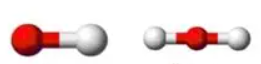
What shape is this lewis structure?
linear
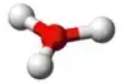
What shape is this lewis structure?
trigonal planar
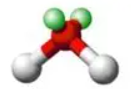
What shape is this lewis structure?
bent
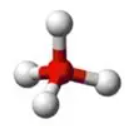
What shape is this lewis structure?
tetrahedron
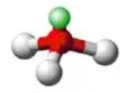
What is the structure of this lewis structure?
trigonal pyramid
electronegativity
the ability of atoms to attract electrons to each other
The difference when a molecule is polar is…
greater than .4 and less than 1.7
The difference when a molecule is ionic is…
greater than 1.7
The difference when the molecule is nonpolar is….
0.4 or less
polar
when shared electrons are pulled closer to one atom than another, causing the bonding atoms to become partially charged
nonpolar
electrons are shared equally and the atoms remain neutrally charged
polar covalent
electrons are more attracted to one atom than the other
ionic
the more electronegative atom takes the bonding electrons and becomes a negative ion, while the other atom becomes a positive ion
dipole
the polarity of an individual polar bond between atoms
the net polarity of an individual polar molecule that may have several polar covalent bonds within it
the polar molecule itself
boiling point
the temperature at which a substance goes from the liquid to the gas phase
in the liquid phase…
the compound is interacting with other molecules of the same compound
in the gas phase..
the molecule is not interacting with other molecules
london dispersion forces
the larger the number of electrons the more polarizable the molecule and the greater the interaction
distillation
the process of separating compounds by their boiling points
dipole-dipole forces
the partial positive end of a polar molecule interacts with the partially negative side of another molecule
hydrogen bonding
hydrogen atoms bound to N, O, or F interact with O, N, or F atoms of other molecules
nonpolar covalent
when the shared electrons experience the same attraction from each atom
polar covalent
a bond which the electrons are shared unequally
filtration
the process of separating undissolved materials from dissolved materials
what is ionic bonding a bond between?
a metal and a nonmetal
what are some consistent properties for ionic bonding?
that they are soluble and malleable
ionic bond
an attraction between a positive particle and a negative particle
what is an example of ionic bonding?
sodium chloride, with a high melting point and forms crystals that dissolve in water
what is a model of ionic bonding?
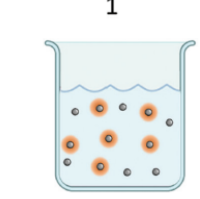
what is metallic bonding between?
two metals
what are some consistent properties for metallic bonding?
high melting point, conducting, no solubility, no malleability
what is an example of metallic bonding?
iron, with a high melting point and it bends rather than breaking along sharp lines
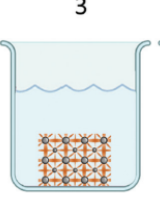
what is a model for metallic bonding
what is network covalent bonding between?
nonmetals and metalloids
what are some consistent properties for network covalent bonding?
no solubility and a high melting point
what is an example of network covalent bonding?
carbon, with an extremely high melting point, and does not conduct electricity
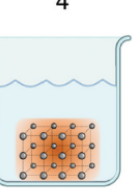
what is a model for network covalent bonding?
what is molecular covalent bonding between?
two nonmetals