DNA Lectures - Mega List #3
0.0(0)
Studied by 1 person Call Kai
 Learn
Learn Practice Test
 Spaced Repetition
 Match
Match Flashcards
 Knowt Play
Card Sorting
1/117

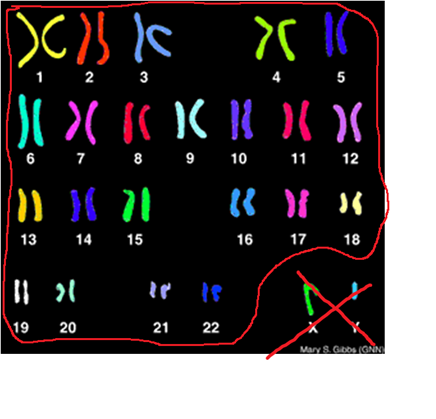
Earn XP
Description and Tags
Last updated 10:35 AM on 11/10/22
Name | Mastery | Learn | Test | Matching | Spaced | Call with Kai |
|---|
No analytics yet
Send a link to your students to track their progress
118 Terms
1
New cards
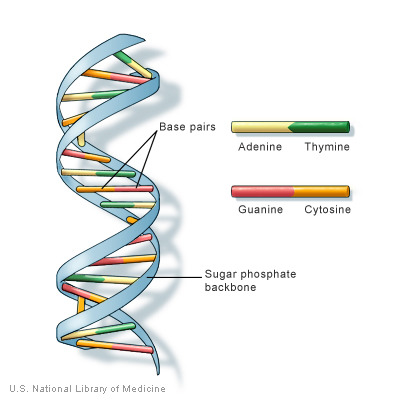
deoxyribonucleic acid
The backronym of DNA, this macromolecule is a polymer and contains all genetic information that codes for its organism's genes.
2
New cards
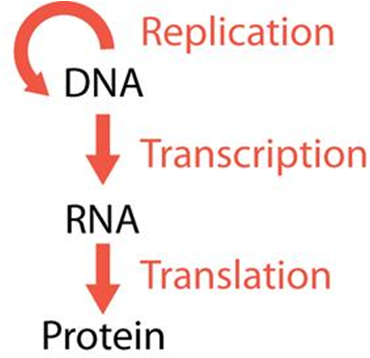
central dogma
This is the the theory that describes protein building in this order: DNA to RNA to protein. DNA is transcribed to RNA which is translated to protein. Protein is never back-translated to RNA or DNA; DNA is never directly translated to protein.
3
New cards
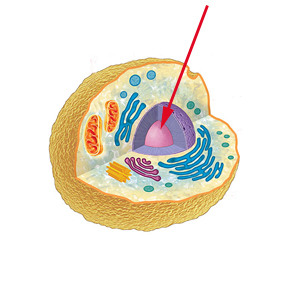
nuclear DNA
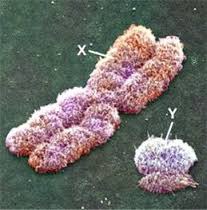
This is DNA found in the nucleus, shortened to "nDNA." Cells have two copies of this kind of DNA.
4
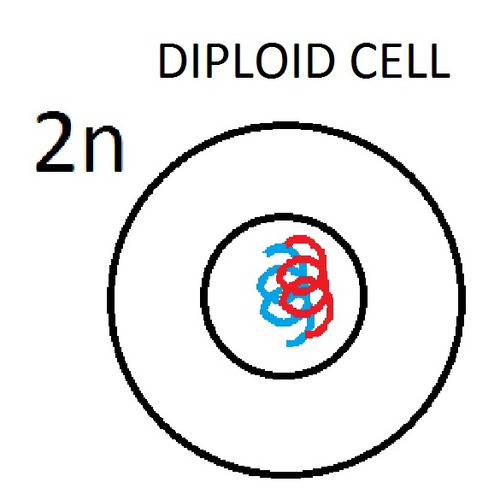
New cards
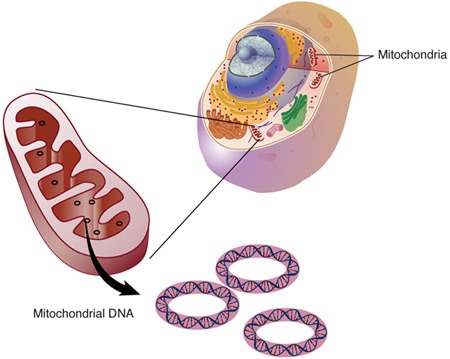
mitochondrial DNA
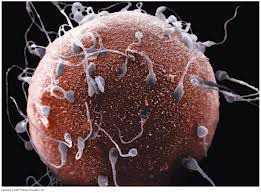
This is DNA found in the mitochondria, shortened to "mtDNA." It is inherited only through mothers. Cells have hundreds to thousands
5
New cards
double helix
This term describes the shape of DNA.
6
New cards
supercoiling
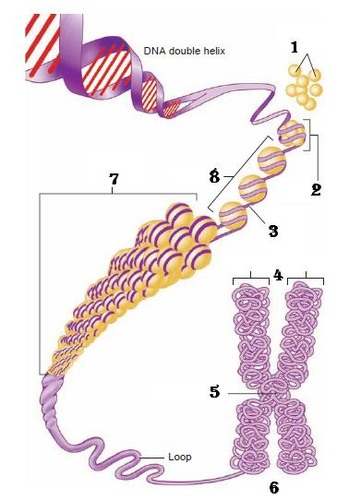
This is the process of how DNA is packed. In this process, DNA is wound tightly around histones to form nucleosomes.
7
New cards
nucleosome
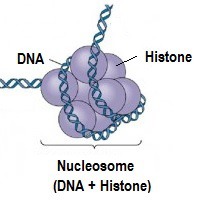
This is formed when DNA is tightly wound around histones.
8
New cards
chromatin
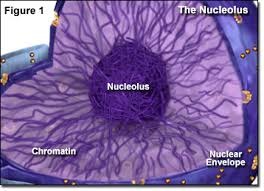
This is densely packed DNA found in the nucleolus of the nucleus.
9
New cards
histone
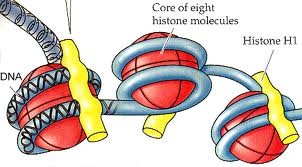
This is the protein molecule which DNA is tightly coiled around.
10
New cards
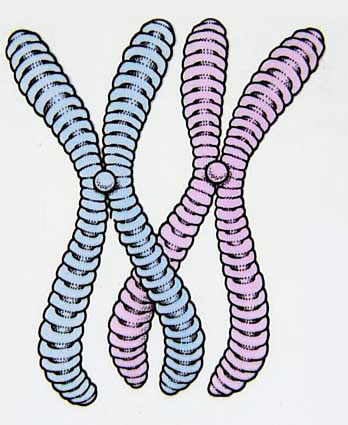
chromosome
This is a threadlike structure of nucleic acids and protein found in the nucleus of most living cells, carrying genetic information in the form of genes.
11
New cards
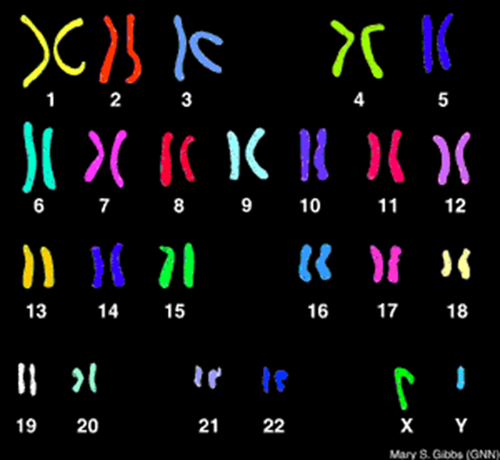
karyotype
This is a display of the chromosome pairs of a cell arranged by size and shape. Humans' consist of 22 pairs of autosomes and a pair of two sex chromosomes.
12
New cards
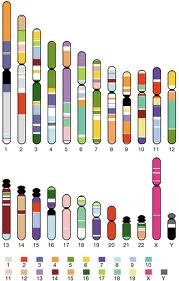
genome
This is the complete set of instruction for making an organism, consisting of all the genetic material in that organism's chromosomes. It consists of the DNA and all of its chromosomes.
13
New cards
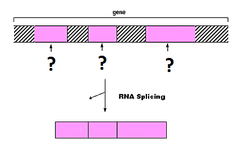
exon
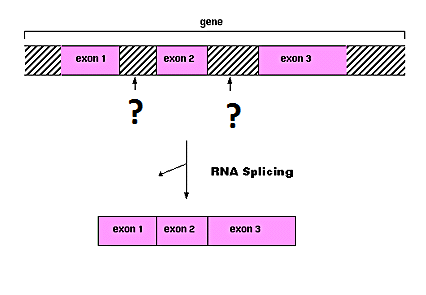
This is the DNA that is expressed to code for proteins. It can be called "extroverted."
14
New cards
intron
This is the DNA that is not expressed to for protein coding. It can be called "introverted."
15
New cards
gene
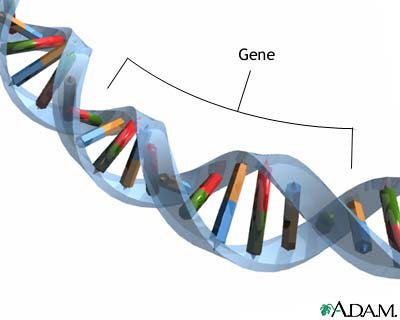
A segment of DNA on a chromosome that codes for a specific trait, this is known as a "genetic blueprint" and can be passed down from one generation to the next.
16
New cards
genotype
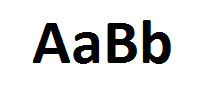
This is the genetic makeup of an organism.
17
New cards
phenotype
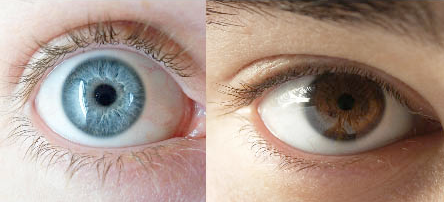
This codes for the physical characteristics of an organism.
18
New cards
hybridization
This process occurs when two strands of DNA are linked together.
19
New cards
nucleotide
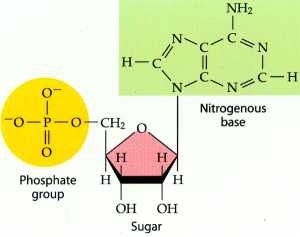
This is the building block of DNA and RNA, consisting of a pentose sugar covalently bonded to a nitrogenous base and a phosphate group. Adenine (A), guanine (G), cytosine (C), thymine (T, in DNA), and uracil (U, in RNA) are all this type of compound.
20
New cards
nucleoside
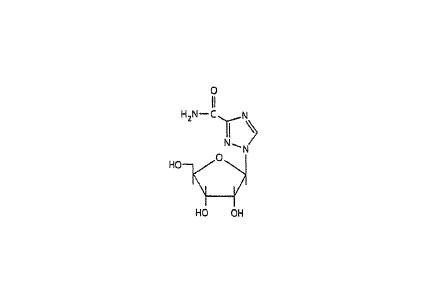
This compound is composed of only a nitrogenous base and a pentose sugar.
21
New cards
five
The number of carbons present in a pentose sugar.
22
New cards
deoxyribose
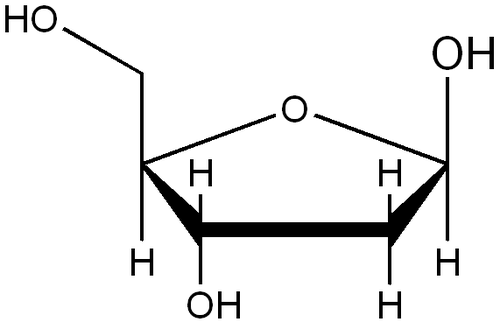
The name of the pentose sugar found in DNA.
23
New cards
ribose
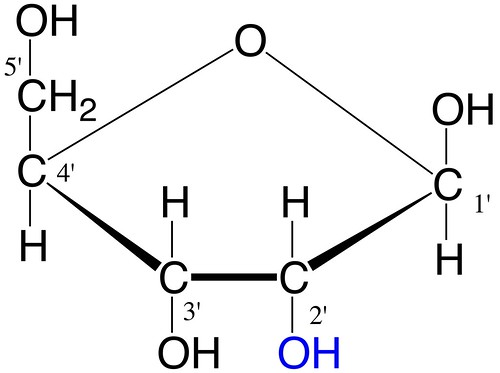
The name of the pentose sugar found in RNA.
24
New cards
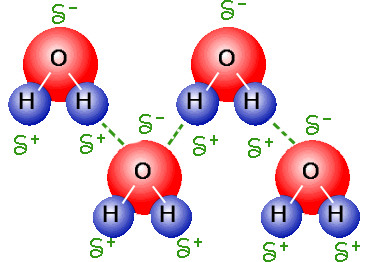
hydrogen bond
This kind of bond occurs when individual nucleotides pair up with their complementary bases. It is the easiest bond to break, which is necessary for the process of transcription.
25
New cards
Rosalind Franklin
This scientist provided significant contributions to the understanding of the structure of DNA through the use of X-ray crystallography.
26
New cards
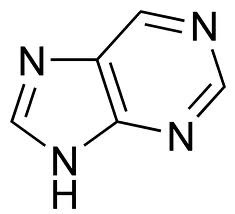
purine
The name for a nitrogenous base that has a double-ring structure. It is one of the two general categories of nitrogenous bases found in DNA and RNA and includes adenine and guanine.
27
New cards
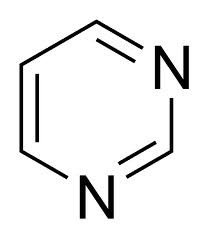
pyrimidine
The name for a nitrogenous base that has a single-ring structure. It is one of the two general categories of nitrogenous bases found in DNA and RNA and includes thymine, cytosine, and uracil.
28
New cards
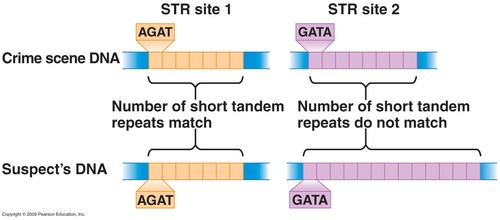
short tandem repeat
Also known as STR, this is located on the autosomal chromosomes. STRs are important for identification in forensic samples.
29
New cards
non-sex chromosome.
Another name for autosomal chromosomes.
30
New cards
Y chromosome
This sex chromosome is paternally inherited.
31
New cards
somatic cell
This type of cell in a living organism is any cell other than reproductive cells. It is also called a "body cell."
32
New cards
diploid
This is the form of chromosomes in all body cells. It results in two sets of chromosomes per cell, 2n.
33
New cards
6 picograms
The amount of picograms in a diploid cell.
34
New cards
gamete
The type of cell in a living organism is a reproductive cell/specialized sex cell. It is also called a "germ cell" or an "egg" or "sperm."
35
New cards
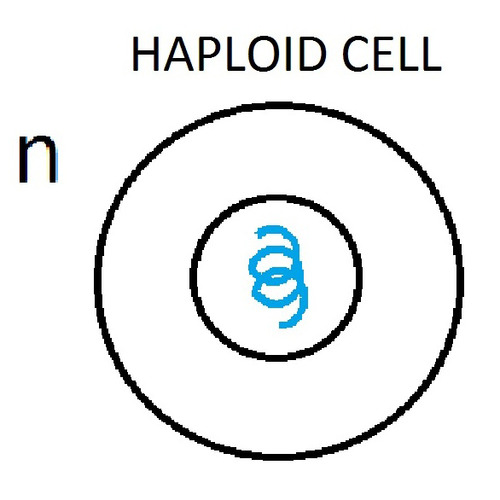
haploid
This is the form of chromosomes in germ cells. It results in one set of chromosomes per cell, n.
36
New cards
3 picogram
The amount of picograms in a haploid cell.
37
New cards
single stranded
This is a term used to describe RNA because it is not in the shape of a double helix and the nitrogenous bases do not have another strand to pair with unless during transcription or translation.
38
New cards
uracil
The nitrogenous base that replaces thymine in RNA.
39
New cards
miRNA
This type of RNA is a small non-coding molecule that can be used for body fluid identification. It is tissue specific
40
New cards
gene locus
The specific location on a chromosome where a coding region exists. In forensic science, the non-coding region needs to be looked at.
41
New cards
allele
A form of a gene locus or an alternative form of a gene.
42
New cards
homozygote
This word is defined as "two copies of the same allele or form of the gene locus."
43
New cards
heterozygote
This word is defined as "a different allele or form of the gene locus."
44
New cards
loci
The plural form of "locus."
45
New cards
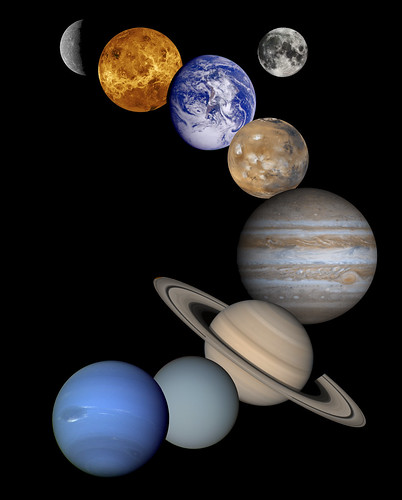
Earth
Our professor used this planet as an analogy for a cell.
46
New cards
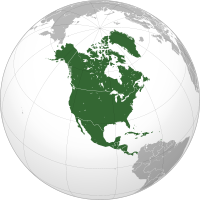
continent
Our professor used this landmass as an analogy for a cell nucleus.
47
New cards
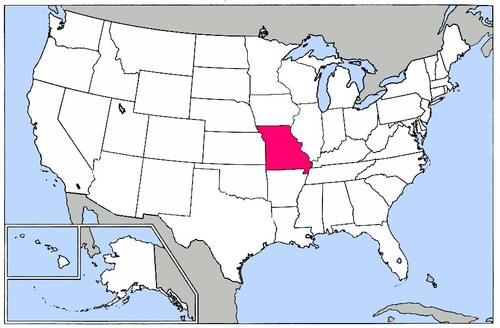
state
Our professor used this area of the USA as an analogy for a chromosome.
48
New cards
city
Our professor used this urban area as an analogy for chromosomal DNA.

49
New cards
street
Our professor used this area of a city as an analogy for a locus.
50
New cards
locus
This is the word that a specific STR marker refers to.
51
New cards
size
In forensic science, analysis of DNA evidence does not focus on the DNA code itself, but rather this:
52
New cards
restriction fragment length polymorphism
The backronym of RFLP, this was an early technology of forensic DNA analysis that required a lot of DNA samples and had to be of high quality to provide successful results.
53
New cards
Dr. Alec Jeffreys
This doctor used RFLP.
54
New cards
The Blooding by Joseph Wambaugh
2 young teens in a low crime village are found strangled and sexually assaulted. All able bodied people are told to donate. Some guy talks about how he donated for his cousin cause he is scared of needles. This gets reported and the guy is found, Colin Pitchforke, who is the person who did it.
55
New cards
rape cases
More than 2/3 of these types of cases use forensic DNA analysis.
56
New cards
heme, soil, bones
These substances are are considered inhibitors to polymerase chain reactions (PCRs).
57
New cards
human identity testing
Forensic cases, paternity testing, historical investigations, missing persons investigations, mass disasters, military DNA, and convicted felon DNA databases are all used for this:
58
New cards
circular
This is the shape of mitochondrial DNA.
59
New cards
linear
This is the shape of nuclear DNA.
60
New cards
nDNA testing
Blood, tissue, hair (with root), fresh bone and teeth, body fluids, and stamps and envelopes are all specimens of this type of testing.
61
New cards
mtDNA testing
Old skeletal remains, hair shafts, and fingernails are all specimens of this type of testing.
62
New cards
steps in DNA analysis
Extraction, Quantification, Amplification, Separation, Analysis and Interpretation, Report conclusions (and statistics) are all a part of this.
63
New cards
two steps of extraction
1) Breaking open the organism or cell that contains DNA.
- biological specimen (Human and nonhuman)
- plants, seeds, leaves
- microbial specimen (terrorism)
2) Separation of DNA from other cellular components.
- proteins
- cellular debris and internal cellular structure
- carbohydrate
- lipoproteins
- inhibitors
- biological specimen (Human and nonhuman)
- plants, seeds, leaves
- microbial specimen (terrorism)
2) Separation of DNA from other cellular components.
- proteins
- cellular debris and internal cellular structure
- carbohydrate
- lipoproteins
- inhibitors
64
New cards
inhibitors
Heme, humid acid, fulvic acid, calcium and collagen, and melanin are all considered this due to their effect on polymerase chain reactions.
65
New cards
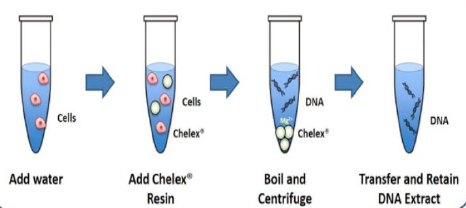
Chelex extraction
This type of extraction produces ssDNA, so it is only good for PCR based testing. It is faster than organic, fewer steps, and there is a lower chance of sample to sample contamination.
-nucleases inactivated
-ion exchange resin
-ions chelate Mg2+ (inactivates nucleases)
-nucleases inactivated
-ion exchange resin
-ions chelate Mg2+ (inactivates nucleases)
66
New cards
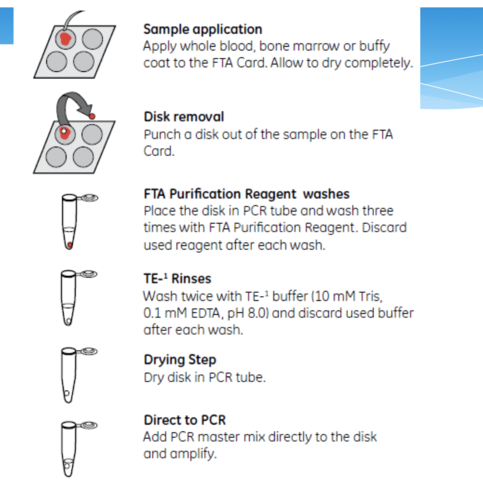
FTA extraction
This type of extraction is a card based system.
67
New cards
robotic extraction
This type of extraction utilizes magnetic beads and is simple.
68
New cards
organic extraction
In this type of extraction, DNA will come out double stranded. It is time consuming but provides quality, clean DNA and is considered the "golden standard."
69
New cards
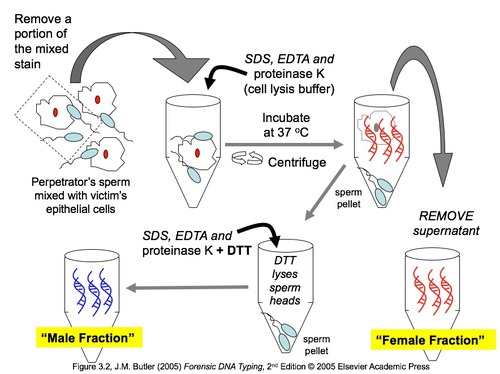
differential extraction
A process by which an analyst can separately isolate male and female DNA from a mixture of female epithelial cells and male sperm cells, such as might be found in sexual assault evidence.
70
New cards
Chelex-100
This compound is an ion-exchange column resin composed of iminodiacetic acid. This compound binds magnesium and removes them from the reaction mixture, stabilizing and preserving DNA. This yields single-stranded DNA, which is then used for STR.
71
New cards
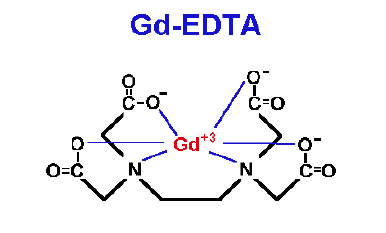
chelate
This is the action of binding ions or molecules to metal ions such as Zn, Mg, and Ca.
72
New cards
metal ion
These molecules (Zn, Mg, Ca) can act as catalysts or co-factors for nucleases, thus helping degrade DNA by the enzymatic degradation of hydrolysis.
73
New cards
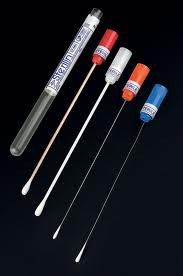
intimate source sample
A vaginal swab is considered this type of sample.
74
New cards
quantification
This step in DNA analysis determines the amount of DNA present in the extract to assist in determining the appropriate amount of the extract to add for amplification.
- qPCR = real time PCR
- adding the incorrect quantity can lead to poor results
- qPCR = real time PCR
- adding the incorrect quantity can lead to poor results
75
New cards
reagents in differential extraction
Lysis Buffer: chemicals and proteins added to the sample that facilitate lysis of the cell membrane and effective removal of impurities
SDS: sodium dodecyl sulfate (detergent)
Pro K: Proteinase K (digests proteins and chops it up)
DTT: Dithiothreitol (breaks S-S bonds/ breakdown sperm heads)
EDTA: Ethylenediaminetetraacetic acid (chelates metal ions that can degrade DNA and cause hydrolysis of DNA molecule
Buffer/ions: Examples Tris- HCL and NaCl (maintains pH)
SDS: sodium dodecyl sulfate (detergent)
Pro K: Proteinase K (digests proteins and chops it up)
DTT: Dithiothreitol (breaks S-S bonds/ breakdown sperm heads)
EDTA: Ethylenediaminetetraacetic acid (chelates metal ions that can degrade DNA and cause hydrolysis of DNA molecule
Buffer/ions: Examples Tris- HCL and NaCl (maintains pH)
76
New cards
lysis buffer
This solution reagent is used in differential extraction to break the cell membrane and release cell contents to remove impurities.
77
New cards
sodium dodecyl sulfate
Backronym of SDS, this detergent reagent is used during differential extraction and results in foaming.
78
New cards
proteinase K
Shortened to Pro K, this enzyme commonly used in differential extraction to degrade proteins.
79
New cards
dithiothreitol
Backronym of DTT, this redox reagent used in differential extraction breaks disulfide bonds, binding the sulfurs to hydrogens, which allows the protein to break apart. This reagent breaks down sperm heads.
80
New cards
ethylenediaminetetraacetic acid
Backronym of EDTA, this acid used in differential extraction to chelate metal ions that can degrade DNA and causes hydrolysis of the DNA molecule. EDTA acts like Chelex.
81
New cards
buffer/ions
Examples of this reagent include Tris-HCl and NaCl. This reagent maintains pH.
82
New cards
polymerase chain reaction
The backronym of PCR, this is the method used for DNA amplification. It is performed by a thermal cycler and works by repeated cycles of heating and cooling.
83
New cards
denature, anneal, extend
The three steps of PCR analysis:
84
New cards
template DNA
A PCR reagent. This is single-stranded.
85
New cards
short primers
A PCR reagent. This substance initiates synthesis of new DNA.
86
New cards
dNTP
A PCR reagent known as "deoxyribonucleoside triphosphate." This is used to add to a growing strand of DNA.
87
New cards
polymerase
A PCR reagent. This is used to to perform synthesis of new DNA.
88
New cards
MgCl₂
A PCR reagent. This chemical is used to activate polymerase.
89
New cards
denature
This step in the DNA amplification process occurs at 95 degrees Celsius and denatures the starting DNA template into two separate strands.
90
New cards
anneal
This step in the DNA amplification process occurs at a range of 50-72 degrees Celsius and binds primers to the separate DNA strands.
91
New cards
extend
This step in the DNA amplification process occurs at 72 degrees Celsius and synthesizes a new strand of DNA from the previously attached primer.
92
New cards
amelogenin
A piece of DNA found in the X and Y chromosomes that determine gender. It is also known as the "sex-determining locus."
93
New cards
Y chromosome
An "X-homologous" amelogenin gene region exists on this chromosome.
94
New cards
complicate
What can these following factors do to DNA analysis interpretation?
- Stutter
- Pull up
- Spikes
- Dye blobs
- Degradation
- Low DNA template amount
- Stutter
- Pull up
- Spikes
- Dye blobs
- Degradation
- Low DNA template amount
95
New cards
Immigration case in Ghana
First DNA case
-Man is detained because the government of the country he was visiting thought he was lying
-They took his blood and matched it with his mom and aunt to prove he was correct
-Man is detained because the government of the country he was visiting thought he was lying
-They took his blood and matched it with his mom and aunt to prove he was correct
96
New cards
Scientific Working Group of DNA Analysis Methods
The backronym of SWIGDAM.
97
New cards
DNA is the only standard
FALSE, any accredited lab will have other standards
98
New cards
extraction
This is the process of isolating DNA.
99
New cards
three possible conclusions
"Inclusion (must provide stats)," "exclusion," and "inconclusive" are all considered this.
100
New cards
inclusion
The evidence profile and reference profile appear to match. The weight of the match and and a discretion notice must be reported in the conclusion.