The Nervous System !
 Call Kai
 Learn
Learn Practice Test
 Spaced Repetition
 Match
Match Flashcards
 Knowt Play
1/33

There's no tags or description
Looks like no tags are added yet.
Name | Mastery | Learn | Test | Matching | Spaced | Call with Kai |
|---|
No analytics yet
Send a link to your students to track their progress
34 Terms
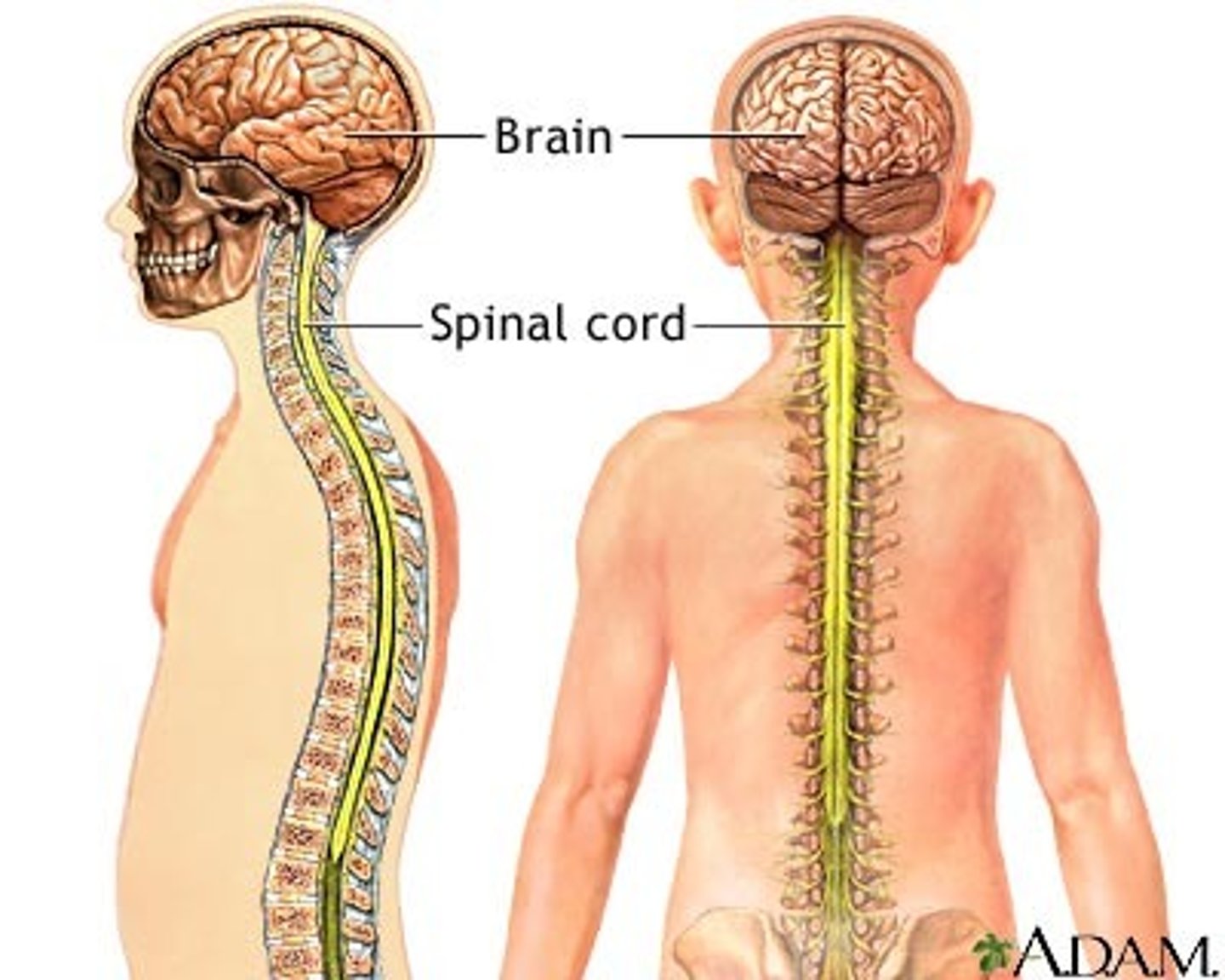
Central nervous system
Part of the nervous system that is made up of the brain and spinal cord. It interprets incoming messages and sends messages out to the peripheral nervous system.
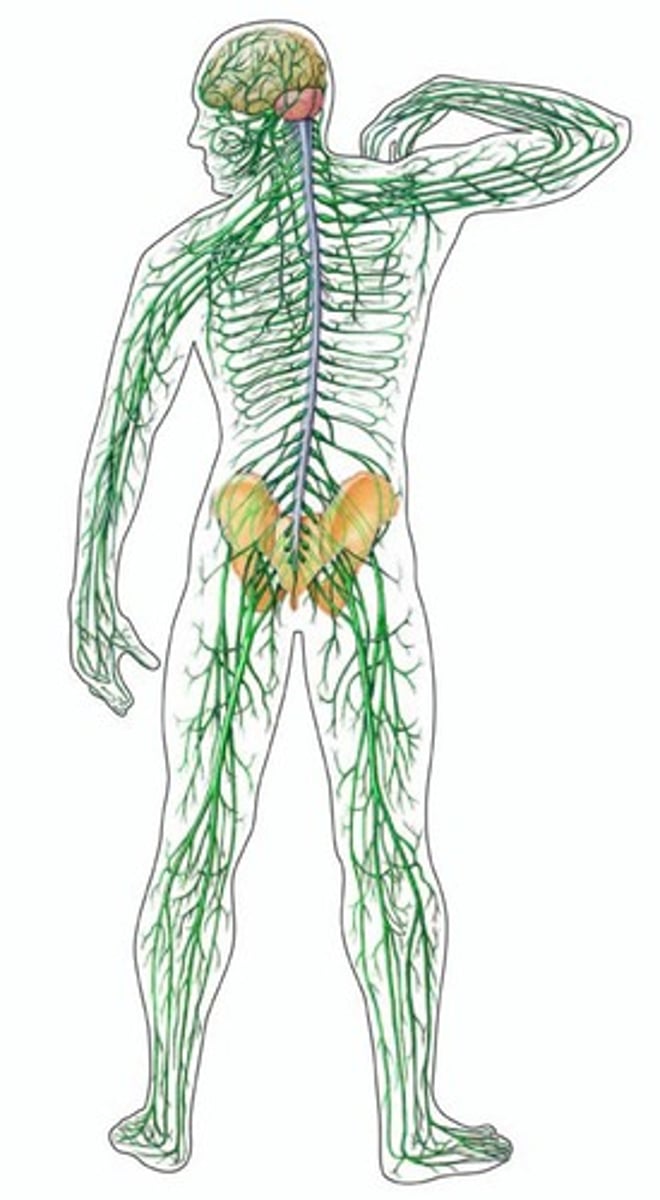
Peripheral nervous system
Part of the nervous system that consists of all of the nerves of the body. These nerves receive stimuli and send information to the central nervous system. They also receive directions from the central nervous system and control direct actions.
Neurons
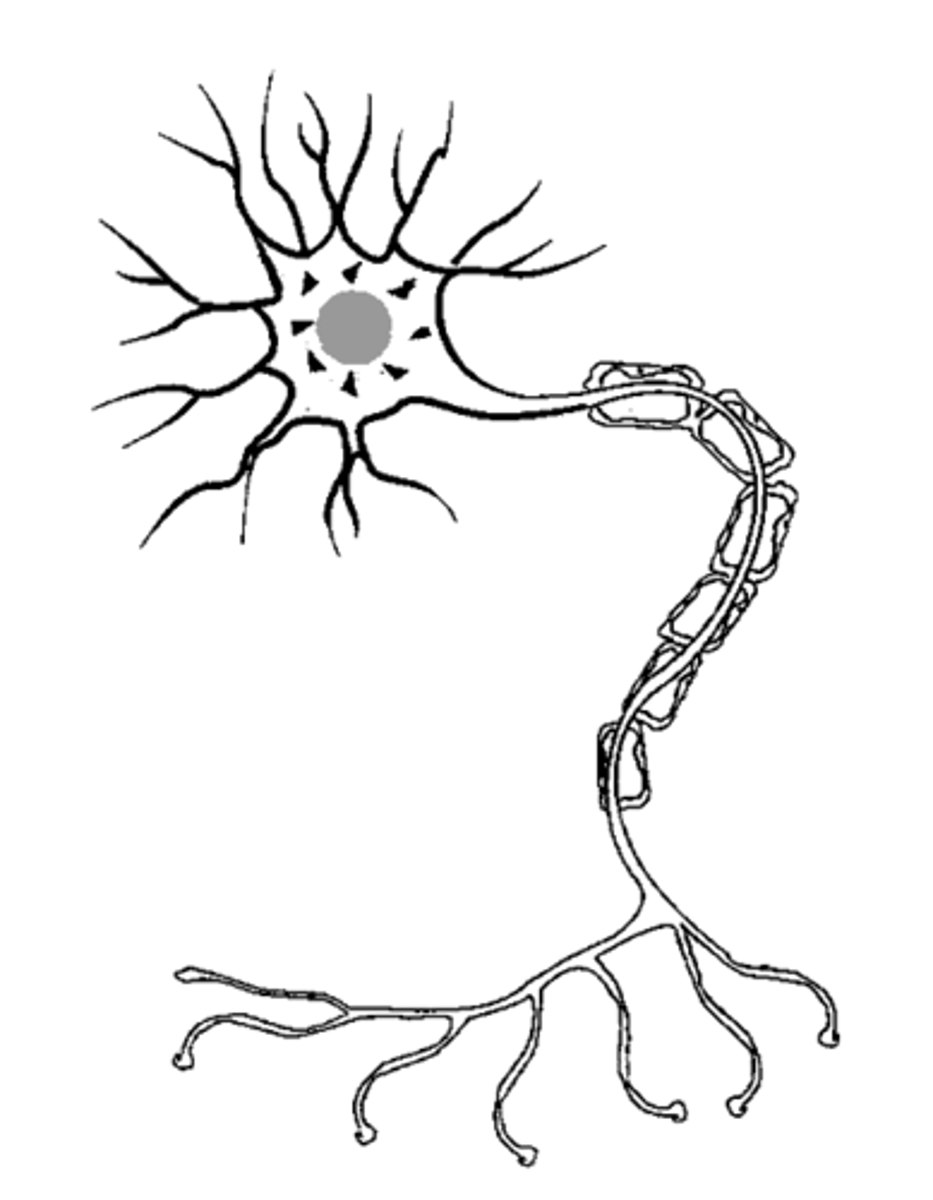
Nerve cells. They carry electrical messages from one area of the body to another area.
Dendrite
The branched part of the neuron that receives incoming messages from other neurons. They send electrical messages TOWARD the cell body.
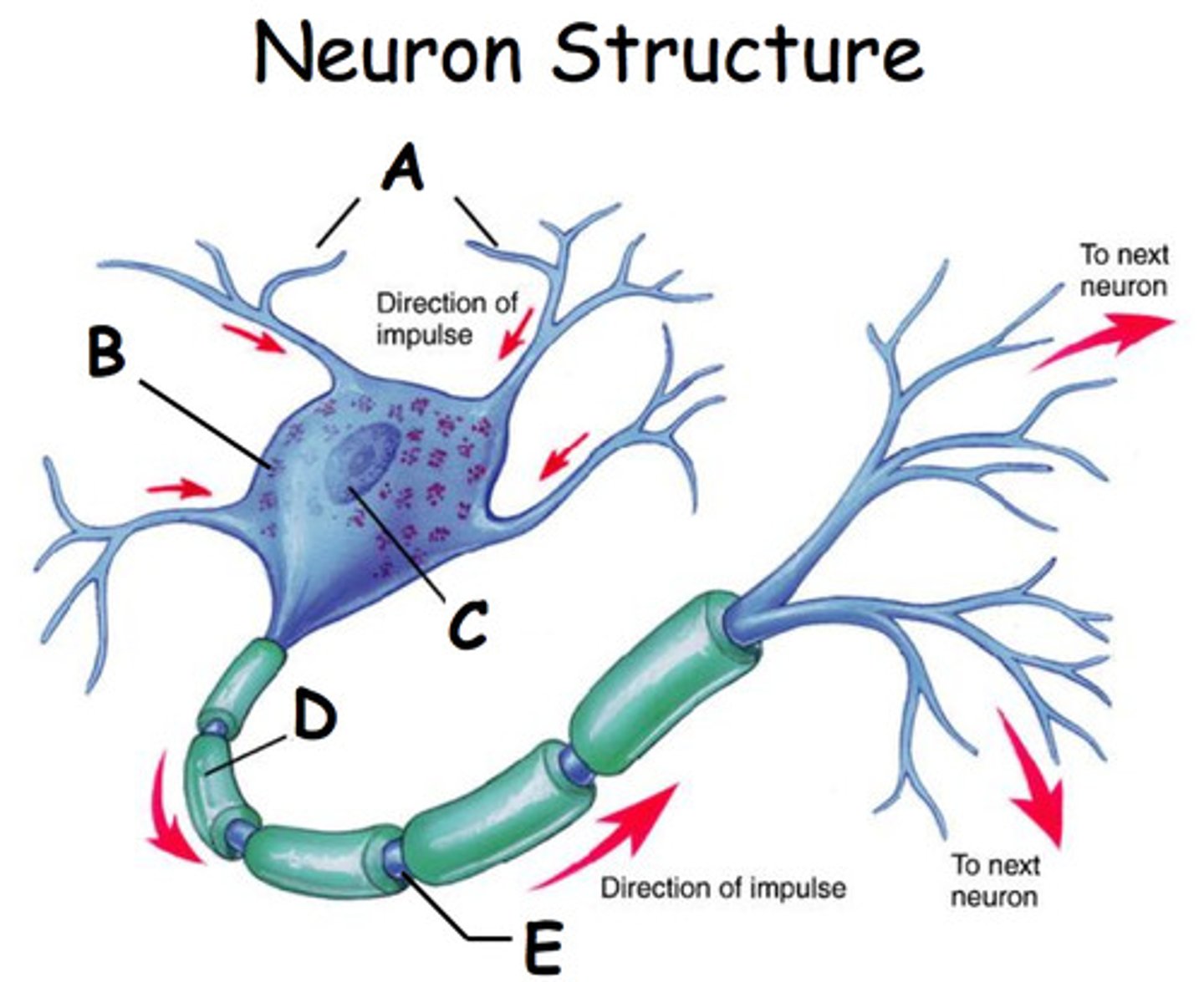
Myelin
An insulating layer (made mainly of fat and protein) along the axon of a nerve cell. It speeds up the message along the axon. Letter E in the diagram.
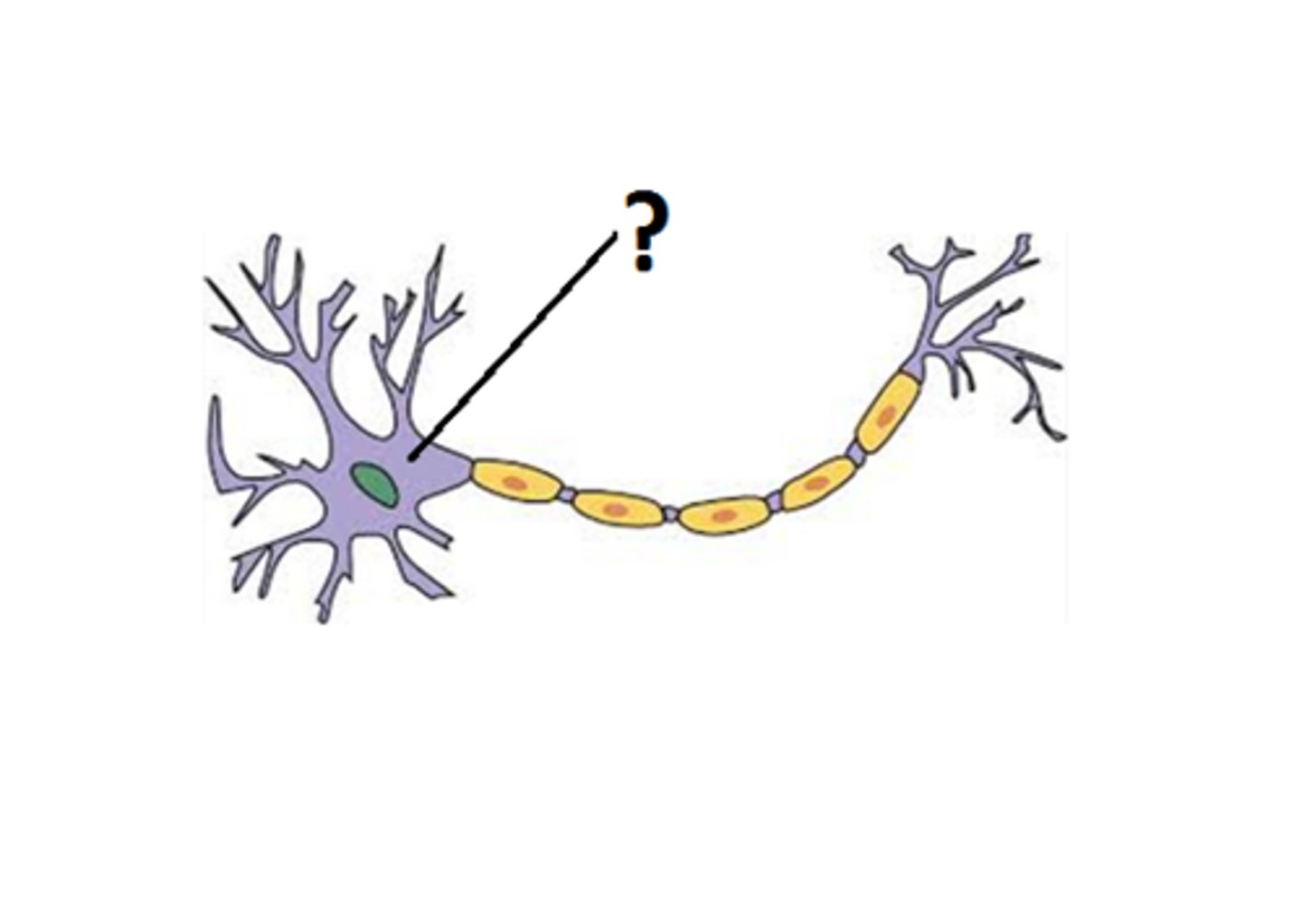
Cell body
The large part of a neuron, where the nucleus is located. It connects the dendrites and axon of the neuron to each other.
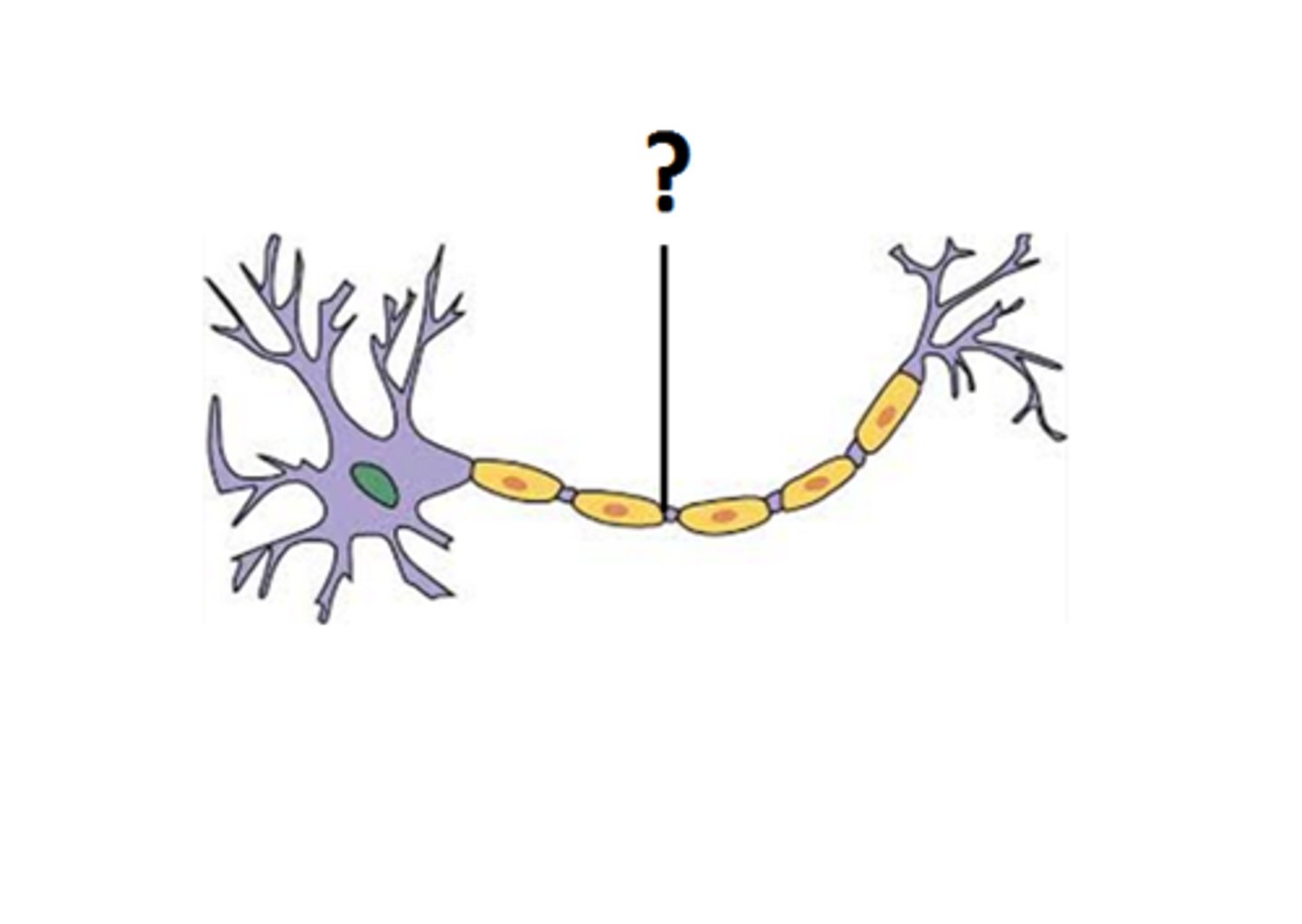
Axon
The long part of a nerve cell, it conducts impulses away from the cell body.
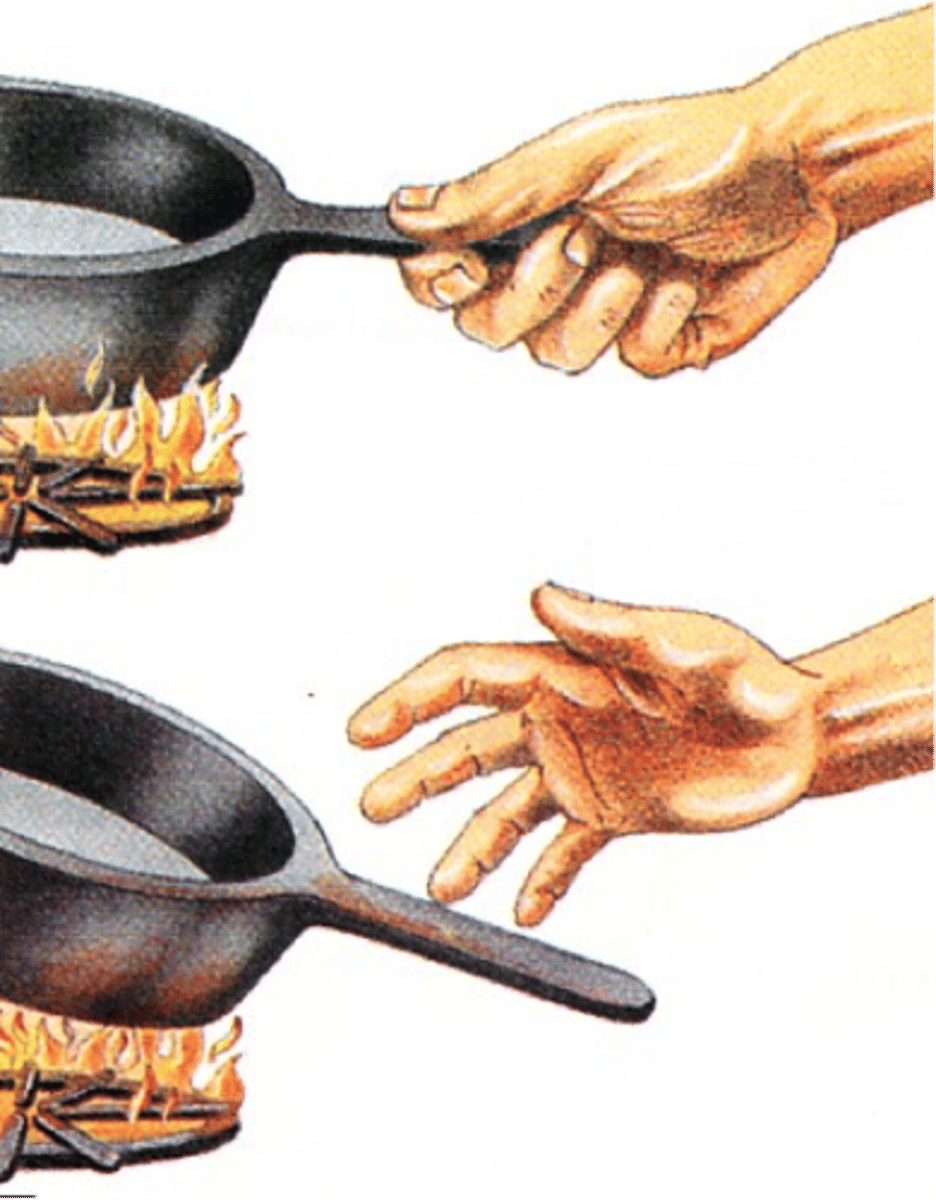
Stimulus
A change in the environment that can be perceived by sensory receptors (sound, light, pain, temperature, etc...) that elicits a response
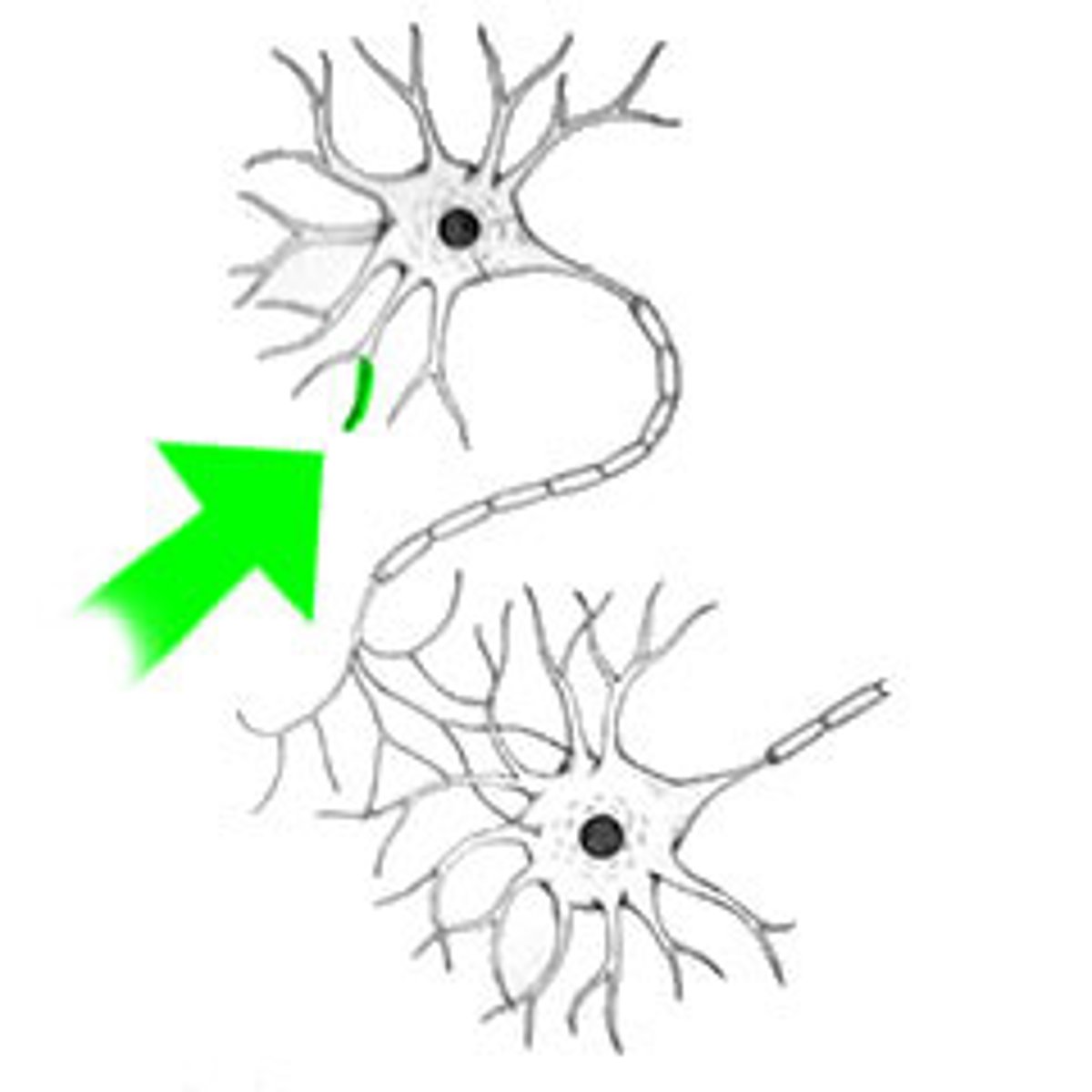
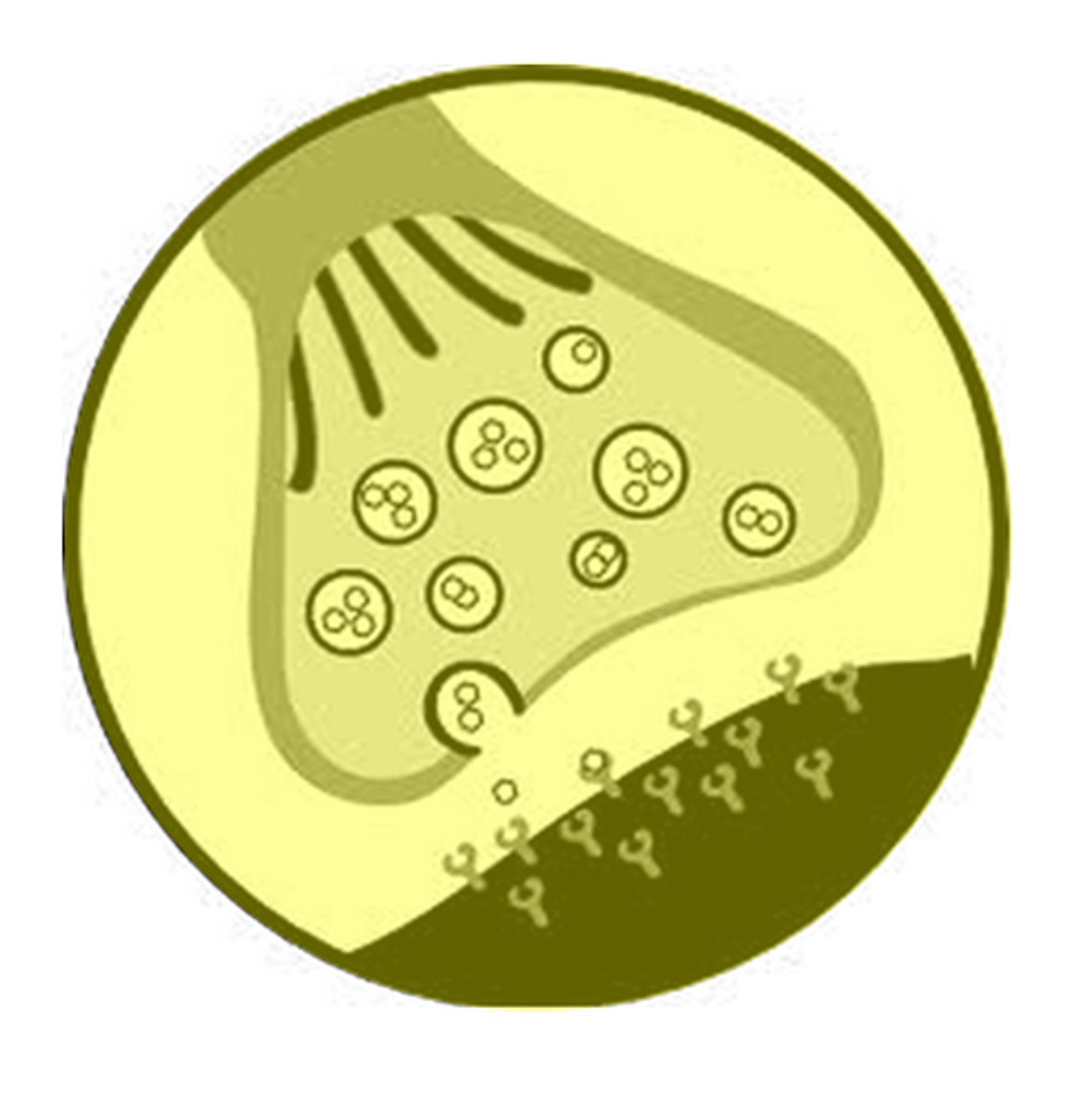
synapse
A gap or space between two neurons. This is where the electrical signal from the axon is converted into a chemical message and passed across the gap to the dendrites of the next neuron.
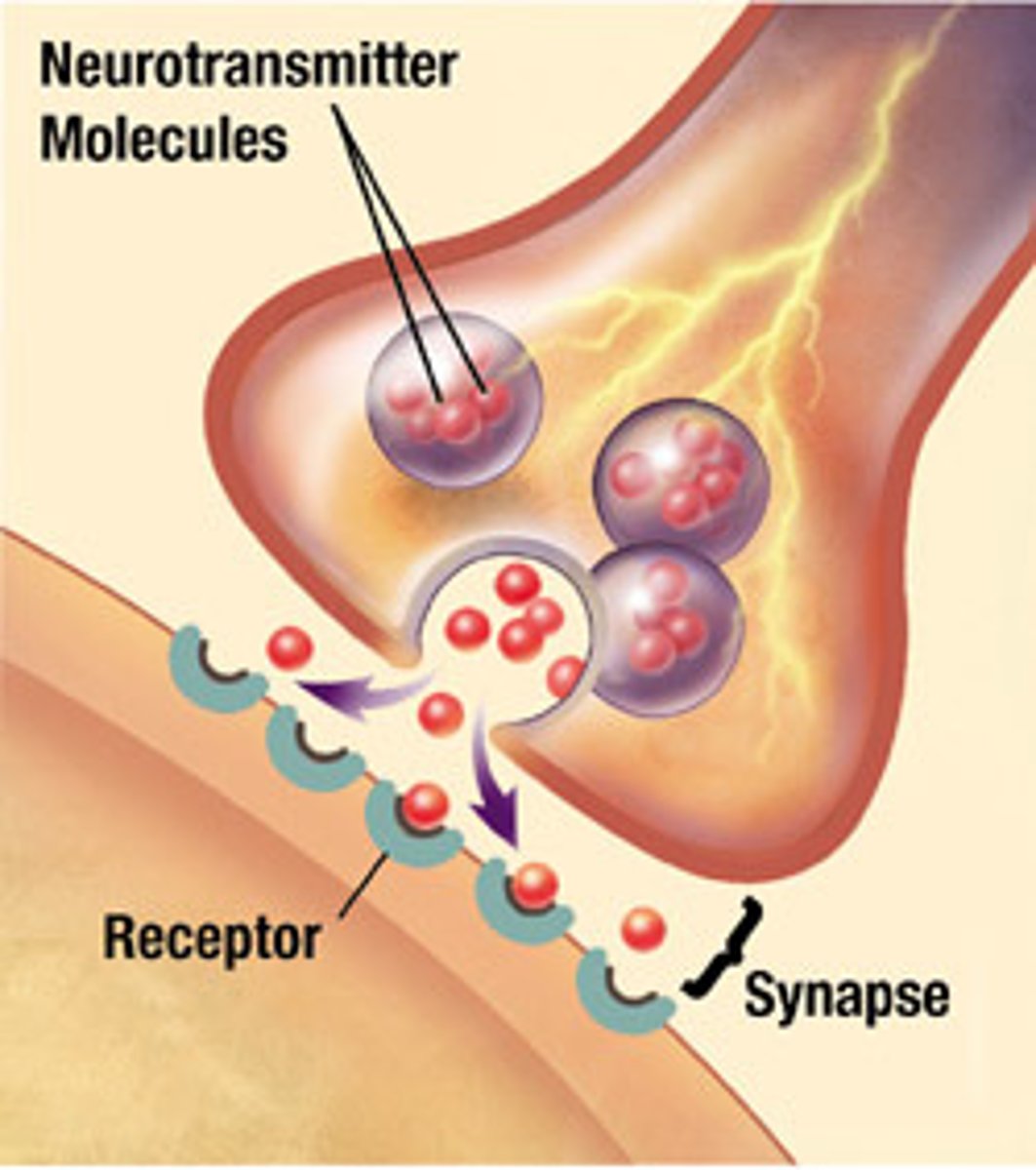
neurotransmitter
Chemical molecules that transmit a message across the synapse from one neuron to another neuron.
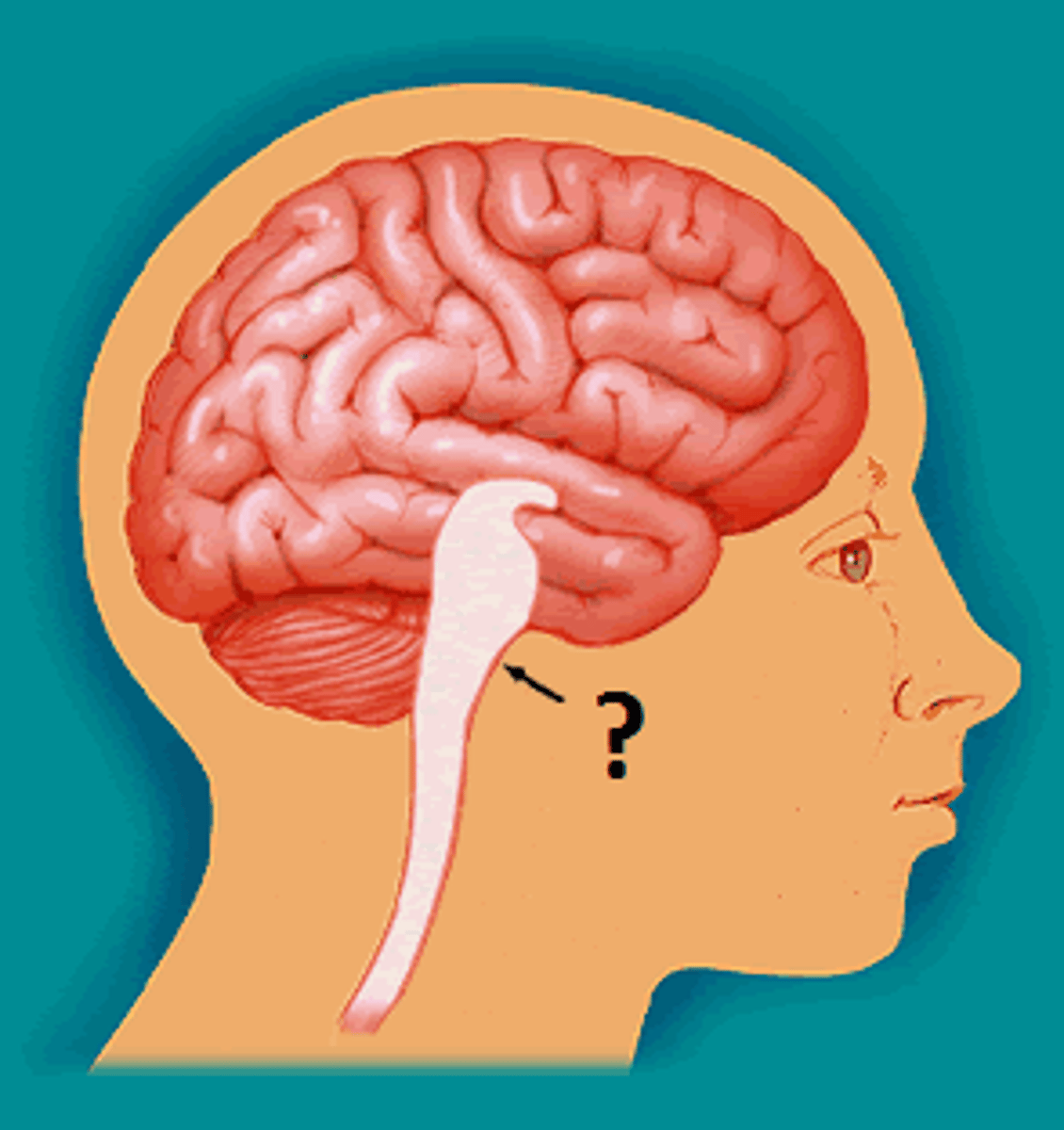
Brain stem
Connects the brain to the spinal cord. Controls involuntary, life-sustaining activities such as breathing, heart rate, sleeping, and maintaining consciousness.
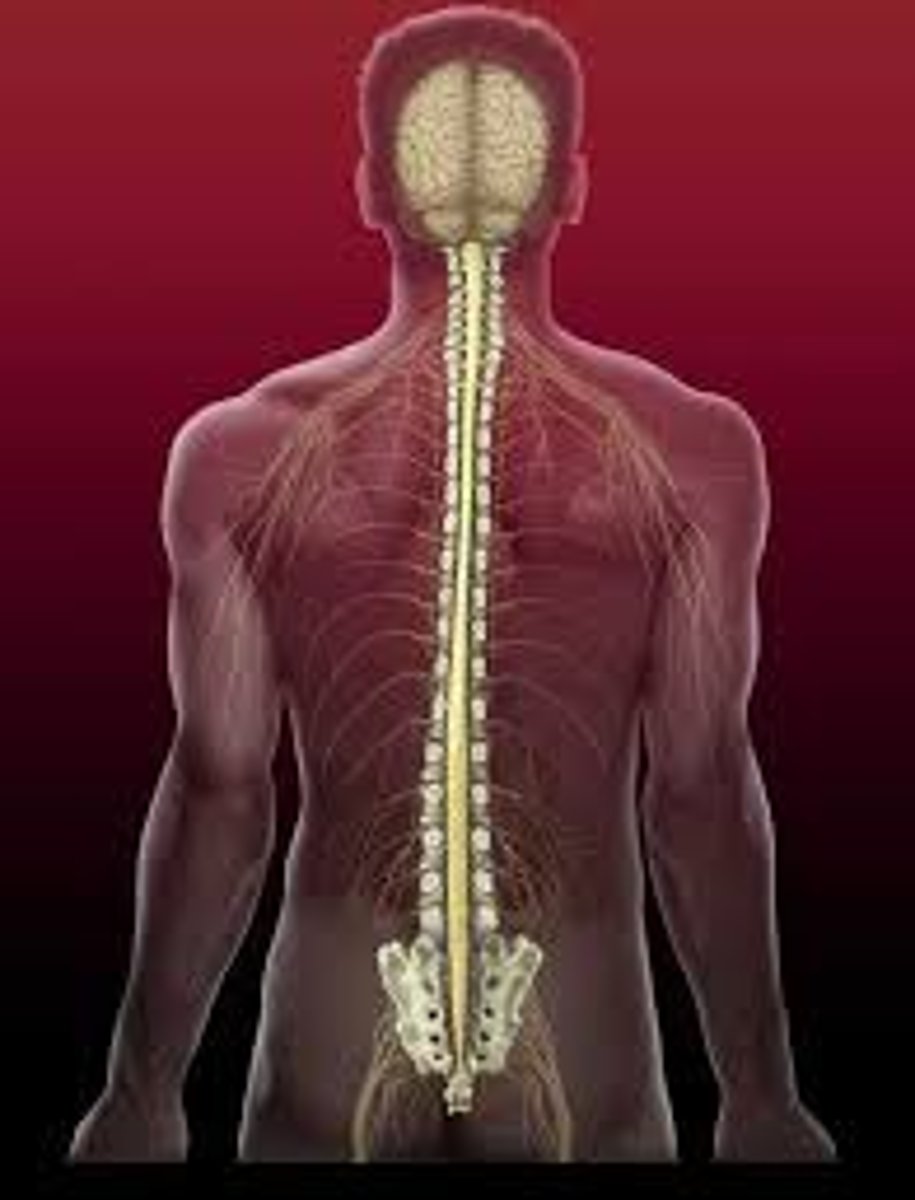
Spinal chord
Long bundles of neurons that run inside of your vertebral column. It carries impulses from all parts of the body to the brain and from the brain to all parts of your body. Reflex arcs occur here.
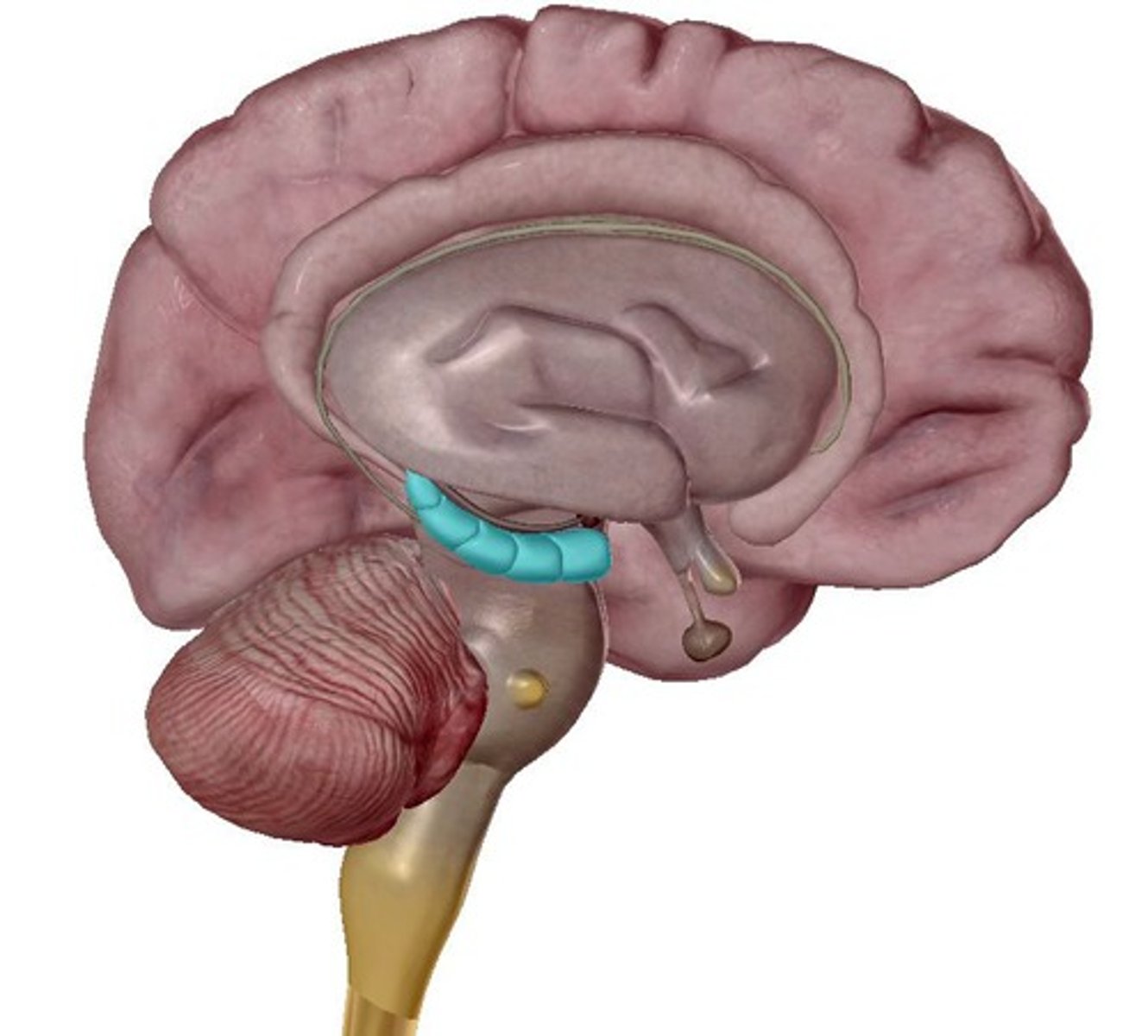
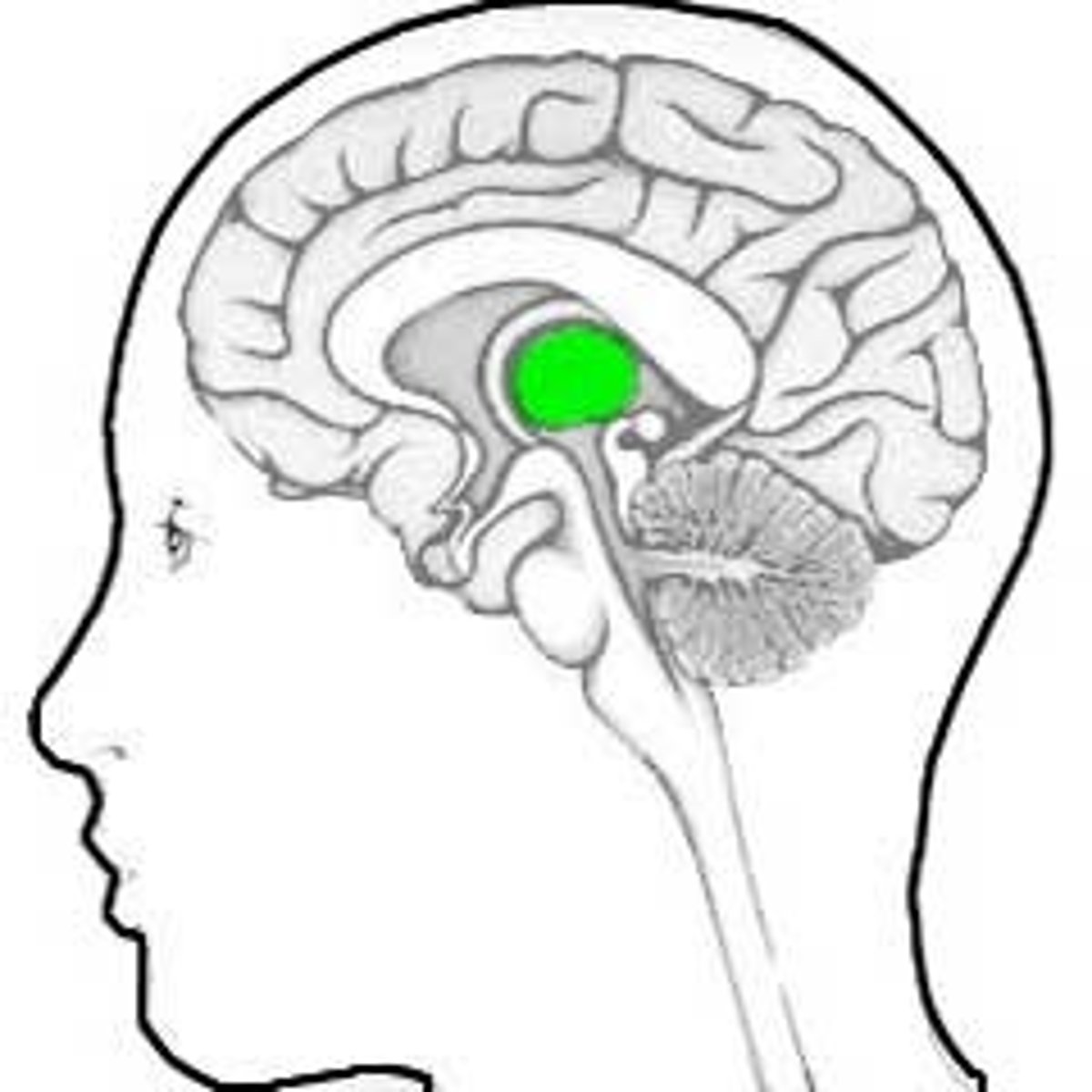
Hypothalamus
Regulates processes of the autonomic nervous system such as temperature control, hormone production, thirst, and fatigue (being tired).
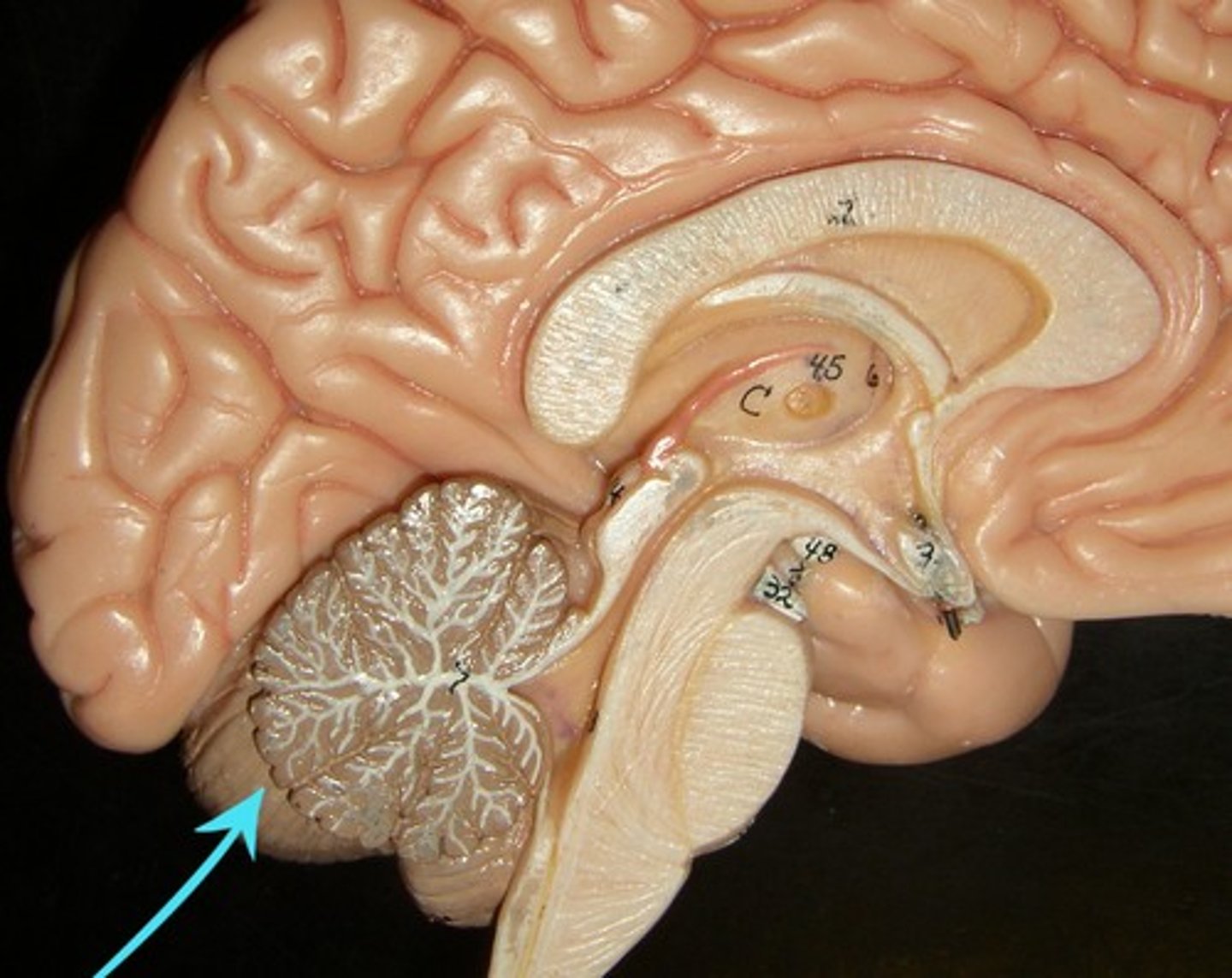
Cerebellum
Cauliflower-shaped part of the brain found at the base of the back of the head. It is responsible for the coordination of muscles and is the center of balance.
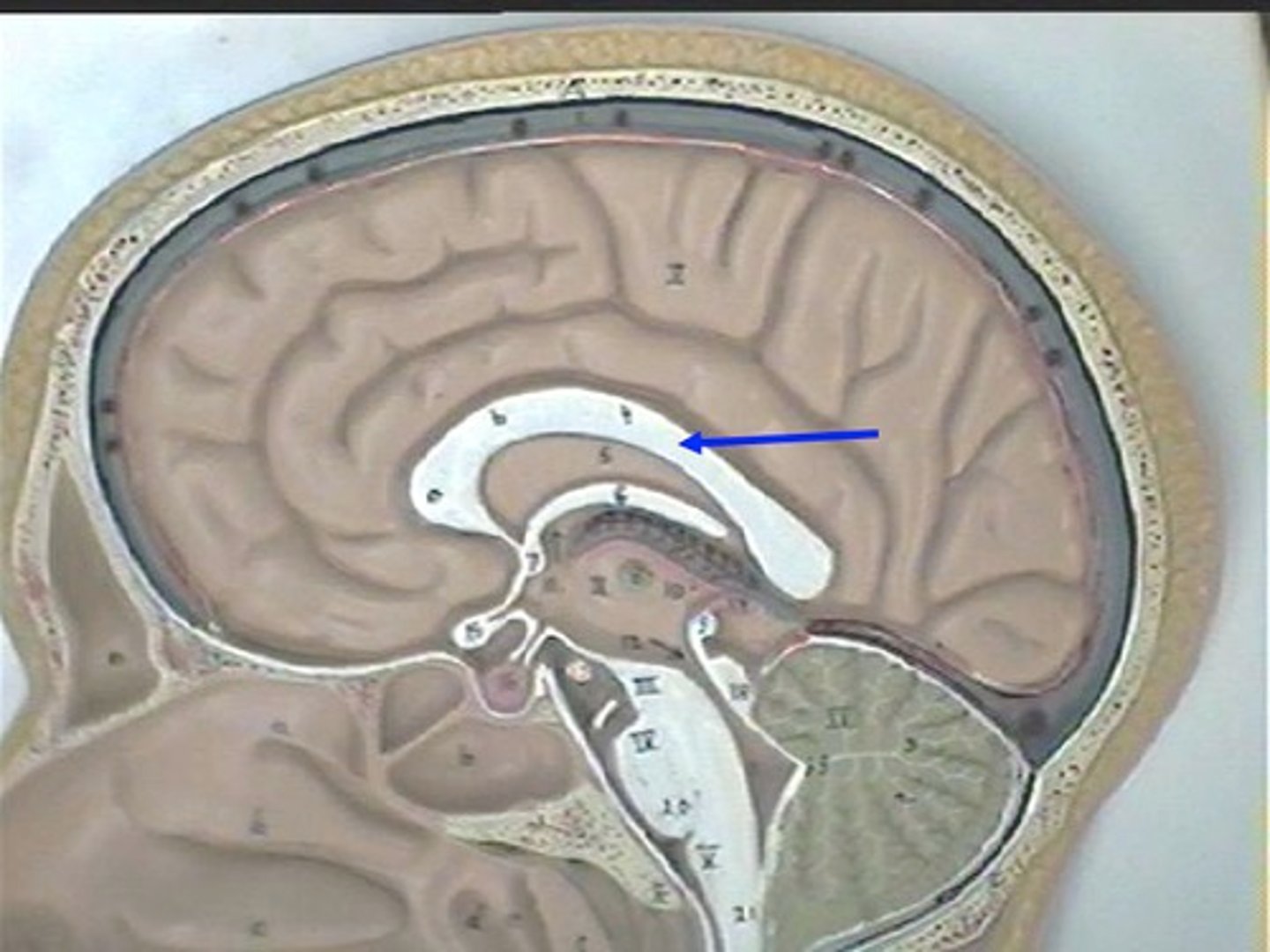
Shown at the end of the blue arrow in the photo.
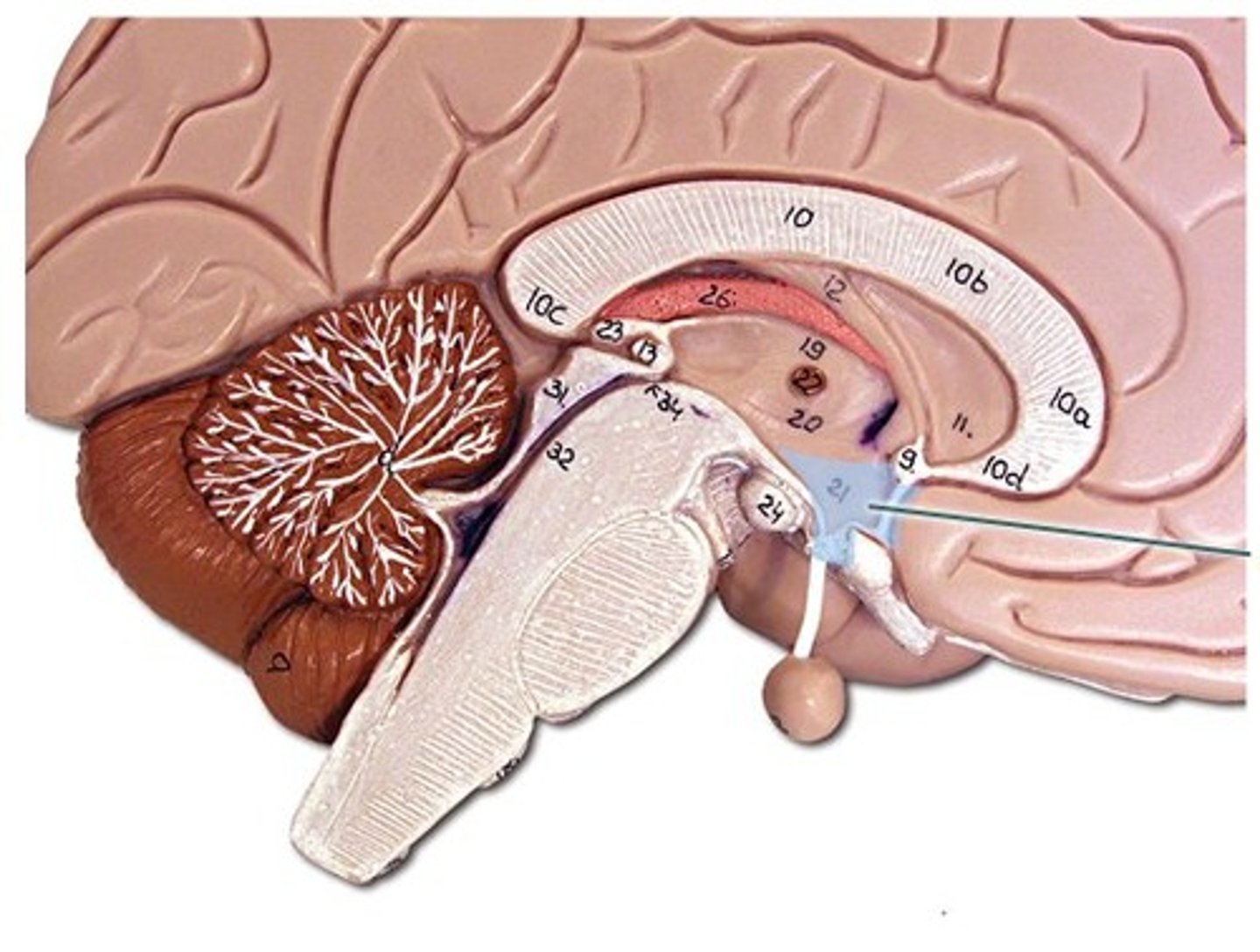
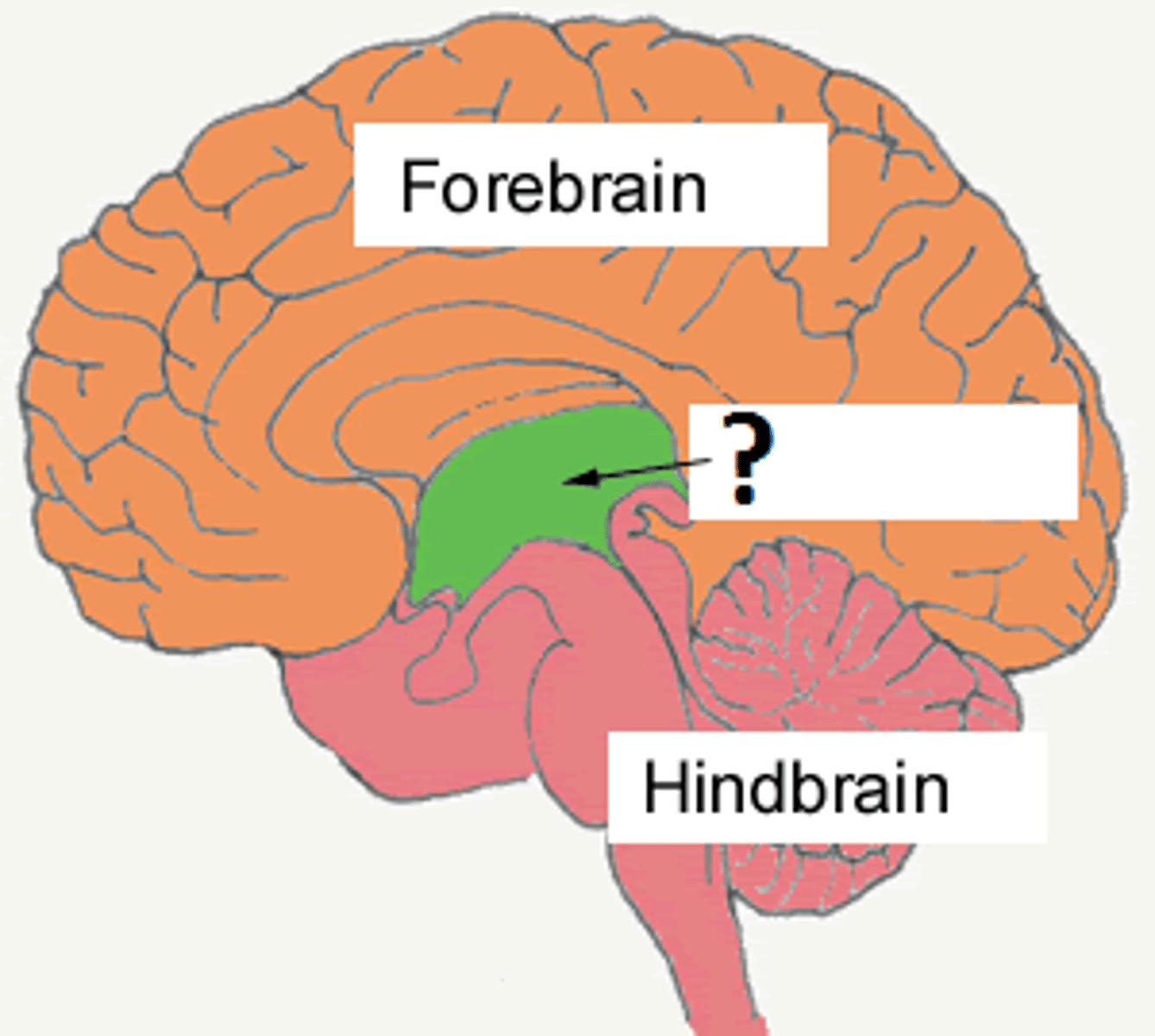
Hypothalamus
A neural structure lying below the thalamus; directs eating, drinking, body temperature; helps govern the endocrine system via the pituitary gland, and is linked to emotion.
Structure #3
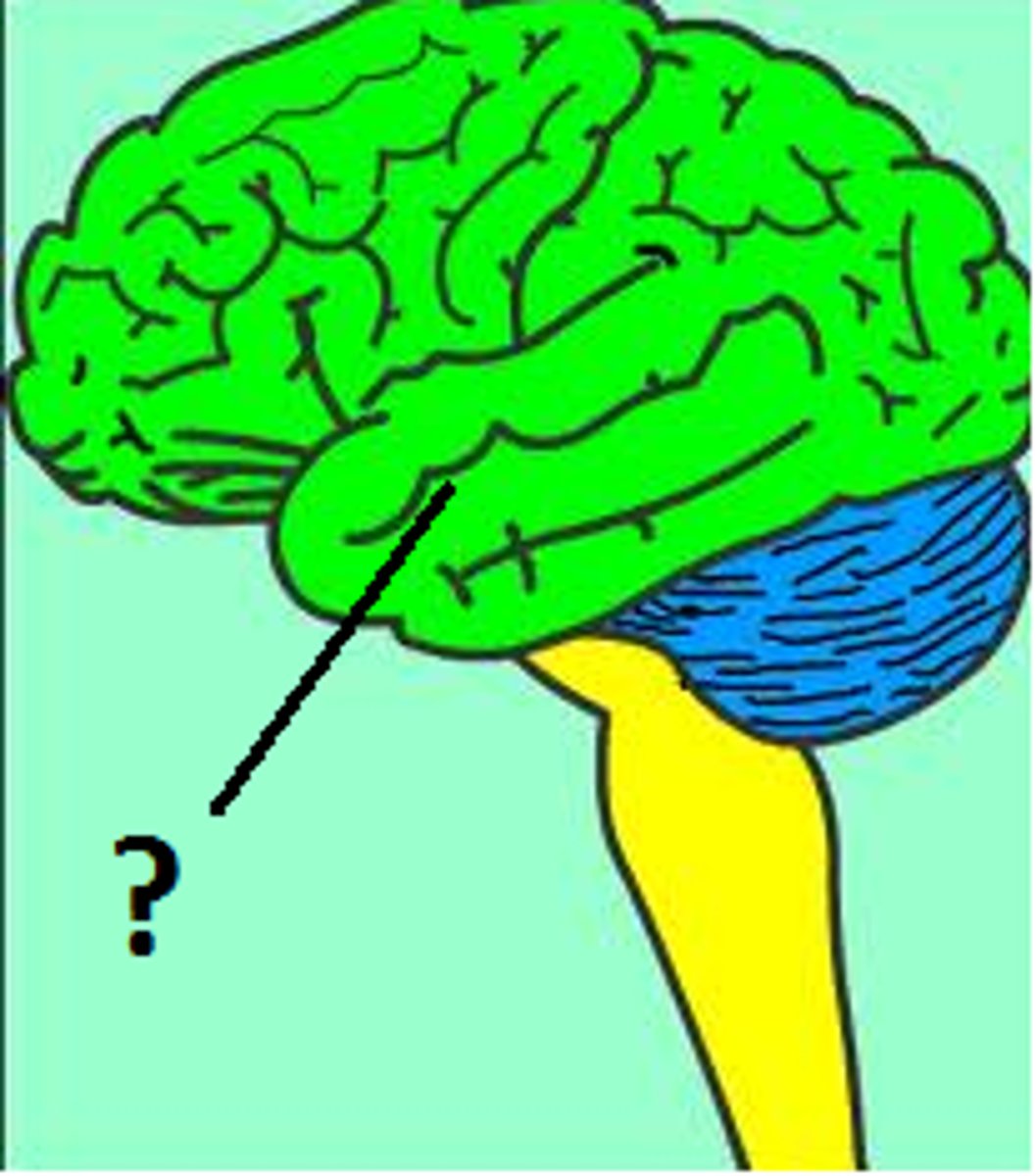
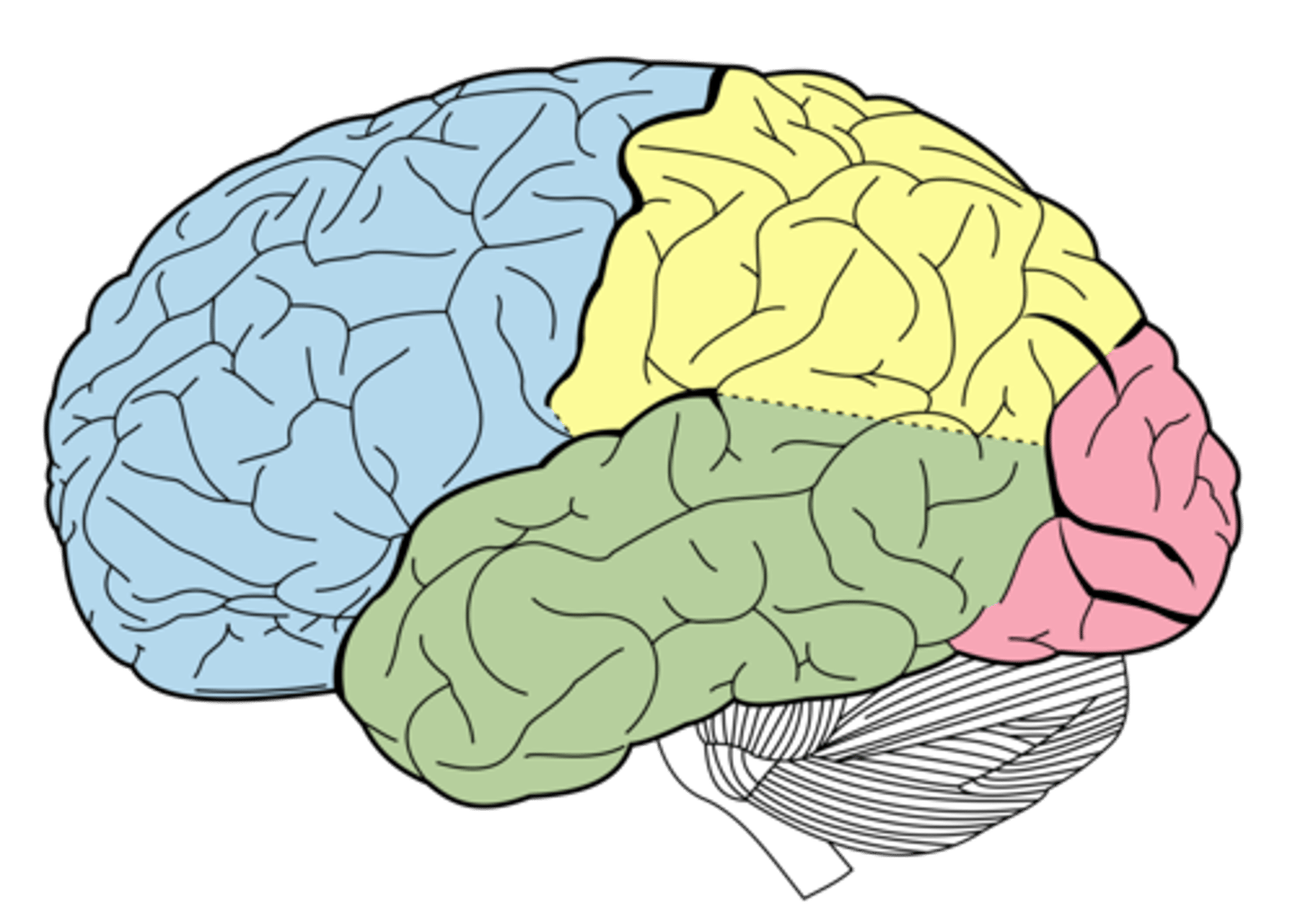
Cerebrum
The largest part of the brain. Divided into two hemispheres (right and left halves). It is also broken into four different lobes.
Green area with question mark in the diagram.
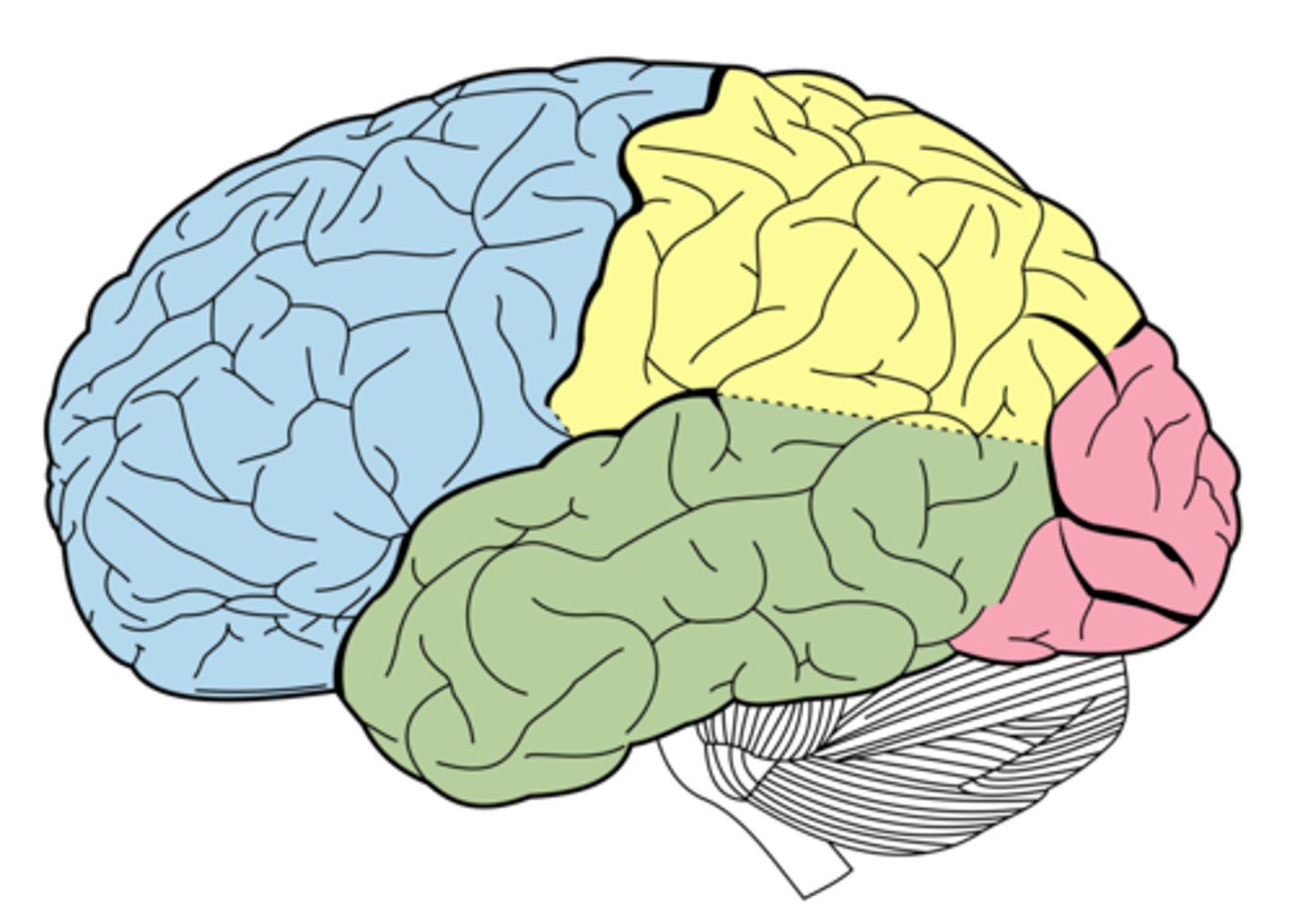
Frontal lobe
This is the largest and longest lobe in each hemisphere (side of the brain). Located in the upper forward half. This area is involved with higher-order thinking such as planning for the future, problem-solving, personality, decision making, controlling emotions and speech production. Motor control is also found at the back of this lobe.
Colored blue in the diagram.
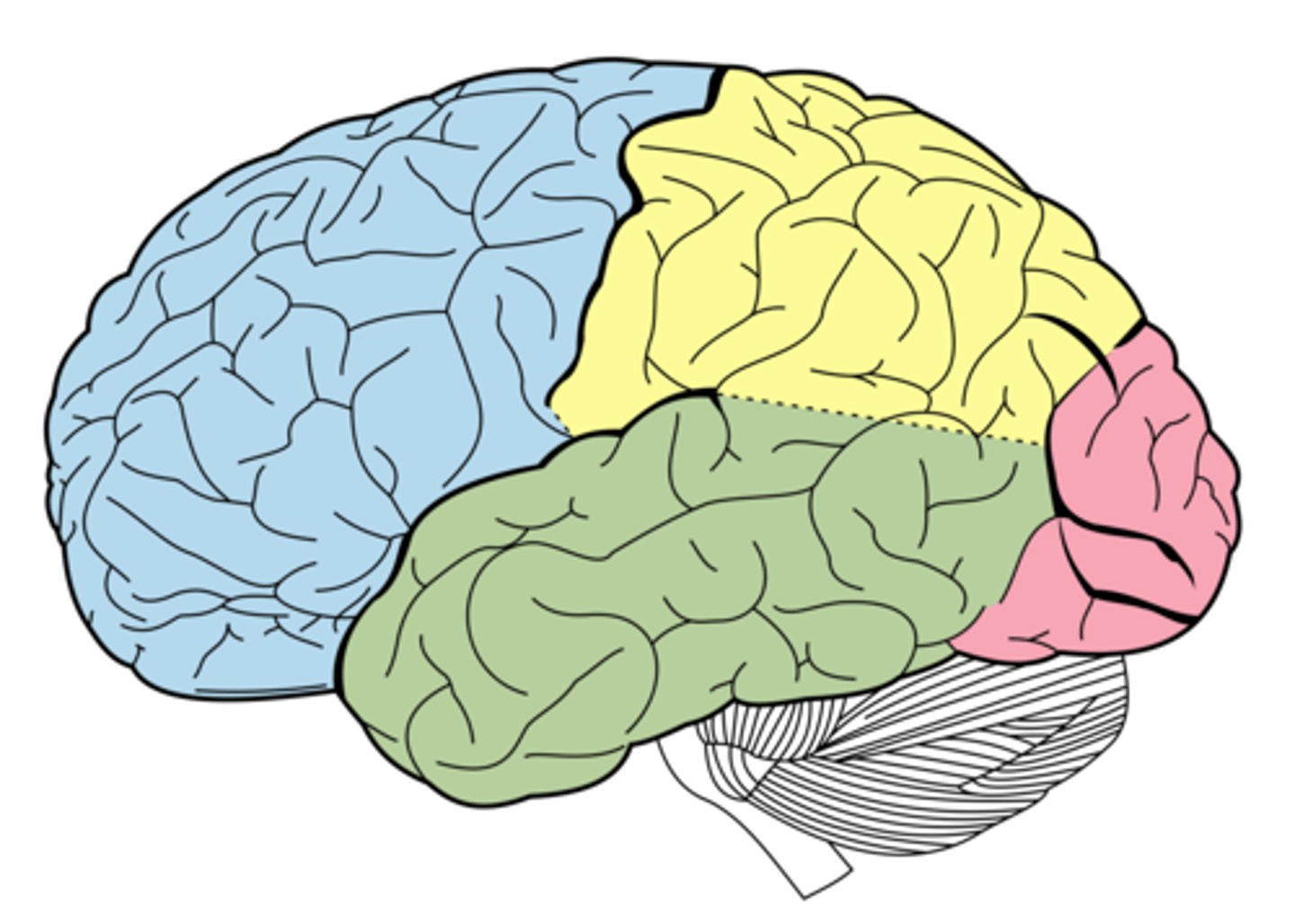
Temporal lobe
Located on the sides of the brain, near the temples of the head. This is where the processing centers for hearing are located. Visual memories are processed here.
Green in the image.
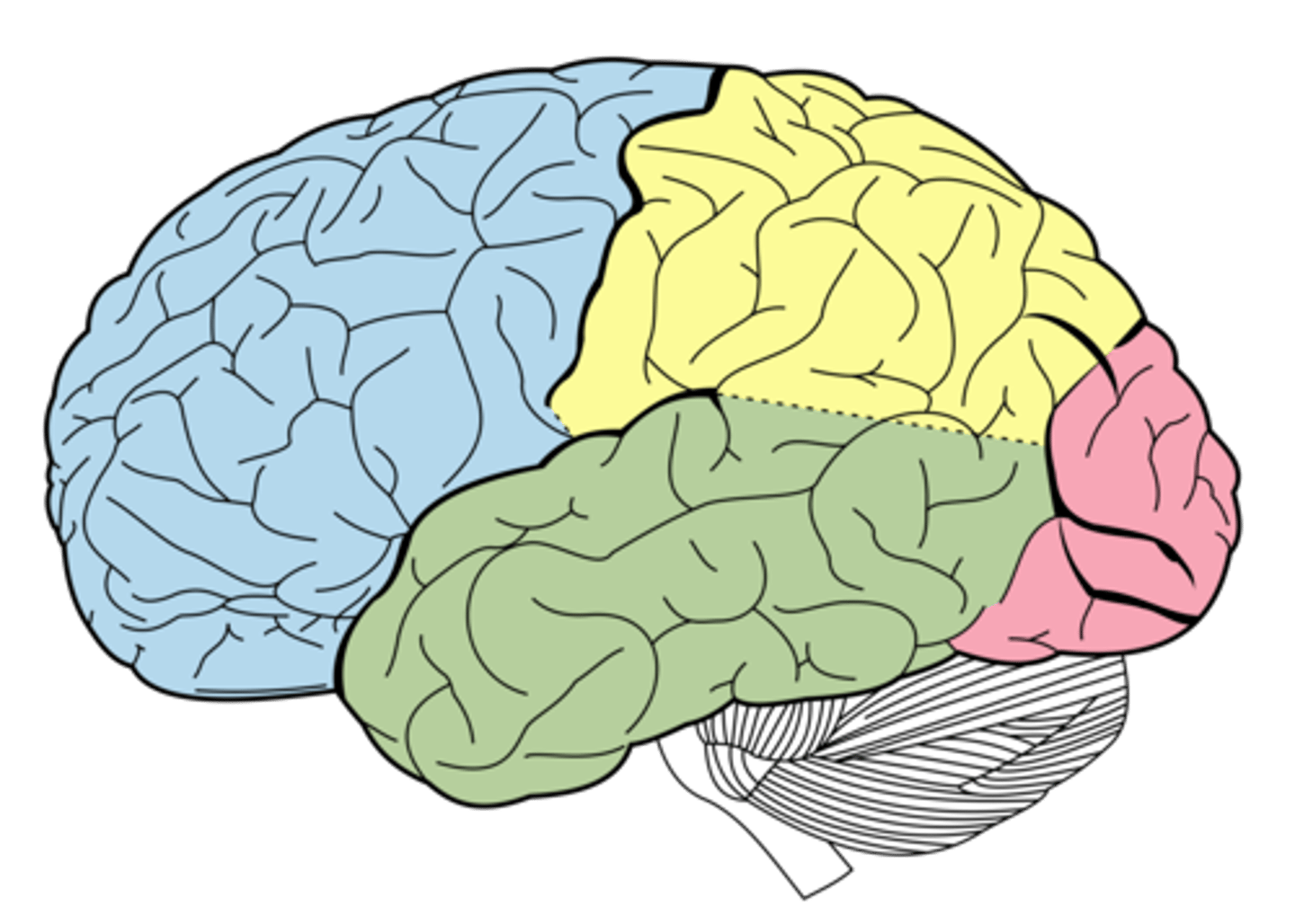
Occipital lobe
Found in the back of the brain. This is where the processing centers for vision are located.
Red/pink in the image.
Parietal lobe
Where the processing centers for speech, taste and reading are located.
Yellow in the image.
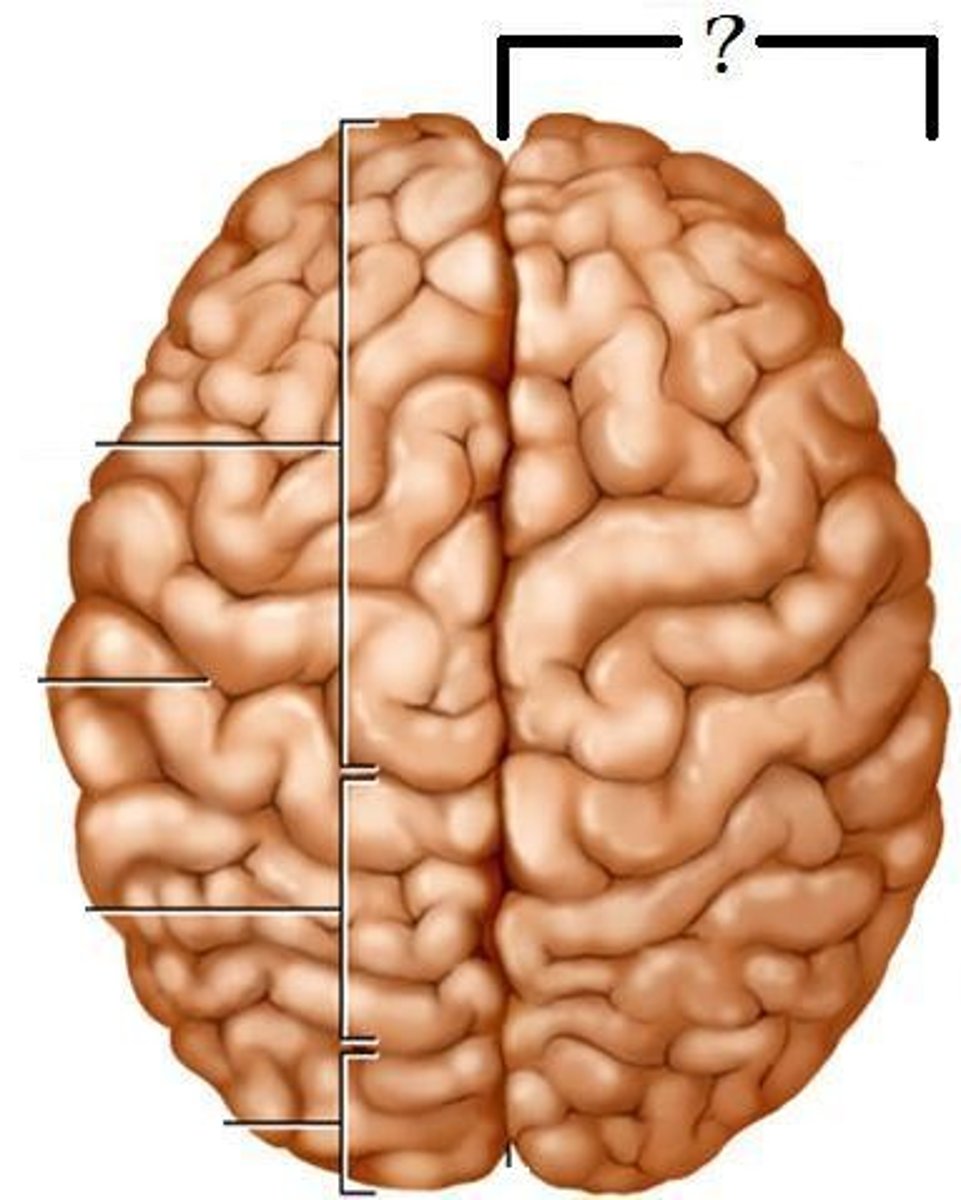
Right hemisphere
The right side of the cerebrum of the brain. It controls the left side of the body.
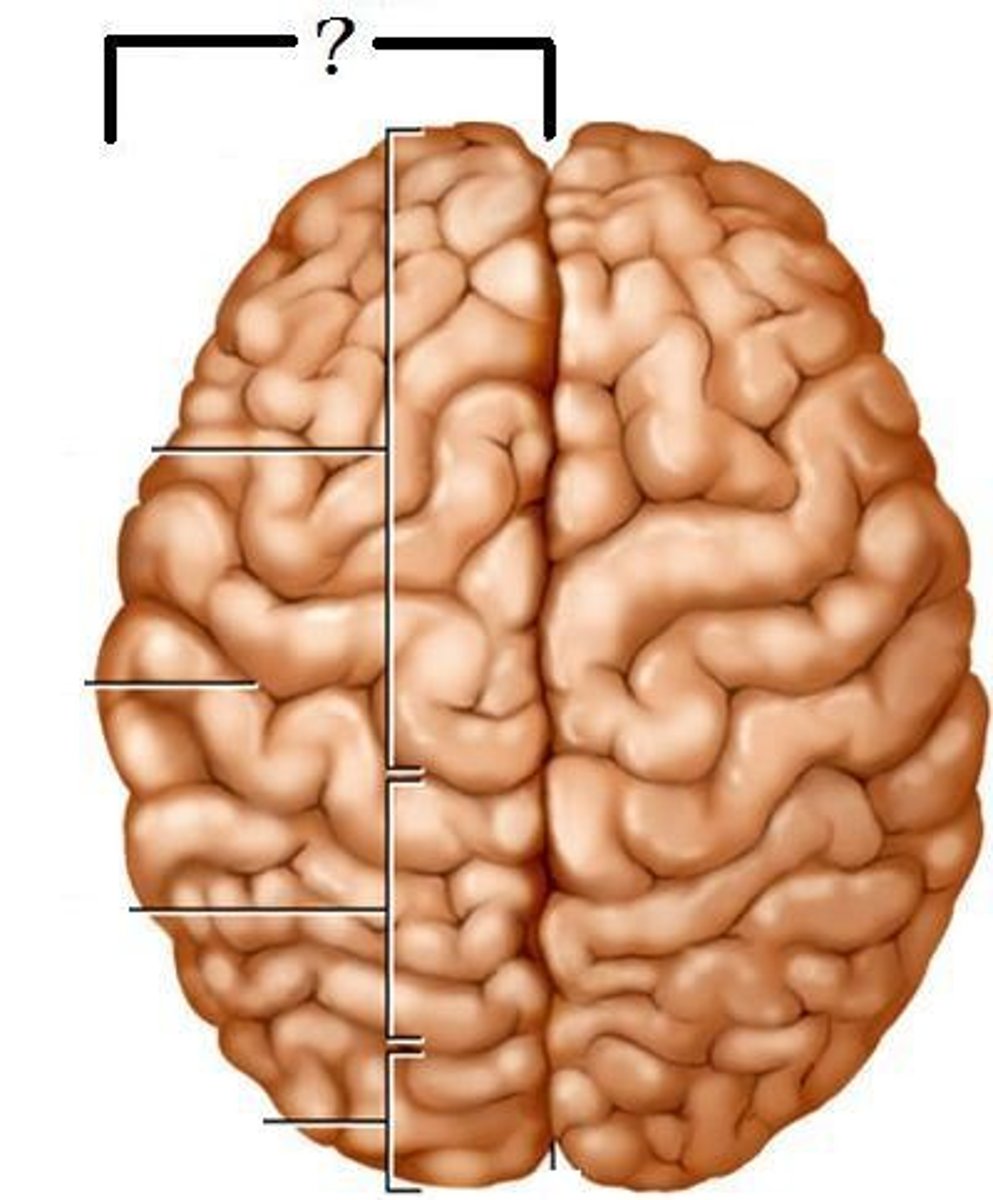
Left hemisphere
The left side of the cerebrum of the brain. It controls the right side of the body.
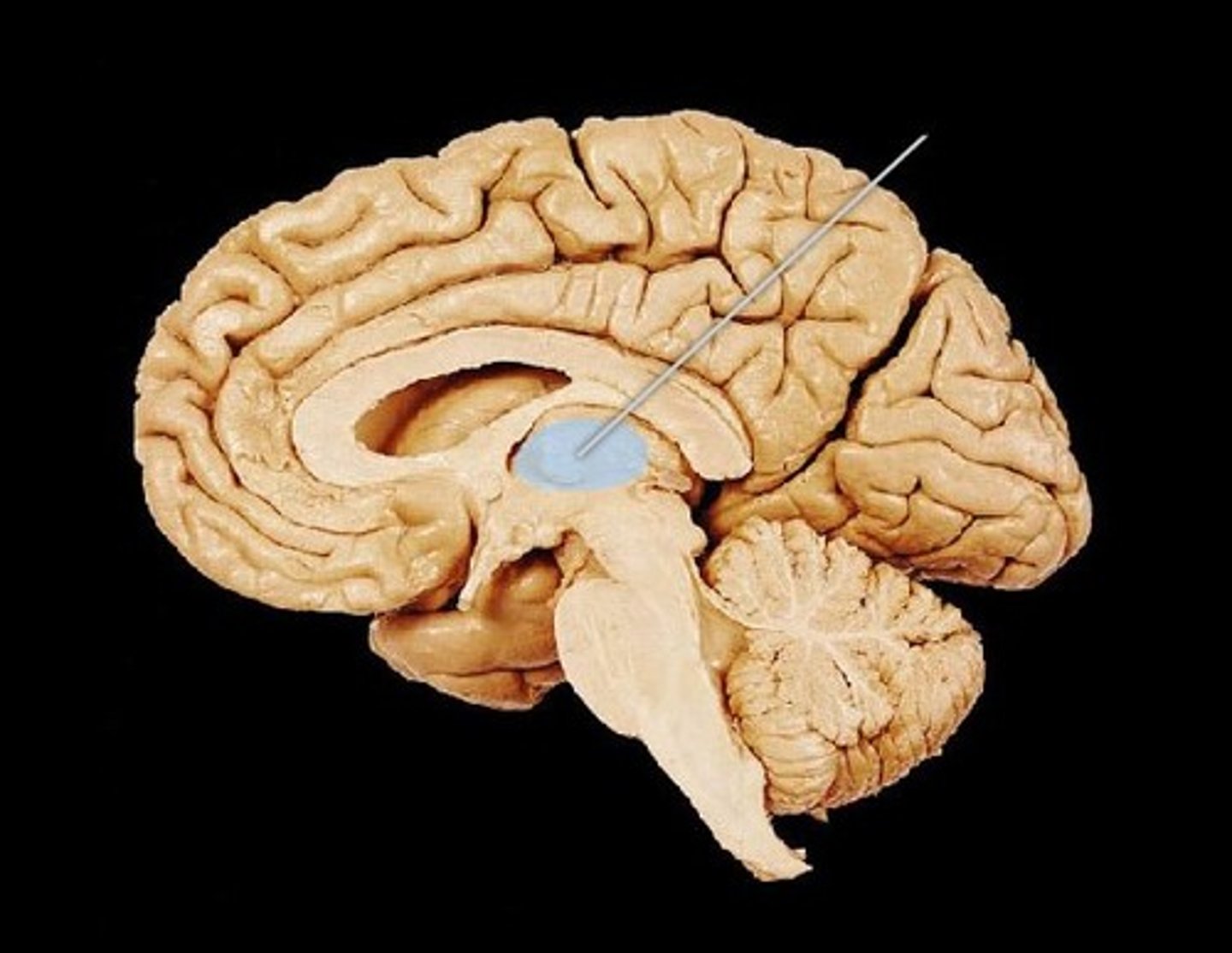
Thalamus
It is involved in sensory perception, sleep and awake states. Also regulates movement.
Optic Nerve
Transfers visual information from the retina in the eye to the vision centers of the brain.
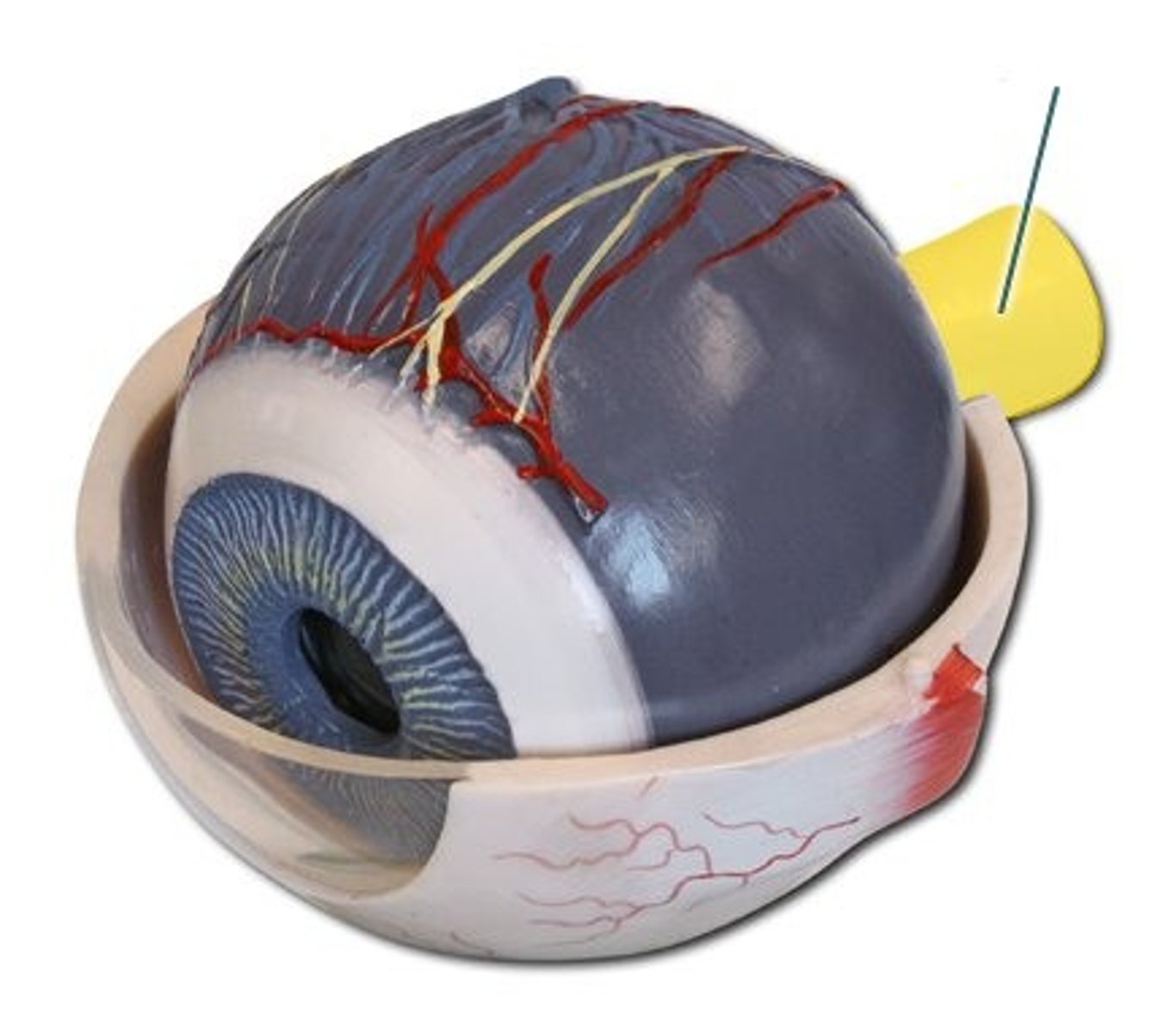
Pituitary Gland
"Master Gland" that regulates how other glands operate.
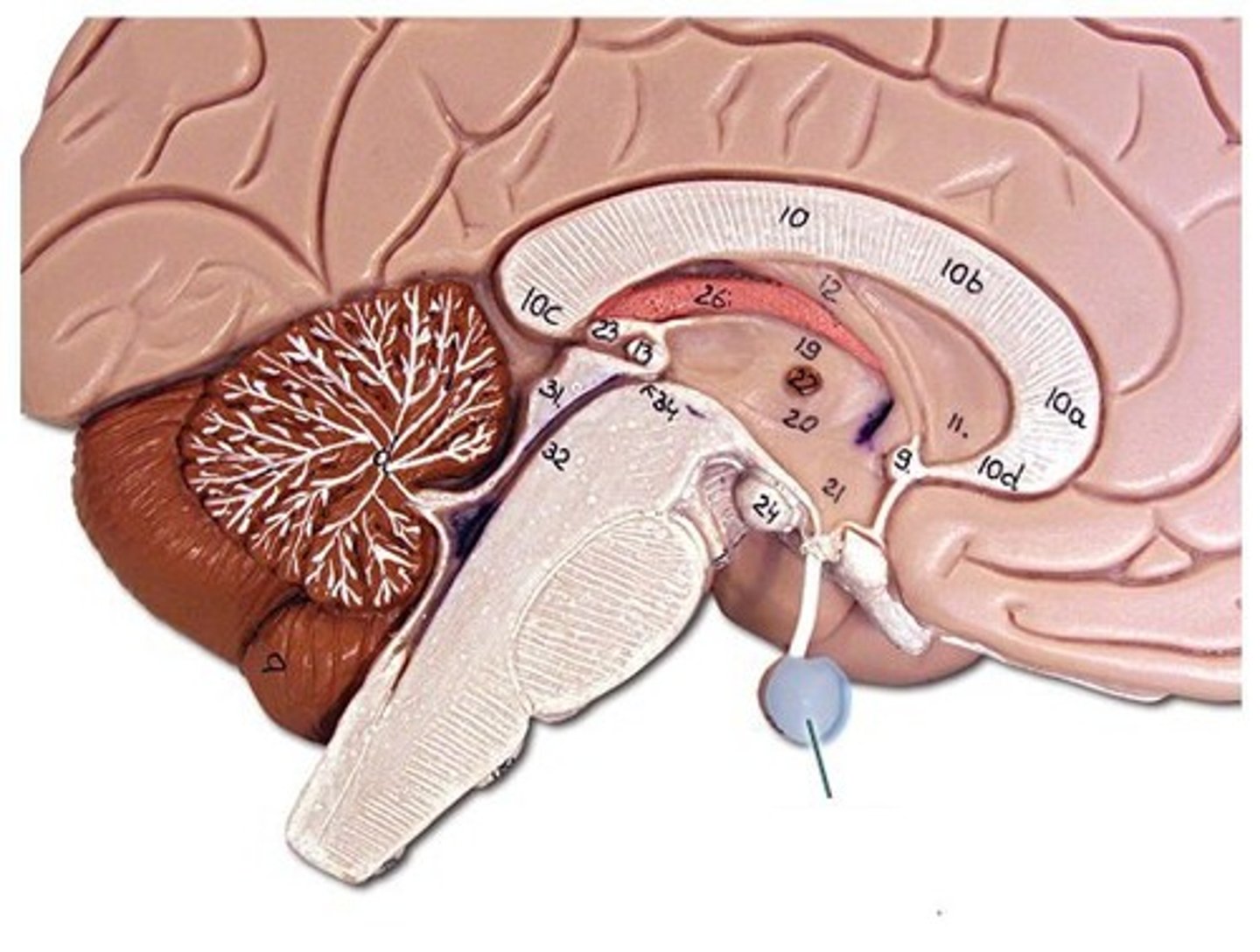
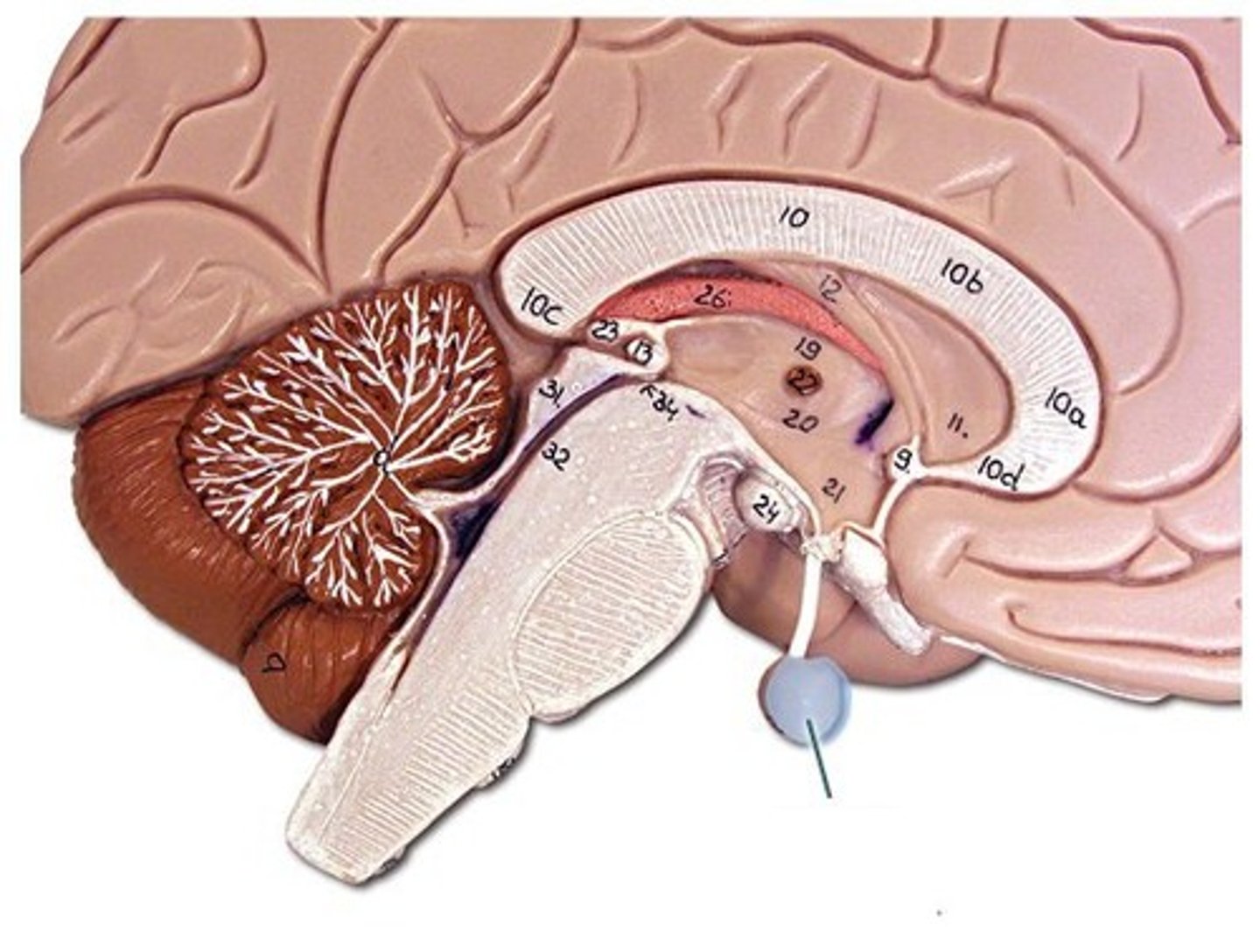
Pituitary Gland
It secretes and stores hormones. It regulates your body temperature, urine production, growth, and sex hormones.
Midbrain
Regulates body movement, vision and hearing.
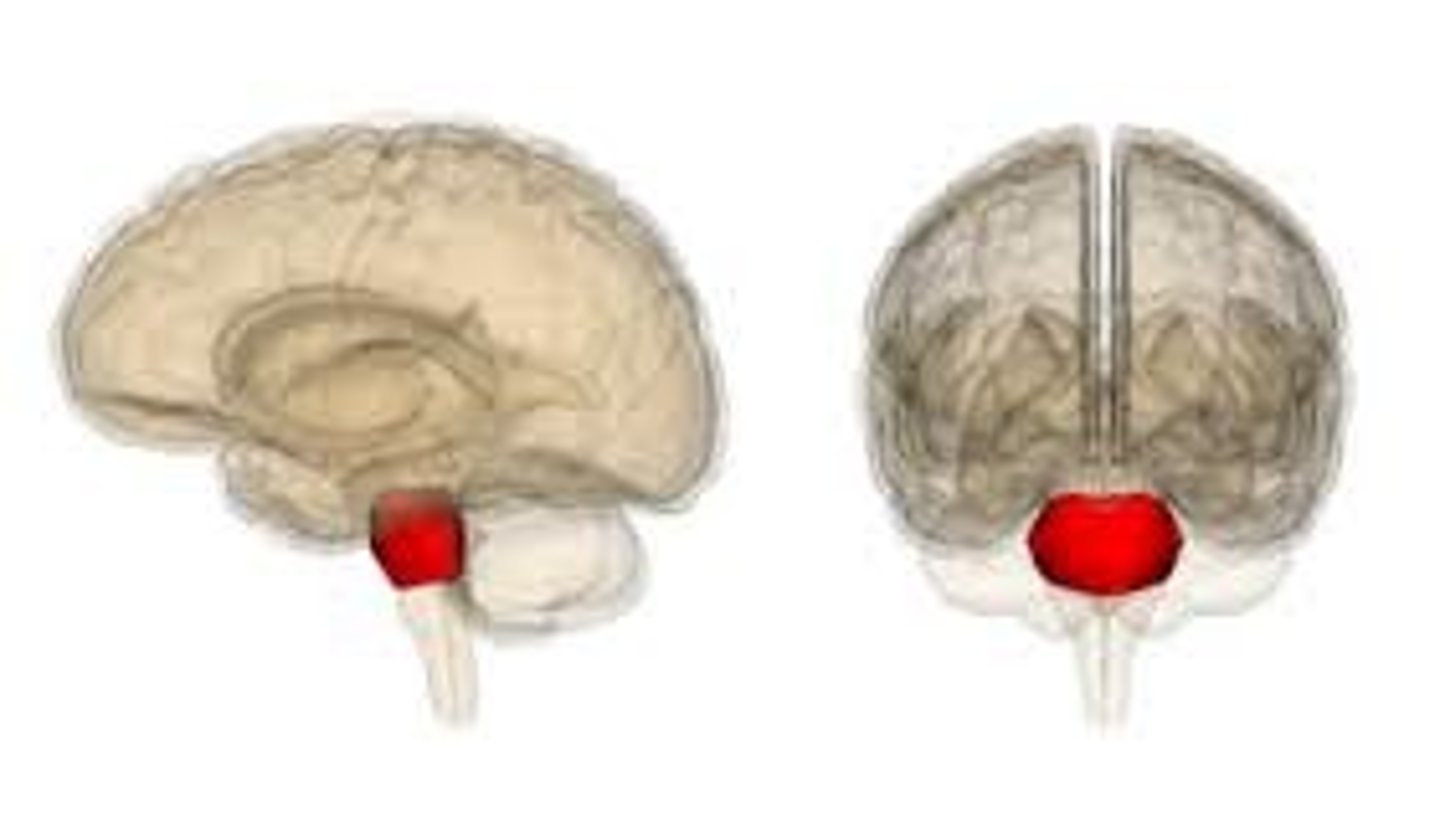
Pons
Links cerebellum to help with posture and movement. It relays messages from cortex to cerebellum.
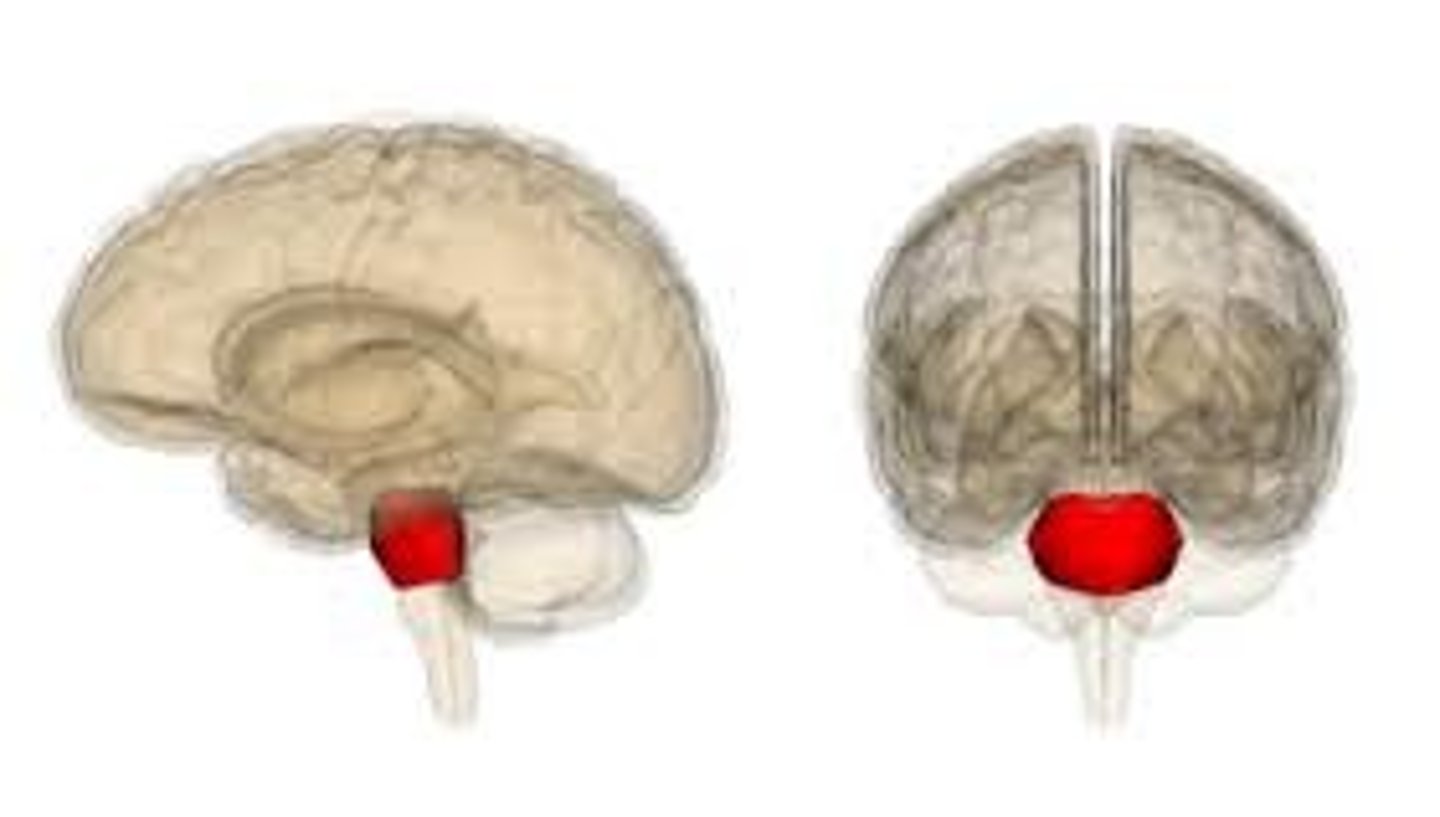
Pons
It controls our sleeping states and dreams.
Rods
cells in the eye that detect dim light
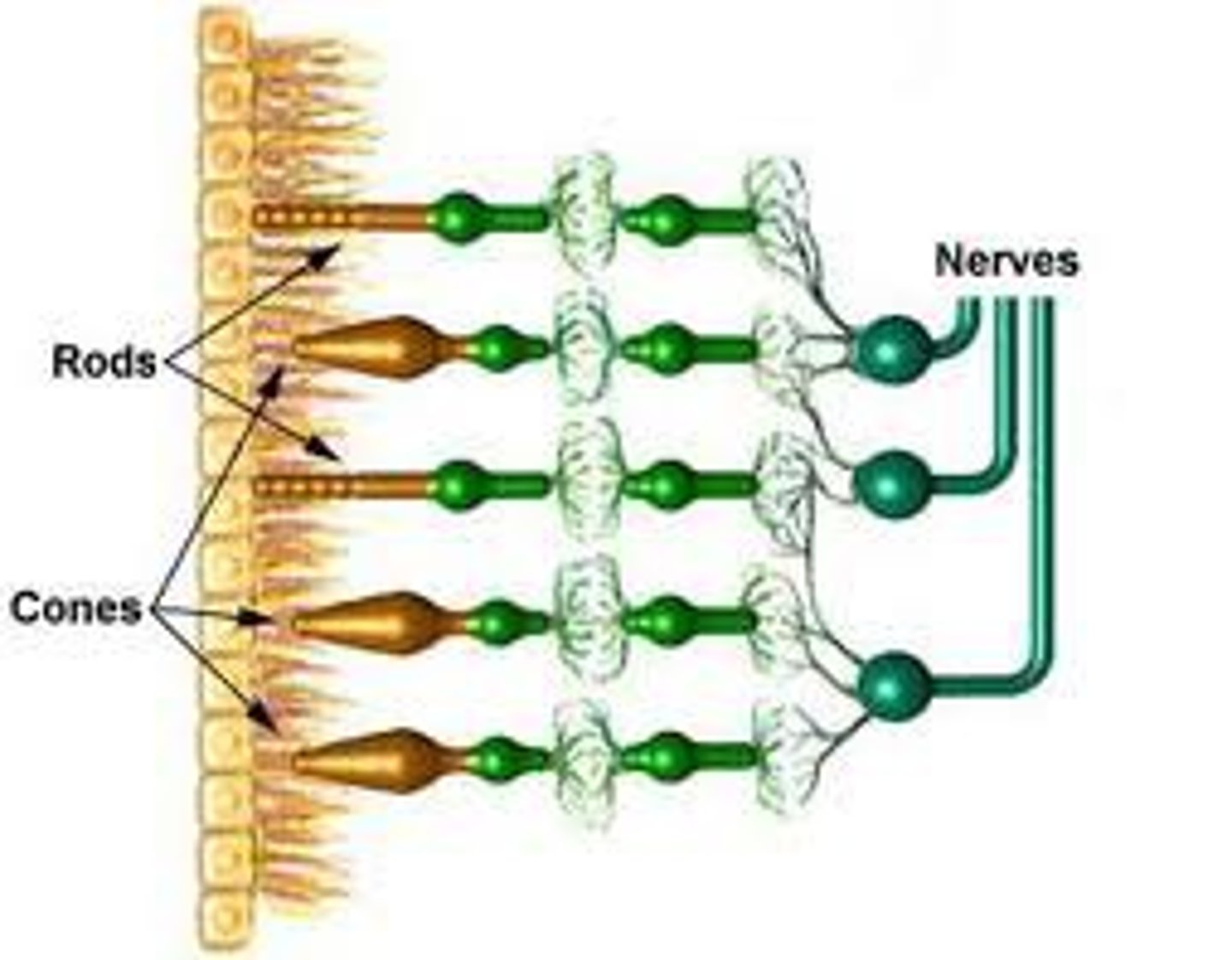
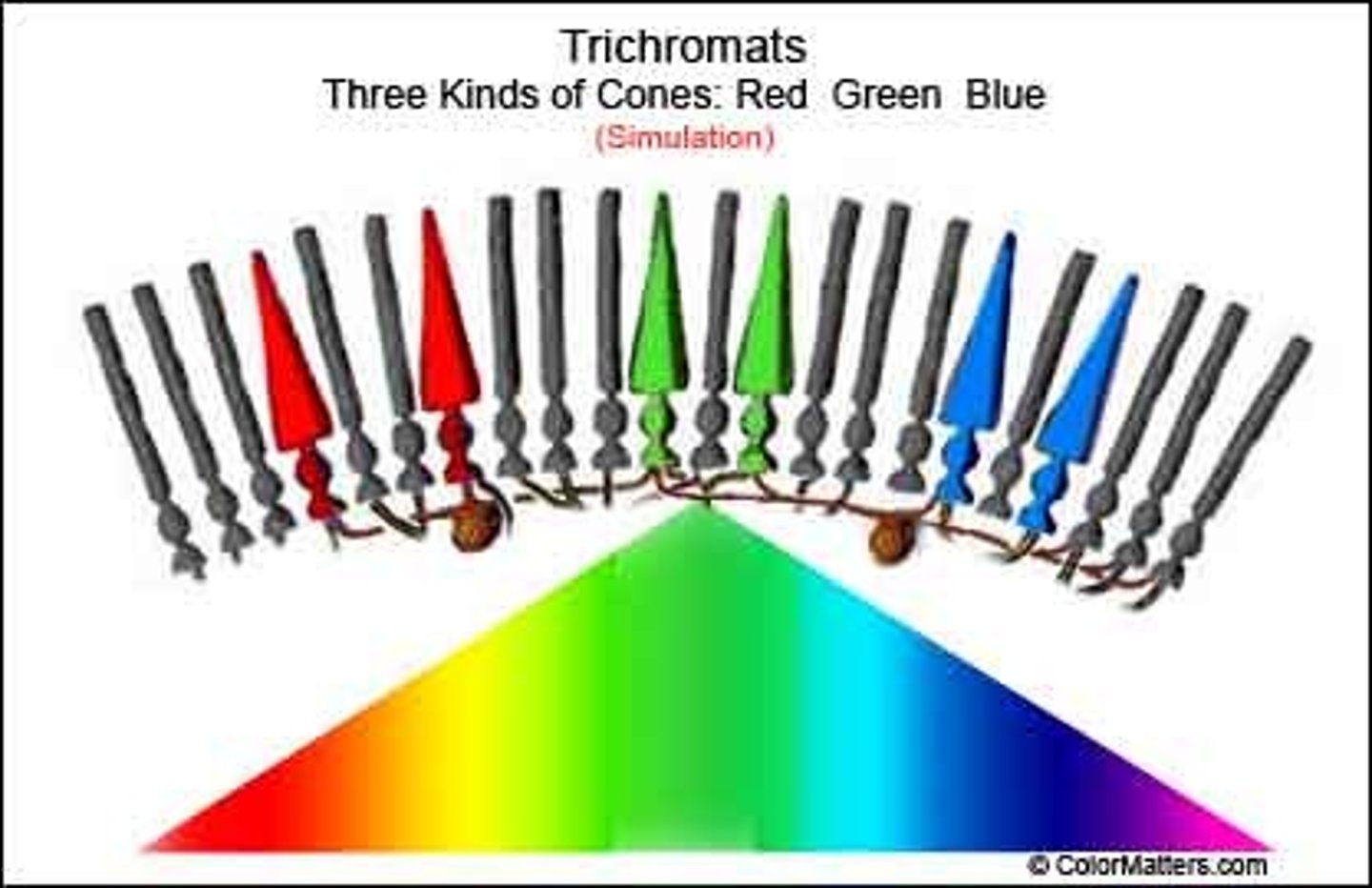
Cones
cells in the eye that detect color
Corpus Collasum
It connects the right and left hemispheres of the brain and allows information to pass between them.
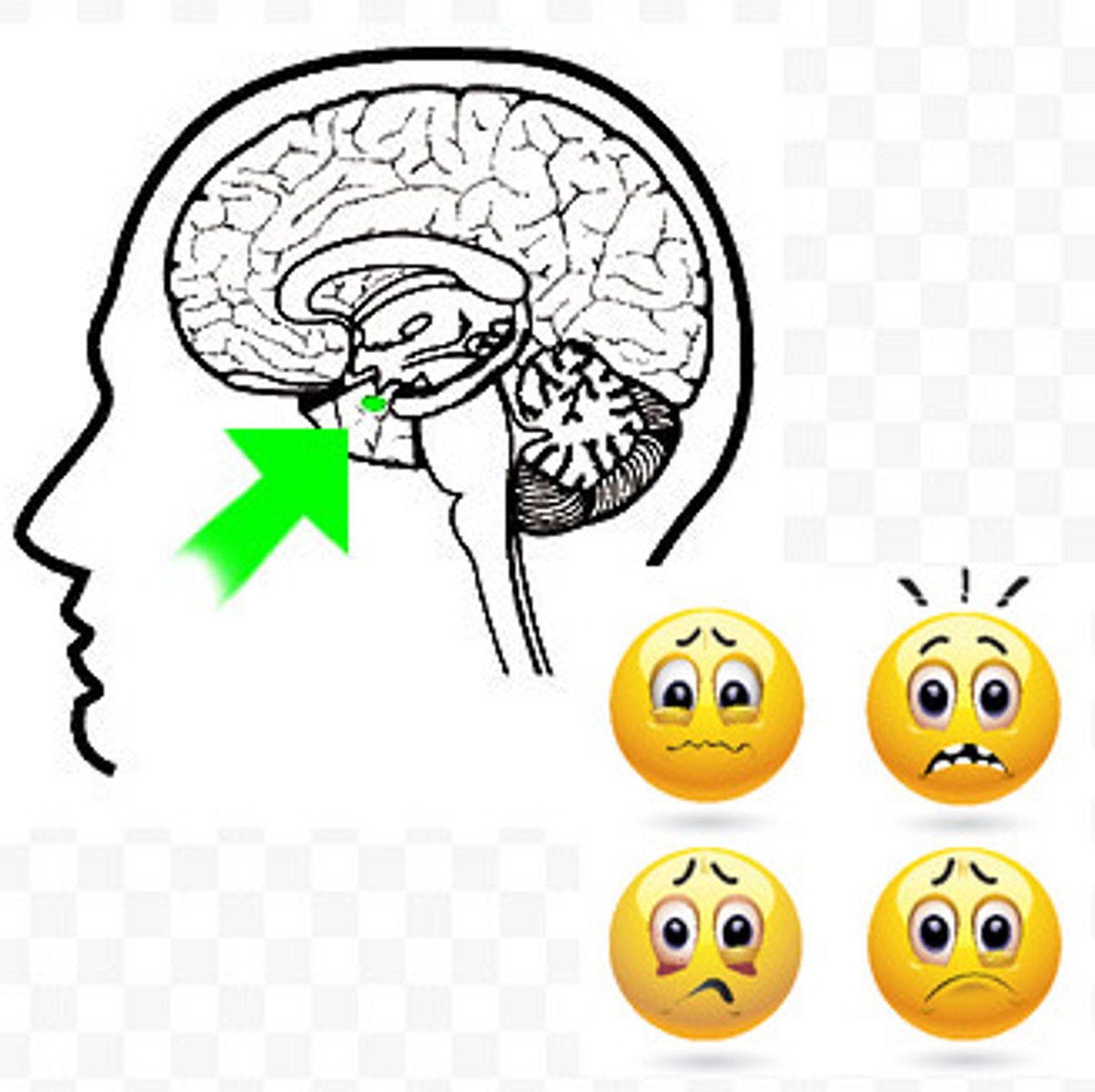
Amygdala
It processes fear emotions. "fight or flight" response, emotion processing, and reward processing.
Hippocampus
It is responsible for long term memory storage and spatial navigation.