11- Angiography and intervention - basic endovascular techniques. Basic vascular surgery techniques, vascular grafts
 Call Kai
 Learn
Learn Practice Test
 Spaced Repetition
 Match
Match Flashcards
 Knowt Play
1/38

There's no tags or description
Looks like no tags are added yet.
Name | Mastery | Learn | Test | Matching | Spaced | Call with Kai |
|---|
No analytics yet
Send a link to your students to track their progress
39 Terms
What are endovascular treatments
percutaneous, catheter based intervention using X ray fluoroscopic control
what are the characteristics of endovascular surgeries
doesn’t require
surgical cutdown
general anesthesia
can be performed as an outpatient procedure
what is the seldinger technique
used to get access to vessels and heart
needle → guidewire → remove needle → sheath → insert
what is angiography
used to diagnose and treat CAD- narrowing or blockage of arteries
What is a balloon angioplasty
A catheter with a tiny, folded balloon on its tip is inserted into the artery → inflated once the catheter reaches the narrowed/blocked artery → opens artery
what are the advantages of balloon angioplasty
low profile devices can be used to treat high caliber arteries
its size and flexibility allows to reach small vessels 1.5mm
what are the disadvantages of balloon angioplasty
elastic recoil
especially in stenosis of arterial orifices
flow limiting dissection is relatively common
can be ineffictive against calcified plaques!
when are stents used
after unsuccessful or non effective PTA
flow limiting or unstable dissection
stenosis in venous system
what are the types of stents
balloon expandable stent system
self expanding stent system
describe balloon expandable stents
Stainless steel
Easy positioning; stent shortening is minimal
High radial force
Limited stent length
Rigidity (external forces can deform)
describe self expanding stents
delivered in a stent
continuous expansion force
adapts to changes in diameter- bifurcation
stent length can vary- bigger than diameter, shorter the stent
what is the cause of restenosis after endovascular treatment
intimal proliferation due to vessel wall damage during intervention
can be inhibited using drug eluting devices
what is the first choice metho for aorto-iliac segment
endovascular!
favourable in occlusion sin patients with severe comorbidities
open is recommended only for extensive lesions
what technique is used in the aortoiliac segment
“kissing stent”
reconstruction of aortic bifurcation by placing 2 stents simultaneously
prohibits contralateral displacement of plaque material
what are the characteristics of femoropopliteal disease
long segment lesions, complex plaque-morphology and prominent calcification
what is the occurrence of restenosis in femoropopliteal diseases
high occurrence in cases with long and/or complex lesions (40-60%)
only recommend when the total length of lesion is shorter than 25cm
stents give better results- occurrence of in-stent restenosis and stent fracture limits its usability
what are the goals of treating infrapopliteal arteries
ensure adequate circulation to limb in critical limb ischemia
eliminate ischemic pain
wound leaning and limb salvage
what is the treatment of infrapopliteal arterial disease
surgical bypass- GOLD STANDARD
endovascular therapy can be first treatment
in what patients is surgical bypass not suitable
severe comorbidity
lack of veins for bypass
lack of adequate receiving artery
what are the types of invasive treatments of arterial diseases
percutaneous interventions
open surgical techniques
hybrid techniques
graft materials
what are the types of open surgical techniques
arteriotomy
embolectomy, thrombectomy, endarterectomy
vascular reconstruction
vessel closure
bypass, interposition
define arteriotomy
opening of artery
done when there is an occlusion in the arteries
most common in femoral!
what is the difference in the reason for doing an arteriotomy in different locations
in lower extremities- treat ongoing problem- decrease LL ischemia
carotid- prevent stroke
what are the types of arteriotomies
transverse arteriotomy and direct suture
longitudinal arteriotomy and patch plasty
why would you do a transverse vs longitudinal
when its a longer segment→ longitudinal
shorter segment → transverse
for emboli- arterial from heart!
what is desobliteration
removal of obliterated part
what are the types of desobliterations
thrombectomy
embolectomy
endarterectomy
what is done in a thrombectomy
removal thrombus + plaque
will have another thrombus otherwise
usually with endarterectomy- thrombendarterectomy
define endarterectomy
removal of the intimal + media
external media + adventitia stays
what are the types of anastomosis
end to end
end to side
what are the types of vessel reconstructions
interposition
bypass
what is interposition
vascular pathology is resected
flap remains- open + replace vessel
end to end anastomosis
eg aneurysm
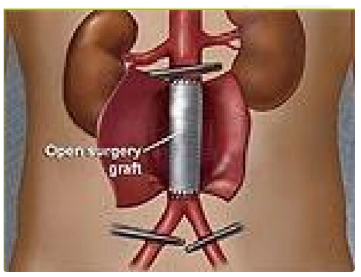
what is a bypass
vascular pathology remains
end to side anastomosis
eg occlusive diseases
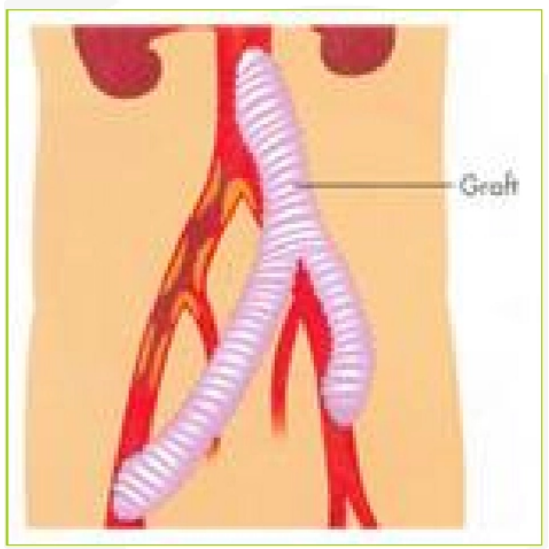
what is the difference between bypass and interposition
bypass- leaves vessel intact
interposition- prosthetics in line of blood flow
what are the types of graft materials used
prosthetic
dacron
PTFE
auto-, allo-, and xenogenic grafts
describe dacron graft material
- most frequently used prosthetic
- aorto-ilio-femoral reconstructions
- bigger vessels
- patchplasty
- can have silver coated
- knitted or woven graft
describe PTFE
- polytetrafluoroethylene
- aka goretex, teflon
- aorto-femoral-popliteal- crural reconstruction, artificial AV fistula
- better on smaller vessels
- stretch on non stretch
- can have enforced with external rings
- monolayer graft
what are the other auto,-allo-, xenogenic grafts
- great saphenous vein
- most common
- have to make multiple incisions, more time consuming, infection
- femoral vein
- septic surgery
- homograft- allograft
- septic surgery
- from donors
- don’t need immunosuppression for this
- bovine pericardium patch
- porcine pericardium patch
describe the hybrid surgeries
- “multilevel disease” that requires complicated one stage surgery
- alternative solution if percutaneous or open surgery is impossible or dangerou