L2(3.4.5d)Species and Taxonomy
 Call Kai
 Learn
Learn Practice Test
 Spaced Repetition
 Match
Match Flashcards
 Knowt Play
1/10

There's no tags or description
Looks like no tags are added yet.
Name | Mastery | Learn | Test | Matching | Spaced | Call with Kai |
|---|
No analytics yet
Send a link to your students to track their progress
11 Terms
What is a species?
Info:These include physiology (the way they look) and behaviour.
Types of classification
Artificial classification:
What is artificial classification?
• This way of classifying organisms is based on organisms having features which have the same function, not the same evolutionary origin. E.g. butterfly and bird wings
Phylogenetic classification:
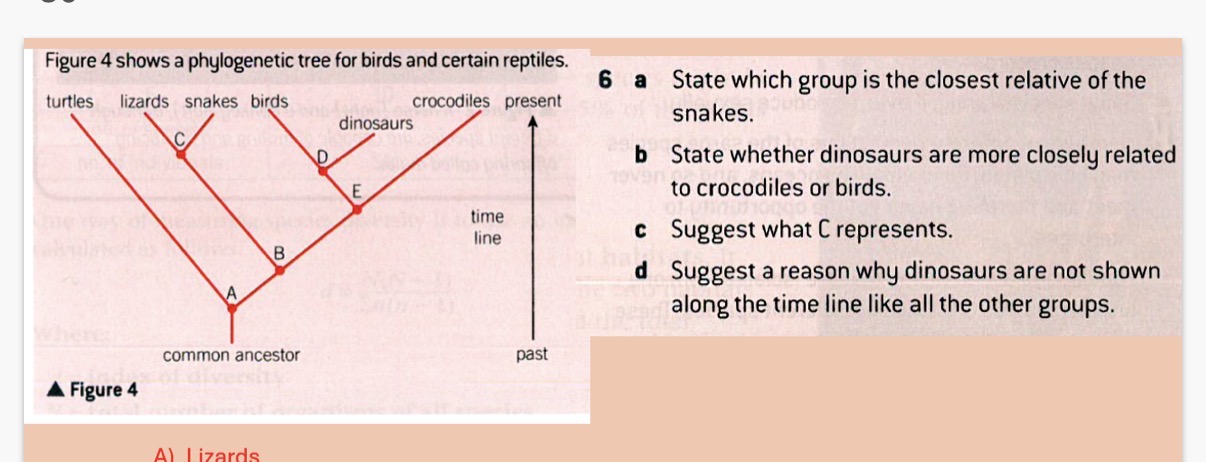
-Keyword: PHYLOGENY: is the study of the evolutionary history of a group of organisms.
Info: All organisms have evolved from shared common ancestors.
-Keyword: Phylogenetics: tells us who is related to whom and how closely related they are
What is phylogenetic classification?
Info:•Classifies species using shared features of organisms which they have inherited from their ancestors.
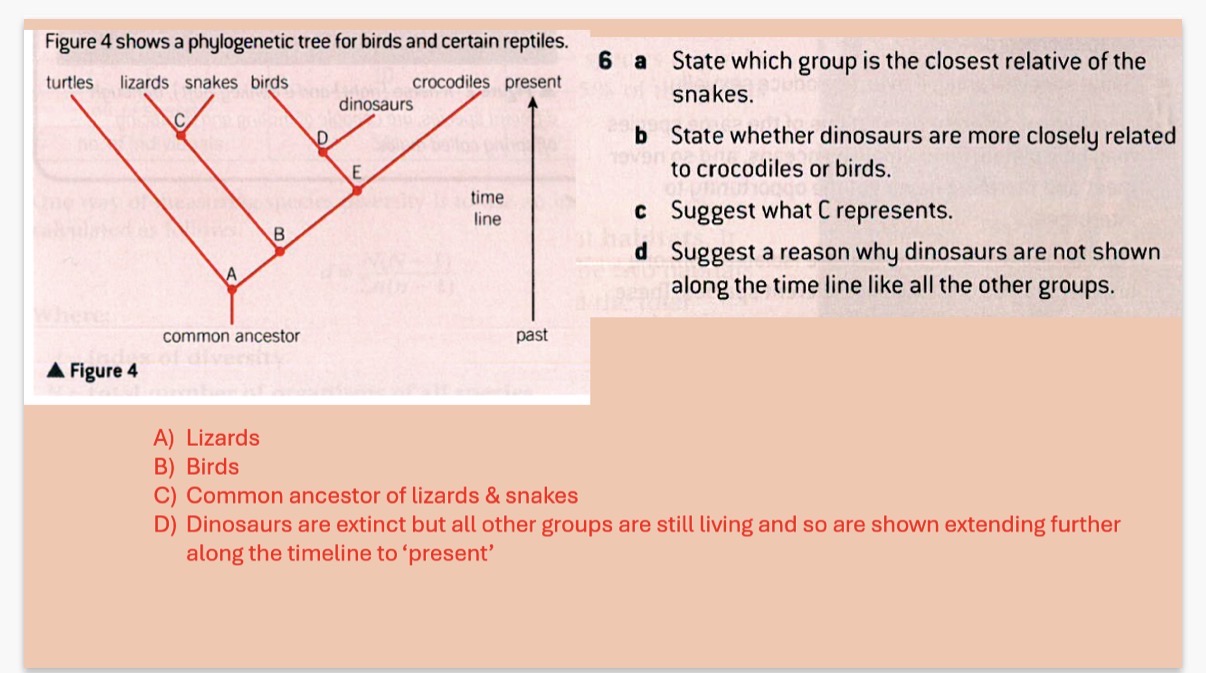
•This Arranges the groups into a HIERARCHY- GROUPS CONTAINED WITHIN LARGER GROUPS WITH NO OVERLAP.
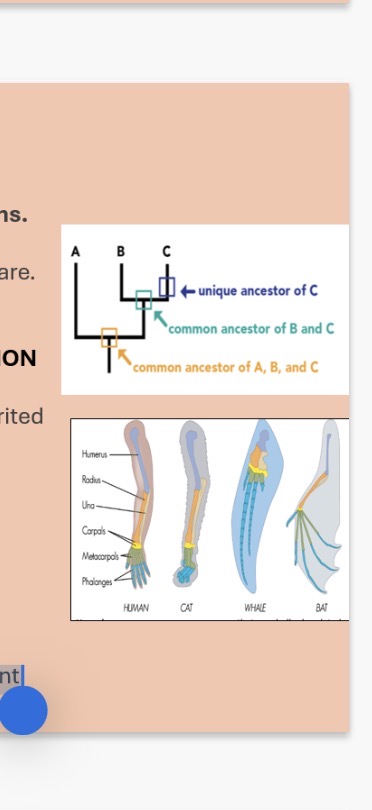
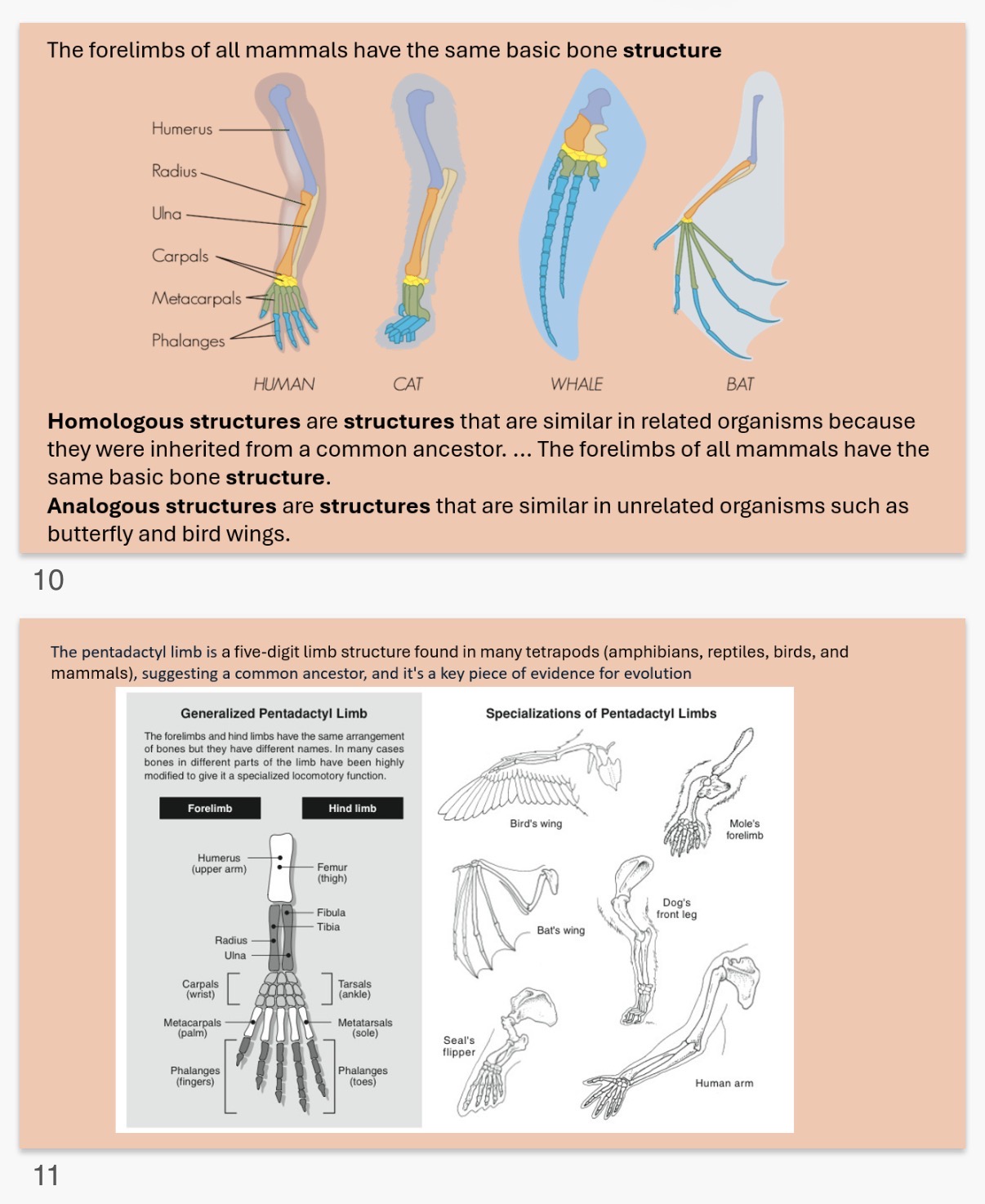
•BASED ON HOMOLOGOUS CHARACTERISTICS(traits shared by different species that are inherited from a common ancestor)
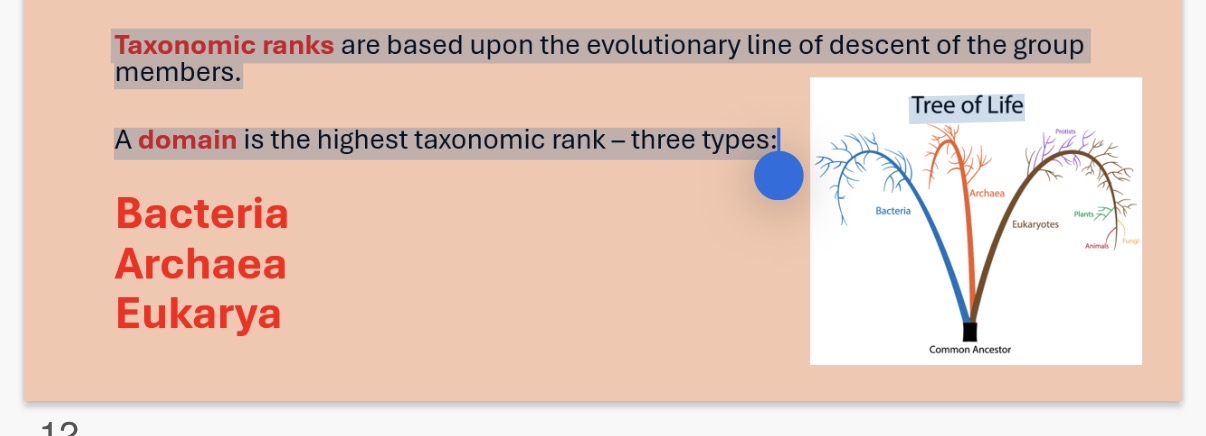
which have similar …4? origins regardless of their functions. •Eg a humans arm, bird wing and front horse leg - all have same basic structure and therefore evolutionary origin even though they have different functions
•The forelimbs of all …8? have the same basic …5? structure
•Homologous structures are structures that are similar in related organisms because they were inherited from a ..6? ancestor. The …7? of all mammals have the same basic bone structure.
What are analogous structures?
A group of organisms with similar characteristics that can reproduce to provide fertile offspring
Grouping organisms by physical (analogous) characteristics, such as size or number of legs.
•GROUPINGS BASED UPON THE EVOLUTIONARY RELATIONSHIPS/COMMON ANCESTRY.
Evolutionary. 5.bone
common
Forelimbs
Mammals
Analogous structures are structures that are similar in unrelated organisms such as butterfly and bird wings.
Taxonomy
What is taxonomy?
(•Naming organisms
• Organising them into groups based on their similarities )
What is a taxon?
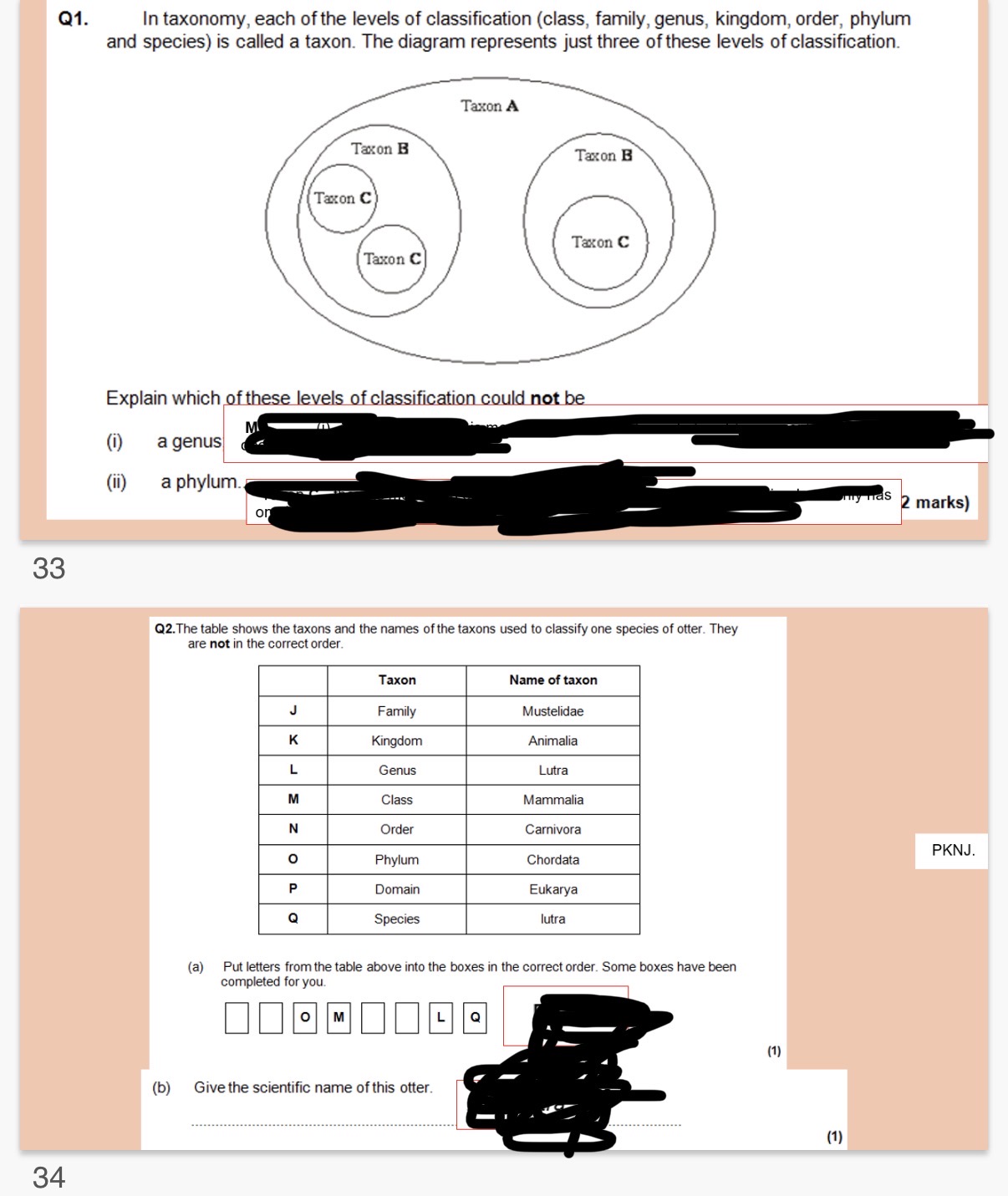
Taxonomic ranks?
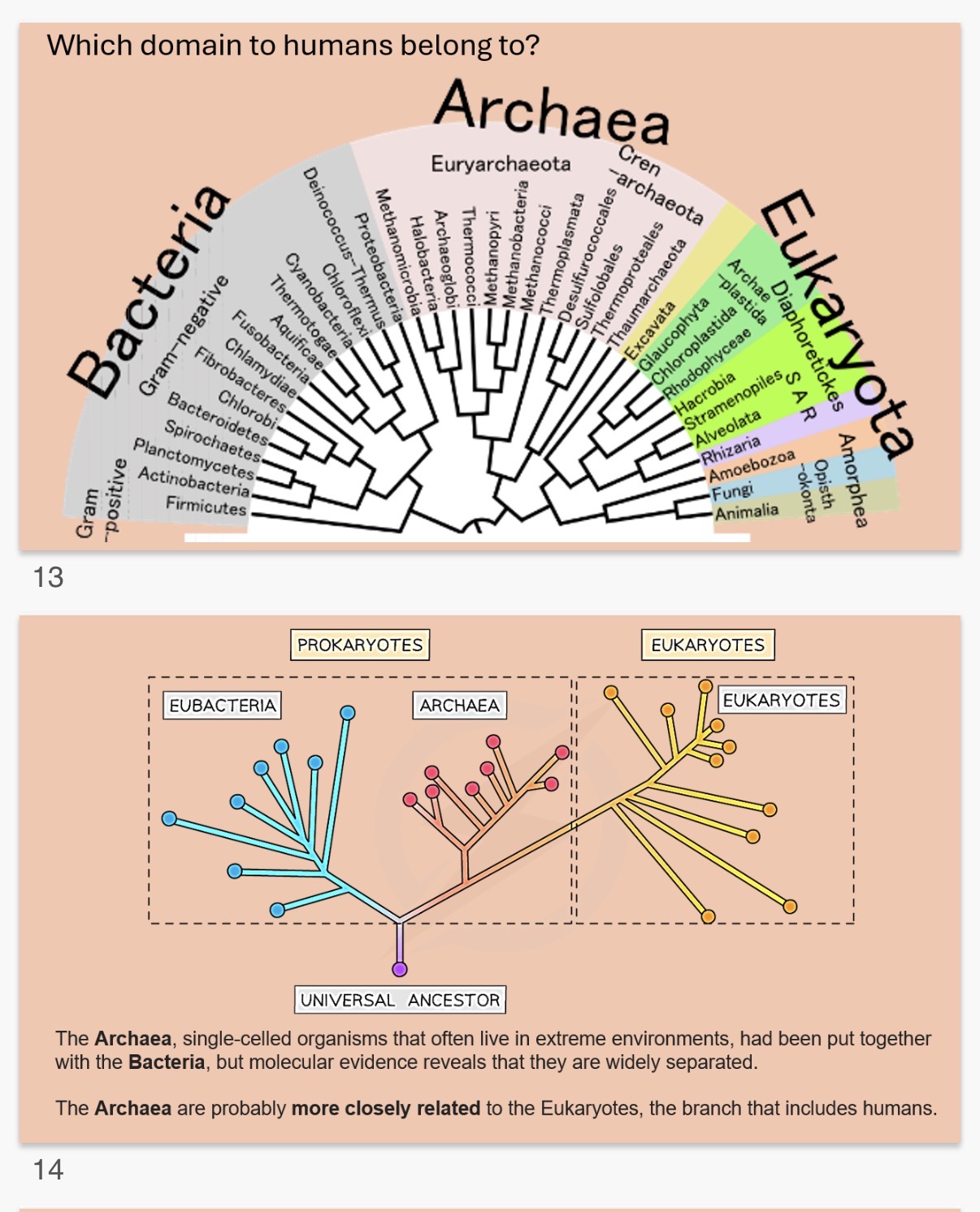
A …4? Is the highest taxonomic rank
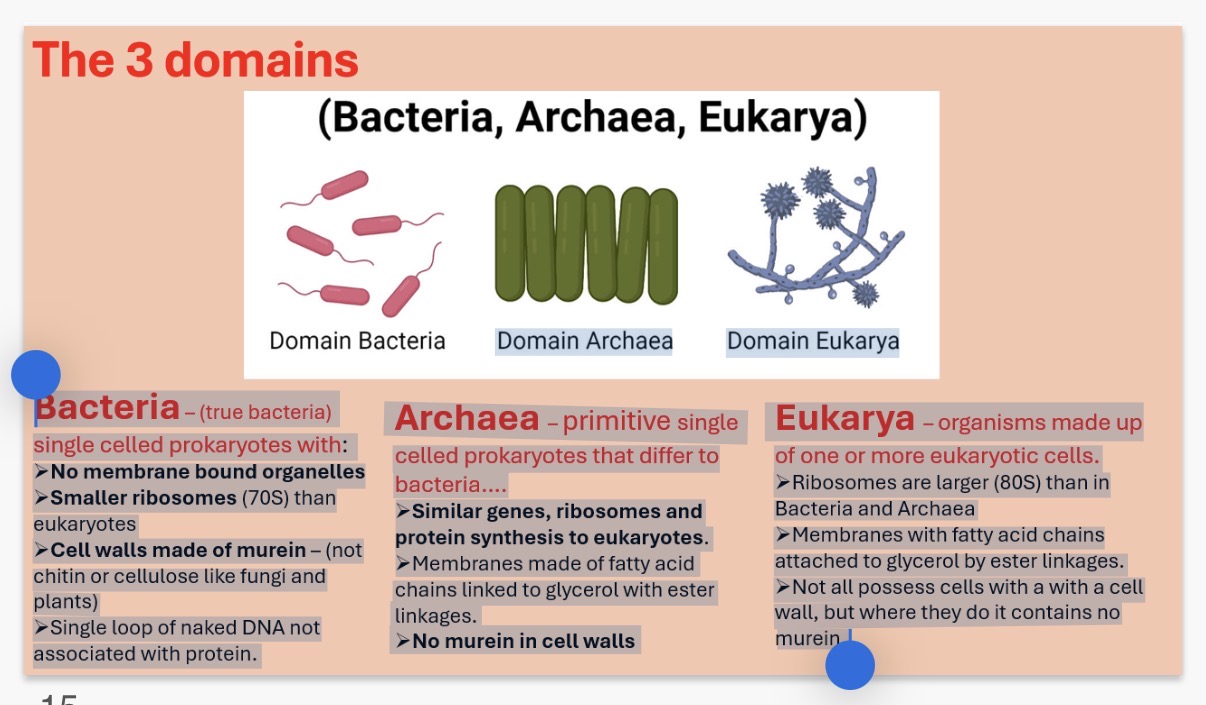
The 3 types of domains are?
The science of classification
A group within a phylogenetic classification
Ranks based upon the evolutionary line of descent of the group members.
Domain
Bacteria,Archae,Eukarya
(image contains info)
The 3 domains
Bacteria - (true bacteria) …1? celled prokaryotes with:
• No membrane bound …2?
> …3? ribosomes (70S) than eukaryotes
› Cell walls made of …4? - (not chitin or cellulose like fungi and plants)
› Single loop of naked DNA not associated with protein.
Archaea - primitive …5? celled prokaryotes that differ to bacteria....
› Similar genes, ribosomes and protein synthesis to ..6?karyotes.
› Membranes made of fatty acid chains linked to …7? with ester linkages.
• No murein in cell walls
Eukarya - organisms made up of one or more ..8?karyotic cells.
› Ribosomes are …9? (80S) than in Bacteria and Archaea
• Membranes with fatty acid chains attached to …10? by ester linkages.
› Not all possess cells with a cell wall, but where they do it contains no murein.
Organisms are classified into three Domains and into one of six Kingdoms of life. These Kingdoms are ….11?.
Single. 2.organelles. 3.smaller. 4. Murein 5. Single. 6.eukaryotes 7.glycerol
eukaryotic. 9.larger. 10.glycerol
1)Archaebacteria,
2)Eubacteria,
3)Protista,
4) Fungi,
5) Plantae,
6) Animalia
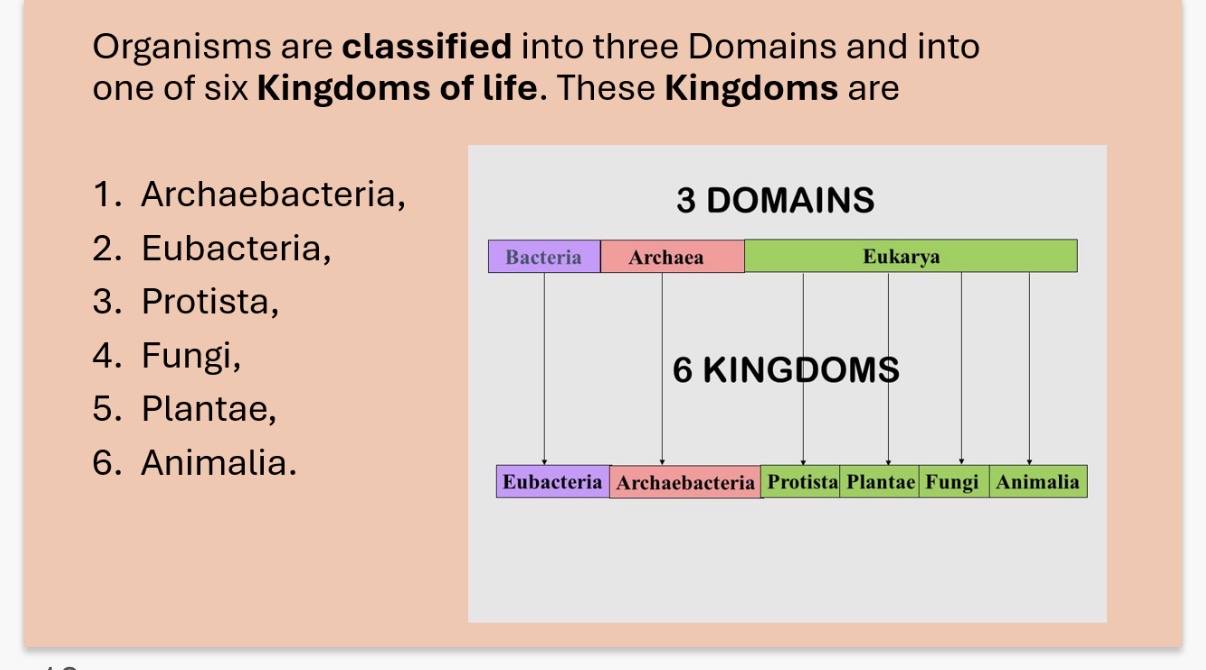
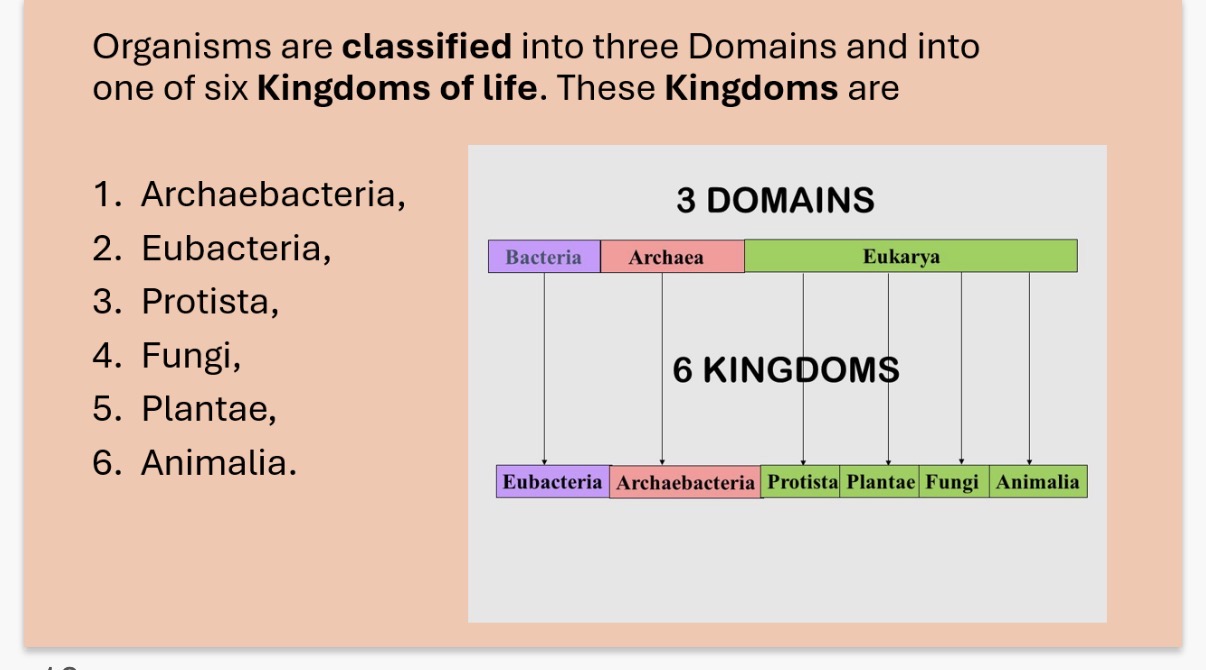
Eukarya domain divided into - 4 kingdoms: all have a nucleus
Protoctista: Eukaryotic; may be unicellular, …1? or multicellular; classified here it cannot be placed in any of the other Kingdoms.
Fungi: Eukaryotic; have …2? cell wall; made of tubular …3?, forming a thread-like …4?; never have cilia or flagellae; …5?trophic nutrition; reproduce by …6?, produced by mitosis.
Plantae : Eukaryotic; have …7? cell wall; photosynthetic; have a complex life-cycle, with 2 stages - a …8?loid sexual stage (gametophyte) and a diploid …9?-forming stage (sporophyte).
Animalia: Eukaryotic; no …10? wall; …11?trophic nutrition; zygote forms a …12? (hollow ball of cells); have nervous systems
Colonial. 2.chitin. 3.hyphae. 4.mycelium. 5.heterotrophic
spores. 7.cellulose. 8.haploid
9.spore. 10.cell. 11.heterotrophic. 12.blastula
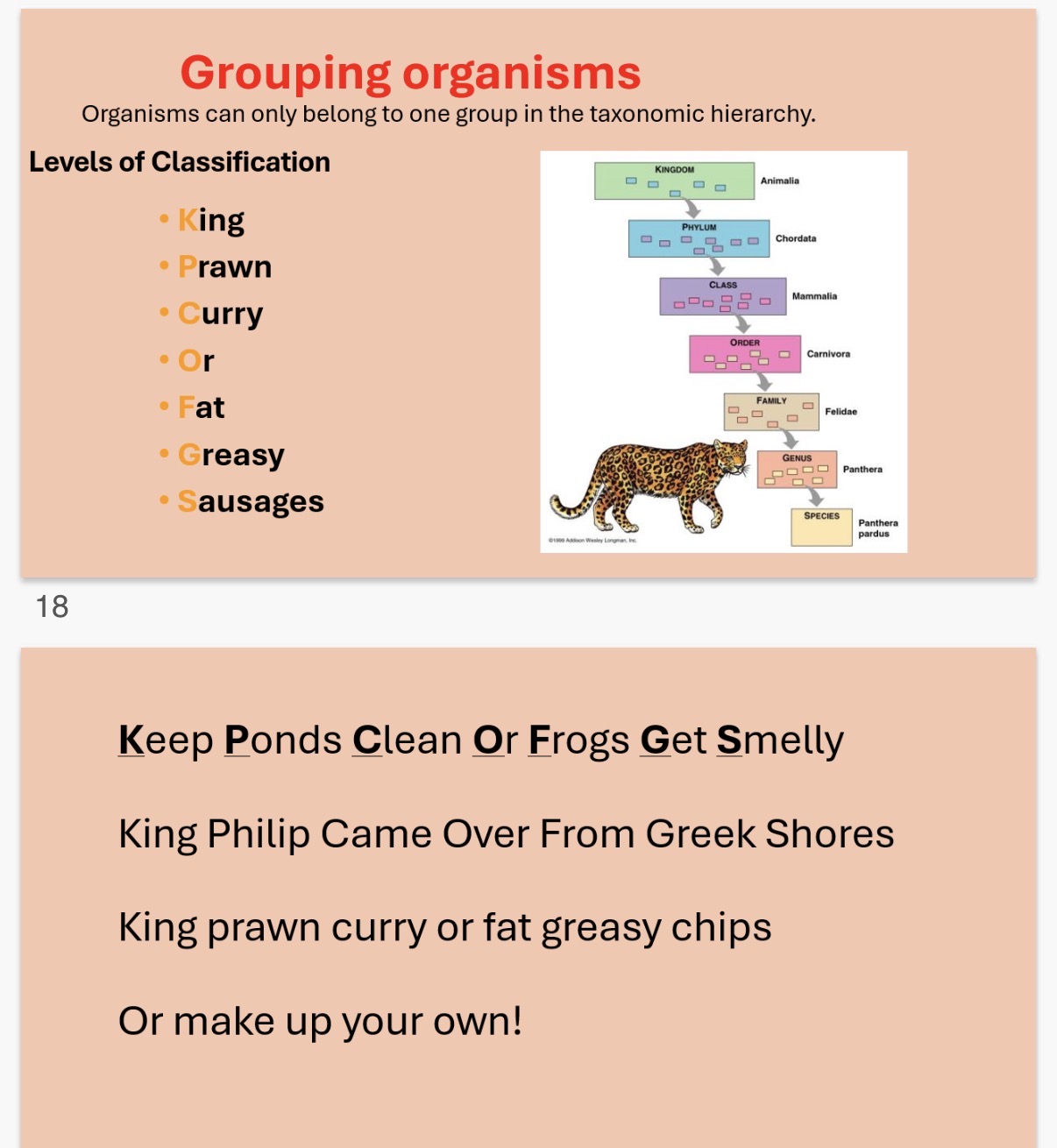
Name all the ranks of the binomial system of nomenclature?
-Kingdoms are then divided into......
Phylum: Within each kingdom the largest groups are known as phyla. Organisms in each phylum have a body plan radically …2? from organisms in any other phylum.
Class: Diversity within each phylum allows it to be divided into classes. Orders: each class is subdivided into orders of organisms that have additional features in …3?.
Families: Each order is divided into families where the differences are …4? obvious to see.
Genera: Further division (singular 'genus')
Species: Organisms that can breed to produce fertile offspring.
(Image in the other side has the binomial nomenclature rules)
Difficulties with taxonomy
• Species …5? over time.
• Considerable …6? can exist within a species e.g. Dogs - artificial selection has lead to a variety of different breeds.
• You can't always see …7? behaviour :
*Species have become extinct and there may be no fossil record.
*They reproduce asexually e.g. bacteria
*Practical and ethical issues
*Different groups may be geographically isolated
*Can't study them in the lab
Kingdom,phylum,class,order,family, Genus,species
Different. 3.common. 4.less
Evolve. 6. Variation. 7.reproductive
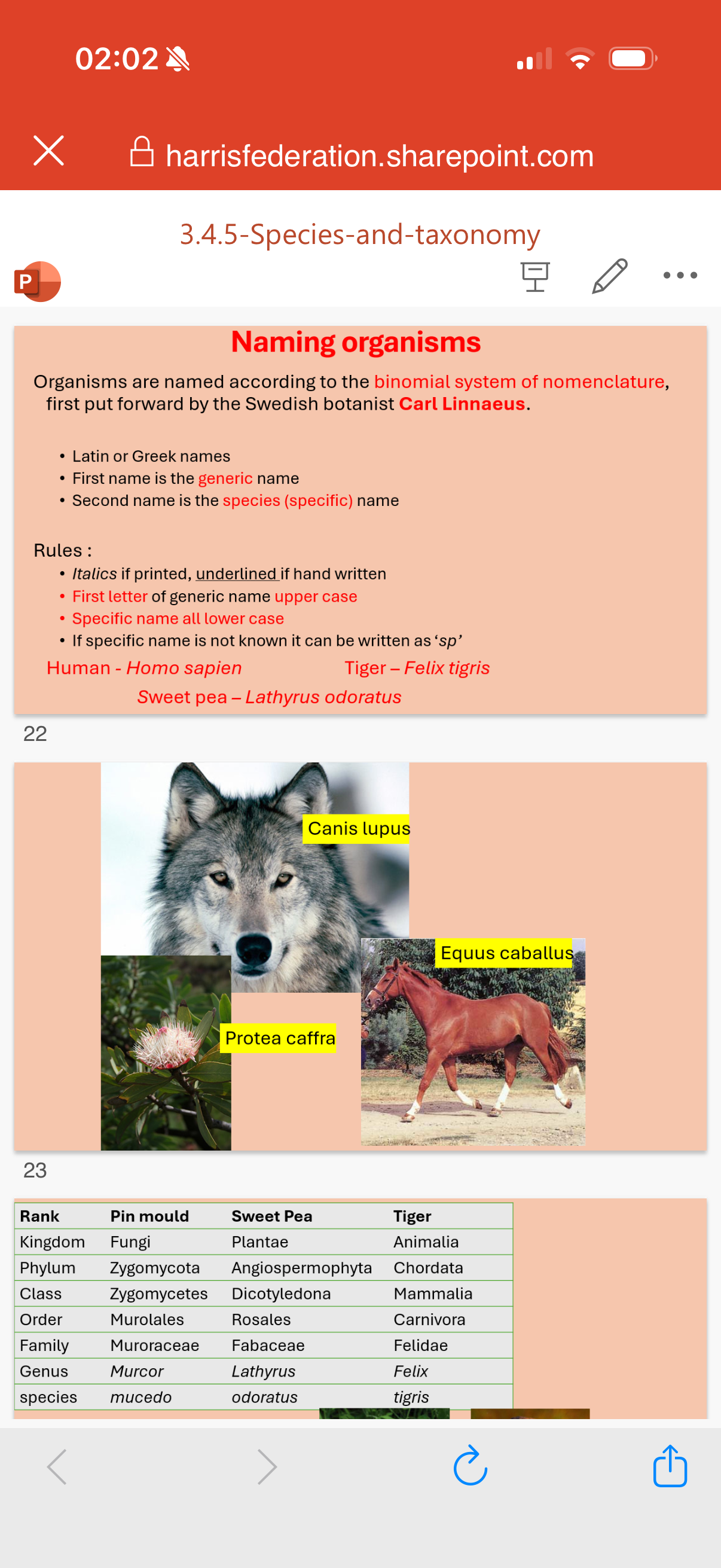
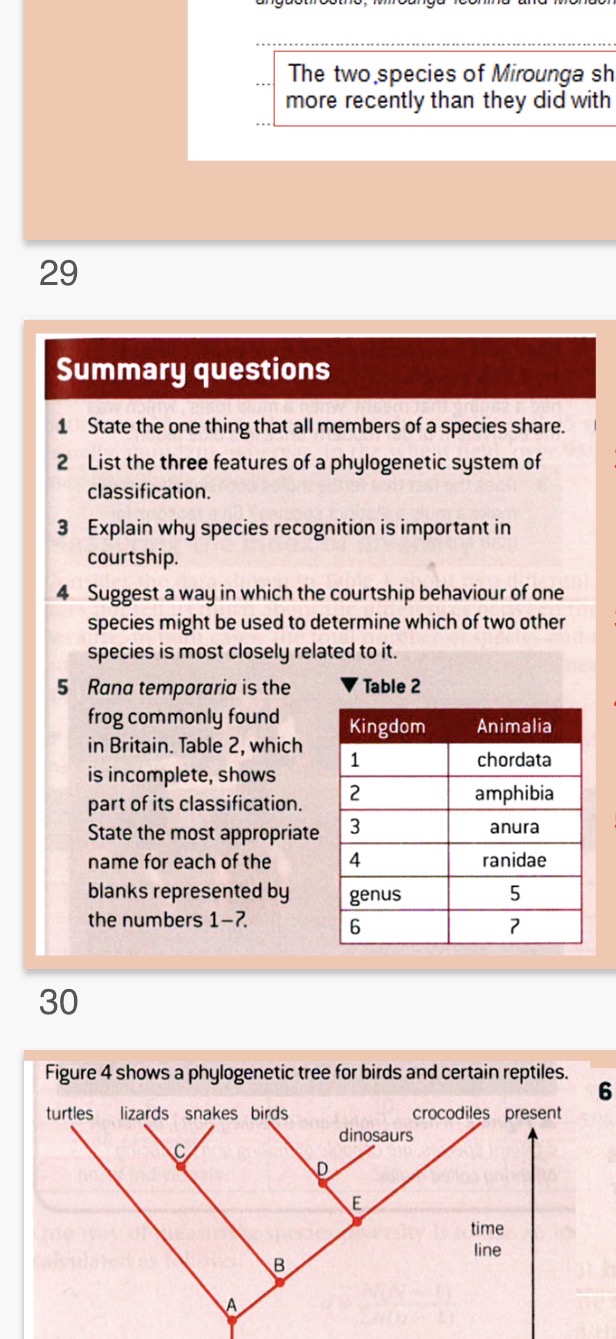
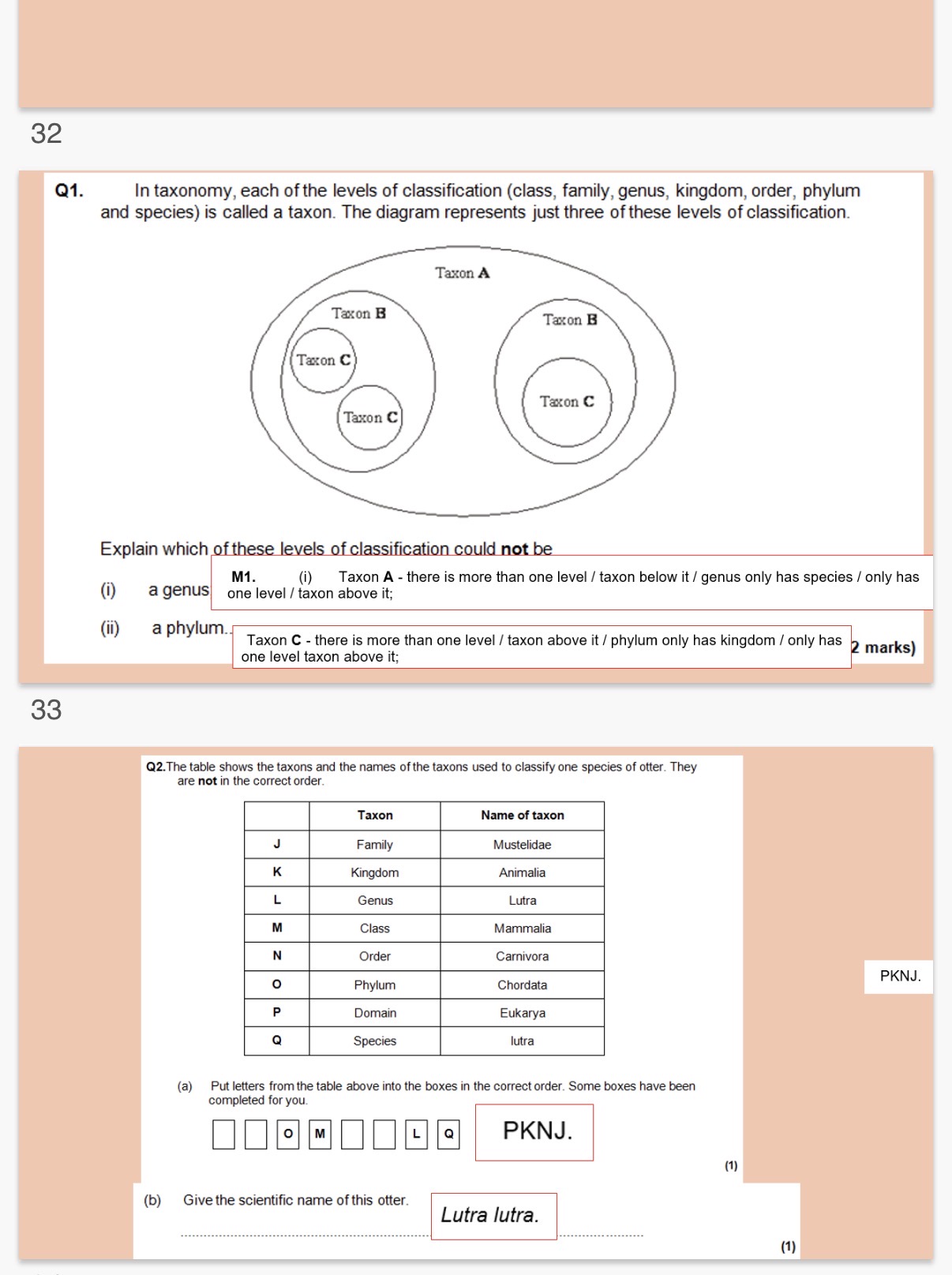
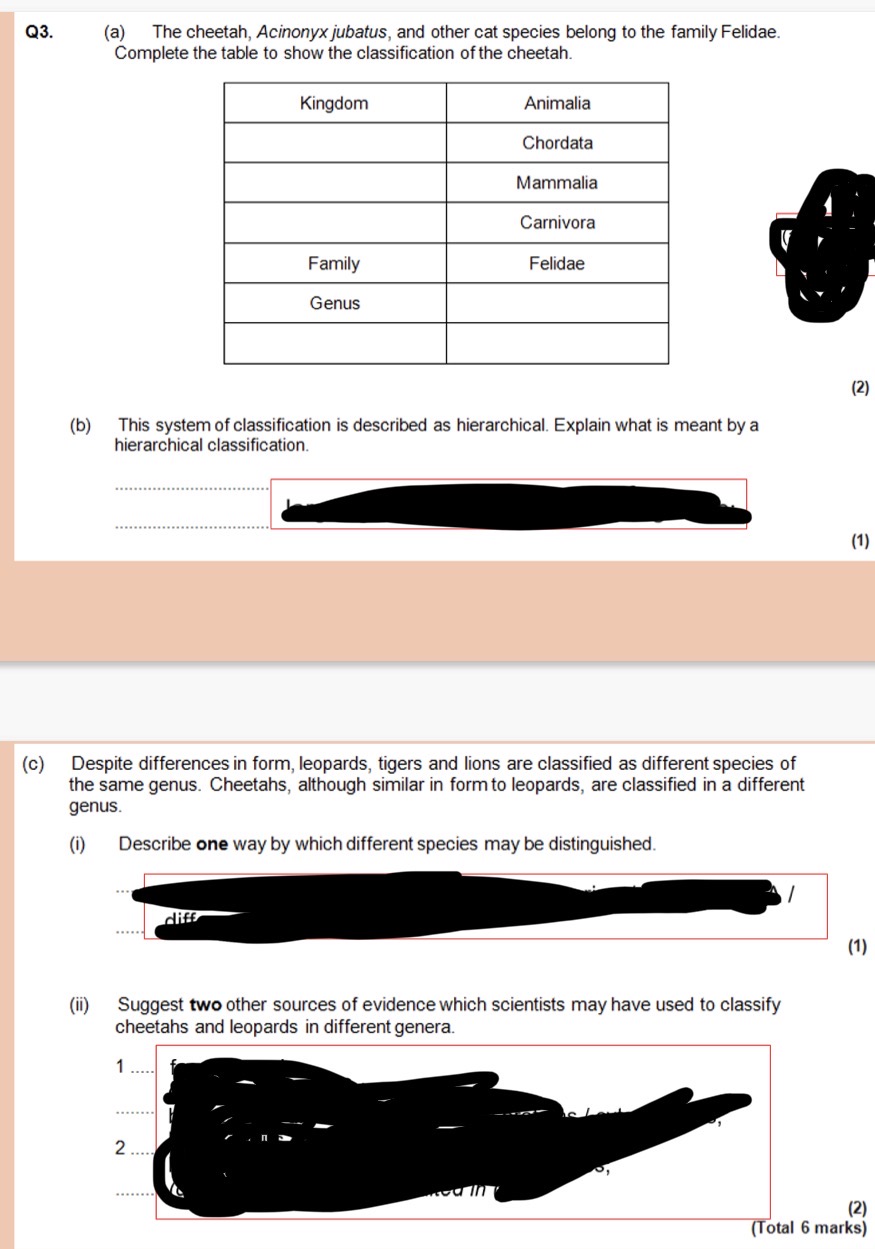
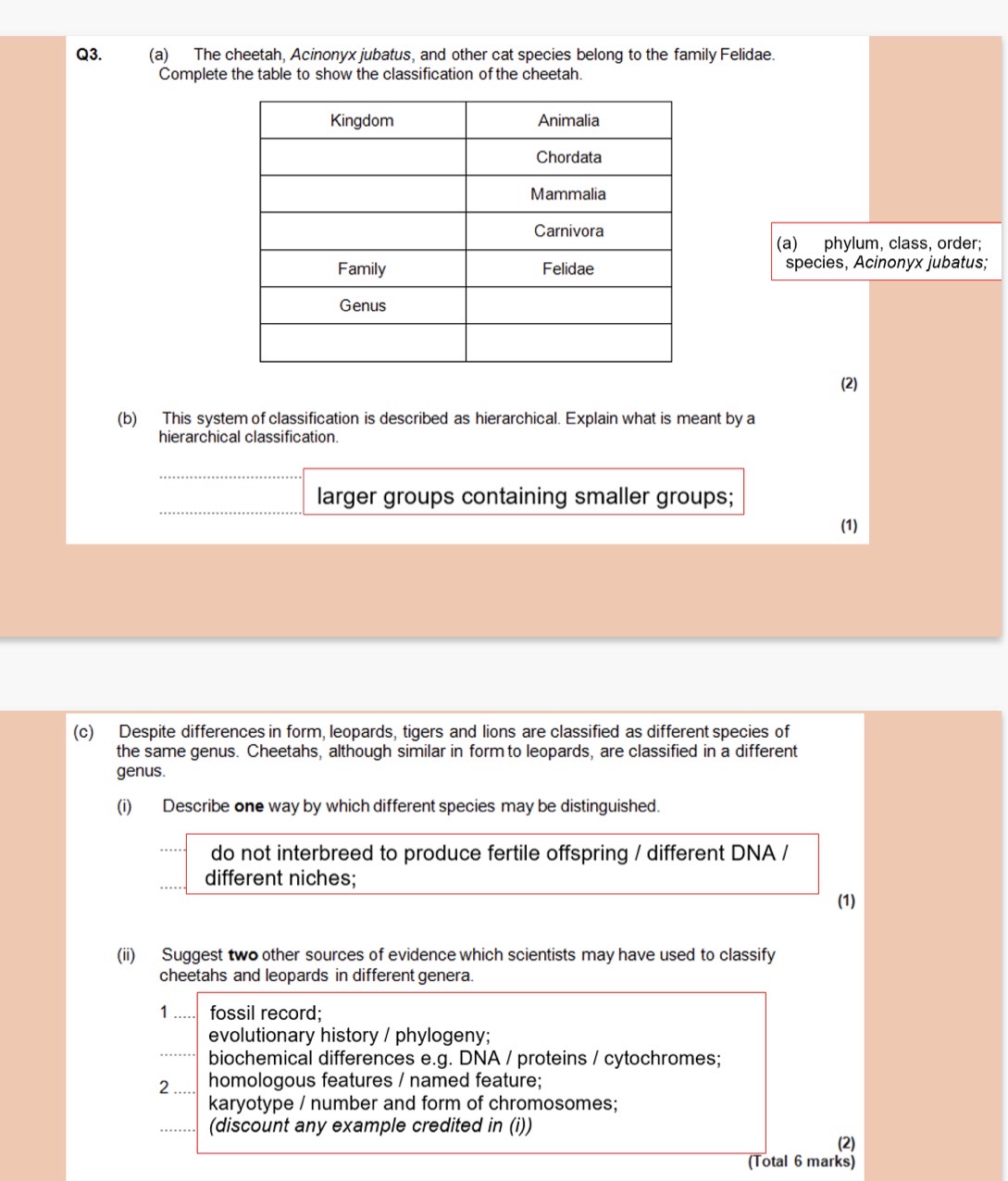
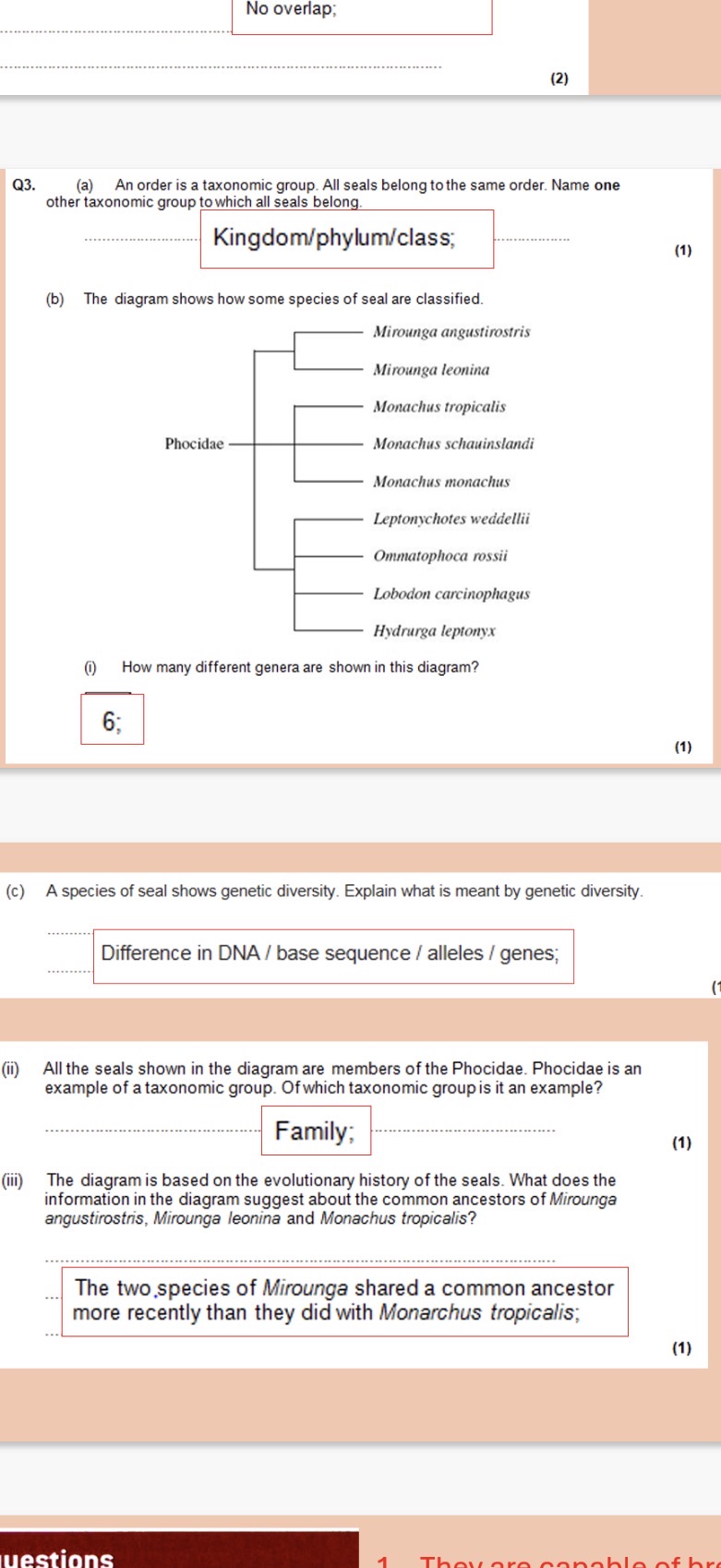
Answer image q?
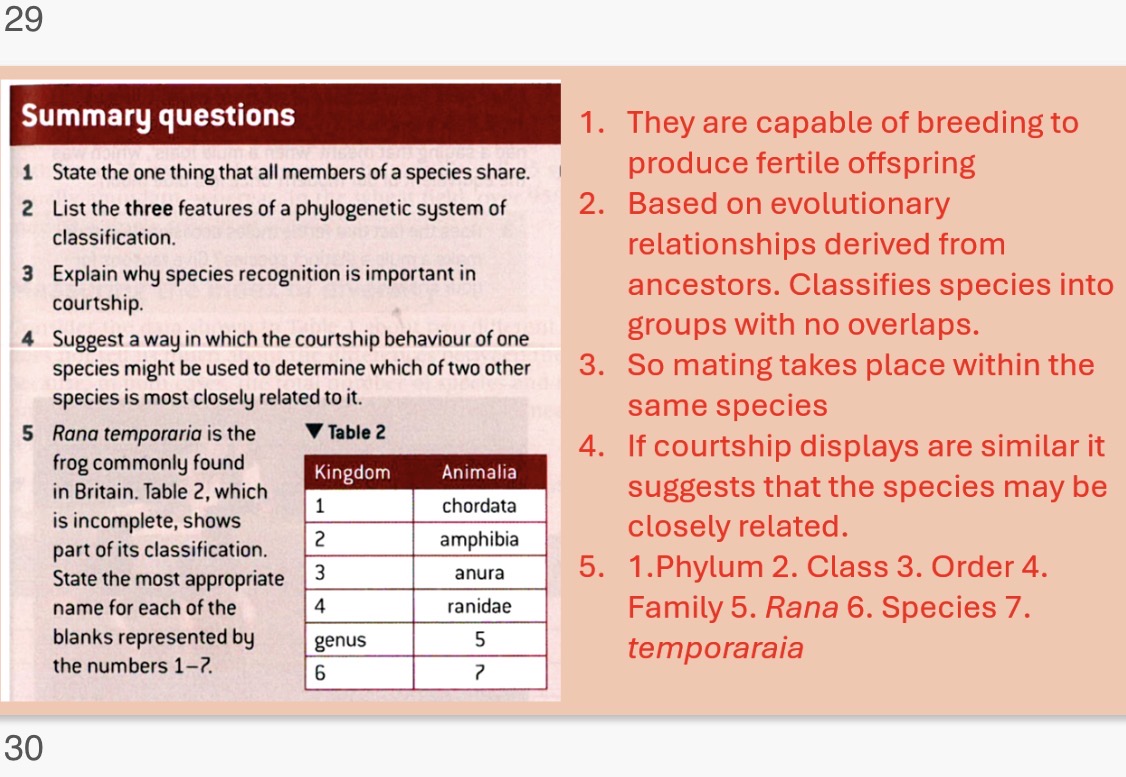
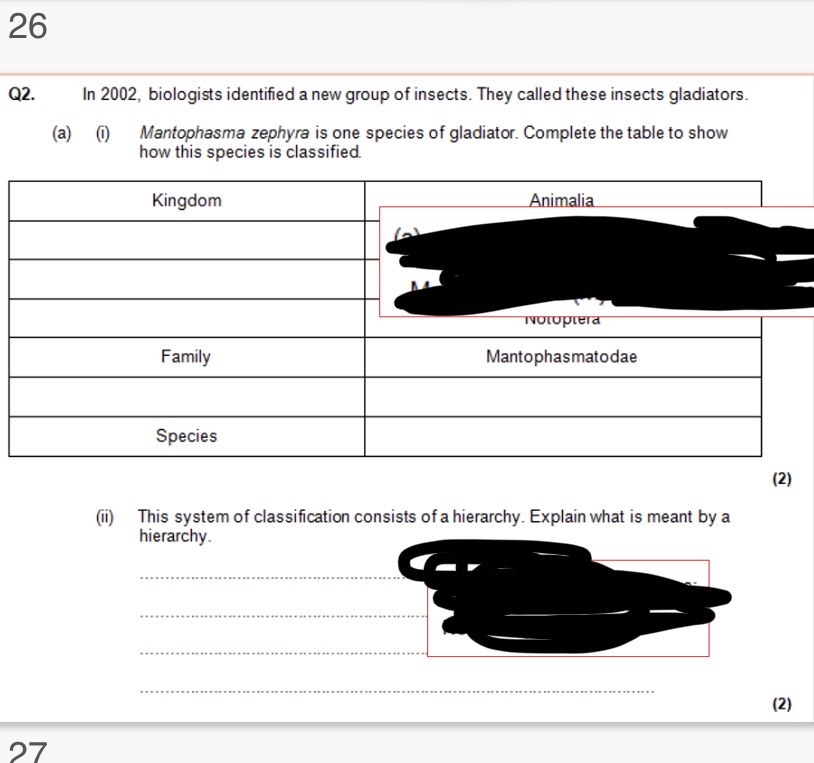
Answer image q?
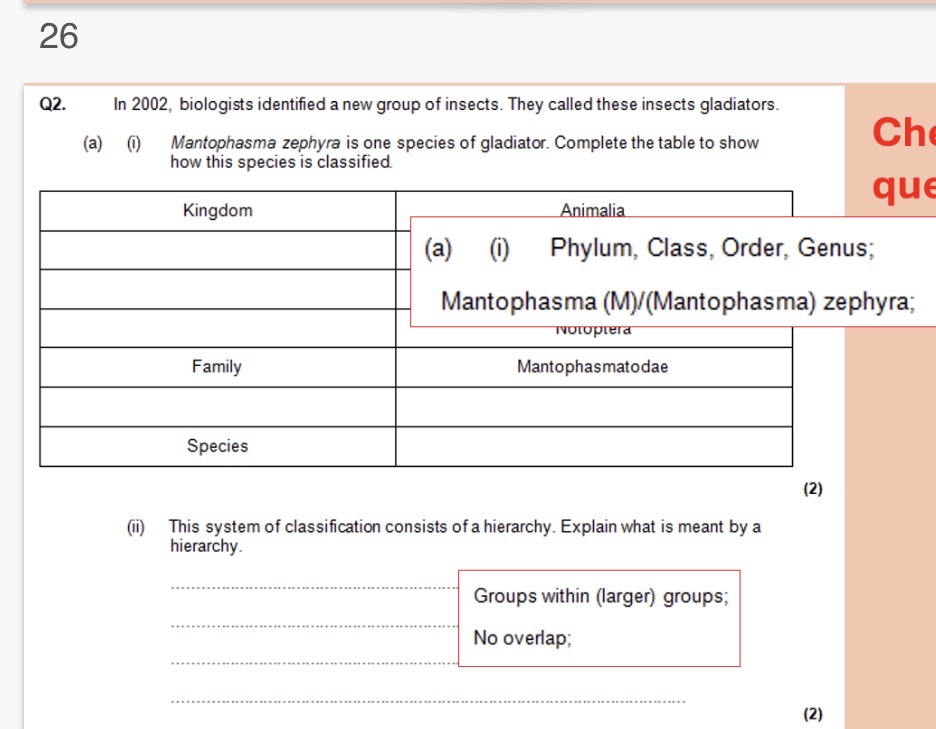

Answer image q?
Explanation for the first question:
All seals belong to the same order." (Specifically, the order Carnivora).
Because an Order is a higher, broader level than Family, Genus, or Species, it "contains" everything below it. However, the reverse isn't true
Answer image q?
Answer image q?