GI Physiology - Salivary Glands (Dr. Olgun)
 Call Kai
 Learn
Learn Practice Test
 Spaced Repetition
 Match
Match Flashcards
 Knowt Play
1/92

There's no tags or description
Looks like no tags are added yet.
Name | Mastery | Learn | Test | Matching | Spaced | Call with Kai |
|---|
No analytics yet
Send a link to your students to track their progress
93 Terms
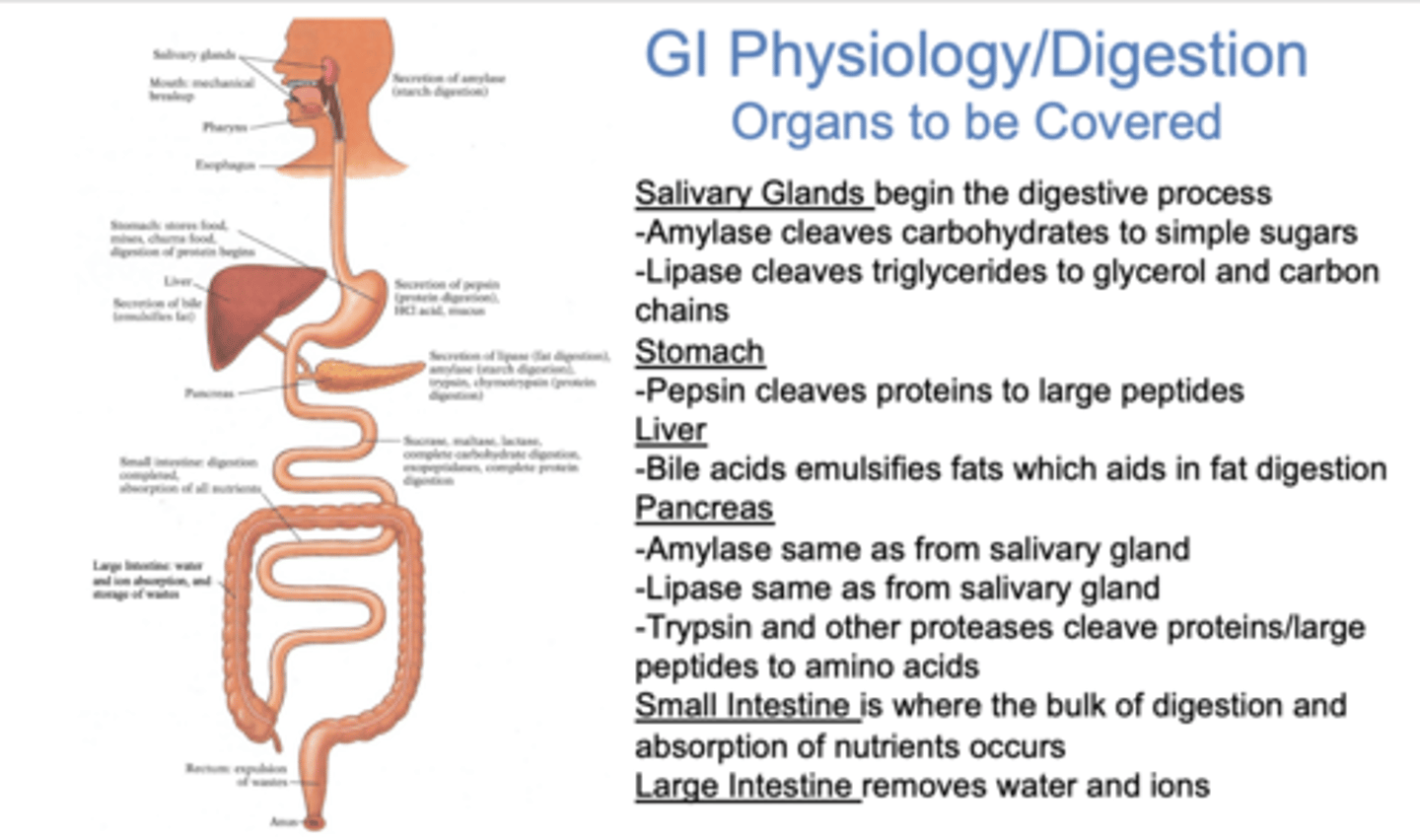
what organs begin the digestive process?
salivary glands
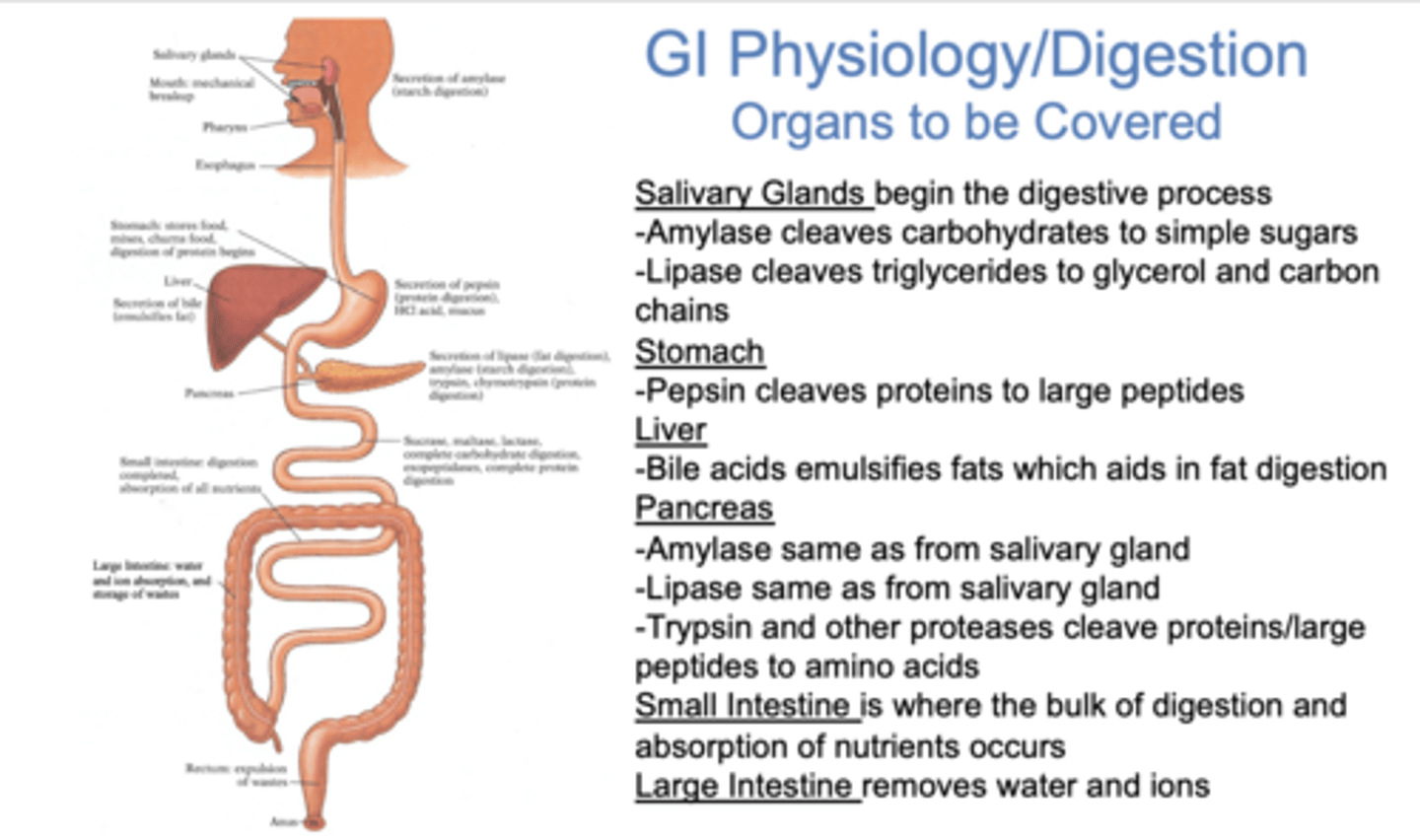
what digestive enzymes are found secreted from salivary glands, cleaves carbohydrates and triglycerides?
- Amylase
- Lipase
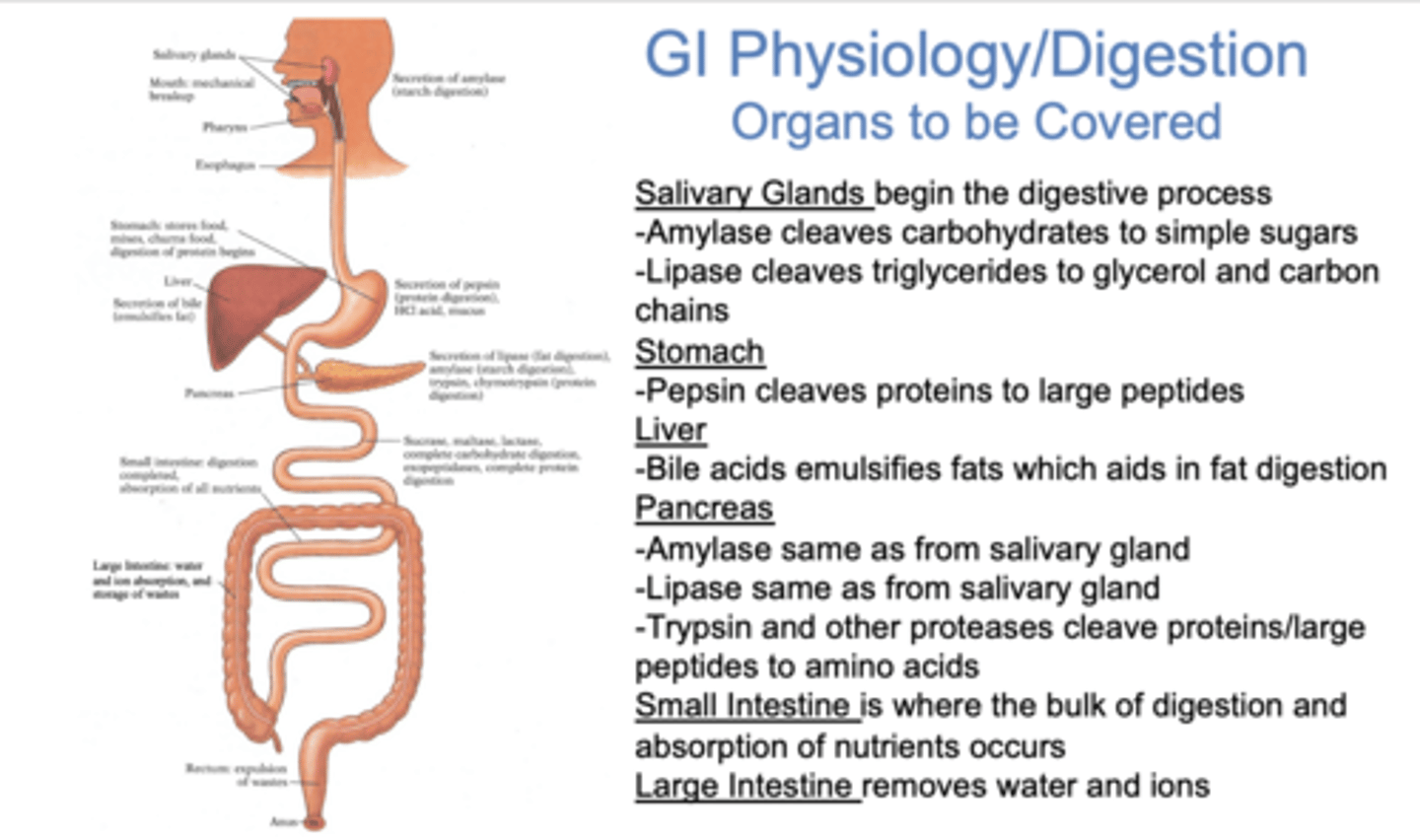
what digestive enzymes are found secreted from the stomach, cleaves proteins to large peptides?
pepsin
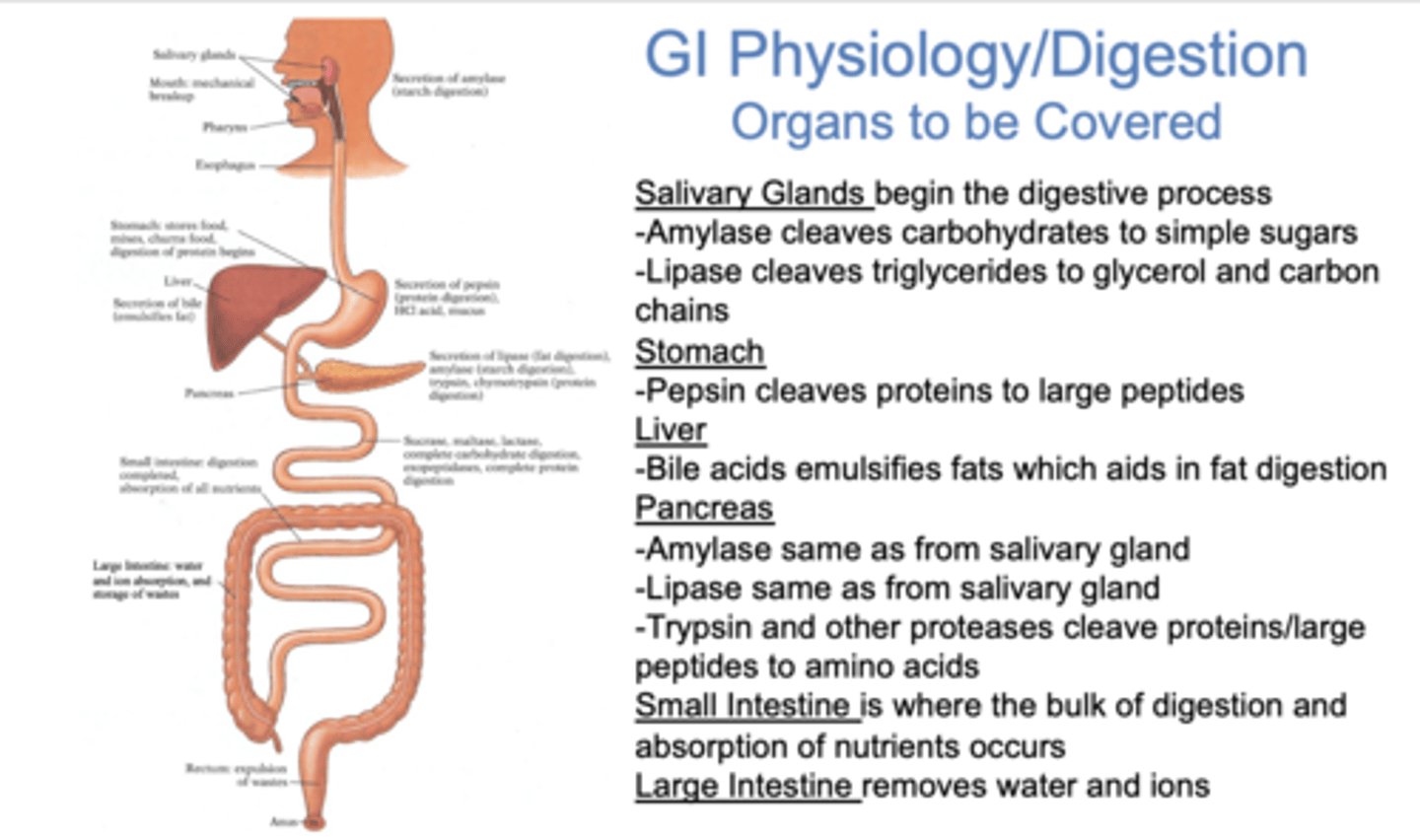
what digestive enzymes are found secreted from the liver which act to emulsify fats and aid in fat digestion?
bile acids
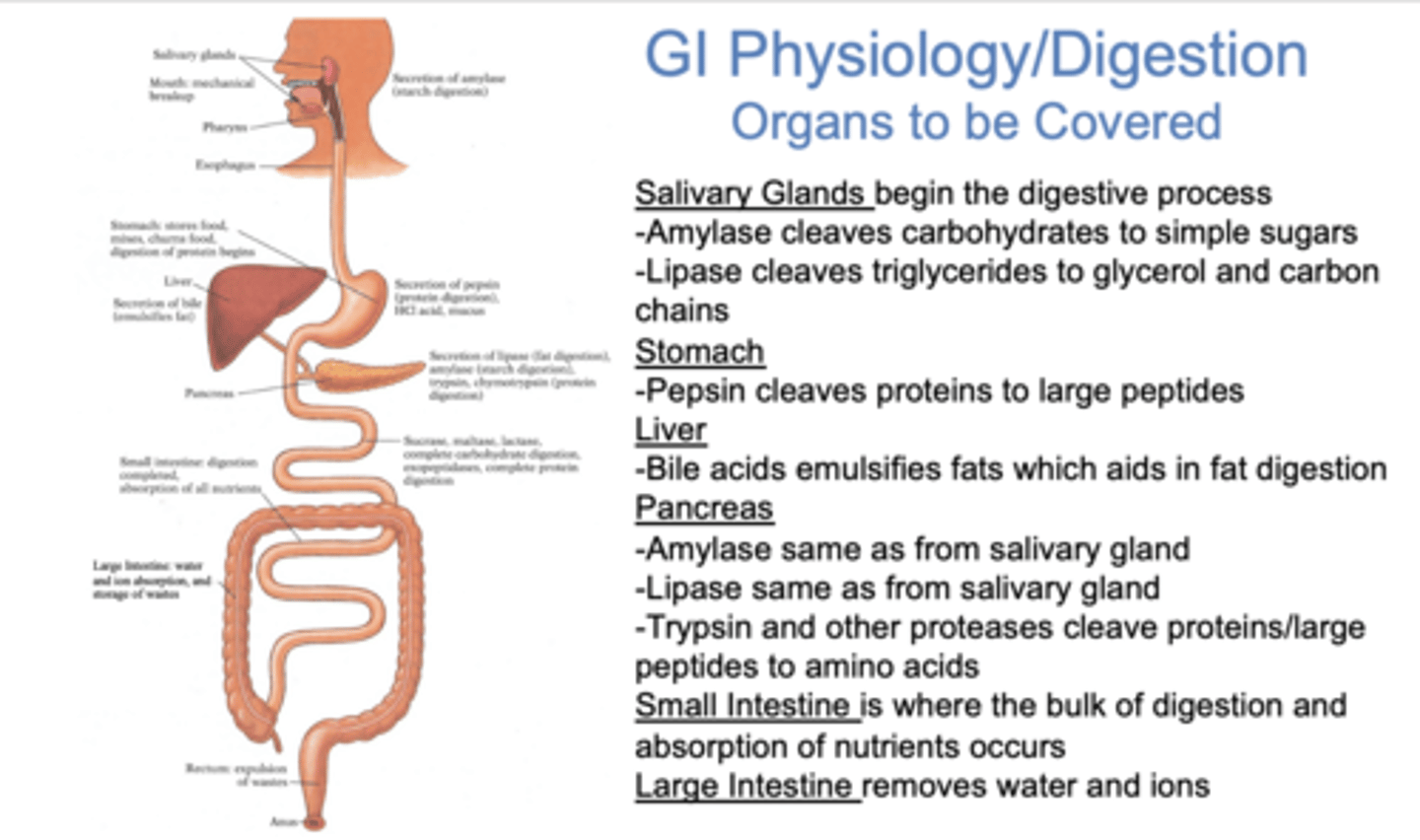
what digestive enzymes are found secreted from the pancreas?
- amylase
- lipase
- trypsin
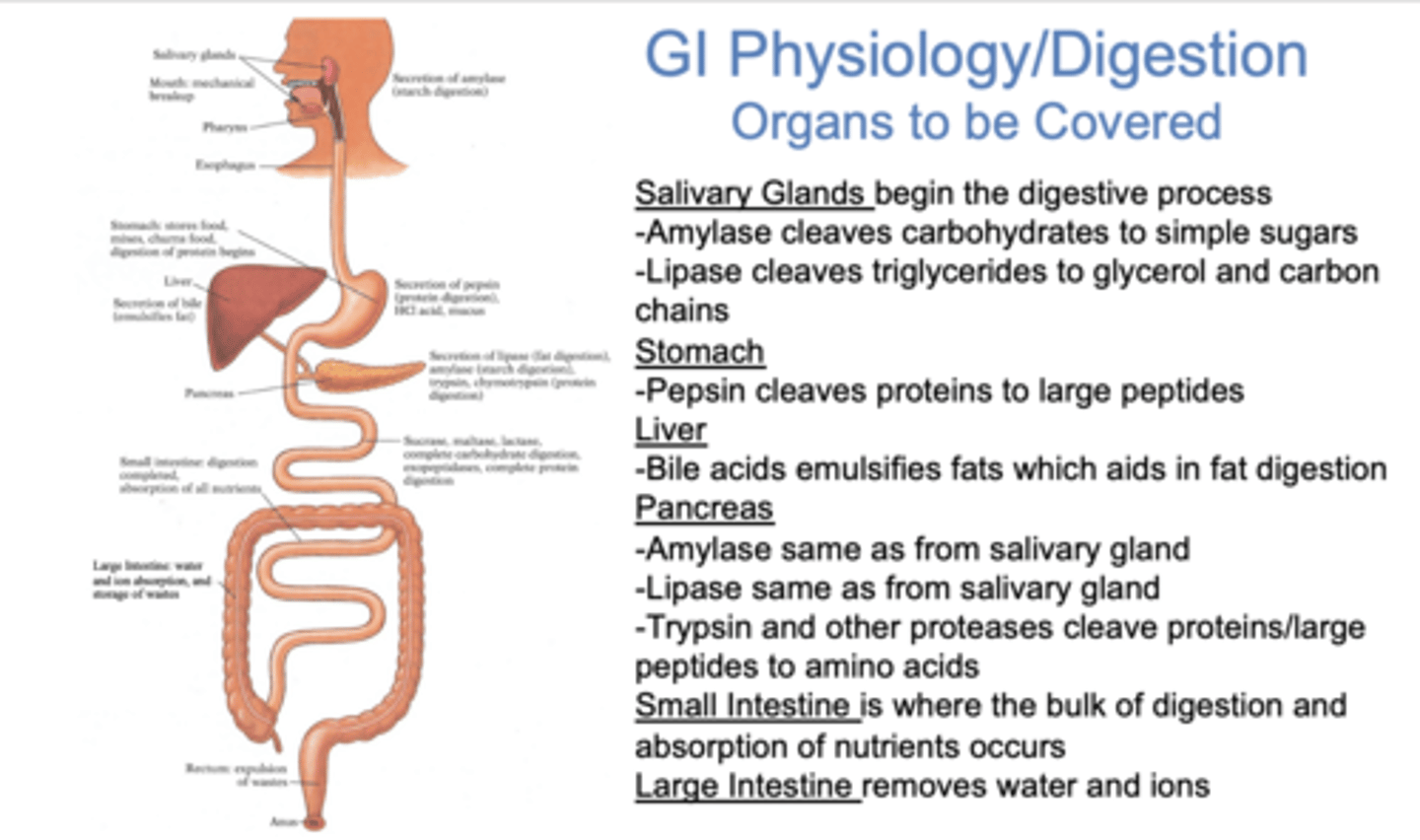
enzyme that cleaves carbohydrates to simple sugars:
amylase
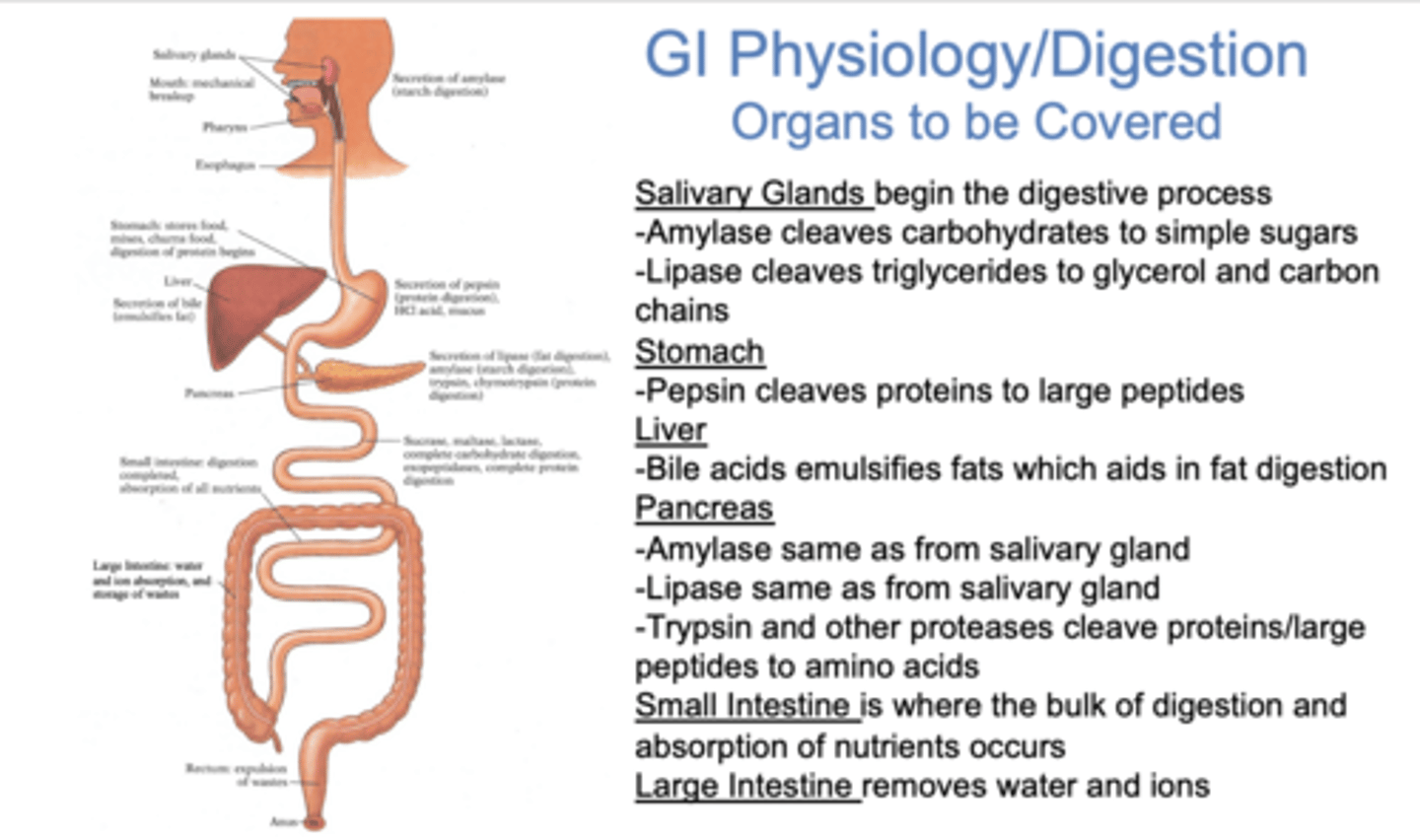
enzyme that cleaves triglycerides to glycerol and carbon chains:
lipase
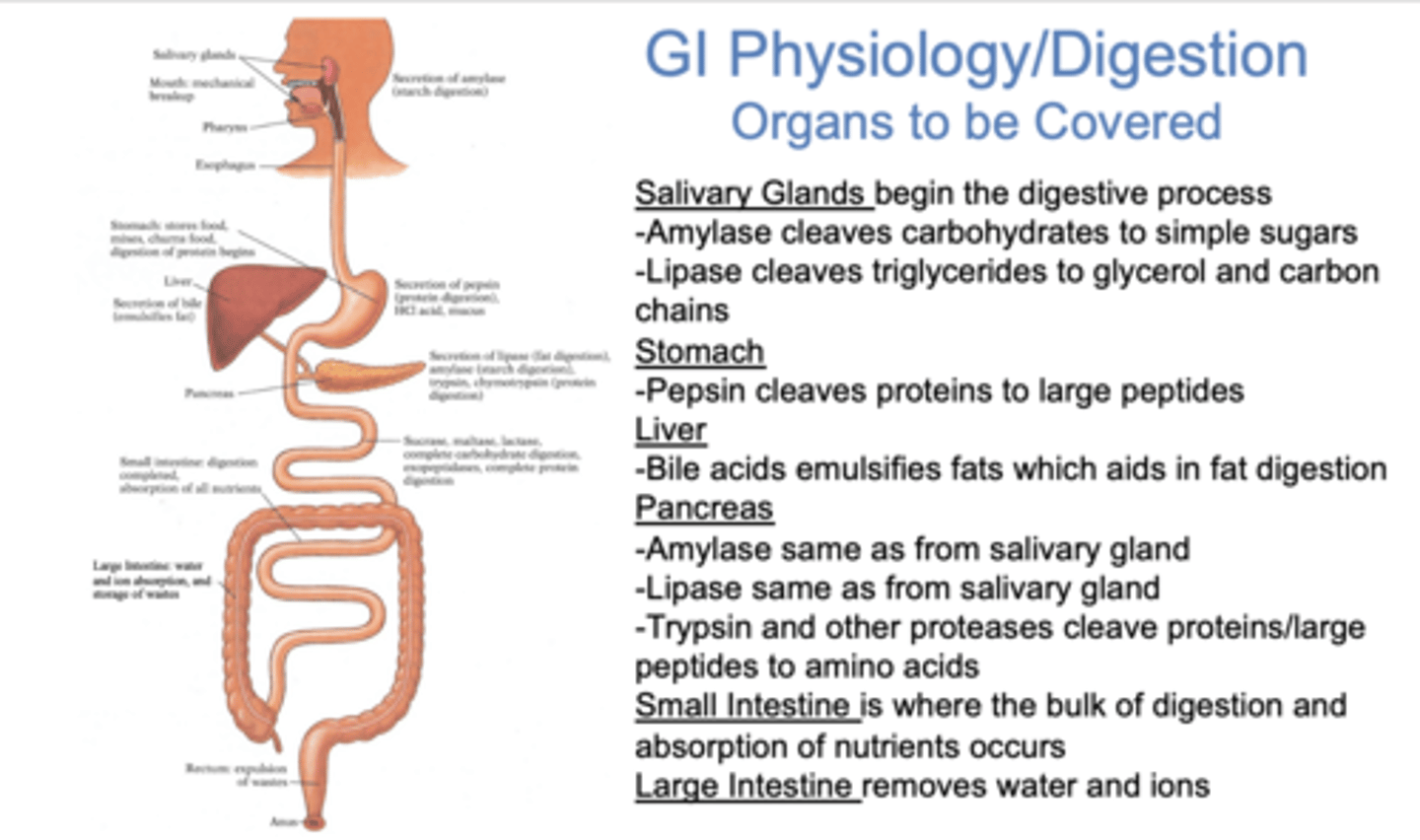
enzyme that cleaves proteins to large peptides:
pepsin
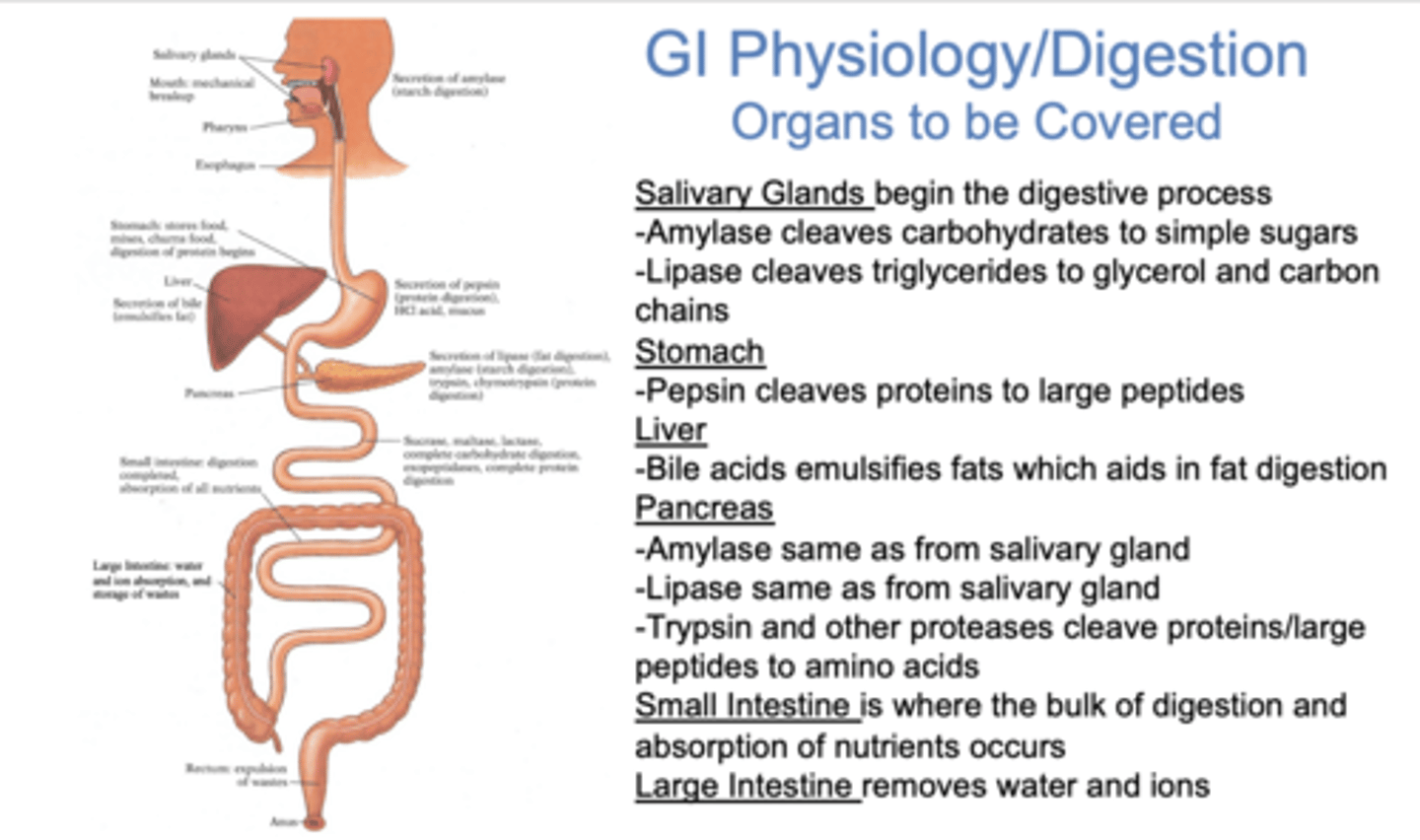
enzyme that cleave proteins/large peptides to amino acids:
trypsin
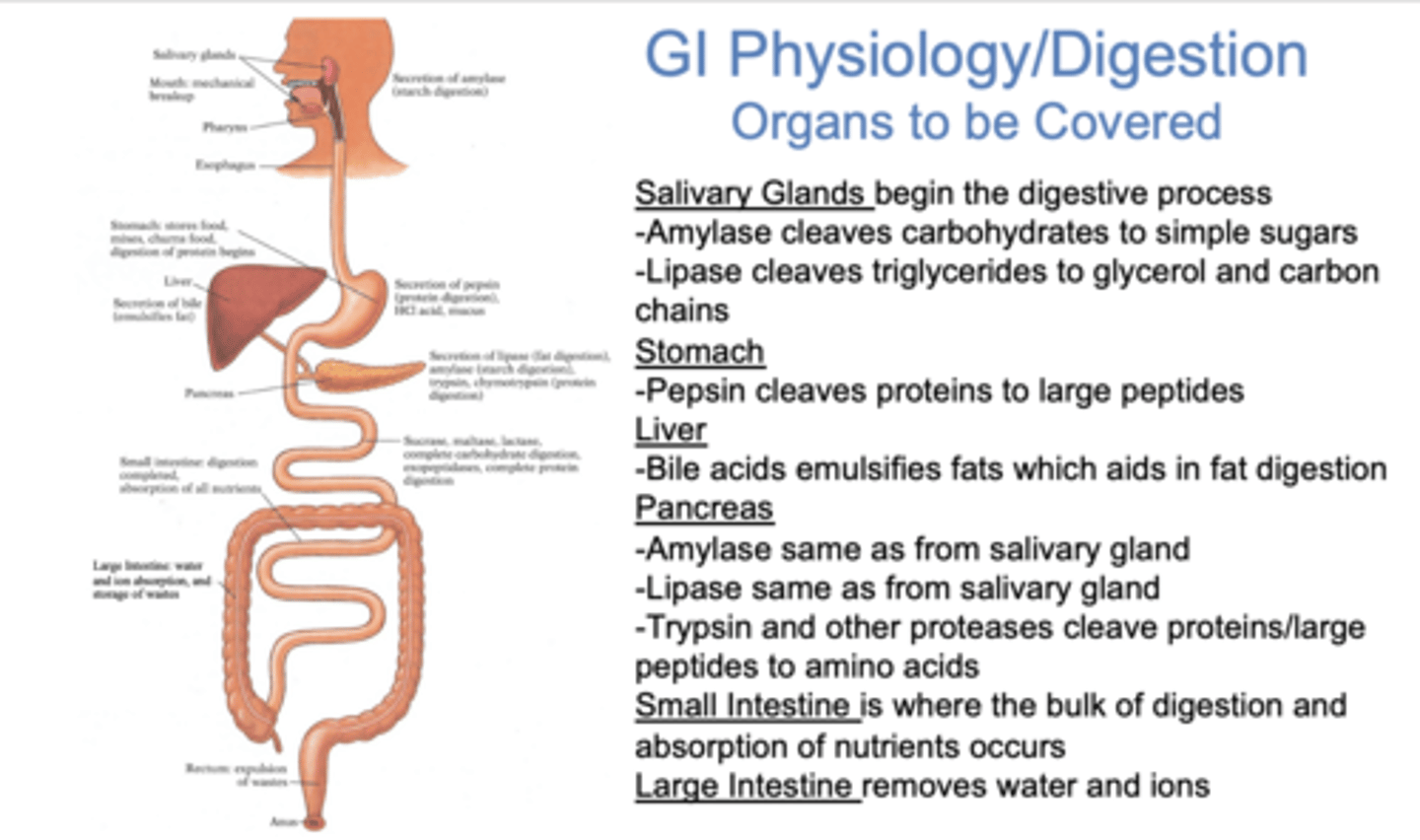
these emulsify fats which aids in fat digestion:
bile acids
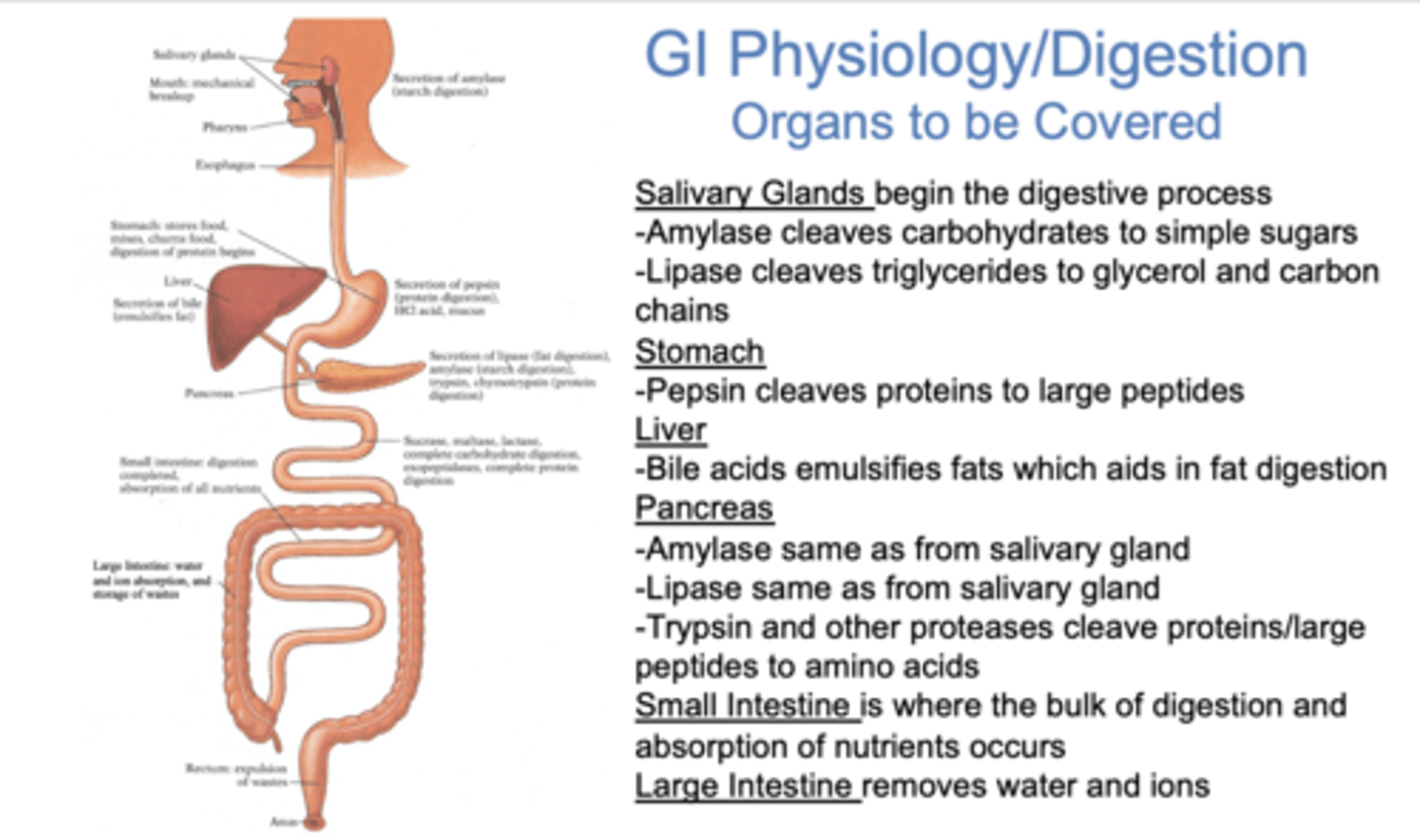
where does the bulk of digestion and absorption of nutrients occur?
small intestine
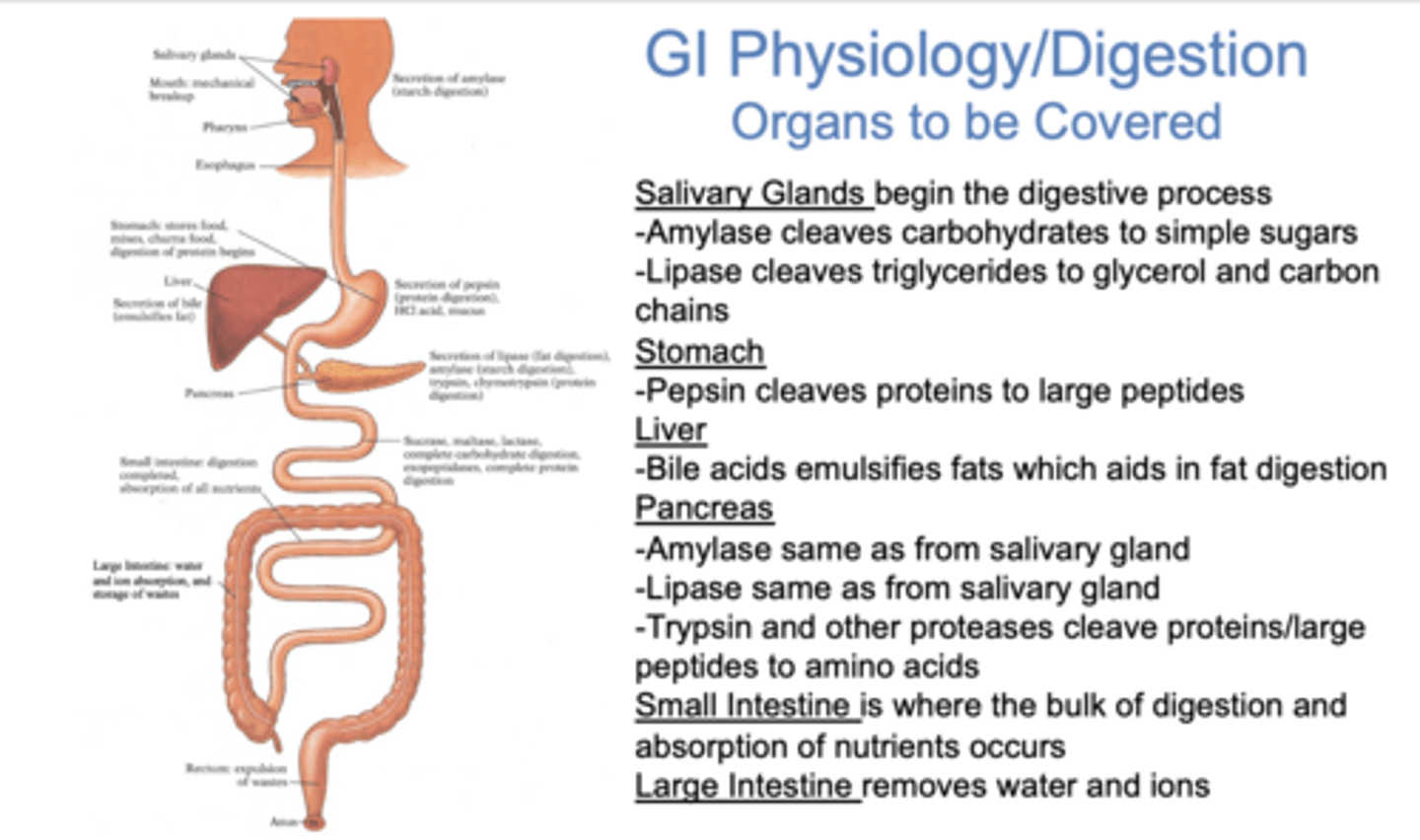
this organ removes water and ions during digestion:
large intestine
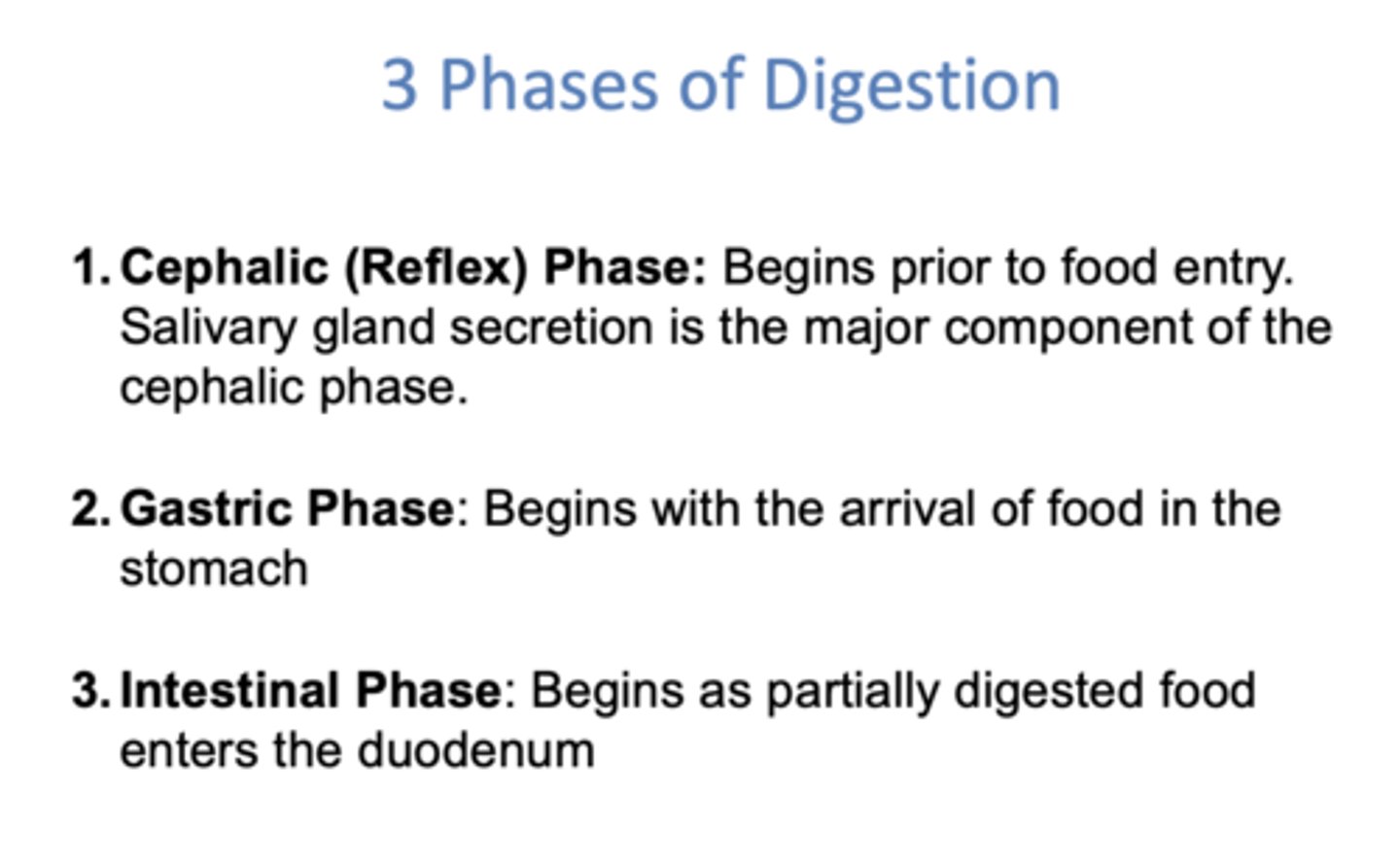
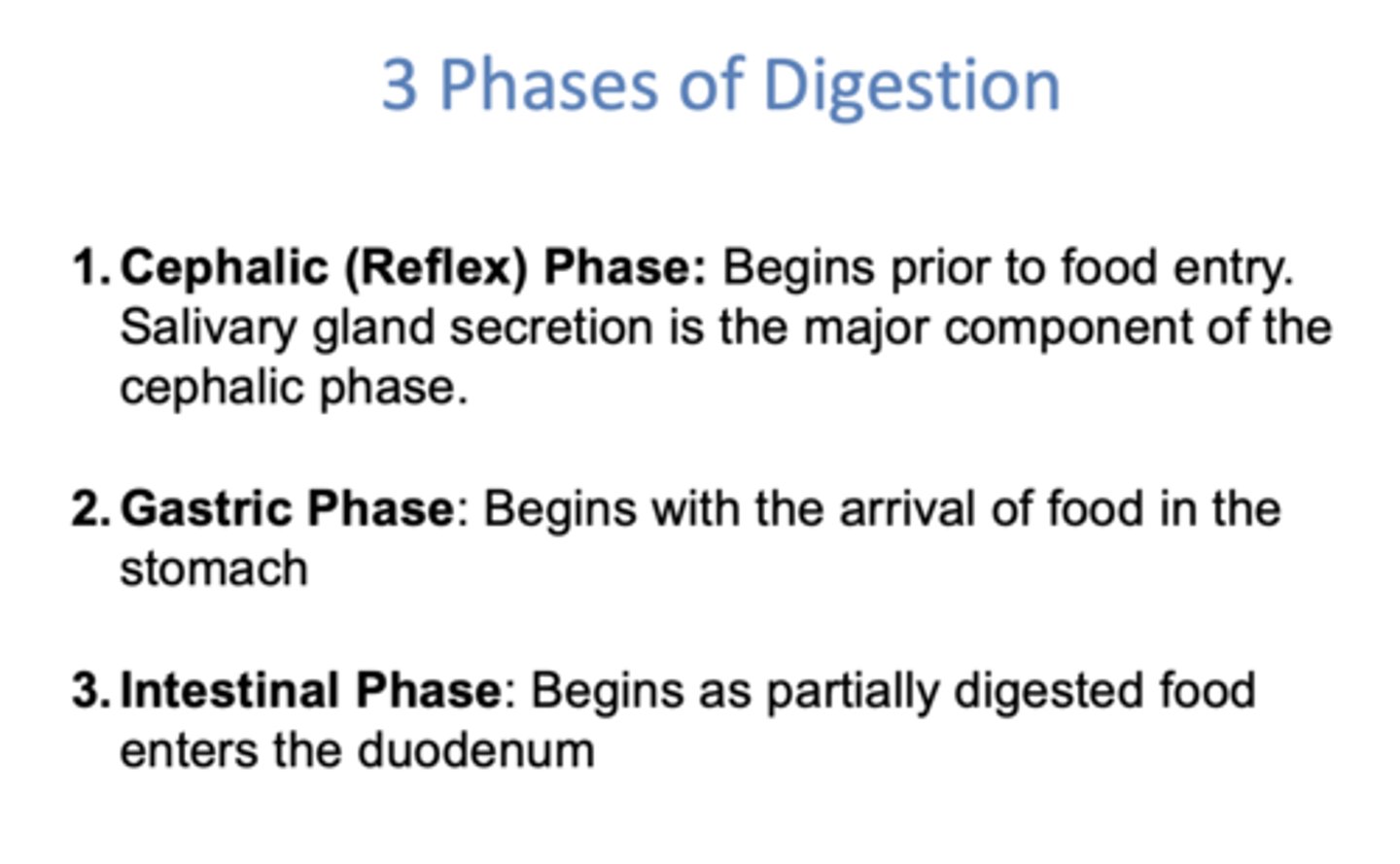
What are the three phases of digestion?
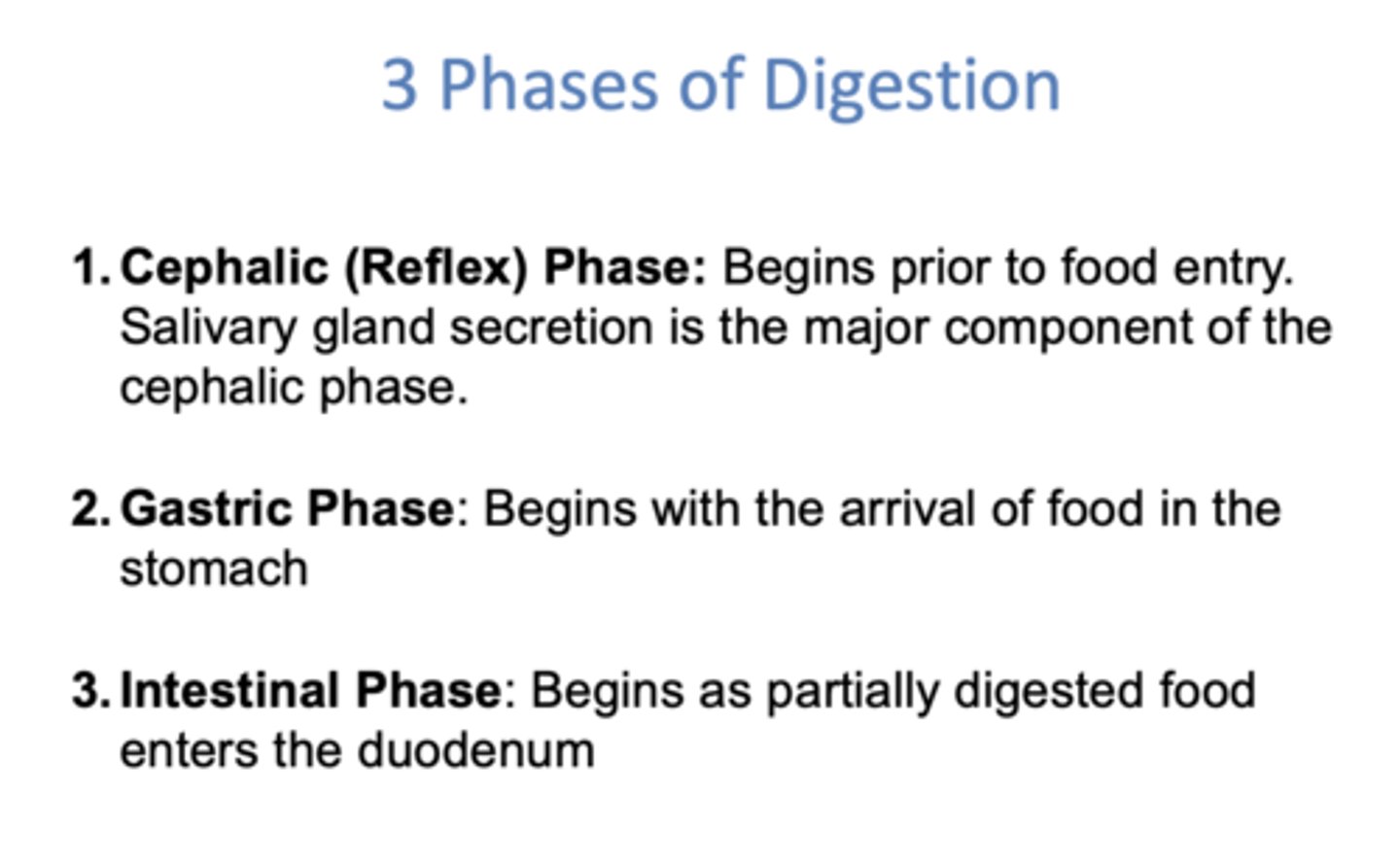
1. Cephalic (reflex) phase
2. Gastric phase
3. Intestinal phase
Which phase of digestion?
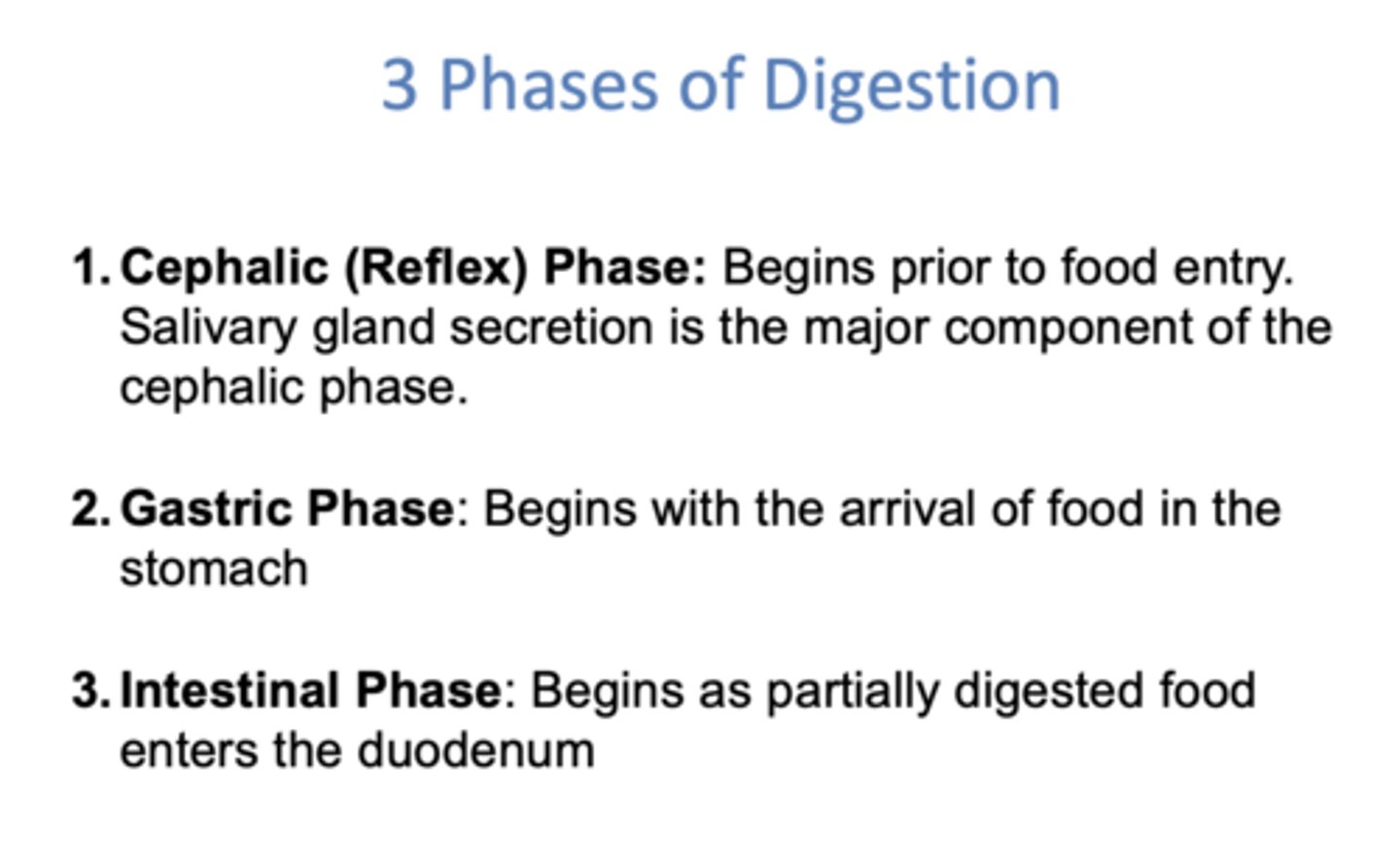
Begins prior to food entry. Salivary gland secretion is the major component of this phase.
Cephalic (reflex) Phase
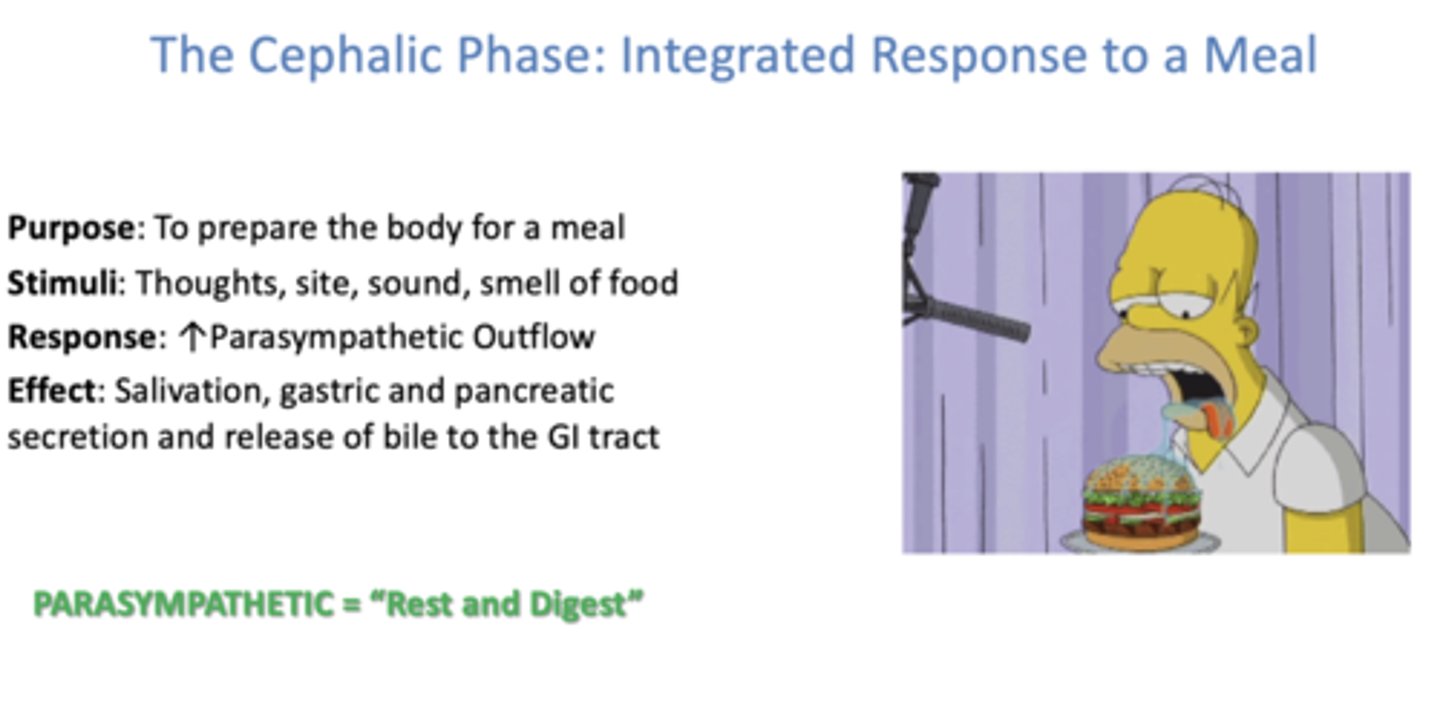
What is the purpose of the cephalic phase?
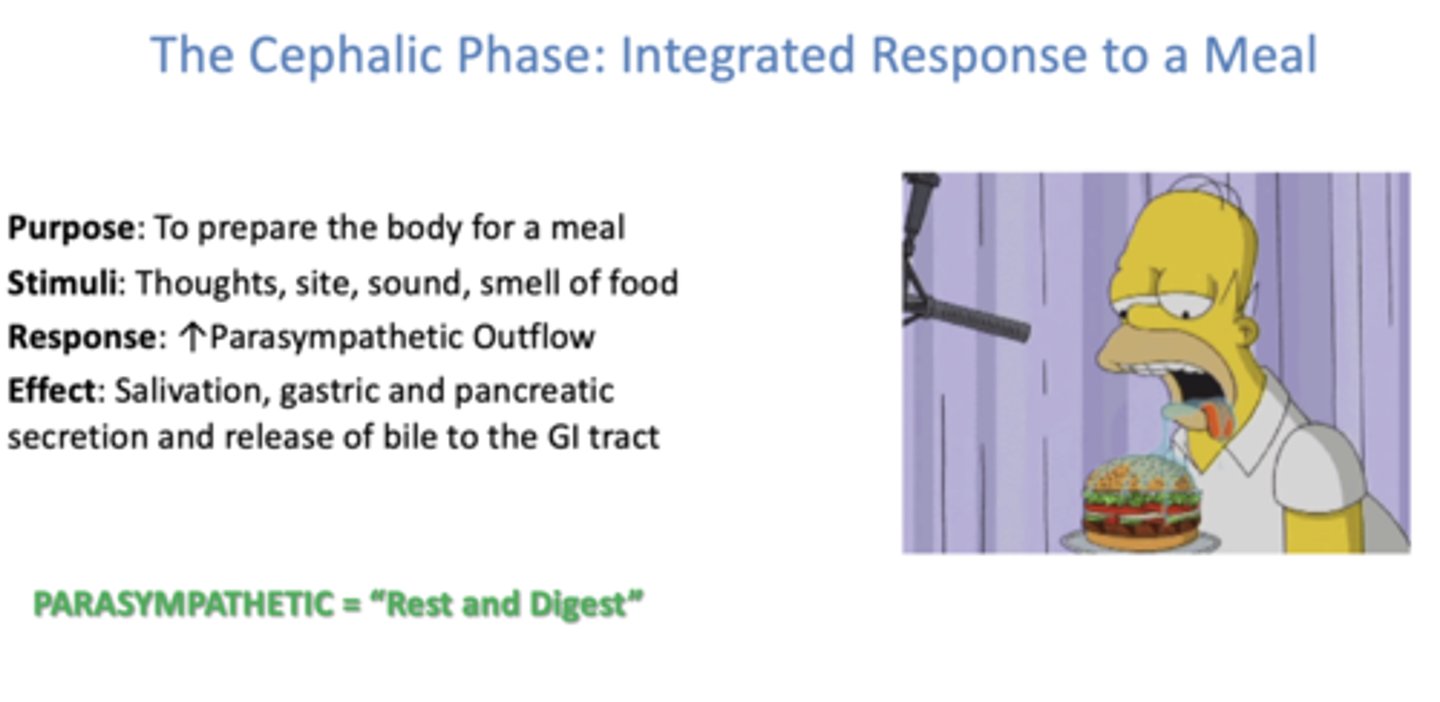
To prepare the body for a meal
What are stimuli of the cephalic phase?
Thoughts, site, sound, smell of food
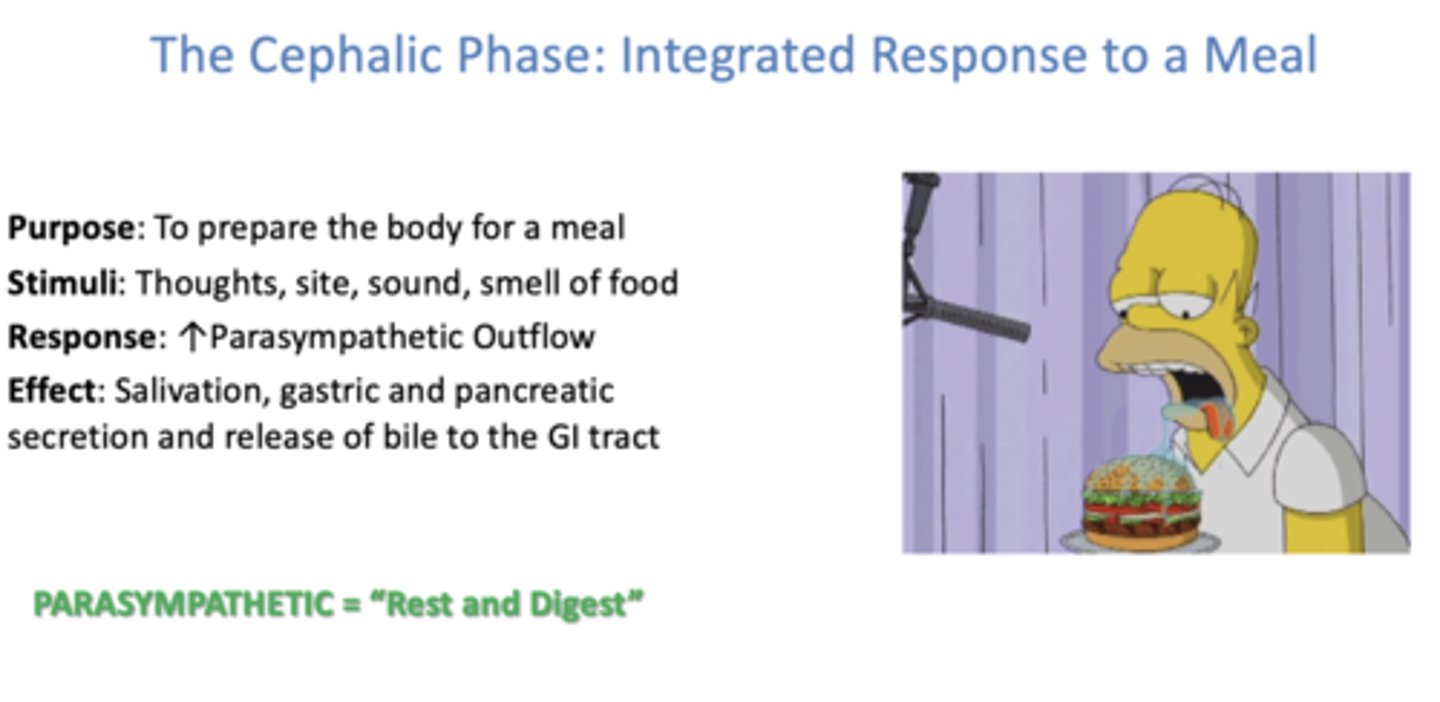
What is the effect of the cephalic phase?
Salivation, gastric and pancreatic secretion and release of bile to the GI tract
Which phase of digestion?
Begins with the arrival of food in the stomach
Gastric phase
Which phase of digestion?
Begins as partially digested food enters the duodenum
Intestinal phase
For secretion, approximately _____L are ingested and ____L secrete into GI tract
2, 7
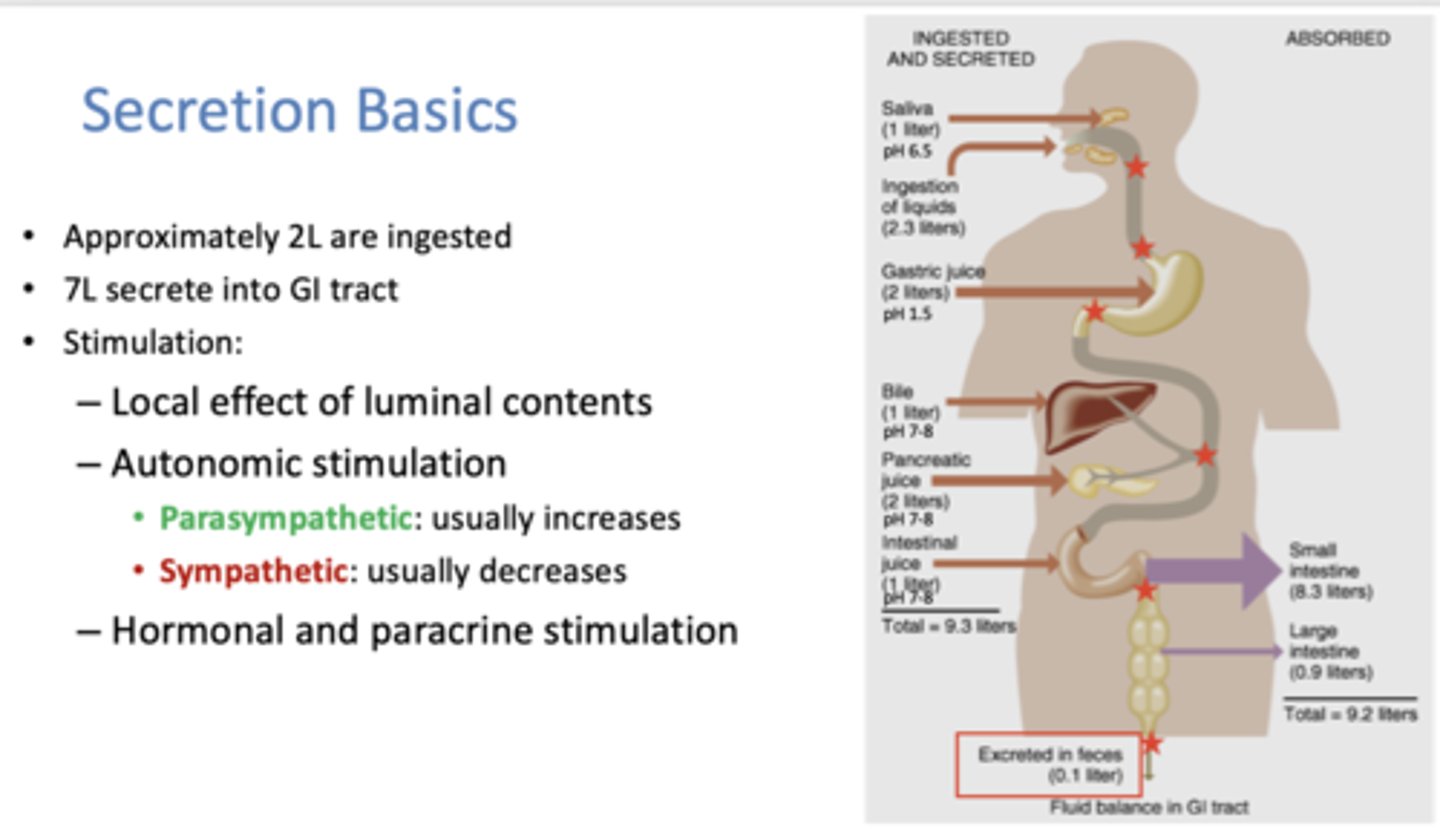
Does secretion usually increase or decrease during parasympathetic stimulation?
Increase
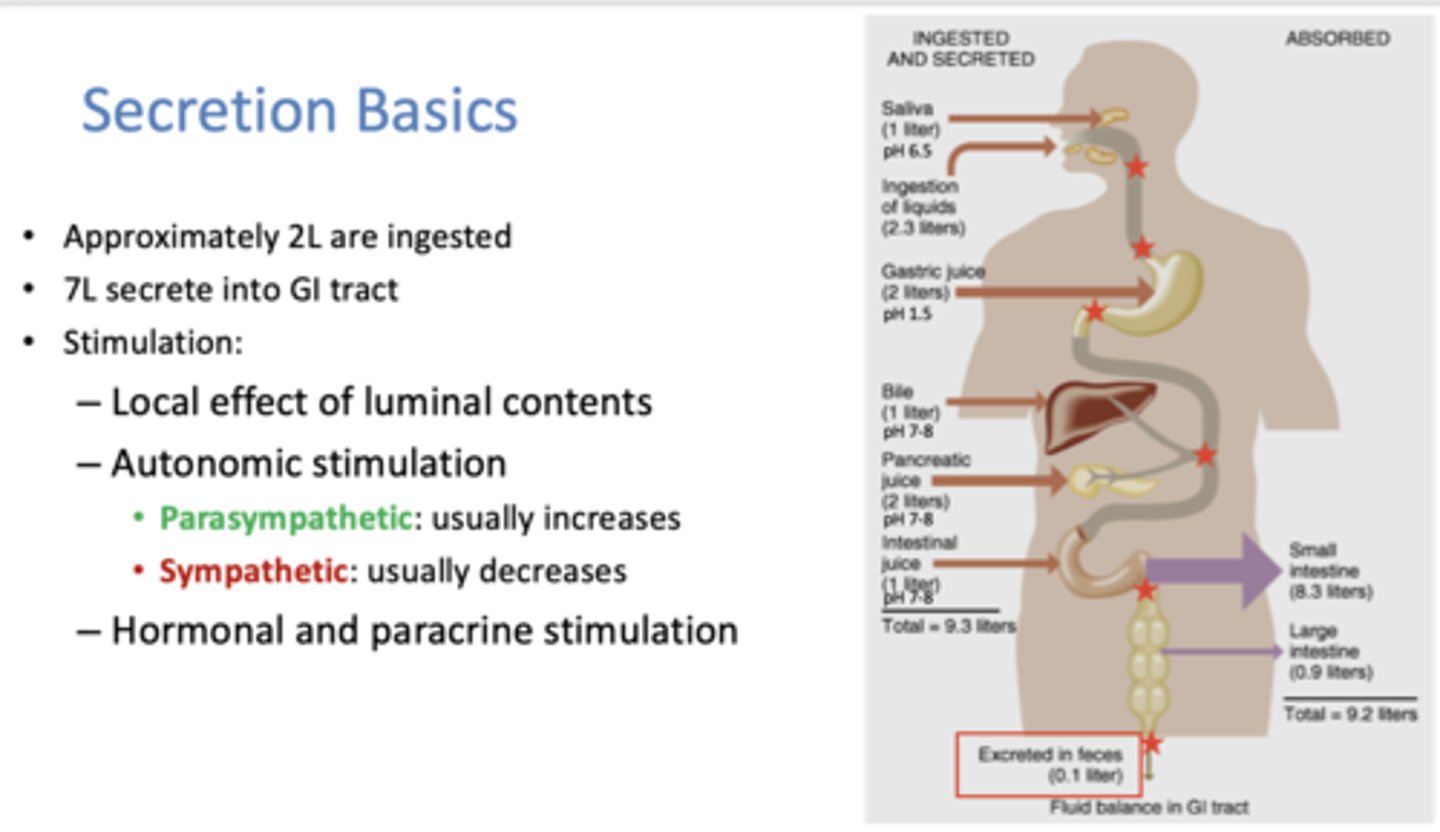
Does secretion usually increase or decrease during sympathetic stimulation?
decrease
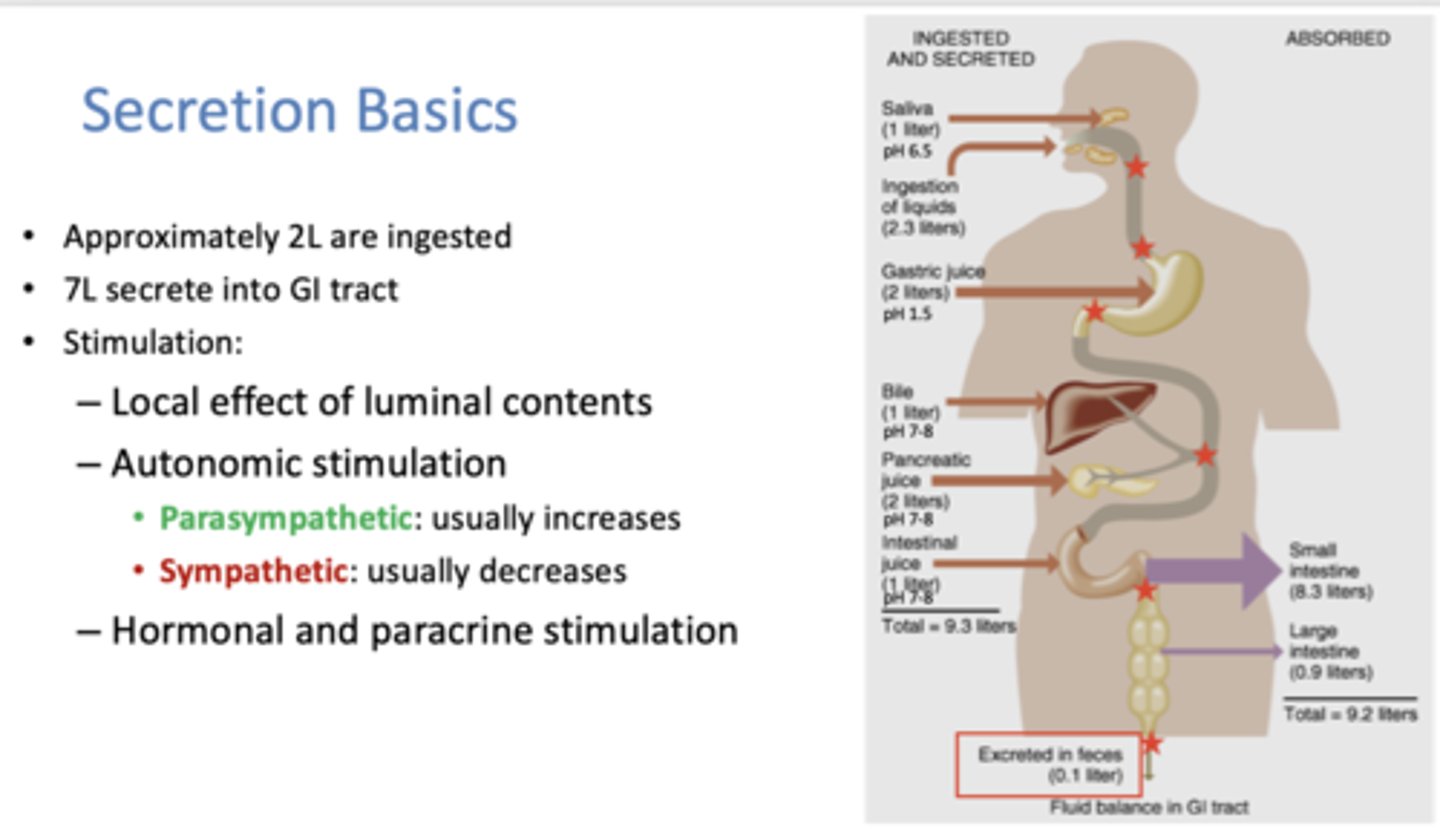
What is the pH of gastric juice in the stomach?
1.5
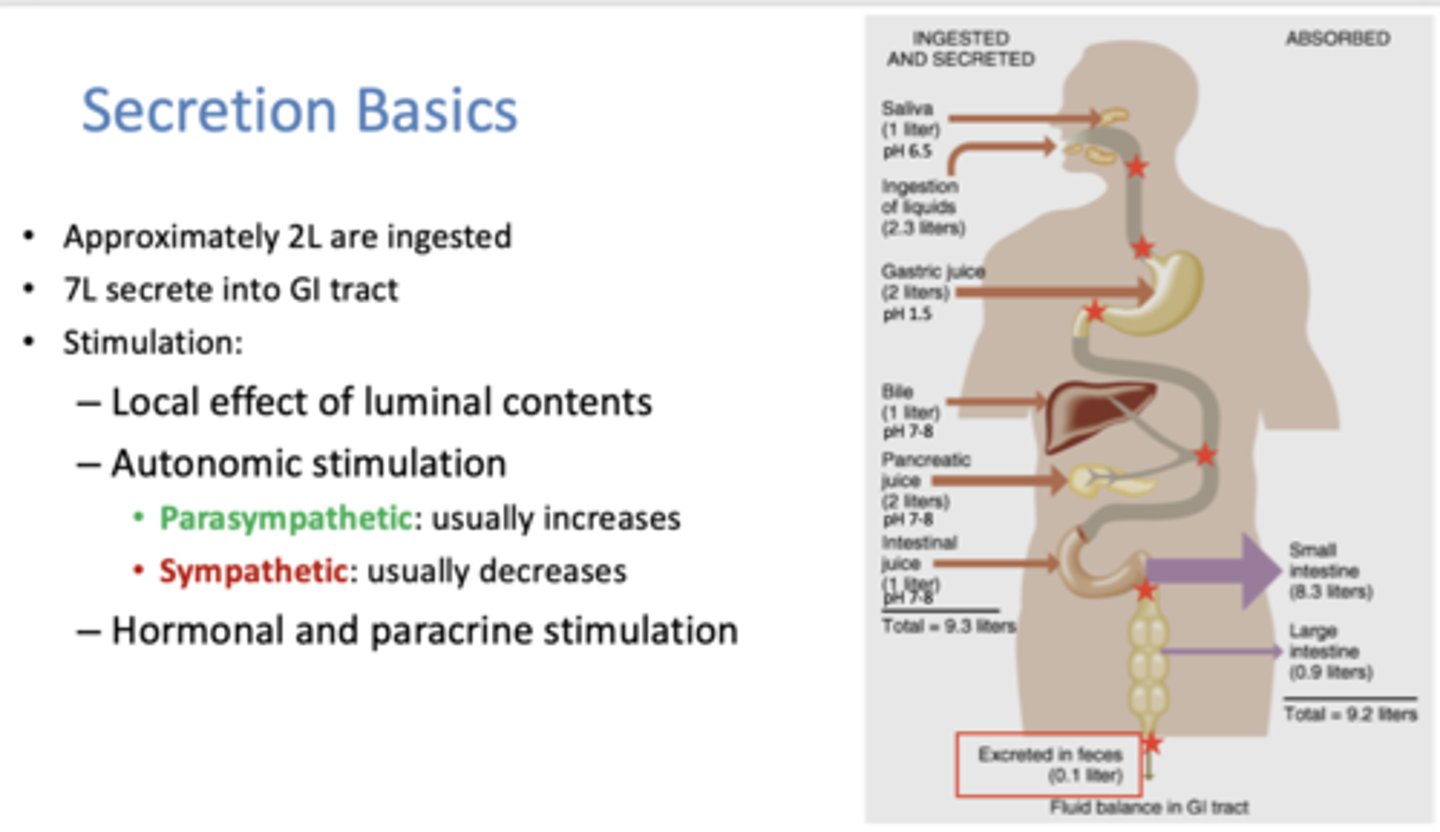
Where is the bile reabsorbed in the body?
Ilium in small intestine (about 1 liter)
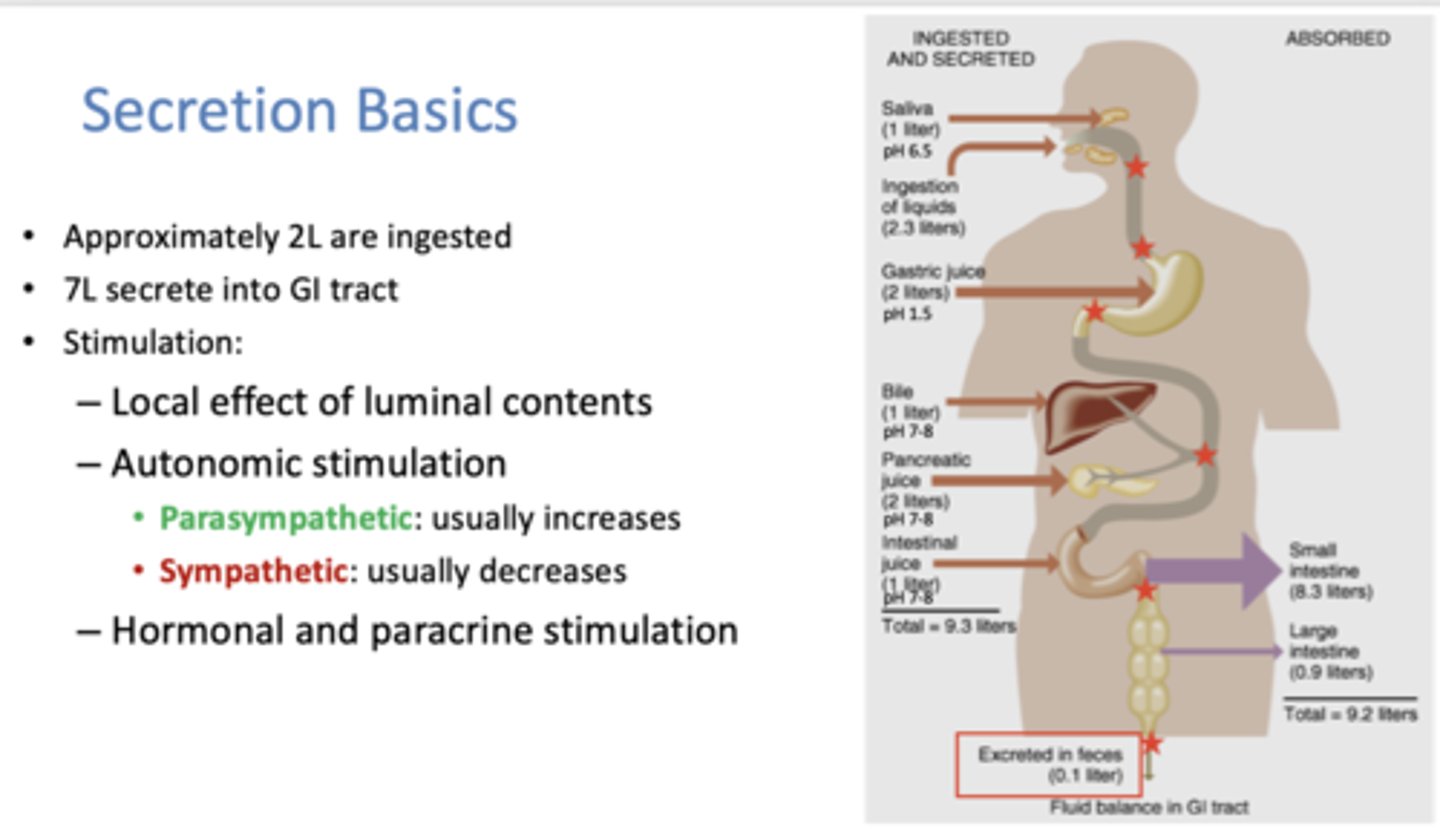
What cranial nerves are responsible for salivation?
CN VII
CN IX
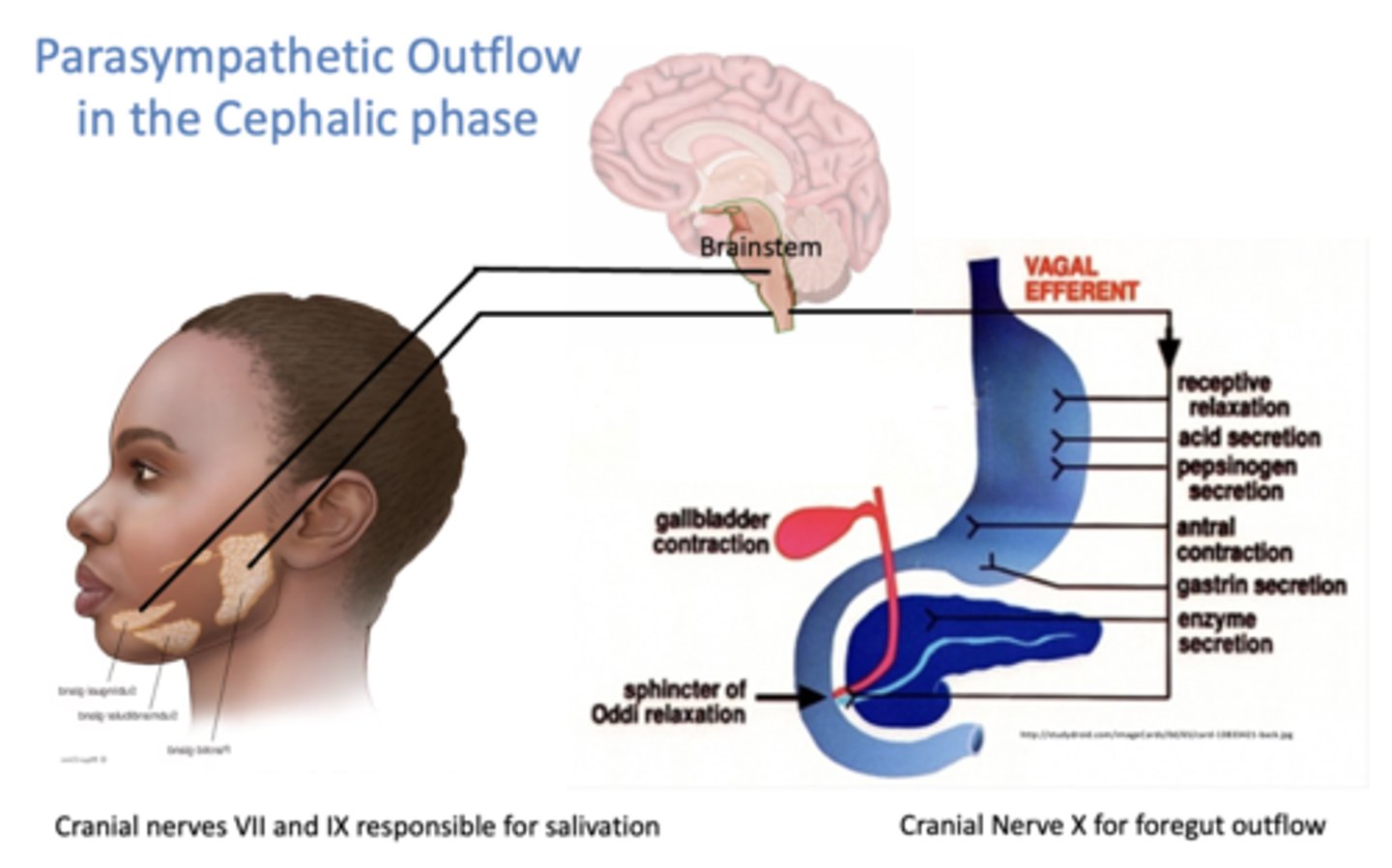
What cranial nerves are responsible for foregut outflow?
CN X
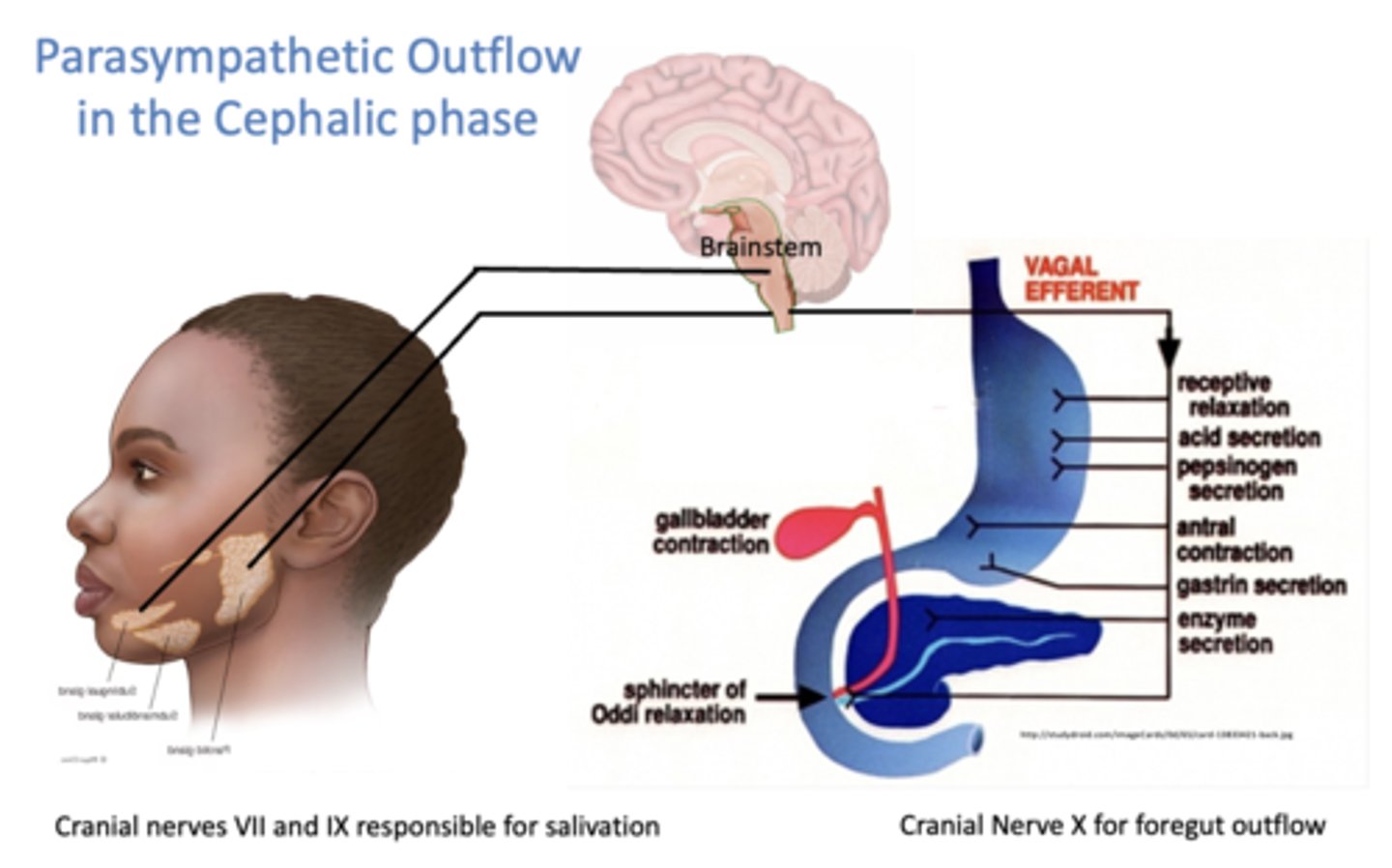
what ion plays an important role regulation of pH?
bicarbonate
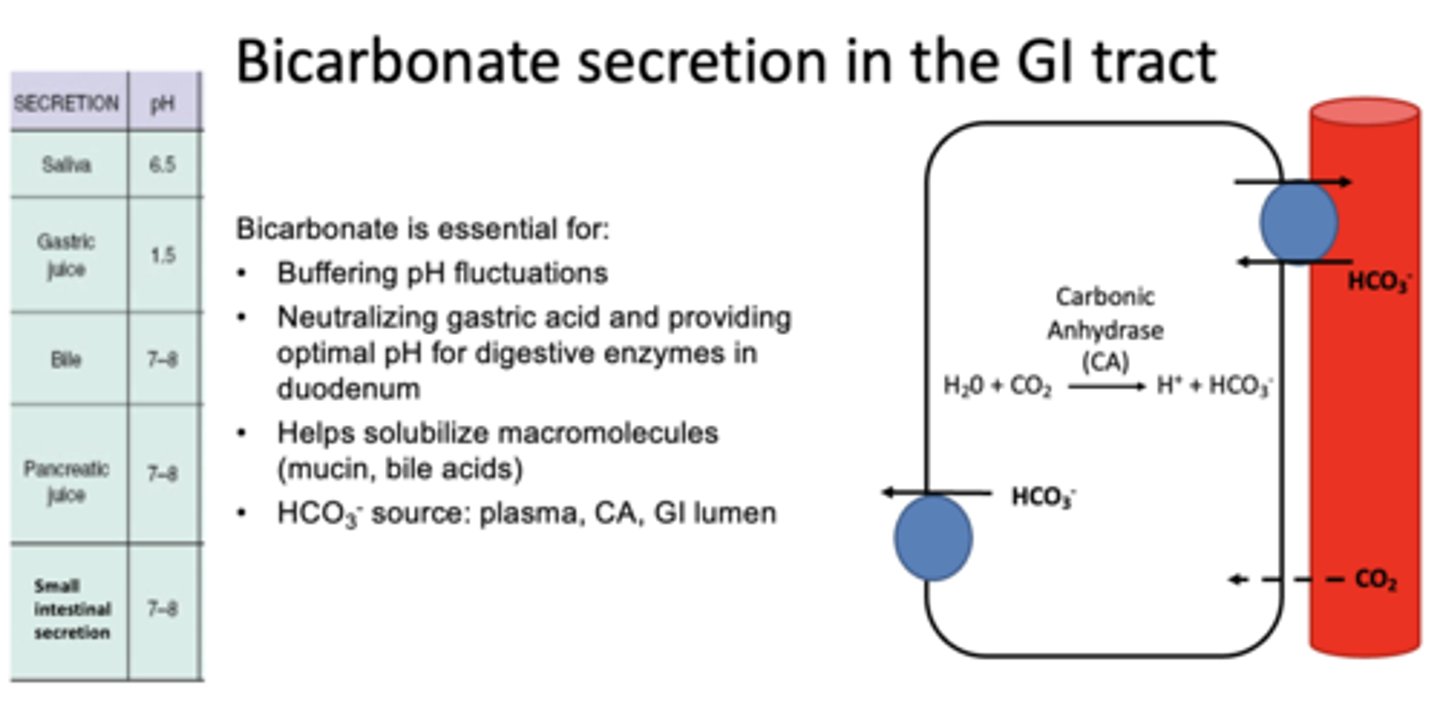
What has the following characteristics:
• Buffering pH fluctuations
• Neutralizing gastric acid and providing optimal pH for digestive enzymes in duodenum
• Helps solubilize macromolecules (mucin, bile acids)
• Source: plasma, CA, GI lumen
bicarbonate
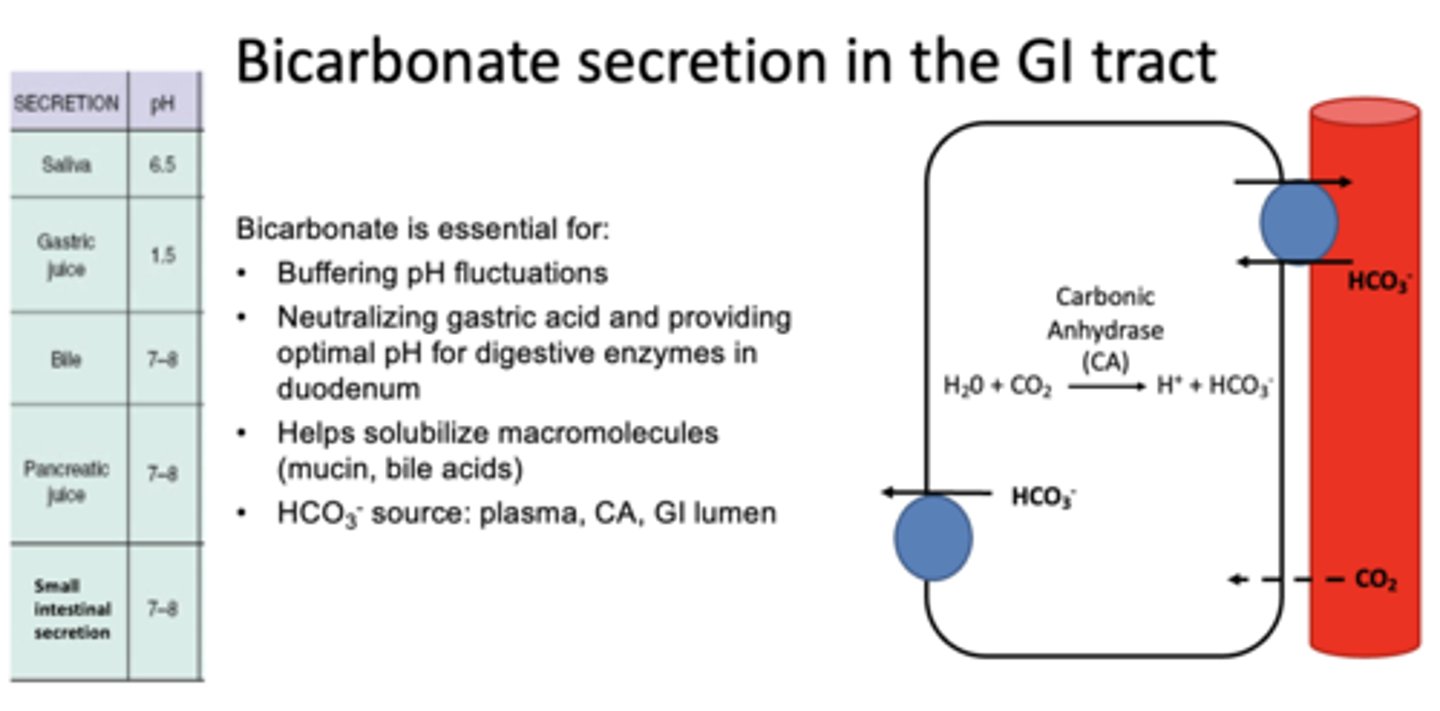
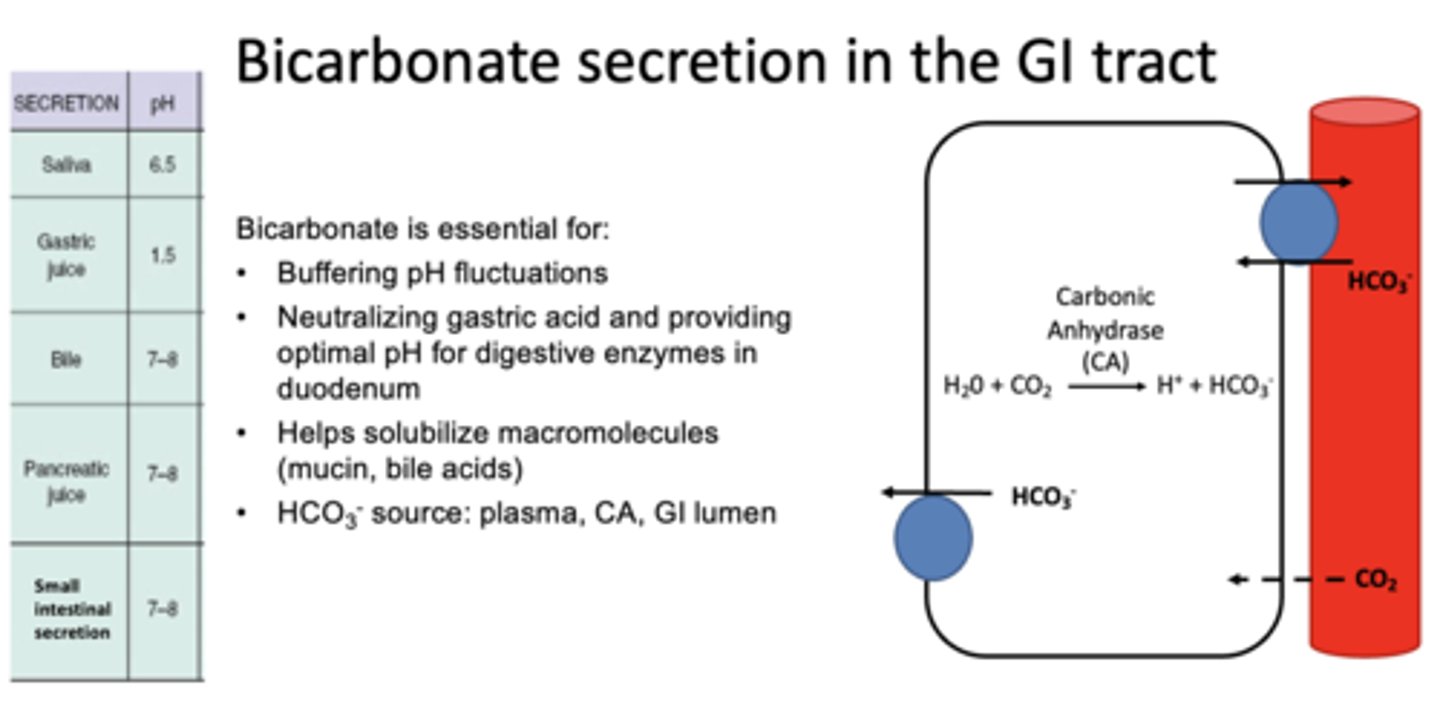
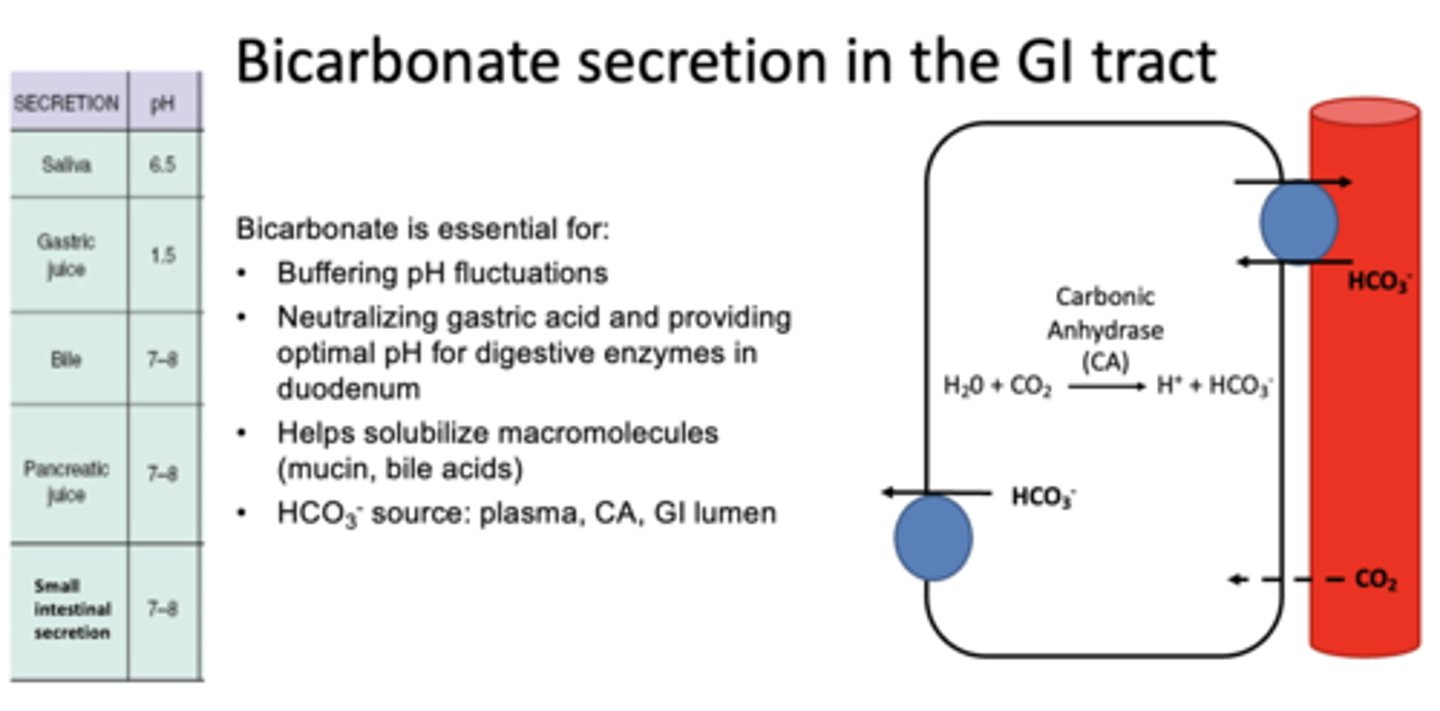
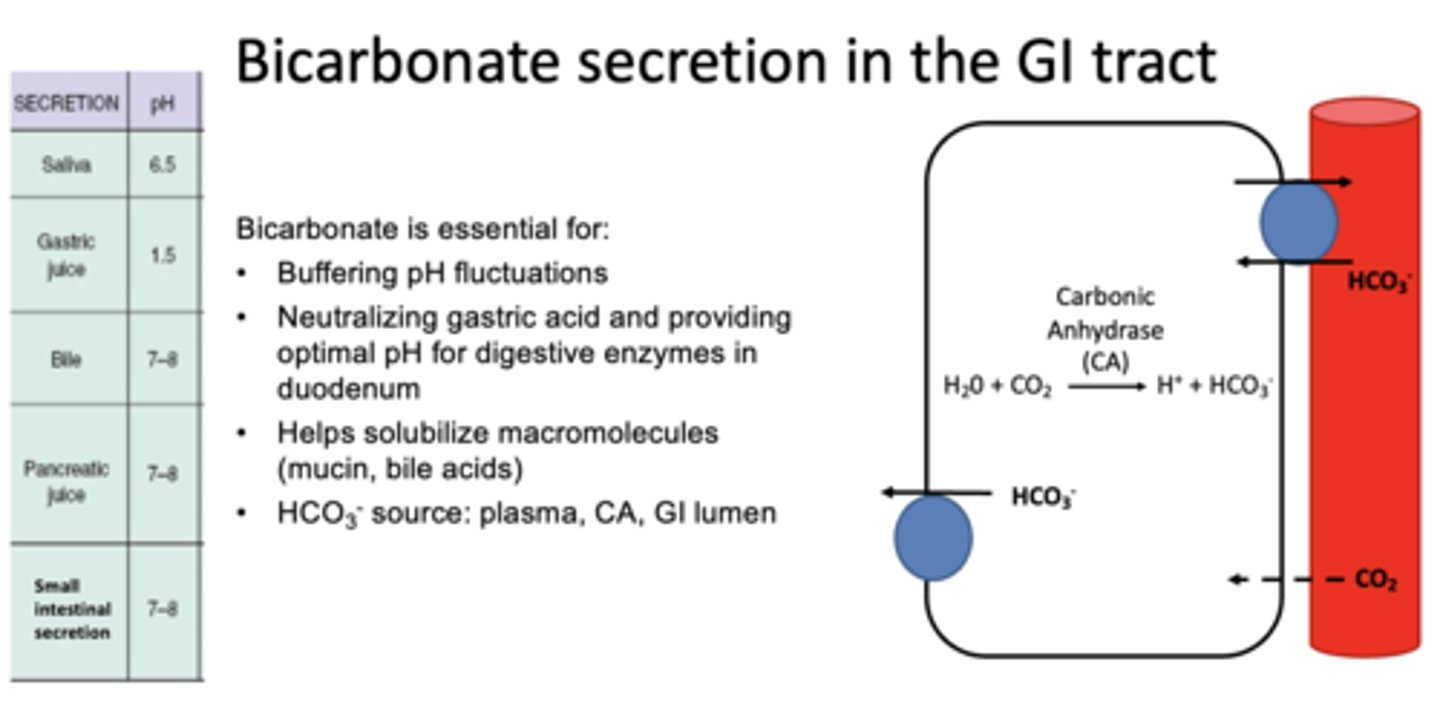
HCO3- is transported into the cell from the plasma by the _______ symporter
Na+/ HCO3-
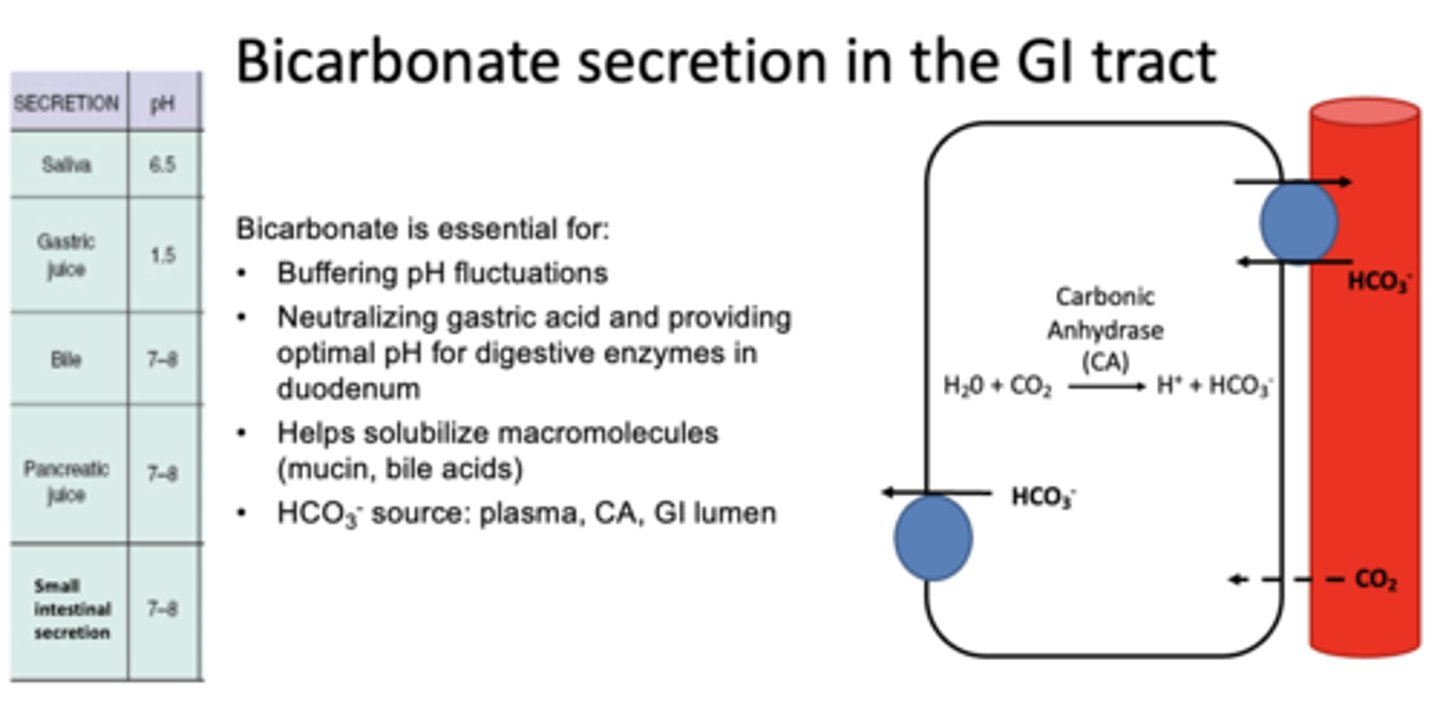
MOA of the Na+/ HCO3- symporter
transports HCO3- into the cell from plasma
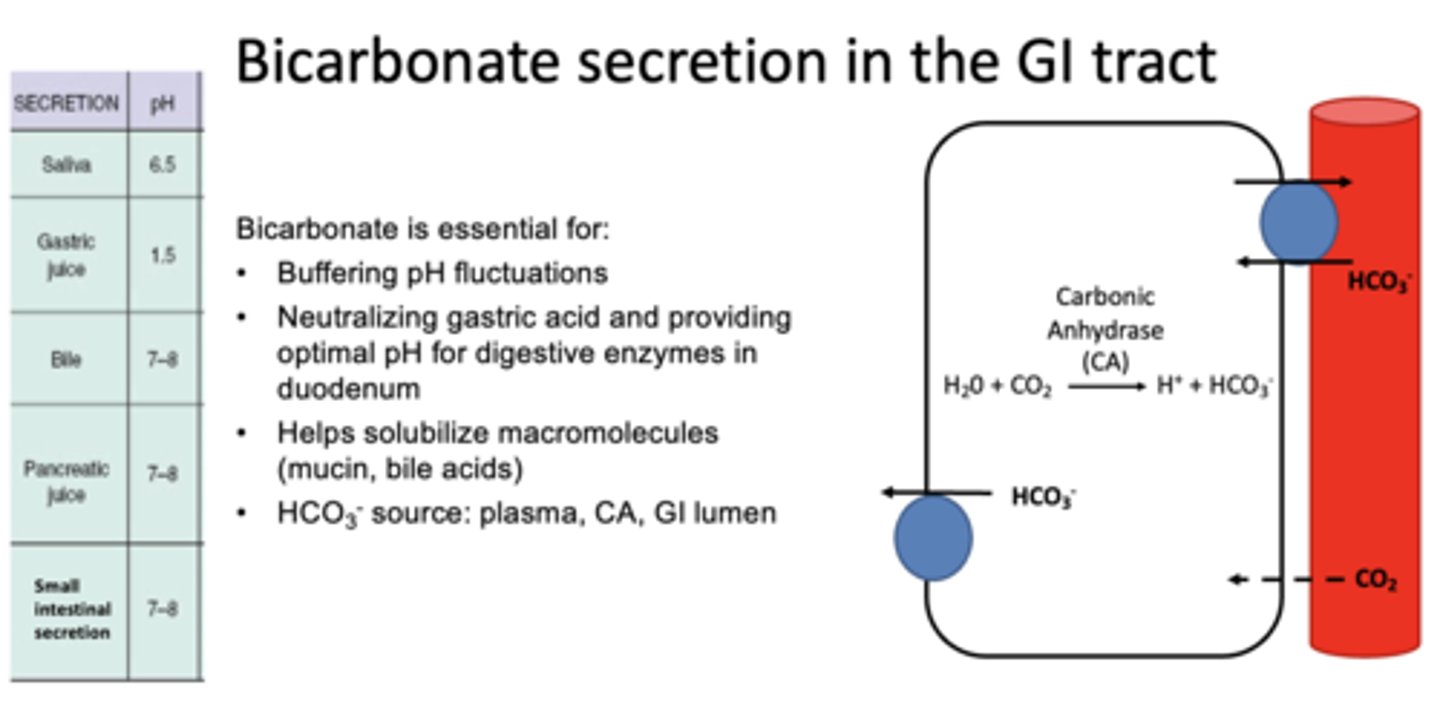
HCO3- is produced in the cell by what enzyme?
carbonic anhydrase
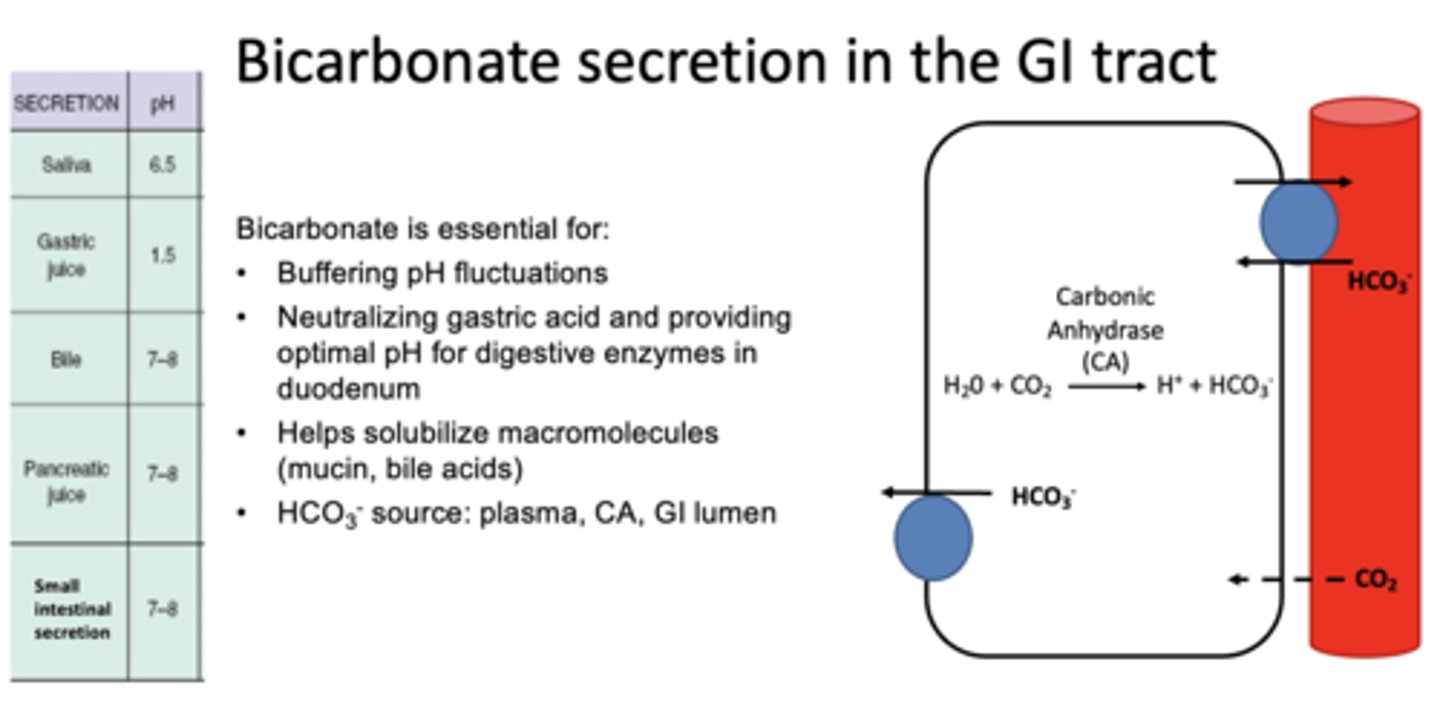
MOA of carbonic anhydrase:
produces HCO3- inside cells
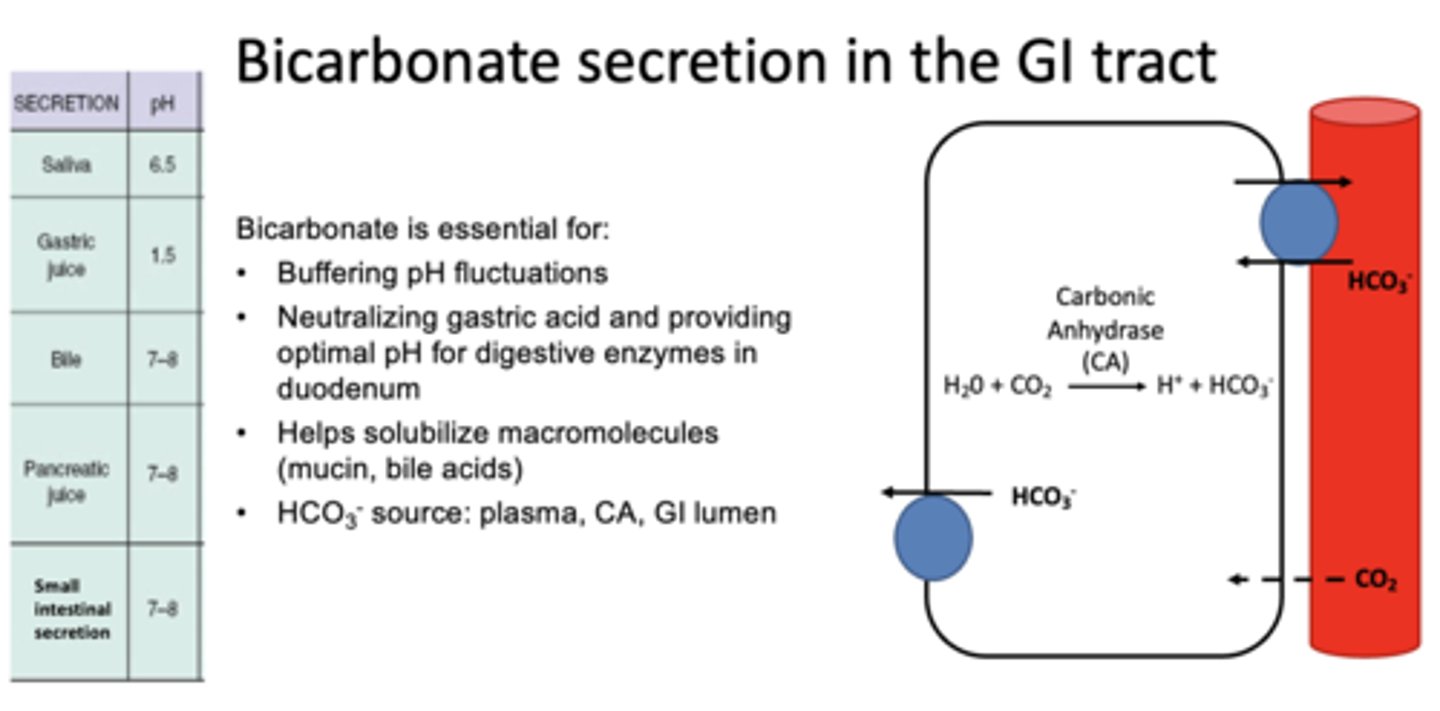
HCO3- is transported out of the cell by the _________ exchanger
HCO3/Cl-
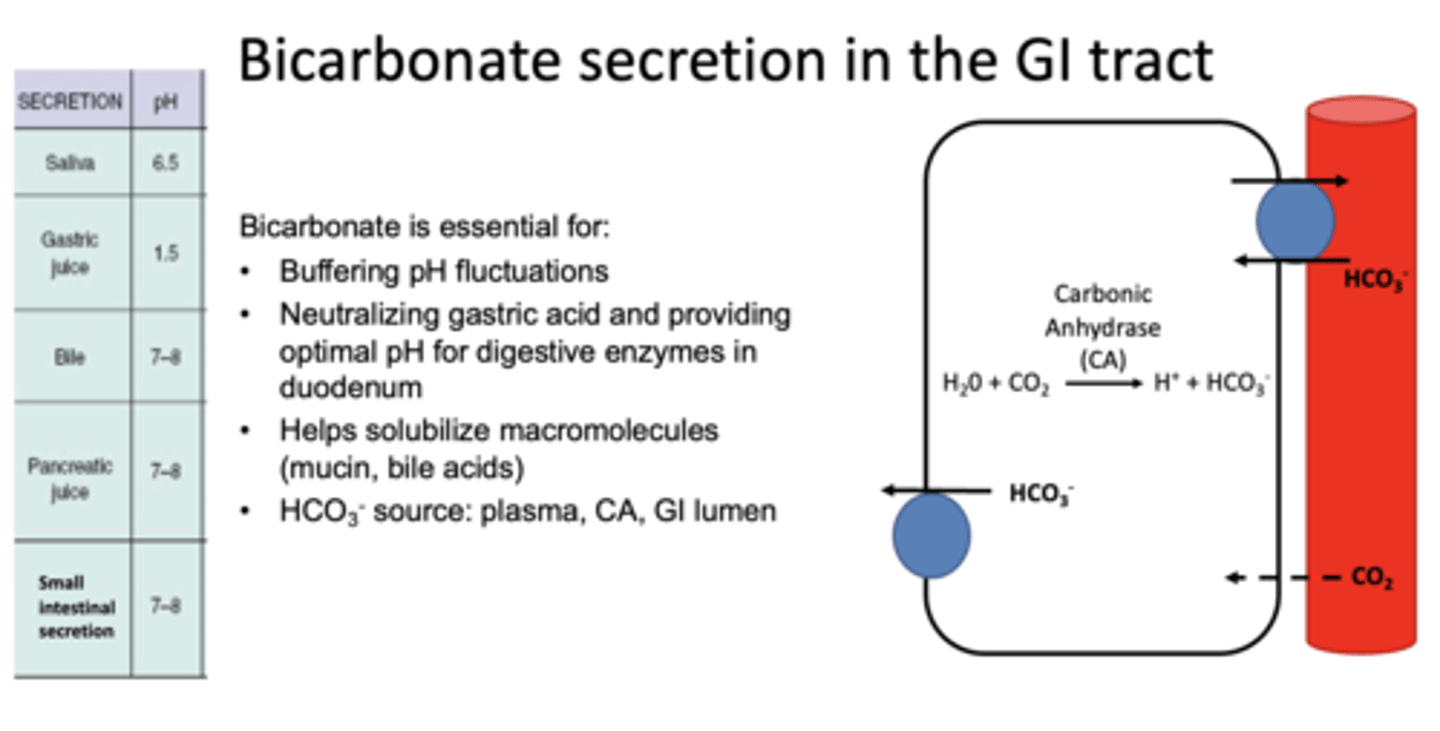
MOA of the HCO3/Cl- exchanger:
transports HCO3- out of the cell to the lumen
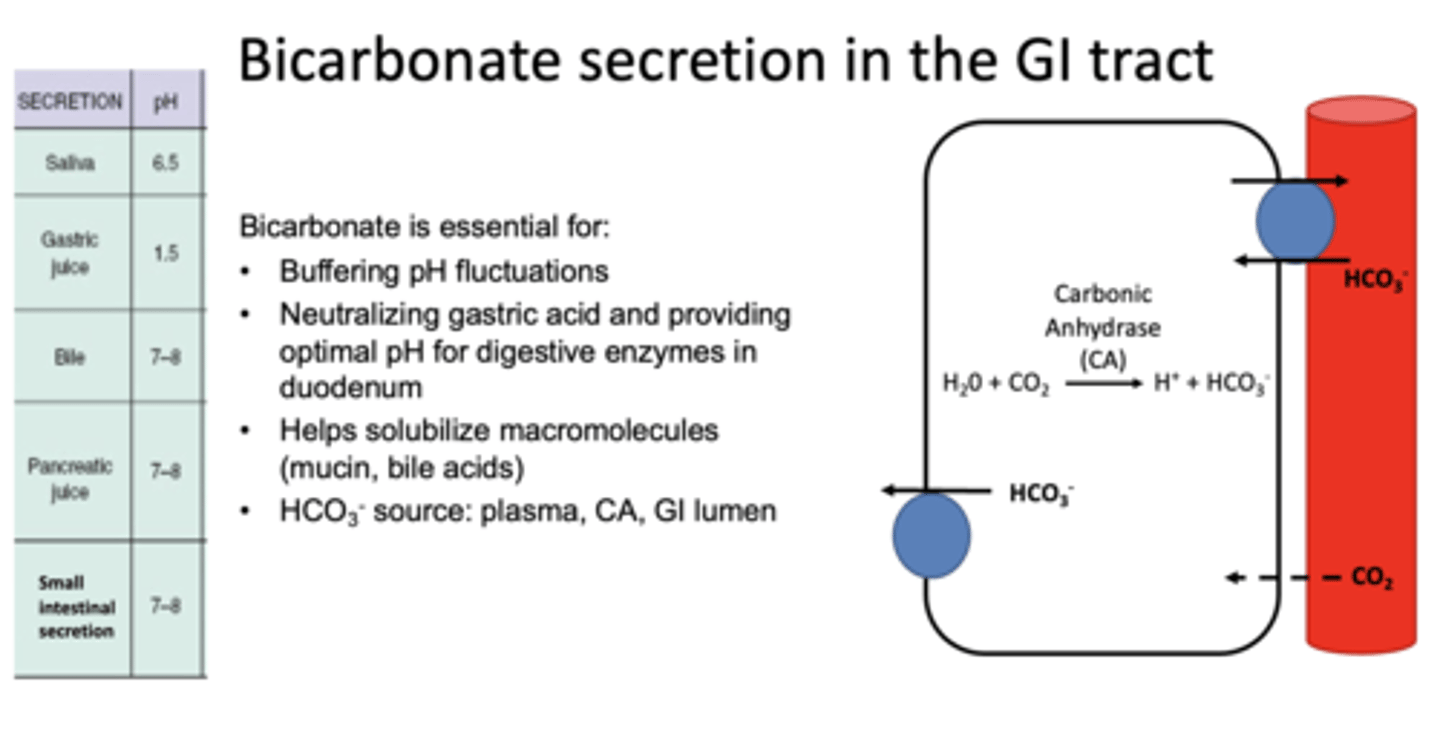
Production of HCO3- by CA produces _____
H+
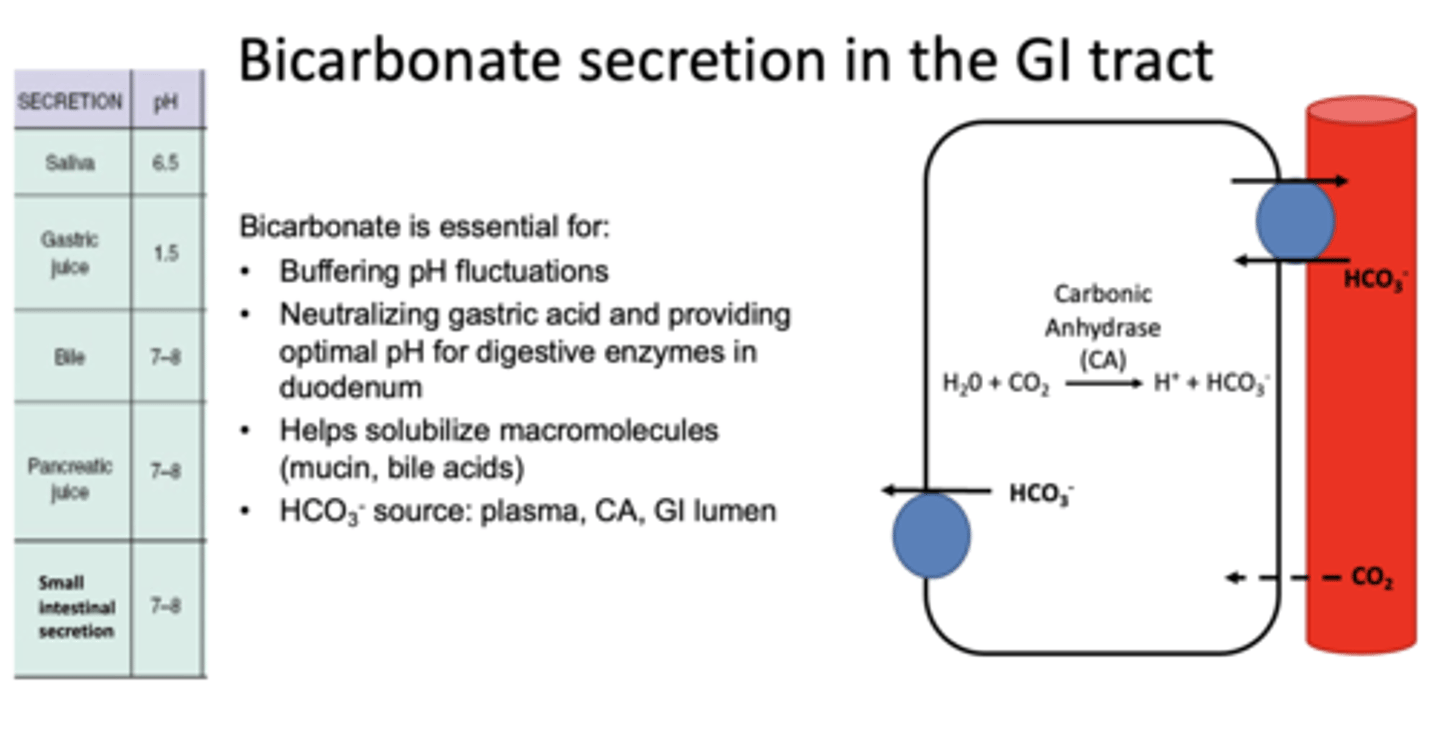
Production of HCO3- by CA produces H+ that is transported out of the cell by the ______ exchanger
H+/Na+
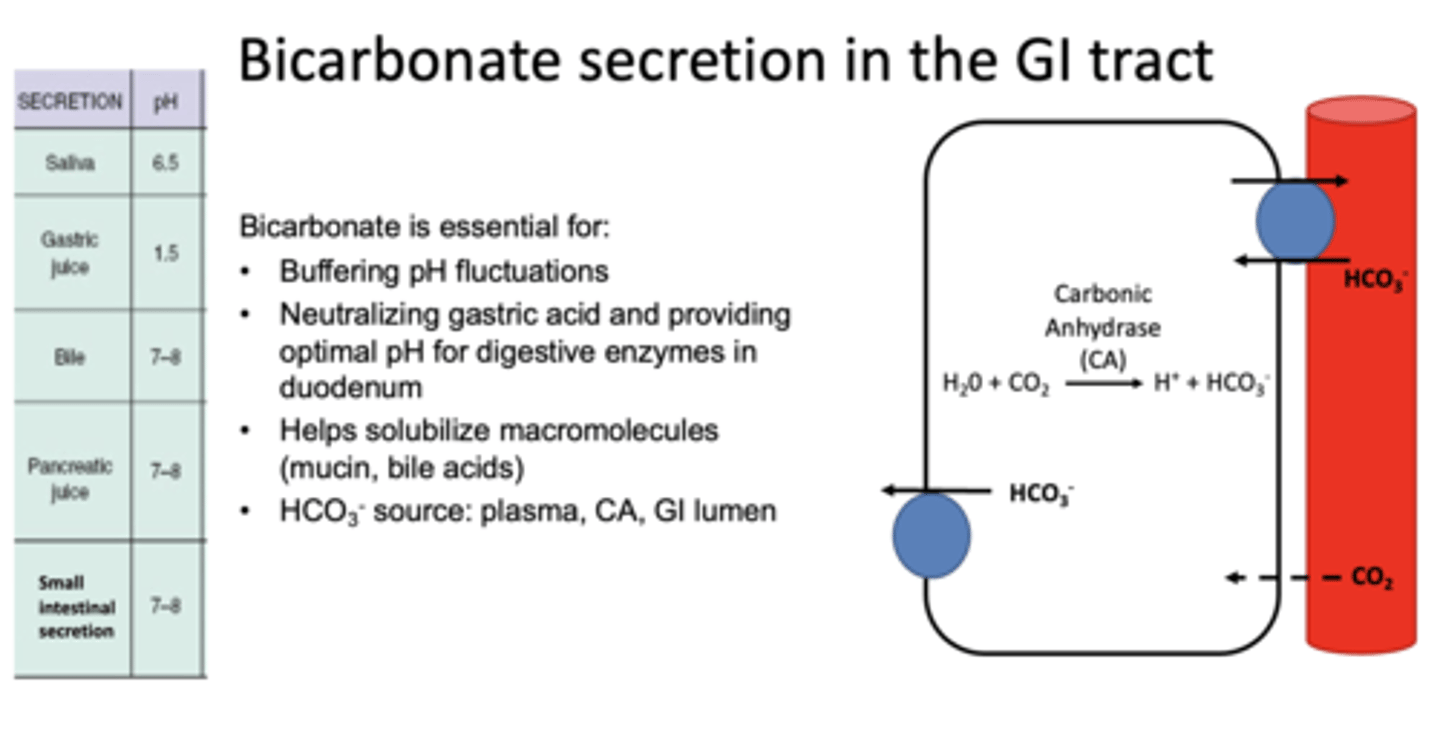
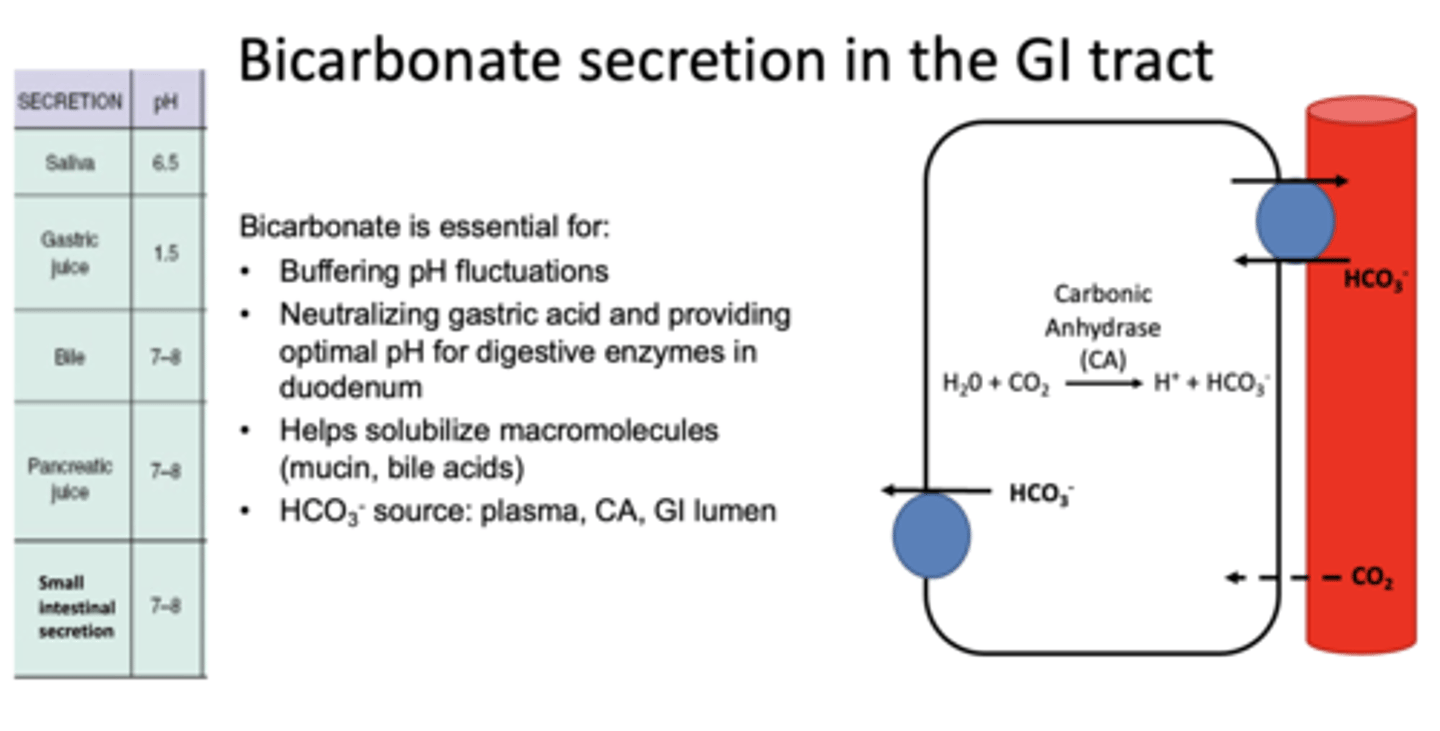
To protect against changes in intracellular pH, cells secrete H+ or HCO3- from their ______ surface
basal
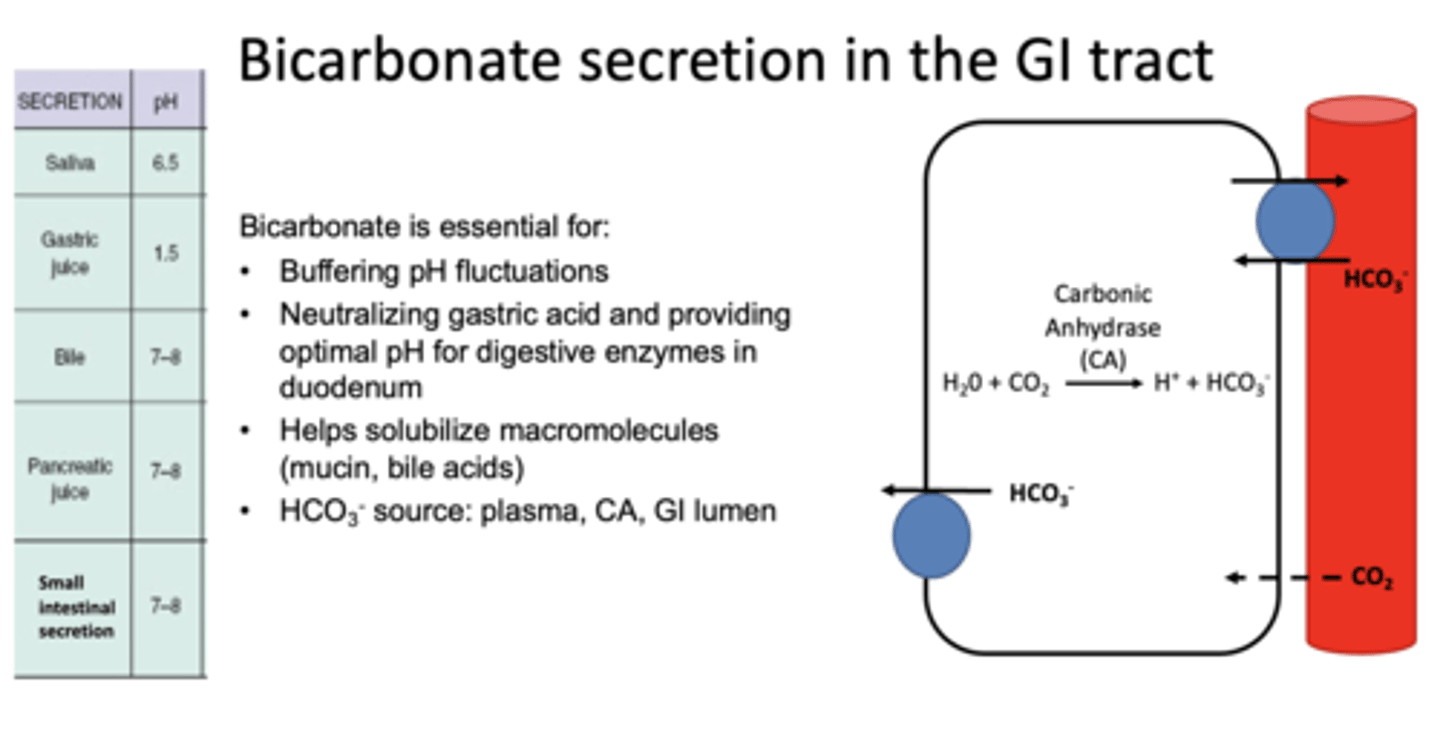
When the cells in the diagram are stimulated to secrete large amounts of H+ or HCO3- across their _____ membrane into the lumen the intracellular pH could rise or fall
apical
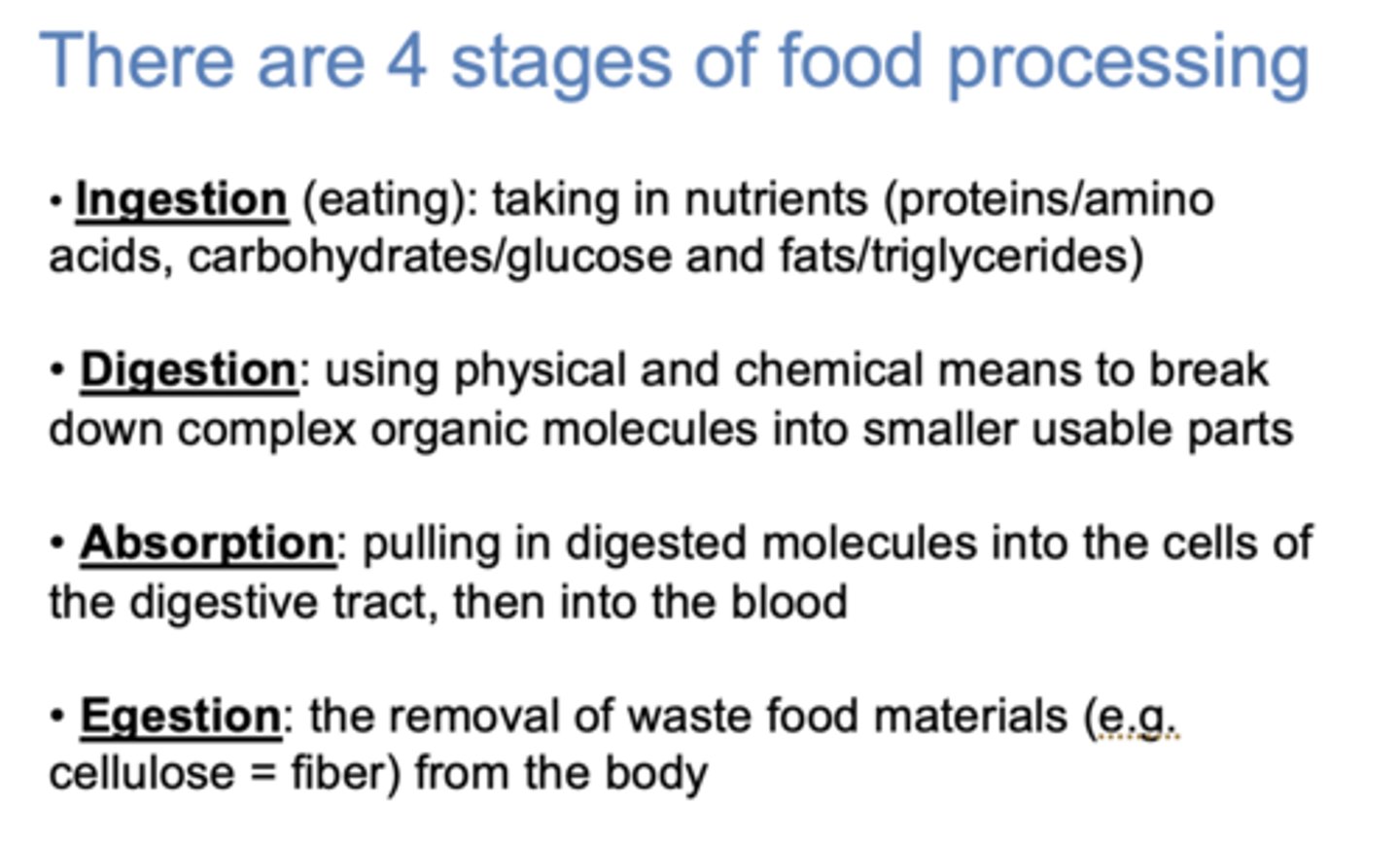
what are the 4 stages of food processing?
- ingestion
- digestion
- absorption
- egestion
Define the following:
Taking in nutrients (proteins/amino acids, carbohydrates/glucose and fats/triglycerides)
ingestion
Define the following:
Using physical and chemical means to break down complex organic molecules into smaller usable parts
digestion
Define the following:
Pulling in digested molecules into the cells of the digestive tract, then into the blood
absorption
Define the following:
The removal of waste food materials (e.g. cellulose = fiber) from the body
egestion
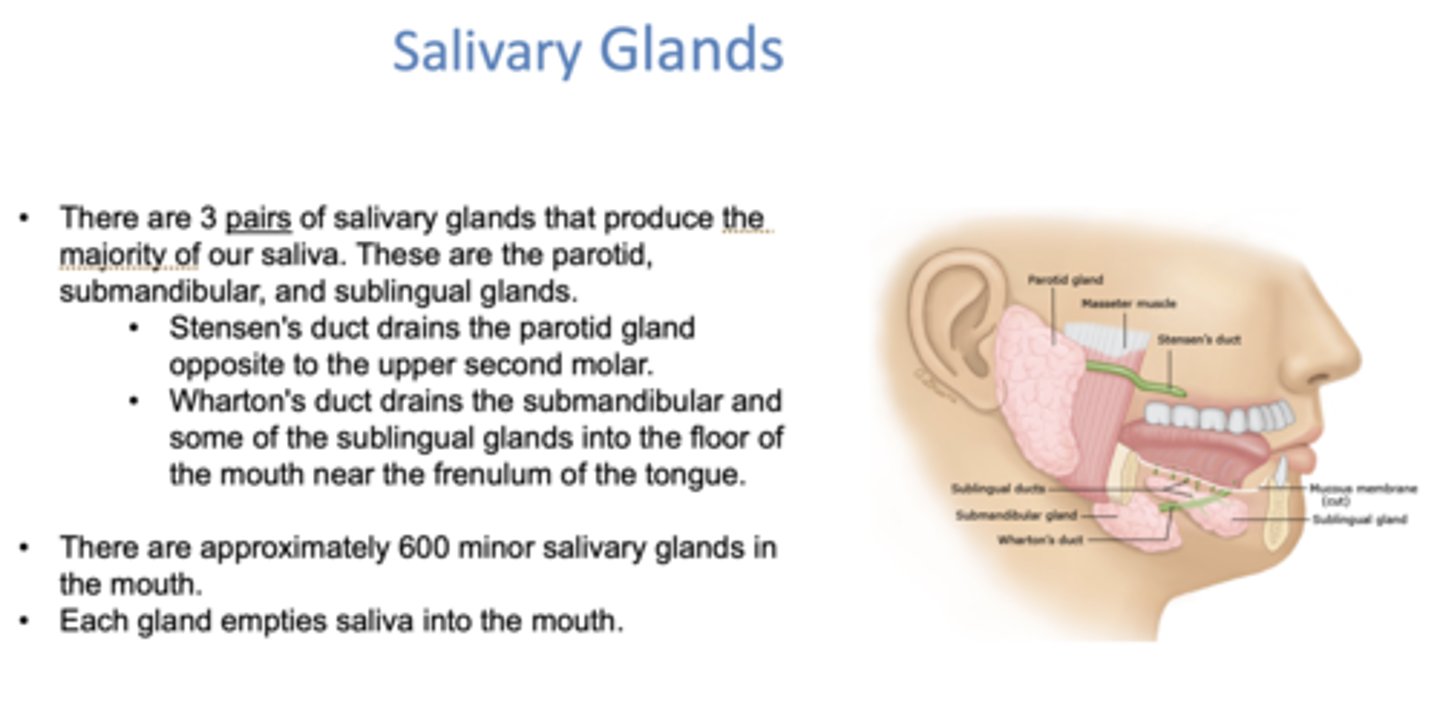
saliva leaves the parotid gland via _______ into the mouth
Stenson's duct
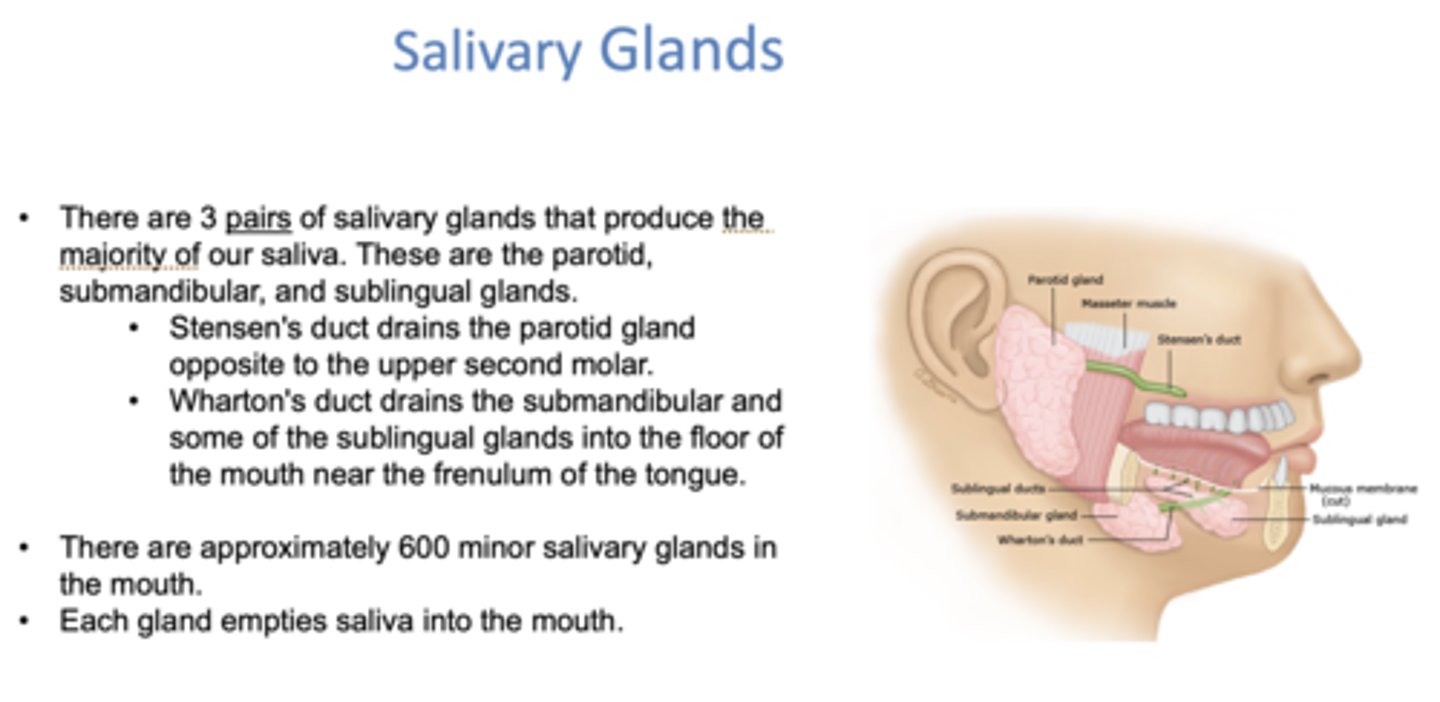
___________ drains the parotid gland opposite to the upper second molar.
Stenson's duct
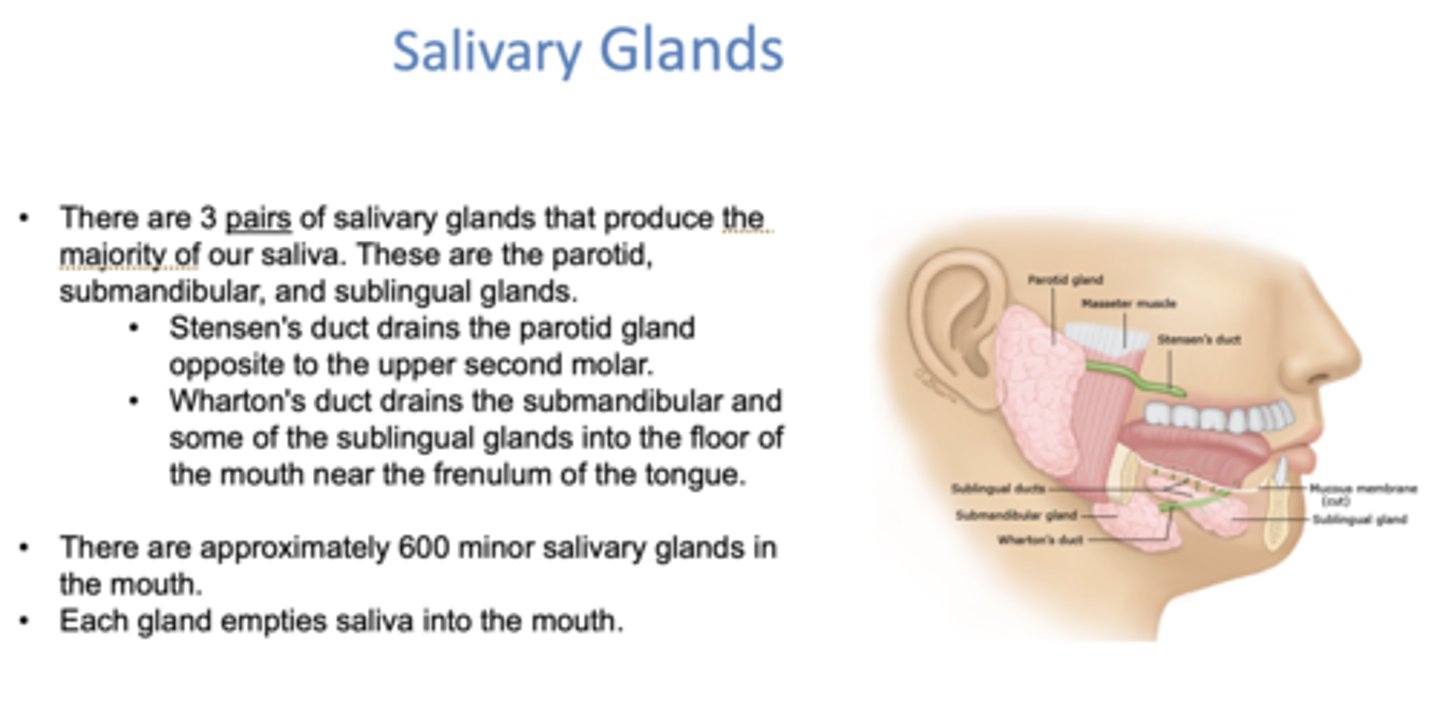
the biggest salivary gland and when stimulated, produces the most saliva of any single salivary gland
parotid
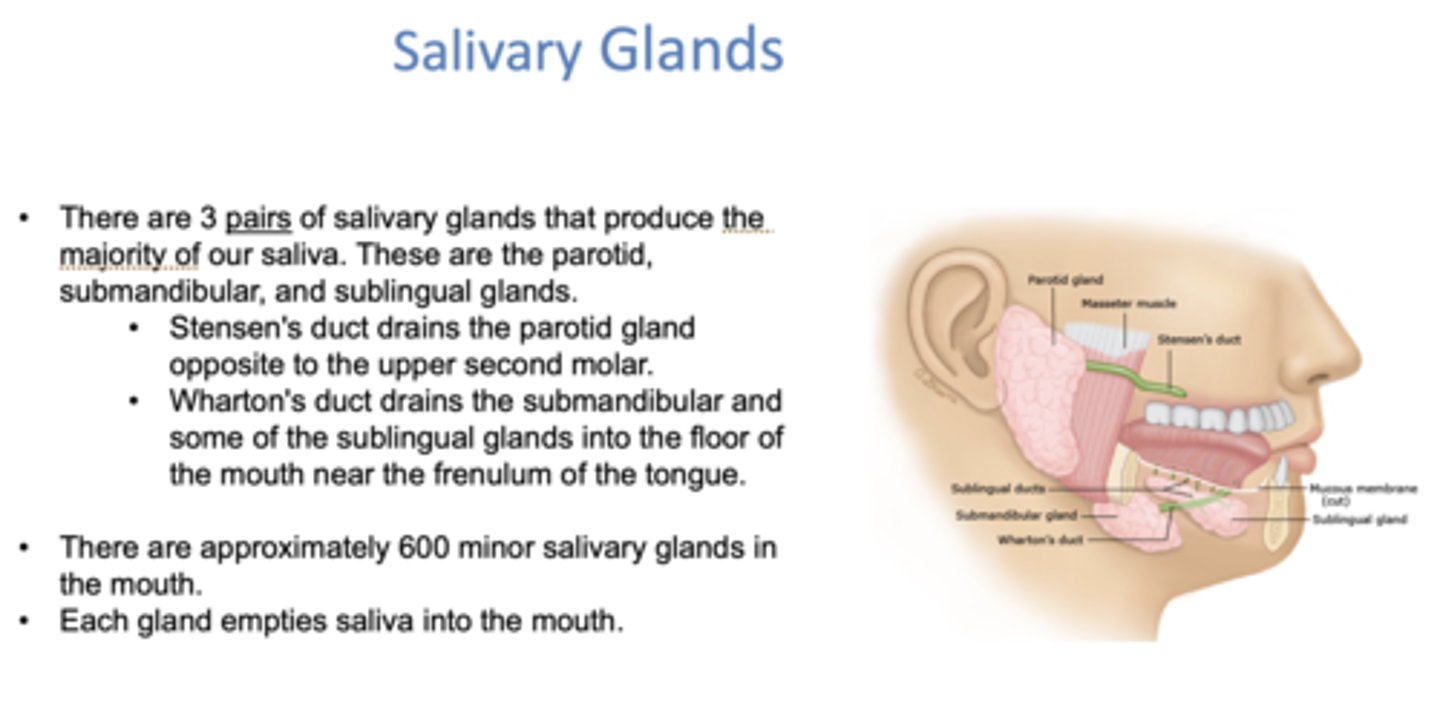
saliva leaves the submandibular gland via _______ into the mouth
Wharton's duct
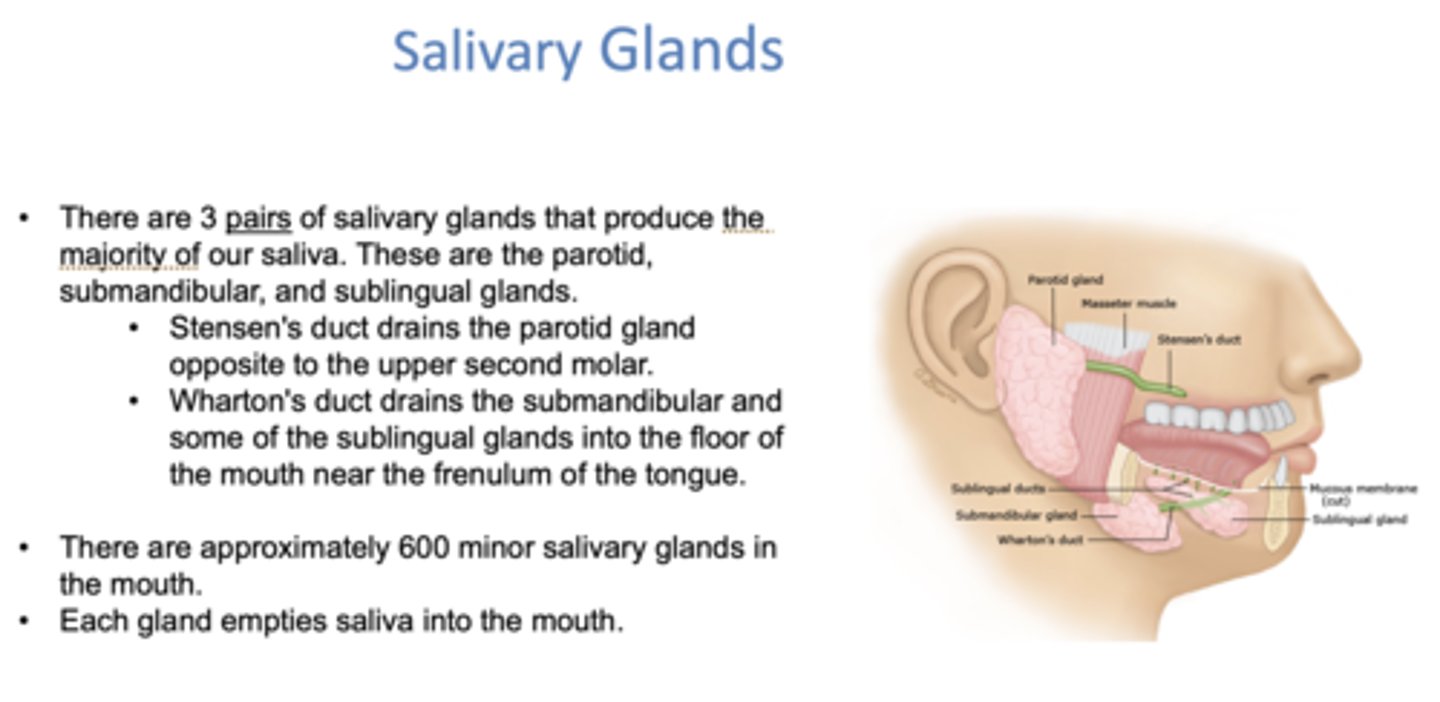
_____________ drains the submandibular and some of the sublingual glands into the floor of the mouth near the frenulum of the tongue.
Wharton's duct
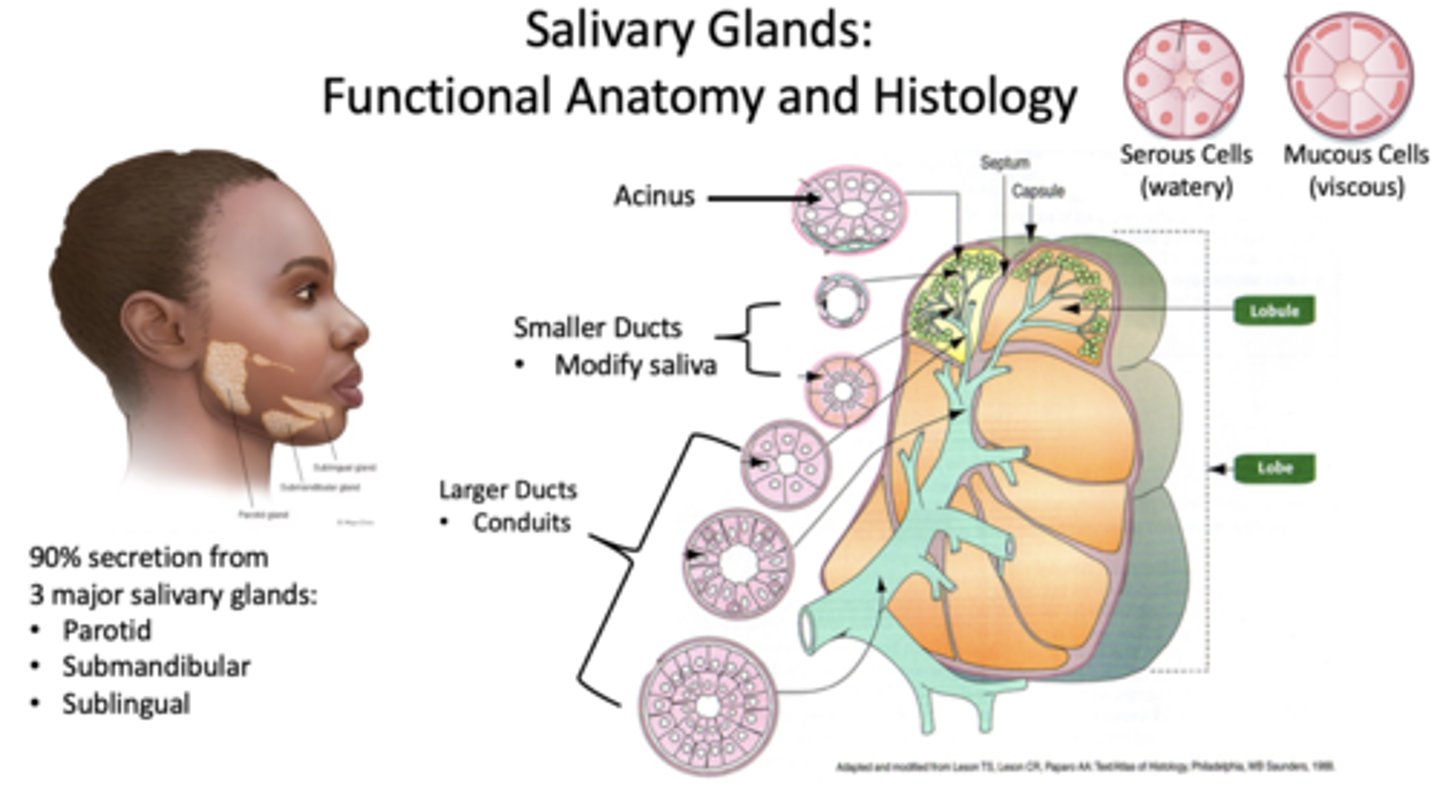
____% secretion from 3 major salivary glands
90%
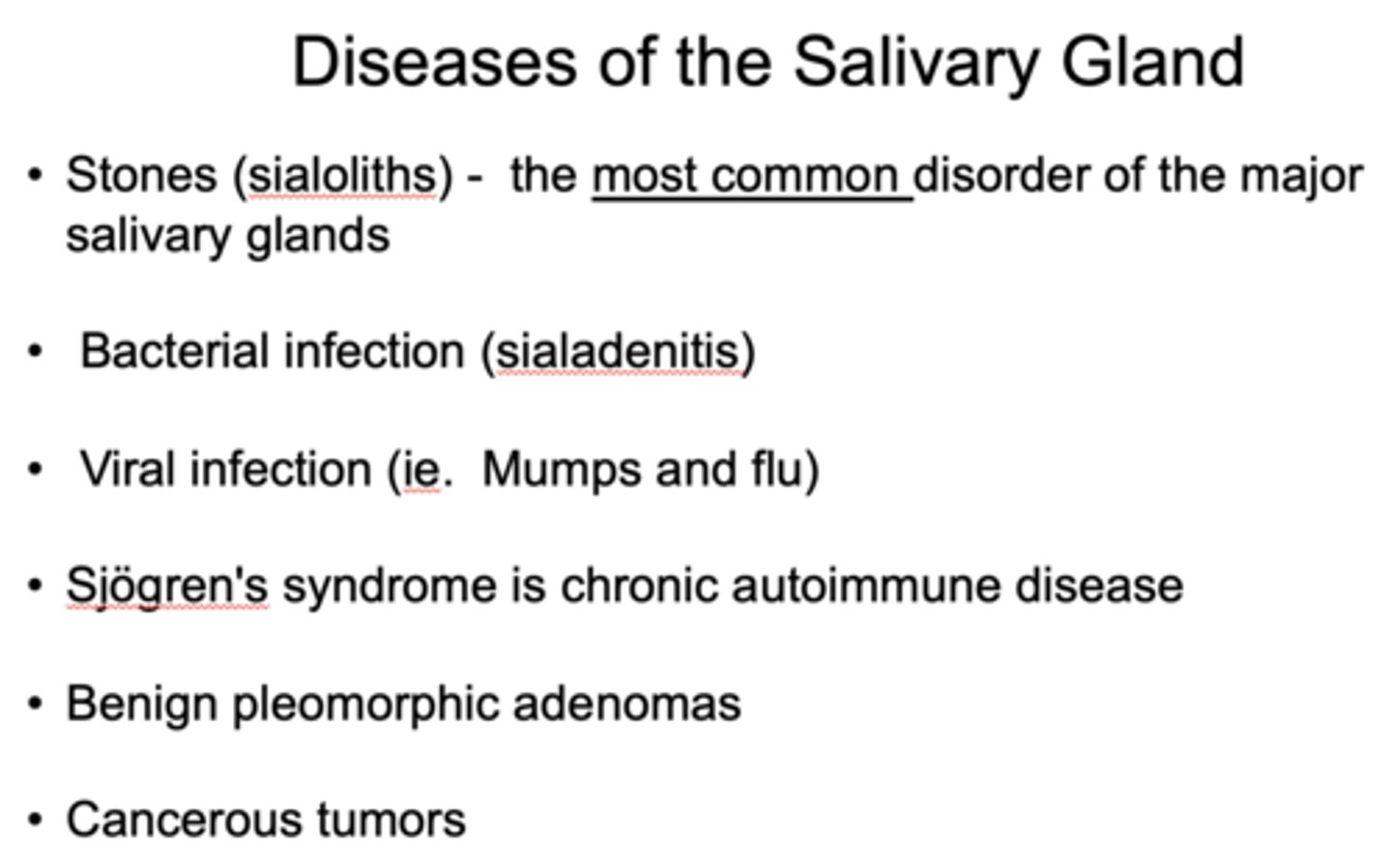
what is the most common disorder of the major salivary glands?
Stones (sialoliths)
What is a bacterial infection of the salivary gland?
Sialadenitis
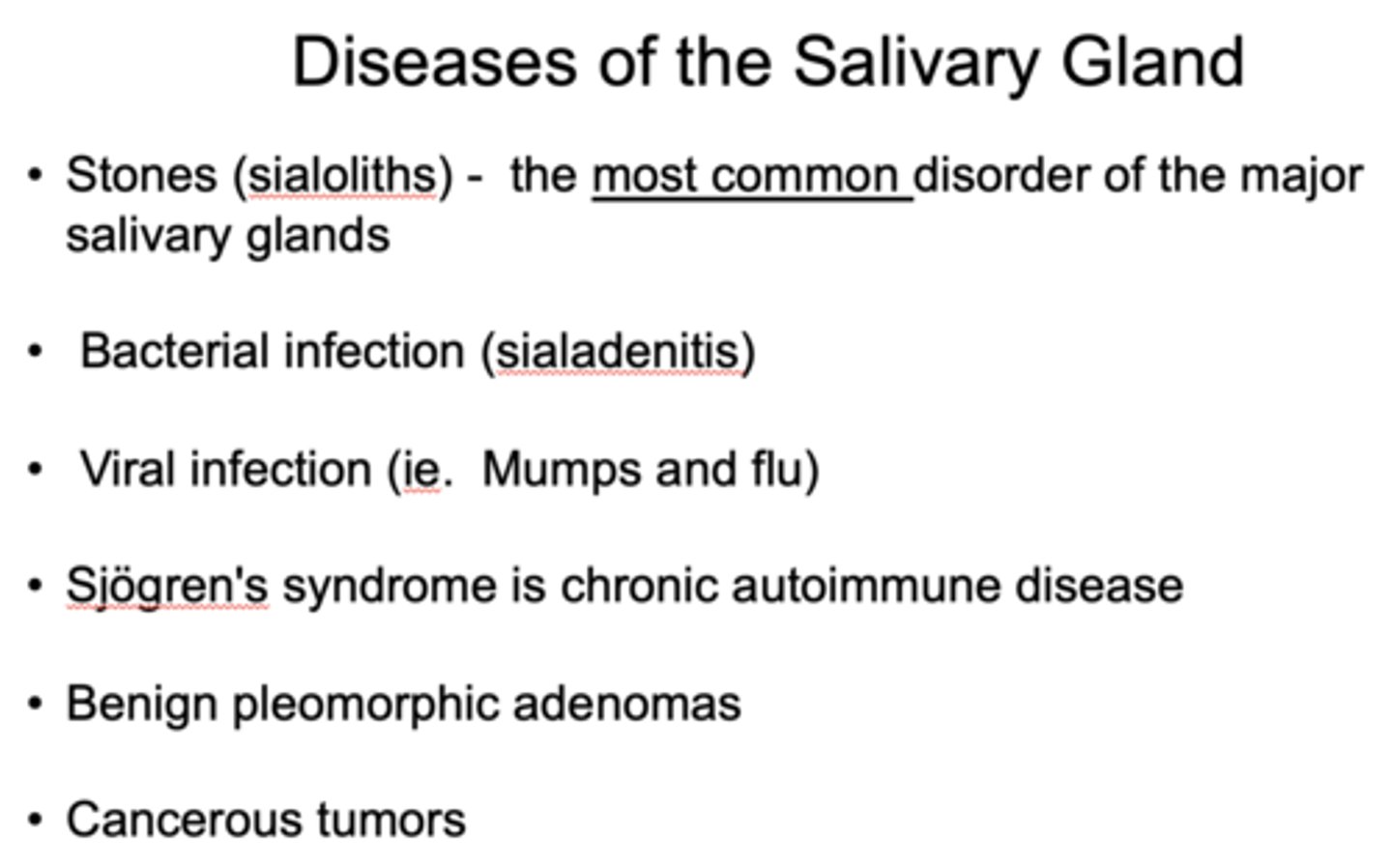
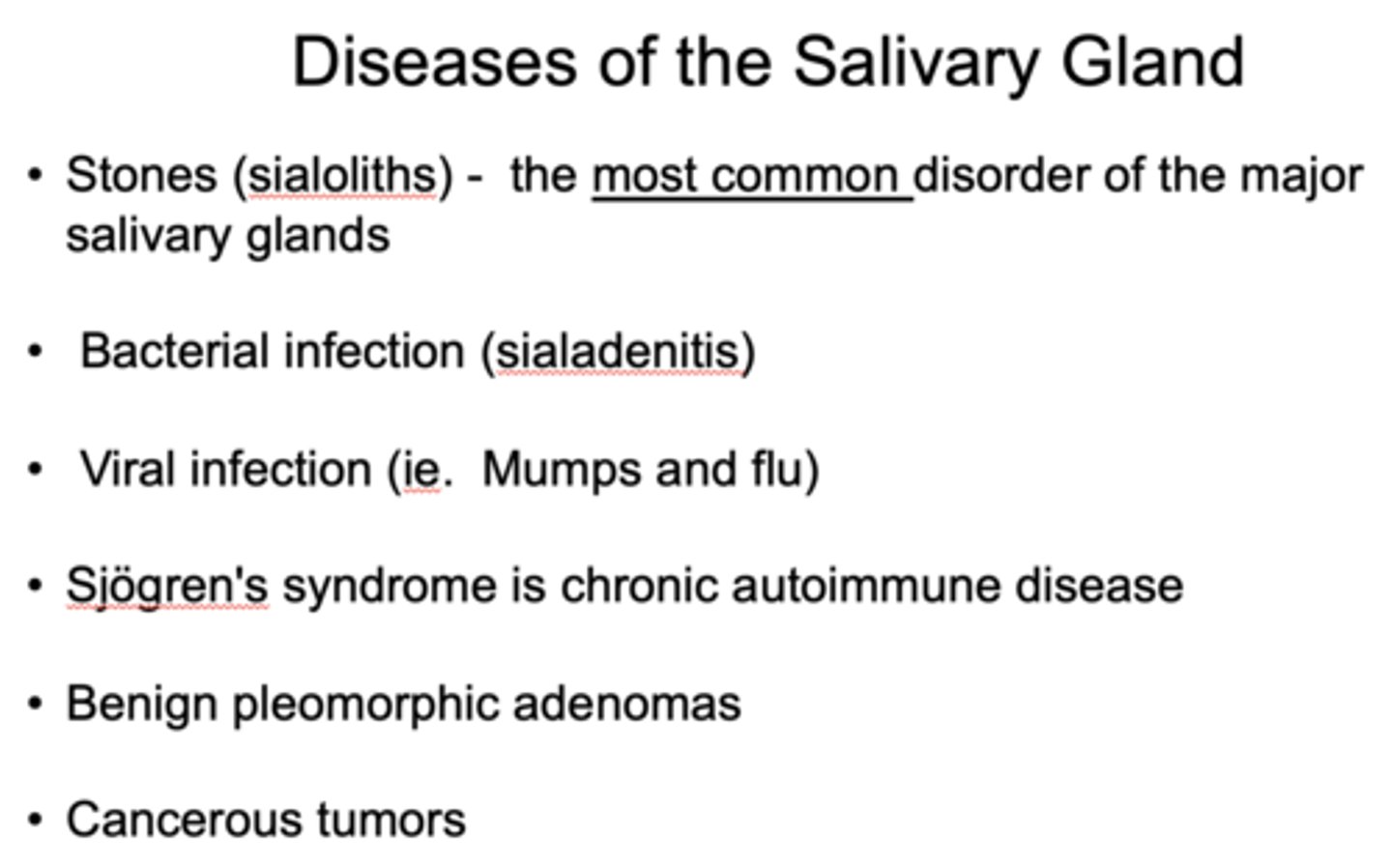
What are common diseases of the salivary gland?
- Sialoliths
- Sialadenitis
- Viral infection
- Sjögren's syndrome
- Benign pleomorphic adenomas
- Cancerous tumors
Oral homeostasis is dependent upon...
Saliva (its proteins)
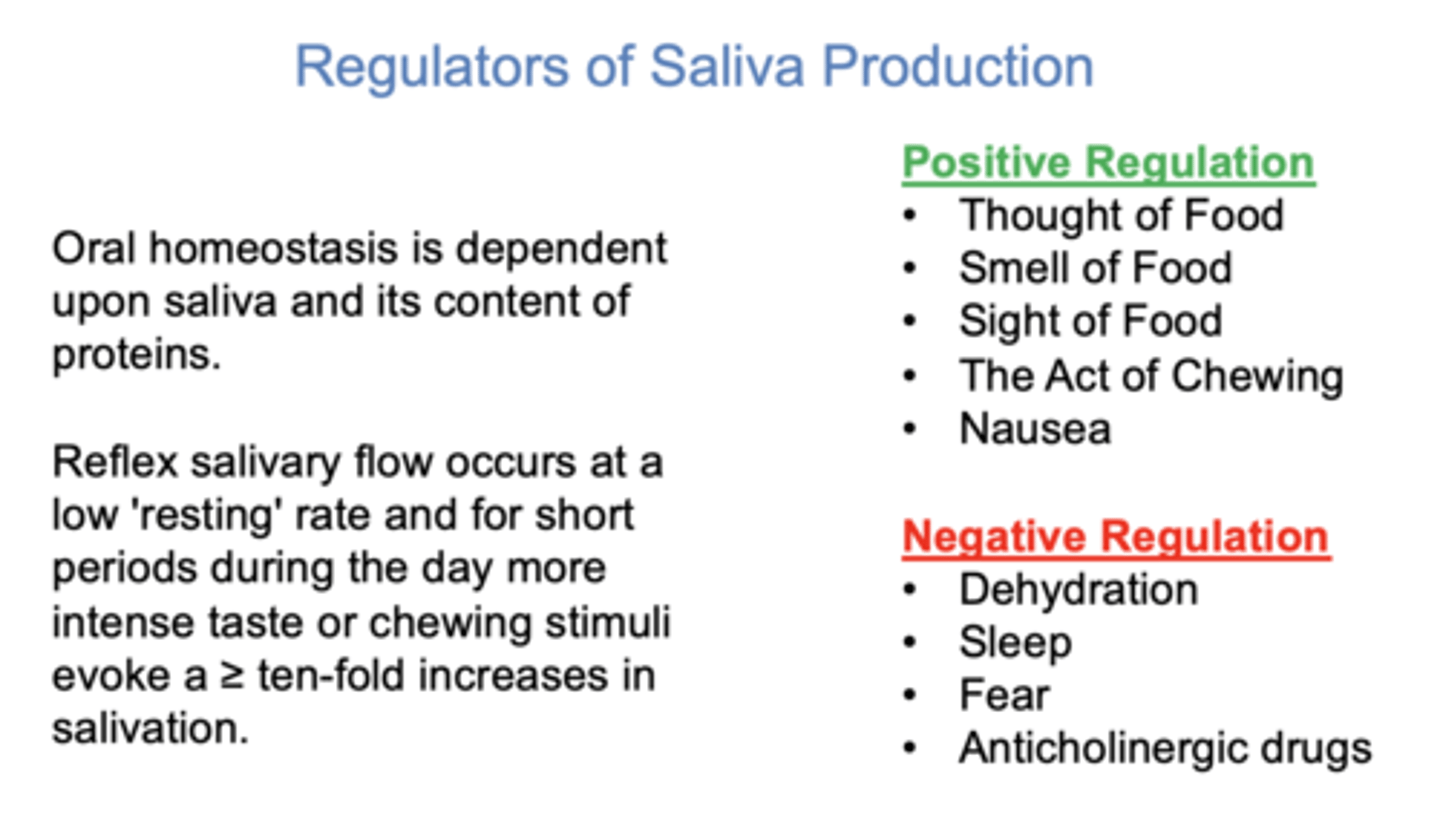
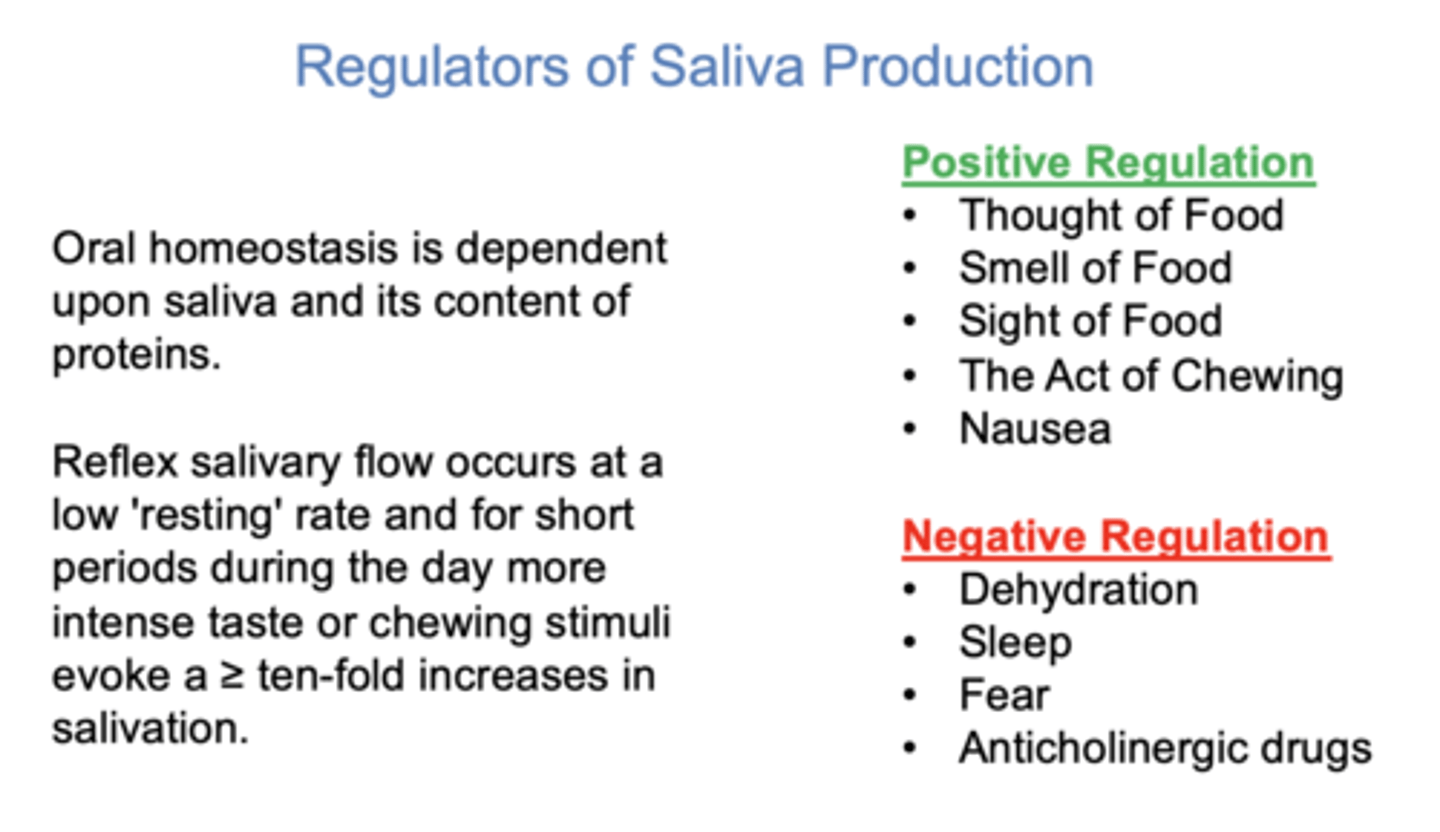
Thought of food is a _________ regulator of salivation production
positive
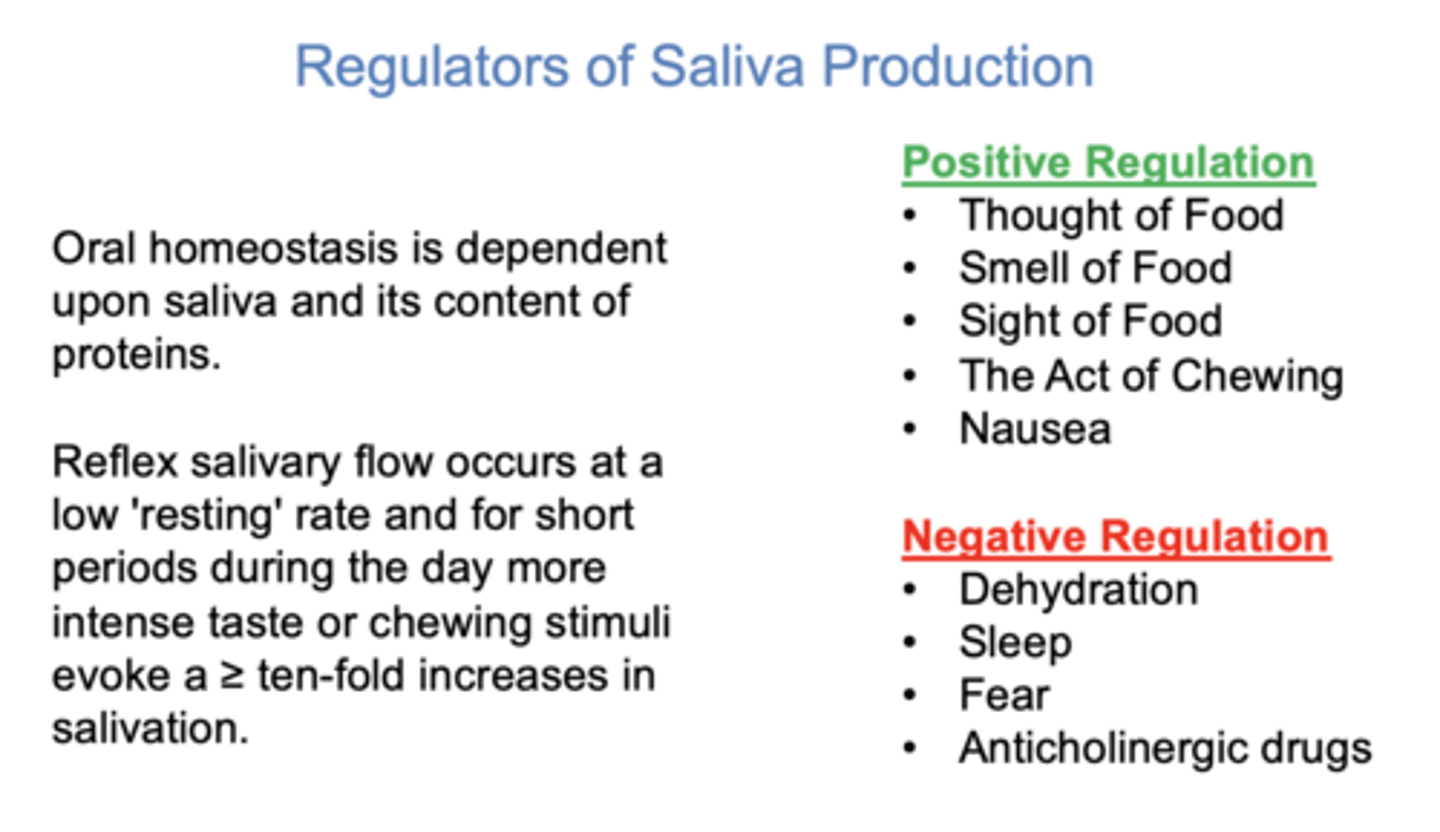
Smell of food is a _________ regulator of salivation production
positive
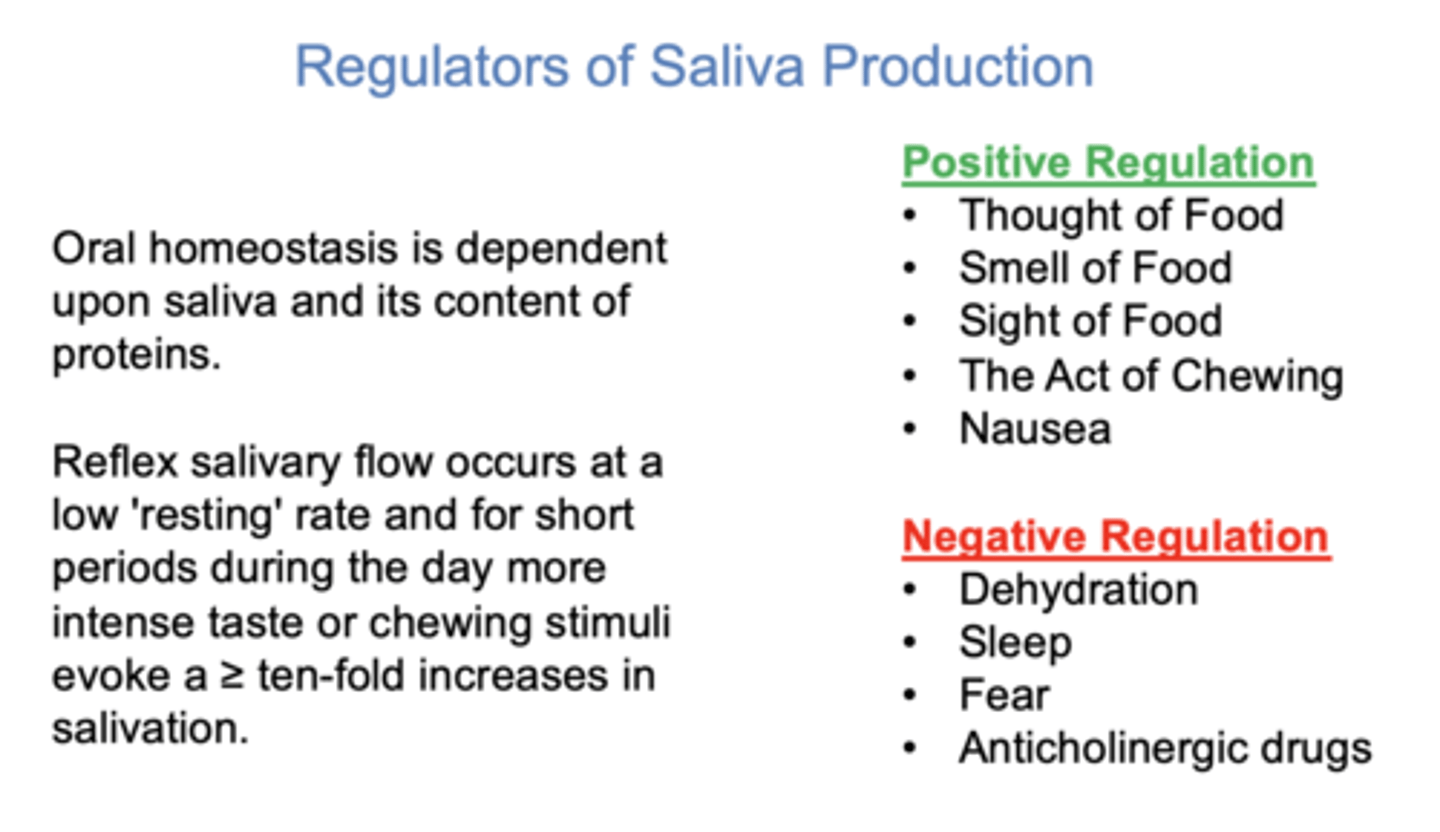
Sight of food is a _________ regulator of salivation production
positive
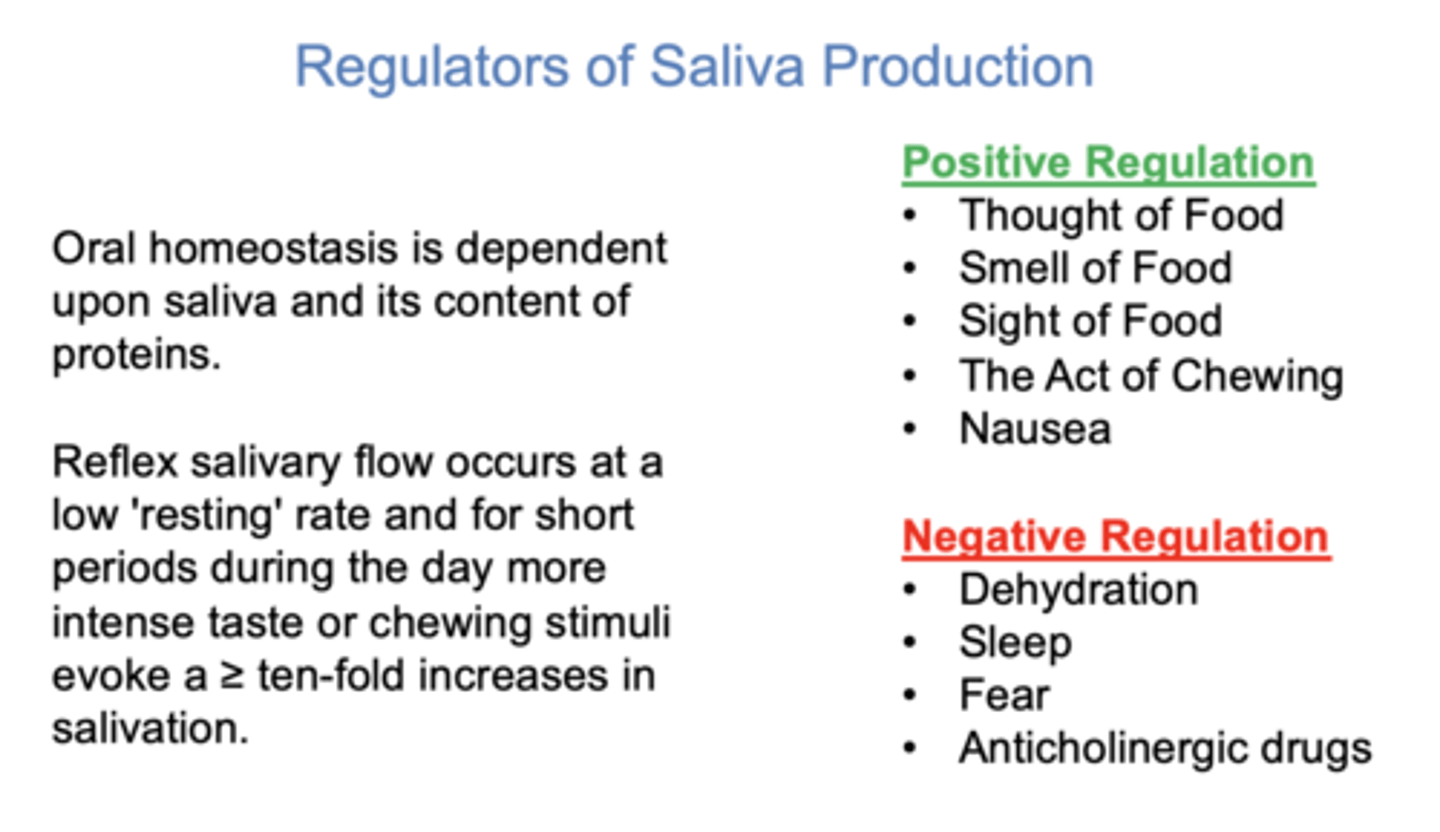
The act of chewing is a _________ regulator of salivation production
positive
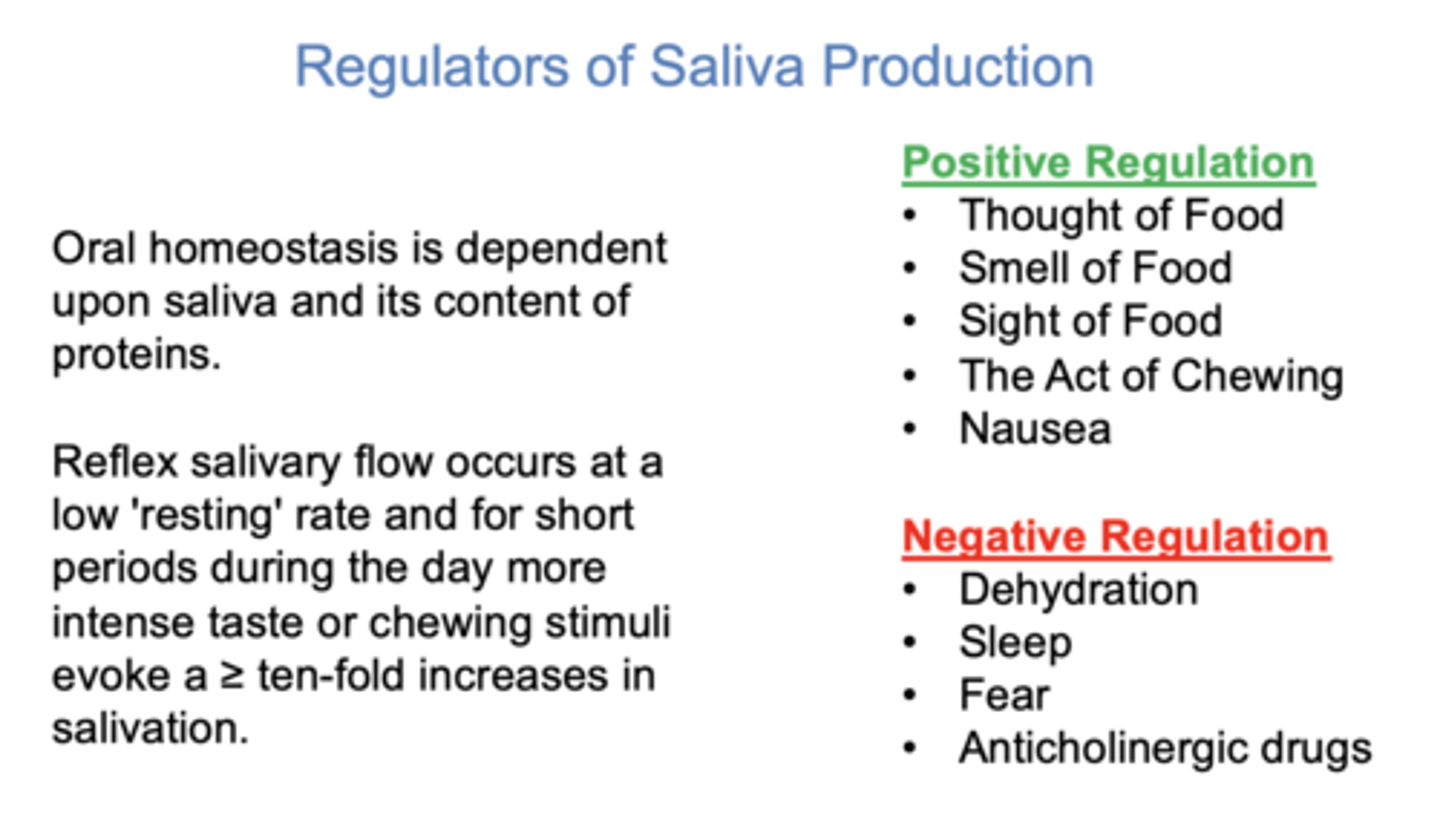
Nausea is a _________ regulator of salivation production
positive
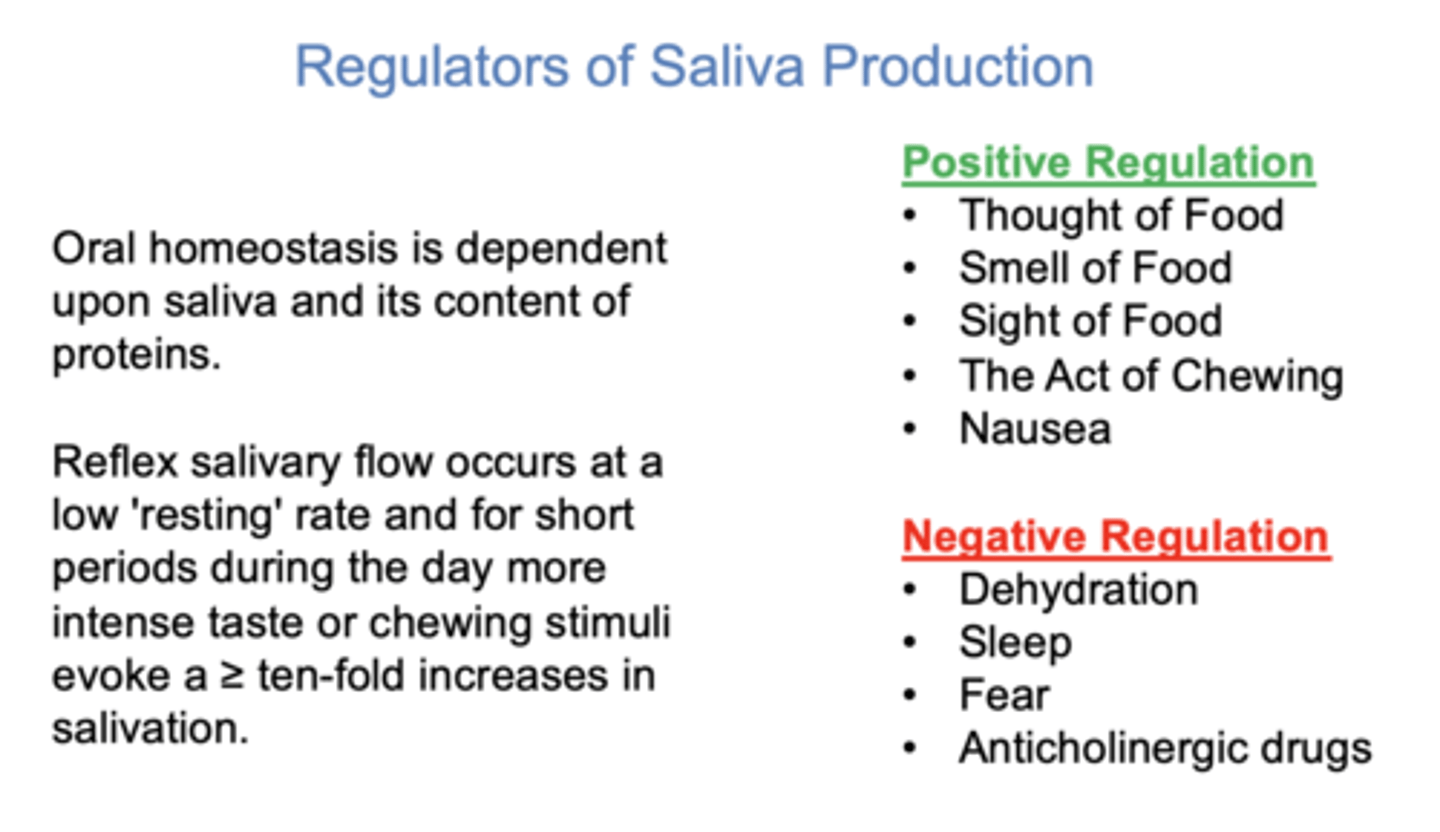
Dehydration is a _________ regulator of salivation production
negative
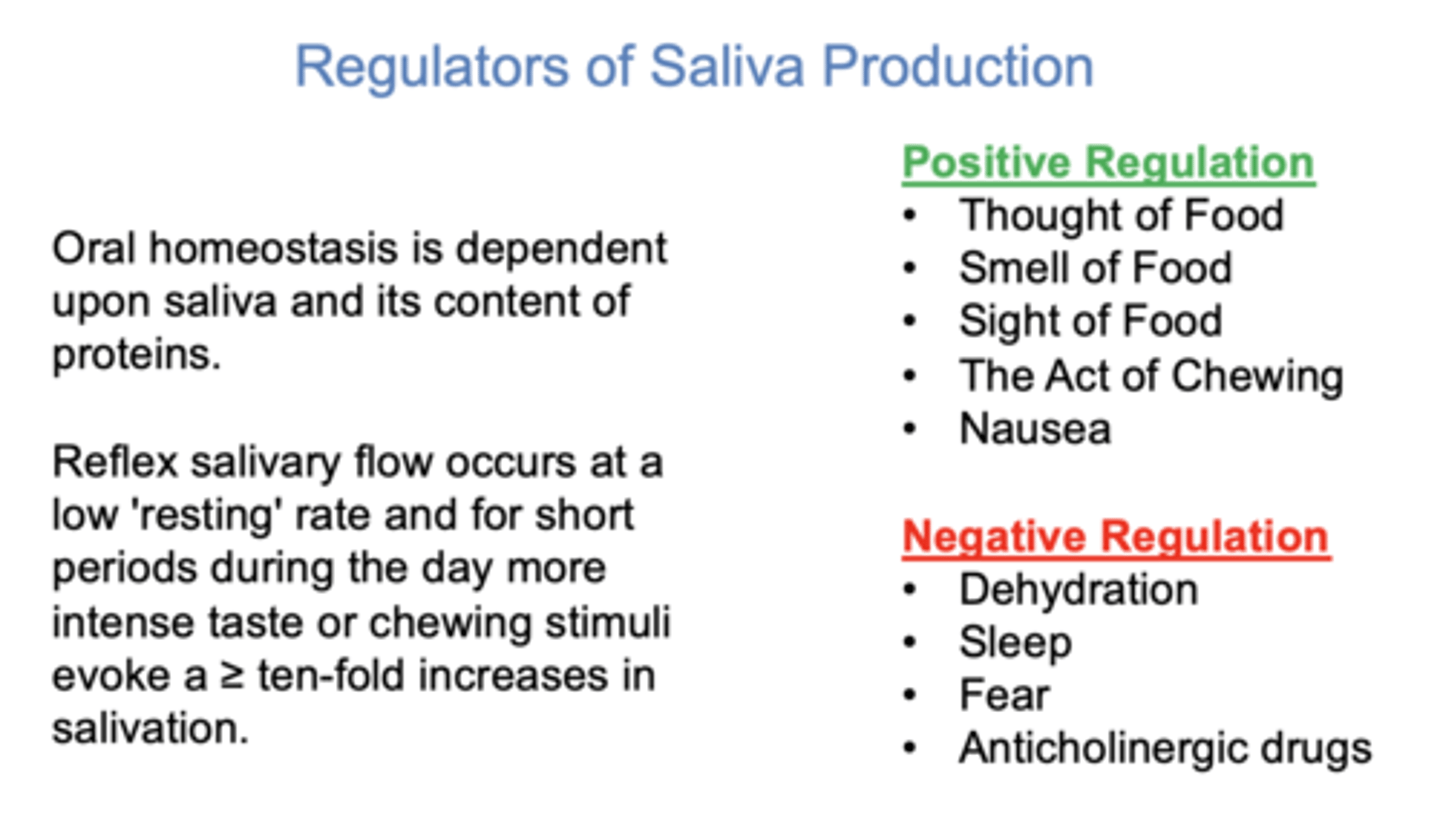
Sleep is a _________ regulator of salivation production
negative
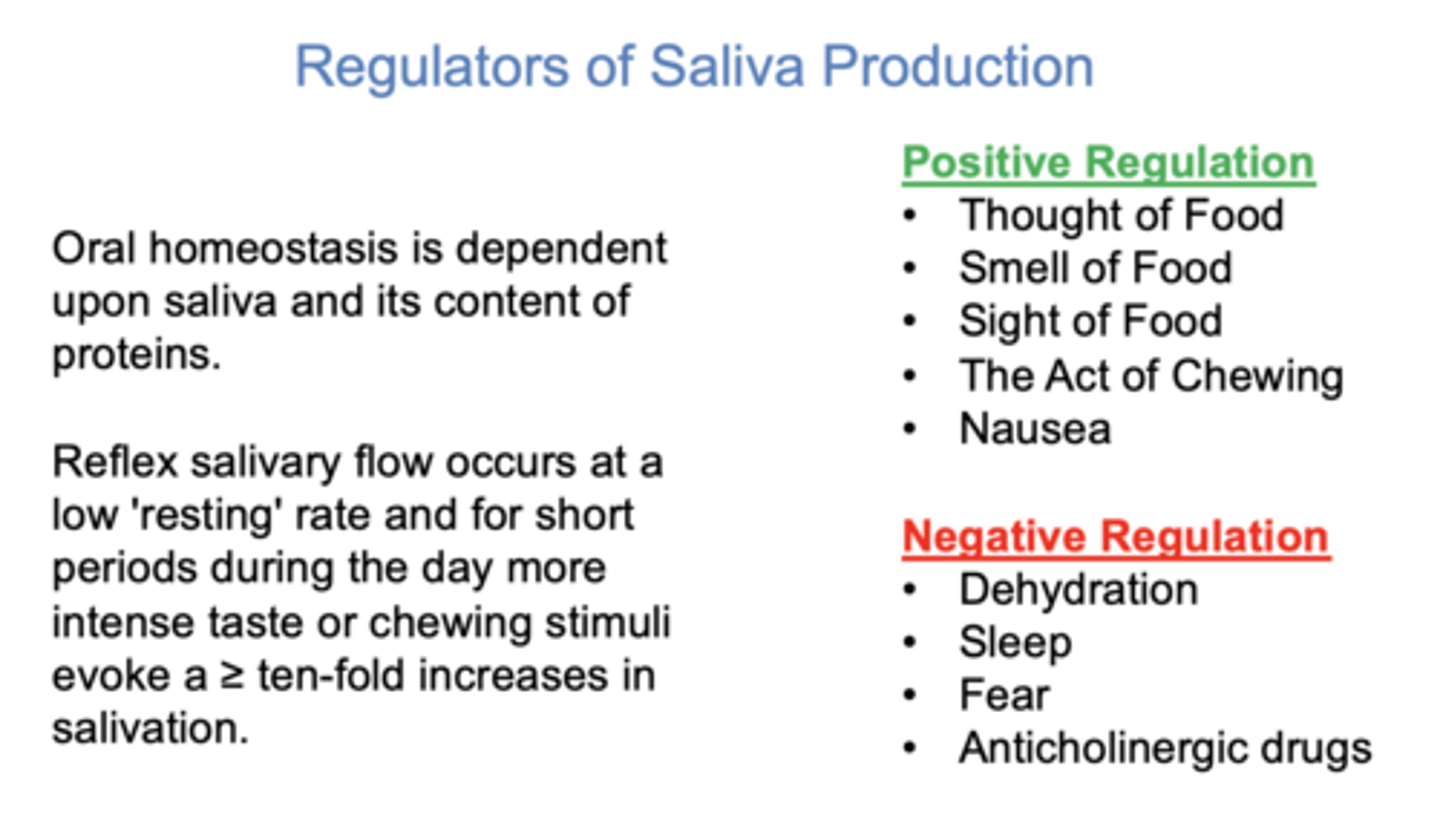
Fear is a _________ regulator of salivation production
negative
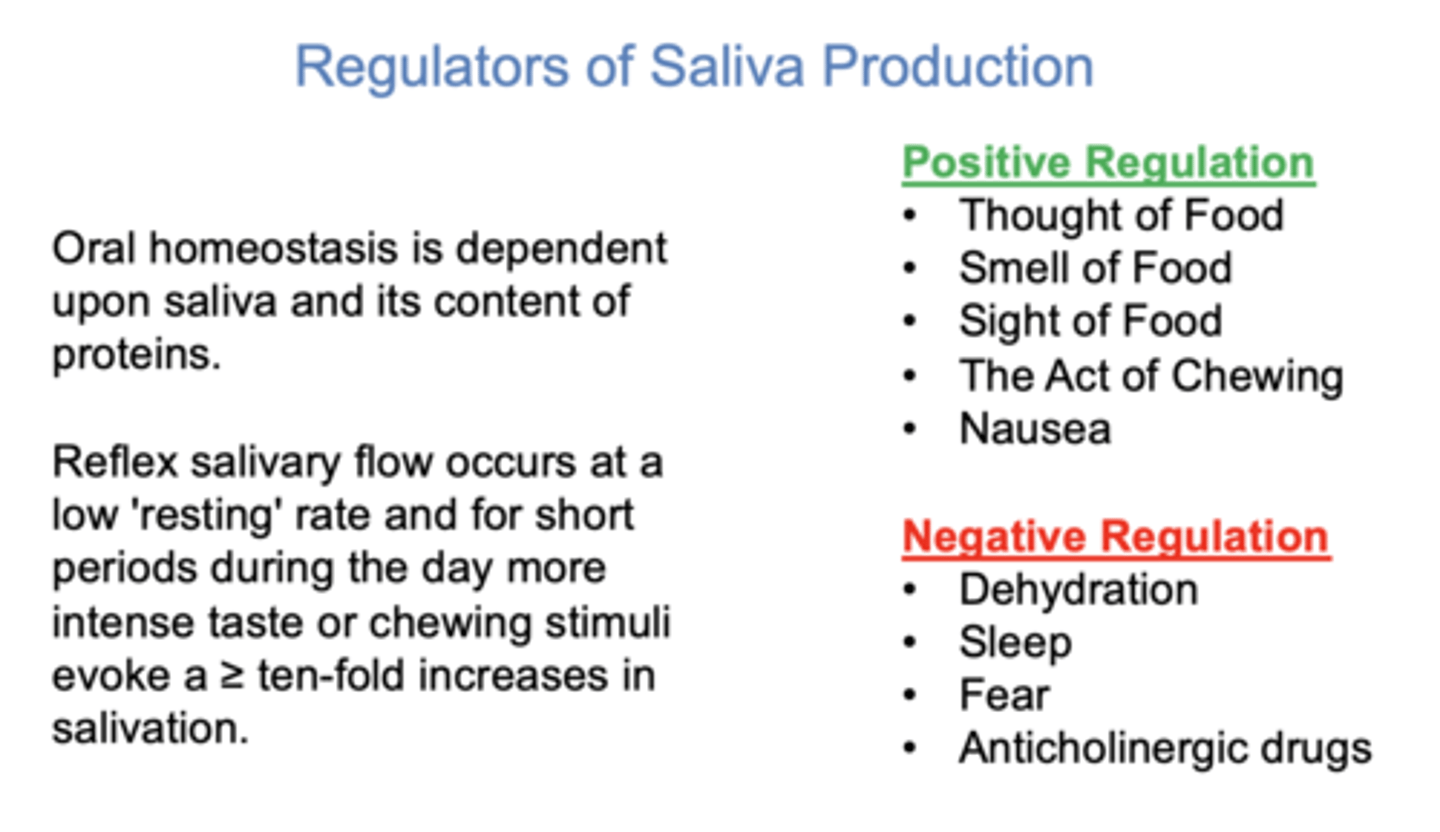
Anticholinergic drugs are a _________ regulator of salivation production
negative
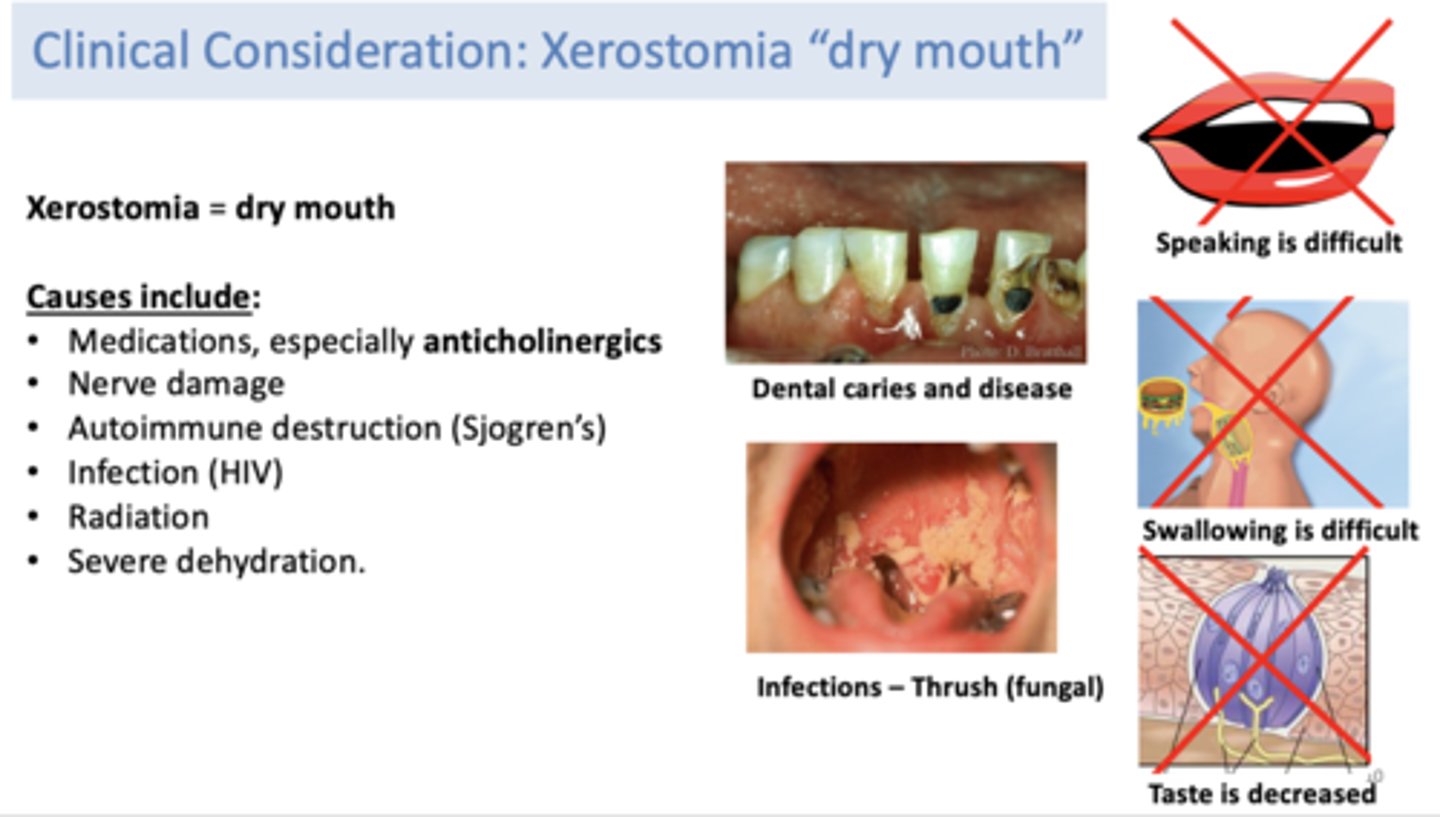
What causes xerostomia ("dry mouth")?
• Medications, especially anticholinergics
• Nerve damage
• Autoimmune destruction (Sjogren’s)
• Infection (HIV)
• Radiation
• Severe dehydration.
What is the pH of saliva?
6.5
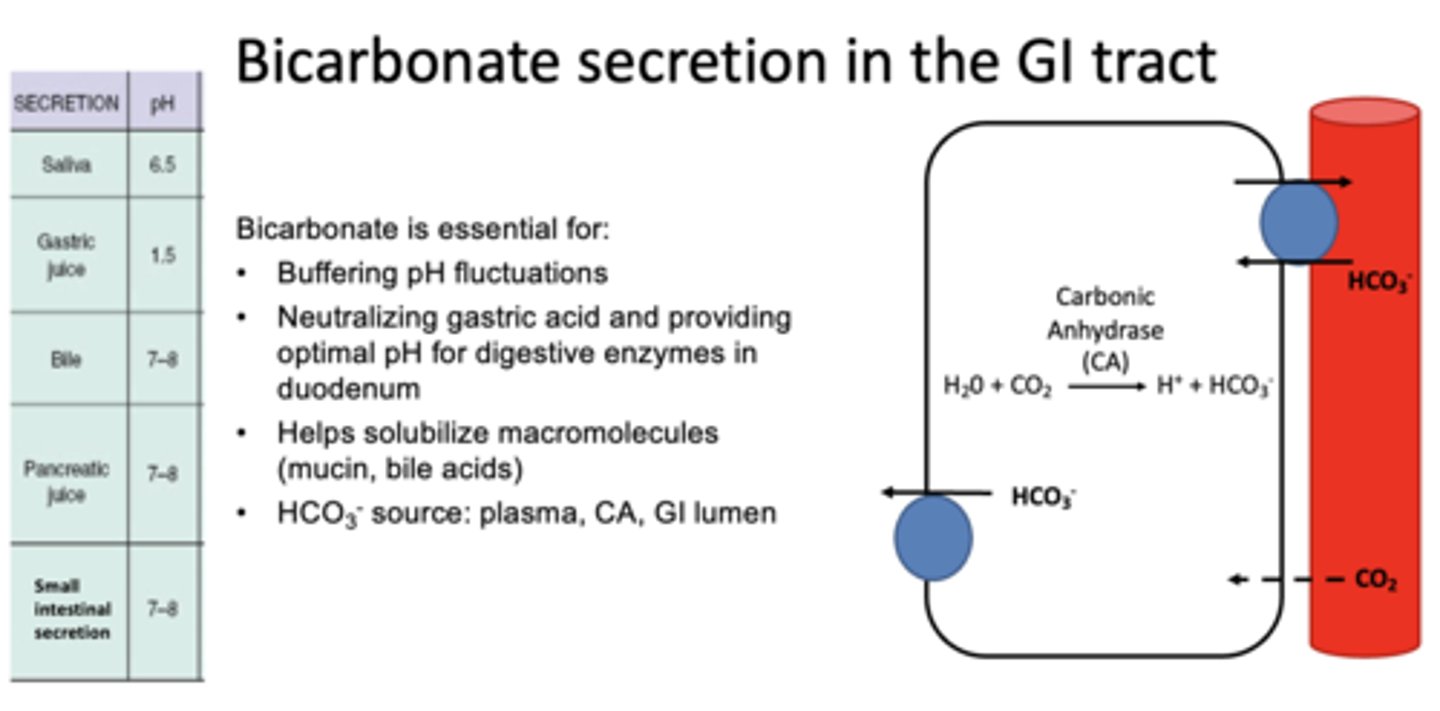
What is the pH of bile?
7-8
What is the pH of pancreatic juice?
7-8
What is the pH of small intestine secretion?
7-8
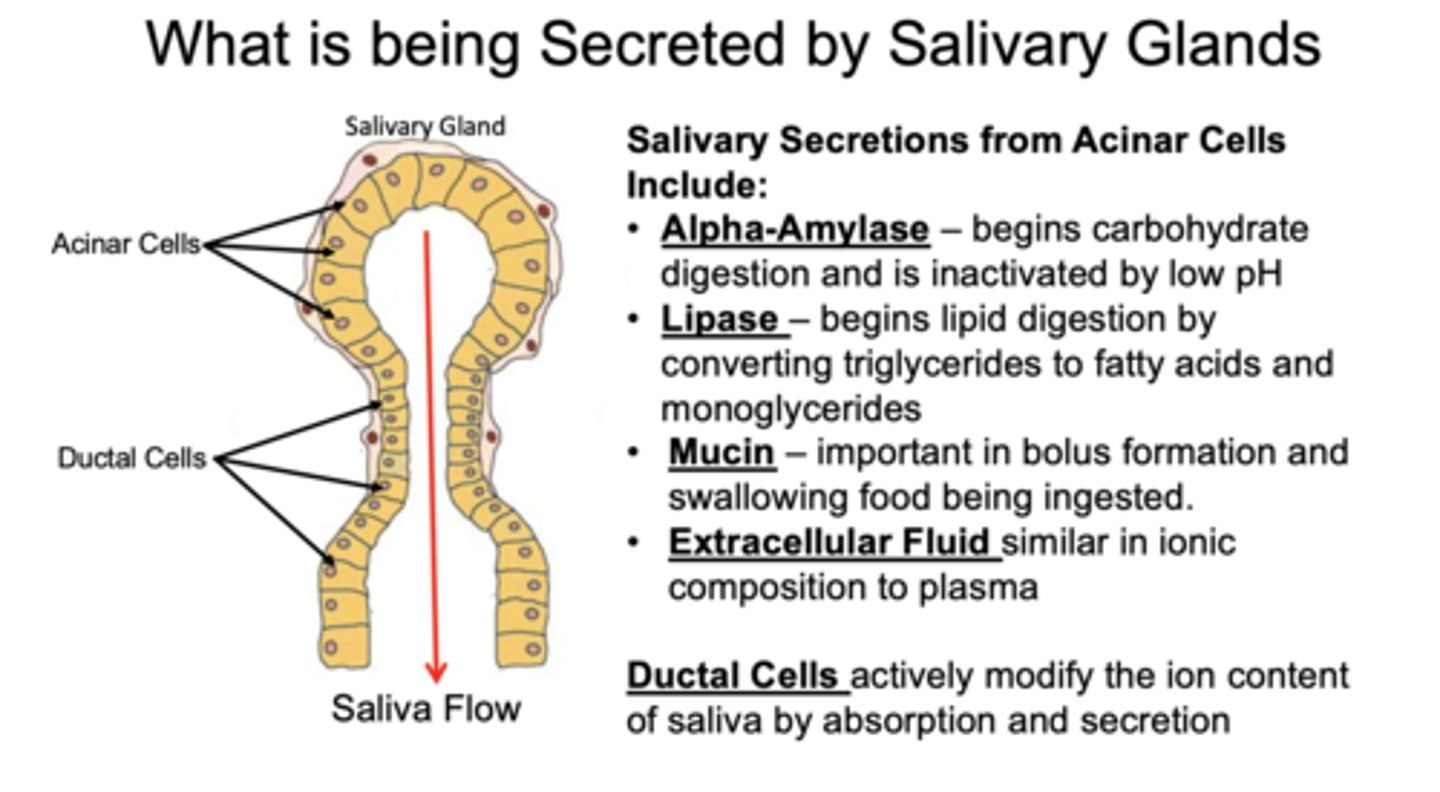
Salivary secretions from acinar cells include (4):
- Alpha-amylase
- Lipase
- Mucin
- Extracellular fluid
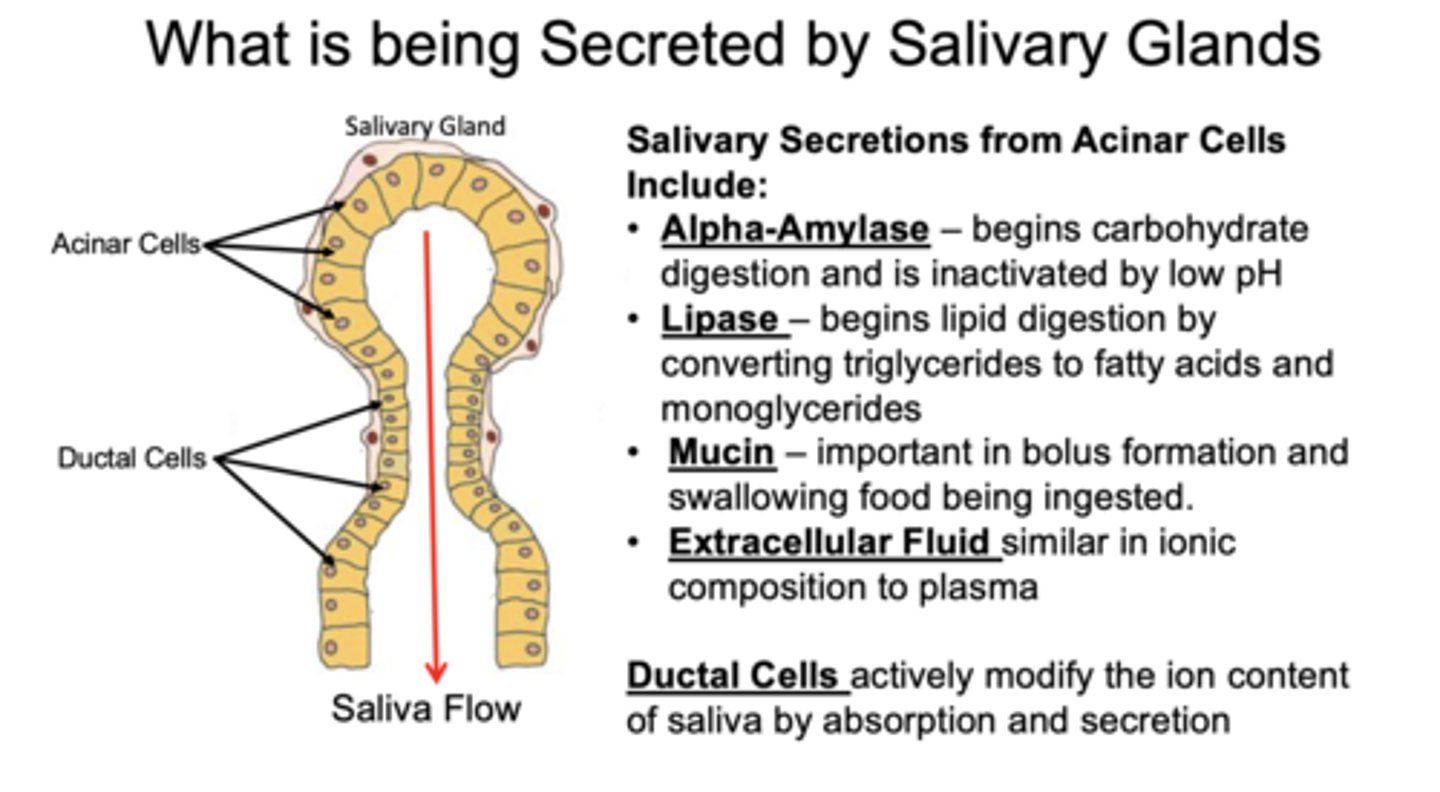
important in bolus formation and swallowing food being ingested:
mucin
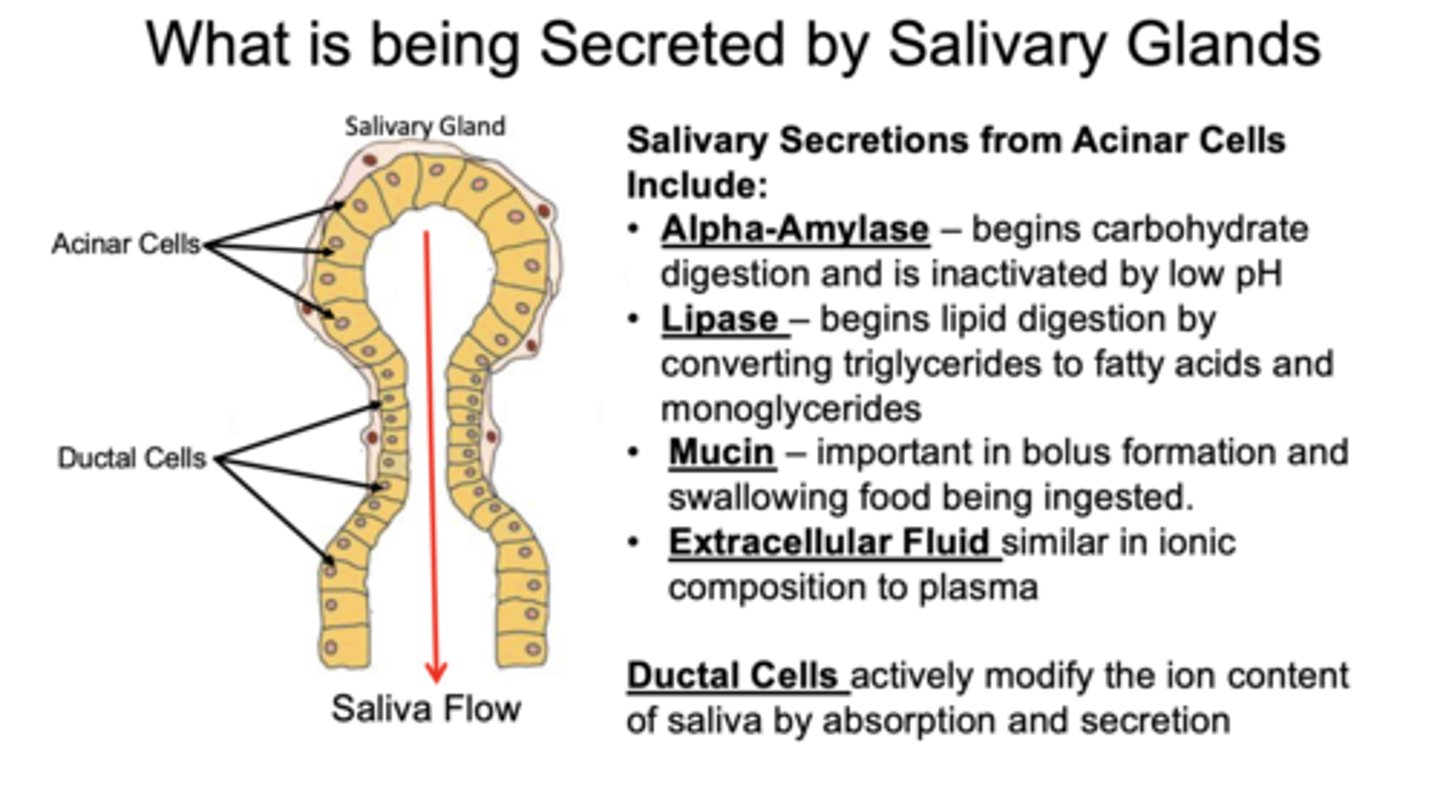
these structures actively modify the ion content of saliva by absorption and secretion:
ductal cells
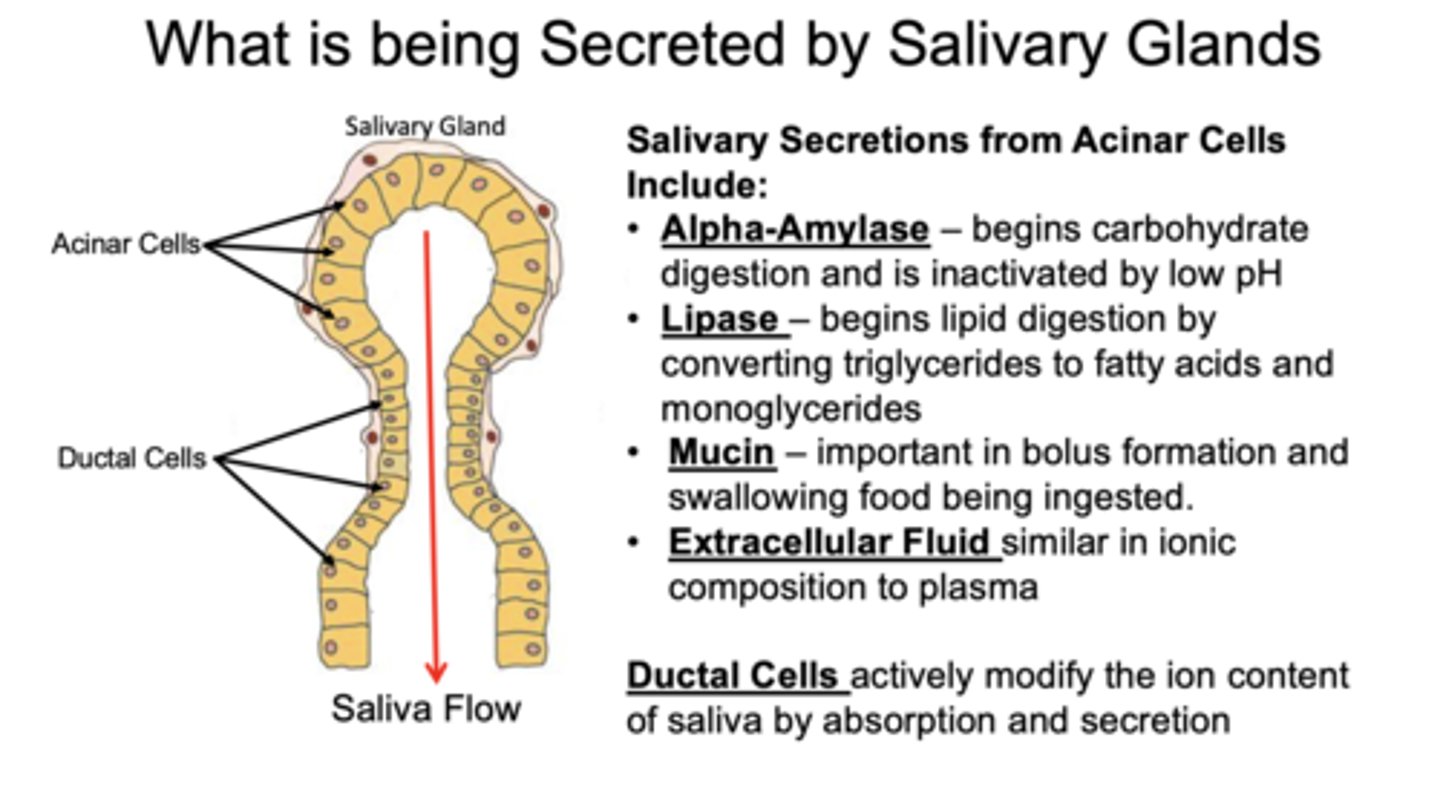
begins lipid digestion by converting triglycerides to fatty acids and monoglycerides
lipase
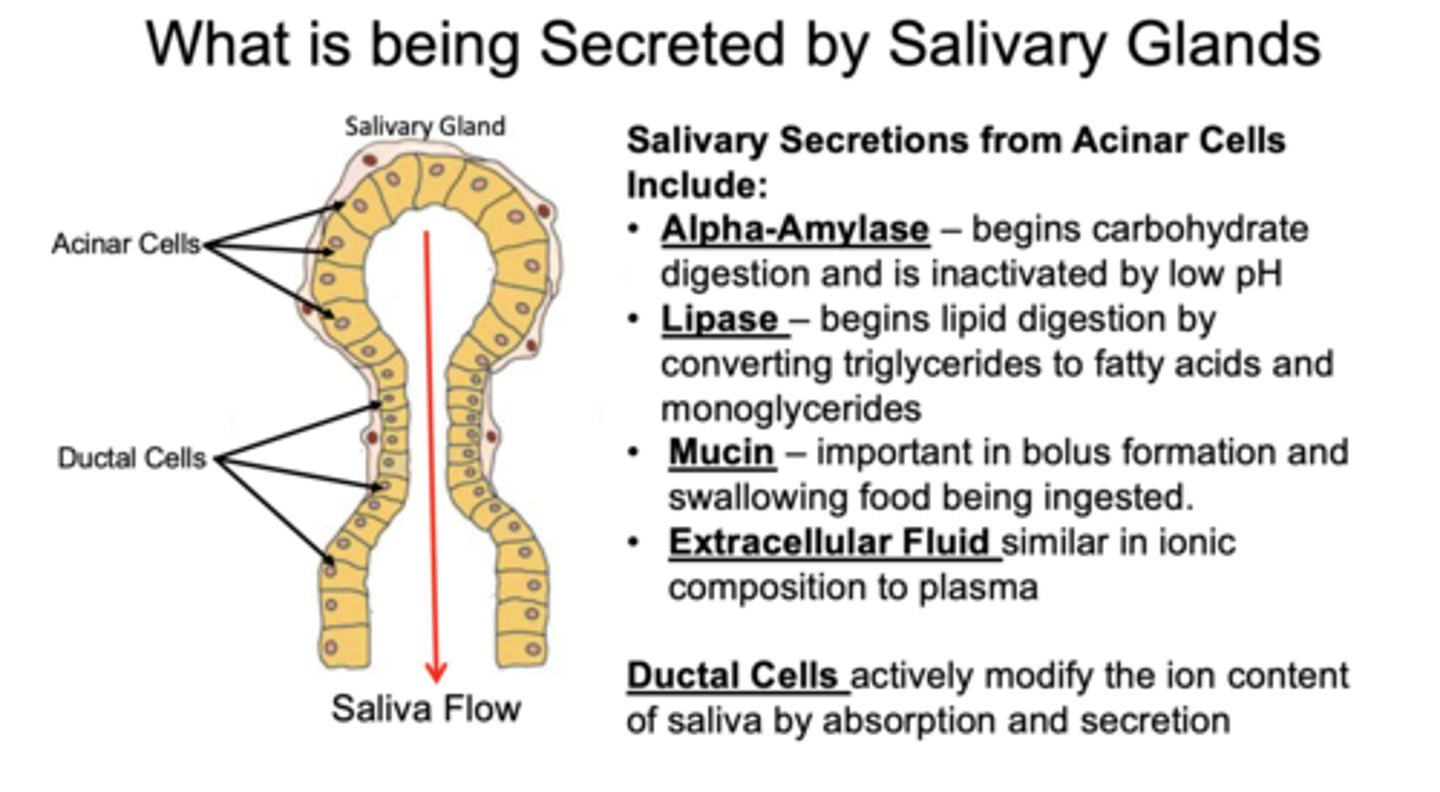
begins carbohydrate digestion and is inactivated by low pH
alpha-amylase
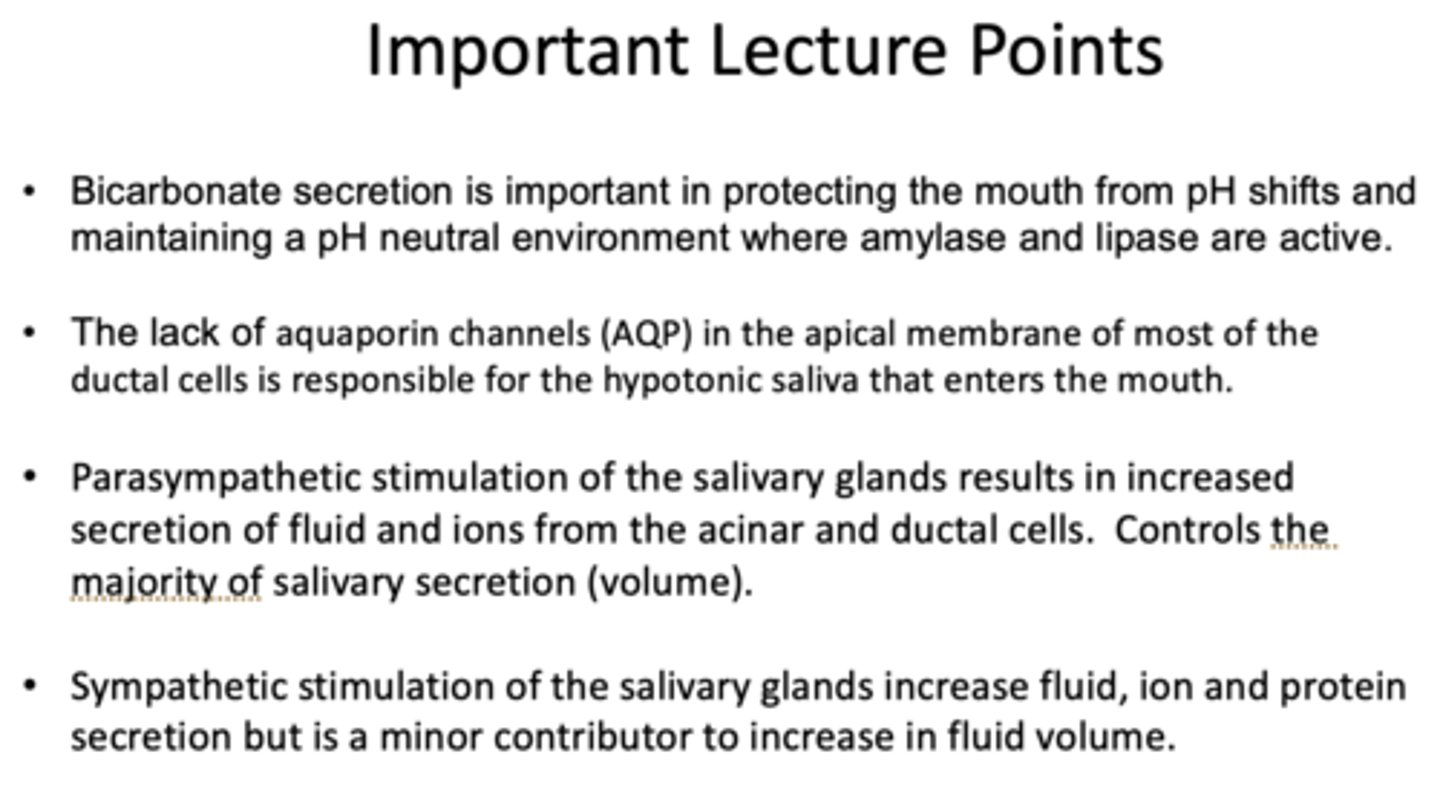
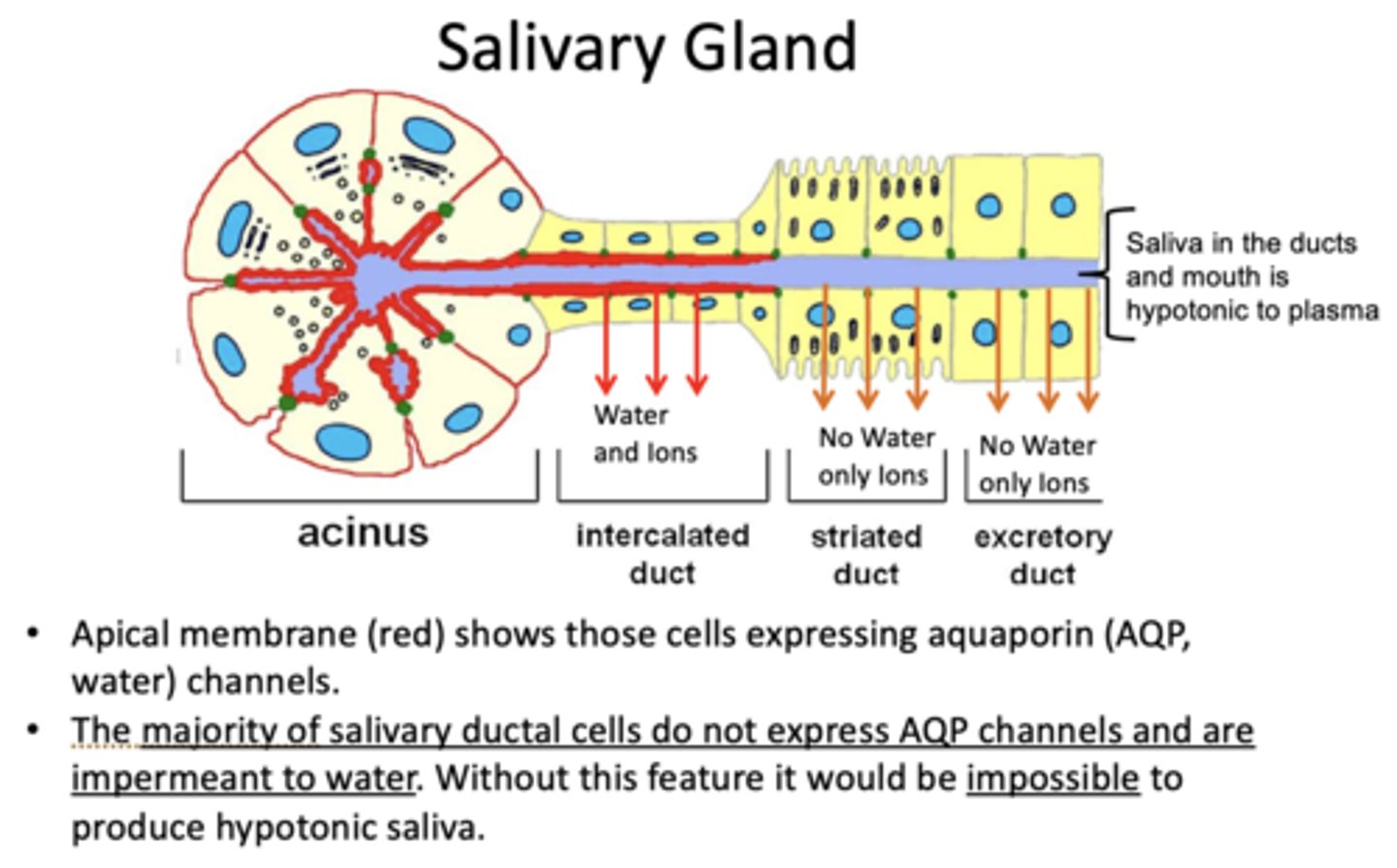
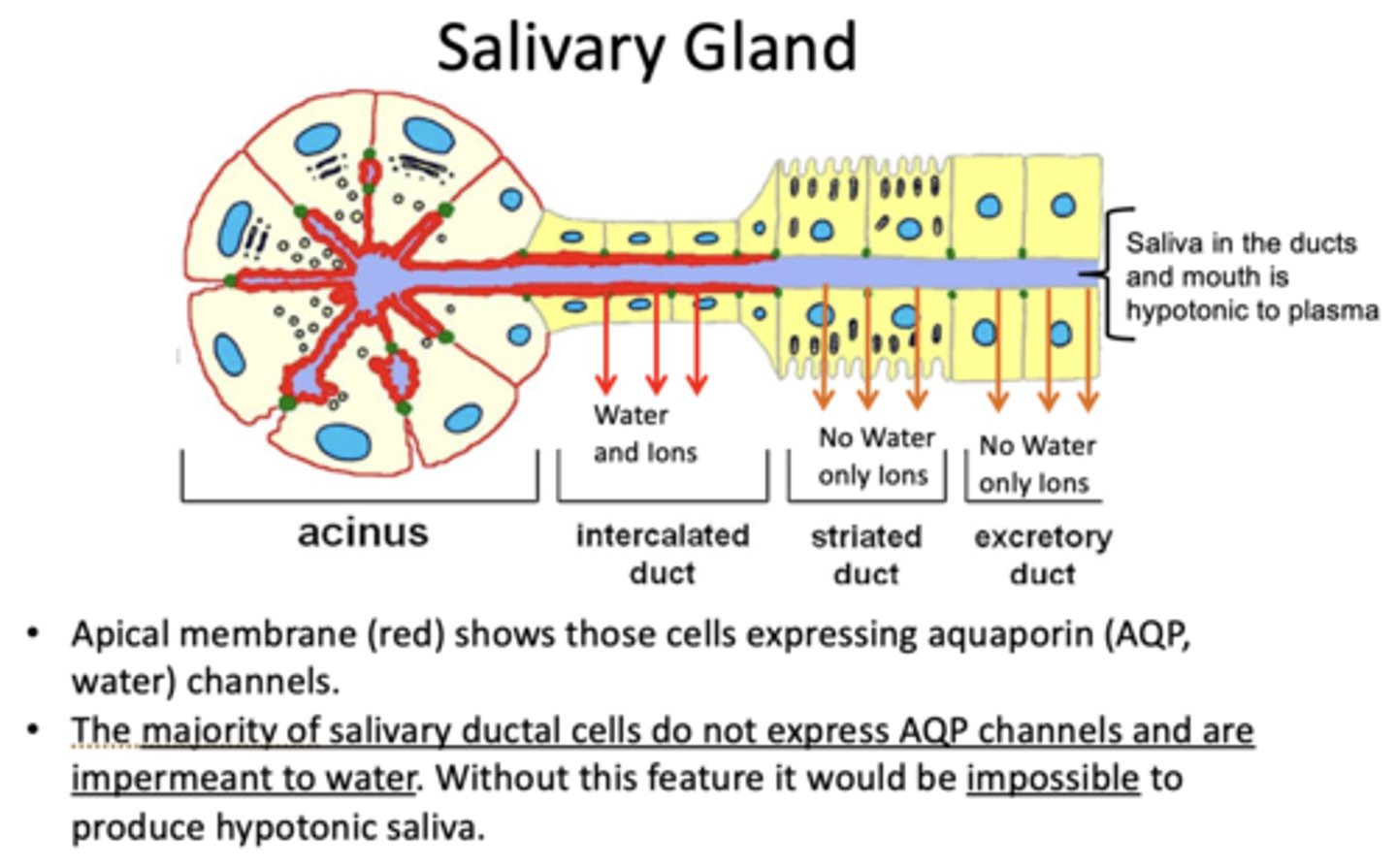
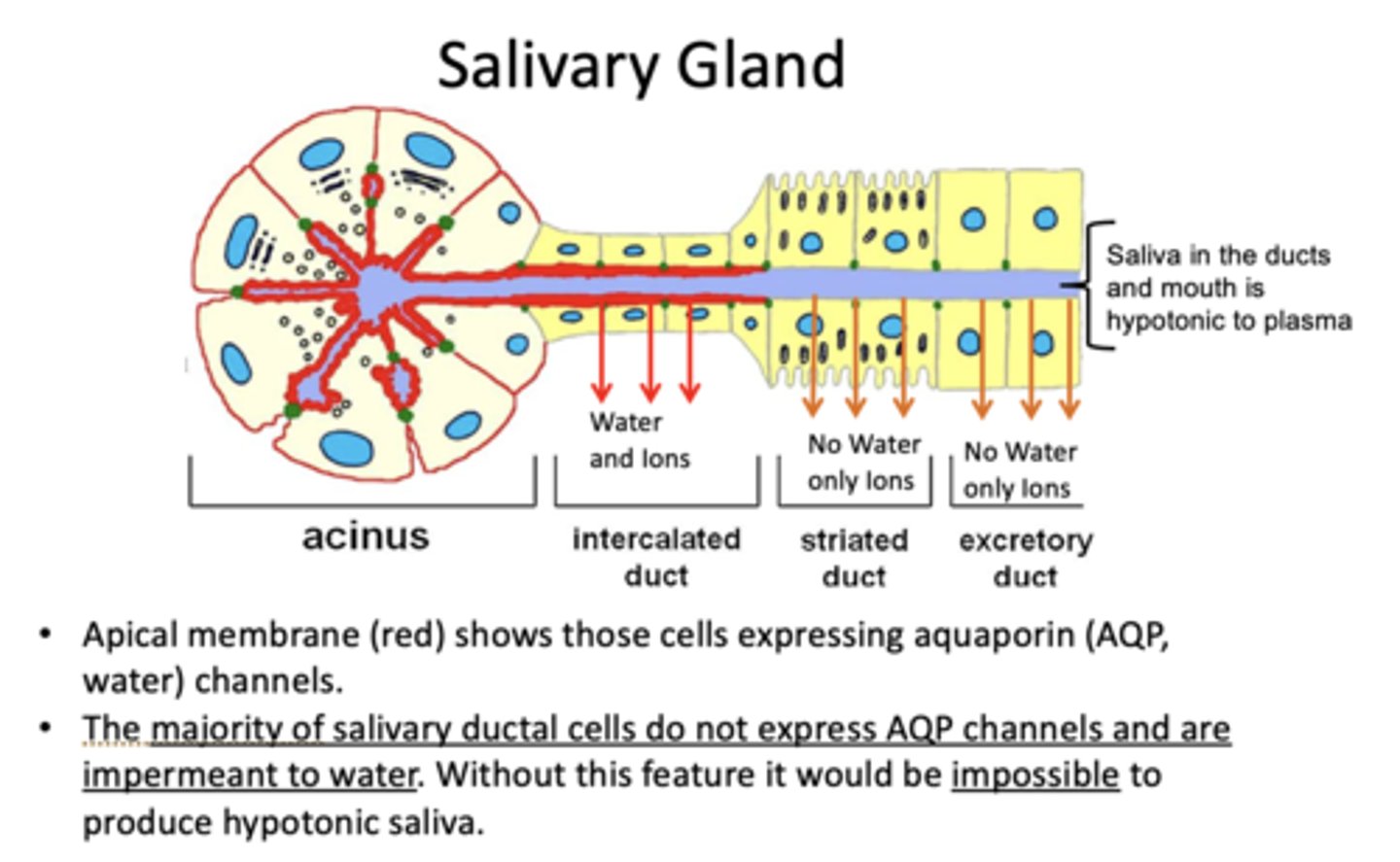
The lack of ________ in the apical membrane of most of the ductal cells is responsible for the hypotonic saliva that enters the mouth
aquaporin channels
Hypotonic condition of saliva entering the mouth aids detection of ____________ in the diet
Salt
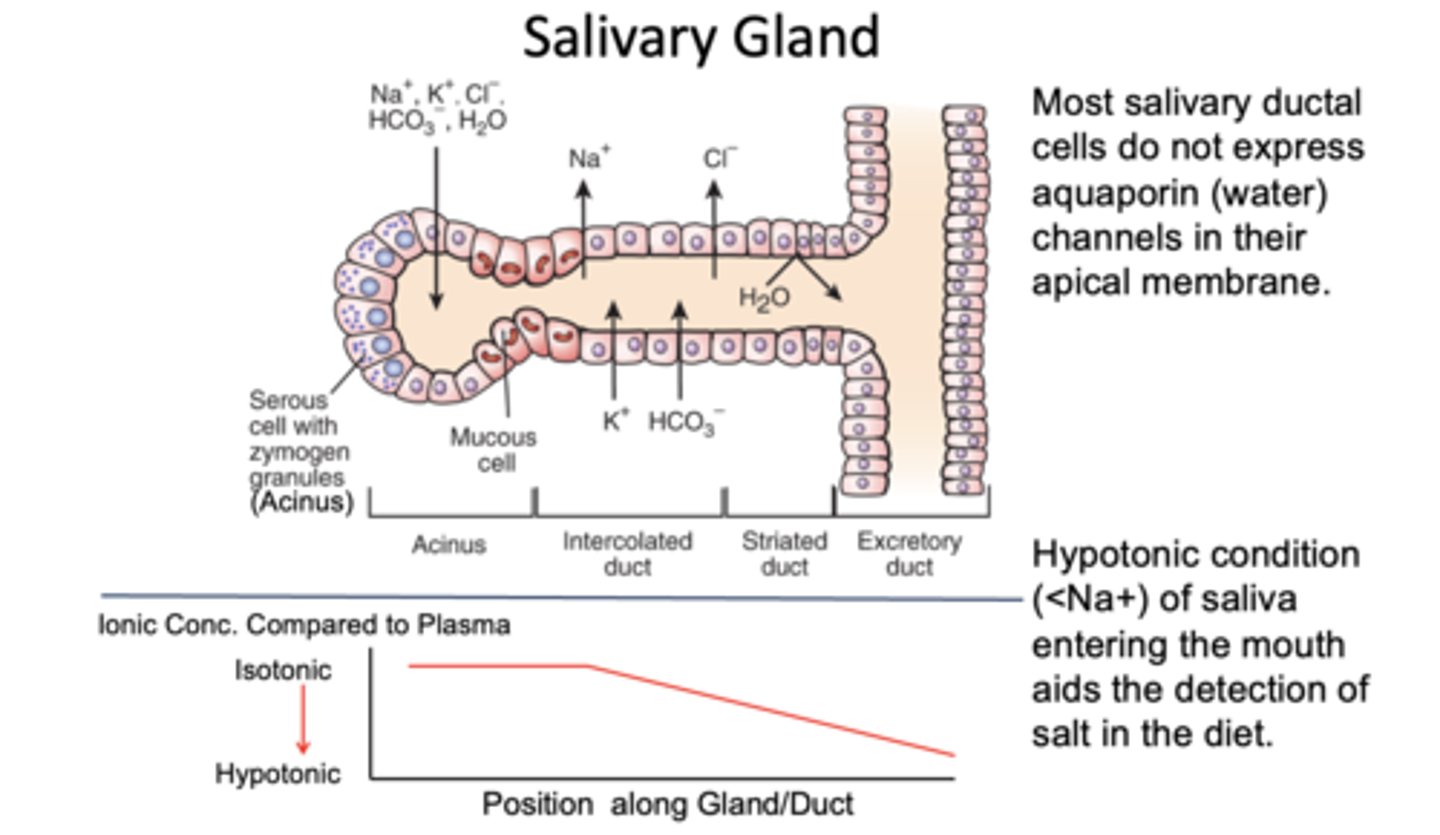
as saliva is produced in acinar cells and moves through the ductal cells, it becomes __________ compared to plasma
hypotonic
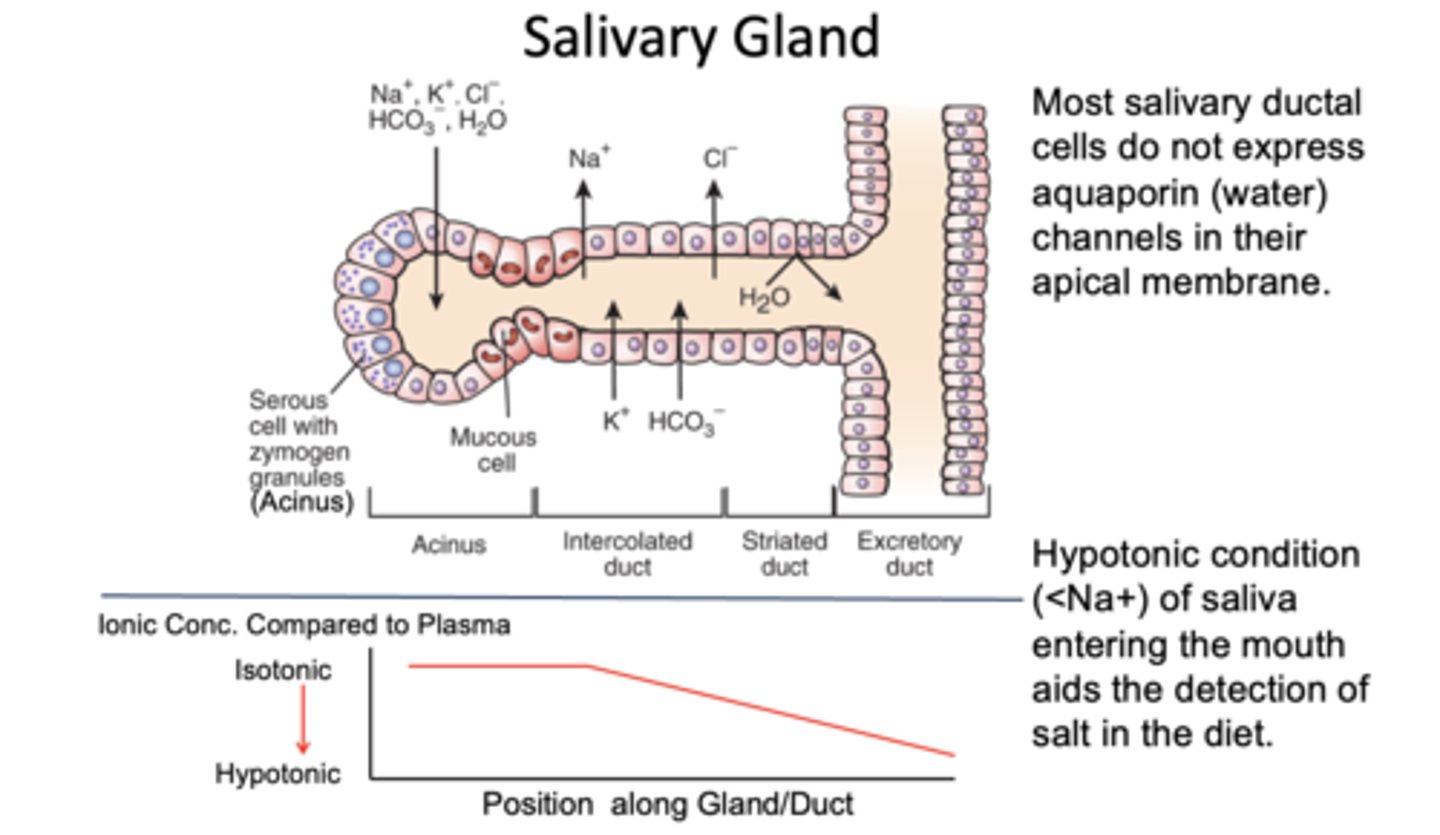
what causes an increase in Na+ ions in the mouth during increased salivary flow?
A. Decrease in Na+ ion function (turned off)
B. Na+ ion working at max capacity relative to saliva production
C. Increase production of Na+ ions
B. Na+ ion working at max capacity relative to saliva production
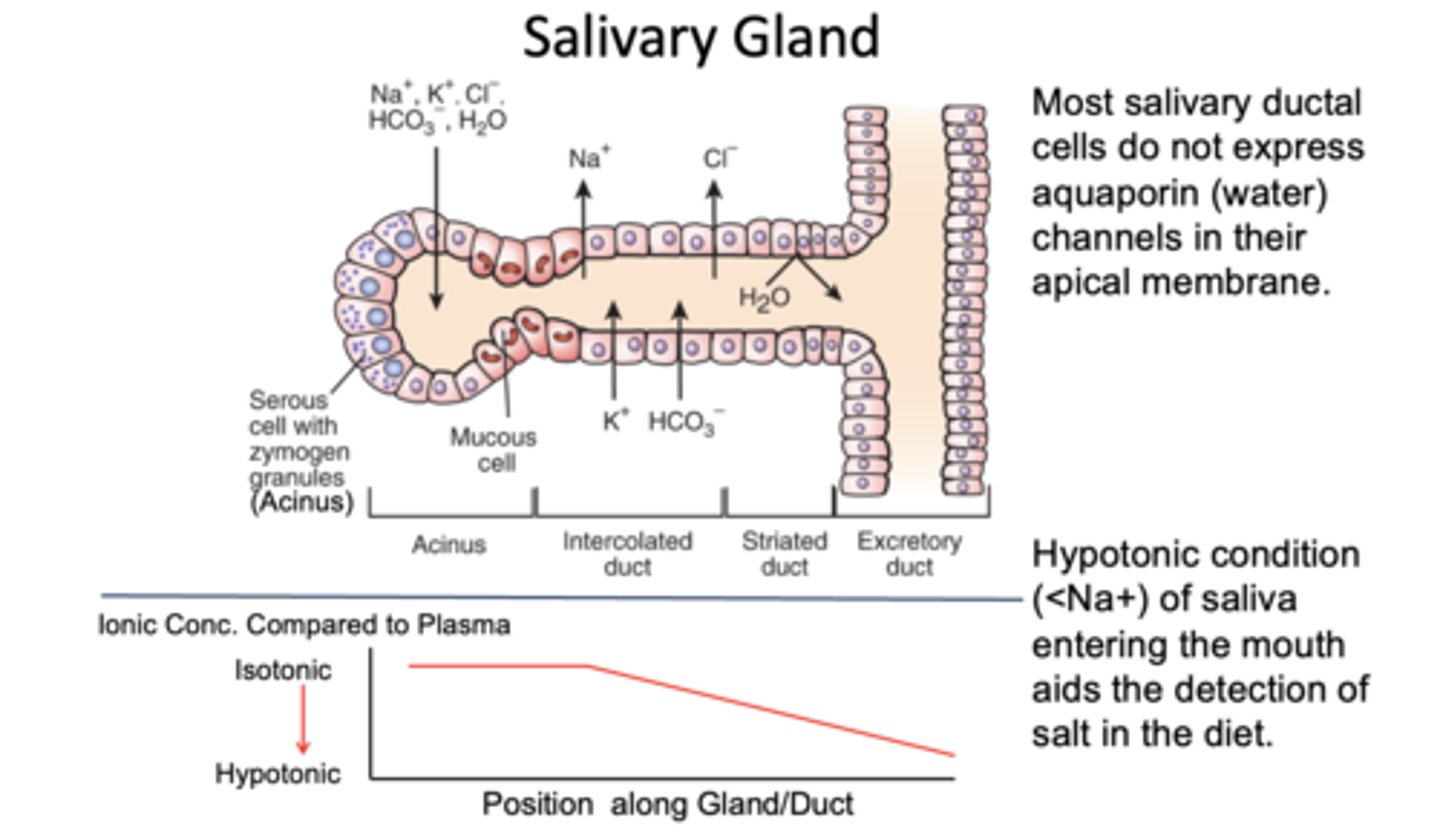
Saliva in the ducts and mouth is ___________ to plasma
hypotonic
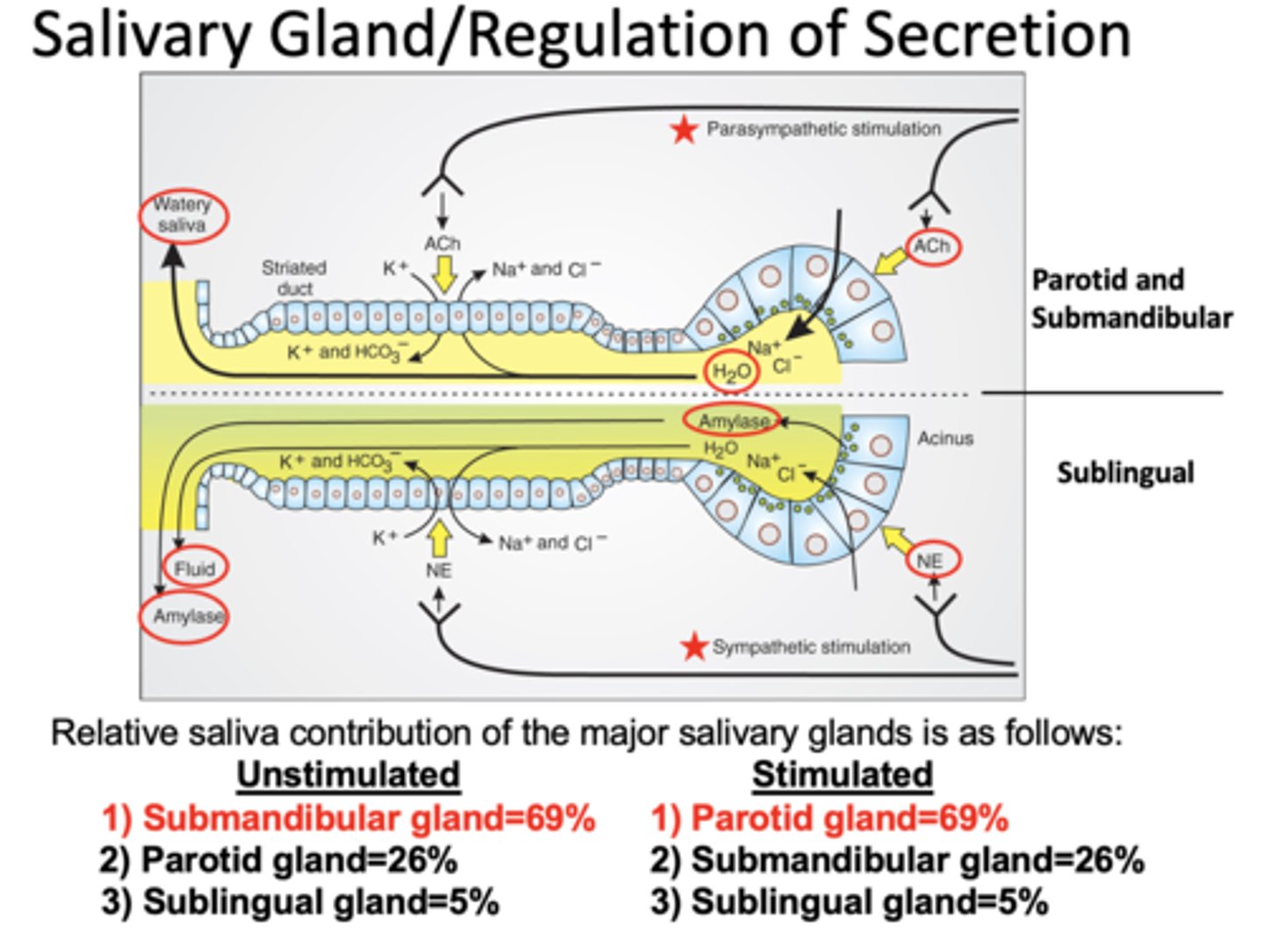
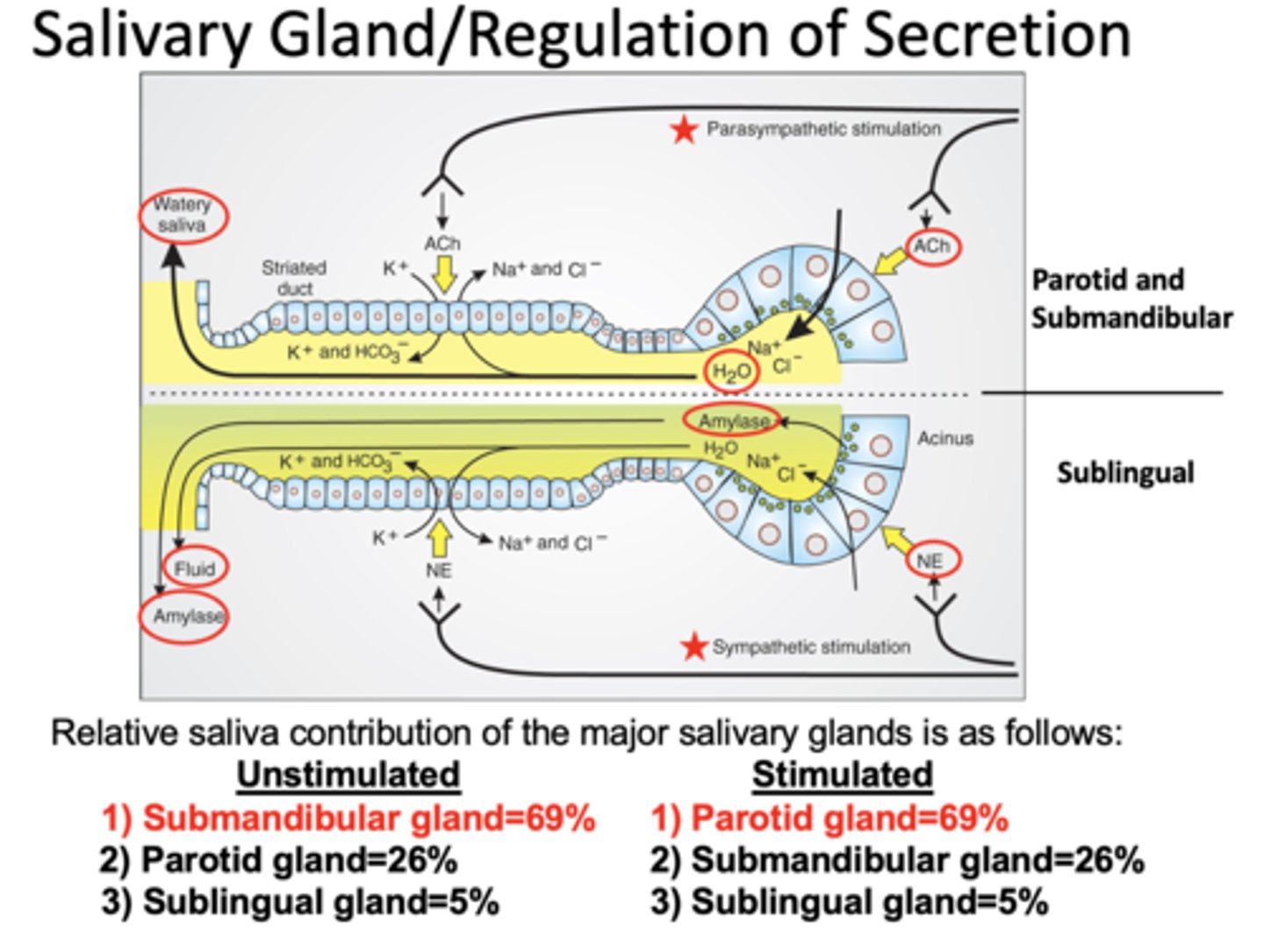
parotid gland secretion is regulated by ________ stimulation
parasympathetic
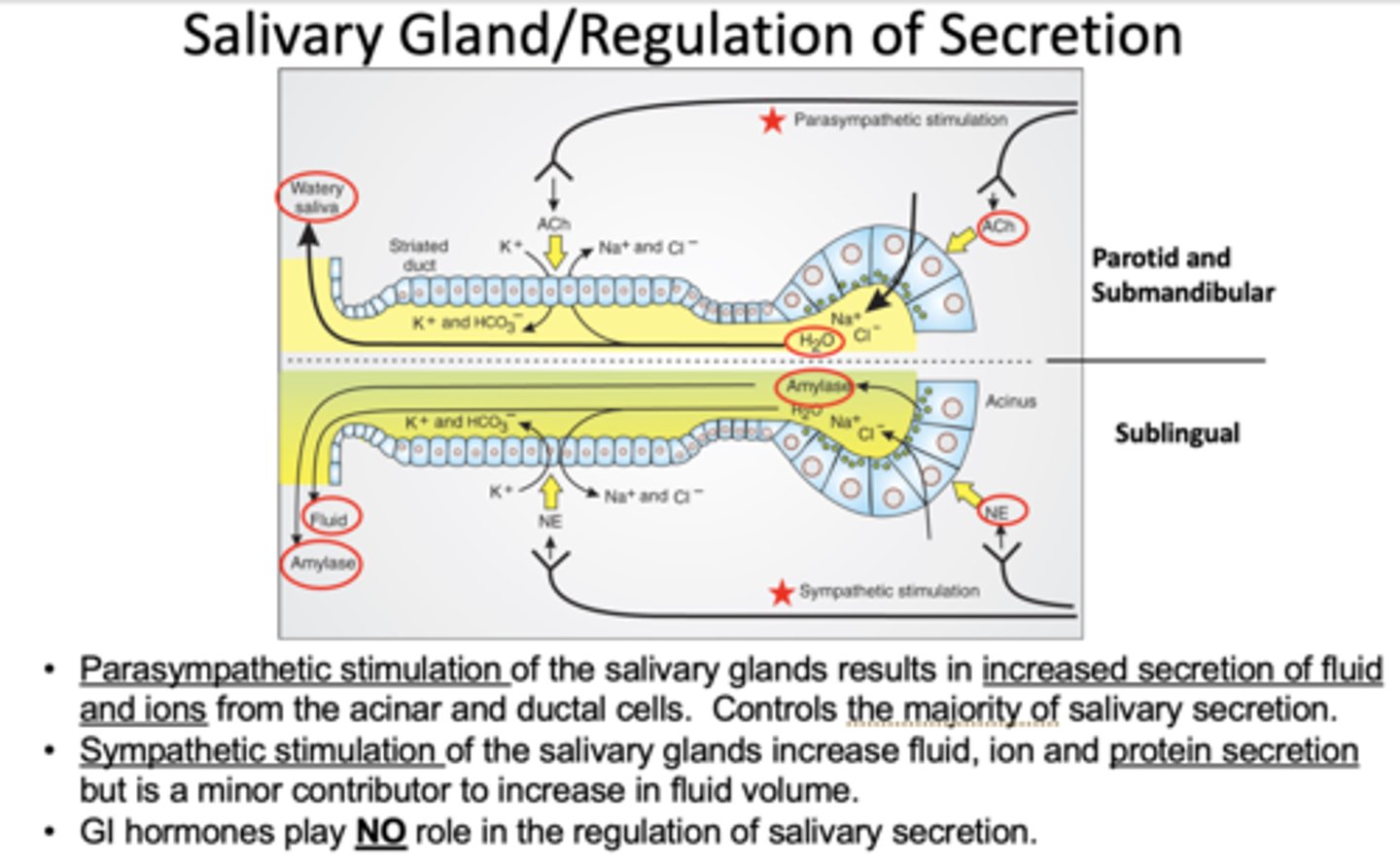
submandibular gland secretion is regulated by ________ stimulation
parasympathetic
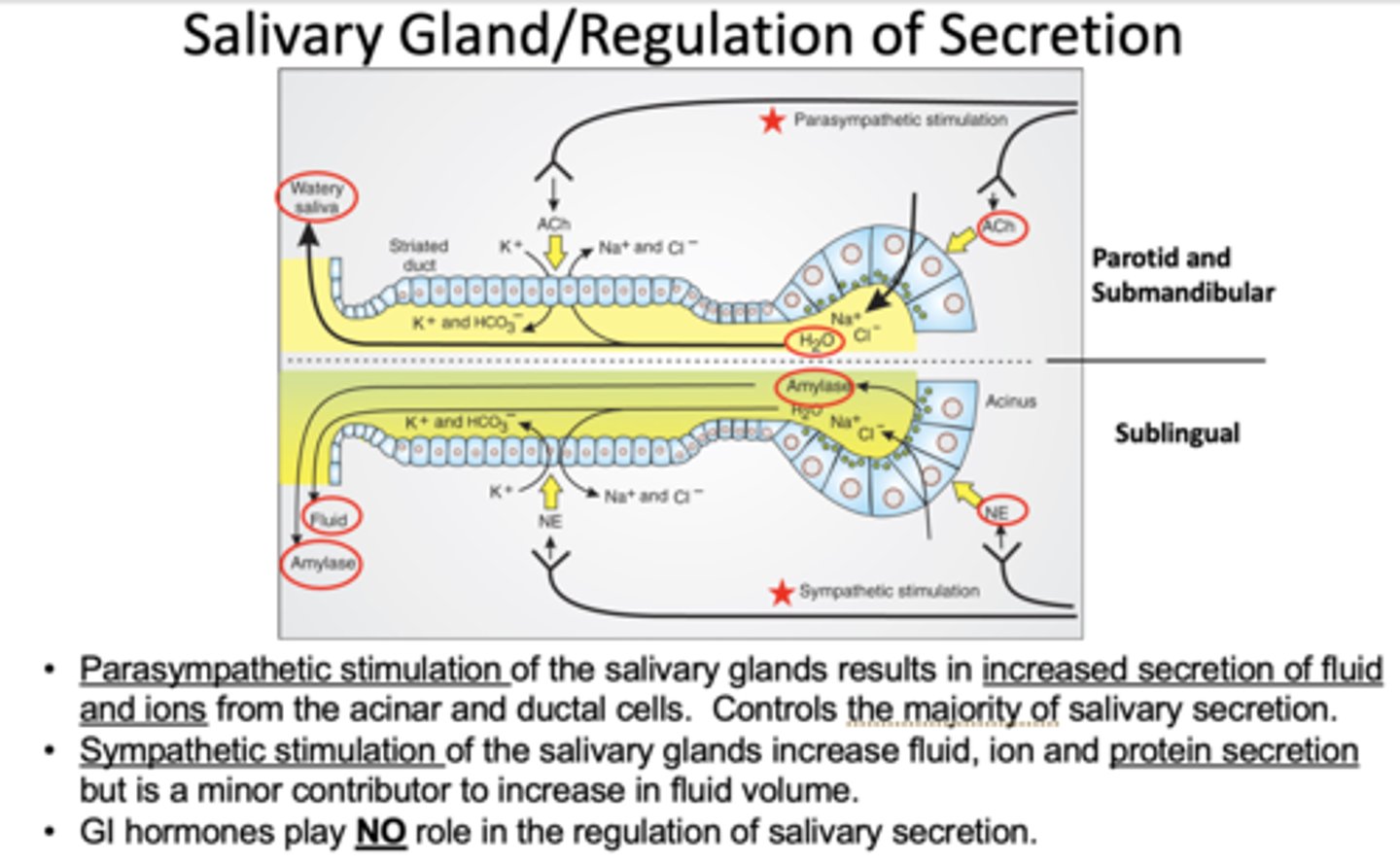
sublingual gland secretion is regulated by ________ stimulation
sympathetic
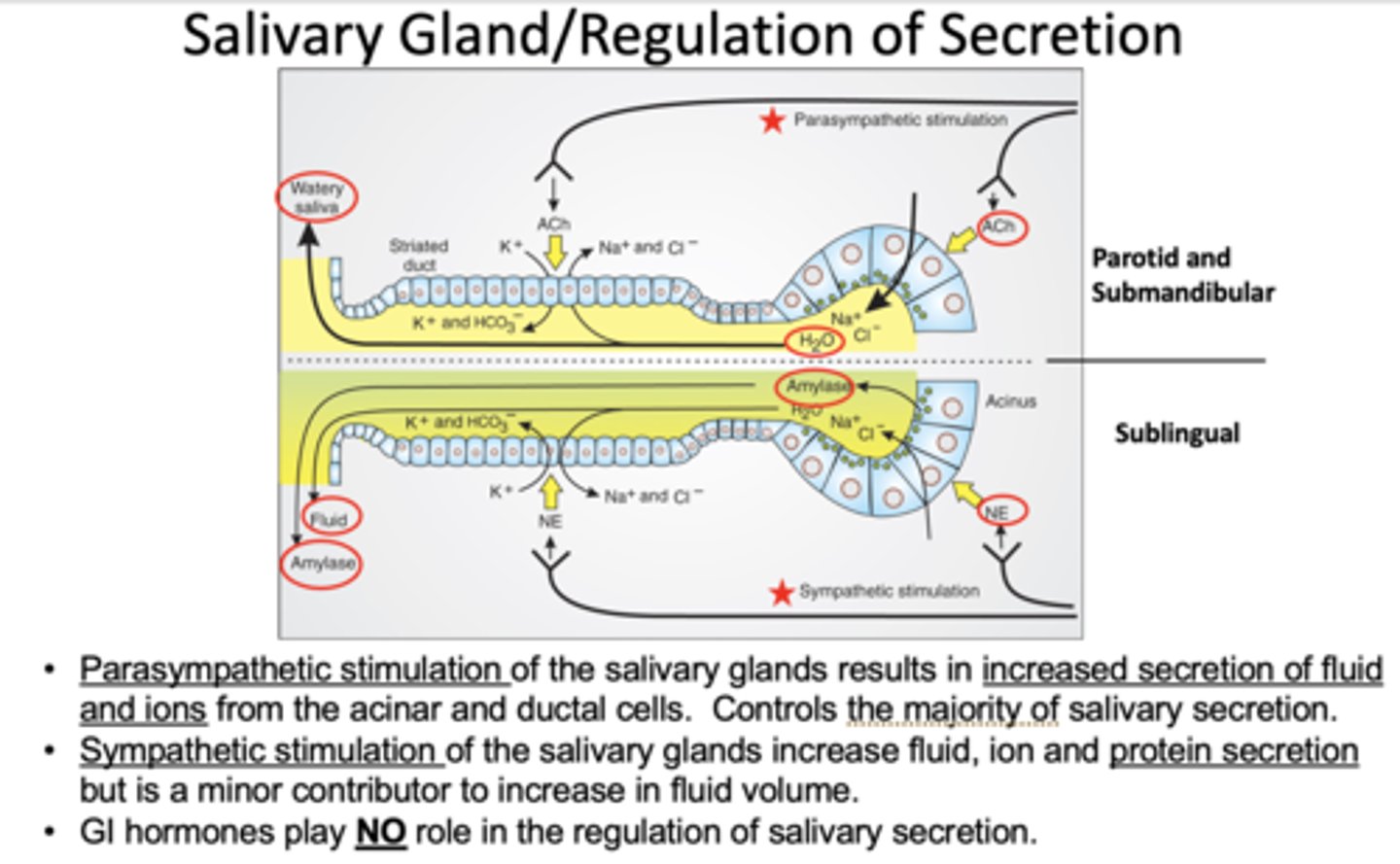
what hormone works on the parotid and submandibular glands causing parasympathetic stimulation resulting in watery saliva?
acetylcholine
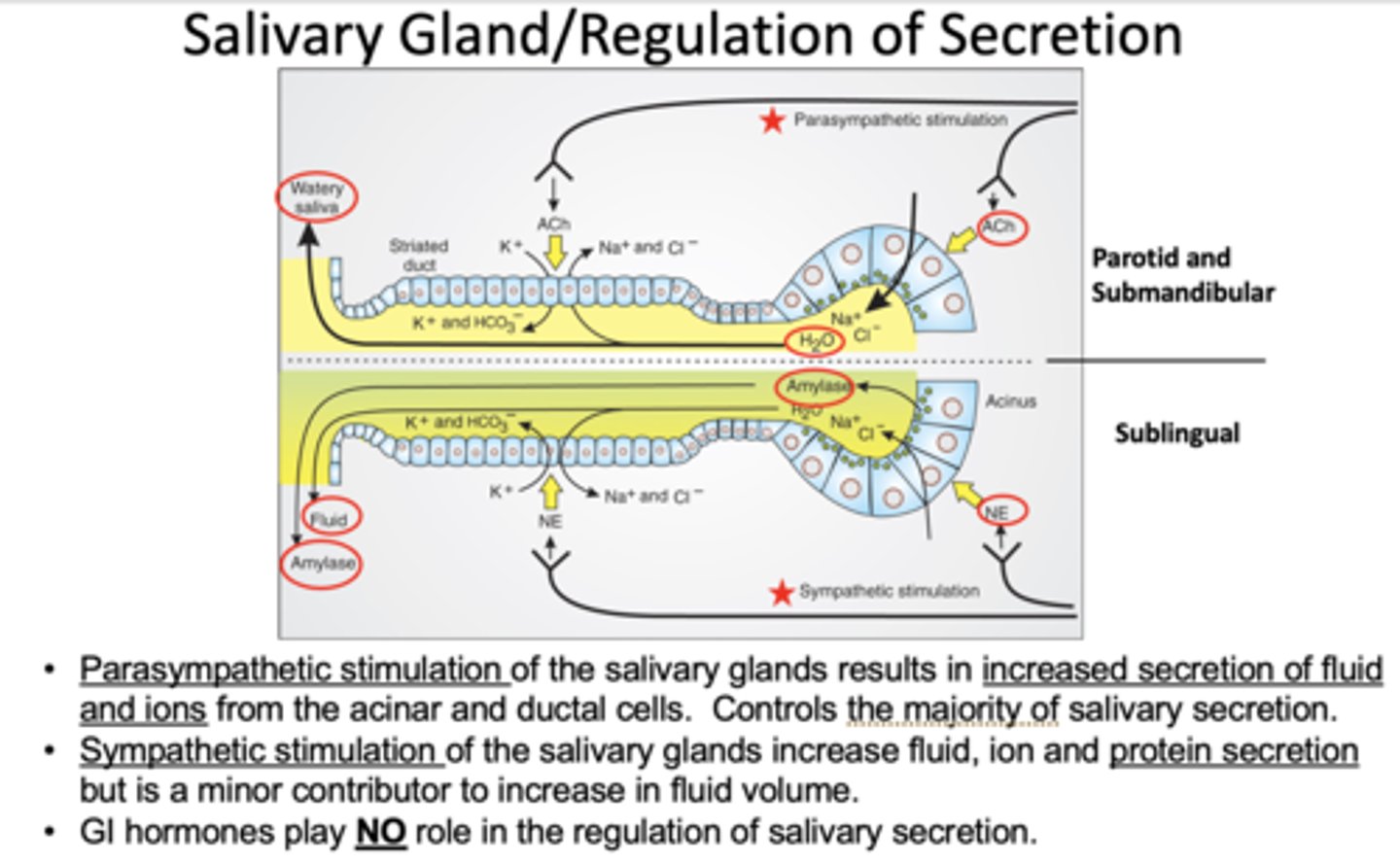
what hormone works on the sublingual glands causing sympathetic stimulation resulting in more ions and protein secretion in saliva?
norepinephrine
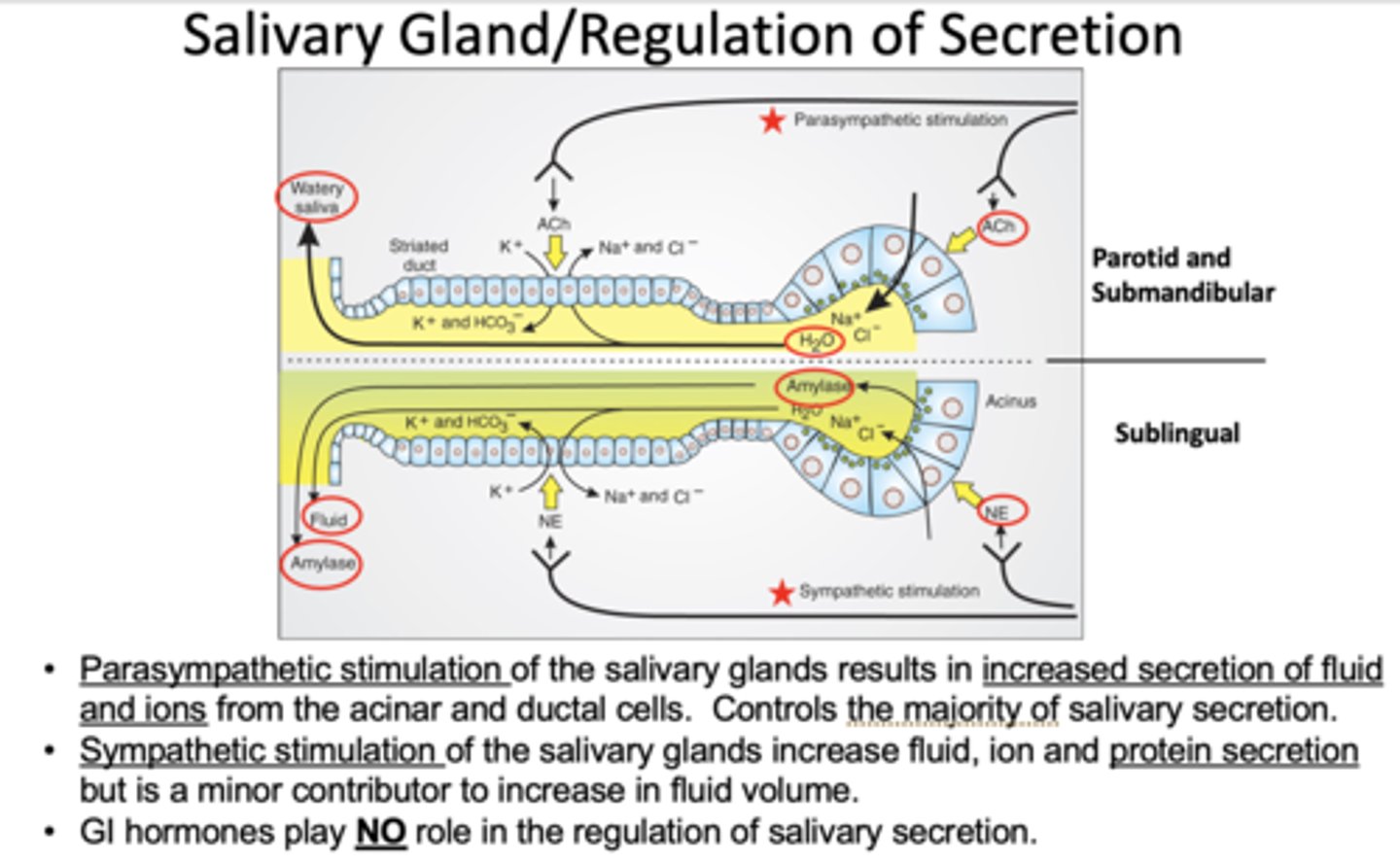
t/f: GI hormones play a role in the regulation of salivary secretion
false (GI hormones play NO role in the regulation of salivary secretion)
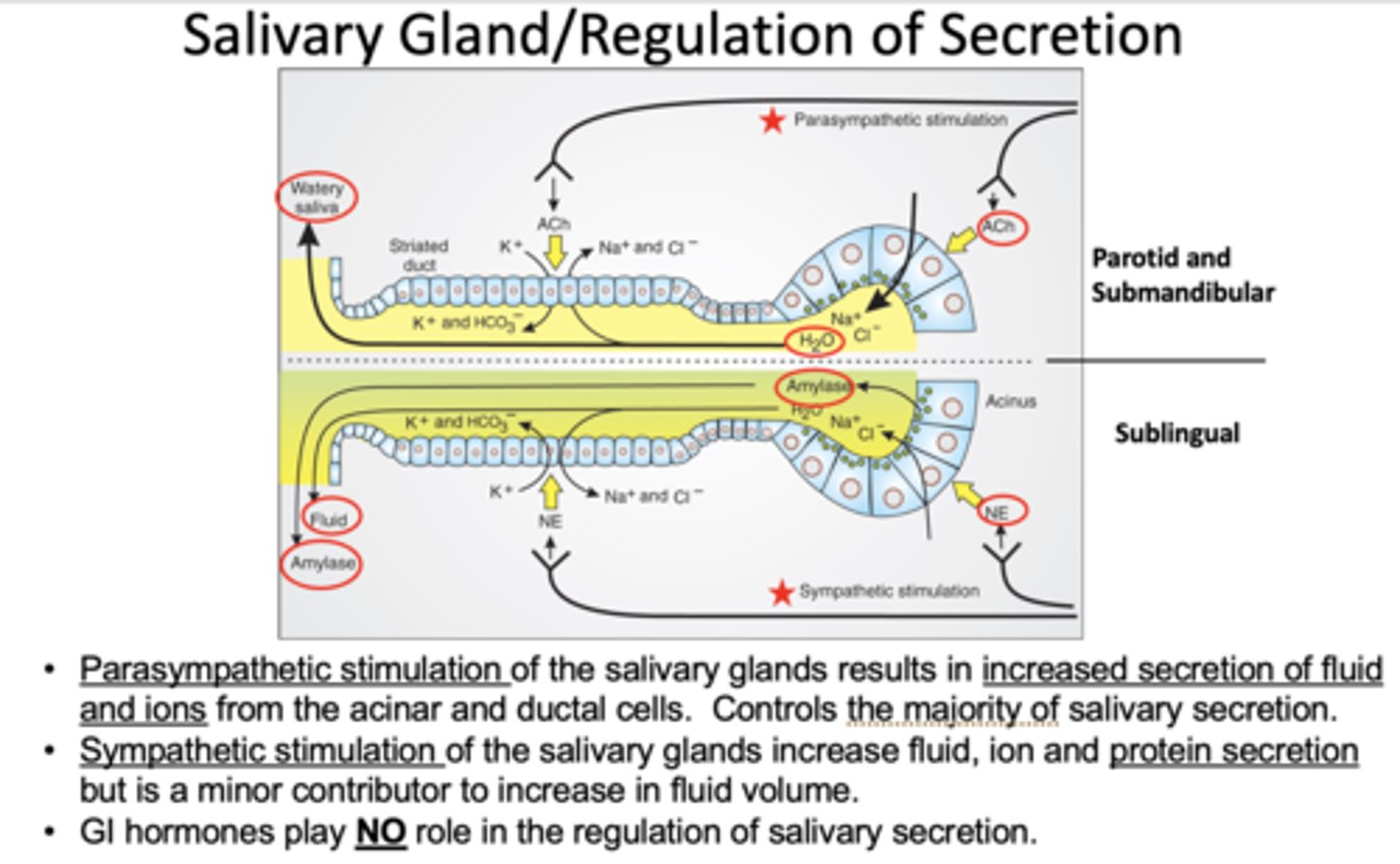
The _____ gland is a purely serous (watery) salivary gland.
parotid
The __________ gland is mixed, but predominantly serous.
submandibular
The _______ gland is mixed, but predominantly mucous
sublingual
T/F: The majority of salivary ductal cells do not express AQP channels and are impermeant to water. Without this feature it would be impossible to produce hypotonic saliva.
True
when the glands are stimulated, which gland produces the majority of saliva?
parotid (69%)
when the glands are unstimulated, which gland produces the majority of saliva?
submandibular (69%)
what type of stimulation controls the majority of salivary secretion (volume)?
parasympathetic
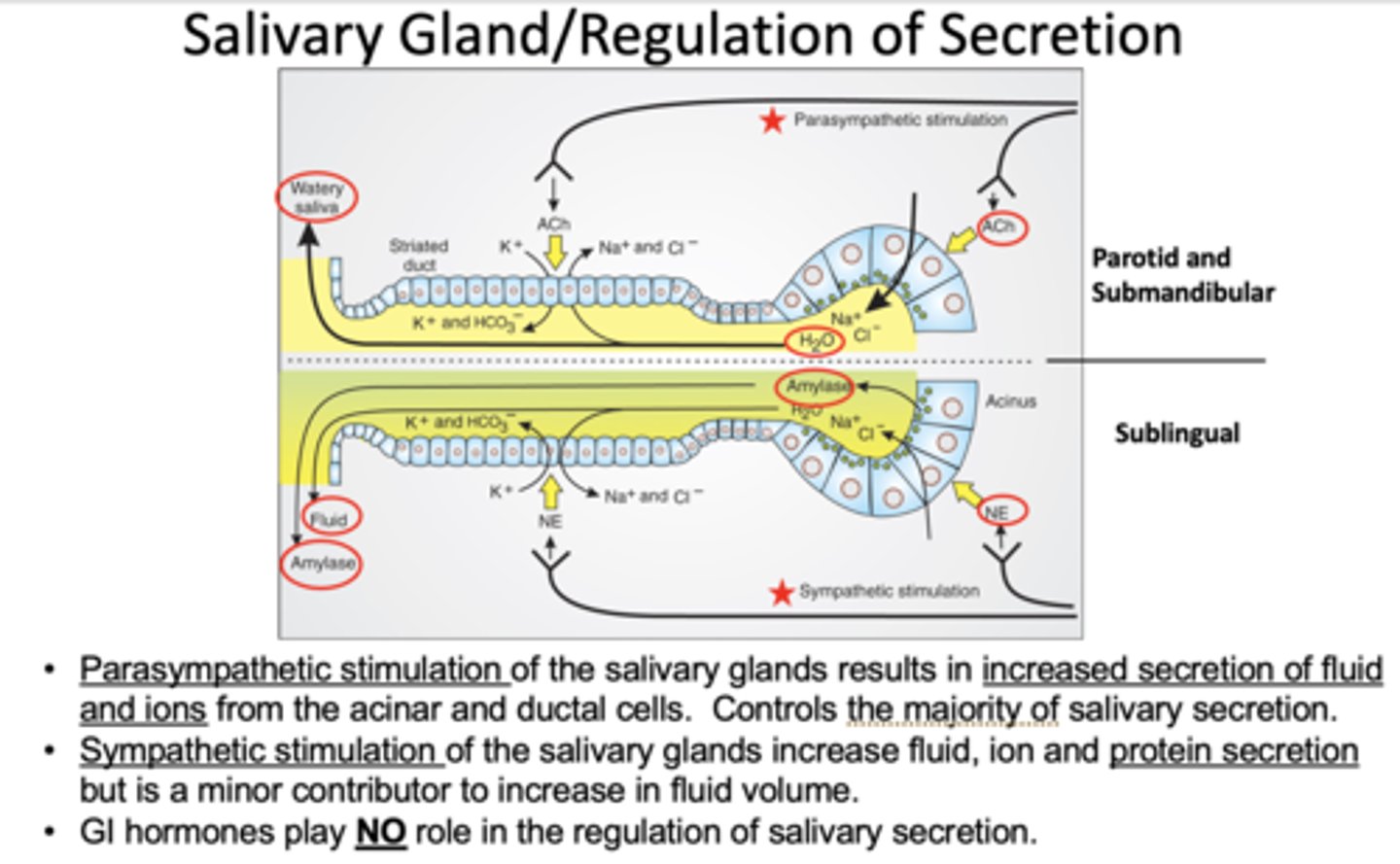
________ stimulation of the salivary glands results in increased secretion of fluid and ions from the acinar and ductal cells. Controls the majority of salivary secretion (volume)
parasympathetic
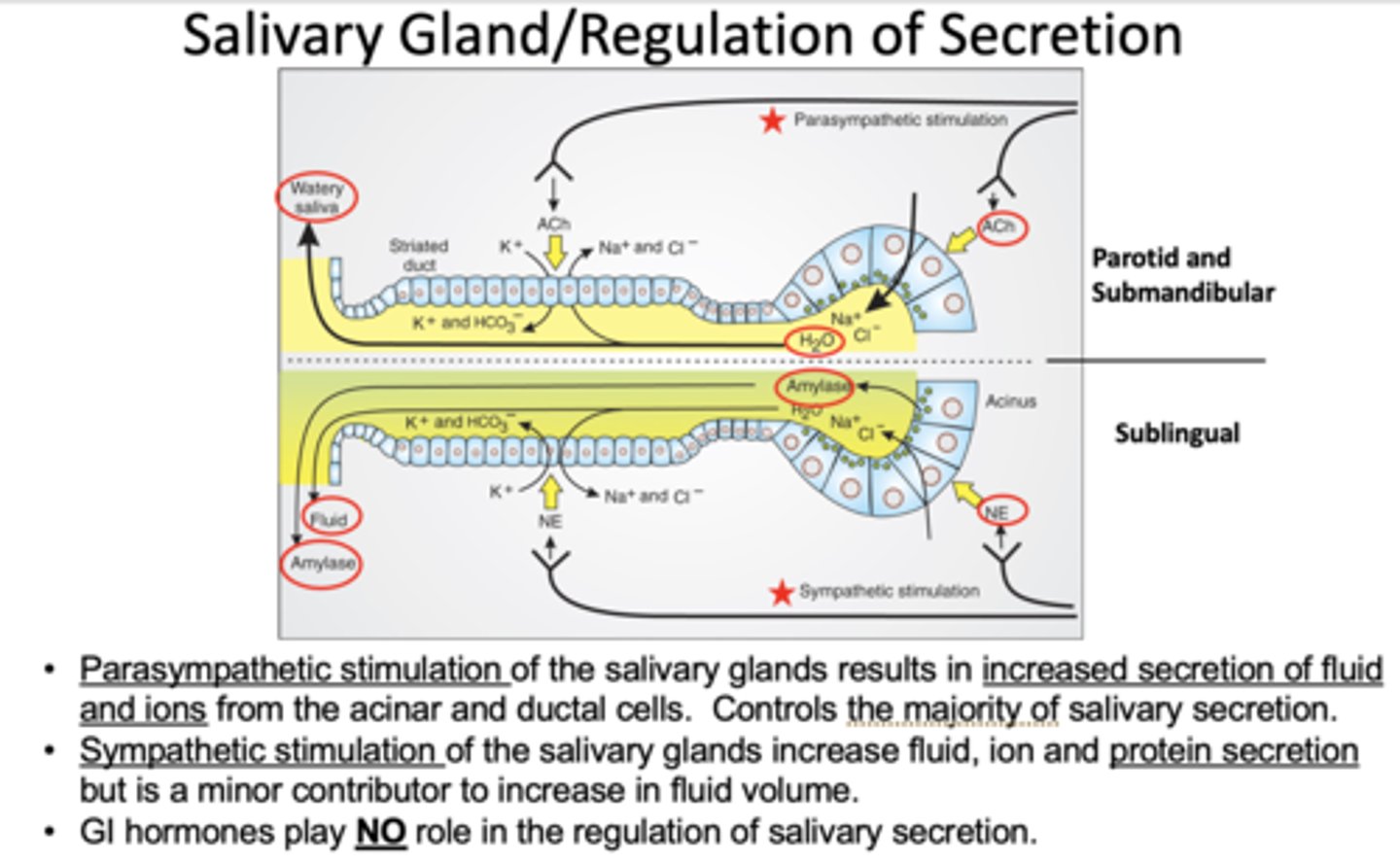
_______ stimulation of the salivary glands increase fluid, ion and protein secretion but is a minor contributor to increase in fluid volume
sympathetic
_____________ secretion is important in protecting the mouth from pH shifts and maintaining a pH neutral environment where amylase and lipase are active
Bicarbonate