Astronomy Exam #3
 Call Kai
 Learn
Learn Practice Test
 Spaced Repetition
 Match
Match Flashcards
 Knowt Play
1/164

There's no tags or description
Looks like no tags are added yet.
Name | Mastery | Learn | Test | Matching | Spaced | Call with Kai |
|---|
No analytics yet
Send a link to your students to track their progress
165 Terms
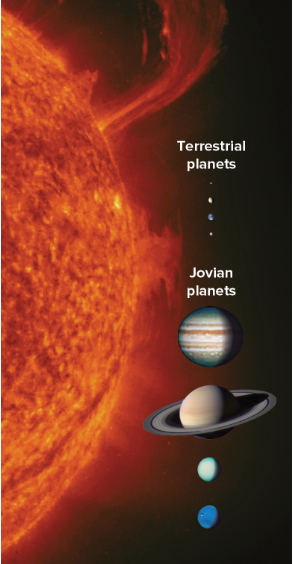
Objects within the Solar System’s are equivalent to roughly how much of the Sun’s mass?
Each object adds up to less than 1/700th of the Sun’s mass.
Important features of the Solar system to explain with a model of its formation include that it…?
has outer planets with a similar composition to the Sun
is flat, with the planets orbiting in the same direction
has rocky planets near the Sun
What is a planet?
It orbits the Sun.
It is massive enough for gravity to “pull” it into a spherical shape.
It has cleared its orbit of other objects of similar or larger size
Terrestrial Planets (inner)
Mercury, Venus, Earth and Mars
The terrestrial planets and some of the asteroids show evidence that they melted. What melted them?
Gravitational compression
Radioactive decay
Collisions during formation
Jovian Planets (outer)
Jupiter, Saturn, Uranus, and Neptune
What is special about the composition of Uranus and Neptune?
Sometimes called Ice Giants, which suggests that they formed from the accretion of icy planetesimals.
Despite the name, these planets have interiors hotter than Earth’s interior
What is special about the composition of Jupiter and Saturn?
Sometimes called Gas Giants, which gathered most of their mass from hydrogen and helium gases that were present in the disk around a protostar.
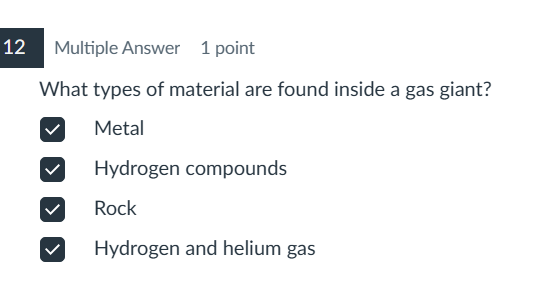
What types of material are found within a Gas Giant?
Metal
Rock
Hydrogen compounds
Hydrogen and helium gas
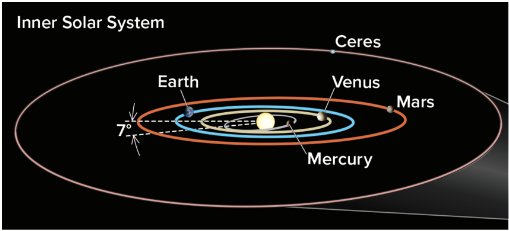
You could characterize the arrangement of planets' orbital planes in the Solar System as basically…?
Flat
Which of the following are the same, or nearly the same, for the planets in our Solar System?
Orientation of satellites' orbits around planets
Plane of their orbits
Direction they orbit
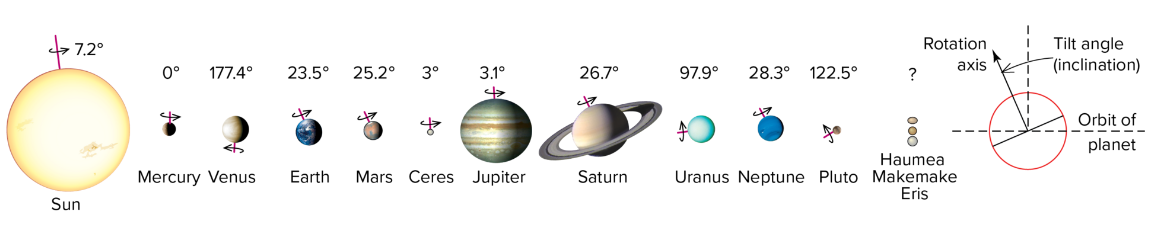
As planets orbit the Sun, they all generally spin in the same direction, counterclockwise. However, what are the exceptions?
Venus spins slowly but clockwise (backward)
Uranus’ axis lies nearly on the orbital plane
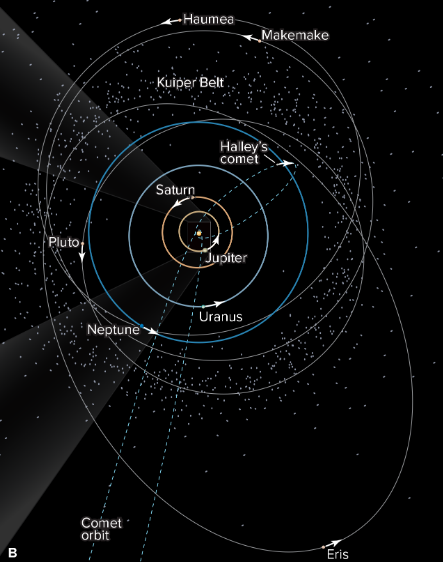
What is the Kuiper Belt?
A region outside of Neptune consisting of a vast number of objects that orbit the Sun out to about twice Neptune’s orbit.
What are trans-Neptunian objects?
An object orbiting in the Kuiper belt or outer Solar System with a semimajor axis larger than Neptune’s. These include Pluto and many other objects ranging up to sizes even larger than Pluto.
What is a comet?
A small body in orbit around the Sun, consisting of a tiny, icy core and a tail of gas and dust.
The tail forms only when it is near the Sun.
“Leftover” planetesimals
Which region of the Solar System contains comets?
Oort cloud and Kuiper Belt
What is a satellite?
A body orbiting a planet or other more massive astronomical body
Fancy word for moon
What is a dwarf planet?
An object orbiting the Sun that is so massive that its gravity pulls it into a roughly spherical shape but, because it is not the dominant mass in the neighborhood of its orbit, it cannot be called a planet.
Why are dwarf planets not considered planets?
It orbits the Sun.
It is massive enough for gravity to “pull” it into a spherical shape.
It has NOT cleared its orbit of other objects of similar or larger size
Rank these parts of the Solar System by distance from the Sun (closest to farthest):
Asteroid belt
Jupiter’s orbit
Neptune’s orbit
Kuiper’s orbit
Oort cloud
What are Volatile Materials?
Includes the composition of the moon and dwarf planets
Common in frozen ices in the outer Solar System
Made of compounds such as hydrogen and other elements in the Sun’s atmosphere, such as oxygen, carbon and nitrogen —> makes water, ammonia and methane.
Usually liquid or gas at room temperature
Mass (kg)
How much “stuff” or matter a planet is made out of
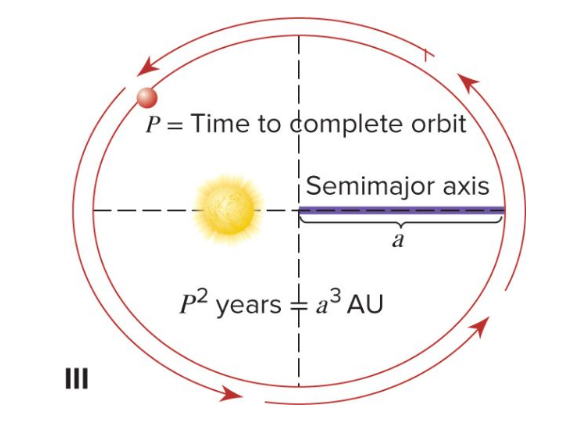
Kepler’s Law and Measuring Planet Masses
The time to complete one orbit is related to the orbit’s size: P2 = a3
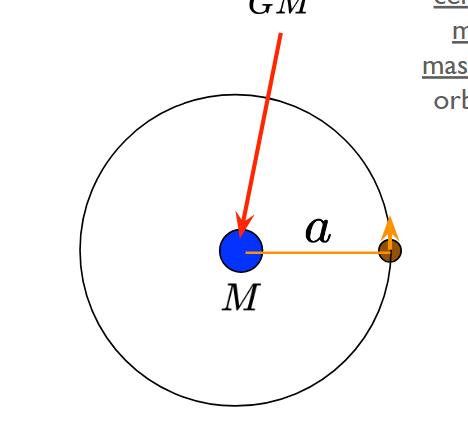
Newton’s Law of Gravity and Measuring Planet Masses
This law allows us to determine a body’s mass from its gravitational attraction on a second body orbiting it —> we can calculate a planet’s mass by observing the orbital motion by one of its moons or a passing spacecraft.
This formula is valid only if the central mass is much more massive than the orbiting object.
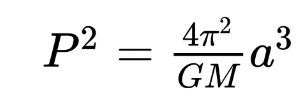
How do you measure the mass of a planet?
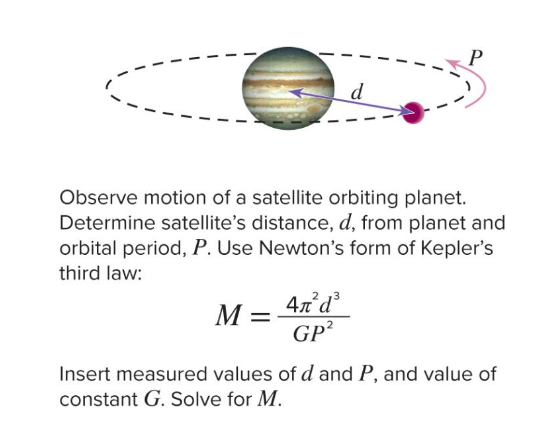
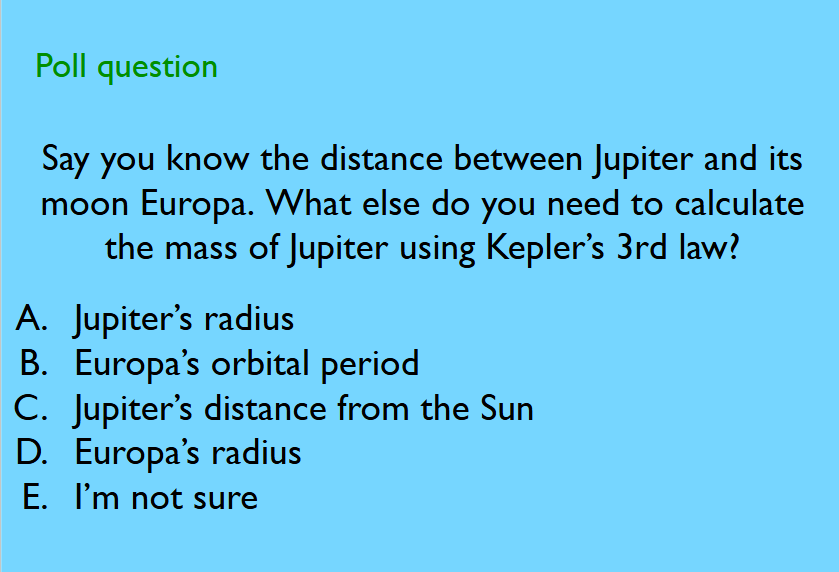
Say you know the distance between Jupiter and its moon Europa. What else do you need to calculate the mass of Jupiter using Kepler’s 3rd law?
Europa’s orbital period
Radius/Diameter
How large or small a planet is
How do you measure the radius and volume of a planet?
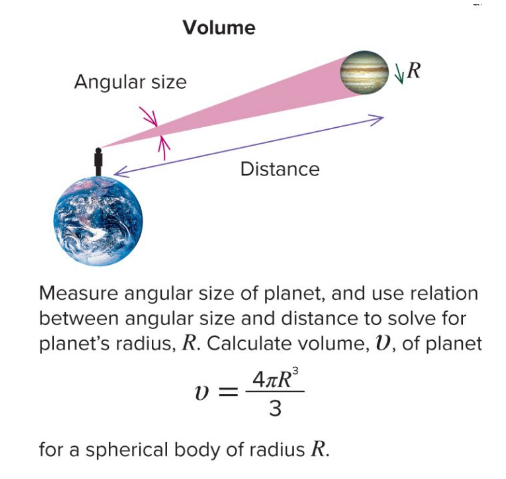
Average Density
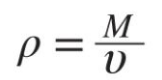
Mass of a planet divided by its volume
P = Mass, M divided by Volume, V
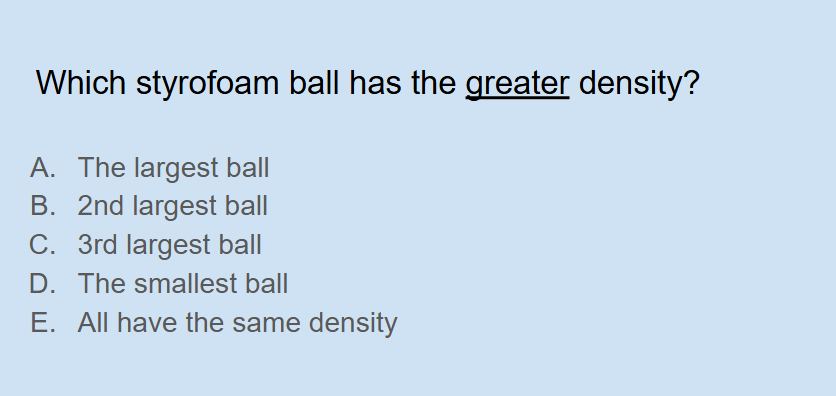
Which styrofoam ball has the greater density (small, medium, large)?
All have the same density
Are density and mass the same?
NO!! They are not the same.
“More massive” doesn’t (necessarily) mean more dense
the density is determined by the type of material, not (necessarily) the amount of material
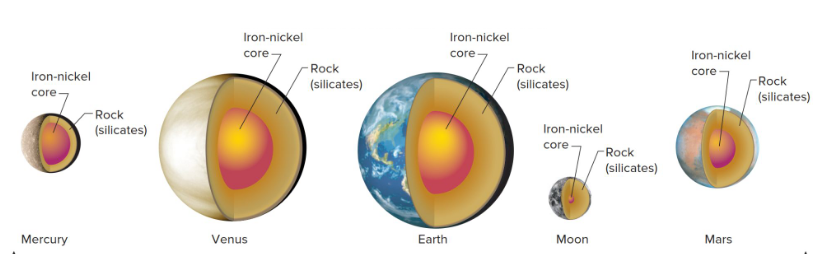
What is the density and composition of a Terrestrial planet?
Composed of solid/liquid rocks and metals
Average density approx. 3-5 g/cm3
Terrestrial Planets have a ___ radii, ___ mass, ___ density, are ___ the Sun, have ___ orbital periods, ___ rotational periods, and have ___ moons…?
small
small
higher
closer to
short
long
few
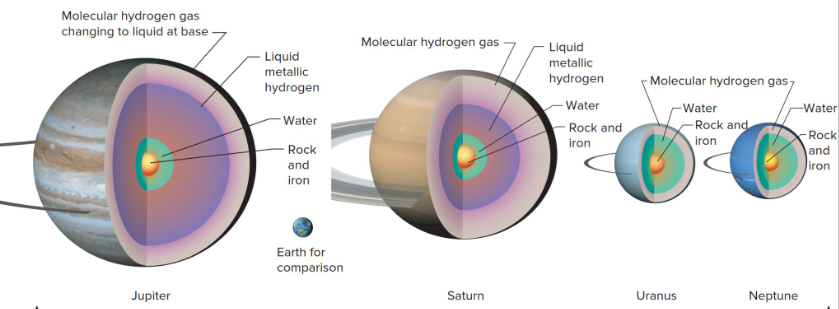
What is the density and composition of a Jovian planet?
Composed of a solid-ish core and thick atmospheres of mainly liquid/gaseous hydrogen
Average density approx. 1 g/cm3
Jovian Planets have a ___ radii, ___ mass, ___ density, are ___ the Sun, have ___ orbital periods, ___ rotational periods, and have ___ moons…?
large
large
lower
farther from
long
short
many
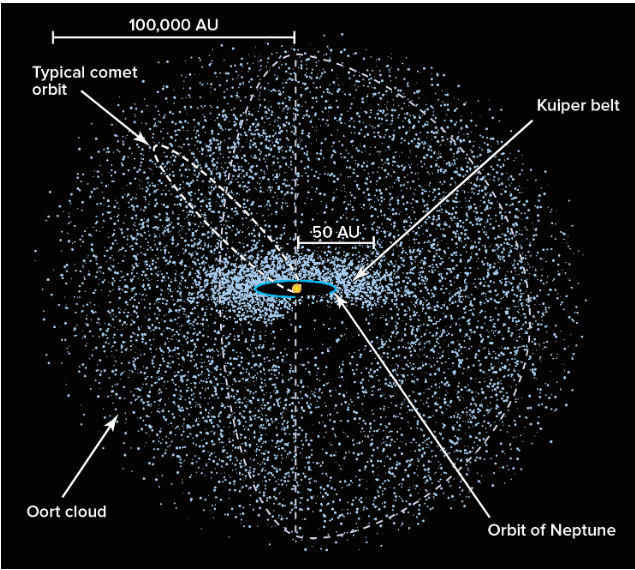
What is the Oort Cloud?
A vast region in which comet nuclei orbit. This cloud lies far beyond the orbit of Pluto and may extend halfway to the next nearest star.
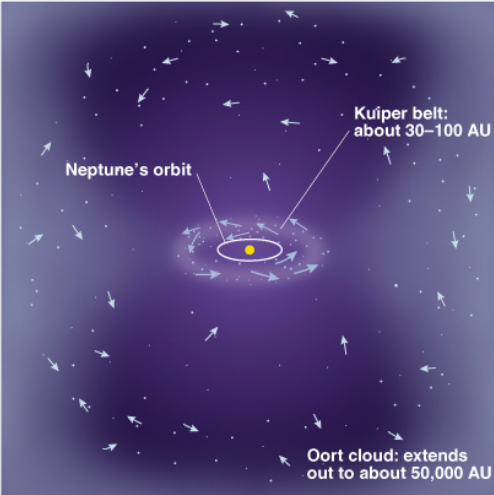
Icy Objects are found in what…?
The Kuiper Belt and Oort Cloud
What are the general features of the solar system?
It is flat, with the planets orbiting in the same direction
The composition of the outer planets is similar to the Sun’s except the inner planets lack gases that only condense at low temperatures.
There are rocky planets near the Sun and massive, gaseous planets farther out
What does it mean when an atom undergoes Radioactive Decay?
The spontaneous breakdown of an atomic nucleus into smaller fragments, often involving the emission of other subatomic particles as well.
What is an isotope?
An atom that has the same number of protons but a different number of neutrons in its nucleus.
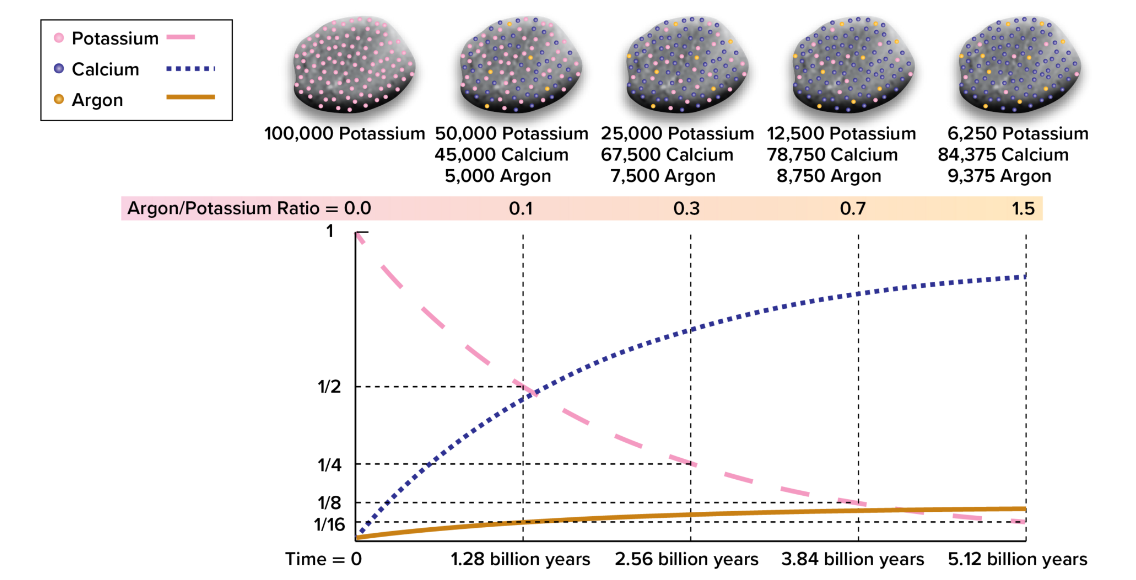
What is the lifespan of a radioactive atom in its half-life?
Let’s say the isotope potassium-40 has a half-life of 1.28 billion years. This means if you were to start with 100k of these atoms, after 1.28 billion years, half of those “parent” potassium atoms would decay into “daughter” calcium and gas argon atoms. Then, after another 1.28 billion years, another half of the remaining potassium atoms decay and more calcium and gas argon atoms are produced.
Long story short, the lifespan is dependent on the isotope as the original isotope slowly decays and is replaced by other isotopes.
Half-life (Mathematically)
After one half-life = half of the initial atoms remain.
After two half lives = one quarter remain
After three have lives = one eighth remain
etc.
What is a meteorite?
The solid remains of an asteroid that falls to Earth
Have been found to be up to 4.57 billion years old
Nebular Theory
The Sun, planets, moons, etc. formed out of a collapsing, rotating cloud of gas and dust (= a nebula).
This occurred about 4.5 billion years ago.
What are the important scientific observations behind Nebular Theory?
All the planets orbit the Sun in the same direction
Most (not all) planets rotate in the same direction as they orbit
Planet types are correlated with their location
Closer to Sun – high density (terrestrial)
Farther from Sun – low density (gas/ice giants)
Distinct zones of small objects (asteroid belt, Kuiper Belt, Oort Cloud)
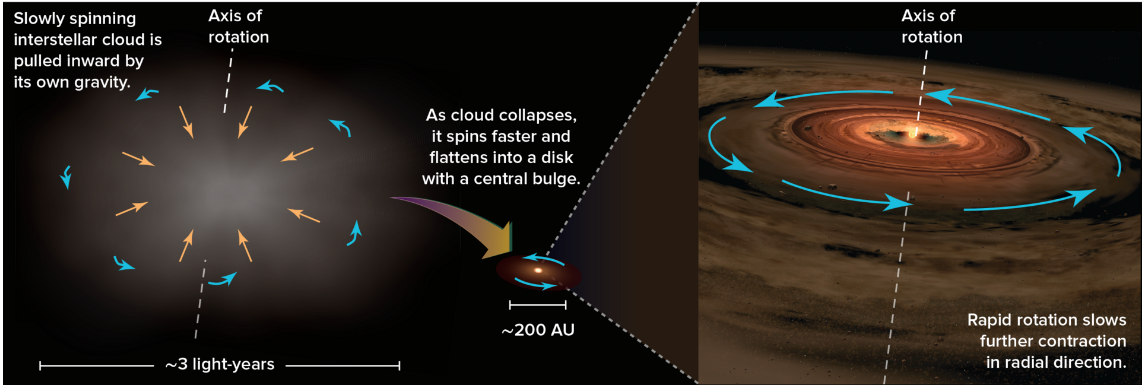
What is a Solar Nebula?
The rotating disk of gas and dust from which the Sun and planets formed
Consists of 71.1% hydrogen gas, 27.4% helium gas, and the remaining 1.5% includes all other chemical elements —> similar composition to the Sun
Hotter toward the center, cooler further out
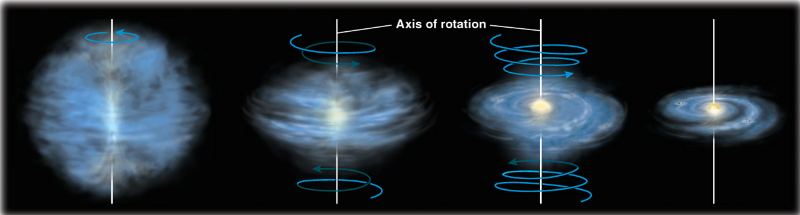
Interstellar Cloud
A cloud of gas and dust in between the stars. Such clouds may be many light-years in diameter.
Cloud rotates faster as it collapses
Theories believe the Solar System, Galaxies or even numerous stars alike originate from these clouds
Temperatures —> 10K
Which force caused the cloud to collapse and the material to come together to form planets?
Gravity
What are Interstellar Grains and what are the compounds found within them?
Microscopic solid dust particles in interstellar space (found in the Solar Nebula). These grains absorb starlight, making distant stars appear dimmer than they truly are.
Consists of iron compounds, carbon compounds, silicon, frozen water, and oxygen
What is a Kelvin (K)?
Astronomers measure temperature in Kelvins (K)
Kelvin is like Celsius, but 0 °C = 273 K
So Temp in K = Temp in °C + 273
Human body temperature is about 300 K
What is Condensation in space?
Due to the low-pressure environment, condensation occurs around 180K
Some substances condense at a much higher temperature
Materials will not condense if the temperature never drops sufficiently
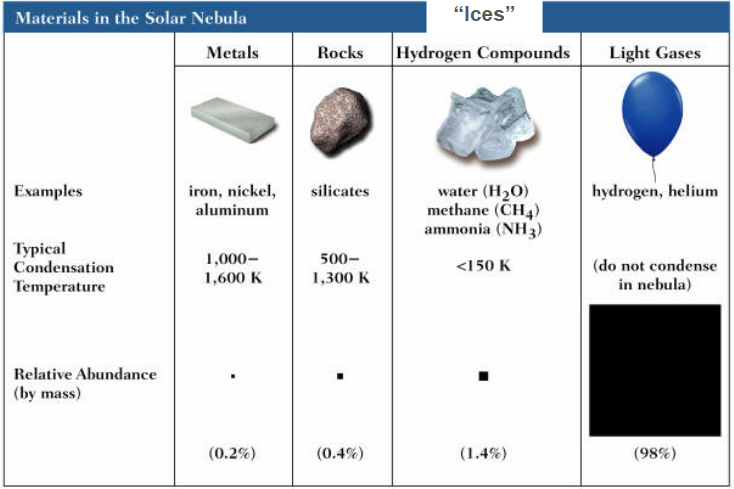
Hydrogen and Helium gas…?
Does not condense, mass 98%
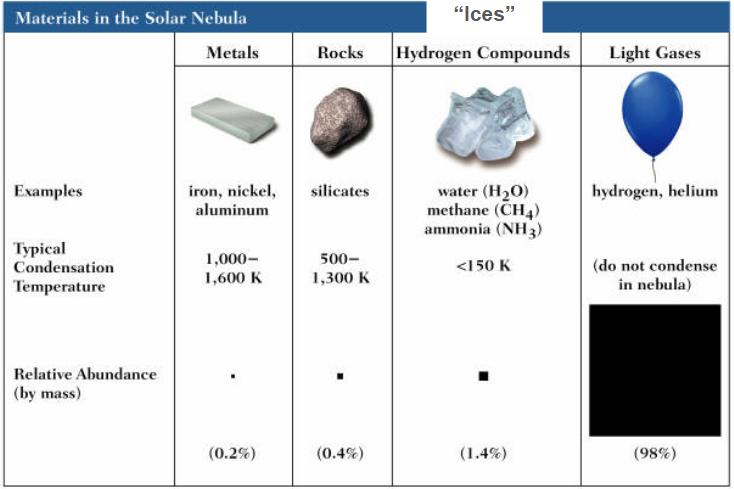
Rocks and Metals…?
Condense at <1600K, mass 0.6%
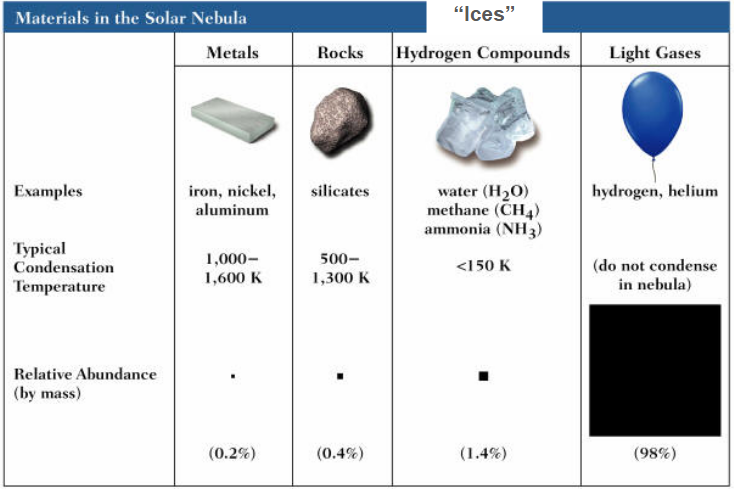
Ices (hydrogen compounds, e.g water, methane and ammonia)…?
Condense at <150K, mass 1.4%
In order, which materials, by the temperature at which they condense, can be incorporated into planets…? (highest temperature at the top)
Iron
Silicates
Water
Ammonia
Methane
What is the average density of Silicate rock?
About 3 kg/liter
What is the average density of Iron?
About 7.9 kg/liter
What is the average density of Water or Ice?
About 1 kg/liter
Why is Iron concentrated into the core of planets?
Differentiation resulted in iron sinking to the core when forming planets melted in impacts.
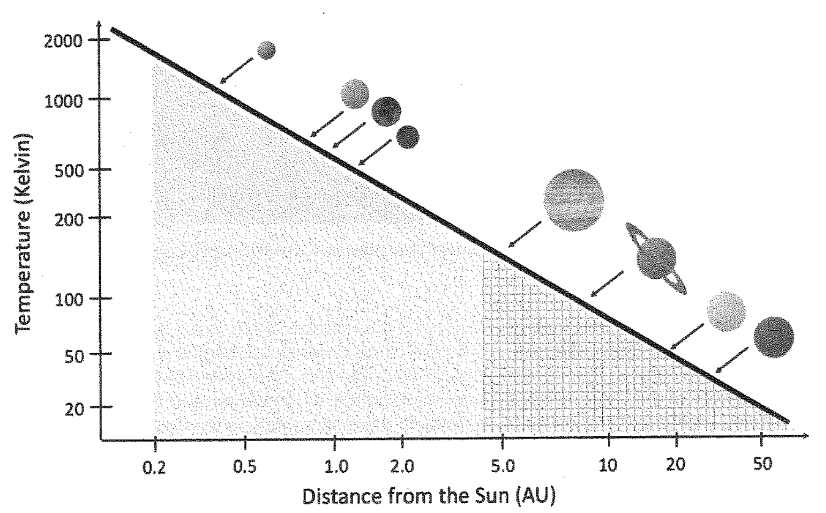
Over what range of distances did rocks and metals condense during the formation of the Solar System?
0.2 - 50 AU
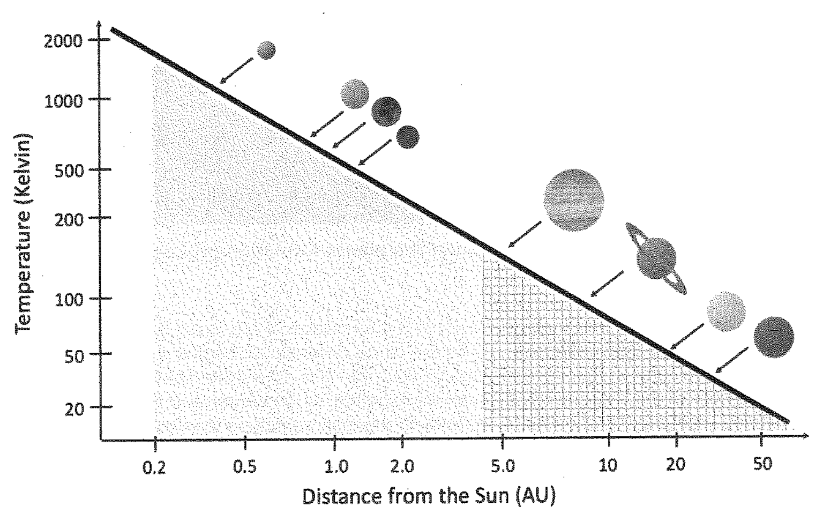
Over what range of distances did hydrogen compounds condense to form ice during the formation of the Solar System?
5.0 - 50 AU
What substances are considered “ice” when in a solid state in the Solar System?
Methane (CH4)
Water (H2O)
Ammonia (NH4)
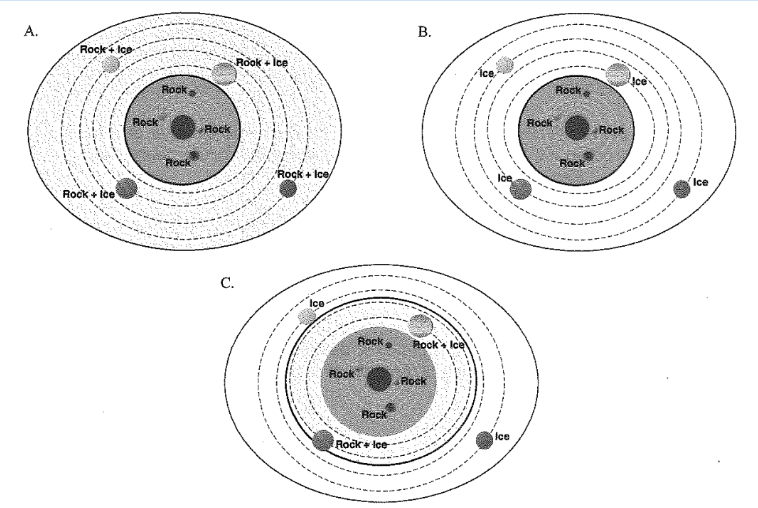
Which Diagram is correct?
A; rock would still be present in the outer regions
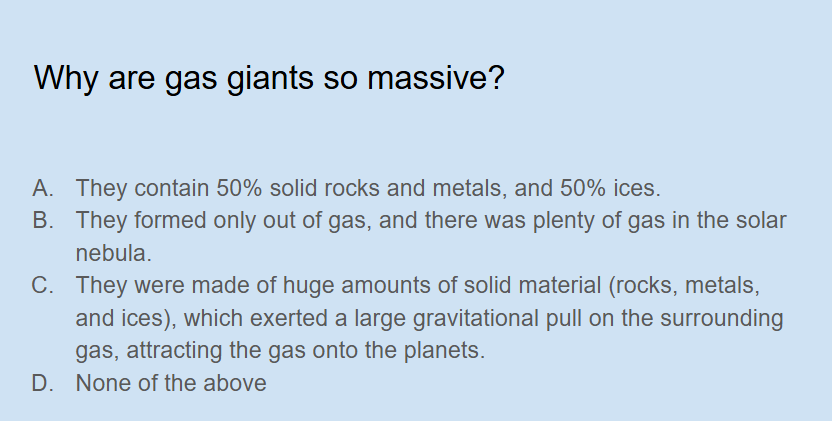
Why are gas giants so massive?
They were made of huge amounts of solid material (rocks, metals, and ices), which exerted a large gravitational pull on the surrounding gas, attracting the gas onto the planets.
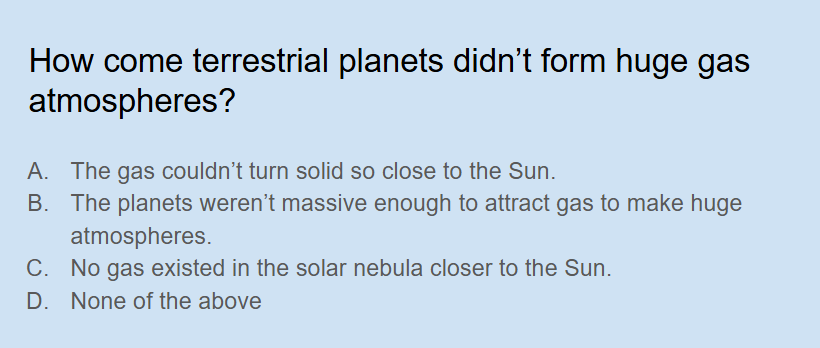
How come terrestrial planets didn’t form huge gas atmospheres?
The planets weren’t massive enough to attract gas to make huge atmospheres.
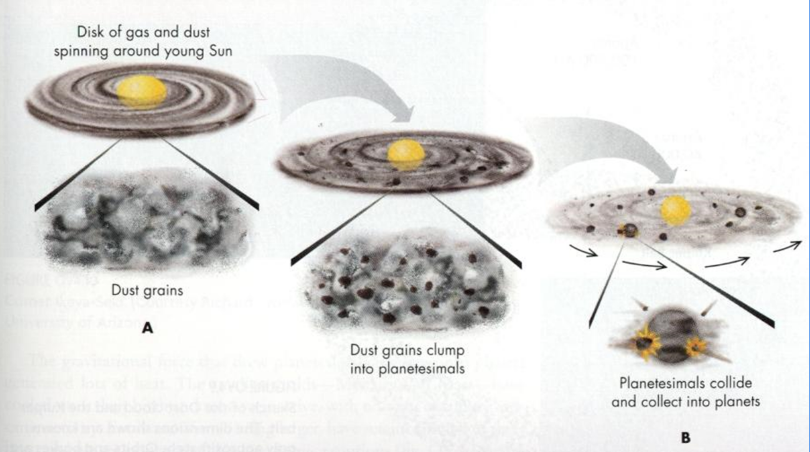
What are Planetesimals?
As the interstellar cloud cools, gas condenses into solid chunks of metal, rock, and ice
These chunks stick together and grow, forming planetesimals that collide and collect into planets
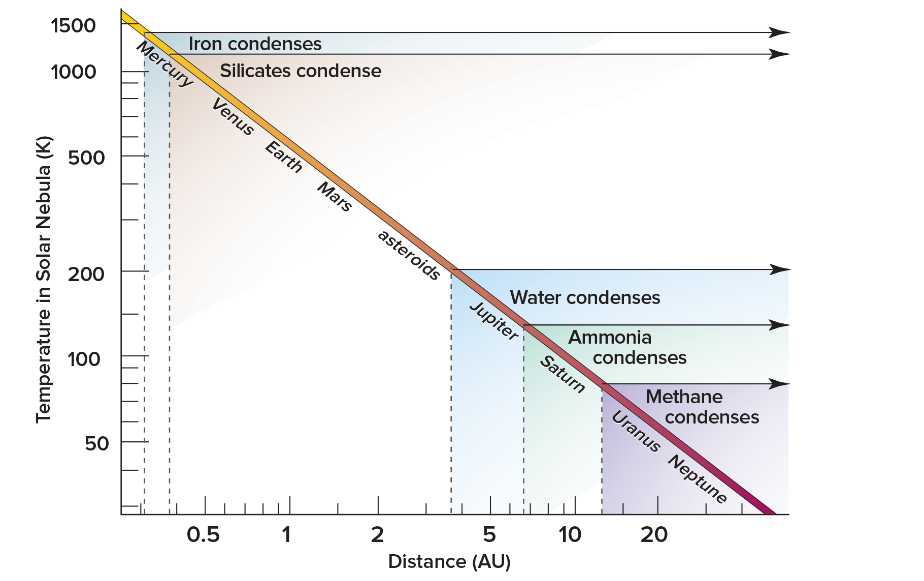
What is a frost line?
The distance from the Sun in the solar nebula beyond which it was cold enough for water to condense and therefore become a major component of planetesimals forming there.
Temperatures low beyond 3 AU from the Sun
Water, ammonia, methane and other volatile molecules are only present as gases in the inner solar nebula
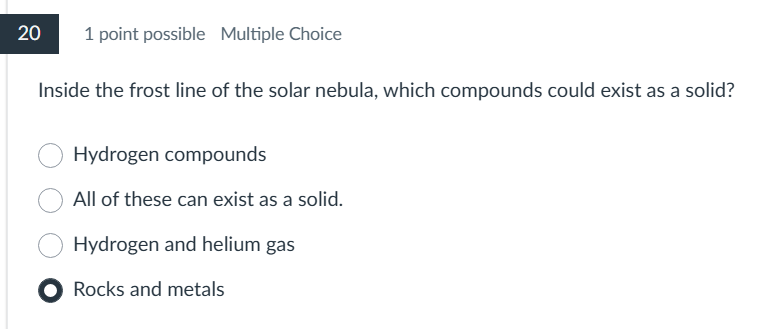
Inside the frost line of the solar nebula, which compounds could exist as a solid?
Rocks and metals
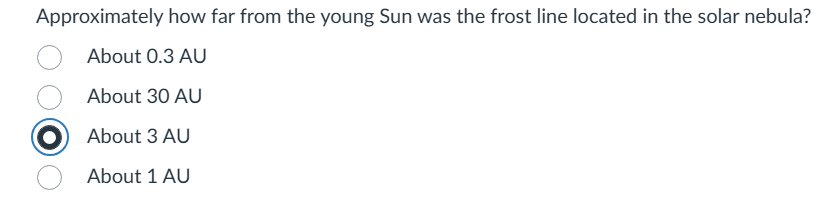
Approximately how far from the young Sun was the frost line located in the solar nebula?
About 3 AU
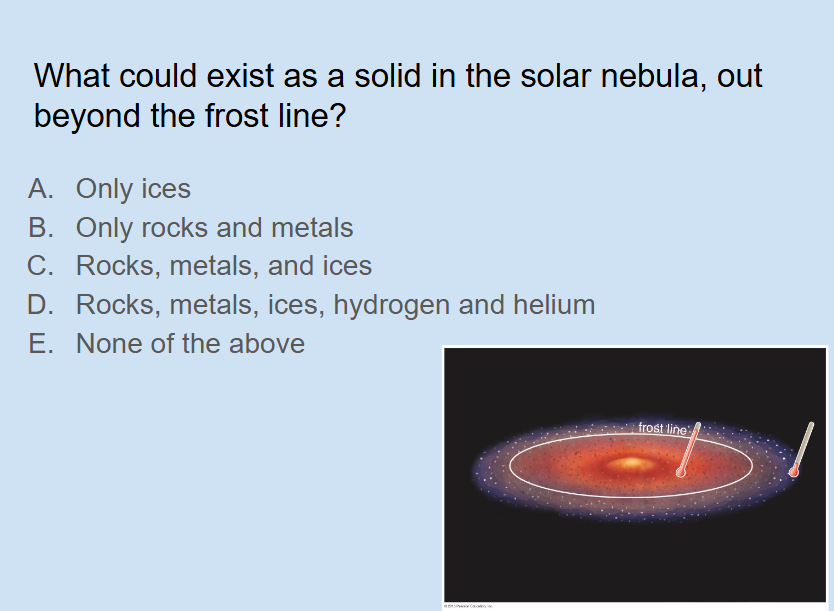
What could exist as a solid in the solar nebula, out beyond the frost line?
Rocks, metals, and ices
Why did planetesimals grow slowly in the inner Solar System and significantly faster in the outer Solar System?
In the outer Solar System, there were additional condensed materials from which to build planetesimals
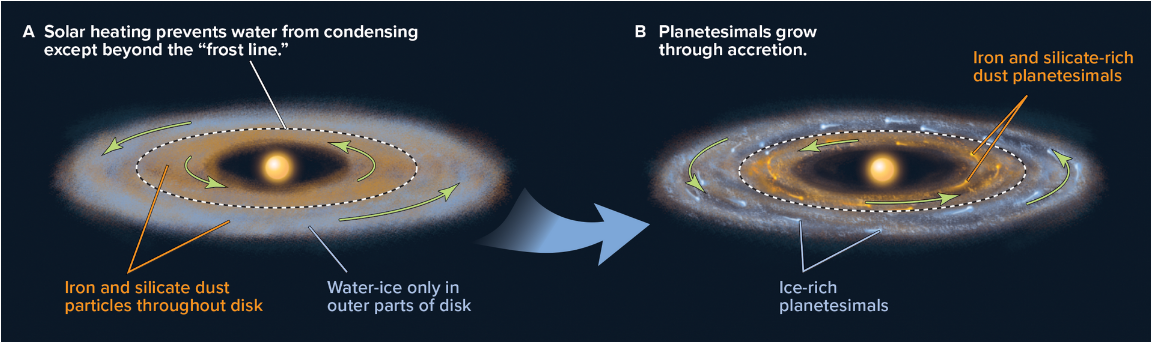
Water (often as ice) is common in the universe, but it does not make up a major fraction of the inner planets. Why?
Planets form by accretion: solid particles hitting and sticking together. Water is not frozen close to the Sun, so it was not available.
planets can only form out of the available materials, and there was too much solar radiation for water to form solid particles near the Sun.
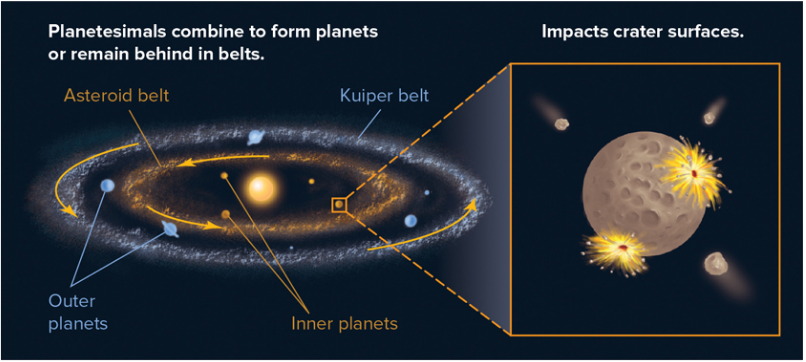
What is the relationship between planetesimals, asteroids and comets?
Asteroids and comets are “leftover” planetesimals
How was the Asteroid Belt formed?
Jupiter’s immense gravity prevented planetesimals beyond Mars from forming a planet
The Jovian worlds grew more rapidly and larger than their terrestrial counterparts and have thicker atmospheres. What factor(s) allowed this to happen?
The larger protoplanets had a higher escape velocity.
Gas particles at low temperatures move more slowly than those at high temperatures.
There were additional condensed materials to build planetesimals from.
How was the Kuiper Belt formed?
Gravity of the outer planets prevented icy planetesimals beyond Neptune from forming a planet
How was the Oort Cloud formed?
Gravity of the outer planets flung icy planetesimals out of the solar system
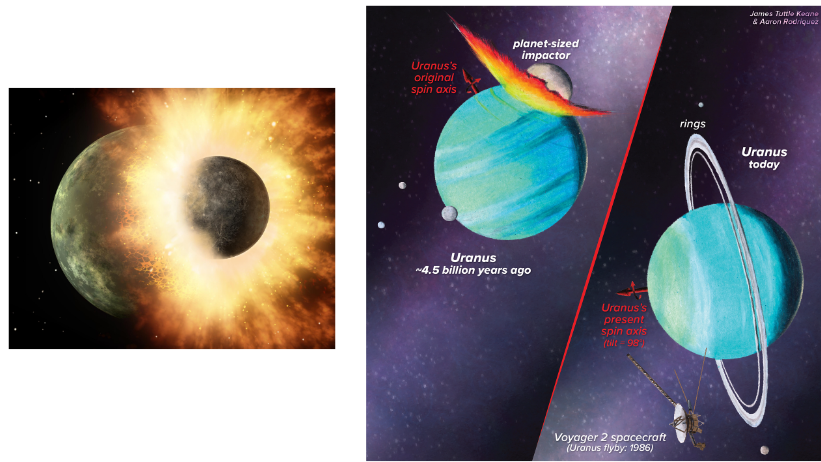
Collisions of Uranus and Venus
Venus and Uranus likely suffered large collision(s) early on
Uranus was struck by a planet or planets billions of years ago, turning it 180°
Venus was struck by an object which slowed its rotation a considerable amount
Hitting a small piece of metal with a hammer will cause it to increase in temperature. What heating process in planet formation is this similar to?
Collisions
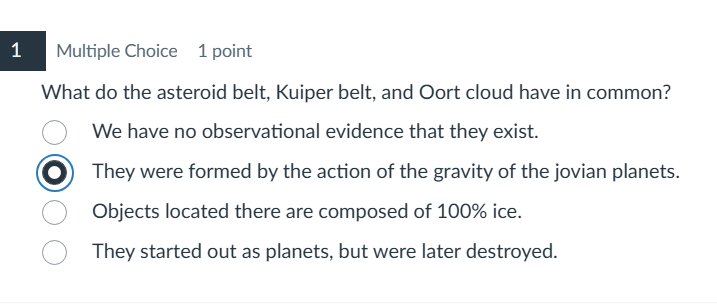
What do the asteroid belt, Kuiper Belt, Oort cloud have in common?
They were formed by the action of the gravity of the Jovian planets.
How much larger is the Sun compared to the Earth?
Roughly 300,000 times the size of Earth
A million Earths could fit inside its volume
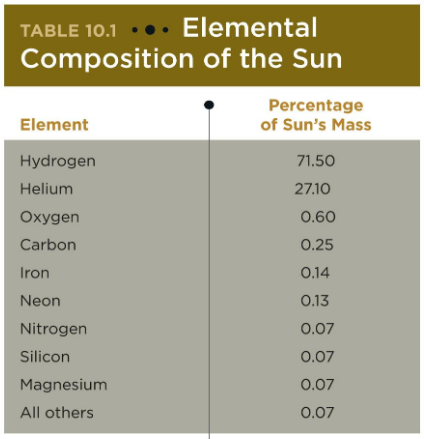
What are the materials inside the Sun?
Hydrogen (71%)
Helium (27%)
Only 2% in heavier elements (AKA “metals” to astronomers)
What is the mass of the Sun?
Mass of the Sun = 2 x 1030 kg
What is pressure?
The force exerted by a substance such as a gas on an area, divided by that area. That is, pressure = force/area.
Gas and pressure must in be in balance within the Sun to create…?
Hydrostatic equilibrium
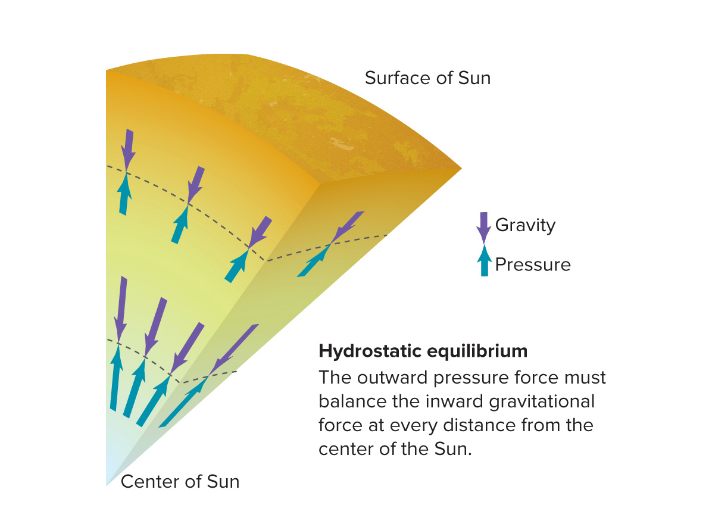
What is Hydrostatic equilibrium?
The condition in which pressure and gravitational forces in a star or planet are in balance. Without such balance, bodies will either collapse or expand.
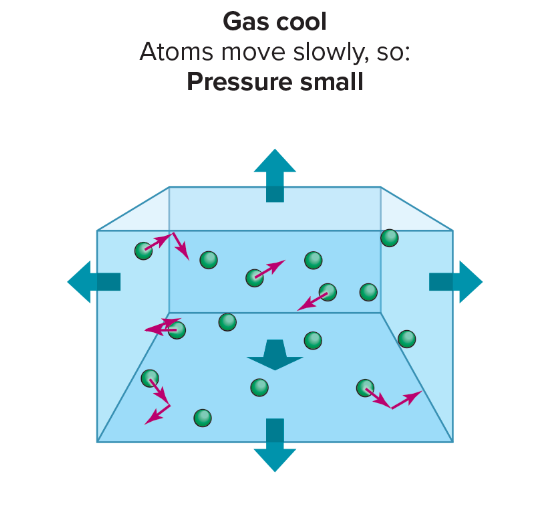
How does a cool temperature impact gas pressure?
Makes the gas pressure small, and slows down atoms, making them collide less often
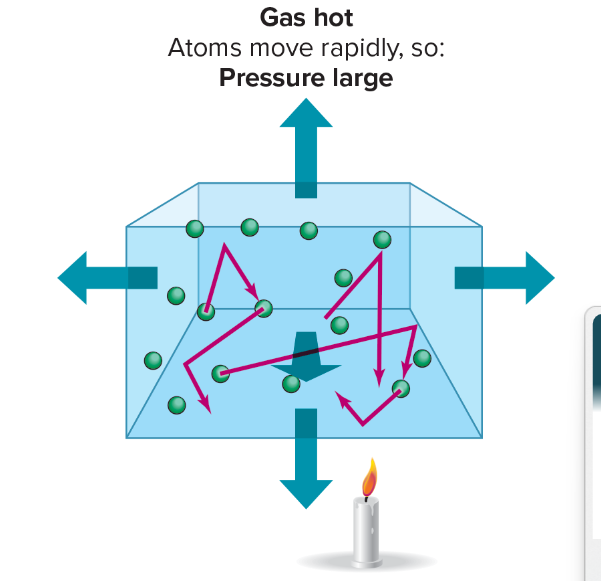
How does a hot temperature impact gas pressure?
Makes the gas pressure large, and speeds up atoms, making them collide harder and more often
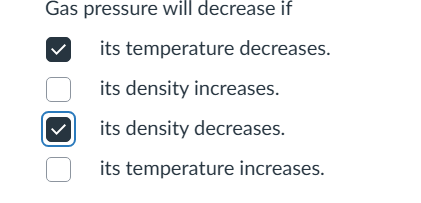
Gas pressure will decrease if…?
Its temperature decreases
Its density decreases
What is the ideal gas law?
A law relating the pressure, density, and temperature of a gas. This law states that the pressure is proportional to the density times the temperature
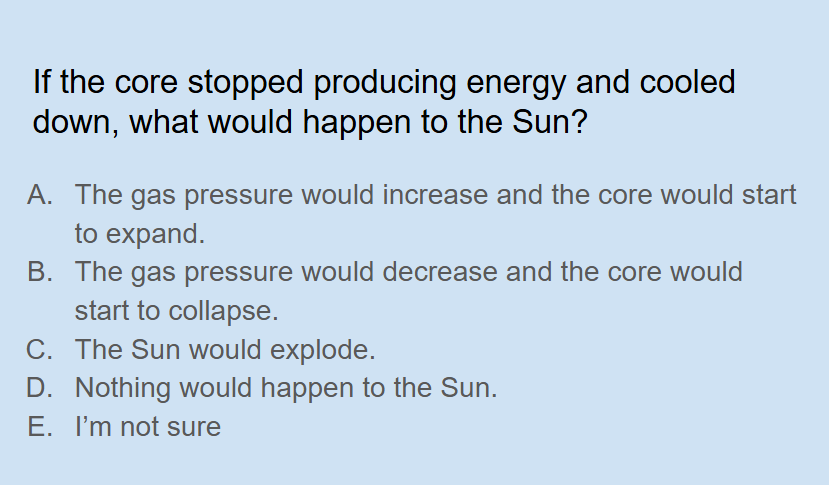
If the core stopped producing energy and cooled down, what would happen to the Sun?
The gas pressure would decrease and the core would start to collapse.
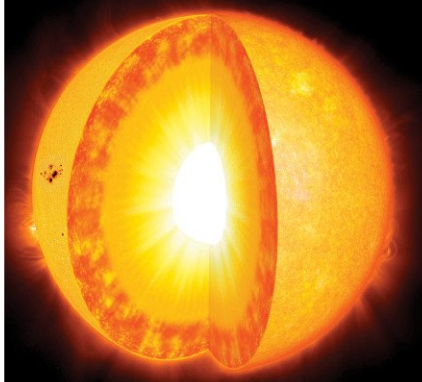
The energy released heats up the core of the Sun, maintaining the gas pressure needed to hold up the Sun against…?
Gravity
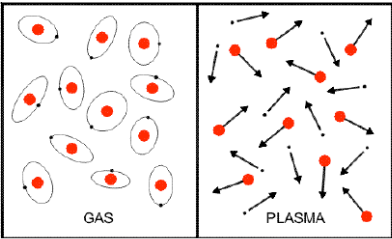
What is plasma?
A gas that is so hot that the atoms have been stripped of their electrons (making them ions)
Material in a star’s interior
If opposite electrical charges attract each other, why do the positively charged nuclei and the negatively charged electrons in a plasma not simply recombine into atoms?
Plasmas are too hot
How much energy does the Sun produce?
Every second, the Sun emits 4x1026 W of power
400,000,000,000,000,000,000,000,000 Watts!
In one second, the Sun emits enough power for the whole world to use for over 1 million years!
What are the two types of nuclear reactions that release energy?
Nuclear fission and Nuclear Fusion
How does the Sun produce energy?
Nuclear fusion; fuses hydrogen and helium in the core
Core is 15millionK
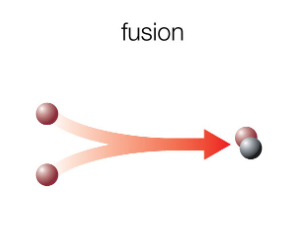
What is Nuclear Fusion?
Combining 2 or more small nuclei
The binding of two lighter nuclei to form a heavier nucleus, with some nuclear mass converted to energy—for example, the fusion of hydrogen into helium.
This process supplies the energy of most stars and is commonly called “burning,” but burning is a chemical process that does not alter atoms’ nuclei.
Operates in very hot, dense environments
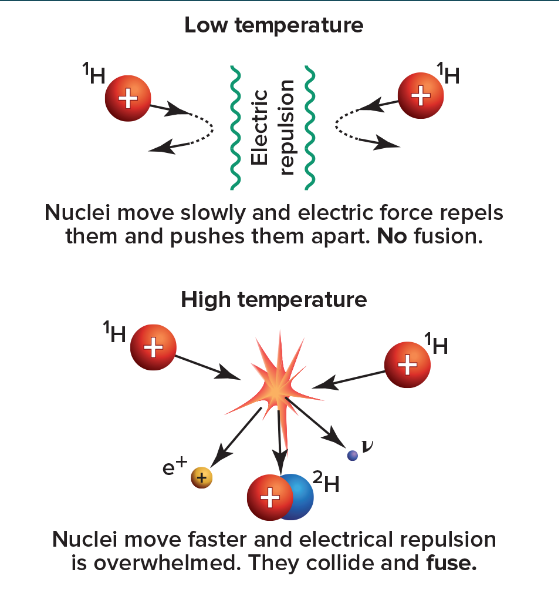
How does high temperature impact nuclear fusion?
High temperature acts to overcome the electrical repulsion of the nuclei and brings them close enough for the nuclear force to fuse them.
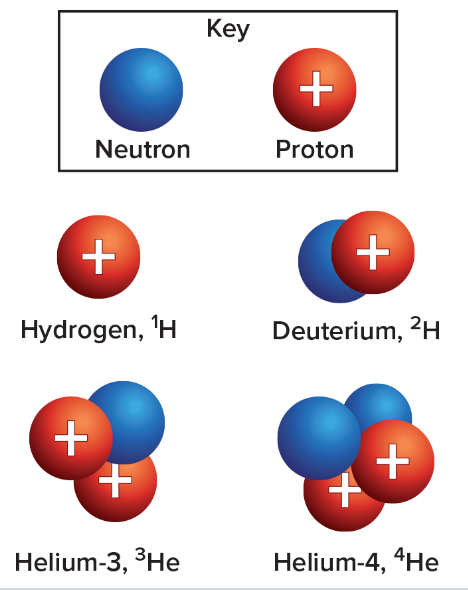
What conditions are needed to fuse hydrogen into helium?
Temperatures above 10 million K
Densities 100x greater than the density of water
density of water = 1 gram per cubic cm
High pressure, velocity and speeds