Marine Microbiology - Algae and bacteria
 Call Kai
 Learn
Learn Practice Test
 Spaced Repetition
 Match
Match Flashcards
 Knowt Play
1/26

There's no tags or description
Looks like no tags are added yet.
Name | Mastery | Learn | Test | Matching | Spaced | Call with Kai |
|---|
No analytics yet
Send a link to your students to track their progress
27 Terms
What is marine biofouling
undesirable growth of micro- and macro-organisms on marine surfaces
What are affected by marine biofouling?
challenge for marine eukaryotes and fouling bacteria
detrimental to marine algae and other eukaryotes
What is Delisea pulchra?
Algae that produces unusual secondary metabolites
rare in nature
What molecules does Delisea pulchra produce?
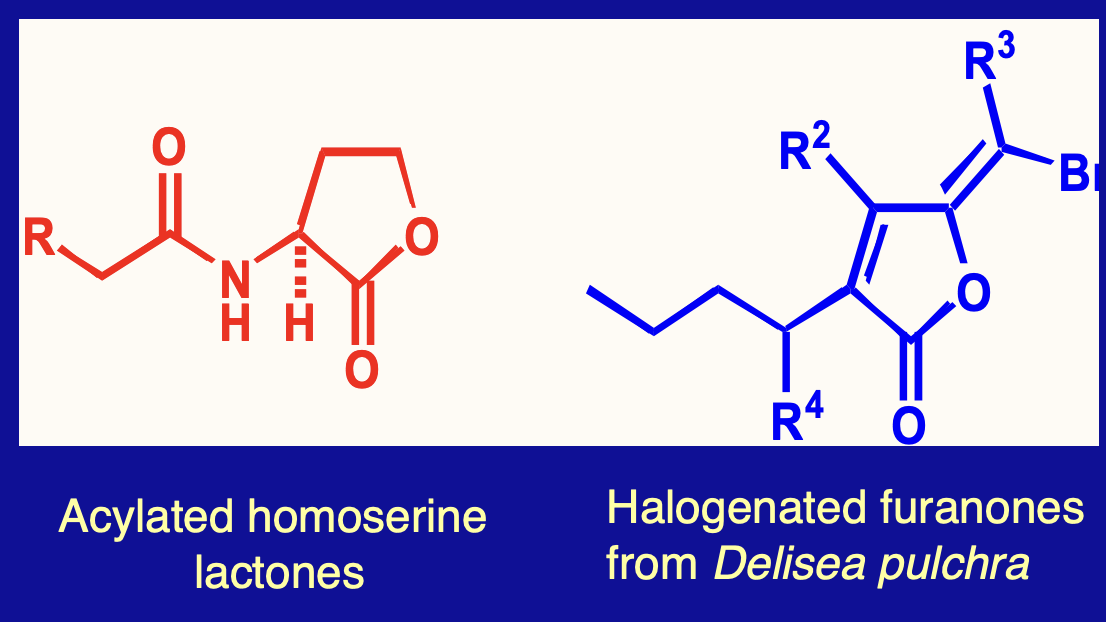
Halogenated furanones
under gland cells of algal tissue
What do halogenated furanones do to bacteria?
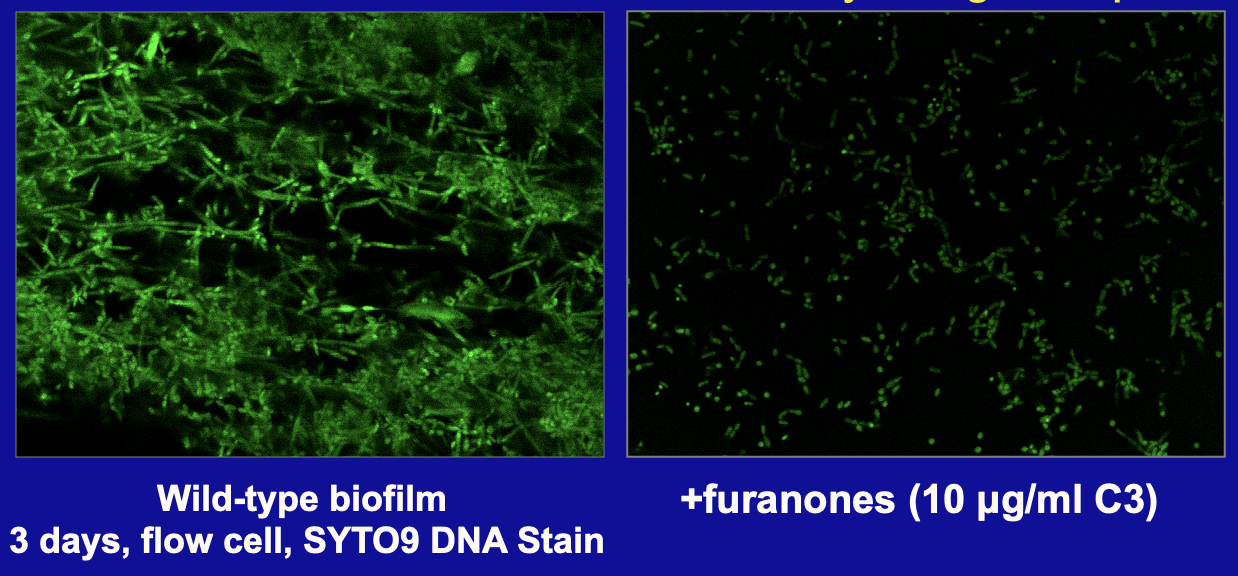
inhibit colonization by epiphytic bacteria on Delisea pulchra
→ colonization and biofilm formation by Ruegeria sp.
What is quorum sensing?
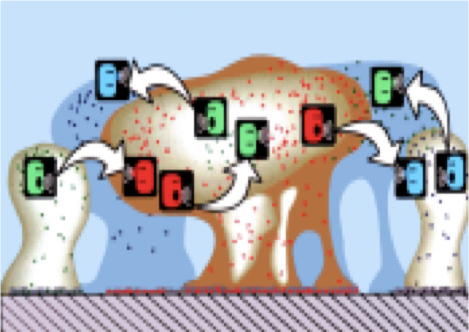
Cell-cell signaling in bacteria for colonization and biofilm formation
→ e.g. bacterial signaling molecules: N-Acyl Homoserine Lactones (AHLs)
How furanones inhibit bacterial signalling?
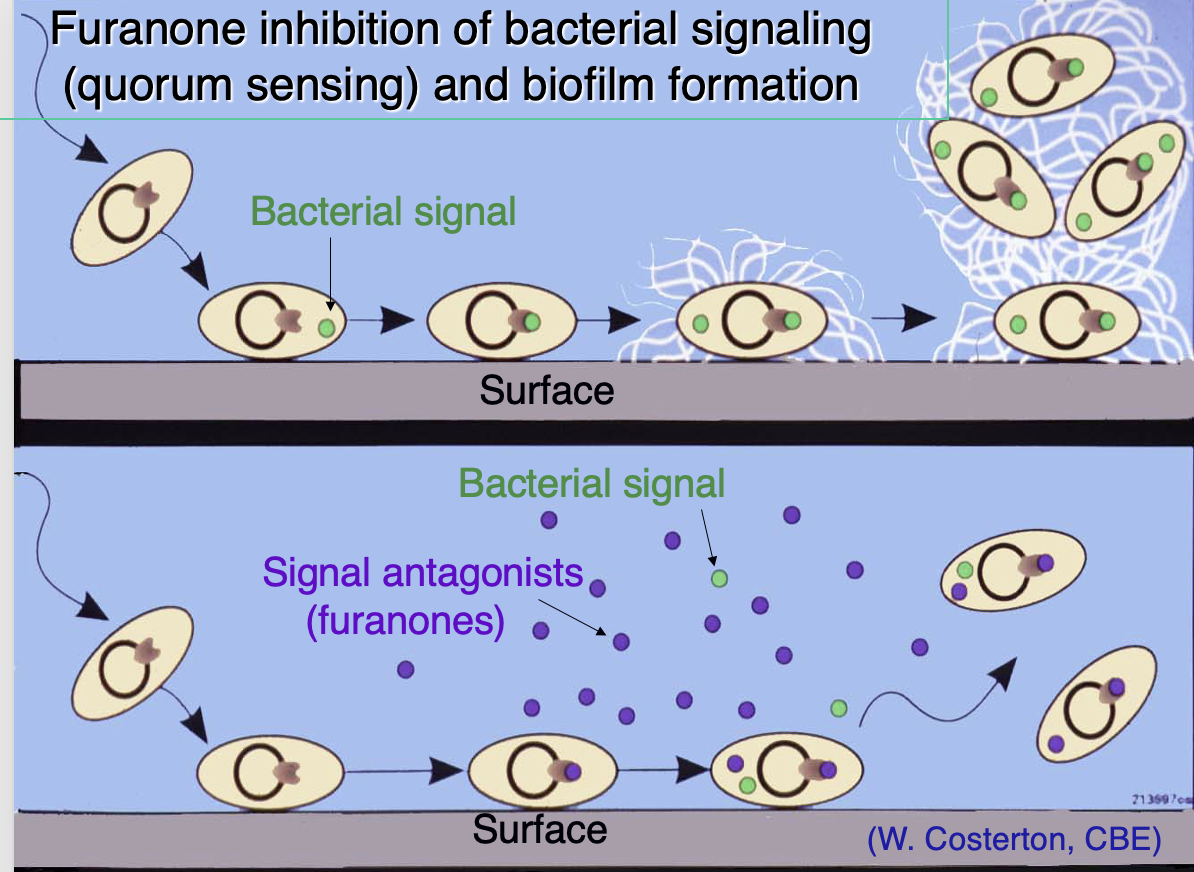
Furanones act as quorum sensing inhibitors
Process of furanones inhibiting bacterial signalling
How furanones shut down quorum sensing mechanism?
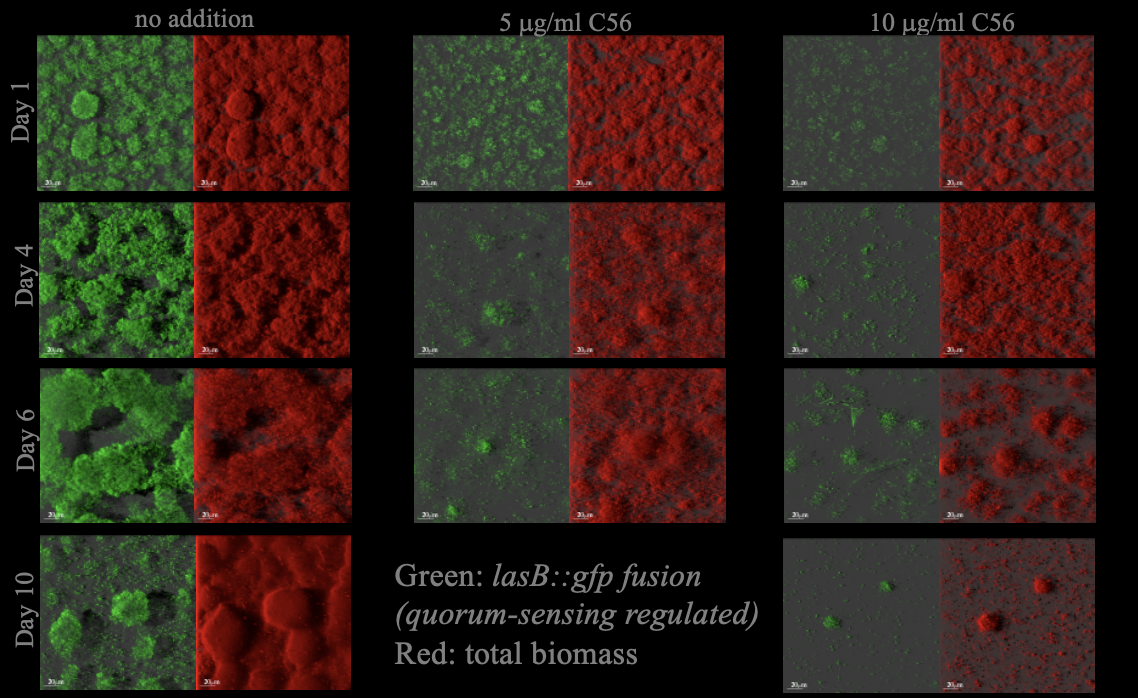
Penetrate Pseudomonas aeruginosa biofilms
→ shut down the quorum-sensing signalling systems and cause detachment
(green fluorescence protein = quorum sensing on)
(red = biomass)
=> furanones shutting down quorum-sensing as conc. increase → biomass reduced
Effect of Delisea pulchra crude extract on bacterial attachment (field trial)
Inihibitory effect
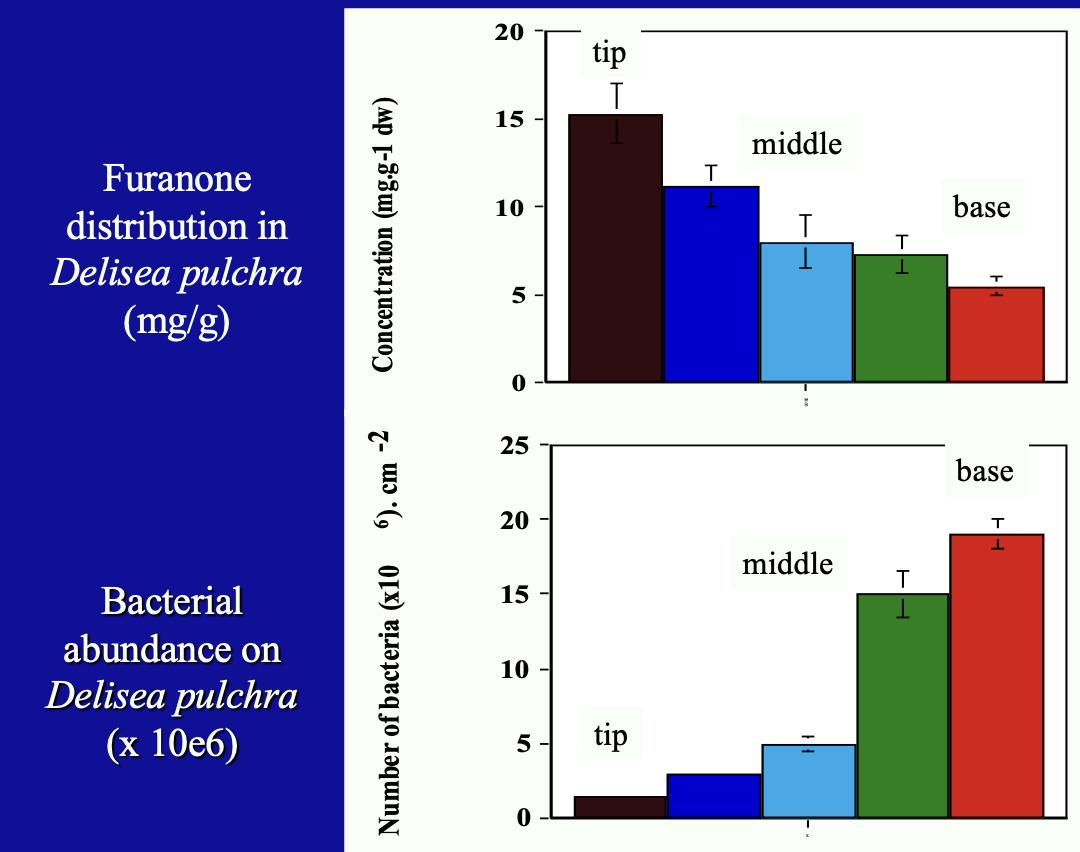
Bacteria abundance compared with Furanone distribution
Low dist of Furanone = high bacteria abundance
Furanone on bacteria diversity in diff. parts of Delisea pulchra
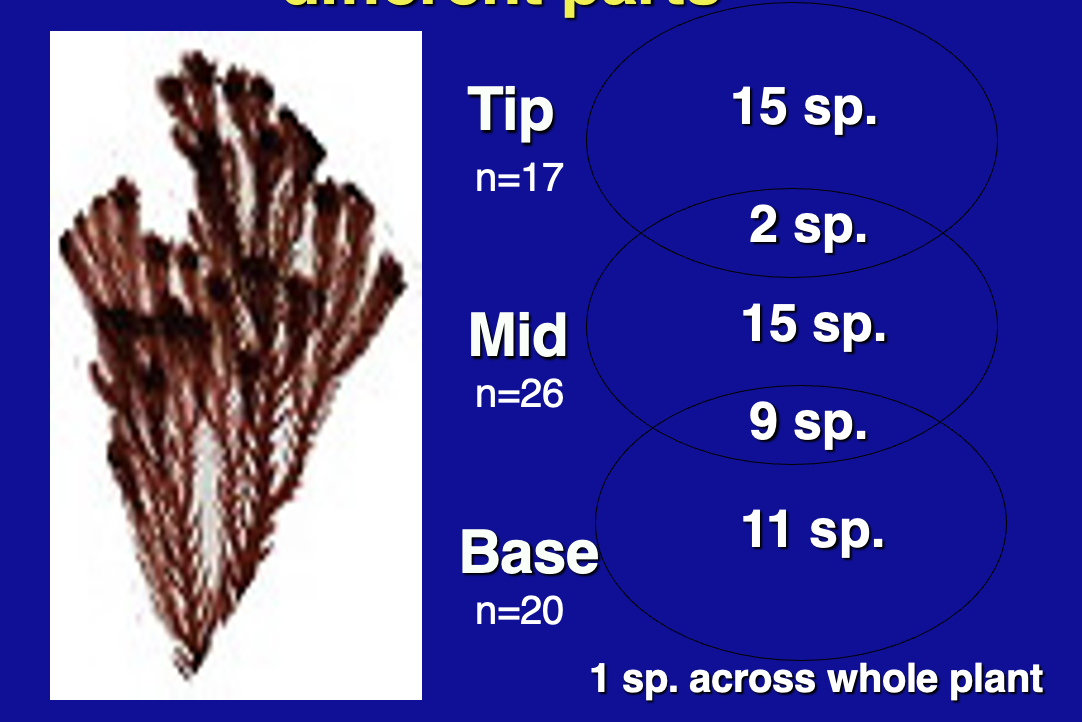
Furanone affect diversity?
Bacteria isolates ifrom diff. parts
BUT 1 sp. across the whole plant
What is Denaturing Gradient Gel Electrophoresis (DGGE)?
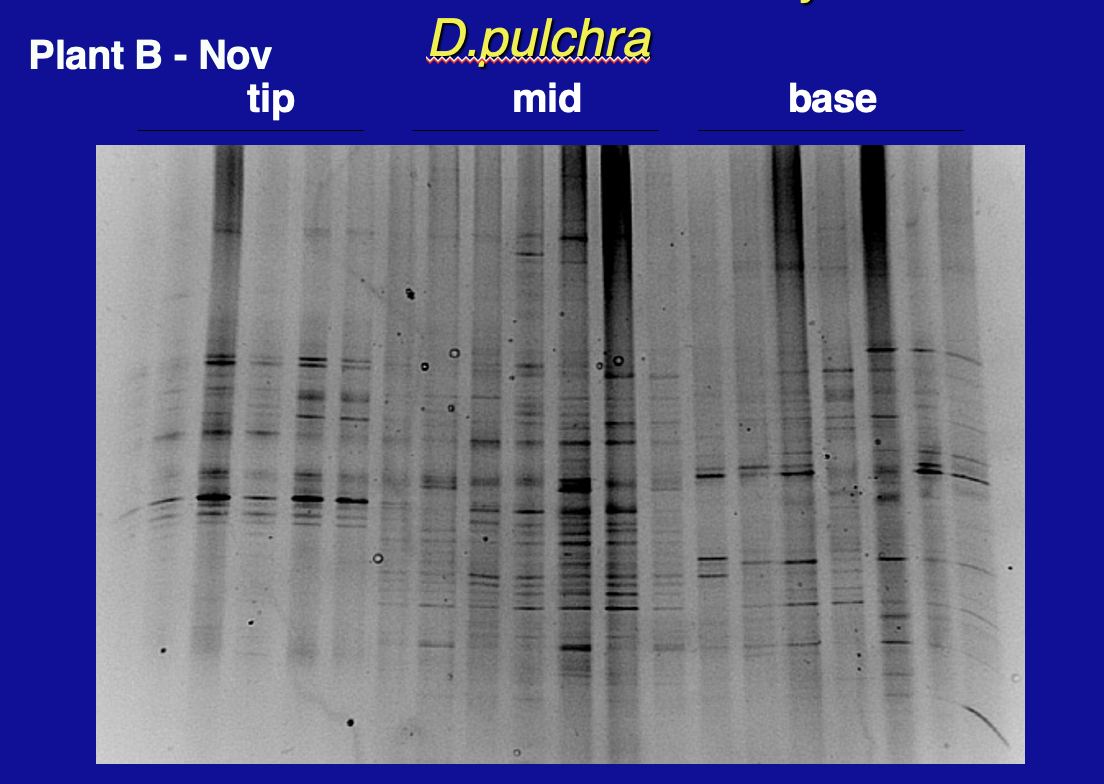
Type of Microbial community fingerprinting
Extract DNA
Amplify with PCR,separating the 16s rDNA gene from the whole microbial community - on denaturing gradient gel (urea denaturing agent, polyacrylamide gel)
→ Differences of 1 base-pair in the PCR product can be detected
1 band type = 1 species
What is Multidimensional Scaling?
Stat. method used to visualise difference in data
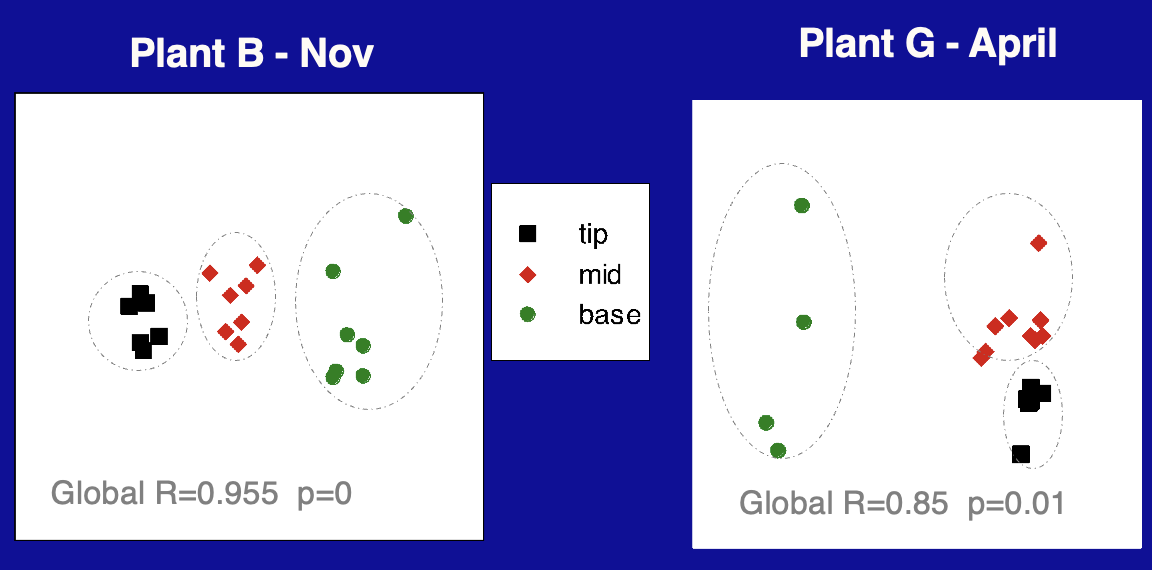
Results of Multidimensional Scaling
Diff microbial comm. at diff regions of plant
D. pulchra's effect on the community succession
Field array apparatus measuring community succession of D. pulchra
Secure treated algae/inanimate surfaces in the marine environment for extended periods
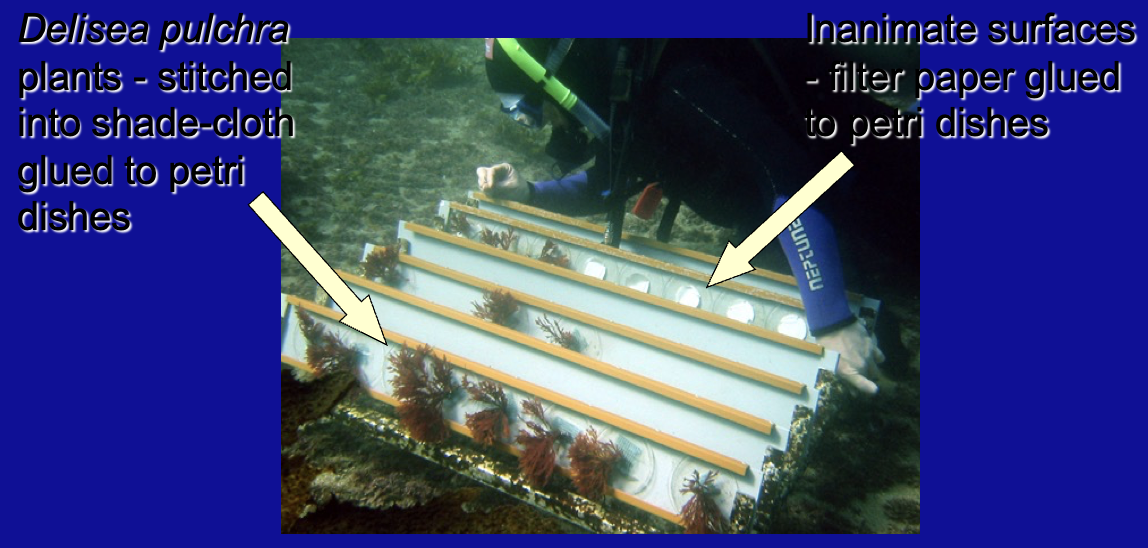
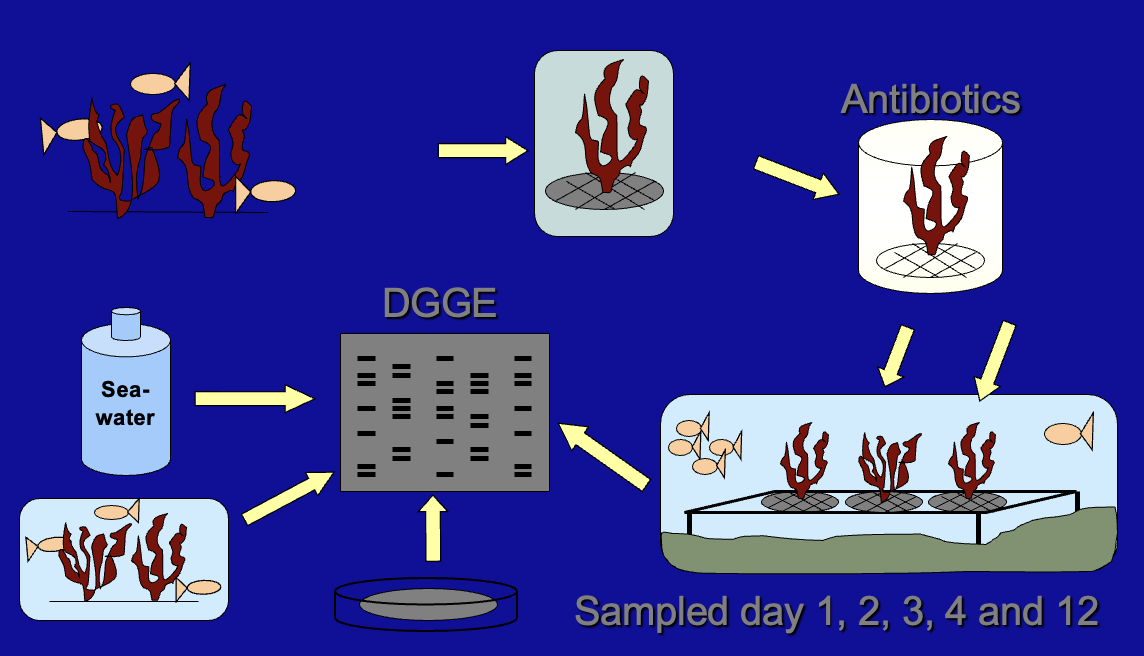
Field assay of microbial community over time on Delisea pulchra
Antibiotic treated v.s. control
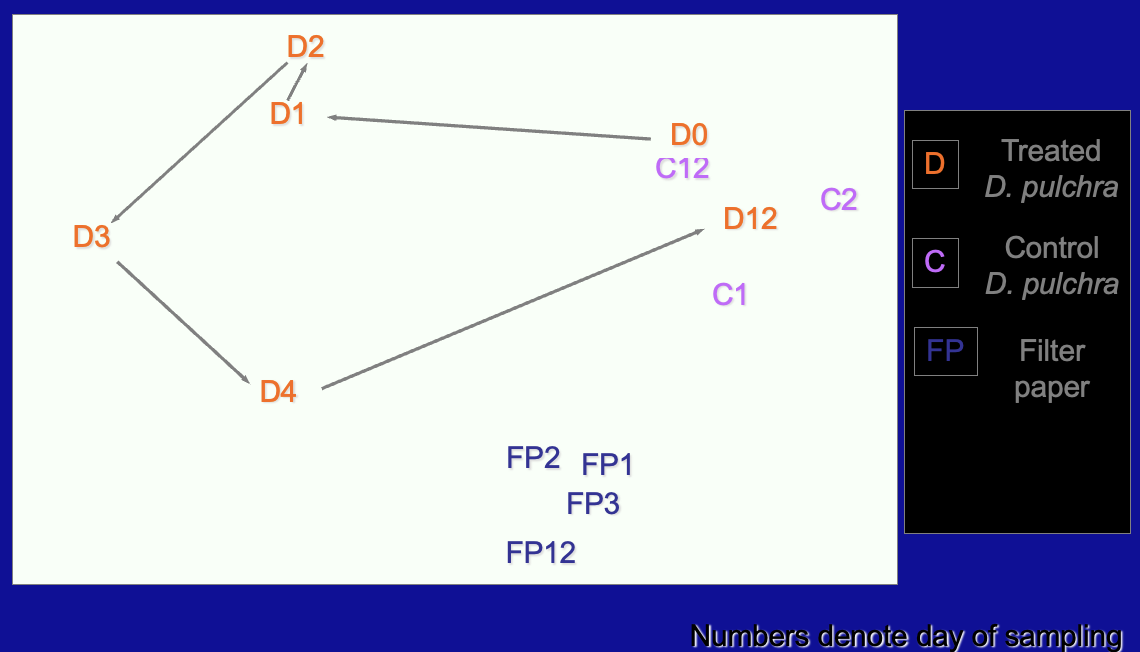
Bacterial succession on D. pulchra (tip)
After 12 days, microbial community was reintroduced to the antibiotic-treated D. pulchra
→ D. pulchra control bacteria community on the surface
What Furanone production do to bacteria community?
Furanone production can prevent fouling and control bacterial community succession on the surface of Delisea pulchra
Anti-biofouling strategies with Furanone
Environment and medical usages
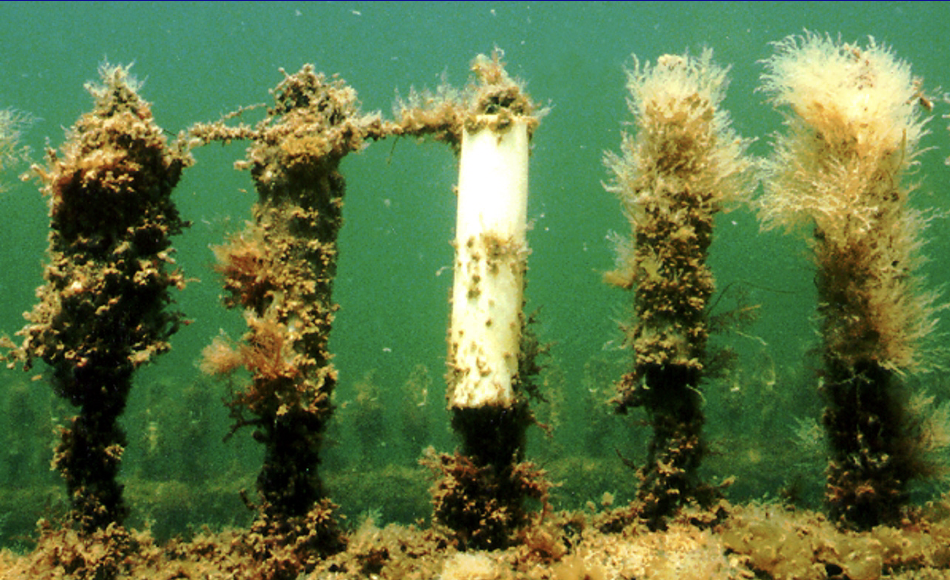
Other non-chemical defence against biofouling (e.g. Ulva lactuca & Pseudoalteromonas)
Harbours inhibitory bacteria such as Pseudoalteromonas
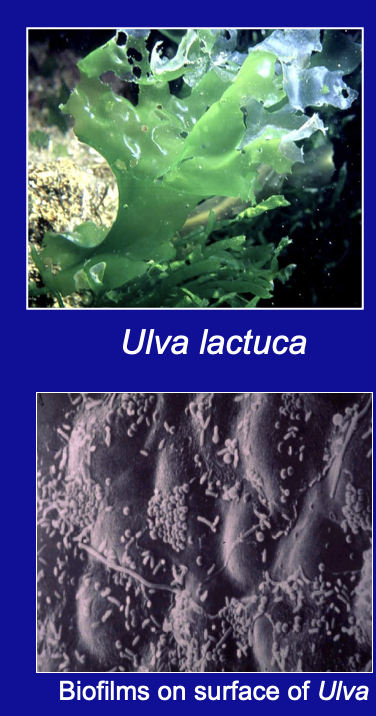
What is Pseudoalteromonas tunicata ?
Colonizes marine living surfaces (e.g. Ulva lactuca)
Produces a range of bioactive compounds that inhibit marine fouling organisms (e.g. invertebrate larvae, algal spores)
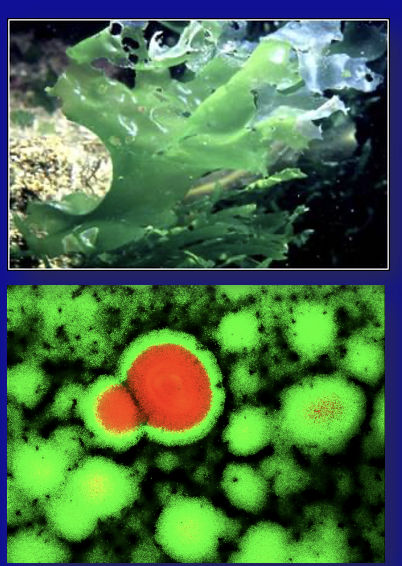
How Pseudoalteromonas tunicata defends against biofouling?
produces a range of target-specific extracellular inhibitory compounds
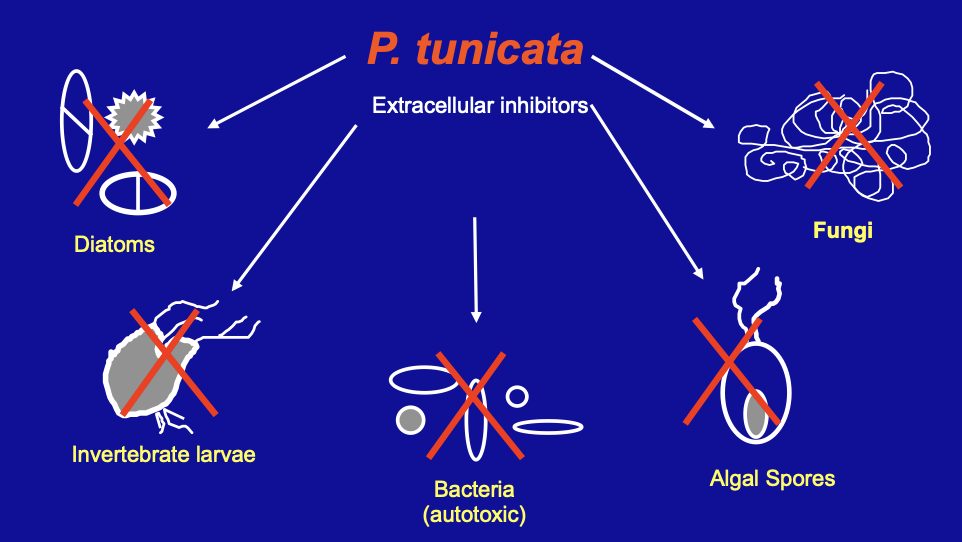
Antibacterial protein of P.tunicata
AlpP
Size: 190 KDa
Mode of action: lysine oxidase activity, H2O2 production
Detected in the effluent of biofilms ≥ 3 days old.
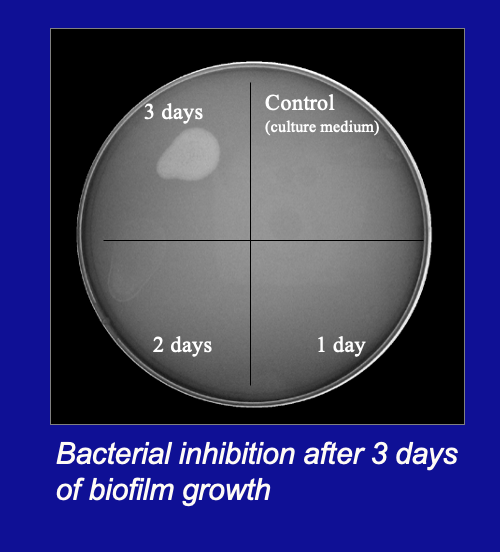
Does P. tunicata outcompete other marine bacterial strains during competitive biofilm development?
Yes
A P. tunicata ΔalpP mutant strain exhibits reduced ability to compete against P. gracilis
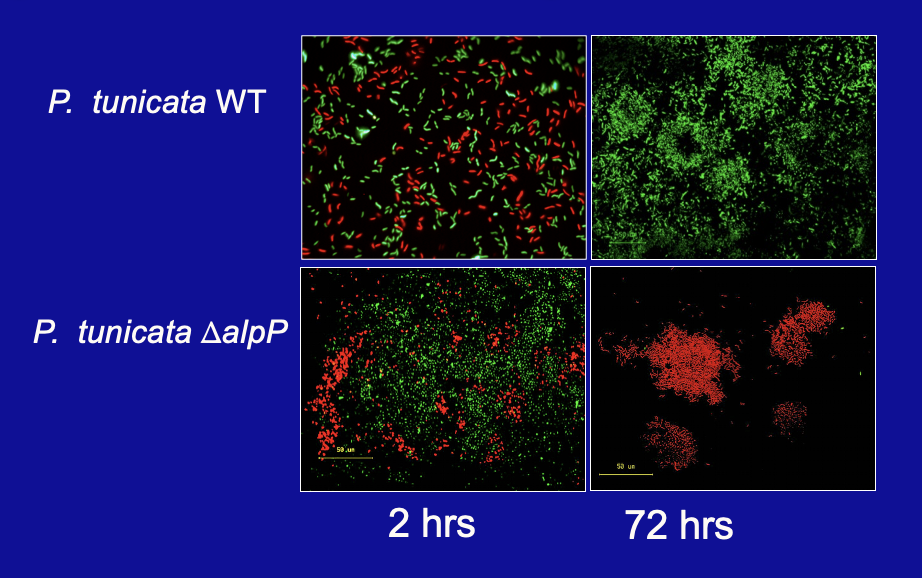
Testing Competitive biofilm development by epiphytic bacteria
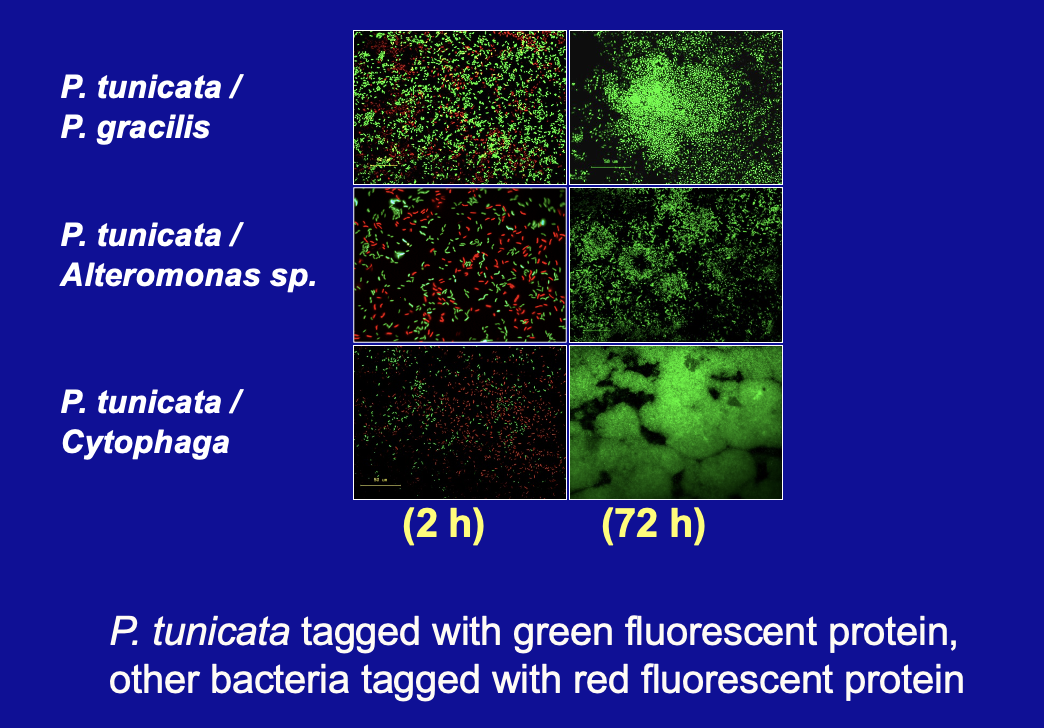
How marine plants (not D. plunra) defend against fouling?
Bacteria on marine plant surfaces can produce extracellular inhibitory compunds