B15.3 Sexual reproduction in plants
 Call Kai
 Learn
Learn Practice Test
 Spaced Repetition
 Match
Match Flashcards
 Knowt Play
1/8

There's no tags or description
Looks like no tags are added yet.
Name | Mastery | Learn | Test | Matching | Spaced | Call with Kai | Chat |
|---|
No analytics yet
Send a link to your students to track their progress
9 Terms
What is pollination?
The transfer of pollen grains from an anther to a stigma
What is fertilisation?
The fusion of the pollen and ovule nuclei to form a zygote
Identify insect-pollinated flower and its structures in diagrams
Male part: stamen → produces pollen
Female part: carpel → seeds develop in the carpel
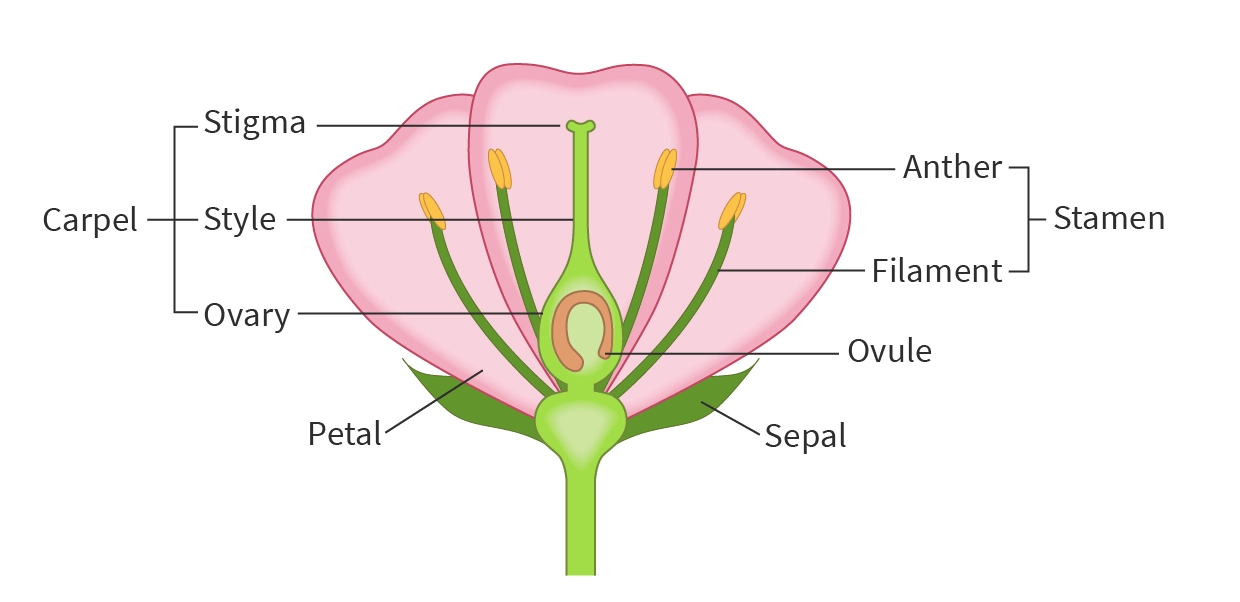
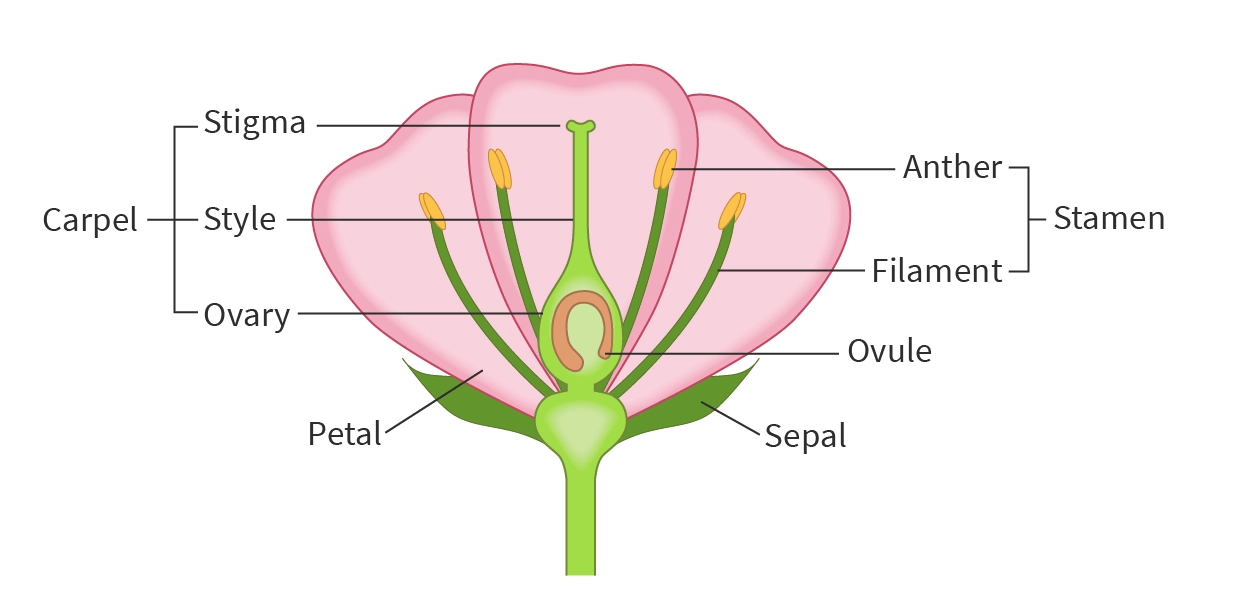
Function of each structure
Structure | Description |
Sepal | Protects unopened flower |
Petals | Brightly coloured to attract insects |
Anther | Produces and releases pollen grains (male gamete) |
Filament | Supports the anther |
Stigma | Top of female part which is sticky to trap pollen grains |
Style | Supports stigma |
Ovary | Contains ovules which will develop into seeds after fertilisation |
Ovule | Produces and contains the ovum (female gamete) and develop into seeds after fertilisation |
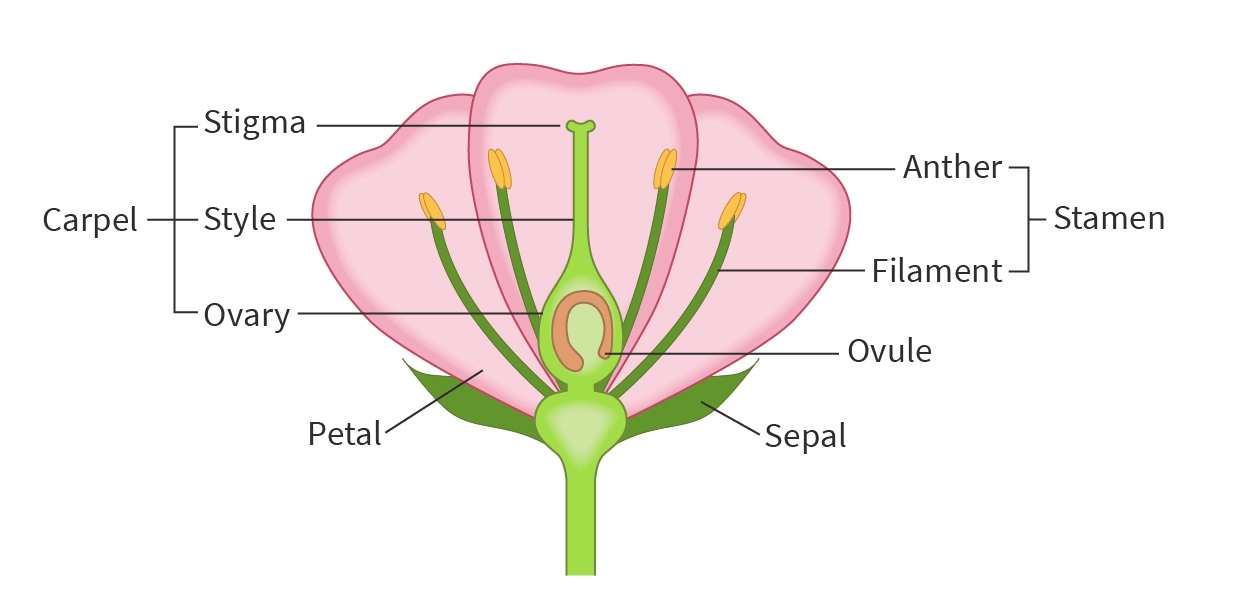
Adaptations of insect-pollinated flowers
Feature | Adaptation |
Petals | Large and bright colors to attract insects |
Stigma | Sticky so pollen grains stick to it |
Anther | Inside flower to brush against insects |
Scent and nectar | Entices insects to visit flower |
No. of pollen grains | Moderate since insects transfer grains efficiently with a high chance of pollination |
Pollen grains | Large, sticky and spiky to attach to insects so it can be carried away |
Identify wind-pollinated flower and its structures in diagrams
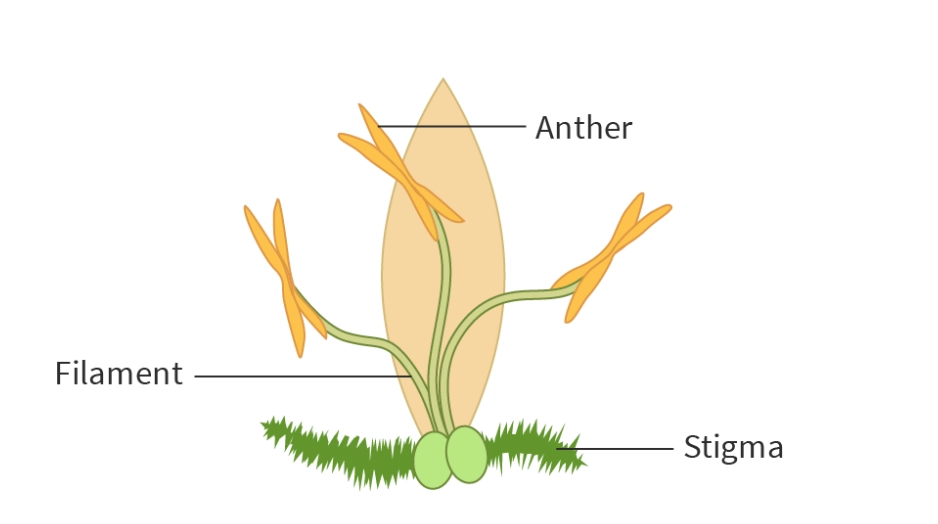
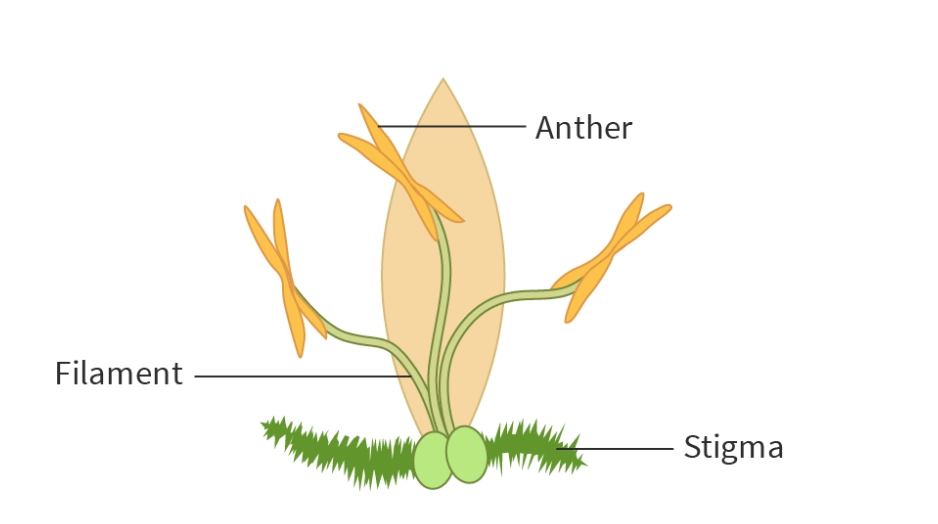
Adaptations of wind-pollinated flowers
Feature | Adaptation |
Petals | Small and dull |
Stigma | Outside flower, feathery to catch drifting, windborne pollen grains |
Anther | Dangles loosely outside the flower to release pollen into the wind so it can blow away |
No scent or nectar | Has no need to attract insects |
No. of pollen grains | Large amounts of pollen since it increases chances of successful pollination |
Pollen grains | Smooth, small and light to be blown away easily |
What is germination?
Process controlled by enzymes in which the seed begins to develop into a new, young plant
What are the conditions required for germination?
Water: allows seed to swell up and enzymes in the seed to start working so seed can begin to grow
Oxygen: needed for aerobic respiration, which provides energy needed for growth
Temperature: since it is a process controlled by enzymes, there is an optimum temperature