3018 wk 9 lec
 Call Kai
 Learn
Learn Practice Test
 Spaced Repetition
 Match
Match Flashcards
 Knowt Play
1/24

There's no tags or description
Looks like no tags are added yet.
Name | Mastery | Learn | Test | Matching | Spaced | Call with Kai |
|---|
No analytics yet
Send a link to your students to track their progress
25 Terms
Children and Young Persons (Care and Protection) Act 1998
Health professionals are mandatory reporters
Children that are admitted to hospitals are more likely to be victims of child abuse/neglect
Commission for Children and Young People Act 1998
Maintaining systems to prevent reportable conduct by health workers
Responsibility to also report colleagues who are not reporting children at risk, or themselves are harming / abusing children
Can happen in work or outside of work
This can be managed with a Working with Children check + Police Check
Professional responsibilities of Nurses in child abuse/neglect
Goes beyond simple ‘legal’ obligations (i.e. mandatory reporting and providing info to Children’s court if called upon)
Recognising and responding to vulnerabilities and needs of the child
Collaborating with other health professionals and agencies to support and strengthen families
Promote children’s health, safety, and wellbeing
What is Child abuse?
All types of physical and/or emotional ill-treatment
Sexual abuse
Neglect
Negligence
Exploitation that results in harm of the child’s health, trust, development etc.
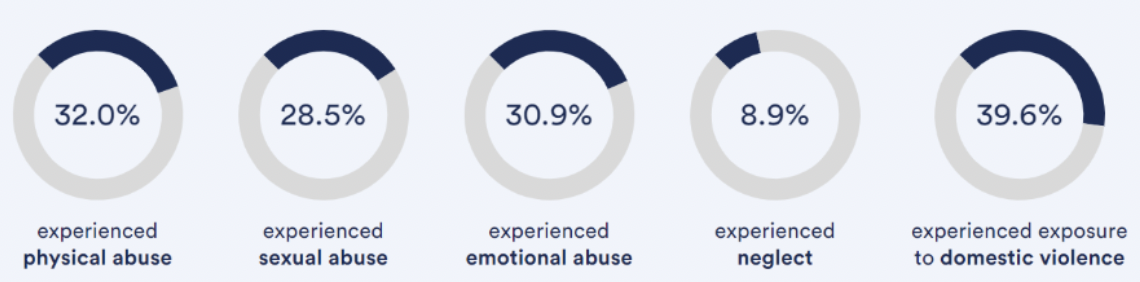
Statistics on Child Abuse in Australia
Nearly 1/3 have experienced physical abuse
Nearly 40% have exposure to domestic violence
30% have experienced sexual abuse and emotional abuse
How much % of reports are made by medical and health personel?
11.6%
What is Risk of Significant Harm?
ROSH
The likelihood that a child or young person may suffer physical, psychological, or emotional harm as a result of abuse or neglect
When risk is high for SIGNIFICANT harm, this warrants a mandatory report irrespective of the family’s consent
What is Physical Abuse?
A child or young person sustains a non-accidental physical injury or is being treated in a way that has or is likely to cause injury
May be inflicted by carer, parent, or other adult
May also be happening between children
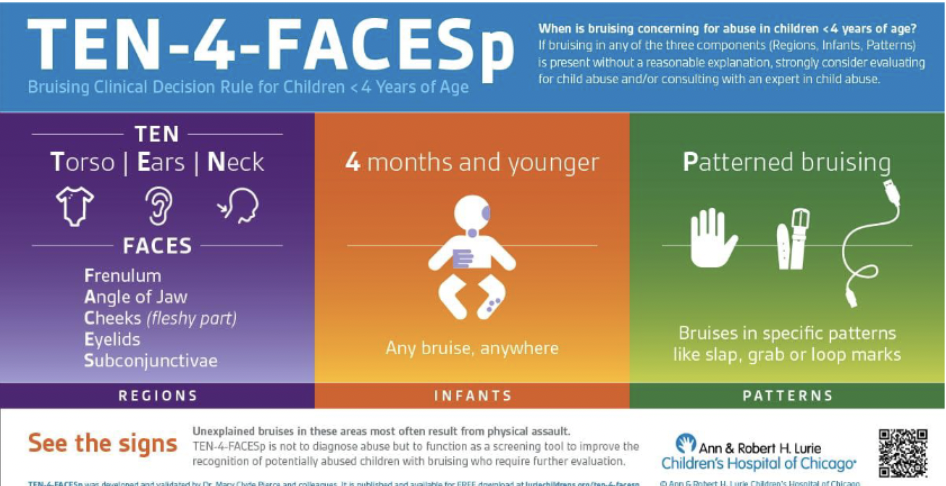
How to assess Physical Abuse? (bruising assessment)
TEN - 4 - FACESp
Torso, Ears, Neck
4mo or less requires noting the presence of a bruise NO MATTER WHERE
Frenulum (under / behind top lip), Angle of Jaw, Cheeks, Eyelids, Subconjuctivae (major red eye)
Patterned Bruising
These locations of bruising are HIGHLY UNLIKELY to happen by accident
What is Sexual Abuse?
Sexual activity or behaviour that is imposed, or is likely to be imposed, on a child or young person.
Sexual Activity includes:
Sexual acts
Exposure to sexually explicit material, including inducing or coercing a child to engage or assist in these act
Exposing a child to a situation where sexual abuse may occur
How to recognise signs of sexual abuse?
Self destructive behaviours
Genital trauma
Trauma to breasts, buttocks, thighs
Bite / burn marks
Direct or indirect disclosure
Disturbed sleep
Noted changes in behaviour that may signal sexual abuse
Sexualised behaviours
Extensive knowledge surrounding sexual acts and topics
What is Psychological Harm?
Child’s psychological state has been, or is at risk of being harmed, because of a parent or carer’s attitudes and behaviours.
This could include:
Domestic Violence
Mental Health aspects
Drug and alcohol use
Criminal or corrupting behaviour
Other exposure to traumatic events
Psychological Harm also includes the impairment, disturbance, or damage to the child or young person due to experiencing or witnessing such violence
What is Domestic Violence?
Any abuse behaviour used by a person in a relationship to gain or maintain control over their partner / ex-partner
Can include a broad range of behaviours or actions to cause fear, physical, and/or psychological harm
(in acting out of their personal interest)
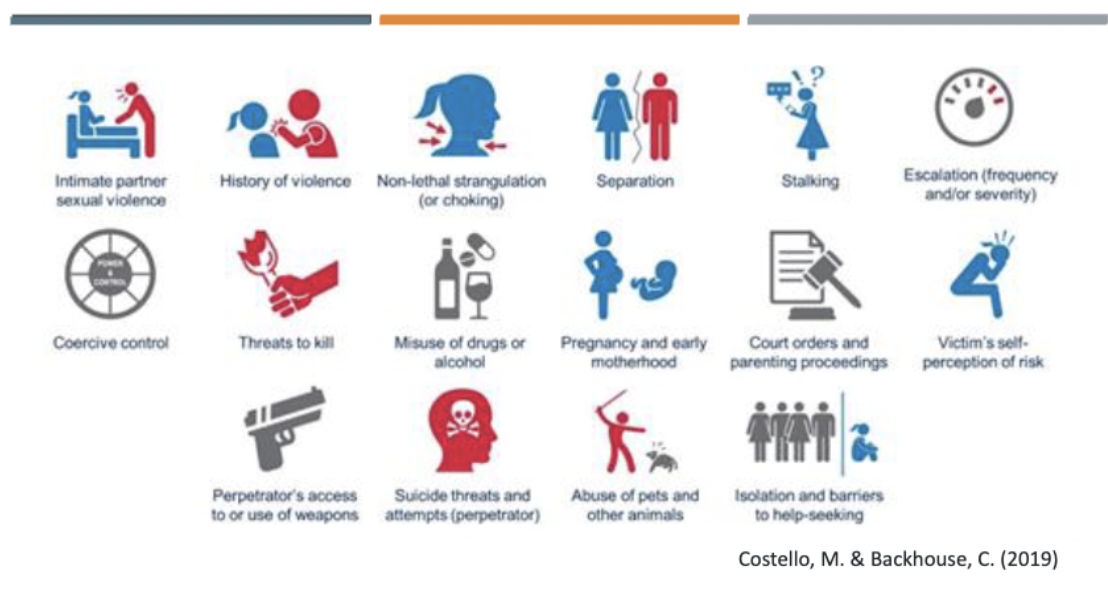
What is Neglect?
When a child’s basic needs are intentionally/unintentionally not met, or at risk of not being met
Inevitably causing impact and adverse outcomes to the child’s health and wellbeing
Aspects of Child basic needs include:
A safe shelter
Nutrition
Education
Medical care
Supervision
Clothing
Lack of acknowledgment from carer / parent
What is Medical Neglect?
When parents:
1) Failure to note and detect obvious signs of serious illness
2) Failure to follow a medical practitioner’s instructions once medical advice has been provided and a plan is set
What is Prenatal Harm?
Circumstances or behaviours of a parent that put a baby during pregnancy at risk of significant adverse health outcomes
Acts are known or highly likely to compromise child’s safety, welfare, health, and wellbeing once born
Challenges of Nurses in responding to Child Abuse/Neglect
1) Rigid Systems, presence of hierarchies
e.g. Junior nurse consults with senior nurse seeking advice - who turns down the concern and influences the junior otherwise
2) Poor communication / collaboration
e.g. Poor communication from handover with info becoming lost, poor documentation surrounding child protection
3) Fear of making mistakes
e.g. Being wrong and possibly accused, scared of responsibility
4) Workload / burnout
Strengths of Nurses working within a System
1) Child centred practice
e.g. listen and understand to the child
2) Relational practice
e.g. promote trust, respect and compassion with the child and others
3) Cultural Safety
4) Reflective practice and learning
How to effectively evaluate risk
1) Work as a team
2) Use risk assessment tools
3) Always remain curious
4) Do not confront the perpetrator
5) Document all aspects of risk evaluation
How to respond to disclosures surrounding child abuse / neglect
Stay calm
Thank the person and acknowledge the courage of the person for informing you
Ask open-ended questions to gather more info and accurately evaluate risk
Avoid ‘leading’ questions
DO NOT make promises that can’t be kept (e.g. confidentiality, since you have to be a mandatory reporter)
Reassure them and inform them you are there to support them
Communicating Concerns with parents
Comfort and validate emotions and feelings
Allow parents to vent
Remain non-judgemental and professional
Be clear and honest about the next steps
Grasp understanding of the experience from the side of the child and the parents/carer, and even potentially siblings
Interagency Collaboration for managing child abuse / neglect
A professional and legal requirement.
→ Best practice for the child’s health, safety, welfare, and wellbeing
Aboriginal Children and their risk of child abuse / neglect
8x more likely to be engaged with Child Protection services and be in out-of-home care compared to non-aboriginal children
What does this mean?
Importance of Cultural Safety
Reflective practice and learning
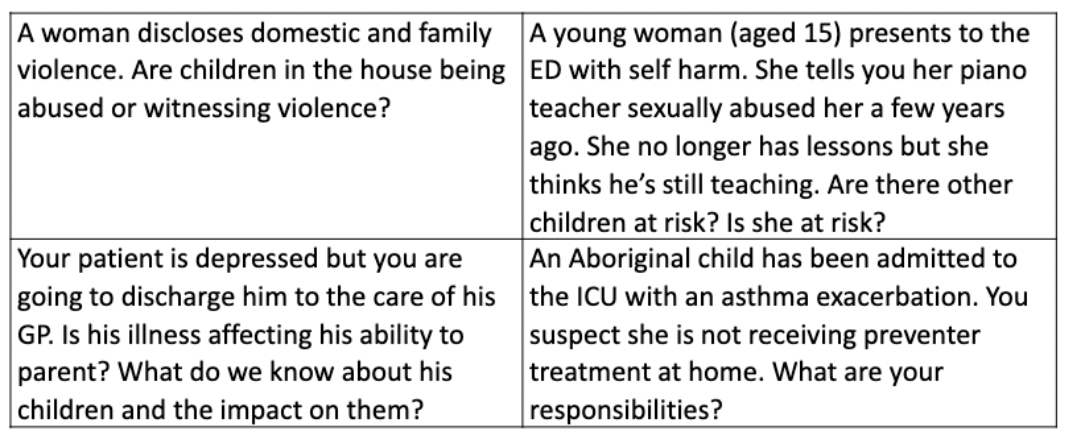
Things to consider when caring for a patient
These scenarios all involve considering the potential for child abuse / neglect