Nunes test 3 part 2 (CVS100 Medical Techniques and Patient Care)
 Call Kai
 Learn
Learn Practice Test
 Spaced Repetition
 Match
Match Flashcards
 Knowt Play
1/84

There's no tags or description
Looks like no tags are added yet.
Name | Mastery | Learn | Test | Matching | Spaced | Call with Kai |
|---|
No analytics yet
Send a link to your students to track their progress
85 Terms
What are the key principles of Patient‑Focused Care (PFC)?
Treat all patients with respect, dignity, and kindness; consider age, cultural traditions, values, and lifestyle; and work as a team with other health care professionals to provide the best care.
What major patient‑rights action happened in 1973?
American Hospital Association (AHA) adopts patient’s bill of rights
What is the 1998 Consumer Bill of Rights and Responsibilities also called?
also known as the Patient’s Bill of Rights
What was introduced in 2004 regarding patient rights?
The Patient Care Partnership: Understanding Expectations, Rights and Responsibilities.
What key patient rights must sonographers respect?
Patients have the right to information about their care, may refuse care or tests, and their information may only be discussed with authorized hospital personnel.
What are the key points of HIPAA?
HIPAA protects health insurance coverage when people change or lose jobs (portability), protects medical records and personal health information (accountability), defines PHI as any patient‑identifying health information, and applies to all healthcare facilities—not just hospitals.
What HIPAA privacy practices must sonographers follow during exams?
Ensure conversations aren’t overheard by other patients, remove patient identification from scans used publicly or presentation., and allow patients to request that students, medical staff, or family leave the room.
What should you do if you are uncomfortable with observers during an exam?
tell the patient there isn’t enough space, inform observers their presence affects your concentration, and offer to call them back in after the exam for viewing.
What factors create an appropriate patient environment?
Proper ventilation and comfortable temperature; adequate lighting; comfortable, safe furnishings; equipment in good working order; access to bathroom facilities; and a safe, private area for disrobing and storing personal items.
What are key patient‑environment responsibilities for healthcare staff?
Staff should introduce themselves and explain their actions, instruct patients to complete admission or consent forms, and respect patient privacy at all times.
What are the four vital signs?
Temperature, pulse, respiration, and blood pressure.
What is pulse rate?
The number of beats per minute (bpm).
What is pulse rhythm?
The interval between beats.
What is tachycardia?
An abnormally rapid pulse — over 100 bpm.
What is bradycardia?
An abnormally slow pulse — under 60 bpm.
What is respiratory rate?
The number of respirations per minute (normal: 16–20 breaths per minute).
What is respiratory depth?
The amount of air taken in with each breath (normal, shallow, or deep).
What is respiratory character?
The quality of respirations (quiet, labored, wheezing, coughing).
What should you observe when assessing a patient’s breathing?
Note if they need to sit or stand to breathe easily, and watch for dyspnea or color changes such as cyanosis or pallor.
What counts as one respiration?
One in‑and‑out breathing sequence.
How should you begin counting respirations?
Start at zero and count respirations for 30 seconds.
How do you calculate respirations per minute?
Multiply the 30‑second count by 2.
What should you do if respirations are irregular?
Count for a full 1 minute.
What is blood pressure and what do systolic and diastolic pressures represent?
Blood pressure is produced by the pumping action of the heart; it is highest when the heart contracts (systolic) and lowest between beats when the heart rests (diastolic).
What is the average arterial pressure for a 1‑year‑old?
95/65
What is the average arterial pressure for children 6–9 years old?
100/65
What is the average arterial pressure for adults?
110/65
What blood pressure range is considered pre‑hypertension?
120/80 to 139/89
What is stage one hypertension?
140/90
What is stage two hypertension?
160/100
What blood pressure is considered hypotension?
80/50
What are the steps to properly prepare a patient and equipment before taking a blood pressure reading?
Have the patient rest 5 minutes; position the arm at heart level on a supporting structure; fully deflate and apply the cuff above the elbow with space over the brachial artery; Wrap the cuff firmly around the patient’s arm, place the stethoscope over the strongest pulse (brachial artery); hold the bulb in your palm and close the valve on the rubber bulb with a thumb and finger.
How should you inflate the cuff when measuring blood pressure?
Rapidly inflate the cuff to 20–30 mm Hg above the expected systolic reading, completing inflation in 7 seconds or less.
What happens if a blood pressure cuff is deflated too slowly?
The reading will be falsely high.
What happens if a blood pressure cuff is deflated too quickly?
The reading will be falsely low.
What are the key steps when identifying systolic and diastolic pressures during BP measurement?
Listen for the first heartbeat sound for systolic; deflate 2–3 mm Hg per beat until sounds stop or change for diastolic; then rapidly deflate the cuff completely to 0.
What does the systolic reading represent?
The first sound heard as the cuff is deflated — blood resuming flow as the heart pumps.
What does the diastolic reading represent?
The last sound heard as air is released — blood flowing freely when the heart is resting.
What should you do if diastolic sounds are difficult to hear during BP measurement?
Completely deflate the cuff, wait 15 seconds, have the patient raise their arm to drain blood from the blood vessels of the lower arm, then retake the blood pressure.
How do you interpret arterial sounds when they become muffled during BP measurement?
Distinct changes in the sounds may be heard between the systolic and diastolic sounds. Sounds may become muffled before stopping or may remain muffled down to 0. If this happens, record the diastolic at the point when you hear the change from clear to muffled and when the sound ends completely
What are common types of patient tubing?
Intravenous (IV) infusion, nasogastric suction, urinary catheters, and nasal catheters/cannulae.
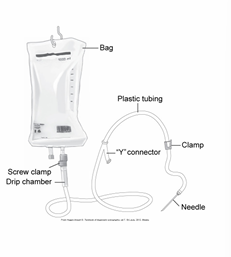
What is IV tubing used for and how is its flow regulated?
IV tubing infuses fluids into the patient; flow is measured by a drip meter, A clamp on the tubing regulates flow, and may be controlled by computerized infusion pumps.
What IV equipment issues must be reported immediately?
Nausea/vomiting, rapid breathing, increased pulse, no solution flowing, overfilled drip chamber, blood in tubing, solution gone, needle out, pain/tenderness/inflammation, or bleeding from a disconnected tube; also never let the IV bag drop below the insertion site.
What delivery systems are used for oxygen therapy?
In‑room piping systems and oxygen tanks/cylinders.
When are large oxygen cylinders used and what feature do they have?
Used for high‑flow or long‑term oxygen needs; they have a metal cap to protect the valve.
When are small oxygen cylinders used and what is their valve design?
Used for transport or short‑duration needs; they have a rectangular valve (without a handle),which has three holes on one side.
What safety rules must be followed when handling oxygen cylinders?
Do not transport a high‑pressure cylinder unless secured, never let it stand free, never place it beside a patient on a stretcher, keep it away from heat, and remember oxygen can ignite, burn, or explode on contact with combustible materials.
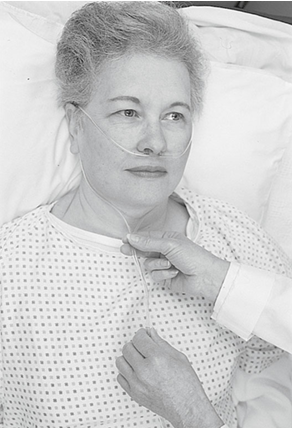
What is this?
Nasal Cannula
What is a nasal catheter and how is it used?
A nasal catheter is a long tube longer than a cannula inserted through the nostril into the back of the mouth, used for continuous oxygen, and secured to the forehead or cheek with adhesive tape.
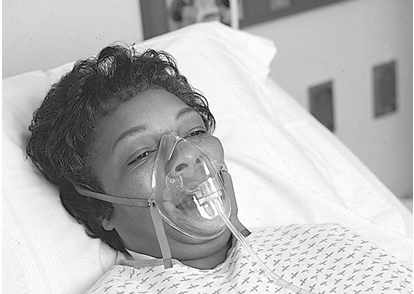
What is this?
Oxygen Face Mask
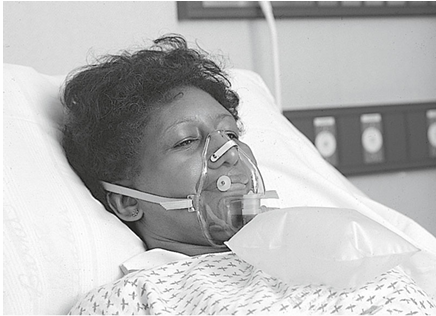
What is this?
Partial Rebreathing Mask
What are urinary catheters and why are they used?
A urinary catheter is inserted through the urethra into the bladder, used to obtain sterile specimens or measure residual urine, and a retention (indwelling) catheter provides temporary or permanent drainage
What are key points about wound dressings that sonographers must know?
A wound dressing protects the wound and to absorb drainage, is removed and replaced by the sonographer during exams, sterile changes are done by nursing staff, and you must always check for wound isolation precautions before removing it.
What steps should you follow when wound isolation precautions are NOT required during dressing removal?
wear gloves and wash hands or use sterile scanning media, avoid dislodging scabs when removing a dressing, ensure adhesive tape doesn’t irritate the skin, report anything unusual, and discard soiled dressings and gloves properly before washing hands thoroughly.
What should you do when handling bedpans and their contents?
follow medical aseptic, Standard Precautions, and Bloodborne Pathogen Standards, inspect for products of conception if the patient has heavy vaginal bleeding if the patient is childbearing age, report any unusual color, amount, or condition, and save the specimen if required for lab testing.
What should you know about urinals for male patients?
Male patients use urinals for voiding, which have a cap and hook‑like handle, and while they should stand to urinate, those unable to stand may sit on the bed or table edge or lie down
What are key safety rules in the patient care environment?
Use good body mechanics, follow your institution’s isolation policies, wear gloves and protective equipment during direct patient contact, ensure electrical equipment is grounded, and avoid extension cords or ungrounded adapters.
What safety steps should be followed when handling electrical equipment and warming media in the patient care environment?
Periodically inspect cords for fraying or defects, keep electrical cords away from wet or damp patient areas, and use only safety‑inspected, approved devices for warming scanning media.
What are the key steps for moving a patient up in bed or onto a scanning table?
Be sure the bed or table is locked, adjust it to elbow height if possible, explain what you’re doing and how the patient can help, slide or pull the patient whenever you can, and get a colleague with a lifting or turning sheet if the patient is heavy or unable to cooperate.
What are the key steps for moving a patient up in bed or onto a scanning table (continued)?
Remove any pillows, have the patient bend their knees and press their feet firmly on the bed, stand with one foot slightly ahead of the other, slide one arm under the shoulders and the other under the thighs while keeping the patient close, and ask them to push with their feet as you shift your weight forward to slide them up onto the bed or table.
What are the key steps for turning a patient toward you?
Position the bed at elbow height, stand as close as possible, use a rocking motion to roll the patient onto their side, use a turning sheet, have the patient bend their knees with the far leg over the near one, and have them fold their hands across their chest.
What are the key steps for turning a patient toward you (continued)?
Place one hand on the patient’s far shoulder and the other on the far hip, pull the patient toward you, raise the side rails if they cannot pull themselves up, and place a pillow behind their back to prevent rolling.
What are the key steps for turning a patient away from you?
Raise the side rails on the side the patient will turn toward, stand on the opposite side with rails down, have the patient bend their knees with one leg over the other so their feet point away from you, and have them fold their arms across their chest.
What are the key steps for turning a patient away from you (continued)?
Slip one arm under the patient’s back and far shoulder, place your other arm under the hips, gently roll the patient onto their side while drawing the arm toward you, shift your body weight in the same direction they’re moving (using raised side rails if they can assist), and support alignment by placing a pillow behind their back.
What are the key steps for safe patient transfers?
Explain the procedure and let the patient help as much as possible, keep the transfer vehicle close with wheels locked, use good body mechanics with enough personnel for safety, and move slowly when ambulating someone who has been in bed for a long time.
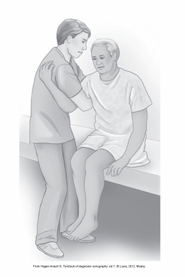
What are the key steps for assisting a patient to and from a scanning table or bed?
Move the upright patient to the edge of the bed with legs dangling, stand facing them, have them slide to the edge with feet flat and allow time to adjust, have them hold your shoulders or arms while you place your hands under theirs, and on the count of three pull them forward while shifting your weight from your forward foot to your backward foot.
What creates a cycle of infection?
A cycle of infection begins when a pathogen finds an environment where it can grow.
Through what portals can pathogens enter and exit the body?
Respiratory, gastrointestinal, urinary, reproductive tracts; breaks in the skin; and blood.
What are Standard Precautions?
They are the minimum infection‑control standards established by the CDC and OSHA to protect patients and healthcare workers.
What do Standard Precautions include?
They apply to all patients regardless of diagnosis or presumed infection and include medical asepsis, general medical practices, and isolation procedures.
What are key general precautions for infection control?
Wash your hands before and after patient contact, keep patient linens clean and off your dirty uniform, dispose of used linens properly in a hamper or bag, discard wound dressings correctly, keep the scanning area clean, and ensure only clean items touch the patient.
What are key isolation guidelines to follow?
Before entering the isolation area, organize supplies, wash hands before and after patient contact and again after touching excretions or secretions, use a paper towel for faucets, properly bag dressings for disposal, and discard gloves, gowns, and masks before leaving the isolation area.
What protective measures should be followed when using gloves?
Hands should be dry before putting on gloves, damaged gloves must be discarded, gloves must cover the wrists (and gown cuffs if worn), each pair is single‑use, new gloves are required if exposed to blood or bodily fluids, gloves should be removed so the clean inside stays outward, and hands must be washed immediately after glove removal.
What protective measures should be followed when using gowns?
Before putting on a gown, remove watches and jewelry and roll up sleeves, make sure the gown fully covers your clothing, tie it snugly at the neck and back, treat any wet gown as contaminated, remember the inside and neck are clean while the outside and waist ties are contaminated, and if a mask is required, wash your hands and put it on before putting on the gown.
What are the key steps for safely removing a contaminated gown?
When ready to remove the gown, take off the gloves first, undo the gown ties, wash your hands and untie the neck strings without touching the outside, pull the gown off from the shoulders turning it inside out, roll it away from you while keeping it inside out, then wash your hands again and use a paper towel to open the doors.
What protective measures should be followed when using masks?
Wash your hands before putting on the mask, avoid touching the part that touches your face, tie the upper strings over the ears toward the top of your head, fit the mask snugly over your nose and under eyeglasses, the mask should fit under the bottom edge of eyeglasses, and wash your hands again before working with the patient.
What protective measures should be followed when removing a mask?
When finished, remove your gloves first, then untie the bottom strings followed by the top, remove the mask by the top strings so the clean inside folds together, discard it properly, wash your hands, and wear goggles or a face shield if required.
What are the key requirements of strict isolation?
is used to prevent the spread of highly contagious diseases by air or contact, requires a private room, mandates gowns, gloves, and masks before entry, requires handwashing and proper disposal or disinfection when leaving, and may require protective eyewear.
What are the key requirements of respiratory isolation?
is used to prevent the spread of diseases transmitted by droplets, allows two patients with the same disease to share a room, requires masks for close contact, and only requires gowns and gloves if soiling is likely.
What are the key requirements of enteric isolation?
is used to prevent infections spread by direct or indirect contact with feces, requires a private room, needs handwashing plus gowns and gloves for direct contact, and for diarrhea patients with Clostridium difficile, wash hands using only soap and water; DO NOT use alcohol gel.
What are the key precautions for reverse isolation?
precautions require washing and disinfecting your hands before entering the room, wearing sterile gloves, gowns, and masks and discarding them properly afterward, and cleansing ultrasound equipment while using sterile transducer covers and scanning media.
What are the key steps for preparing a sterile field?
Select a clean, dry, waist‑level surface, wash your hands, place the sterile linen‑wrapped pack on it, remove the tape seal and unwrap both layers, and use the opened wrapper as the sterile field.
What are the key steps for preparing a sterile field (continued)?
Open the outermost drape flap while keeping your arm away from the sterile field, then grasp the adjacent corner and hold the drape straight up over the work surface, place the bottom half of the drape onto the surface first, and lay the top half down last.
What are the key steps for adding sterile items to a sterile field?
Add the sterile items according to their directions and place them directly on the field or transfer them with sterile forceps, keeping all objects at least 1 inch from the drape’s border, wearing sterile gloves while preparing items, and ensuring the gloves do not touch the sterile item wrappers.
What are wound‑skin precautions?
precautions are used for infections spread by direct contact with wounds, linens, or dressings, require handwashing plus gowns and gloves, require masks if dressings are removed, and mandate bagging or disinfecting any items contaminated with urine, feces, or vomitus.