Cell Communication
 Note
Note Call Kai
 Learn
Learn Practice Test
 Spaced Repetition
 Match
Match Flashcards
 Knowt Play
1/25

There's no tags or description
Looks like no tags are added yet.
Name | Mastery | Learn | Test | Matching | Spaced | Call with Kai | Chat |
|---|
No analytics yet
Send a link to your students to track their progress
26 Terms
Cell communication involves
Responding to signals and producing outgoing signals
Why is Cell communication important
to respond to a changing environment and to communicate with other cells
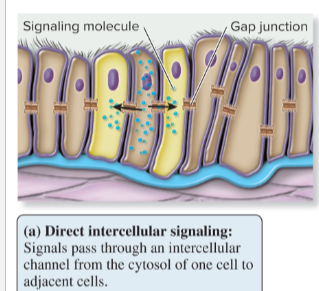
What happens in Direct Intercellular Signaling
Cell junctions allow signals to directly pass one another
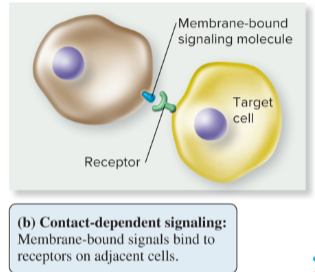
What happens in Contact-Dependent Signaling
A molecule bound to the surface of cells serve as signals to cells coming in contact with them
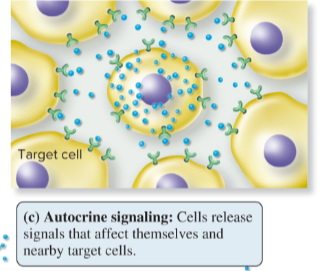
What happens in Autocrine Signaling
cells secrete signaling molecules that bind to their own surface receptors
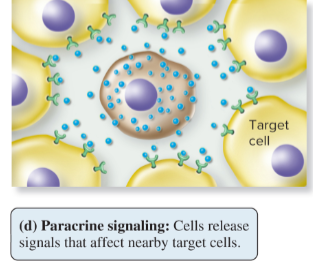
What happens in Paracrine Signaling
cells release signals that affect nearby cells
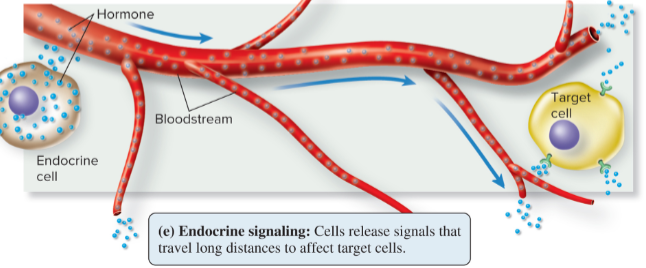
What happens in Endocrine Signaling
signals are released into blood and affect targets far away
The three common stages of Cell Signaling
Receptor activation
Signal transduction
Cellular Response
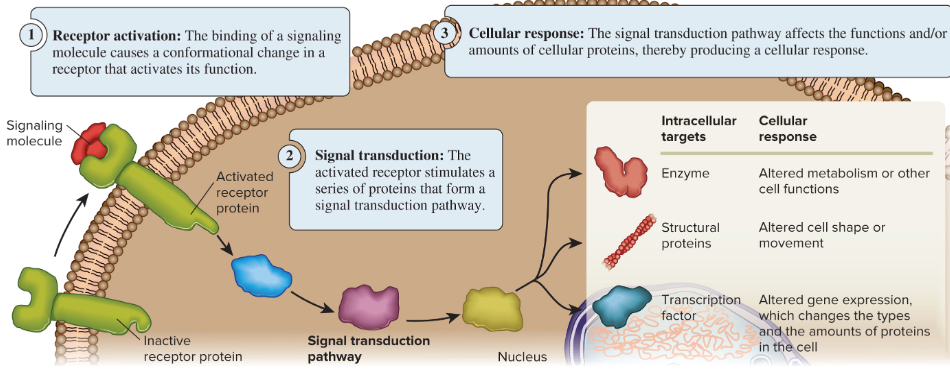
True or False: Ligand binding changes the receptor structure
True, this change sends a signal across the membrane
What does Kon mean
the rate at which binding occurs
What does Koff mean
the rate of dissociation of the ligand receptor complex
What does Kd mean
the dissociation constant, used to check the affinity of the receptors with their ligand Kd=Koff/Kon
True or False Kd is inversely related to the affinity between its ligand and its receptor
True, Kd also reflects the ligand concentration when half are active
If Ligand concentration is above Kd then
most receptors are likely to have a ligand bound to them
If Ligand concentration is below Kd then
most receptors will not be bound to their ligand
Why can’t signaling molecules pass through the membrane
they are small and hydrophilic, or too large
Cell surface receptors are embedded in the membrane and detect what type of signals
extracellular signals
3 Types of Receptors
Enzyme-Linked Receptors
G-Protein-coupled Receptors
Ligand-Gated Ion channels
What do Enzyme-Linked Receptors contain
A extracellular signal binding domain and a intracellular catalytic domain. (they transfer phosphate group from ATP to a specific amino acid in target proteins
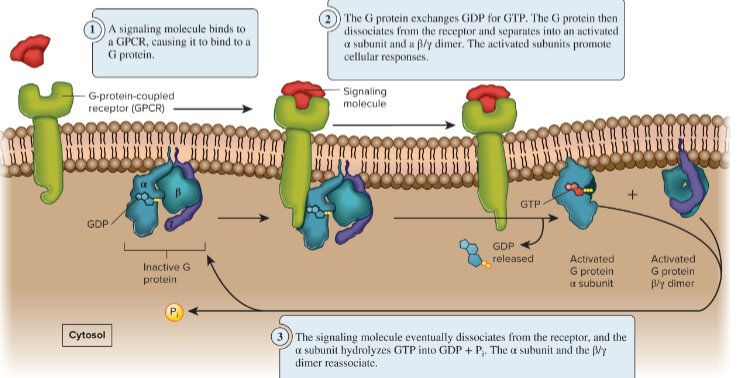
What does G-protein-coupled Receptors contain
G-proteins that bind GTP to GDP and causes their a and b/y dimer subunits to disassociate
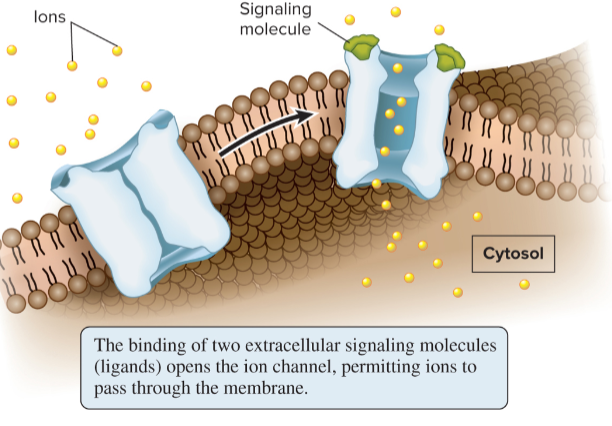
What does Ligand-Gated ion channels contain
ion channels that let the flow of ions across the membrane
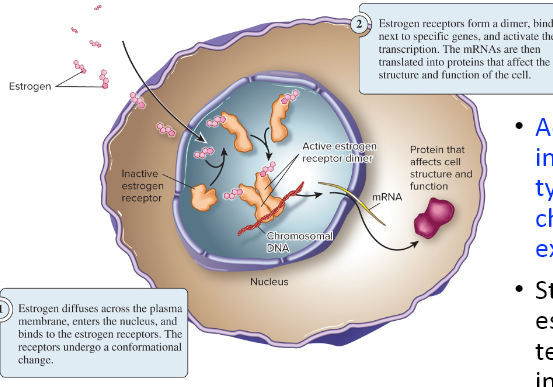
Where are intracellular receptors found
in the cytosol or nucleus
what happens when u active a intracellular receptor
gene expression changes
Who uses intracellular receptors
Steroid hormones like, estrogen and testosterone
What happens when an enzyme-linked receptor is activated
The phosphorylation of a intracellular protein
What receptors do intracellular receptors bind to
signal molecules that are small and hydrophobic